
Overview
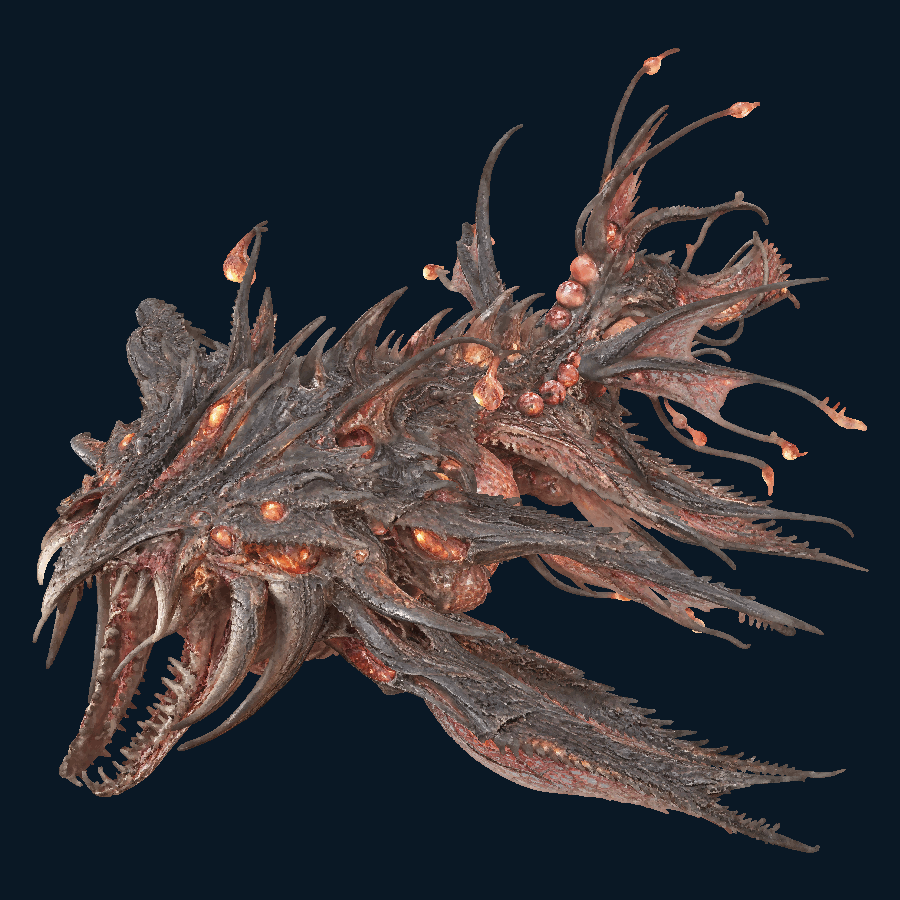
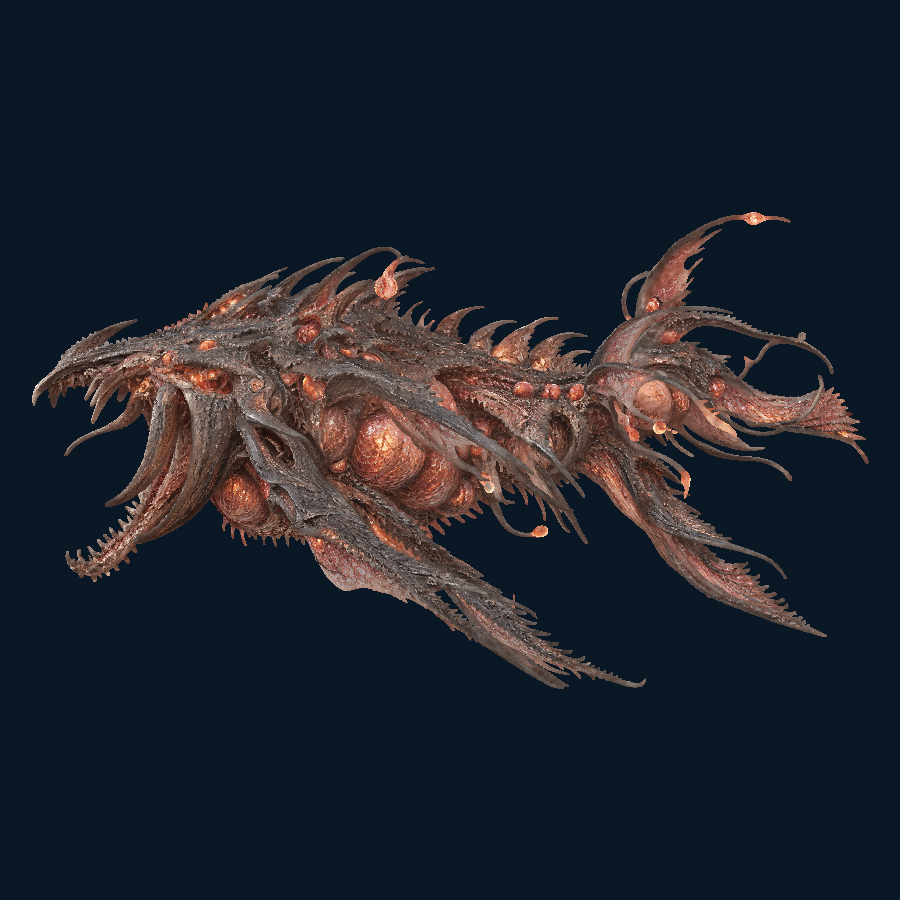
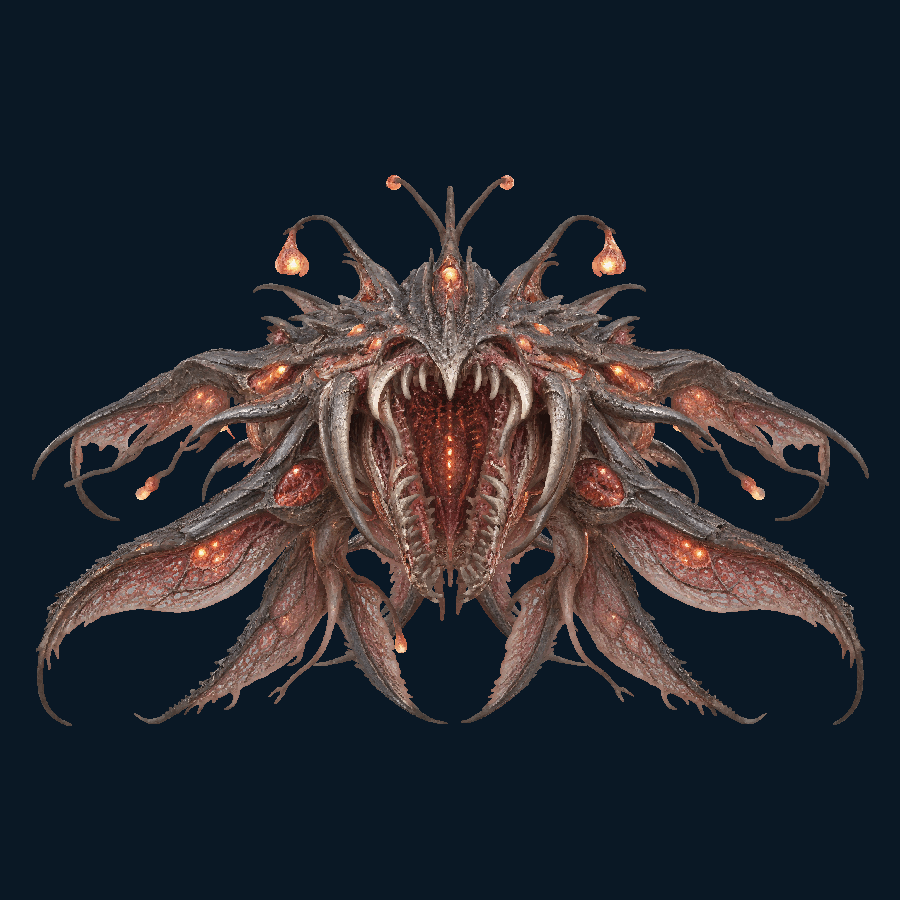
Siege Deepworlder is a Bugvex strategic undersea war organism of the Leviathan Deepworlder family. A massive pressure-balanced body combines fortress-breaking attack organs, brood transport and sustained support tissues. Its slow advance brings a living siege formation toward defended seabed positions while smaller organisms exploit the openings it creates.
Organism Profile
Dimensions & Scale
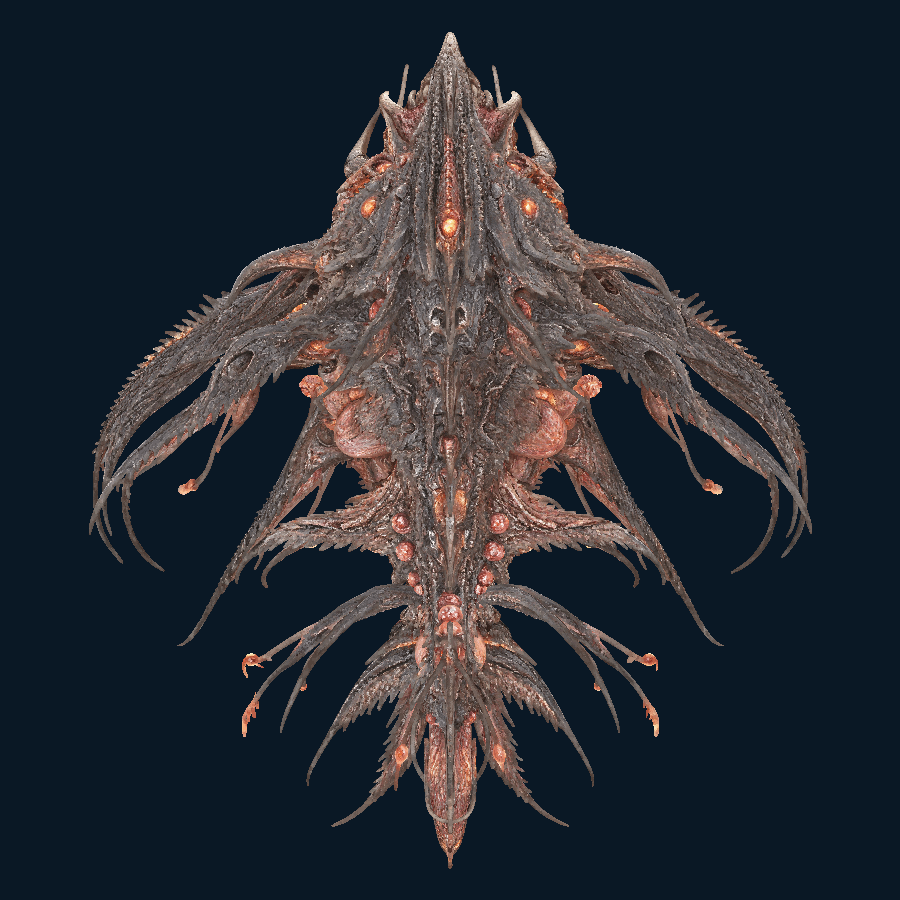
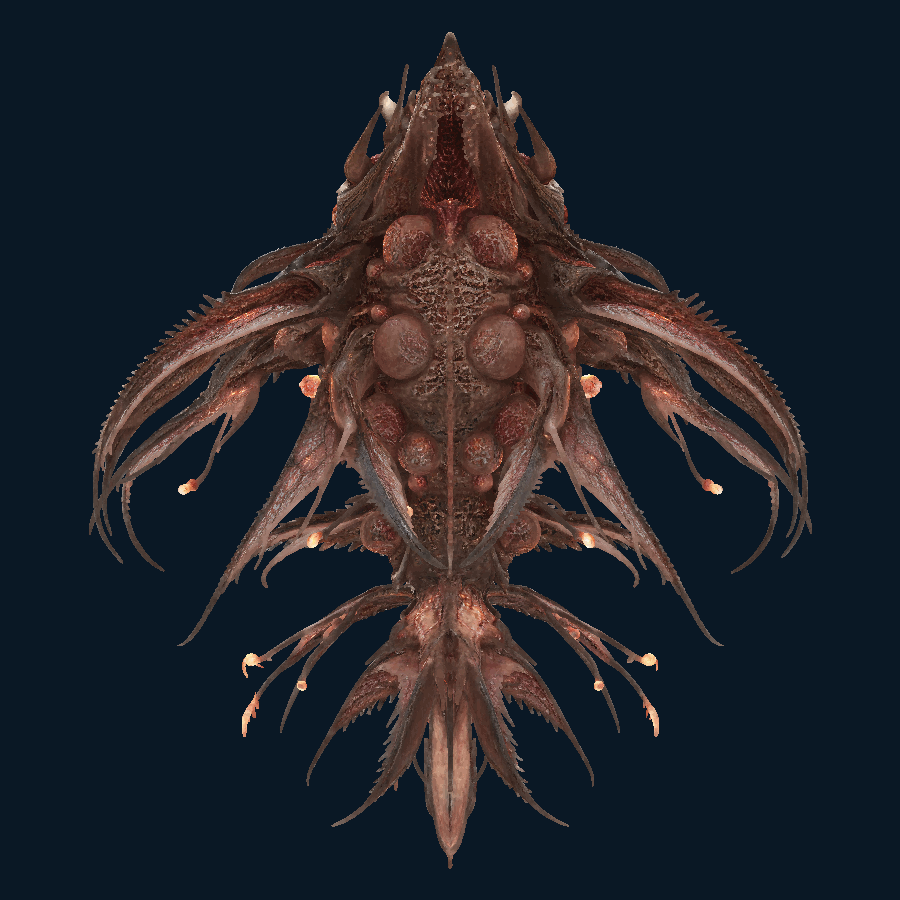
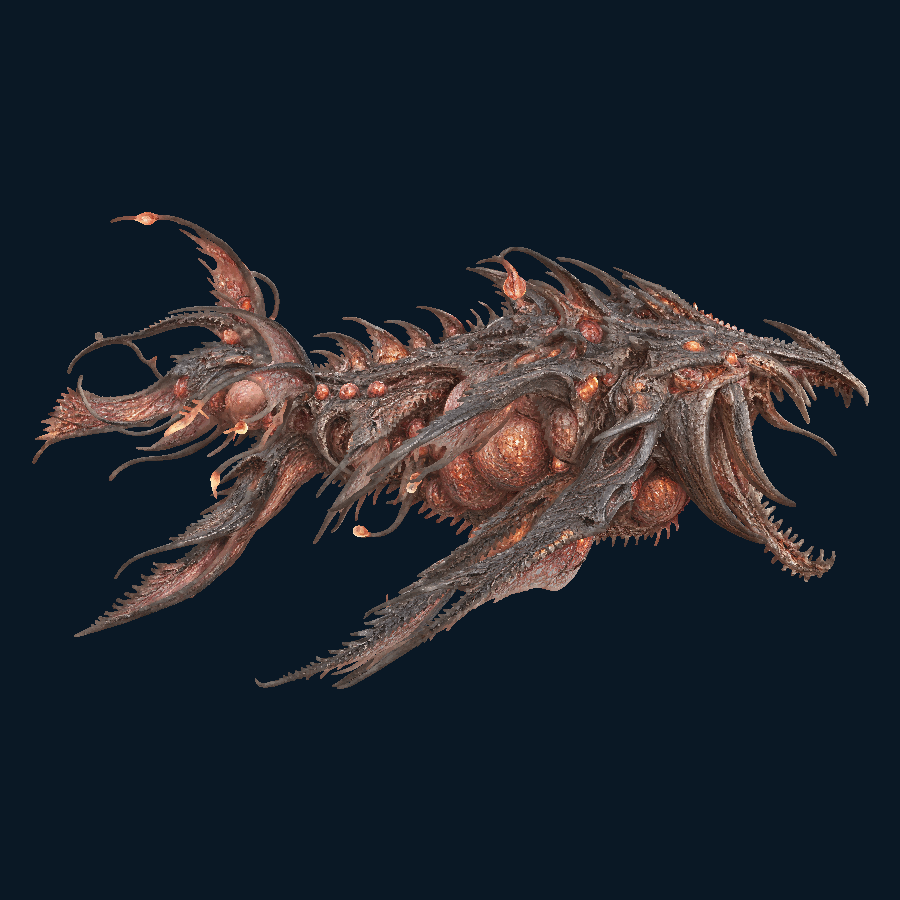
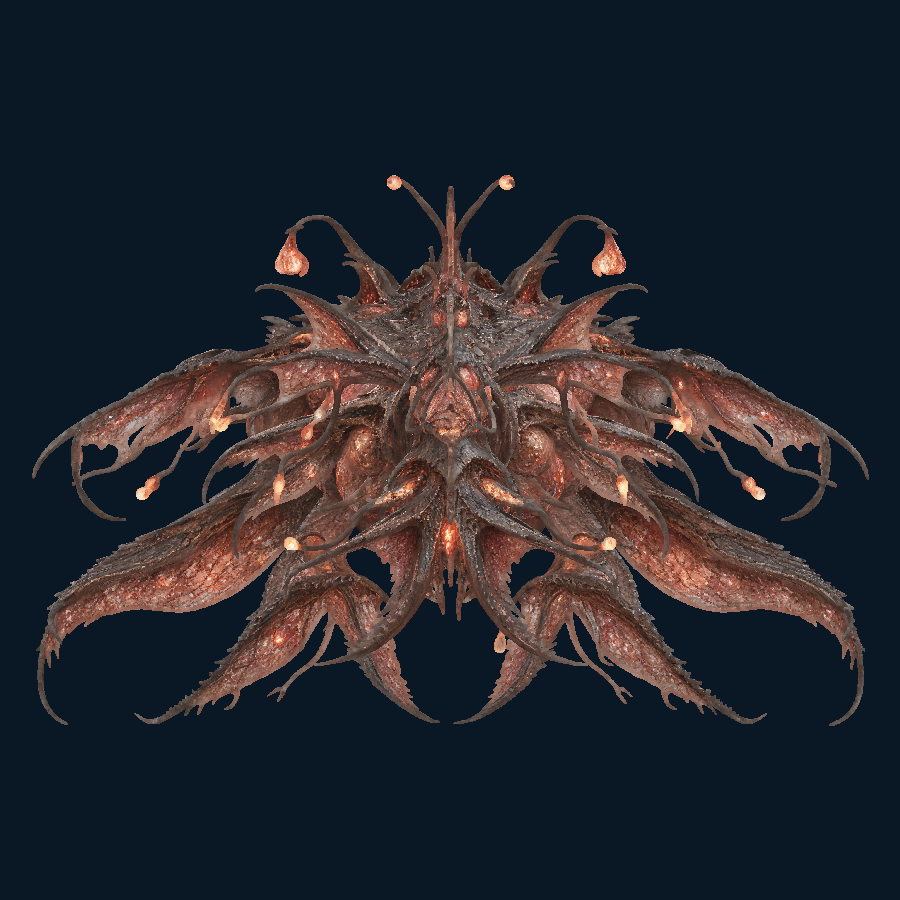
Length 80 m × Width 69.2 m × Height 45.6 m. The supplied overall-size range is 70–90 m; 80 m is the adopted concept length. Width and height are proportional estimates for the complete depicted organism, including extended membranes, spines and sensory growths.
Proposed living submerged operating mass: approximately 140,000 ton (metric tons). This fictional estimate allows for an irregular, partly hollow, fluid-rich body and its submerged buoyancy. It is not a measured weight or a solid-envelope density calculation.
Weapons & Armament
Shock organs — Deep muscular chambers produce concentrated underwater pressure disturbances for close siege work. Their role is to stress defenses and disrupt nearby attackers; exact reach and destructive output remain fictional concept parameters.
Spine batteries — Rooted clusters of mineralized biological spines provide directed attack against defended approaches. Vascular growth beds replenish expendable tissue over time, so firing depletes real biological reserves.
Corrosive vents — Protected secretion organs release corrosive compounds at short range to attack exposed seams and obstruct close defenders. Water movement dilutes the effect, making contact conditions and positioning important.
Brood release — Internal nursery and transport regions deploy smaller organisms to exploit openings, screen vulnerable flanks and establish a local support presence. These functions are grown organs of the host rather than carried mechanical weapons. The heavy leading bite structures provide a further close-contact threat without replacing the integrated siege systems.
External Anatomy
A deep armored central body carries overlapping hardened ridges, broad muscular membranes and long sensory growths. The leading mass is heavily reinforced around substantial bite structures, while softer vascular areas connect the larger protective growths. Rear and lateral tissues spread control and sensing across a broad envelope.
Pressure-balanced body sectors distribute internal volume through several connected but locally regulated regions. Transport cavities, support tissues and attack organs share thick load-bearing roots. The family’s living-fortress identity describes functional integration, not a literal building or vessel carried on the back.
Functional Architecture
Pressure regulation — Fluid-rich tissues and locally regulated internal sectors manage the difference between external pressure and protected biological spaces. Their resilience is finite; severe rupture or abrupt environmental change can overwhelm recovery.
Colony integration — Distributed neural tissue coordinates the host, resident symbionts and carried brood. Separate growth and nutrient regions support transport, feeding, tissue repair and preparation of newly released organisms.
Theater support — Large reserve tissues store nutrients and biological feedstock, sustaining nearby brood activity over extended operations. Proposed ecological-conversion tissues process suitable local material into brood-support substrate after an area is secured. Conversion requires time and resources and does not instantly transform an entire ocean.
Sensing — Extended feelers and distributed pressure-sensitive regions detect nearby movement and changes in water flow. Brood-borne observations supplement the host’s own awareness during the slow approach.
Technical Specifications
Offensive rating: 91/100 — Shock organs, spine batteries and corrosive vents concentrate fortress-breaking pressure
Defensive rating: 88/100 — Hardened growths and pressure-balanced sectors protect the central living mass
Mobility rating: 24/100 — Slow advance and a broad body limit rapid pursuit and turning
Tactical cognition rating: 72/100 — Distributed sensing and brood communication coordinate a sustained siege
Endurance rating: 86/100 — Large reserves sustain prolonged activity but require replenishment
Fleet support rating: 89/100 — Brood transport, release and support tissues maintain nearby formations
Battlefield Role
Strategic fortress breaker for Bugvex undersea formations. Siege Deepworlder advances against defended seabed positions while carrying the transport, offense and support capacity needed to maintain local pressure. It opens opportunities for smaller organisms rather than winning every engagement through size alone. Its operational value extends from the initial assault into reinforcement and recovery.
Undersea Operations
Slow, deliberate abyssal movement comes from broad muscular control tissues and coordinated body motion, supported by pressure-balanced sectors and managed buoyancy. Near the seabed, its passage and contact can disturb sediment and terrain. This mass favors sustained advance over rapid turning or pursuit.
The assigned operating domain is underwater. The record does not establish independent atmospheric flight, orbital travel or routine surface operations. Pressure adaptation is a fictional biological capability, not an unlimited depth rating.
Defense Architecture
Interlocking hardened growths protect major organ roots while thick muscle and pressure-balanced sectors distribute shock. Biological compartment response can limit damage spreading between regions, and smaller released organisms screen exposed approaches. The protective envelope is strongest around the central body; long sensory growths and broad membranes remain more vulnerable.
Operational Limits
Low speed and a broad turning envelope make it dependent on route choice and supporting organisms. Sustained siege attacks consume nutrients, secretion reserves and replacement spine material. Heavy damage can interrupt brood release or pressure regulation, and recovery requires time. Narrow passages, unstable seabed conditions and concentrated attacks on exposed tissue can deny its preferred approach.
Strategic Strengths
Combines transport, siege attack and long-duration biological support in one organism. Its reserves let a brood maintain pressure after lighter attackers would need to withdraw. Multiple attack-organ families address different stages of a siege, while distributed support tissues help consolidate openings and recover surviving brood.
Capability Assessment
Proposed fictional doctrine profile. Attack, protection, endurance and support define the Siege variant; mobility is deliberately low. Tactical cognition represents distributed sensing and brood coordination rather than a ranking of species intelligence. These values describe an intended living siege platform, not measured combat performance or guaranteed victory over a fortress.
A · 75.0
Fleet-wide concept rating, 0–100; not simulated performance. Specialized strengths do not imply an equally high overall grade. Tactical Cognition describes sensing, coordination and command. Grade is the equal-weight mean: S ≥ 90, A ≥ 75, B ≥ 60, C ≥ 45, D < 45.
Technology Level
T0 — advanced planetary bioengineering expressed through pressure adaptation, distributed neural coordination and integrated symbiotic systems. No independent space or phase-travel capability is assigned.
Weapon Class
Proposed W3 — strategic theater siege through integrated attack, brood deployment and sustained support. The tier describes campaign influence, not unlimited range or planetary destruction.
T0 planetary · T1 system flight · T2 phase travel · T3 limited world engineering. W0 point defense · W1 ship combat · W2 heavy fleet combat · W3 strategic theater systems. Technology and weapon classes are independent of the profile grade.
History & Lineage
Universe lore · authored service history
Origin
Grown within the fictional Bugvex Marine Warforms as a Siege specialization of the Leviathan Deepworlder family. Its architecture concentrates the family’s transport and support functions around prolonged assault against fortified undersea positions.
Lineage & Branch
Leviathan Deepworlder — Undersea warfare branch, Siege variant. Family traits include colossal integrated bodies, pressure-balanced internal sectors and shared transport, offense and ecological-support functions.
Brood or Swarm
Bugvex — fictional Deepwake siege broods and their accompanying undersea support organisms
Individual History
The Sealed Basin Campaign — In this authored service history, a Siege Deepworlder joins a brood facing fortified access passages into an enclosed abyssal basin. It advances behind smaller scouts, absorbs the strain of sustained approach and brings shock organs and corrosive tissues close enough to pressure an outer defense. Released brood enter the resulting gaps while the host supports the assault from outside the narrowest passage.
The Long Replenishment — Damage to lateral membranes and depleted biological reserves prevent an immediate second attack. Supporting organisms maintain the perimeter while the host feeds and repairs. The campaign establishes a deliberate rhythm of reconnaissance, siege approach and recovery rather than treating the giant organism as an inexhaustible weapon.