
Overview
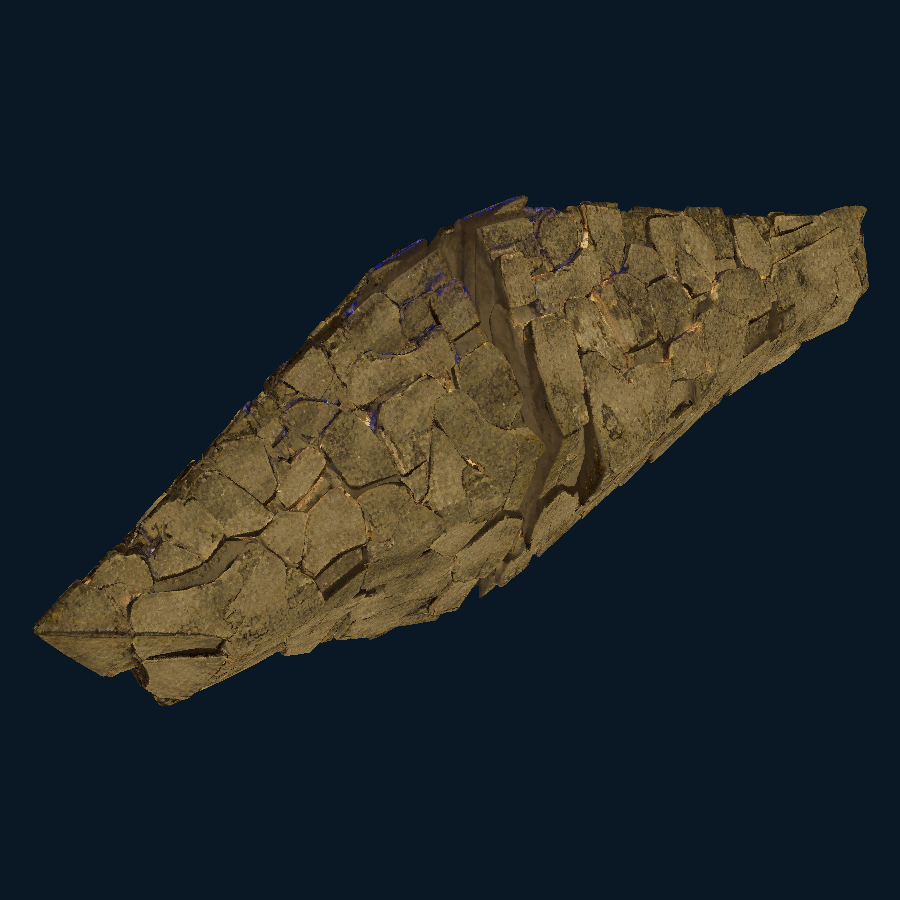
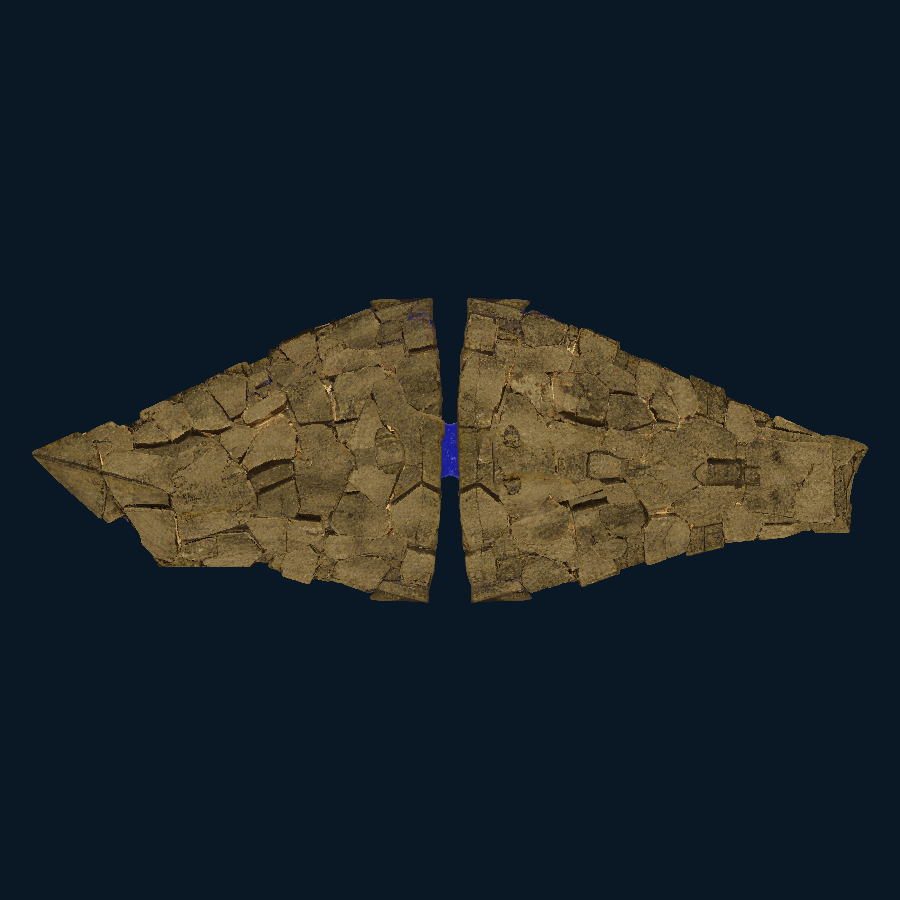
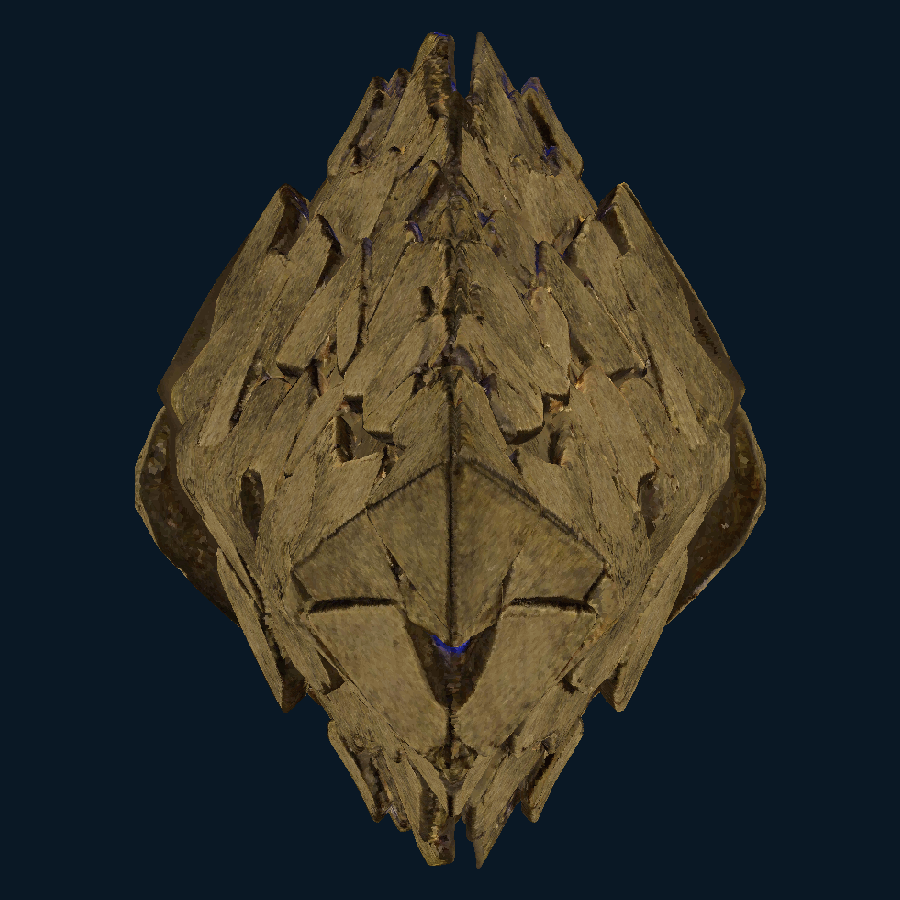
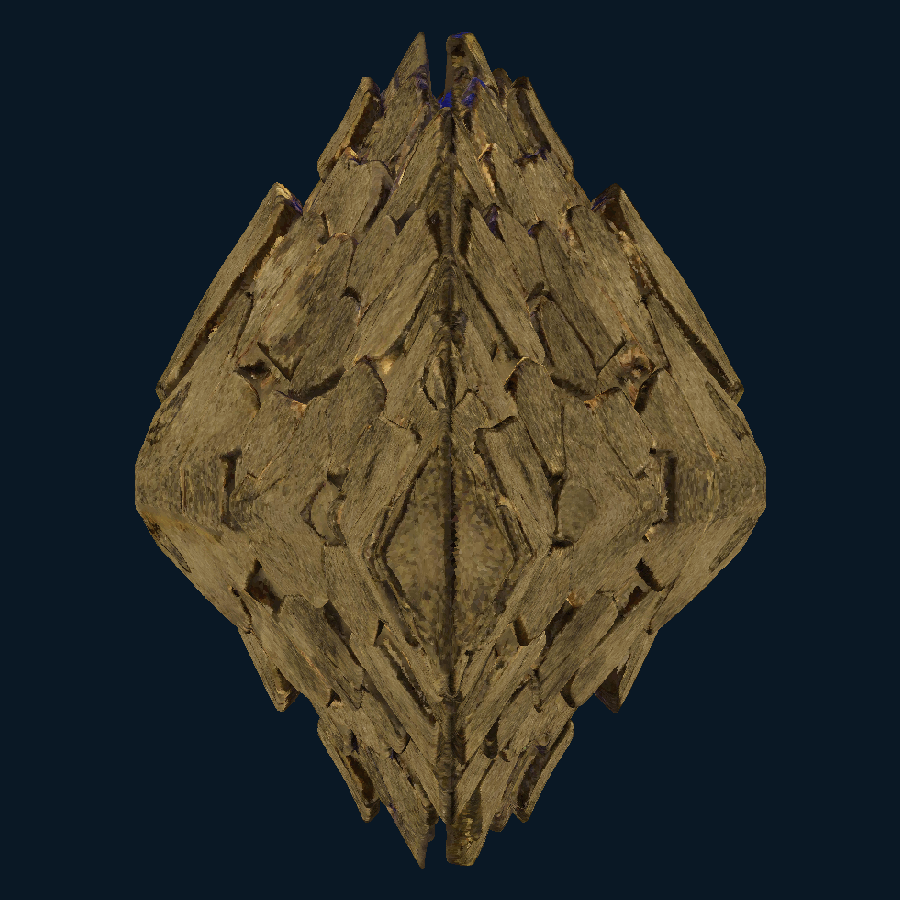
Brassfold Bulwark grows mineral domains, energy reservoirs and buried cognition into a single coherent capital ship. Its deep central body carries reserves for prolonged combat. This battleship is distinct from the smaller Brassfold Traverse-class Cruiser.
Vessel Profile
Weapons & Armament
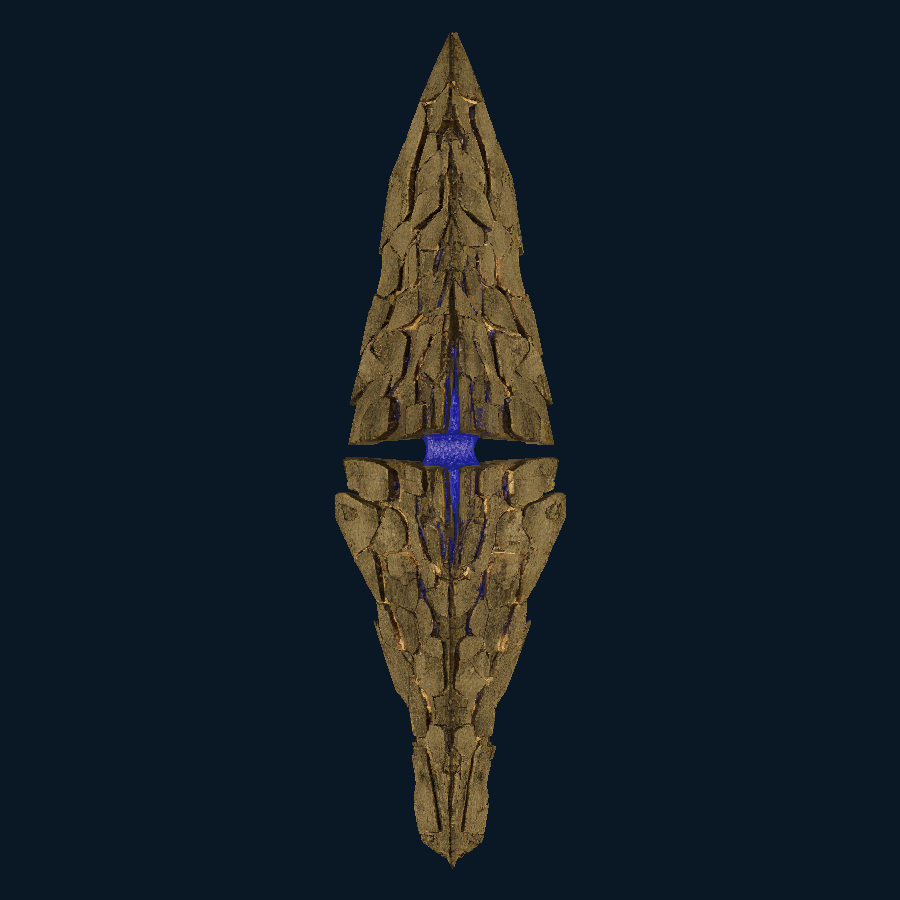
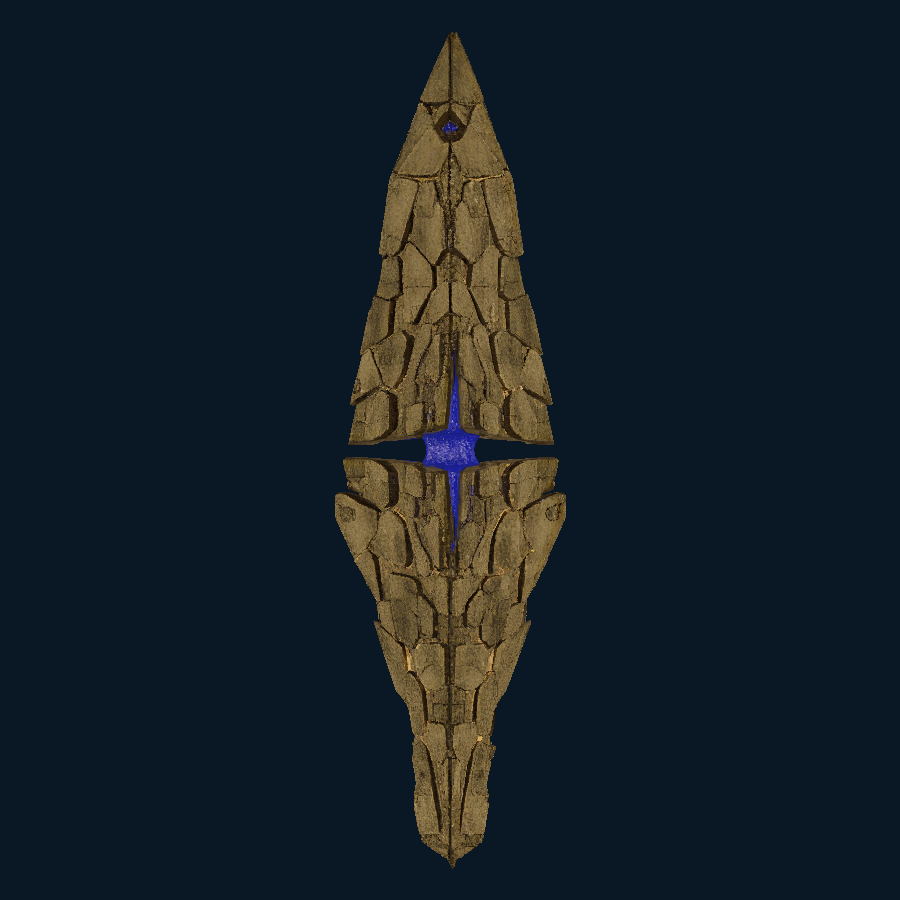
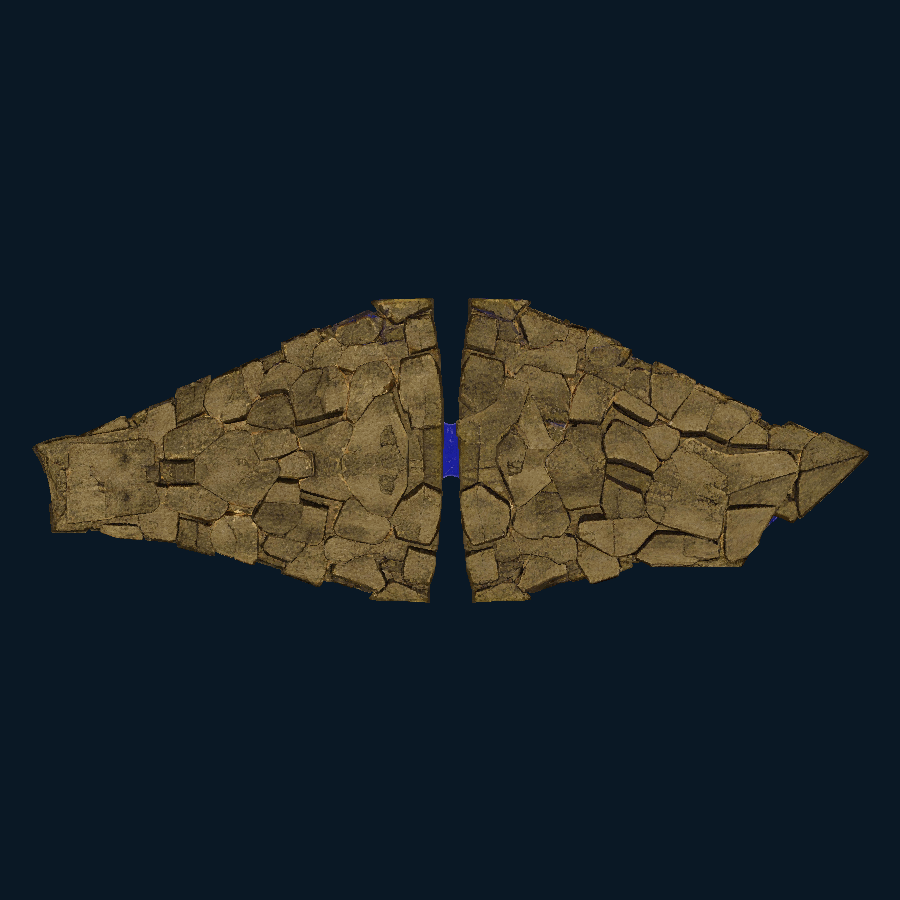
A broad forward phase band projects coordinated resonance that disrupts the structural alignment of connected target material. It is a body-grown field function rather than a turret battery. Two massive shoulder regions supply repulsion and close protective pressure.
Dimensions & Scale
Length 1,800 m × Width 1,050 m × Height 586 m. Fictional overall dimensions in standard operating configuration.
External Anatomy
A deep capital-scale parent mass carries broad pyrite-like facets and substantial shoulder regions. Attack, reserve and rear field domains remain buried in a continuous crystal-metal body. This Bulwark battleship is a separate entry from the smaller Brassfold Traverse cruiser.
Functional Architecture
Protected reserves, buried cognition and conductive mineral paths coordinate energy across the body. Compatible mineral material can be moved toward damaged connections, where pressure and stable resonance support regrowth. Restoring continuity is an internal material process.
Technical Specifications
Offensive rating: 90/100 — A broad forward phase band projects coordinated resonance that disrupts the structural alignment of connected target material
Defensive rating: 90/100 — Two massive shoulder domains act as repulsion fields while the deep parent mass distributes stress
Mobility rating: 20/100 — Maneuvering supports the formation and mission profile rather than unrestricted pursuit
Tactical cognition rating: 66/100 — Target assessment, formation coordination and response timing support bulwark-class battleship operations
Endurance rating: 81/100 — Mission duration depends on finite reserves, damage recovery and scheduled replenishment
Fleet support rating: 38/100 — Anchors a heavy battle formation and confronts major fleet targets
Fleet Role
Anchors a heavy battle formation and confronts major fleet targets. Escorts secure its flanks while it establishes a stable forward field axis and uses its deep reserves to remain effective through a prolonged engagement.
Life Between Stars
Three buried rear field-bias regions govern motion, with smaller embedded states controlling attitude. Large reserves and deep structural mass support endurance but make rapid course changes costly. Operational doctrine commits to a deliberate approach with an escort screen.
Defense Architecture
Two massive shoulder domains act as repulsion fields while the deep parent mass distributes stress. Structural continuity, compatible reserves and stable resonance allow repair after damage, provided the supporting domains remain functional.
Operational Limits
Sustained attack consumes reserve energy and can destabilize the battleship’s own domains. Depletion weakens propulsion, repulsion and repair together. Its low agility makes wide flanking pressure dangerous, especially while the forward phase band remains committed.
Strategic Strengths
Heavy forward attack, exceptional protective depth and large internal reserves favor sustained capital engagements. Its continuous lattice keeps the attack and protection roots connected to the strongest body regions.
Capability Assessment
A heavy battleship profile: attack, protection and endurance are deliberately high, while mobility remains low. Support describes its ability to shelter a formation; it is not assigned the specialized service role of a fleet fortress.
B · 64.2
Fleet-wide concept rating, 0–100; not simulated performance. Specialized strengths do not imply an equally high overall grade. Tactical Cognition describes sensing, coordination and command. Grade is the equal-weight mean: S ≥ 90, A ≥ 75, B ≥ 60, C ≥ 45, D < 45.
Technology Level
Proposed T2 — integrated field motion and phase-compatible fleet operations, following the reference exhibit’s editorial classification. This is a setting proposal, not a measured transit specification.
Weapon Class
Proposed W2 — concentrated field engagement against fleet targets. No world-scale destructive capability is assigned.
T0 planetary · T1 system flight · T2 phase travel · T3 limited world engineering. W0 point defense · W1 ship combat · W2 heavy fleet combat · W3 strategic theater systems. Technology and weapon classes are independent of the profile grade.
History & Lineage
Universe lore · authored service history
Origin
Cultivated for heavy battle formations that require a durable field anchor capable of holding a contested approach
Lineage & Branch
Pyrite-derived Bulwark battleship. Its mineral domains and metallic phases grow together as one connected body.
Fleet or Unit
Brass Root Battle Confluence
Individual History
The Brass Root — During a prolonged stand, the Bulwark withheld a full forward discharge until its shoulder domains had stabilized the surrounding screen. The confluence remembered the action as a held root: strength expressed by preserving the formation.
The Quiet Facet — Afterward, one exhausted attack region remained dormant while compatible reserves restored its connection. The battleship returned to patrol only after the repaired facet resumed resonance with the parent mass.