
Overview
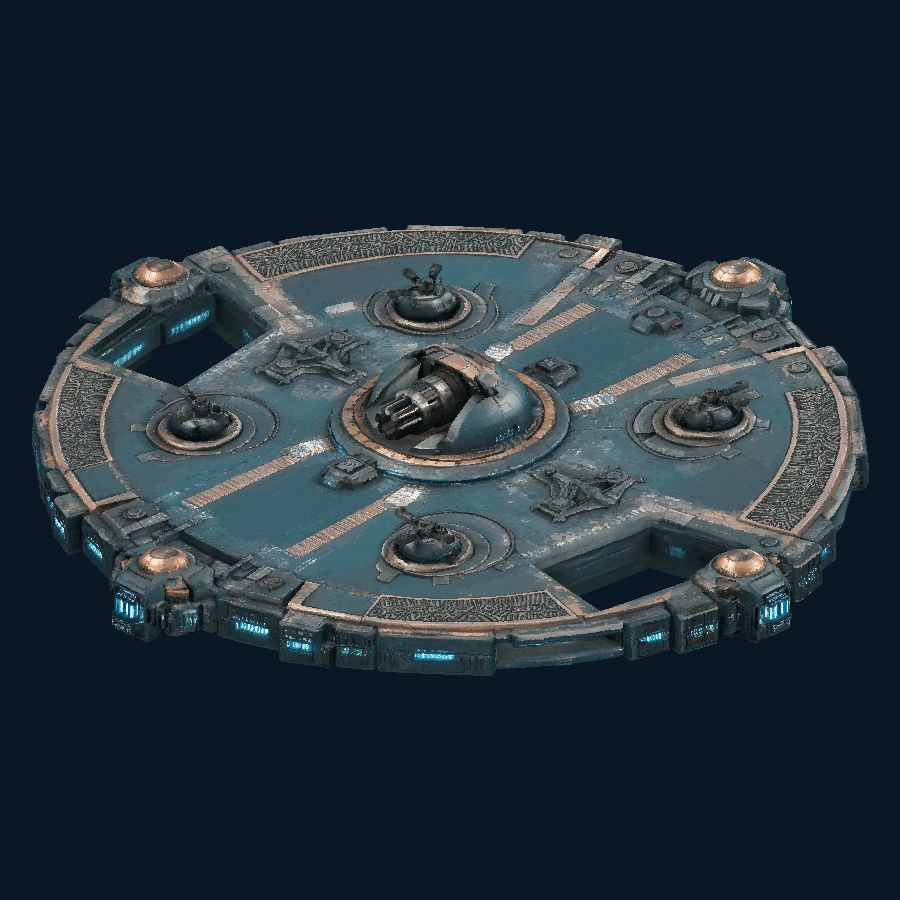
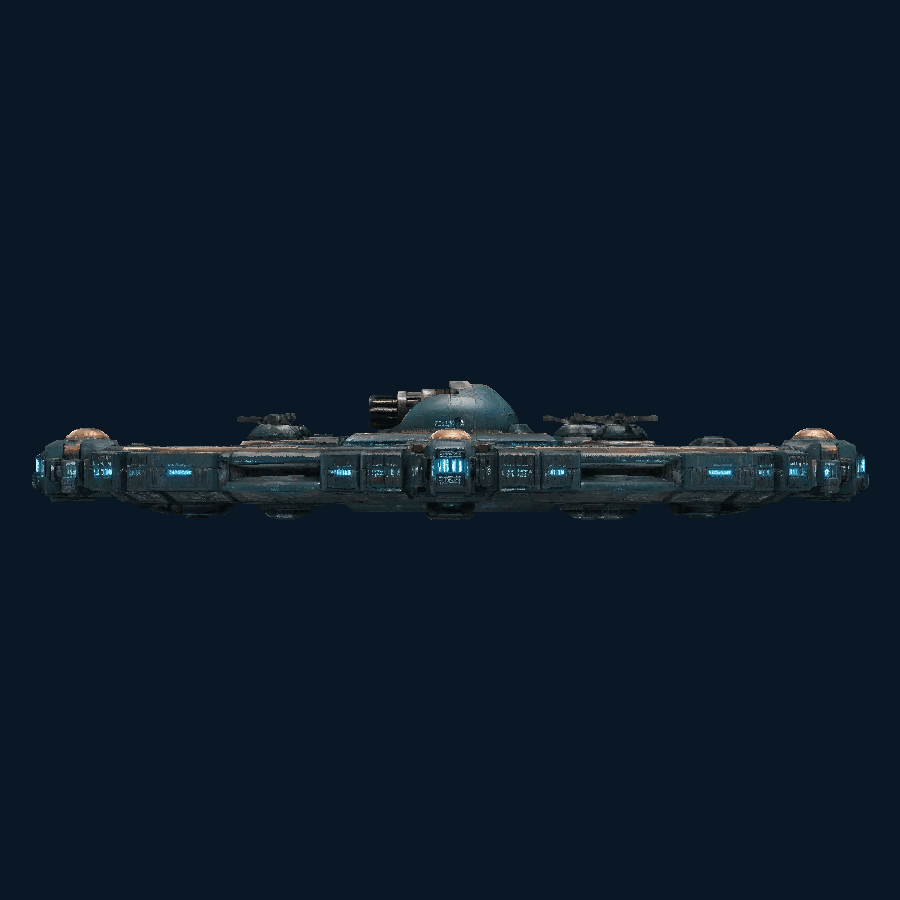
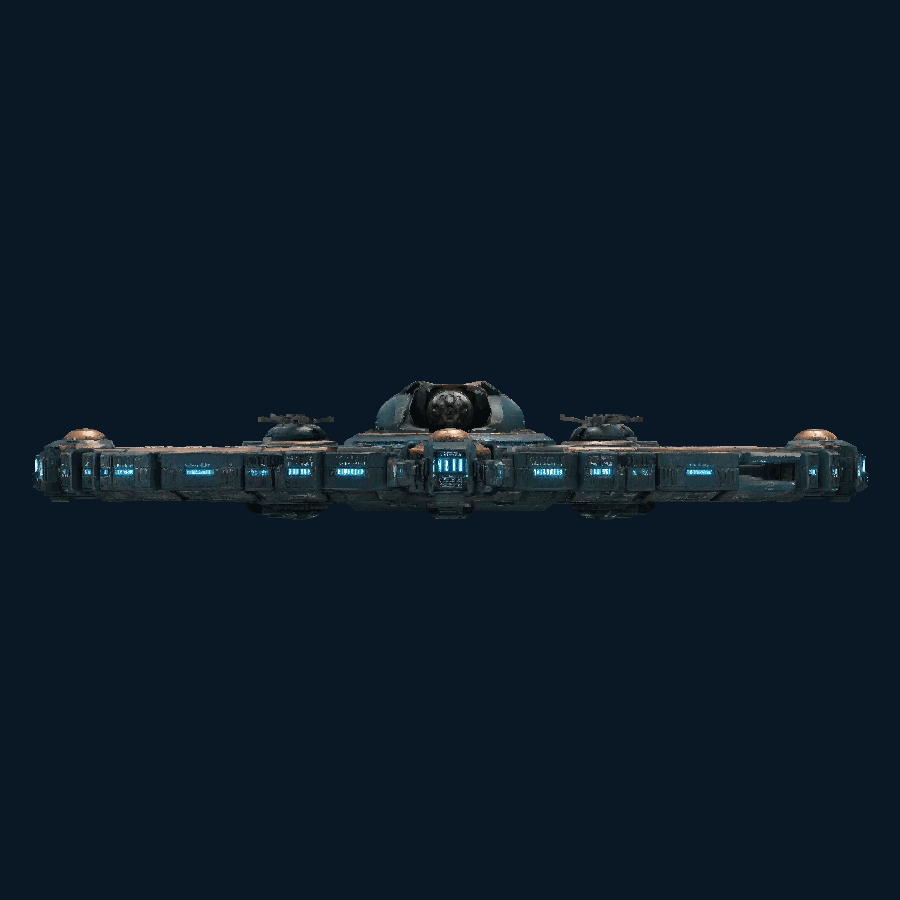
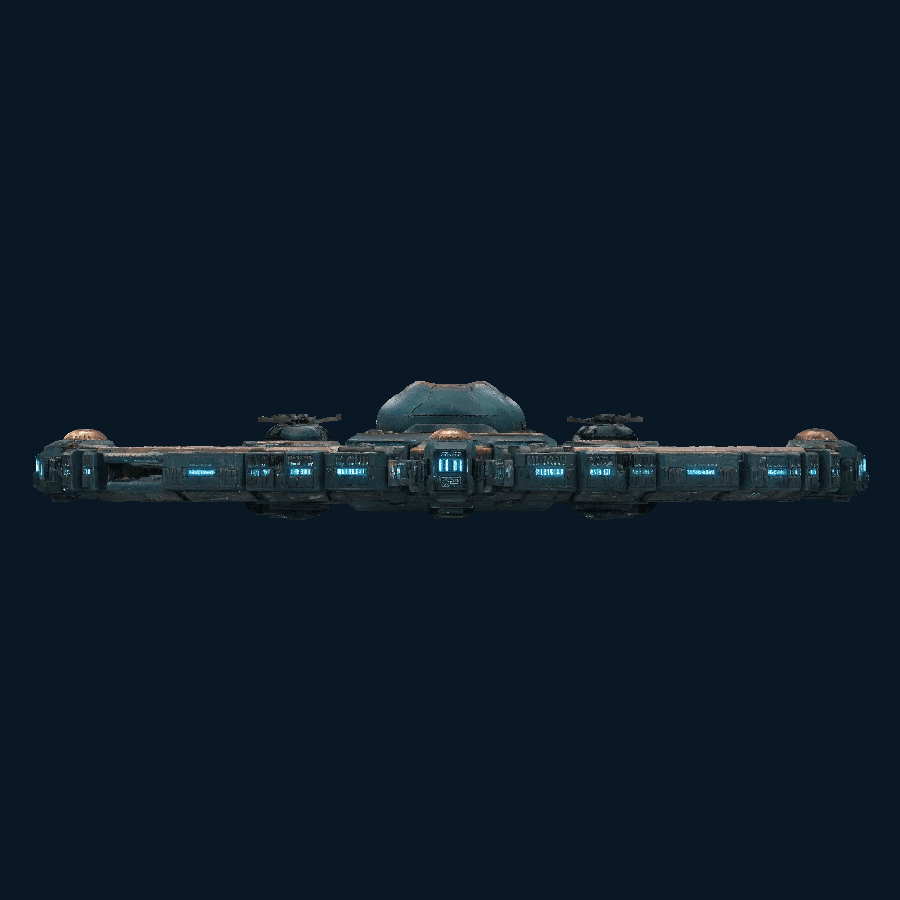
SolarCitadel Fleet Carrier Fortress is a Human spaceborne fleet-protection and logistics hub. A broad shallow hull, continuous reinforced rim and protected central fighting volume organize its carrier, defensive and servicing functions. Deep teal and midnight-blue armor with pale-copper structural borders give the fortress a distinctive presence without obscuring its recessed hangars.
Vessel Profile
Dimensions & Scale
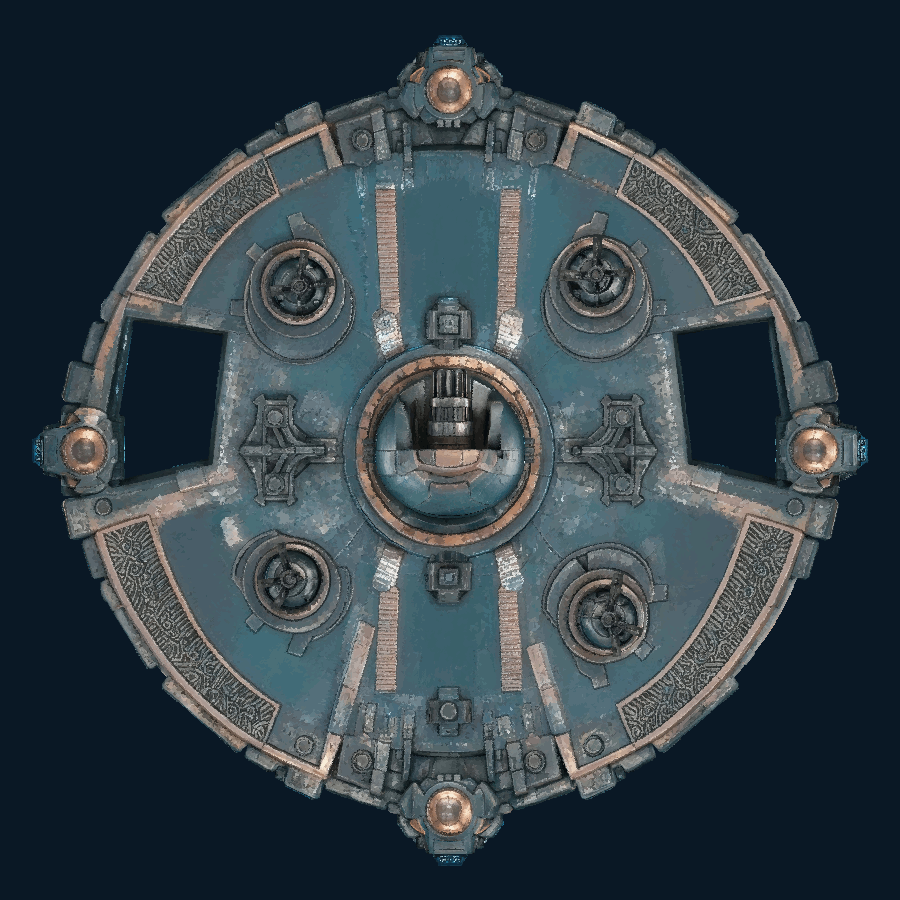
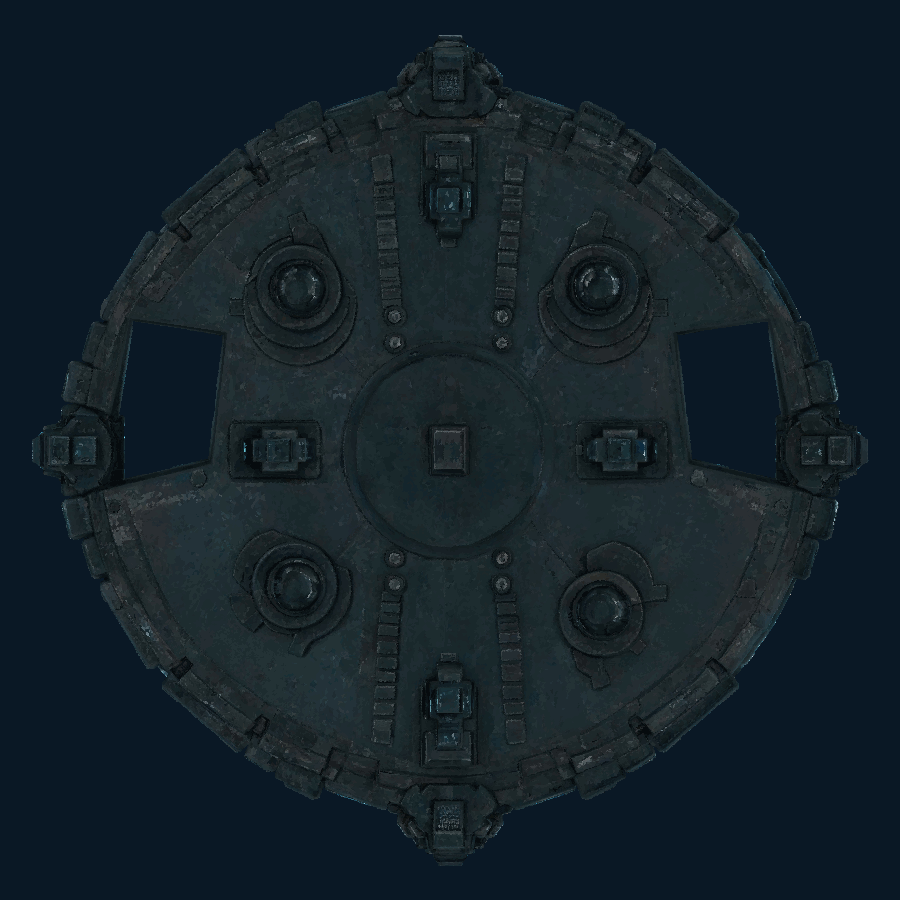
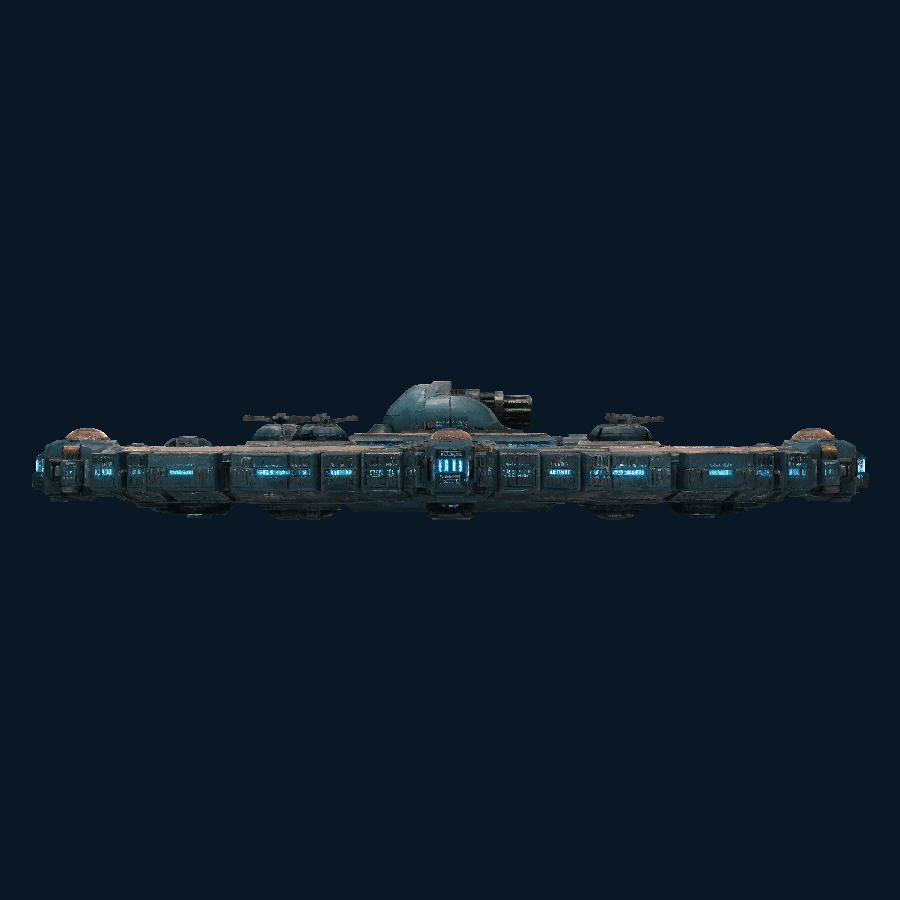
Length 1720 m × Width 1480 m × Height 410 m. Supplied fictional overall proportions.
Proposed operating mass: approximately 310,000,000 ton (metric tons). This concept estimate allows for armor, large occupied volumes, stores and hangar voids; it is not measured mass or a propulsion validation.
Weapons & Armament
One dominant Rotary Flak Drum occupies the central raised mount. The proposed design specifies a short-barrel cluster about 28 m across, an ammunition housing about 80 m long and a shroud about 170 m across, rising about 90 m above its surrounding deck. These describe the concept weapon rather than a measured reconstruction.
Four heavy defensive turrets, two protected missile blocks and twelve flush point-defense nodes form the supporting defensive layers. Mounts remain inside the outer hull outline and leave service openings clear. The two recessed hangar mouths are carrier infrastructure rather than additional weapons.
External Anatomy
A shallow rounded body carries four evenly spaced raised structural bosses around the protected center. Broad concentric armor fields, a continuous rolled rim and a low rear spine preserve a simple load-bearing form. Recessed hangars occupy existing openings beneath the rim. Large calm armor faces are separated by deliberate relief borders and protected machinery recesses.
Functional Architecture
Protected command processing coordinates local defense, carrier traffic and fleet replenishment. Enclosed transport corridors, workshops, magazines and reserve spaces support extended mobile-base duties. Hangar operations and defensive fire share controlled clearances around the reinforced rim.
Power routing and thermal systems prioritize protection, maneuvering and servicing according to demand. Compartment isolation and distributed controls preserve limited operations after local damage; finite stores and repairs still require external resupply.
Technical Specifications
Offensive rating: 76/100 — Capital flak and supporting batteries provide substantial defensive fire
Defensive rating: 89/100 — Reinforced structure and layered interception protect carrier operations
Mobility rating: 30/100 — Broad mass favors deliberate formation movement
Tactical cognition rating: 82/100 — Protected command systems coordinate fire and traffic
Endurance rating: 88/100 — Large reserves sustain long operations but need replenishment
Fleet support rating: 95/100 — Carrier, transport and servicing capacity define the mission
Fleet Role
Fleet protection, transport, logistics and mobile-base operations. SolarCitadel supports deployed craft and sustains nearby formations while its concentrated defensive package protects the operating area. The carrier role takes precedence over fast pursuit or dedicated siege bombardment.
Life Between Stars
Eight to twelve proposed recessed thrusters distributed along the aft rim and rear spine provide maneuvering without detached engine pods. Its broad mass favors stable formation movement and deliberate repositioning. Only Space is assigned; independent atmospheric landing and phase travel are not established.
Defense Architecture
A thick continuous rim, protected central mount and compartmented internal structure shield service volumes. Four supporting turrets and perimeter point defenses layer protection around the carrier. Hangar openings remain valuable vulnerabilities, and sustained defensive output competes with propulsion and servicing demand.
Operational Limits
Low agility makes route planning and escort coverage important. Hangar traffic can constrain firing opportunities, while ammunition, maintenance stores and thermal capacity limit sustained defense. The fortress cannot replace an entire supply chain or evade every concentrated attack.
Strategic Strengths
Combines protected carrier volume with disciplined local defense and substantial reserves. The broad structure supports coordinated fleet servicing and defensive coverage without dispersing critical functions into exposed pods.
Capability Assessment
Proposed fictional profile. Fleet support, protection and endurance dominate, while mobility remains low. Attack reflects the central flak mount and its supporting batteries, not unlimited offensive reach. Scores describe intended game roles rather than measured performance.
A · 76.7
Fleet-wide concept rating, 0–100; not simulated performance. Specialized strengths do not imply an equally high overall grade. Tactical Cognition describes sensing, coordination and command. Grade is the equal-weight mean: S ≥ 90, A ≥ 75, B ≥ 60, C ≥ 45, D < 45.
Technology Level
T1 — space-capable Human carrier engineering and distributed fleet coordination. Independent phase travel is not assigned.
Weapon Class
Proposed W2 — heavy fleet defense through a capital flak mount and coordinated supporting batteries
T0 planetary · T1 system flight · T2 phase travel · T3 limited world engineering. W0 point defense · W1 ship combat · W2 heavy fleet combat · W3 strategic theater systems. Technology and weapon classes are independent of the profile grade.
History & Lineage
Universe lore · authored service history
Origin
Developed within the fictional Human fleet as a protected mobile support center for formations operating beyond fixed service facilities
Lineage & Branch
SolarCitadel fleet-carrier branch, organized around a broad reinforced hull and centralized defensive coordination
Fleet or Unit
Human — fictional Sunward reserve and carrier-support formations
Individual History
The Long Convoy — In this authored service history, SolarCitadel supports a formation crossing a region without secure maintenance stations. It receives damaged craft while escorts hold the outer approaches, using controlled hangar schedules to preserve defensive coverage.
The Reserve Watch — A later operation exhausts much of its repair inventory before the formation reaches its destination. The fortress completes the passage at reduced servicing capacity, reinforcing a doctrine of planned replenishment and shared escort responsibility rather than limitless self-sufficiency.