
Overview
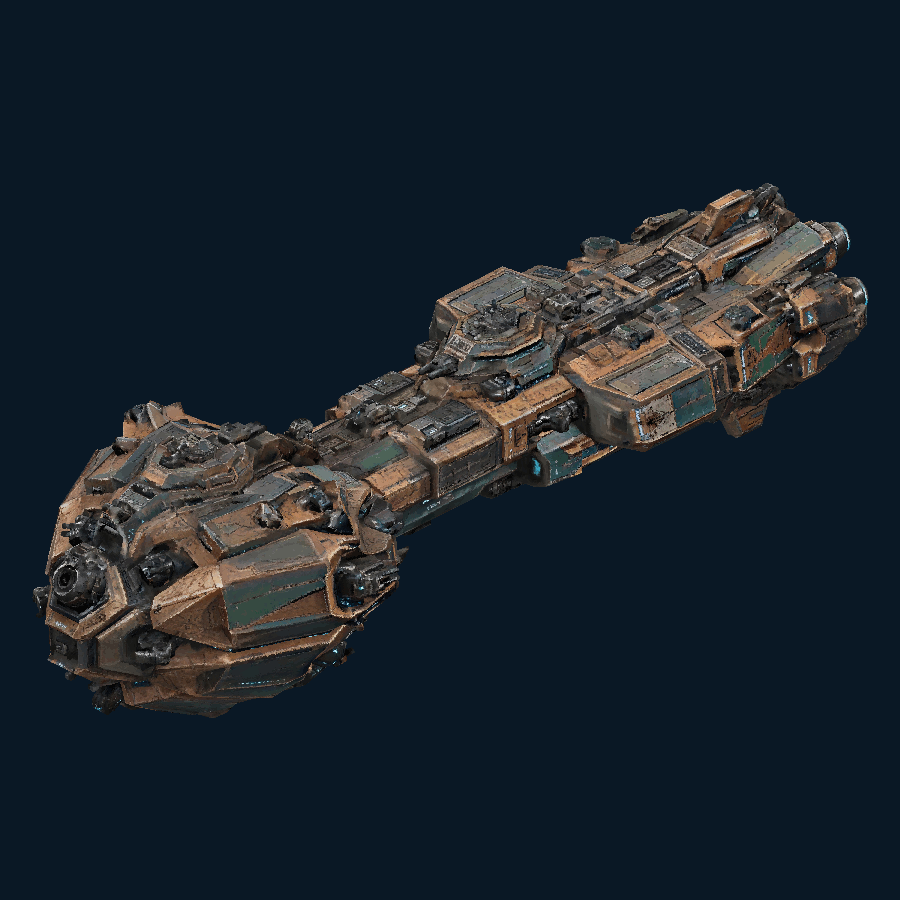
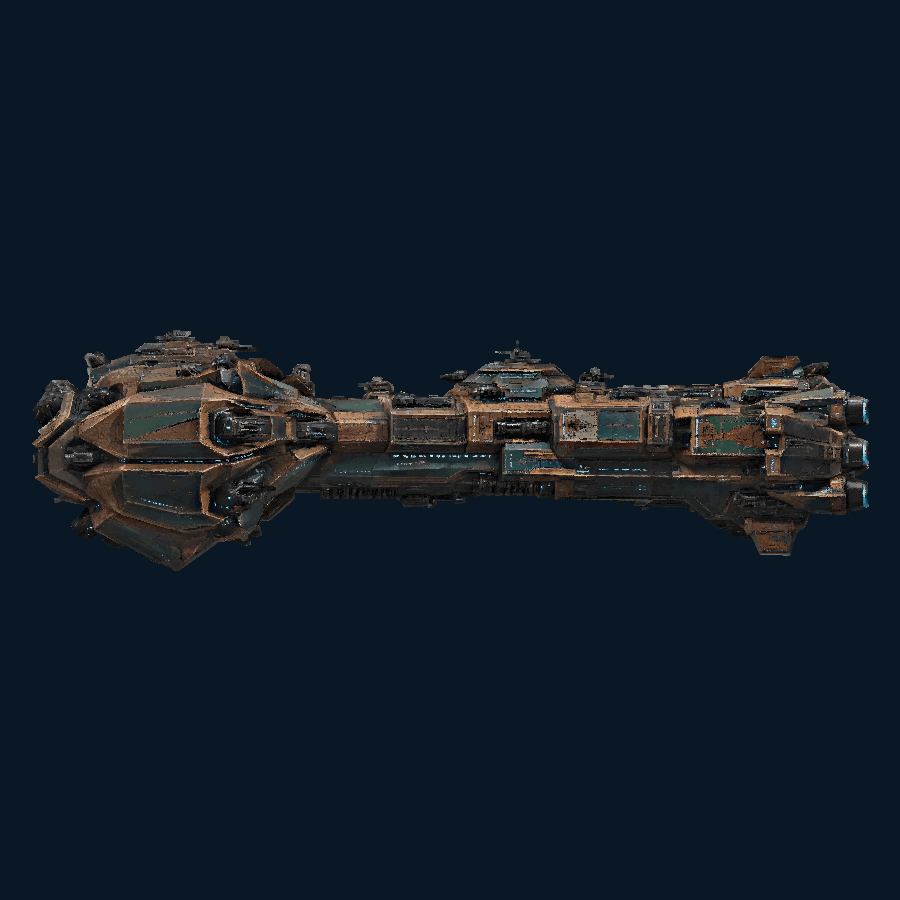
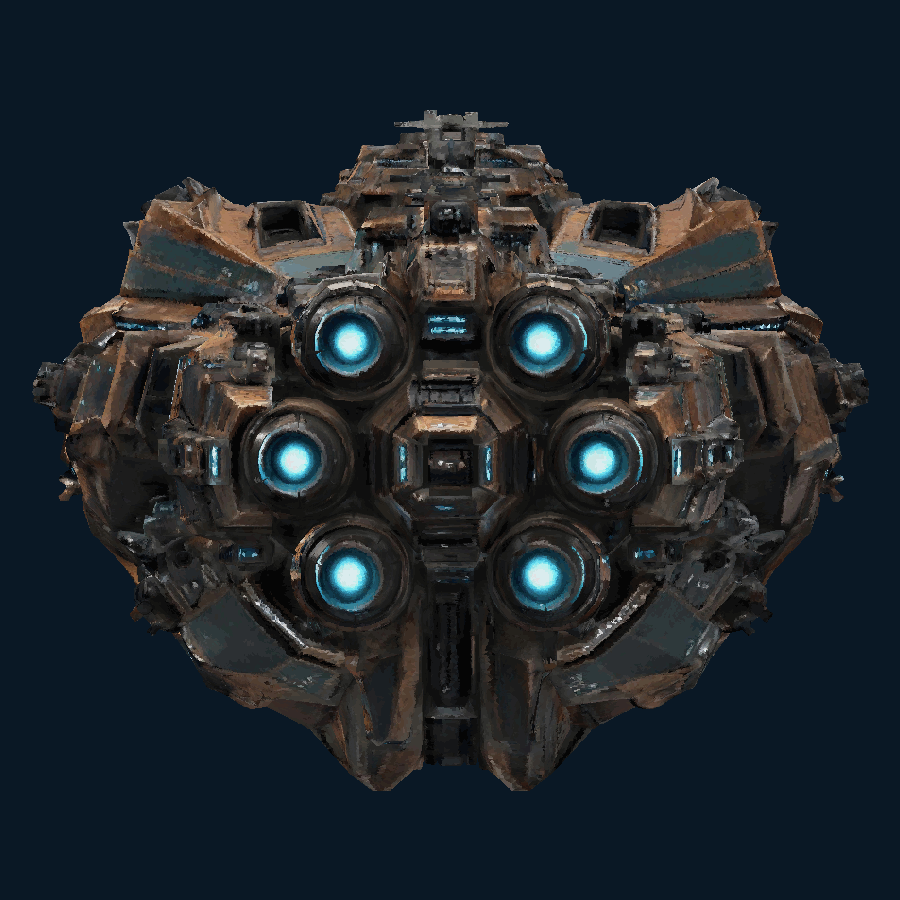
StormHammer Siege Monitor is a Human capital warship built for close siege, kinetic suppression and fictional shield disruption. Heavy forward armor, deep structural valleys and a protected central body surround a dominant siege weapon, while six compact stern drives support deliberate repositioning.
Vessel Profile
Dimensions & Scale
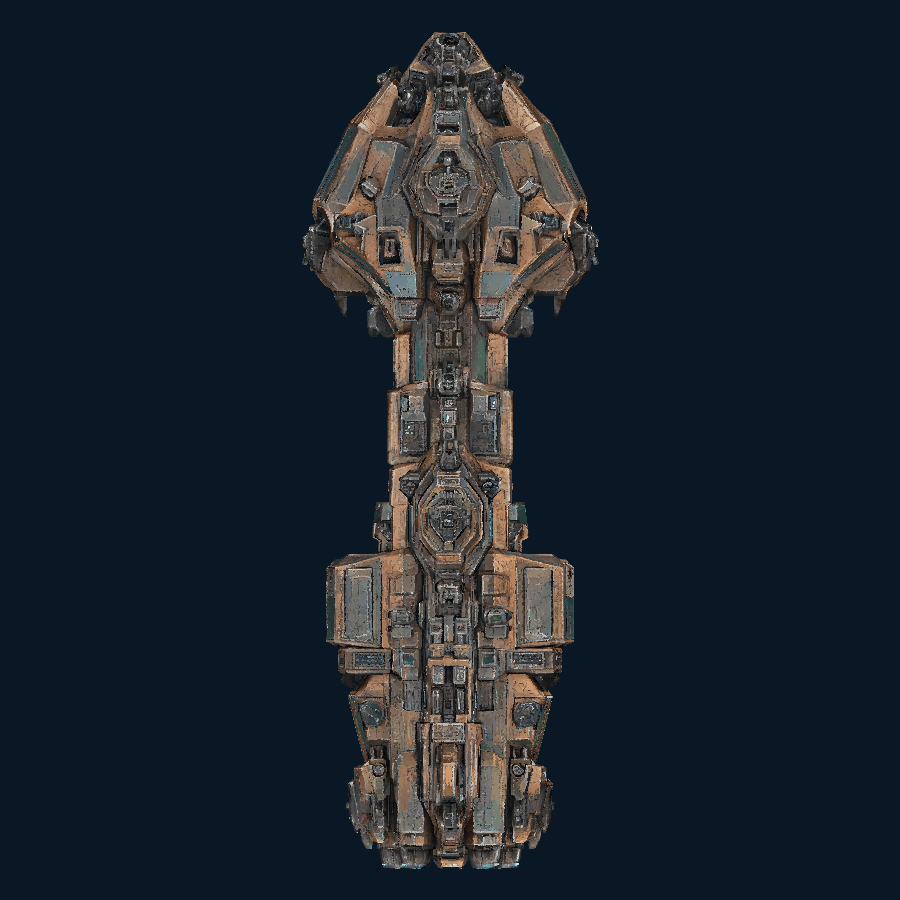
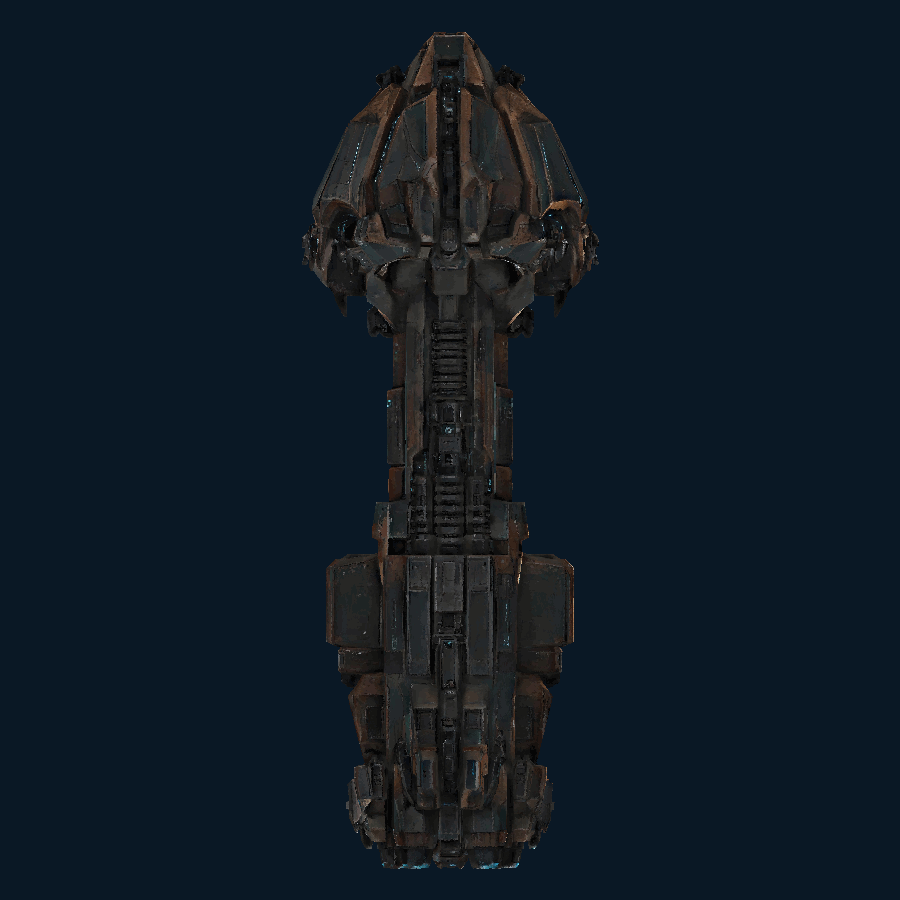
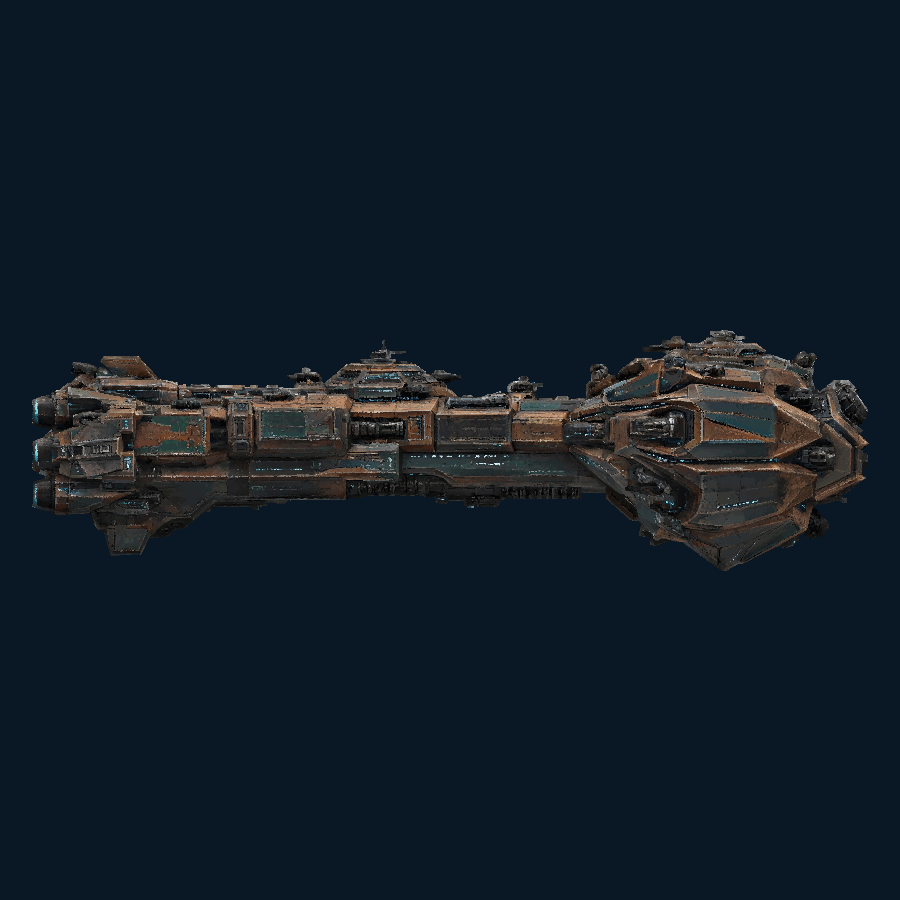
Length 650 m × Width 550 m × Height 200 m. Supplied concept dimensions; width and height follow the stated design envelope rather than a perspective measurement.
Proposed operating mass: approximately 13,000,000 ton (metric tons). Fictional concept estimate based on size, structure, operating environment and reserves; not measured performance.
Weapons & Armament
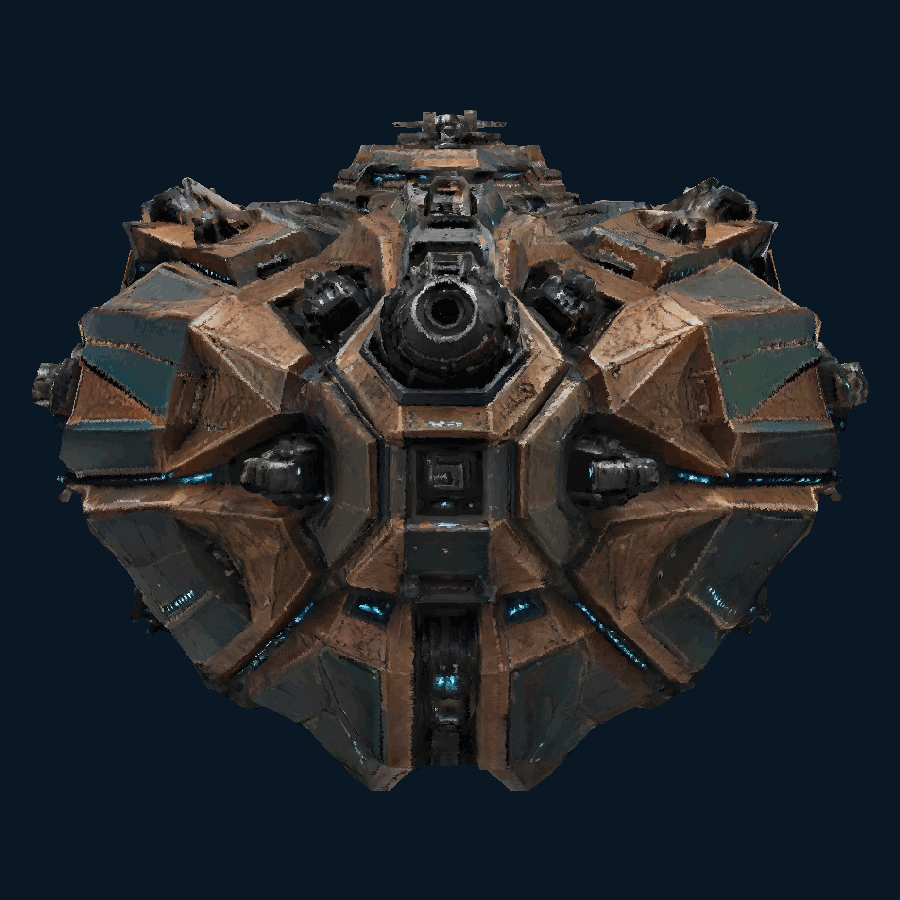
The proposed signature armament is one Heavy Siege Mortar supported by four short heavy beam turrets, two armored bombardment-cell blocks and eight flush point-defense nodes. The primary mount occupies protected internal hull space, while secondary systems remain subordinate. This is a fictional game loadout for sustained capital-scale pressure, with no additional weapon groups assigned.
External Anatomy
A heavy lobed forward mass connects through reinforced structure to the central fighting body and armored stern. Broad faceted flanges and stepped collars organize the armor, with calm valleys reserved for protected working systems. Burnished bronze, patina teal and dark umber define the manufactured hull, while gunmetal marks the weapons and joints.
Functional Architecture
A low protected command section coordinates siege fire, defensive coverage and drive allocation. Proposed isolated power and loading regions support the main weapon, with maintenance access retained through broad structural valleys. Protected sensors and enclosed service routes reduce exposed hardware around the main armor masses.
Technical Specifications
Offensive rating: 88/100 — The proposed signature armament is one Heavy Siege Mortar supported by four short heavy beam turrets, two armored bombardment-cell blocks and eight flush point-defense nodes.
Defensive rating: 83/100 — Heavy armor lobes and reinforced central structure distribute combat loads around the siege system
Mobility rating: 28/100 — Six short, high-torque drive nozzles surround the compact armored stern power body
Tactical cognition rating: 67/100 — A low protected command section coordinates siege fire, defensive coverage and drive allocation
Endurance rating: 70/100 — The large armor and siege mass constrain acceleration and turning
Fleet support rating: 52/100 — Concentrated heavy fire, protected weapon foundations and substantial armor favor deliberate siege engagements
Fleet Role
Siege Monitor. Concentrated heavy fire, protected weapon foundations and substantial armor favor deliberate siege engagements. A clear primary-and-secondary weapon hierarchy supports coordinated pressure without scattering equipment across the outer hull.
Life Between Stars
Six short, high-torque drive nozzles surround the compact armored stern power body. Their role is controlled space repositioning and orientation of the heavy siege mass rather than rapid pursuit. The supplied design establishes space operations; ocean travel, planetary landing and independent interstellar transit are not specified.
Defense Architecture
Heavy armor lobes and reinforced central structure distribute combat loads around the siege system. Recessed weapon foundations protect vulnerable mechanisms, while eight flush defense nodes cover nearby threats. The monitor relies on formation support when facing fast attackers outside its preferred engagement geometry.
Operational Limits
The large armor and siege mass constrain acceleration and turning. Heavy discharge, cooling and drive demand compete for reserves, while damaged loading or power regions can interrupt the main weapon cycle. The monitor is vulnerable during repositioning and cannot maintain maximum attack and defense indefinitely.
Strategic Strengths
Concentrated heavy fire, protected weapon foundations and substantial armor favor deliberate siege engagements. A clear primary-and-secondary weapon hierarchy supports coordinated pressure without scattering equipment across the outer hull.
Capability Assessment
Proposed fictional doctrine profile. Concentrated heavy fire, protected weapon foundations and substantial armor favor deliberate siege engagements. A clear primary-and-secondary weapon hierarchy supports coordinated pressure without scattering equipment across the outer hull. Ratings express intended game roles rather than measured combat performance.
B · 64.7
Fleet-wide concept rating, 0–100; not simulated performance. Specialized strengths do not imply an equally high overall grade. Tactical Cognition describes sensing, coordination and command. Grade is the equal-weight mean: S ≥ 90, A ≥ 75, B ≥ 60, C ≥ 45, D < 45.
Technology Level
T1 — advanced space-capable Human engineering and fictional heavy siege systems; independent phase transit is unspecified
Weapon Class
Proposed W2 — capital-scale siege pressure and localized shield disruption
T0 planetary · T1 system flight · T2 phase travel · T3 limited world engineering. W0 point defense · W1 ship combat · W2 heavy fleet combat · W3 strategic theater systems. Technology and weapon classes are independent of the profile grade.
History & Lineage
Universe lore · authored service history
Origin
Developed for Human fleet operations requiring sustained pressure against defended positions. The design places siege capacity and load-bearing depth ahead of the narrow pursuit geometry used by faster warships.
Lineage & Branch
StormHammer siege-monitor branch, distinguished by heavy forward armor, broad flanges, deep protected valleys and a compact clustered stern drive
Fleet or Unit
Human Fleet — siege formations
Individual History
The Bronze Watch — In this authored service history, a StormHammer holds behind a screening formation while its observers confirm a fortified target. The monitor makes a slow orientation change and brings the main siege system to readiness only after its escorts secure the approach.
The Held Interval — Repeated firing forces a cooling interval. Rather than spend its remaining reserves on a rapid advance, the monitor maintains defensive coverage while nearby ships shift position. The formation resumes pressure after its power and loading regions recover, preserving the siege capability for the next engagement.