
Overview
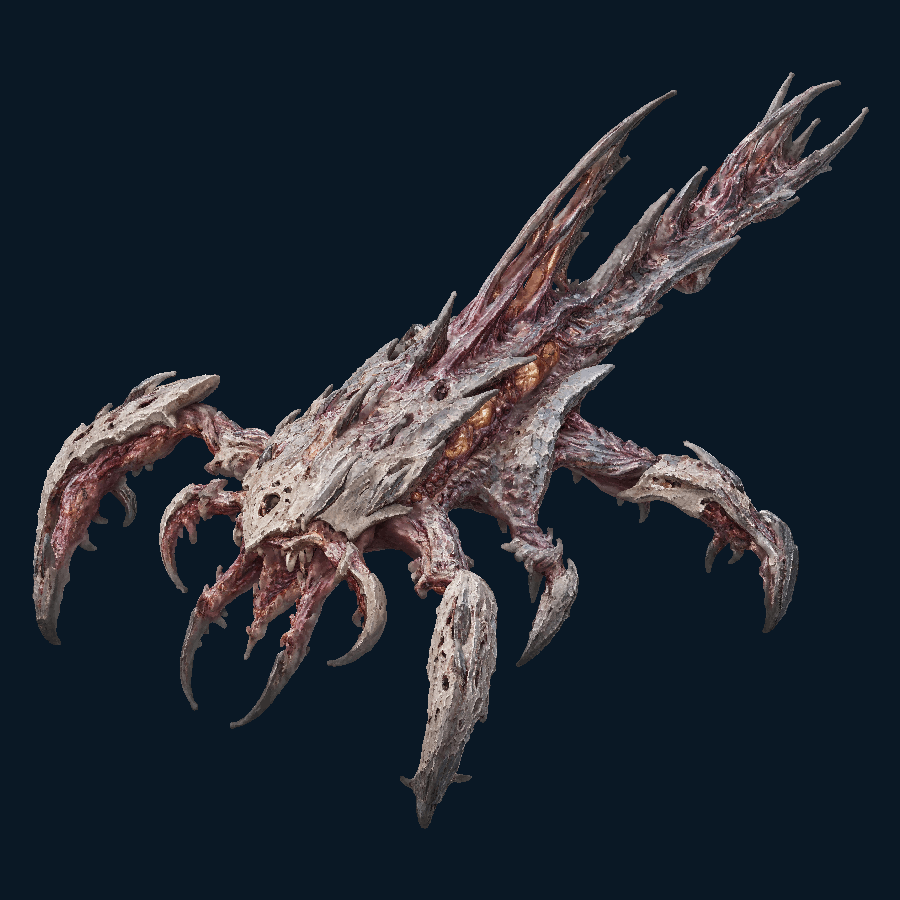
Hullrake Boarder is a Breacher-tier Bugvex surface war organism of the Reefclaw Boarder family. A flattened gripping core skims toward hostile vessels, then anchors to their outer surfaces with reef-hook claws. Grown cutting and seam-prying organs concentrate its attack on opening the target rather than sustained ranged combat.
Organism Profile
Dimensions & Scale
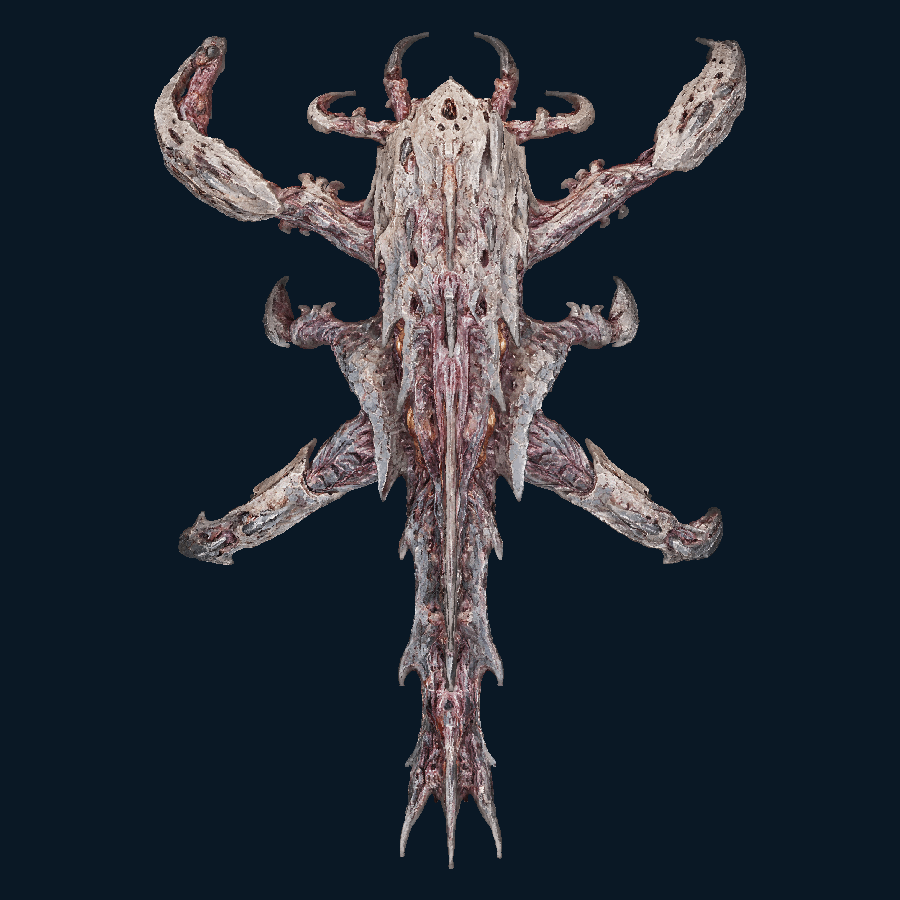
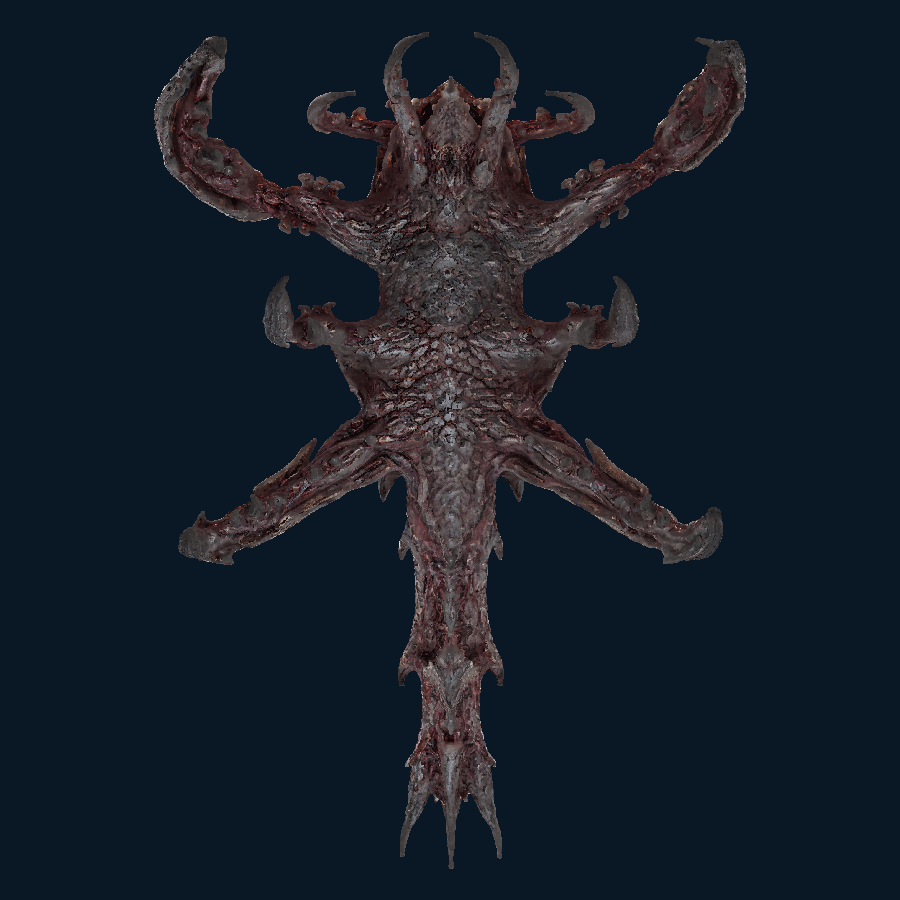
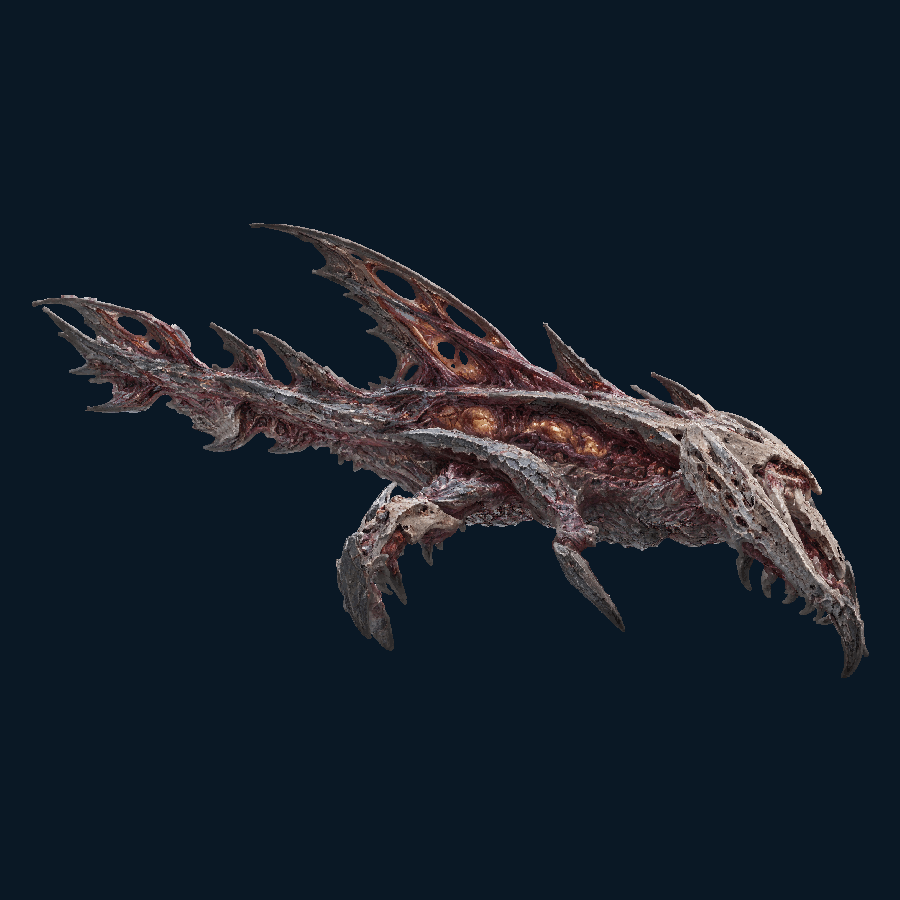
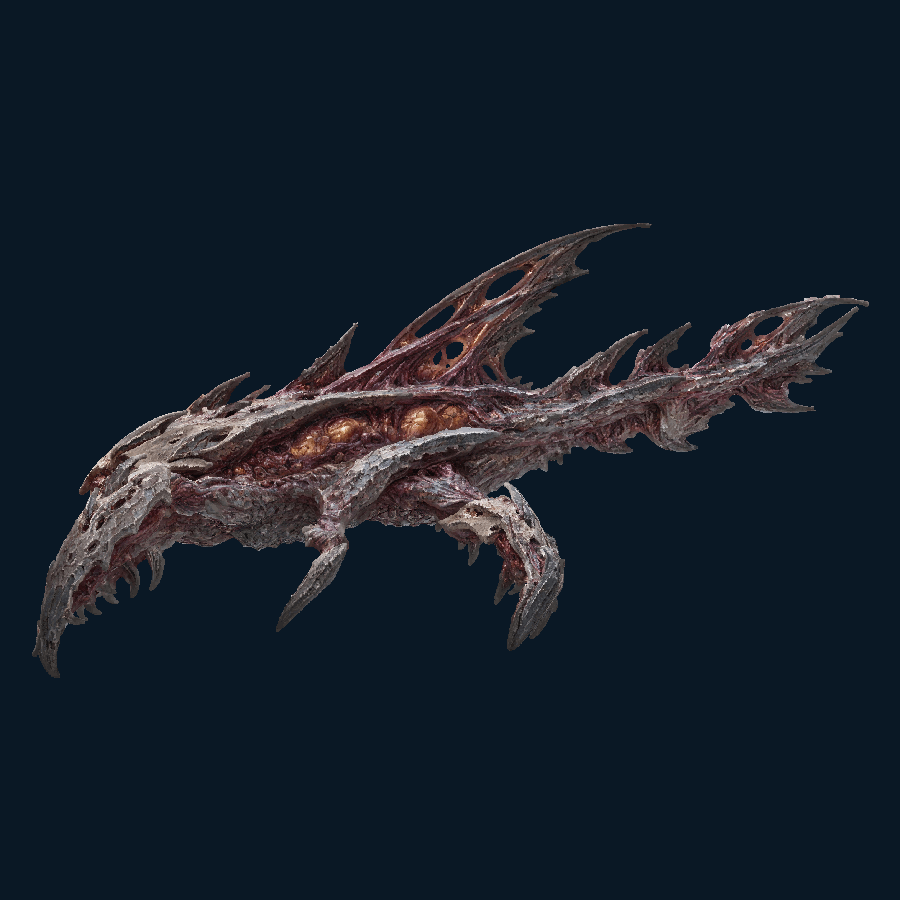
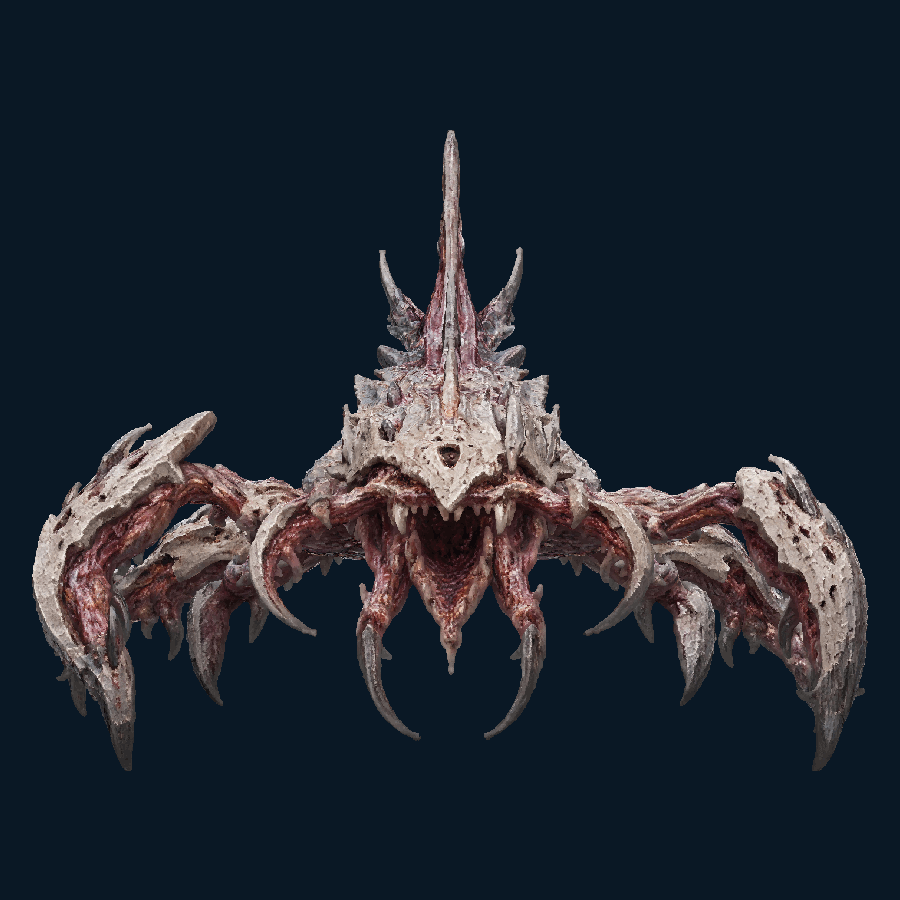
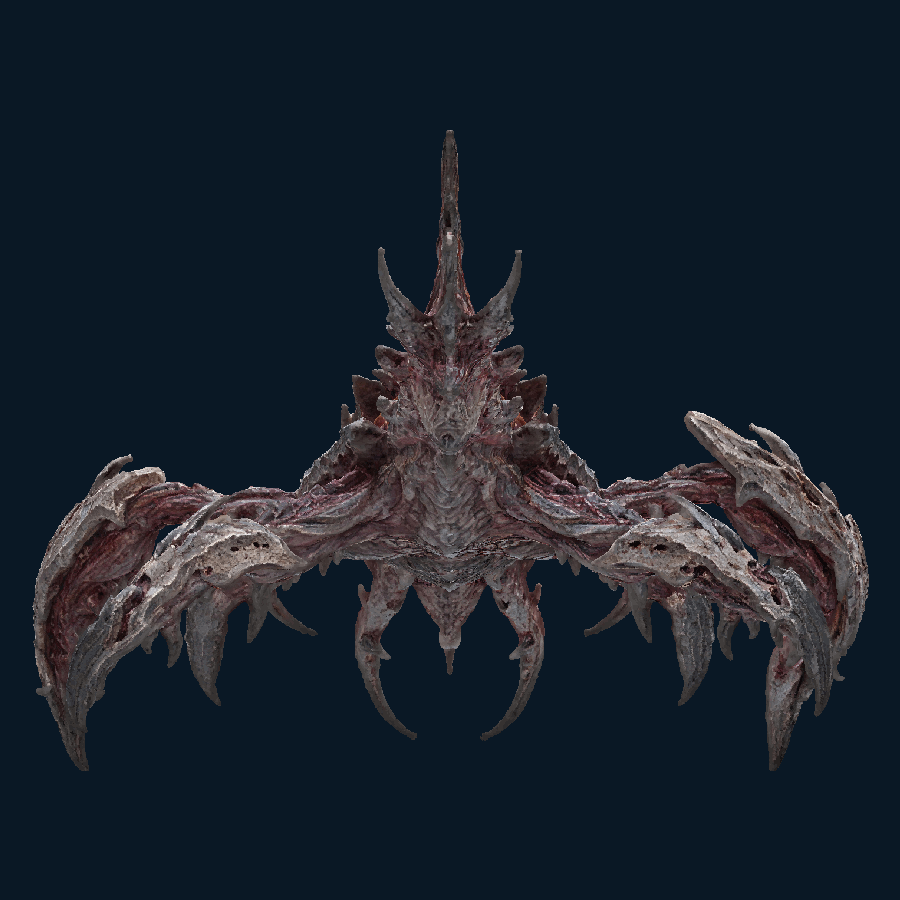
Length 6.75 m × Width 4.8 m × Height 3.7 m. Proposed overall concept dimensions use the midpoint of the supplied 6–7.5 m range. Width and height follow the supplied visual proportions and include extended gripping limbs and dorsal growths; the central gripping body is flatter than this full envelope.
Proposed living combat mass: approximately 18 ton (metric tons). Fictional estimate based on size, appendage spacing, protective growths and biological reserves; not measured performance.
Weapons & Armament
Boarding hooks secure contact while hull-cutting growths and seam-pry organs concentrate force at the attachment region. Corrosive latch tissues support the fictional breaching effect. Each attacking structure grows from reinforced living roots; no separate weapons or carried equipment are assigned.
External Anatomy
A flattened central gripping body connects broad hook-bearing limbs, smaller traction organs and elongated dorsal growths. Hard protective regions overlap vascular tissue around the load-bearing roots. The spread of the appendages gives the organism multiple contact points while leaving open space around its compact core.
Functional Architecture
Proposed distributed traction sensing coordinates the grip of individual limbs. Muscular pressure regions transfer load through the body as the organism changes contact points. Vascular routes nourish cutting growths and latch tissues, while internal reserves support short bursts of skimming, climbing and breaching activity.
Technical Specifications
Offensive rating: 66/100 — Grown cutters and seam-pry organs concentrate attack after attachment
Defensive rating: 42/100 — Localized protective growths shelter the gripping core but leave joints exposed
Mobility rating: 78/100 — Fast surface approach transitions into clamped climbing over a target
Tactical cognition rating: 61/100 — Distributed traction sensing coordinates changing contact points
Endurance rating: 39/100 — Short intense assaults consume latch-tissue and muscular reserves
Fleet support rating: 45/100 — Breaches create opportunities for nearby marine assault organisms
Battlefield Role
A surface hull-climber and boarding predator specialized in tearing openings into hostile vessels. Hullrake supports a marine assault by establishing contact and applying local breaching pressure. It depends on reaching the target and holding its position rather than contributing long-range fire.
Maritime Operations
Fast low skimming provides the approach, followed by a leap onto the target and clamped climbing movement. Reef-hook claws and traction organs redistribute grip across the contacted surface. Its assigned domain is sea-surface warfare; leaping does not establish atmospheric flight, and sustained deep-water operation is not specified.
Defense Architecture
Low approach posture and localized protective growths shield the central body. Multiple gripping points reduce dependence on a single attachment, while thick anatomical roots support force transfer during contact. Exposed joint tissue remains less protected than the hard growths.
Operational Limits
The organism must make physical contact before its main breaching organs are useful. Rough seas, sudden target movement and unsuitable contact surfaces can interrupt attachment. Damage to gripping limbs reduces purchase, while cutting and corrosive tissues consume finite biological reserves. It lacks sustained ranged fire and requires recovery between demanding assaults.
Strategic Strengths
A combined skimming, gripping and climbing anatomy allows a continuous transition from surface approach to hull attachment. Concentrated cutting organs and distributed contact points suit localized breaches while preserving a compact central body.
Capability Assessment
Proposed fictional doctrine profile: strong close-contact breaching and surface approach mobility, balanced by limited ranged capability and modest endurance. Ratings describe the intended boarding role rather than measured performance.
C · 55.2
Fleet-wide concept rating, 0–100; not simulated performance. Specialized strengths do not imply an equally high overall grade. Tactical Cognition describes sensing, coordination and command. Grade is the equal-weight mean: S ≥ 90, A ≥ 75, B ≥ 60, C ≥ 45, D < 45.
Technology Level
T0 — advanced aquatic biological warfare, integrated traction organs and living breaching tissues
Weapon Class
Proposed W1 — localized hull breaching and close-contact boarding attack
T0 planetary · T1 system flight · T2 phase travel · T3 limited world engineering. W0 point defense · W1 ship combat · W2 heavy fleet combat · W3 strategic theater systems. Technology and weapon classes are independent of the profile grade.
History & Lineage
Universe lore · authored service history
Origin
Purpose-grown to give Bugvex marine formations a dedicated hull-opening organism. Its anatomy combines contact stability and concentrated breach force without adopting the structure of a conventional ship or a machine carried by an animal.
Lineage & Branch
Reefclaw Boarder family, Breacher variant, within the Bugvex Marine Warforms surface branch. Flattened gripping bodies, reef-hook claws and clamped movement define the shared family traits.
Brood or Swarm
Bugvex — marine surface assault broods
Individual History
The Broken Wake — In this authored service history, a Hullrake approaches an isolated hostile vessel while larger marine organisms draw attention away from the waterline. The boarder makes contact but loses one grip as the vessel turns, forcing it to shift weight through its remaining limbs.
The Held Margin — With its reserves falling, Hullrake maintains a brief opening for the following brood and then releases its hold. It returns to sheltered water to recover damaged latch tissues. The encounter highlights the Breacher variant’s reliance on timing, contact stability and support from the surrounding formation.