
Overview
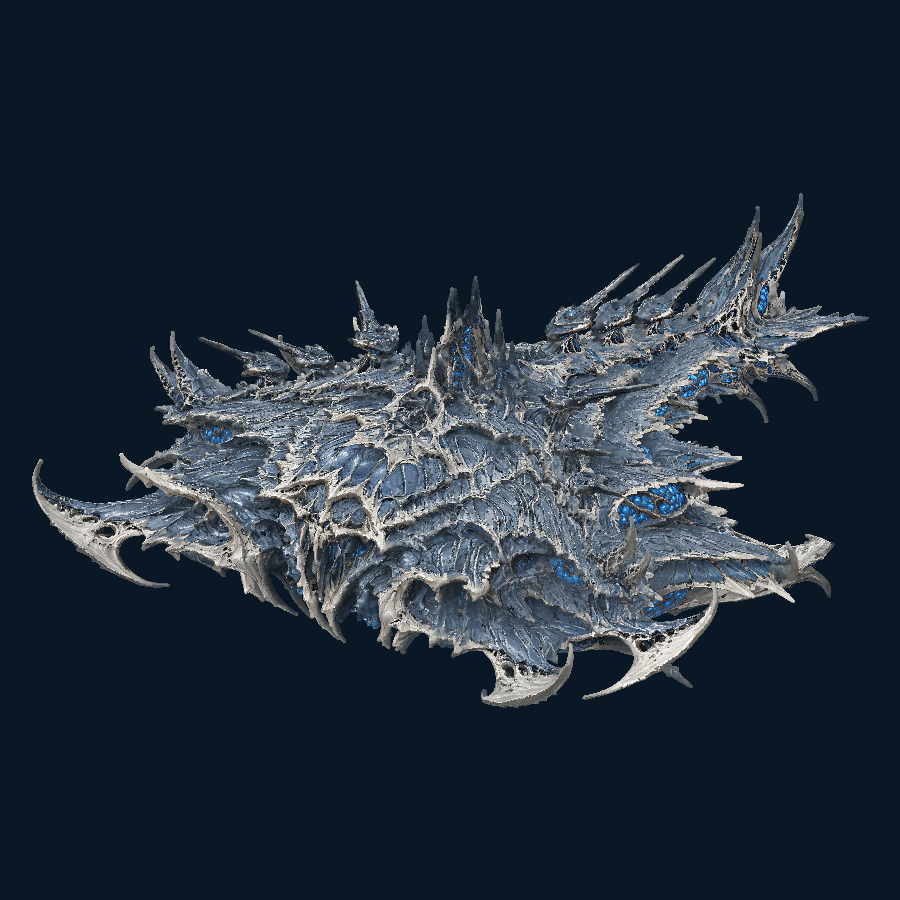
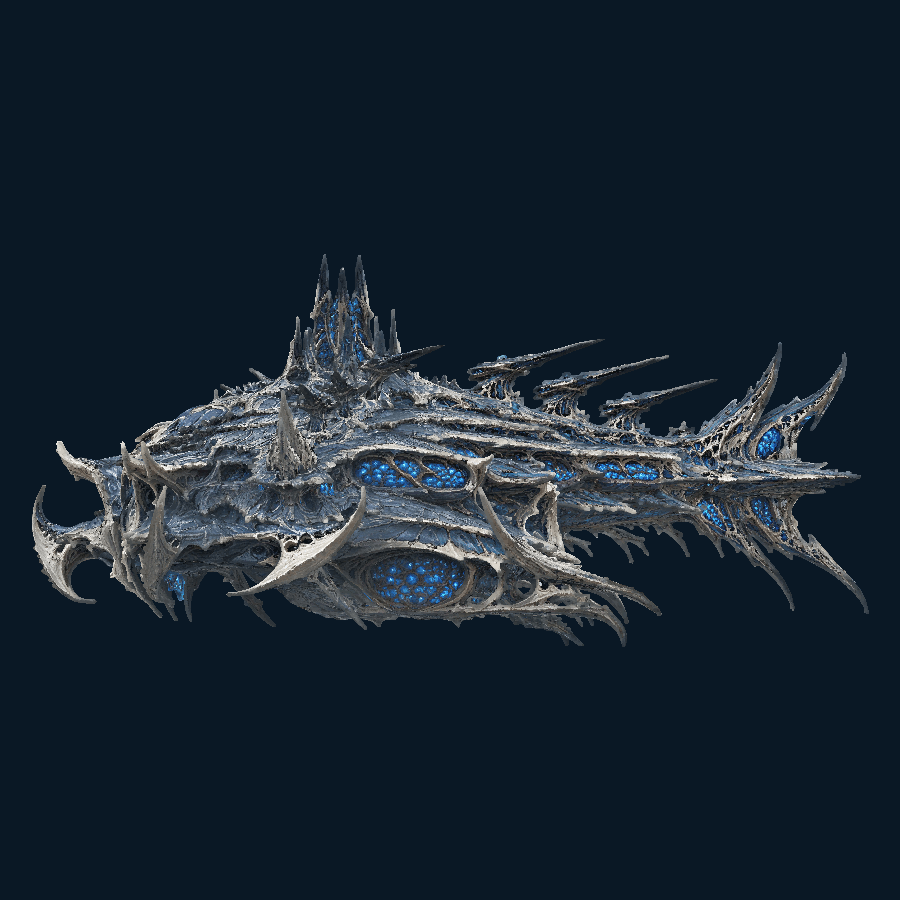
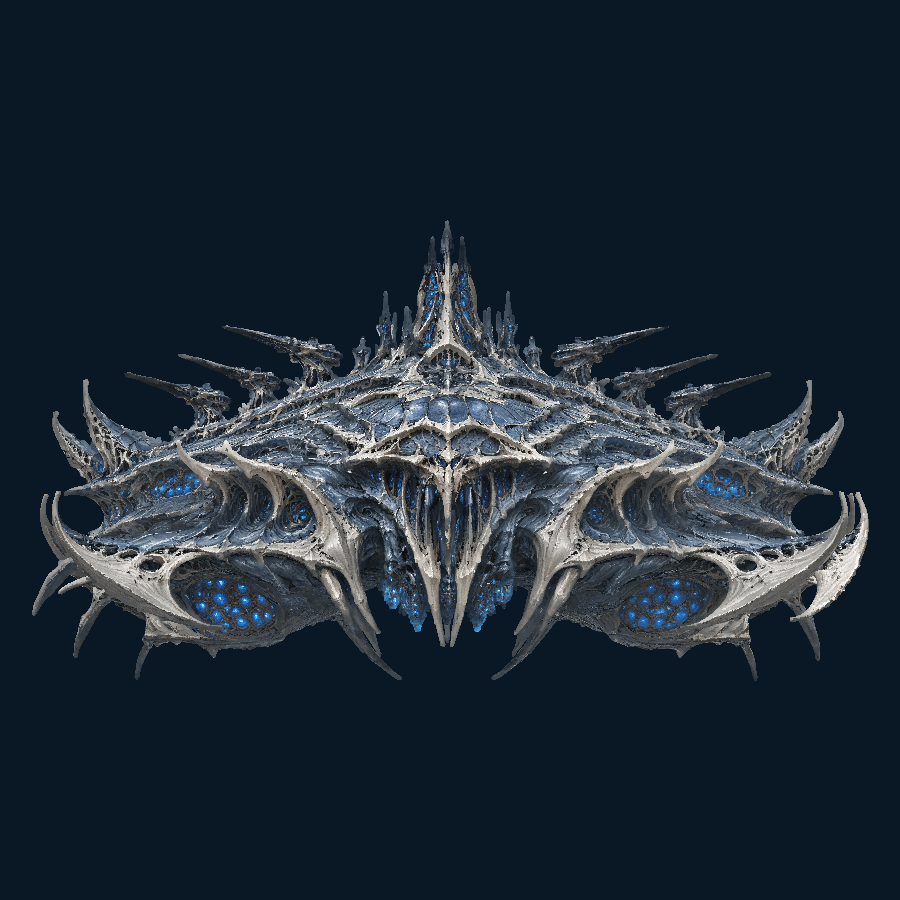
BMS-100 Stormwake Sovereign is a highest-order surface war organism of the Bugvex Marine Warforms. A low-floating living fortress of the Stormwake Colossus family, it combines armored ridges, brood chambers and specialized combat organs into one continuous body. Its slow advance establishes a mobile center of fire support and swarm command.
Organism Profile
Weapons & Armament
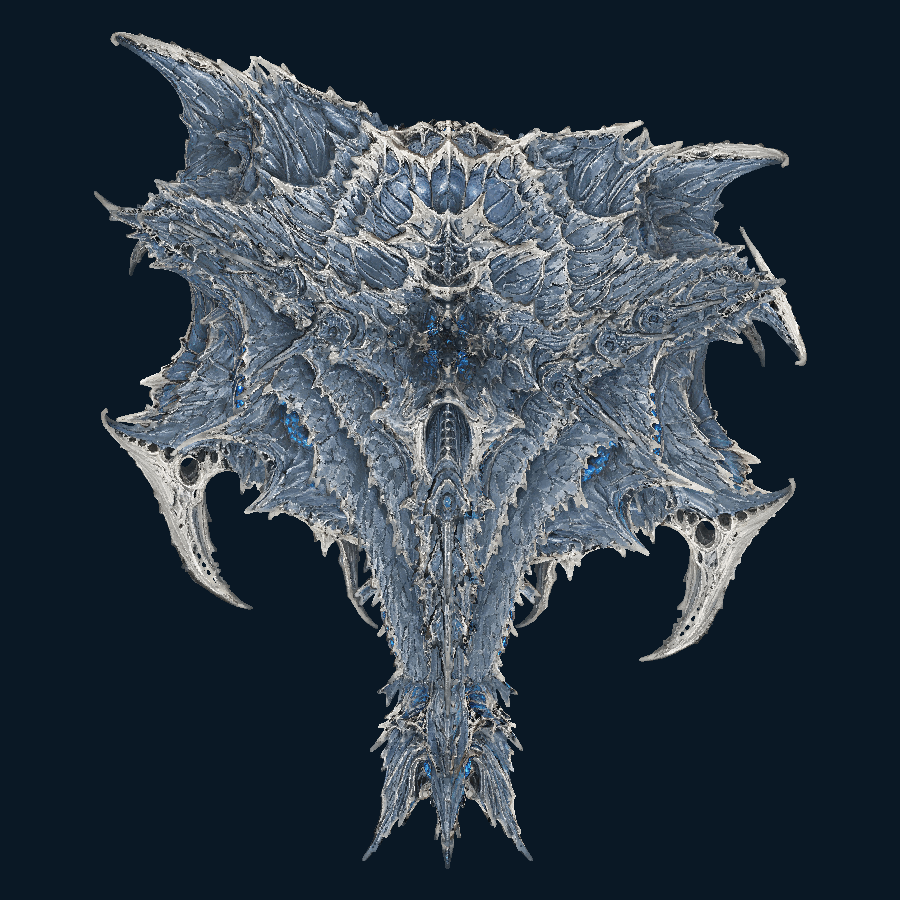
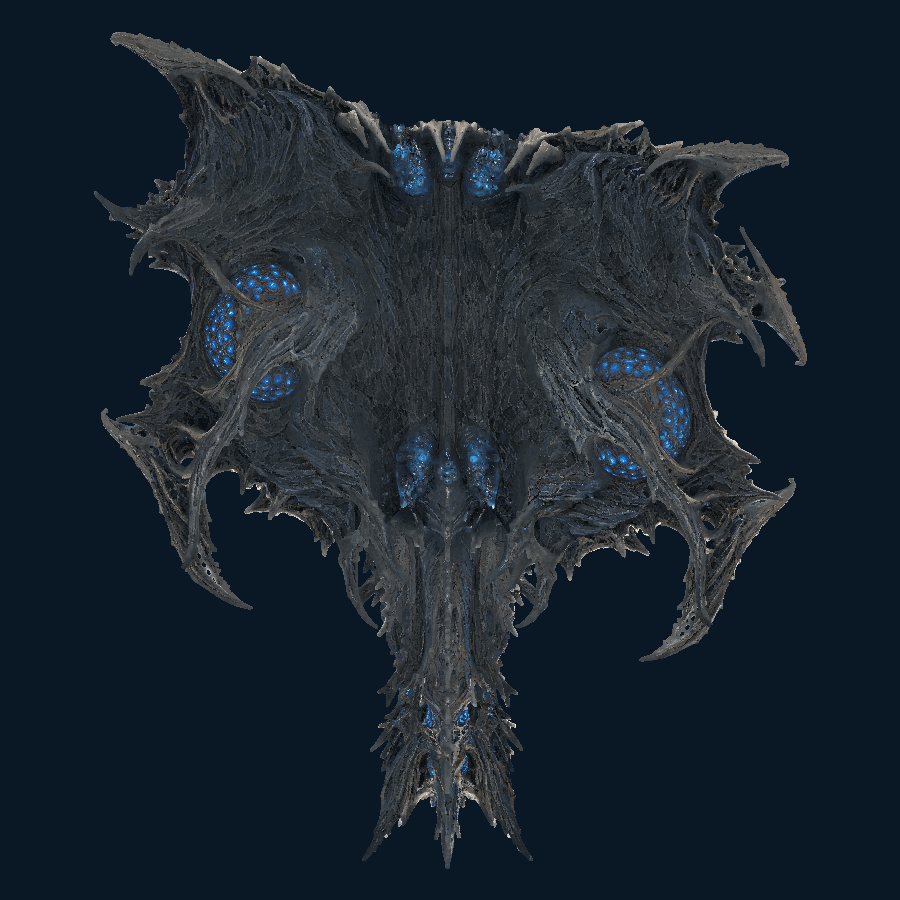
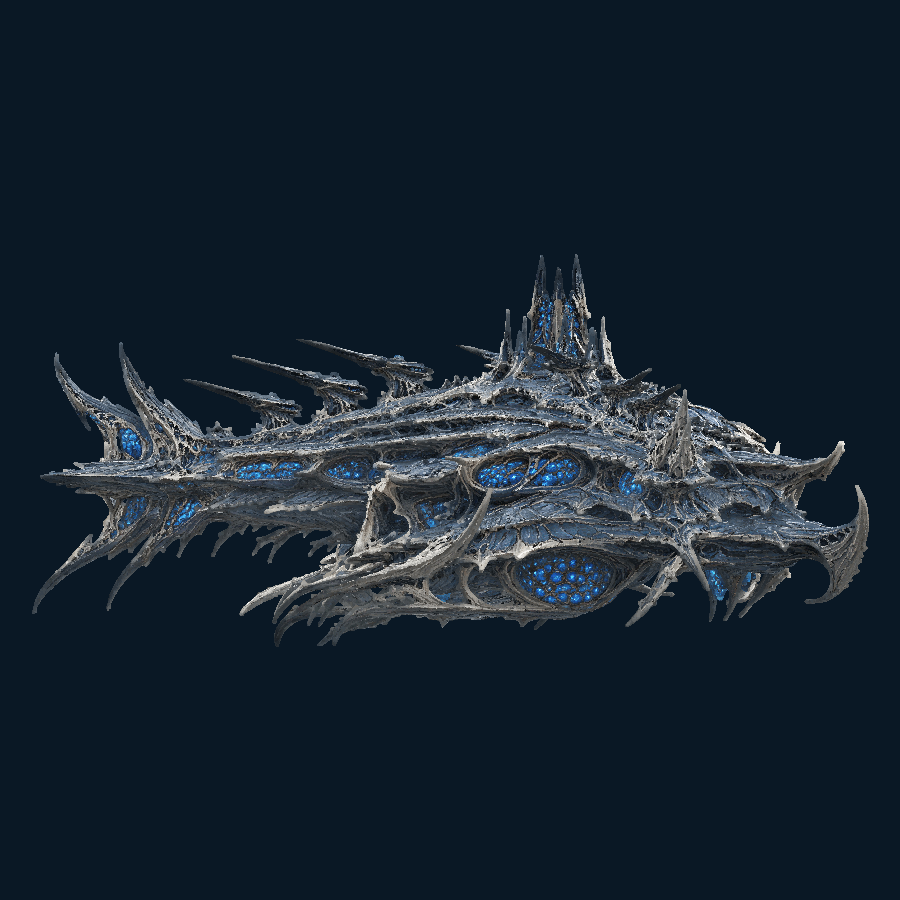
Heavy spine batteries are grown into the dorsal ridges and discharge hardened biological projectiles. Distributed support-fire organs cover nearby approaches, while shock tissues deliver short-range defensive pulses through the surrounding water. Brood chambers release subordinate warforms. Every weapon is living anatomy supplied by the organism, rather than equipment attached to a hull.
Dimensions & Scale
Length 110 m × Width 78 m × Height 32 m. Authored representative adult dimensions within the family's approximate 80–110+ m scale; width includes lateral armor and height spans the deepest ventral tissue to the tallest dorsal spine. These are fictional setting dimensions, not measurements of the model.
External Anatomy
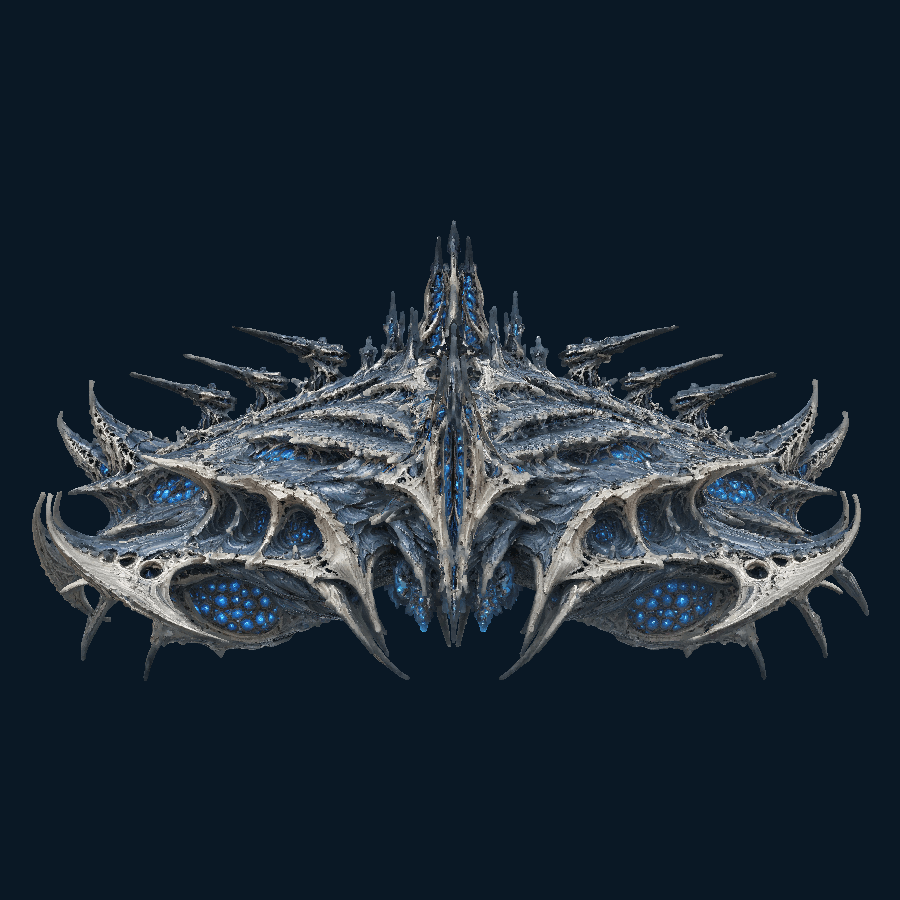
A broad, buoyant body carries overlapping armored ridges, hooked perimeter growths and recessed organ districts. The central mass supports command tissues; lateral recesses shelter brood systems and shock organs. Load-bearing tissue connects every district into a single living structure without reproducing a conventional ship or recognizable terrestrial animal body plan.
Functional Architecture
Compartmentalized buoyancy tissues maintain the low surface posture. Distributed circulatory routes supply the weapon districts and brood chambers, while linked neural nodes coordinate sensing, movement and offspring release. Damaged districts can be biologically isolated, but regeneration competes with combat activity for nutrients.
Technical Specifications
Offensive rating: 93/100 — Heavy spine batteries and integrated support fire
Defensive rating: 94/100 — Massive layered ridges and redundant tissue districts
Mobility rating: 28/100 — Slow displacement travel with limited turning agility
Tactical cognition rating: 88/100 — Distributed command tissues coordinating nearby marine broods
Endurance rating: 90/100 — Large metabolic reserves supported by secure feeding routes
Fleet support rating: 92/100 — Protected brood release and sustained local swarm coordination
Battlefield Role
Highest-order surface warfare anchor for the Bugvex Marine Warforms. It supports coastal assaults, holds marine approach corridors and sustains lesser warforms around a moving command center. Its authority belongs to the surface branch, not to the entire interstellar swarm.
Maritime Operations
Slow heavy-displacement travel uses coordinated ventral muscular waves and water-expulsion organs. The advancing body produces enormous wakes and turns gradually. Active buoyancy tissues preserve stable firing and brood-release conditions. This organism operates at the sea surface; it is neither a deep-diving warform nor independently spaceflight-capable.
Defense Architecture
Massive ridges distribute impacts across layered armor. Recessed organs and redundant tissue pathways preserve function after localized injury. Sacrificial outer growths protect brood apertures and command nodes, while shock organs discourage close attack. Heavy protection does not make exposed sensory tissue or underside circulation invulnerable.
Operational Limits
Low speed and a wide turning radius make withdrawal difficult. Shallow passages and confined harbors can trap its broad body. Sustained spine fire, brood production and tissue repair draw on the same metabolic reserves. Disrupted command tissues weaken swarm coordination, and an isolated Sovereign cannot replace its lost brood indefinitely.
Strategic Strengths
Durable surface presence, integrated heavy fire, sustained brood support and coordinated local command. The Sovereign is most effective when smaller warforms secure its flanks and feeding routes while it holds a contested marine corridor.
Capability Assessment
A fortress-and-command profile with exceptional protection, heavy organic armament and high support capacity. Its low mobility is a deliberate tradeoff: the organism advances as the center of an operation rather than pursuing scattered targets.
A · 80.8
Fleet-wide concept rating, 0–100; not simulated performance. Specialized strengths do not imply an equally high overall grade. Tactical Cognition describes sensing, coordination and command. Grade is the equal-weight mean: S ≥ 90, A ≥ 75, B ≥ 60, C ≥ 45, D < 45.
Technology Level
T0 advanced planetary war biology: integrated buoyancy, distributed command tissues and purpose-grown maritime combat organs
Weapon Class
W2 heavy surface-theater organic batteries, supported by local shock defense and brood release
T0 planetary · T1 system flight · T2 phase travel · T3 limited world engineering. W0 point defense · W1 ship combat · W2 heavy fleet combat · W3 strategic theater systems. Technology and weapon classes are independent of the profile grade.
History & Lineage
Universe lore · authored service history
Origin
Grown in the pressure-sheltered Veyr Basin nurseries after earlier surface broods repeatedly lost their command nodes during prolonged coastal sieges
Lineage & Branch
Stormwake Colossus family / Sovereign variant / BMS-100 marine record. Its lineage unites armored-reef load bearing, integrated colonial organ systems and surface-fortress doctrine.
Brood or Swarm
Bugvex Marine Warforms / Surface Warfare Branch / Veyr Basin Sovereign Brood
Individual History
The first recorded Stormwake Sovereign matured during the War of the Broken Shoals. Earlier colossi could hold a firing line, but their subordinate broods exhausted themselves crossing exposed water between separate command organisms. The Sovereign lineage brought brood support and command tissues beneath the same armored ridges.
At the Siege of the Drowned Causeway, BMS-100 advanced through the outer breakers while its spine districts suppressed the fortified crossing. Rather than chase retreating defenders, it remained over the approach channel and released successive broods into the sheltered wake. The crossing fell only after the organism had maintained that living corridor through three tidal reversals.
The victory exposed a weakness. Simultaneous brood release and prolonged support fire depleted the tissues needed for armor renewal. During its return to Veyr Basin, damaged outer ridges shed faster than they could regrow. Later maturation cycles strengthened the separation of metabolic reserves and imposed alternating fire-and-release rhythms.
Stormwake Sovereign now serves as the anchor of the Stillwater Convergence, a campaign to reconnect isolated marine nurseries. Its advance is preceded by survey broods that test channels and feeding grounds; the giant follows only when a route can sustain the living force behind it.