
Overview
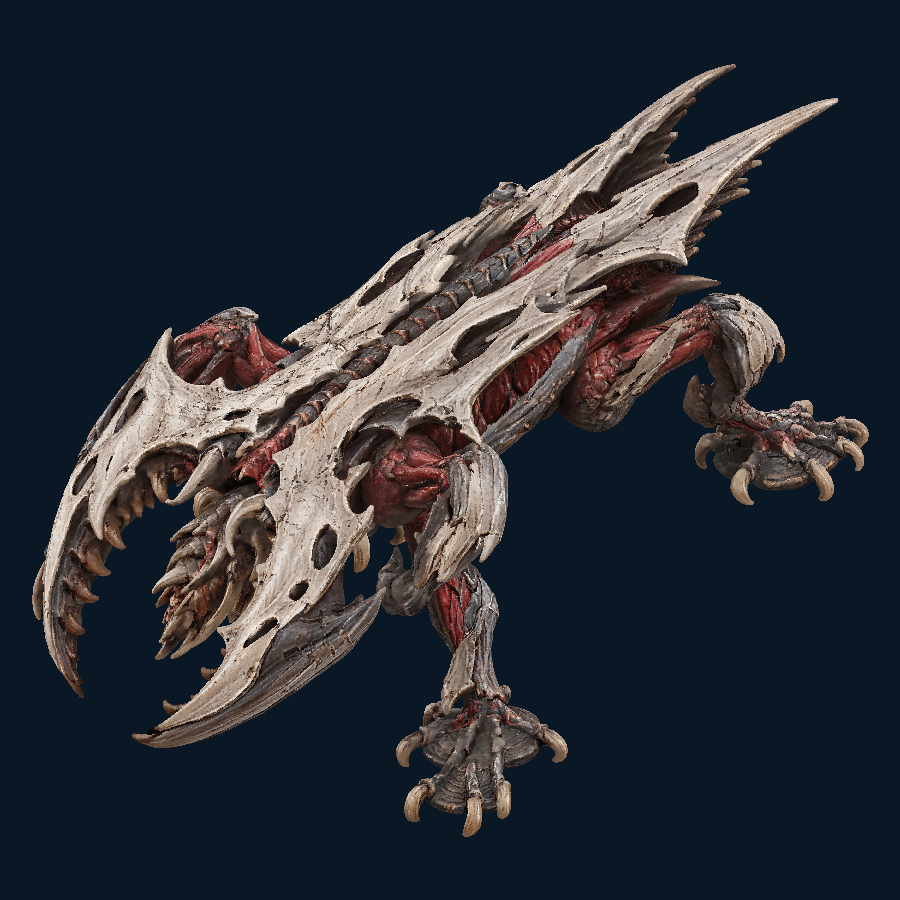
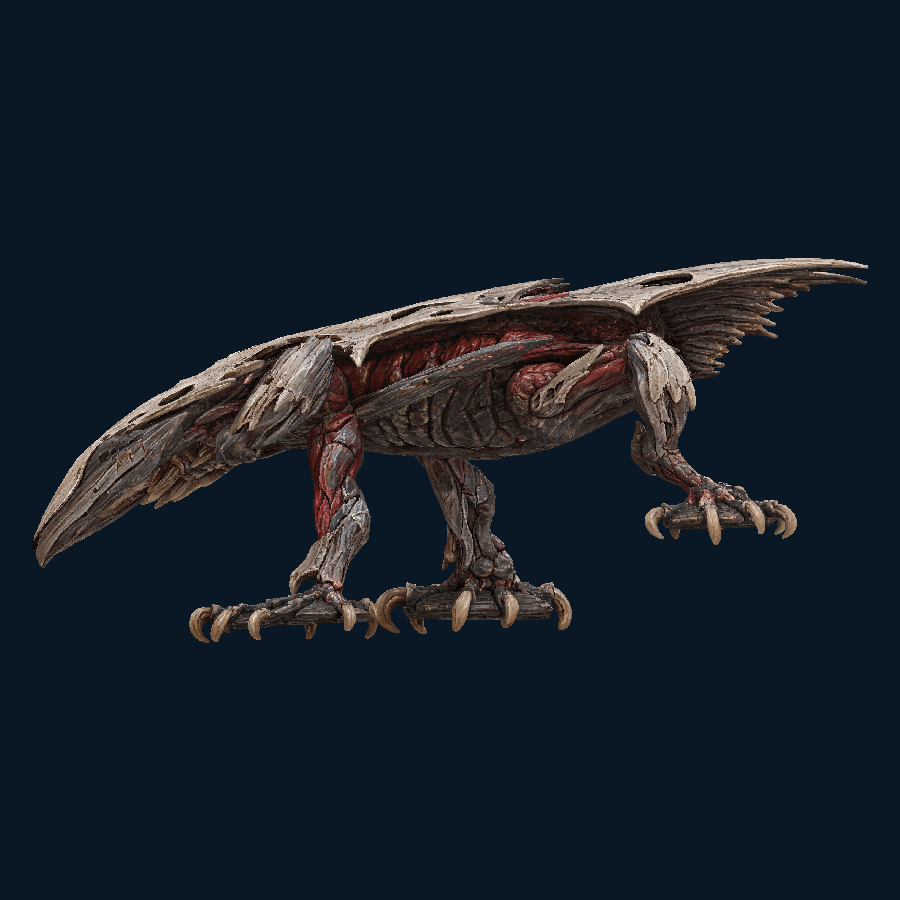
The MMW Apex Latchbeast is a Bugvex elite assault organism specialized in hunting heavy vehicles. Approximately 6–8 m in size, it rapidly closes distance, attaches to armored targets and tears into vulnerable sections using fully biological weapon organs.
Organism Profile
Dimensions & Scale
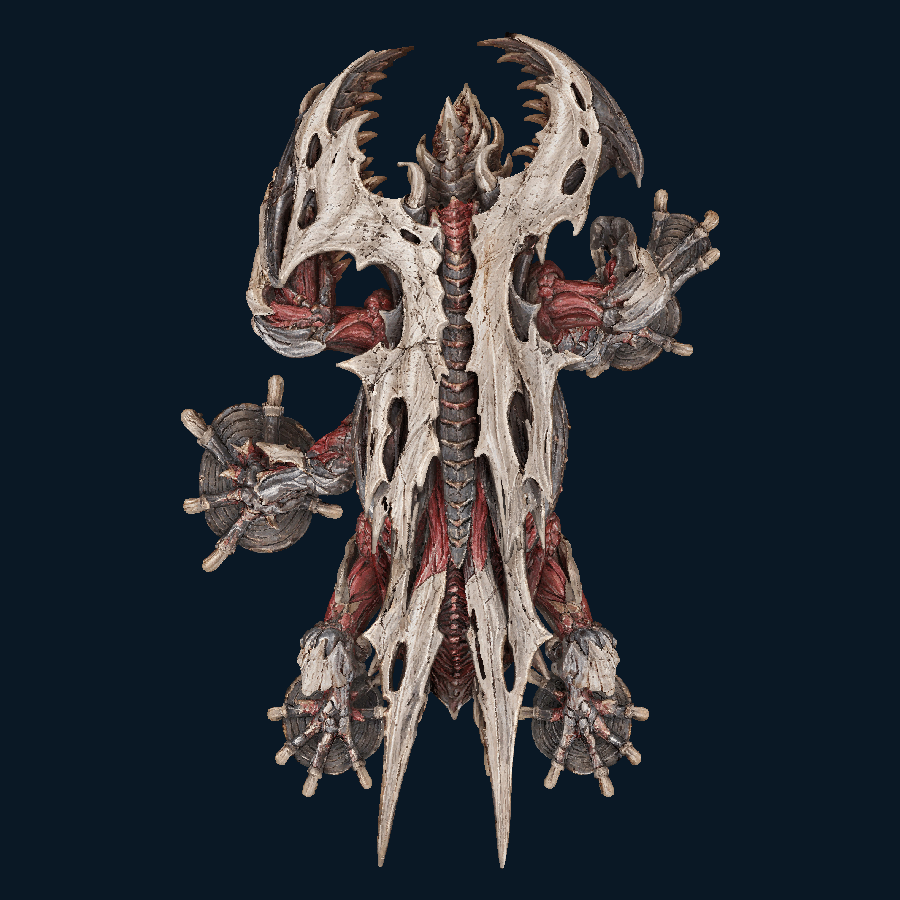
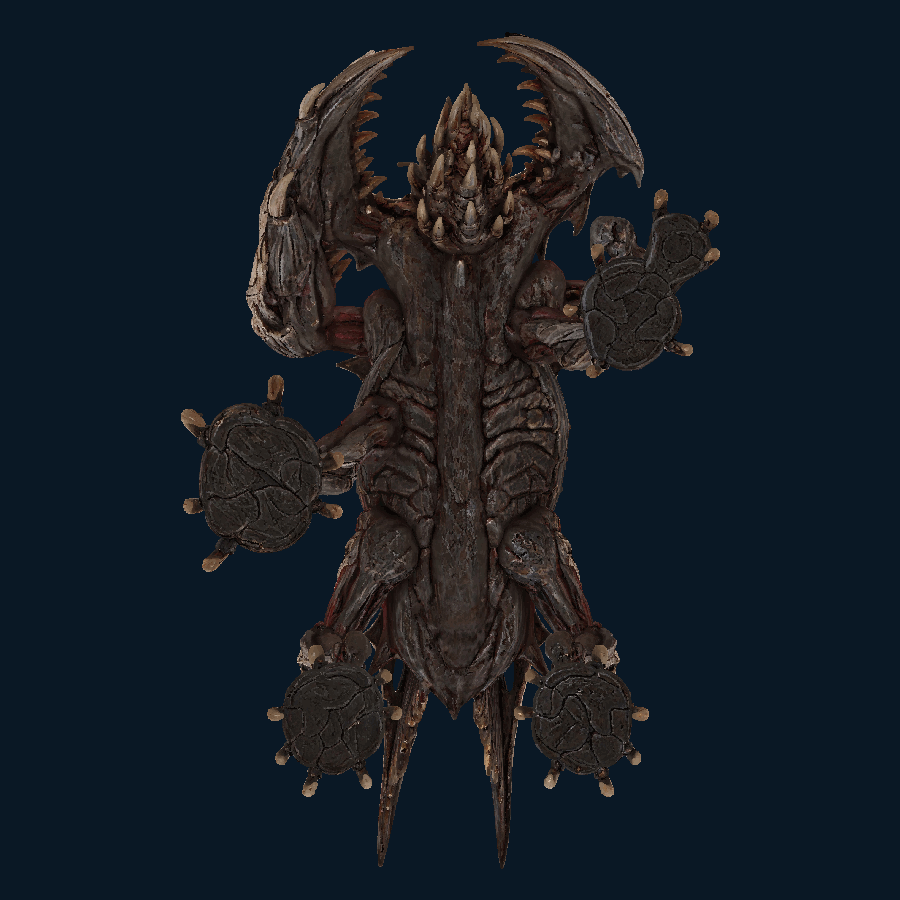
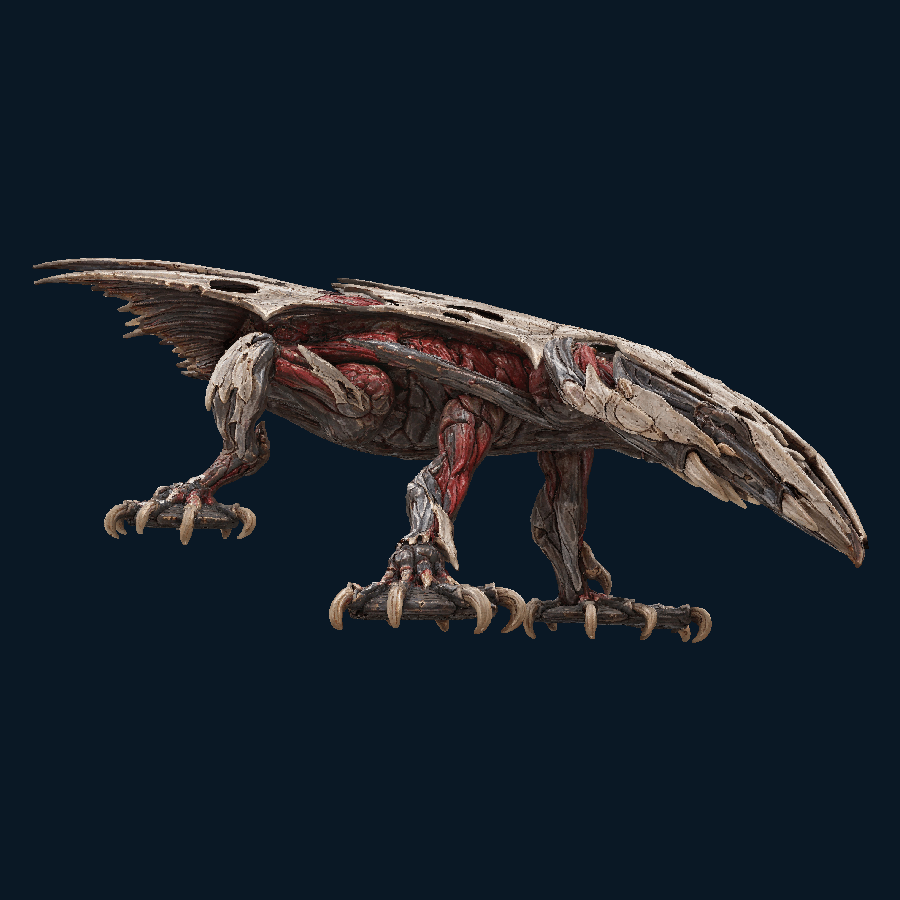
Length 7 m × Width 4.5 m × Height 3.2 m. Proposed reference dimensions for a typical specimen, using 7 m as the midpoint of the approximately 6–8 m size range. At matching proportions, that range corresponds to widths of approximately 3.9–5.2 m and heights of 2.8–3.7 m. Overall span includes the extended gripping limbs and shell projections in the illustrated stance.
Weapons & Armament
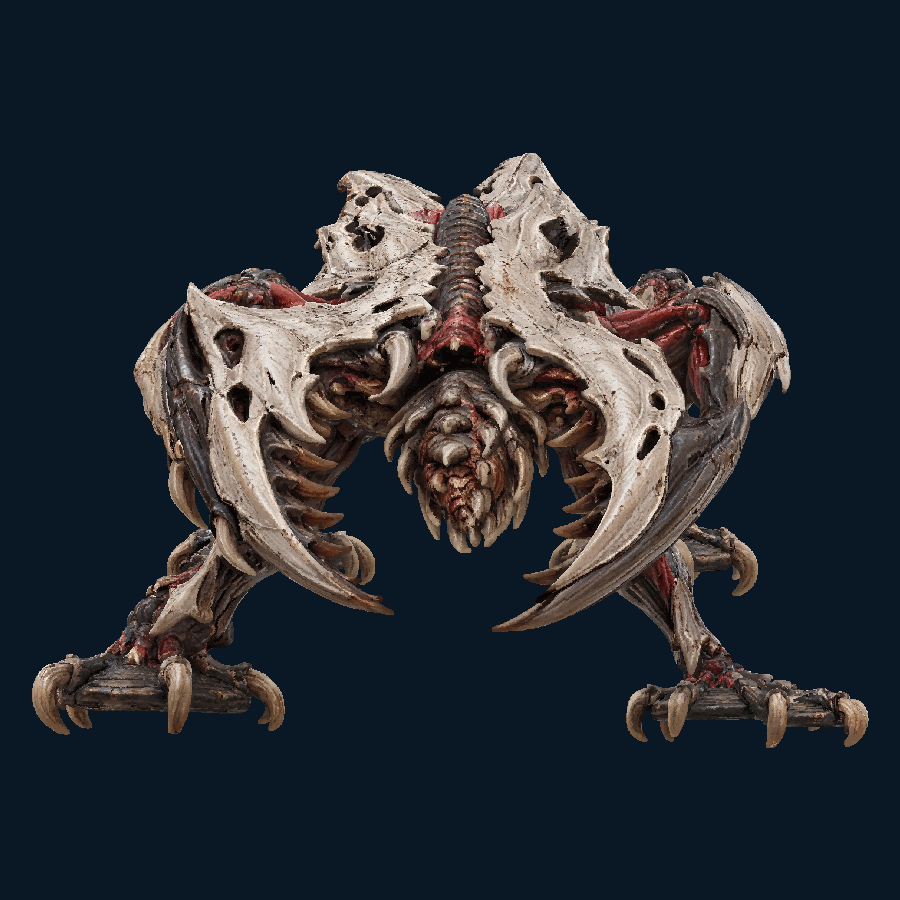
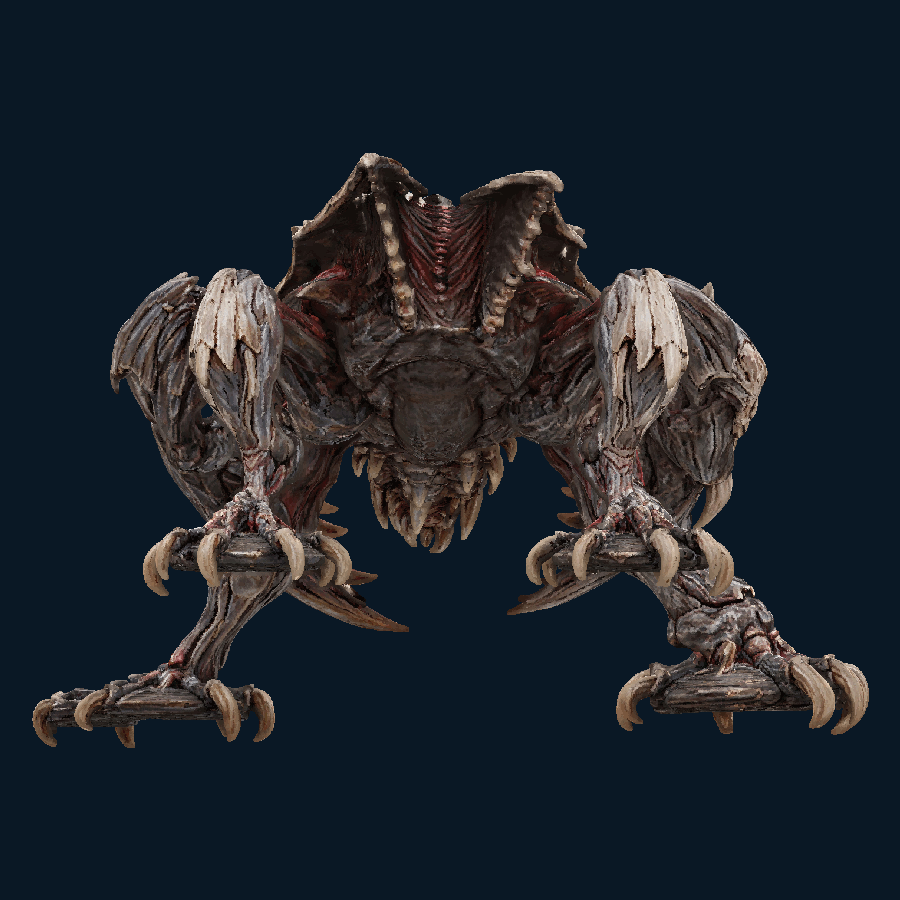
Adhesive hooks establish purchase on an armored target, while shell-cutting organs open vulnerable seams. A protected central boring core then attacks the exposed section. Gripping, cutting and boring structures are grown biological organs integrated with the body.
External Anatomy
A flattened, clamp-like body brings several gripping pads into contact with the target. Pale overlapping shell structures protect the central body and cutting surfaces, while muscular roots connect the gripping limbs to the core. The boring organs remain sheltered within the central contact zone.
Functional Architecture
The proposed attack sequence coordinates grip pressure, adhesive purchase and cutting effort. Multiple contact points stabilize the body while the protected boring core works against a vulnerable section. Muscle, sensory tissue and circulation form a continuous living system rather than separate carried equipment.
Technical Specifications
Offensive rating: 32/100 — Biological cutters and a boring core threaten vehicle weak points at contact range
Defensive rating: 28/100 — Shell structures shelter the core but leave reaching limbs exposed
Mobility rating: 72/100 — Sprinting, leaping and hull crawling support rapid close assault
Tactical cognition rating: 42/100 — Coordinated gripping and contact sensing guide a specialized hunting sequence
Endurance rating: 30/100 — Sustained grip and boring effort consume finite metabolic reserves
Fleet support rating: 18/100 — The organism creates local anti-vehicle openings rather than providing broad brood support
Battlefield Role
An elite anti-heavy-vehicle predator that exploits close-range openings against armored ground targets. It closes distance, establishes a hold and concentrates its biological weapons on vulnerable sections rather than exchanging fire at range.
Ground Operations
Ground movement combines short sprints, leaps and low crawling approaches. Once attached, the organism shifts between gripping pads to move across hostile hulls and reach vulnerable areas. Independent flight and vacuum operations are not assigned to this ground assault role.
Defense Architecture
Overlapping shell structures protect the central boring core and major muscle roots. The low body profile and firm contact posture reduce exposed surfaces during an attack. Outer gripping organs remain vulnerable while reaching for a new hold.
Operational Limits
It must reach physical contact before its main weapons can act. Open approaches expose it to defensive fire, and a failed attachment can leave it beside a moving heavy vehicle. Cutting and boring require a stable grip and sustained effort; damaged hooks, exhausted muscles or coordinated escorts can interrupt the attack.
Strategic Strengths
Rapid closing movement, multiple gripping points and a protected boring core support a focused anti-armor attack. Integrated biological weapons let the organism maintain a hold while cutting into weak sections without deploying separate equipment.
Capability Assessment
Proposed editorial assessment: strong approach mobility and specialized contact attack against vehicles, balanced by limited reach and endurance. These ratings describe its ground assault doctrine within the wider archive; elite status does not imply capital-ship firepower or invulnerability.
D · 37.0
Fleet-wide concept rating, 0–100; not simulated performance. Specialized strengths do not imply an equally high overall grade. Tactical Cognition describes sensing, coordination and command. Grade is the equal-weight mean: S ≥ 90, A ≥ 75, B ≥ 60, C ≥ 45, D < 45.
Technology Level
T0 — specialized planetary biological assault. This organism is not assigned independent spaceflight, phase travel or world-engineering capabilities.
Weapon Class
W0 — local contact attack against armored vehicles. Its anti-heavy-vehicle specialization does not imply ship-scale offensive reach.
T0 planetary · T1 system flight · T2 phase travel · T3 limited world engineering. W0 point defense · W1 ship combat · W2 heavy fleet combat · W3 strategic theater systems. Technology and weapon classes are independent of the profile grade.
History & Lineage
Universe lore · authored service history
Origin
Cultivated for ground broods facing heavy armored vehicles that smaller assault organisms could harass but could not reliably hold. Its anatomy concentrates on reaching the target, surviving the first contact and maintaining pressure at a vulnerable point.
Lineage & Branch
Latchhunter family, elite assault branch. Its flattened clamping body, distributed gripping pads and sheltered boring core specialize the family’s attachment behavior for heavy armored prey.
Brood or Swarm
Bugvex elite ground assault broods
Individual History
The First Grip — In this authored service history, an Apex Latchbeast reaches a stalled armored transport through a narrow service trench. It anchors its gripping pads against the lower hull and begins cutting at an exposed joint while the surrounding brood draws attention away from the contact point.
The Broken Hold — An escort forces the organism to release before it can reach the protected interior. It withdraws with damaged hooks, preserving the central boring core beneath its shell. Later hunts favor isolated vehicles and covered approaches, where the time needed to establish a grip is less likely to become a fatal delay.