
Overview
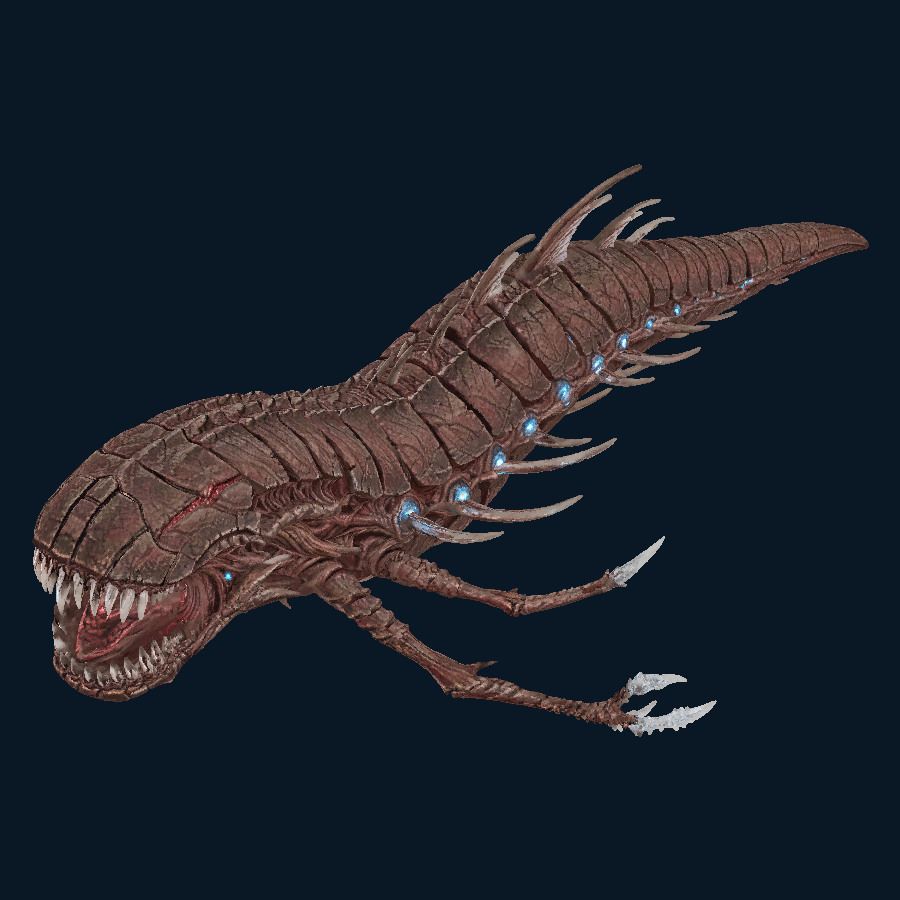
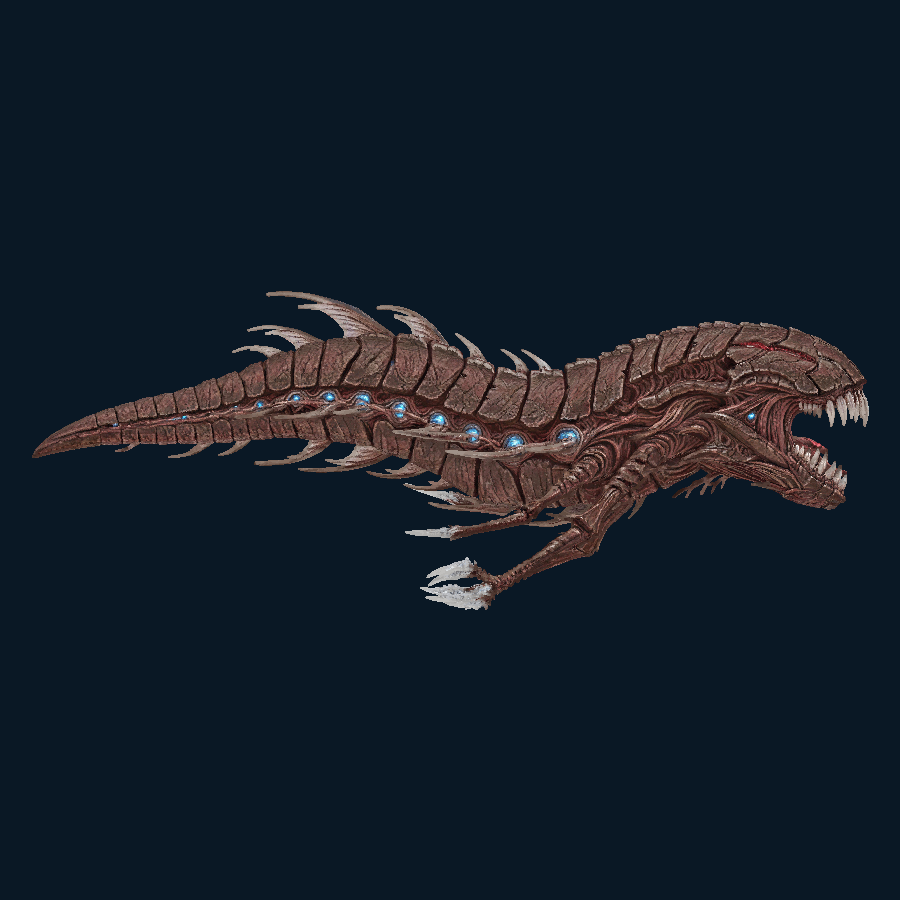
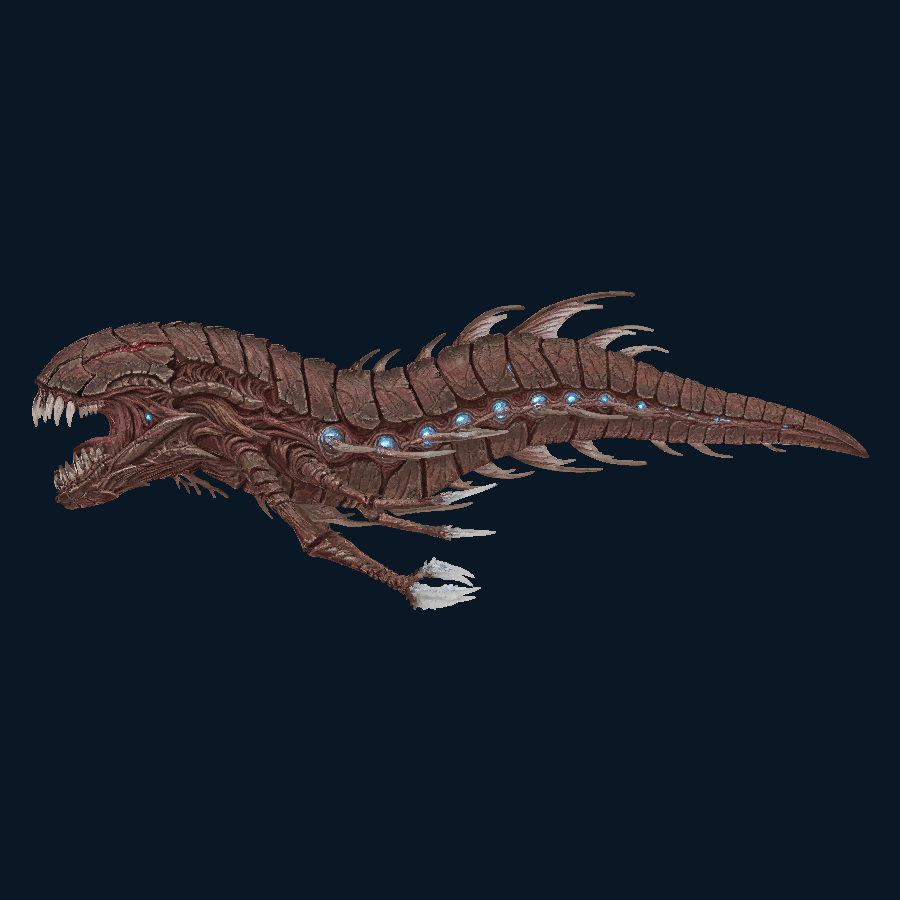
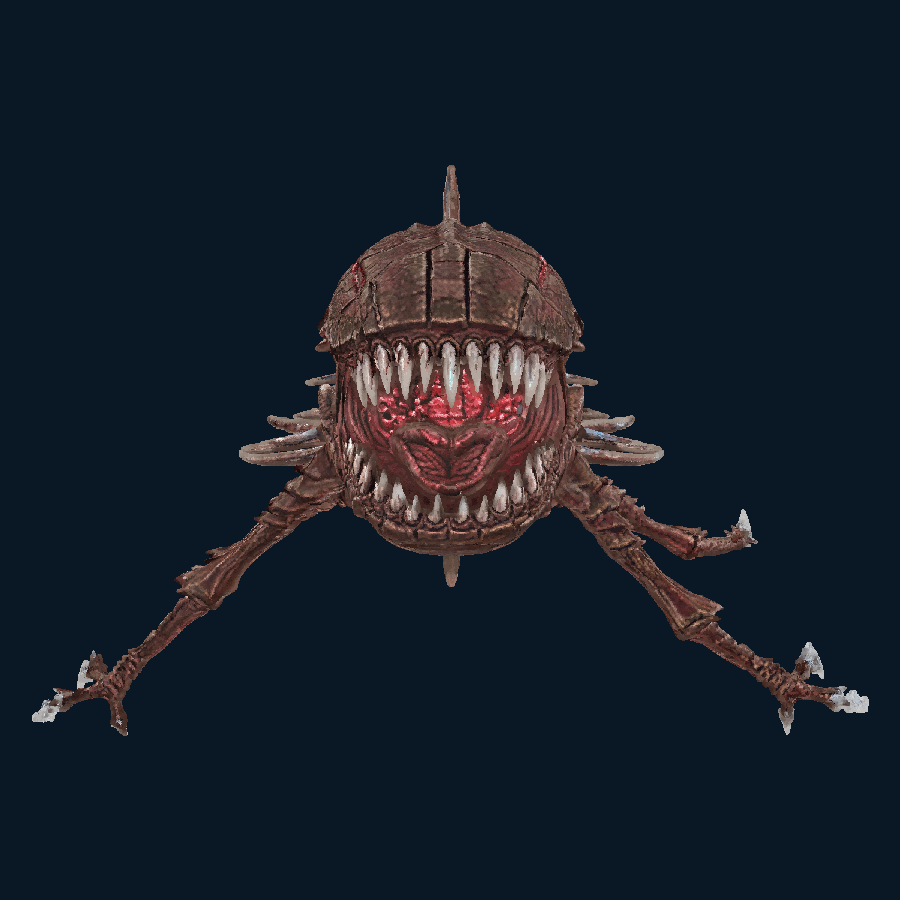
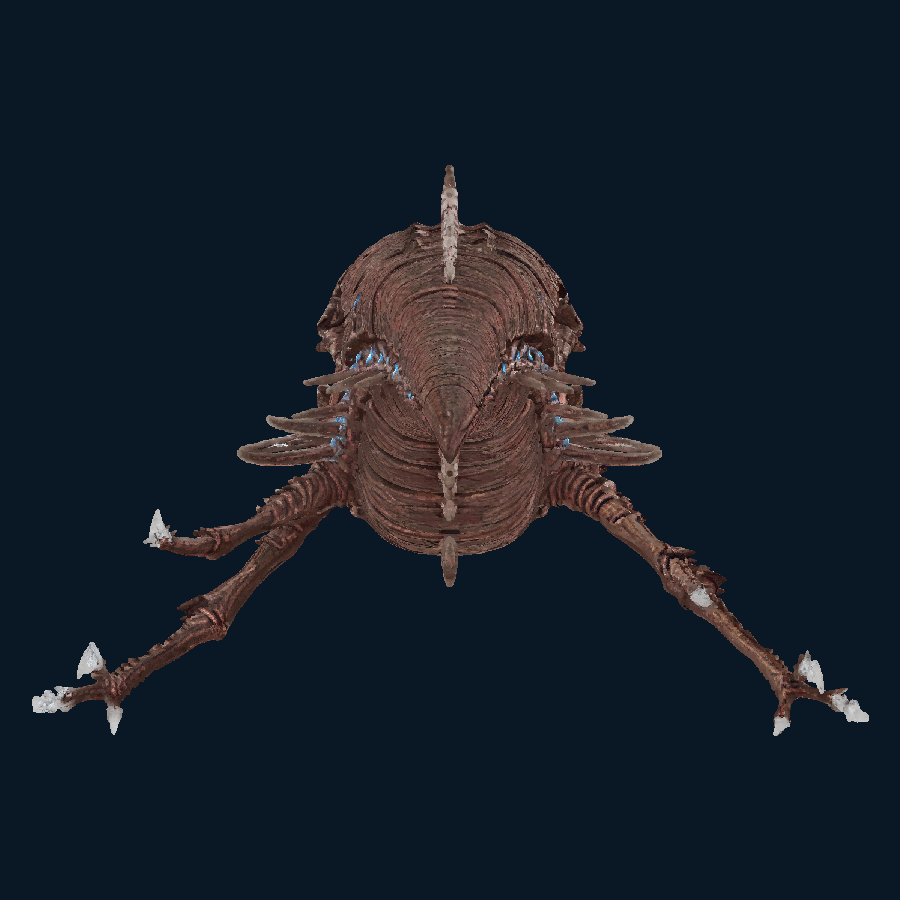
Iron Maw is a vacuum-adapted organism with a swollen seed-pod body, shallow mantle lobes and a smooth tapered rear. Skin, muscle, vessels and membranes form a continuous living structure, with hardened material concentrated around vulnerable regions.
Vessel Profile
Weapons & Armament
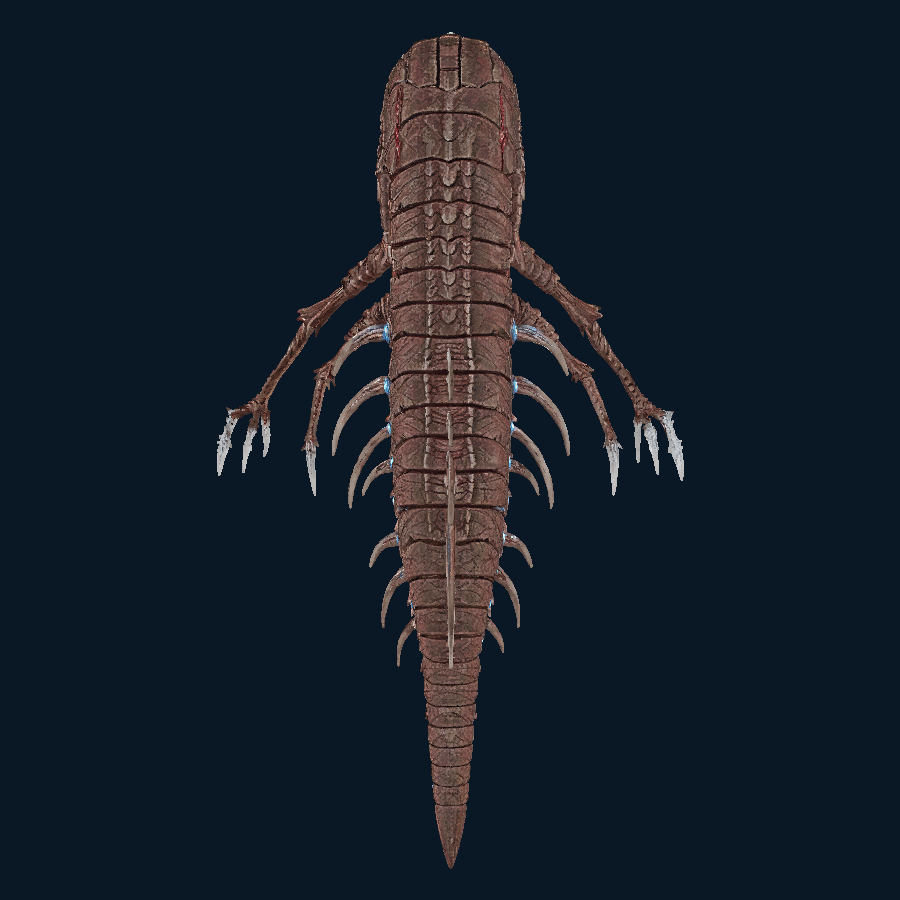
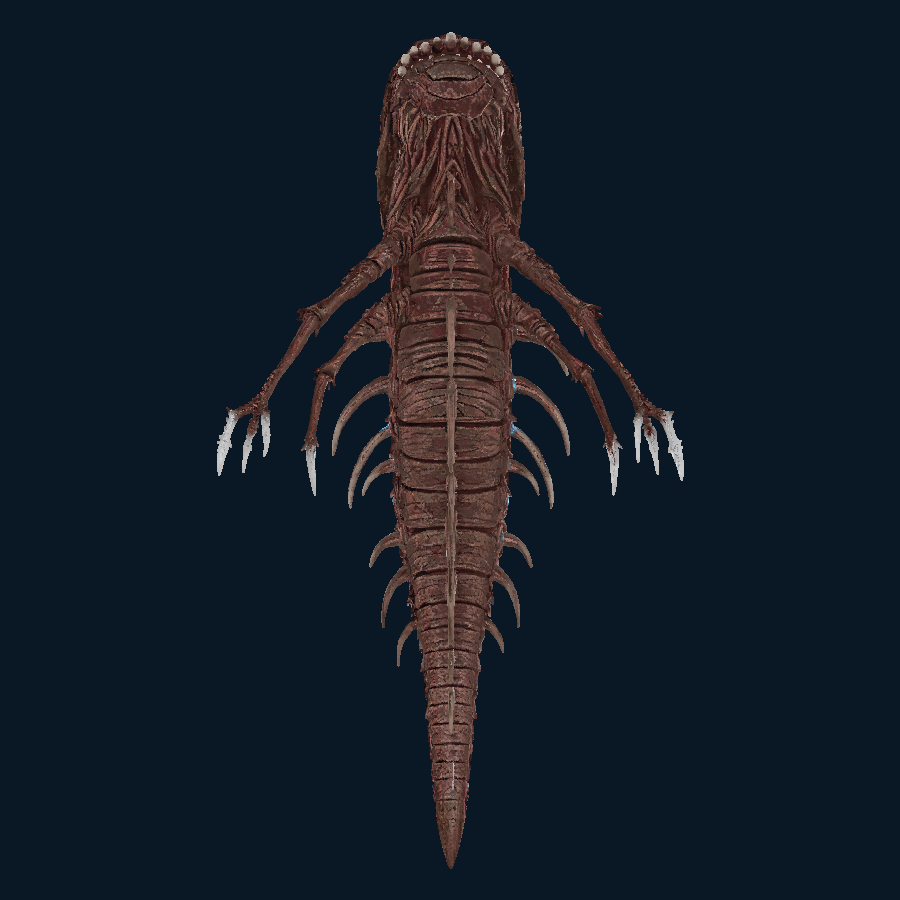
Protected womb chambers release boarding larvae, seed organisms and brood clouds through elastic birth openings. Sixteen symbiont colonies in eight pairs defend the host through acid, spores, electric mucus and other biological responses. Twenty-four sensory-defender polyps guard exposed organs.
Dimensions & Scale
Length 1,940 m × Width 1,319 m × Height 601 m. Fictional overall dimensions in standard operating configuration.
External Anatomy
A swollen seed-pod body contains the brood chambers and nutrient reserves. Shallow mantle lobes and muscular birthing folds belong to the same skin-and-muscle envelope. Hardened tissue gathers around vulnerable regions while the tapered rear maintains a continuous living silhouette.
Functional Architecture
Several hearts circulate blood and conductive gel through the carrier. Multiple stomachs process biomass and minerals; nutrient sacs sustain developing broods. Captured Cryvum fragments are dissolved and redeposited as thin mineral-organic reinforcement in teeth, brood tissue and defensive glands.
Technical Specifications
Offensive rating: 79/100 — Protected womb chambers release boarding larvae, seed organisms and brood clouds through elastic birth openings
Defensive rating: 84/100 — Hardened tissue covers vulnerable regions, while skin-pocket symbionts and sensory polyps defend the body at close range
Mobility rating: 36/100 — Maneuvering supports the formation and mission profile rather than unrestricted pursuit
Tactical cognition rating: 91/100 — Target assessment, formation coordination and response timing support swarm invasion carrier operations
Endurance rating: 90/100 — Mission duration depends on finite reserves, damage recovery and scheduled replenishment
Fleet support rating: 98/100 — Carries a mobile invasion ecology: it nurtures the organisms that board, seed and occupy a target, then supports their release behind a defensive screen.
Fleet Role
Carries a mobile invasion ecology: it nurtures the organisms that board, seed and occupy a target, then supports their release behind a defensive screen. Its greatest contribution is maintaining the swarm’s capacity to act beyond the carrier’s own body.
Life Between Stars
Conductive blood vessels, muscle sheets and lateral mantle membranes coordinate a fictional electrogravitic field. Operational doctrine preserves a stable carrier position while smaller organisms conduct pursuit and interception. Deep metabolic reserves support sustained deployments, subject to feeding and recovery.
Defense Architecture
Hardened tissue covers vulnerable regions, while skin-pocket symbionts and sensory polyps defend the body at close range. A dispersed Sentinel screen interferes with targeting before an attacker reaches the carrier. The organism must protect its birthing folds while releasing broods.
Operational Limits
Torn body walls expose nutrient sacs and developing broods. Regeneration and brood growth consume the same metabolic resources that sustain the carrier, so launching repeatedly while injured creates competing demands. The large body is poorly suited to sudden pursuit.
Strategic Strengths
Deep reserves, protected brood cultivation, numerous local symbionts and coordinated escorts make Iron Maw a persistent invasion platform. Its supporting organisms extend its influence beyond the reach of its own attack anatomy.
Capability Assessment
Support and endurance dominate the proposed profile. Tactical Cognition describes coordination among host, escorts and broods, not a species-wide intelligence ranking. Attack includes the carrier’s invasion role; it does not imply battleship-like direct fire.
A · 79.7
Fleet-wide concept rating, 0–100; not simulated performance. Specialized strengths do not imply an equally high overall grade. Tactical Cognition describes sensing, coordination and command. Grade is the equal-weight mean: S ≥ 90, A ≥ 75, B ≥ 60, C ≥ 45, D < 45.
Technology Level
T1 — space-operating biological civilization. This editorial class describes the demonstrated space role; phase travel and world engineering are not assigned from anatomy alone.
Weapon Class
W2 — heavy invasion operations through deployed broods and supporting organisms. No world-scale destructive capability is assigned.
T0 planetary · T1 system flight · T2 phase travel · T3 limited world engineering. W0 point defense · W1 ship combat · W2 heavy fleet combat · W3 strategic theater systems. Technology and weapon classes are independent of the profile grade.
History & Lineage
Universe lore · authored service history
Origin
Cultivated for migratory swarms that must carry their nurseries and food-processing organs with them rather than return to a stationary brood site
Lineage & Branch
swarm-invasion carrier branch. Coordinated nomadic predation provides the behavioral reference; the mature carrier is a swollen brood organism rather than a mechanical vessel with attached insect features.
Brood or Swarm
Wandering Womb Swarm
Individual History
The Moving Nursery — Iron Maw crossed a stripped feeding region without releasing its immature broods. Its escorts widened their patrols while the host diverted its remaining reserves to the protected womb chambers.
The Split Scent — During a later interception, a defensive wound scattered the swarm’s chemical signals. The carrier slowed its birthing rhythm until its Sentinels reassembled the screen. The surviving brood inherited a staggered emergence pattern instead of a single mass release.