
Overview
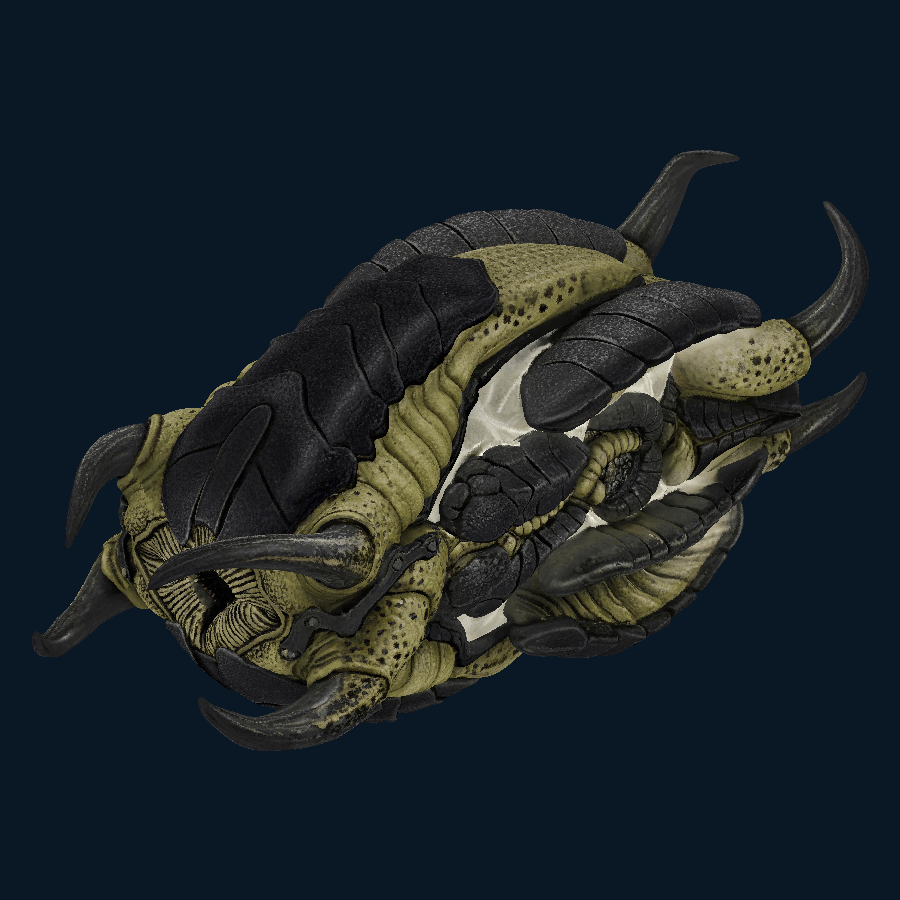
Obsidian Pilgrim carries thick muscular shoulders on a broad manta-stone body. Black and olive-yellow pigmentation follows its tissue, shell growth and veins. Its main weapon grows from the same body that protects and moves it.
Vessel Profile
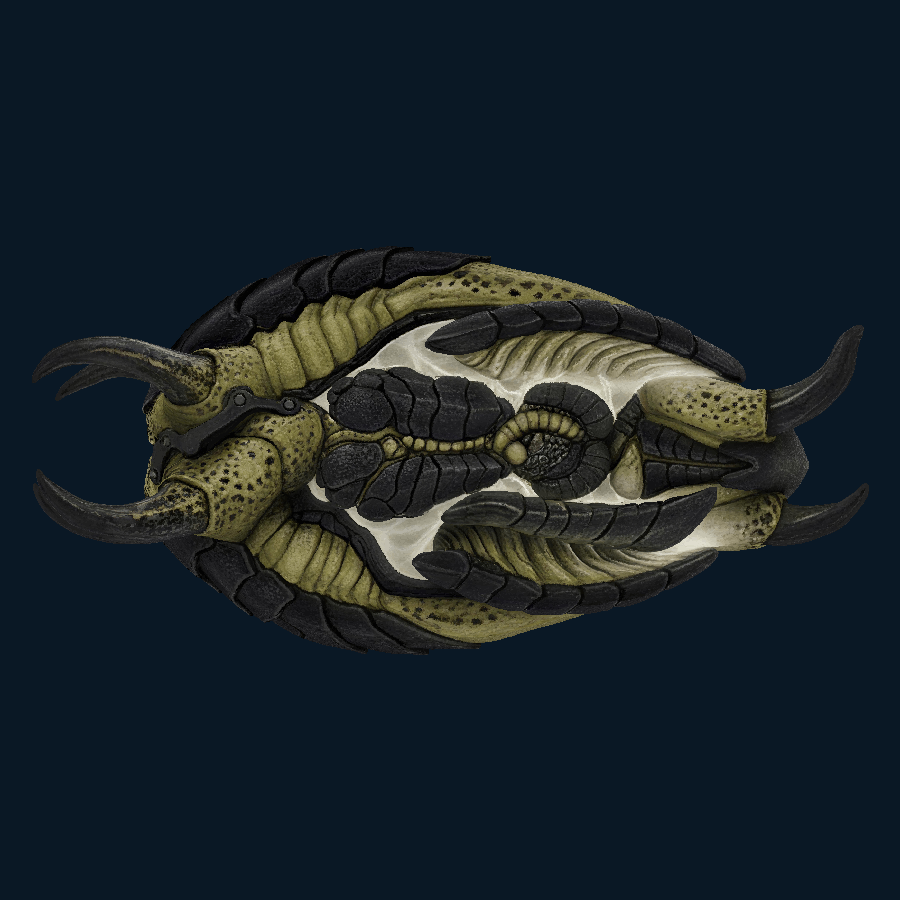
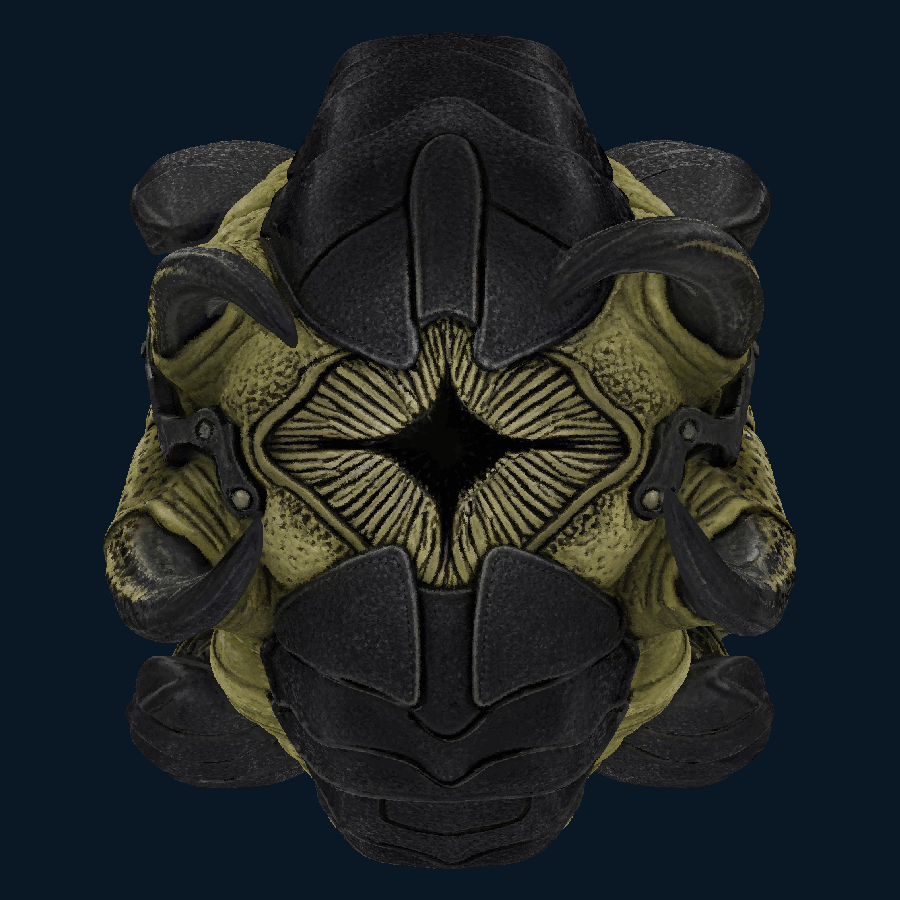
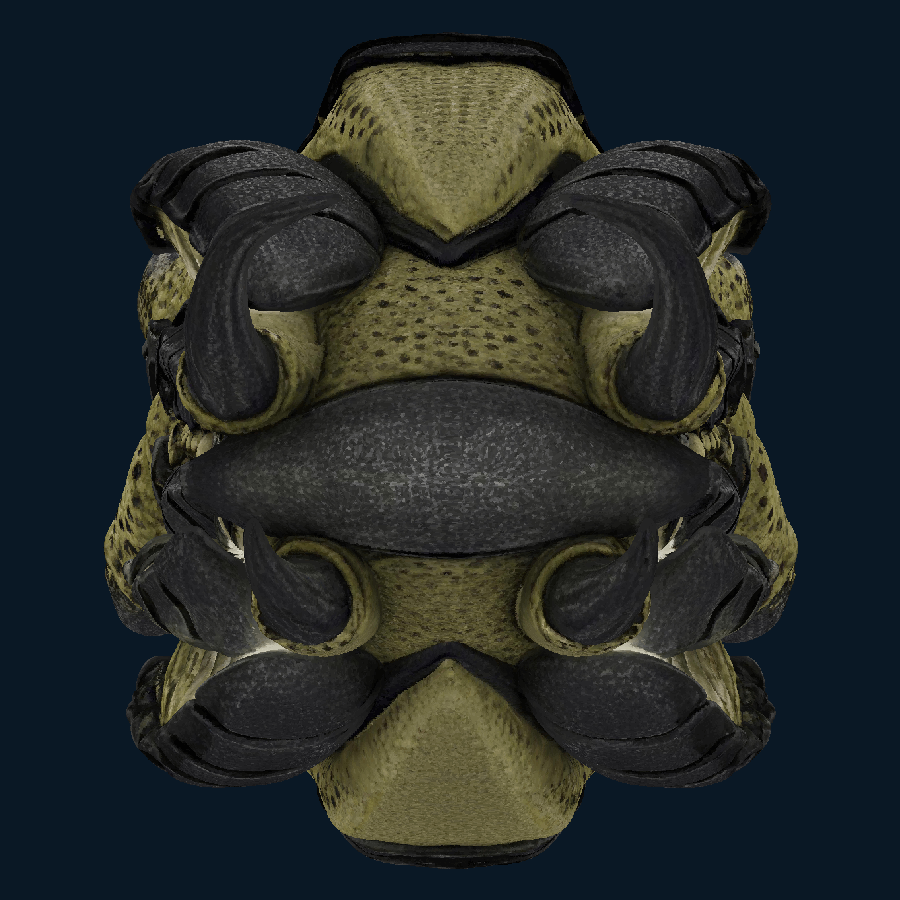
Weapons & Armament
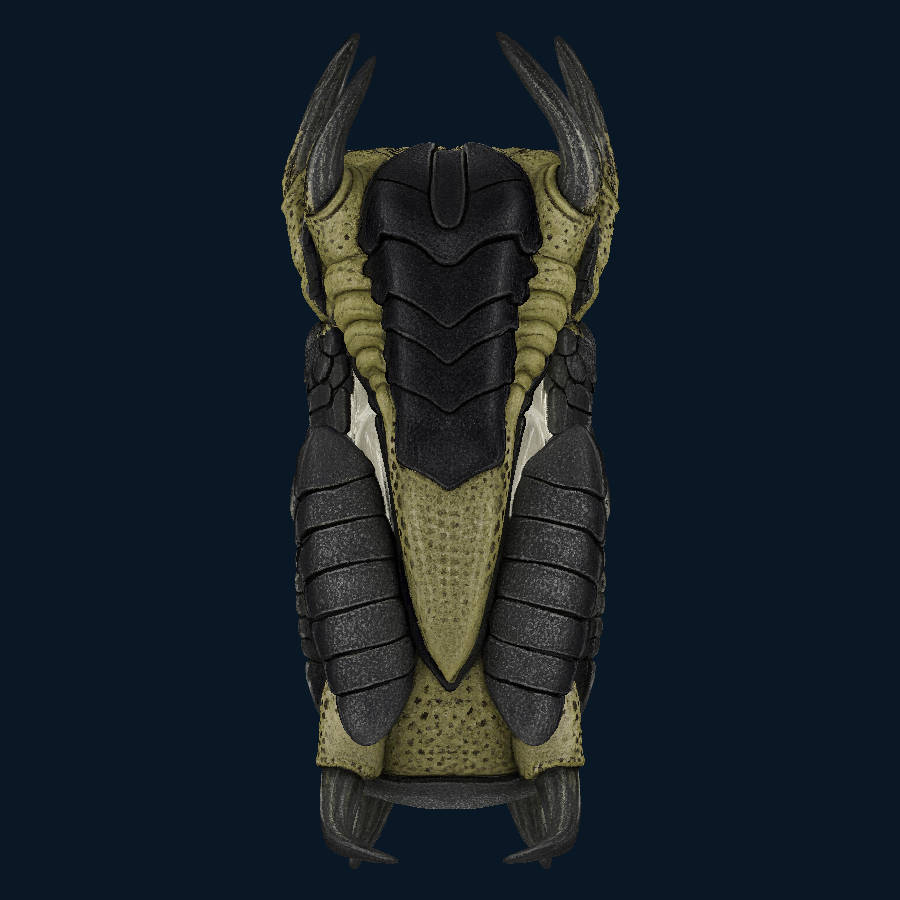
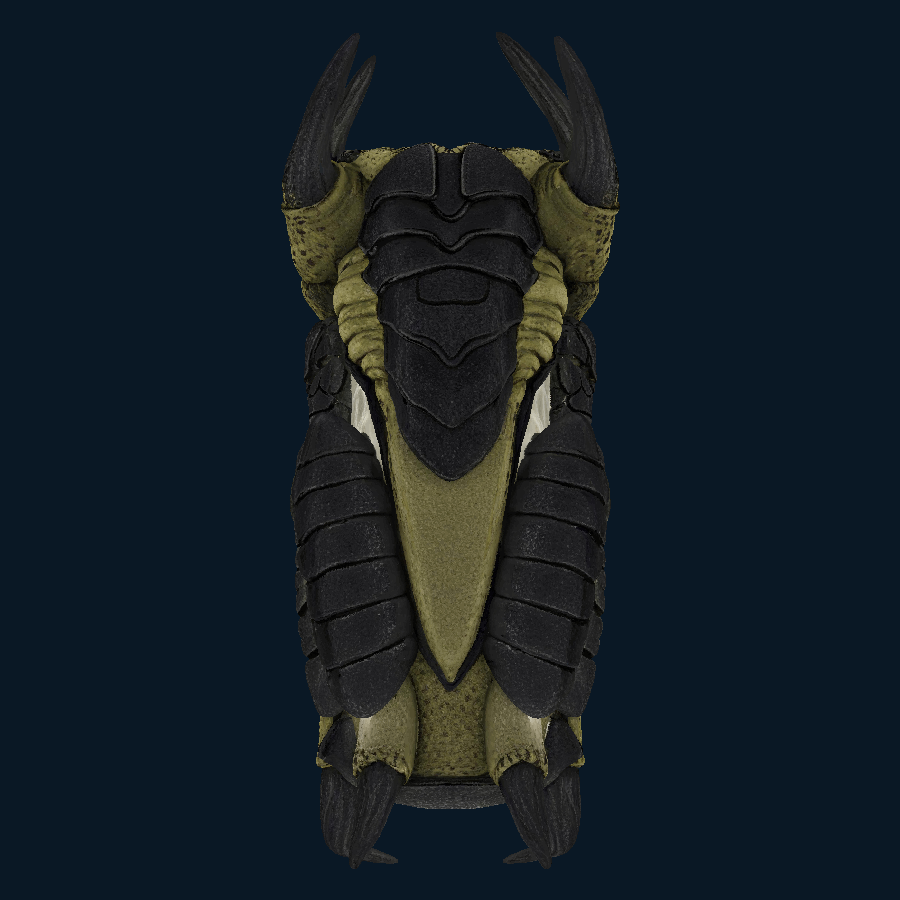
A reinforced forward grapple and shear organ clamps, pierces and tears heavily protected targets. Dense muscle, cartilage and mineralized tissue form its load-bearing attack structure. Assimilated Cryvum material reinforces selected weapon surfaces, teeth and armor.
Dimensions & Scale
Length 2,120 m × Width 1,230 m × Height 594 m. Fictional overall dimensions in standard operating configuration.
External Anatomy
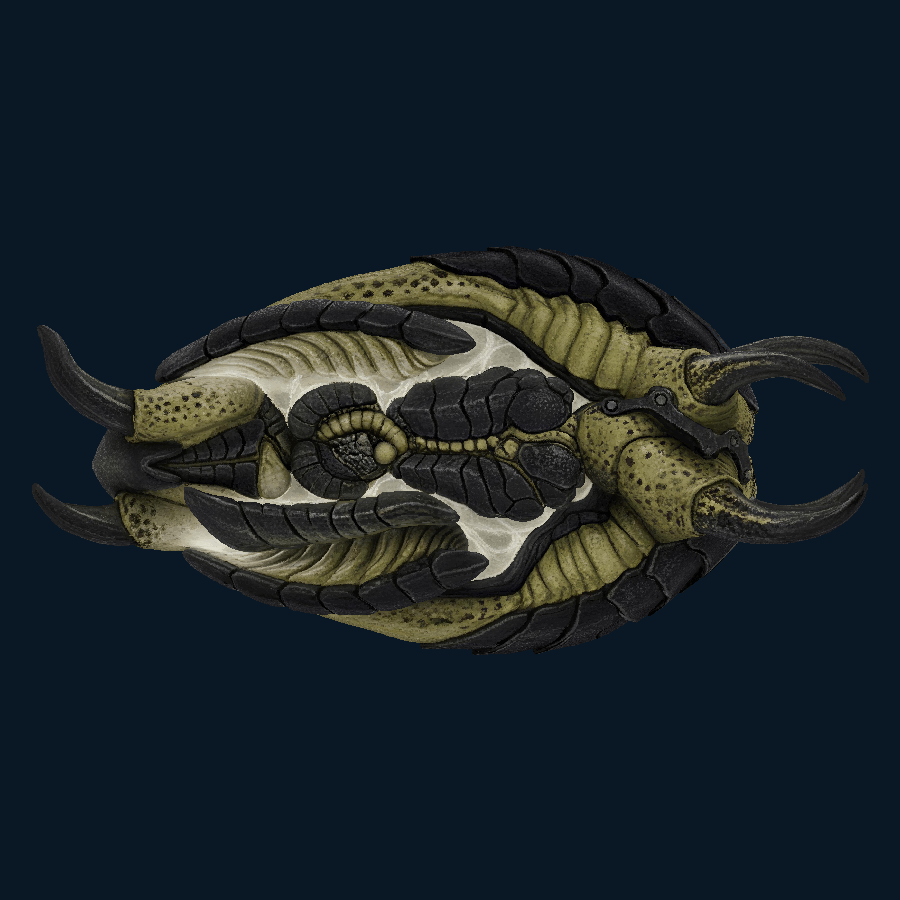
A broad manta-stone body carries thick muscular shoulders around its dominant forward attack organ. Black and olive-yellow pigment follows shell growth, veins and living tissue. Three broad ventral membranes sit beneath the main body, while the weapon roots remain deeply connected to the organism.
Functional Architecture
Deep muscle groups transfer force into the grapple rather than supporting a separately mounted weapon. Blood flow must perfuse and cool the thick attack tissues between exertions. Skin-pocket symbionts remain distributed across the body to defend organs that the forward clamp cannot cover.
Technical Specifications
Offensive rating: 92/100 — A reinforced forward grapple and shear organ clamps, pierces and tears heavily protected targets
Defensive rating: 89/100 — Thick body tissue, hardened shell regions and selected mineral reinforcement protect the main mass
Mobility rating: 18/100 — Maneuvering supports the formation and mission profile rather than unrestricted pursuit
Tactical cognition rating: 55/100 — Target assessment, formation coordination and response timing support siege dreadnought operations
Endurance rating: 73/100 — Mission duration depends on finite reserves, damage recovery and scheduled replenishment
Fleet support rating: 33/100 — Breaches a heavily protected target once the brood has constrained its movement
Fleet Role
Breaches a heavily protected target once the brood has constrained its movement. Smaller organisms screen its approach and exploit the opening after the main organ has secured contact. It is a siege anchor rather than an independent interceptor.
Life Between Stars
Waves of deep muscular contraction support the organism’s motion, while three ventral membranes assist braking and turns. The enormous attack mass favors a deliberate approach. The proposed brood doctrine commits it only after a usable contact path has been established.
Defense Architecture
Thick body tissue, hardened shell regions and selected mineral reinforcement protect the main mass. Local symbionts answer close threats with acid, spores, electric mucus and hooked feeding organs. The deepest weapon roots shelter the connections that carry the clamp’s load.
Operational Limits
The huge forward organ turns slowly and needs periodic perfusion and cooling. A failed contact leaves the organism exposed during recovery; attacks from several directions can draw its supporting symbionts away from the primary engagement.
Strategic Strengths
Exceptional contact attack and protection allow the dreadnought to threaten structures that lighter organisms cannot break. Its deep muscle roots keep the dominant weapon integrated with the strongest part of the body.
Capability Assessment
Attack and defense are intentionally high, while mobility and support are limited. The score assumes a prepared siege approach with brood assistance; it does not guarantee a favorable result against a faster opponent in open space.
B · 60.0
Fleet-wide concept rating, 0–100; not simulated performance. Specialized strengths do not imply an equally high overall grade. Tactical Cognition describes sensing, coordination and command. Grade is the equal-weight mean: S ≥ 90, A ≥ 75, B ≥ 60, C ≥ 45, D < 45.
Technology Level
T1 — space-operating biological civilization. This editorial class describes the demonstrated space role; phase travel and world engineering are not assigned from anatomy alone.
Weapon Class
W2 — heavy siege contact and structural breaching. The profile does not assign strategic theater-wide or planetary destruction.
T0 planetary · T1 system flight · T2 phase travel · T3 limited world engineering. W0 point defense · W1 ship combat · W2 heavy fleet combat · W3 strategic theater systems. Technology and weapon classes are independent of the profile grade.
History & Lineage
Universe lore · authored service history
Origin
Cultivated as the heavy contact organism of broods that encountered targets too well protected for chemical disruption and small boarding larvae alone
Lineage & Branch
siege-dreadnought branch. The Hercules beetle’s opposing horn leverage informs the body-grown grapple and shear organ, enlarged into a monumental siege organism.
Brood or Swarm
Stonewake Siege Brood
Individual History
The Held Threshold — Obsidian Pilgrim locked its grapple around an armored threshold while smaller organisms passed through the widening opening. Its body remained still long after the surrounding swarm had moved ahead, cooling the deep tissues that carried the load.
The Unclosed Horn — A mineralized edge fractured during another assault. The brood withdrew rather than force the damaged clamp shut. The regenerated surface retained a structural seam, marking a recovery cycle the organism had survived instead of a weapon it had replaced.