
Overview
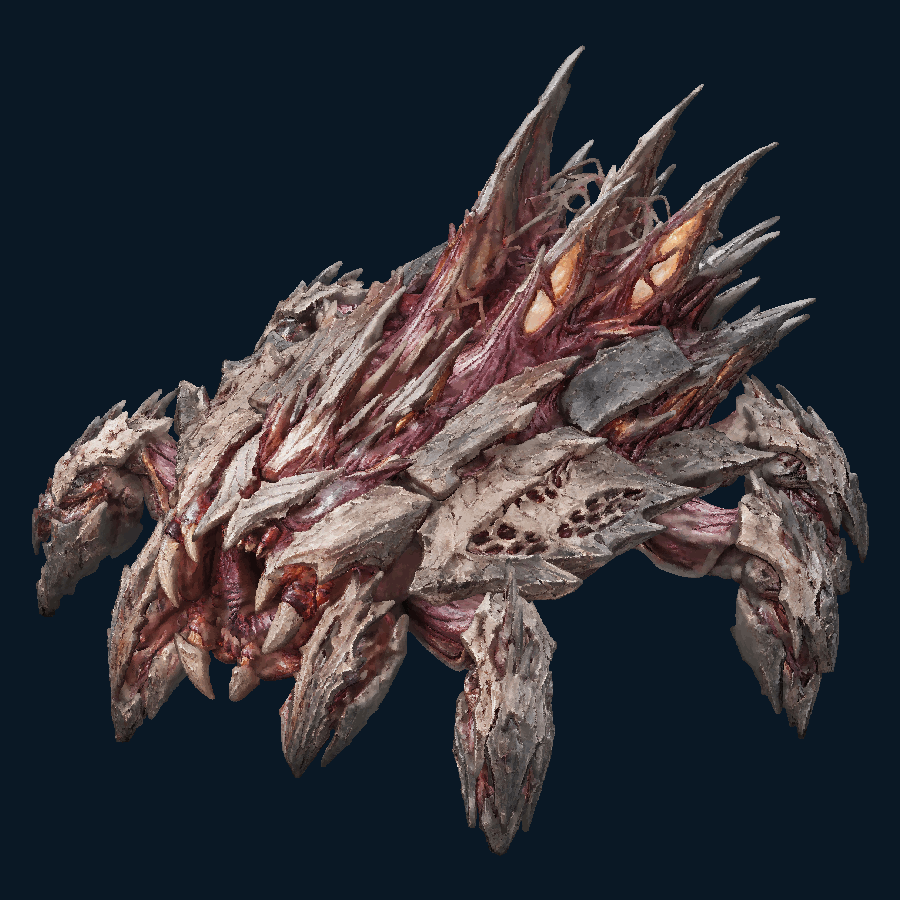
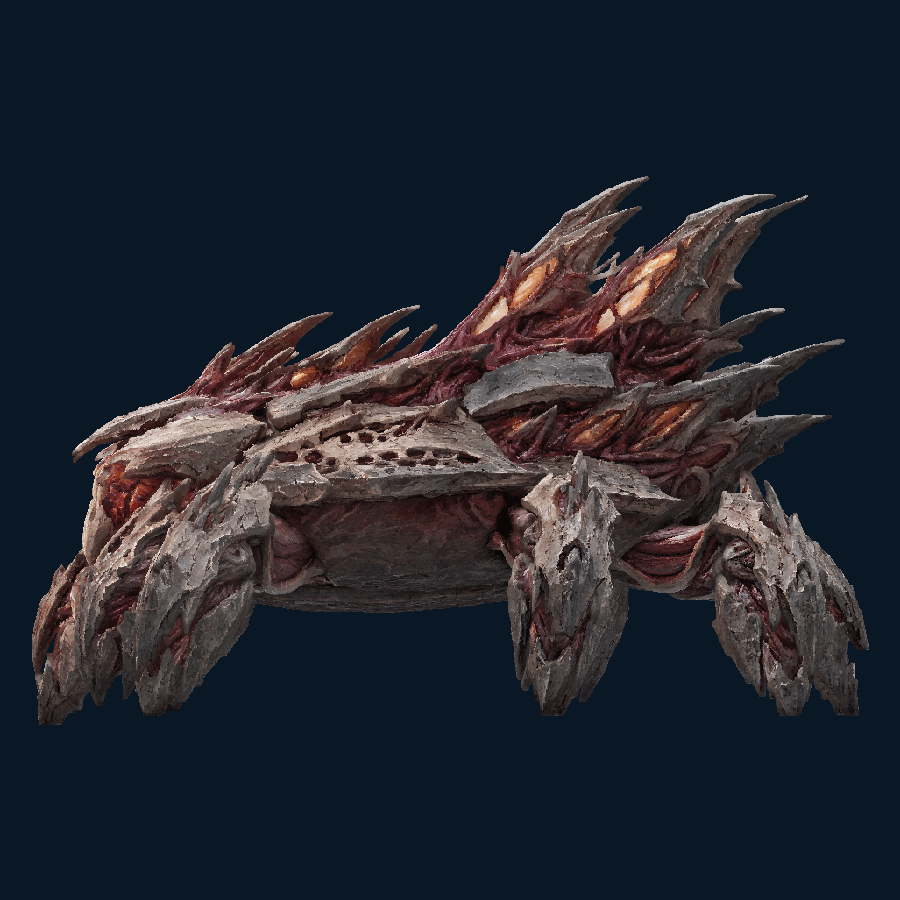
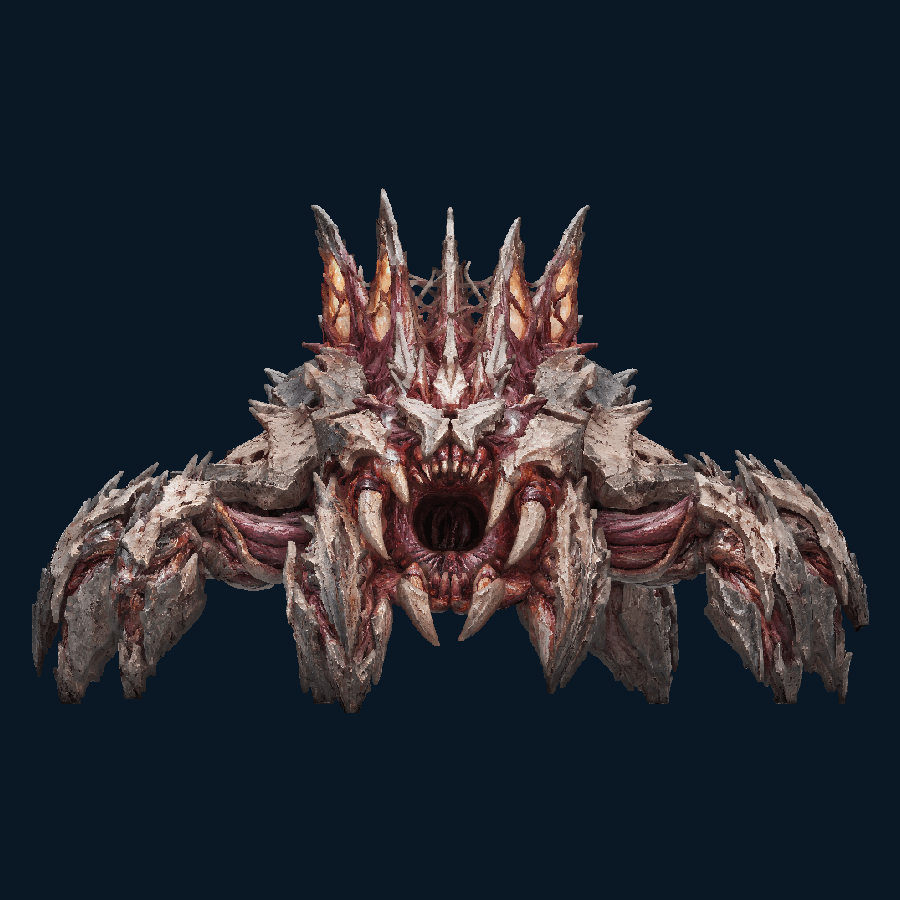
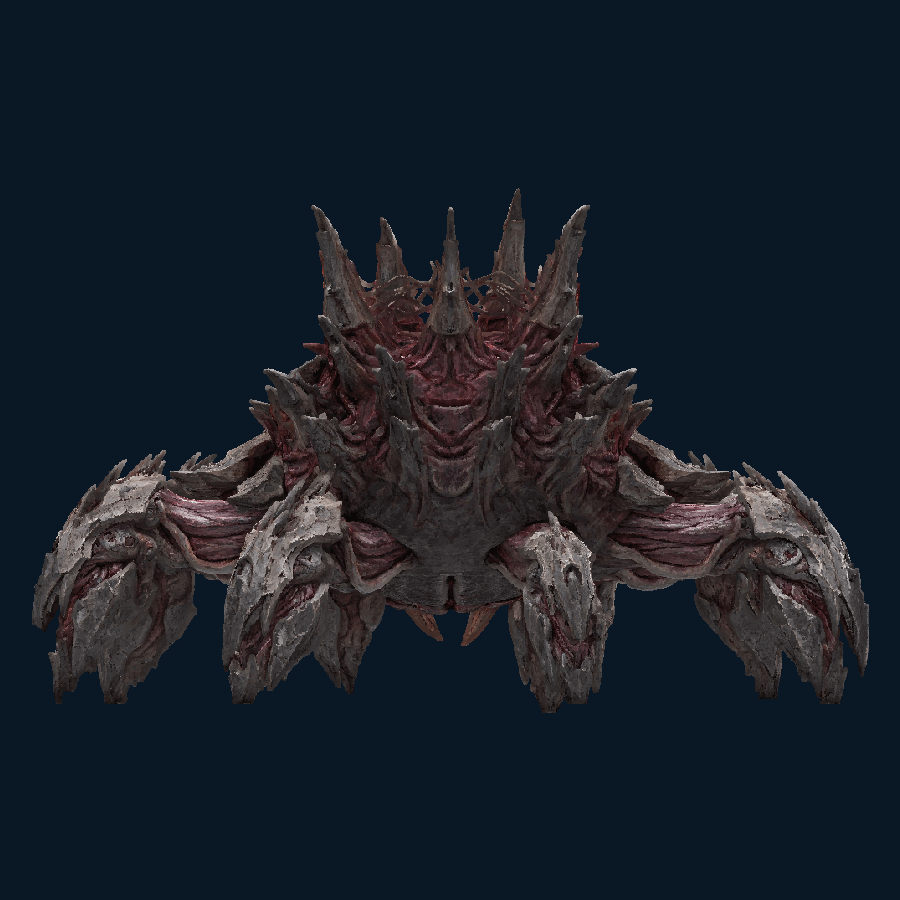
Ironhide Assault Crawler is the Standard-tier main battle bio-tank of the Bugvex Bio-Armored Warforms. A broad armored core carries dorsal kinetic-pressure organs and mineral penetrators, while eight hydraulic-muscular supports spread its load across broken ground. Every weapon and protective structure grows as part of the organism.
Organism Profile
Dimensions & Scale
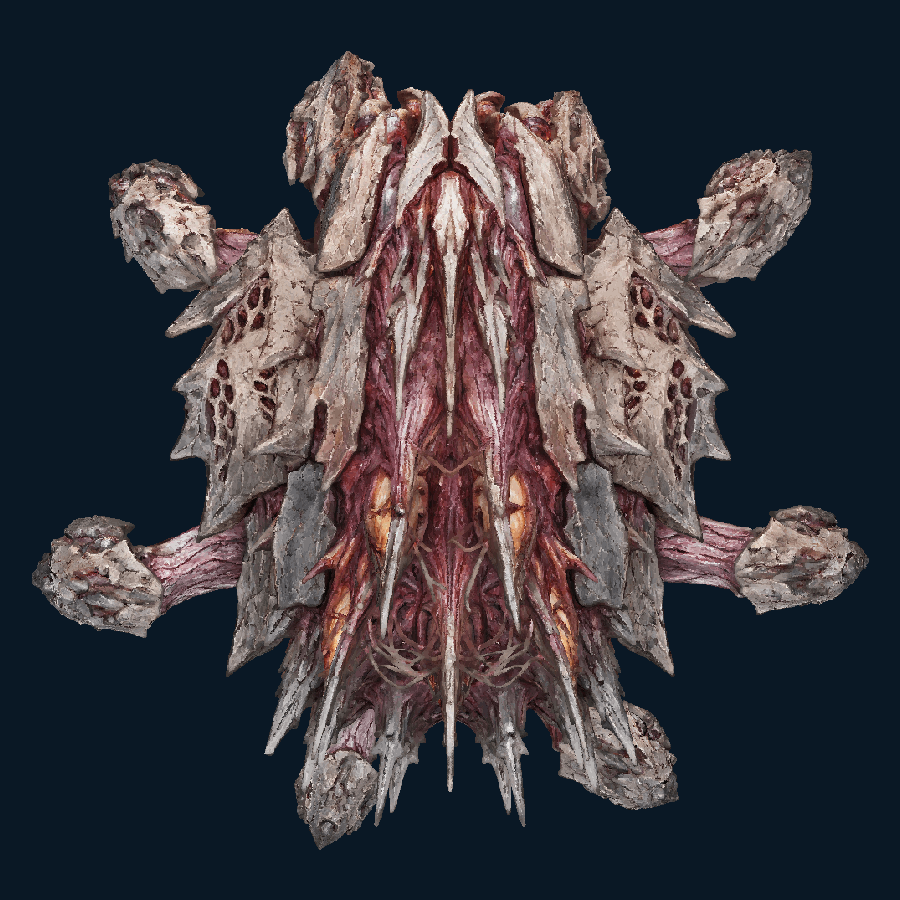
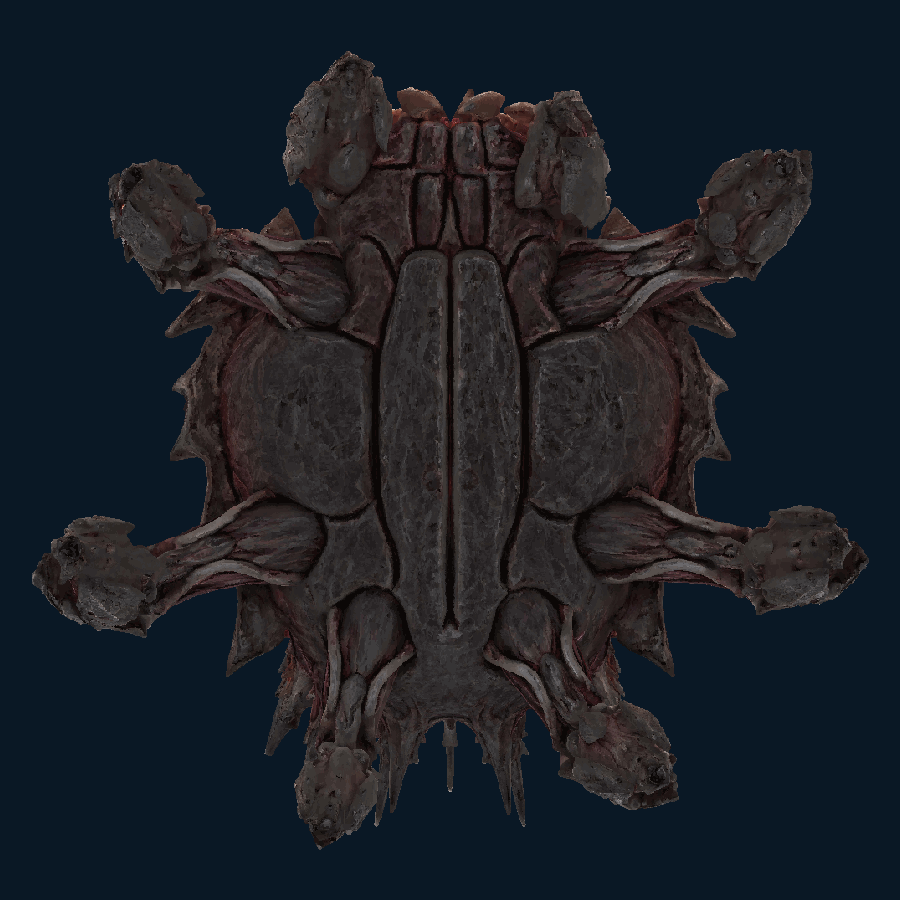
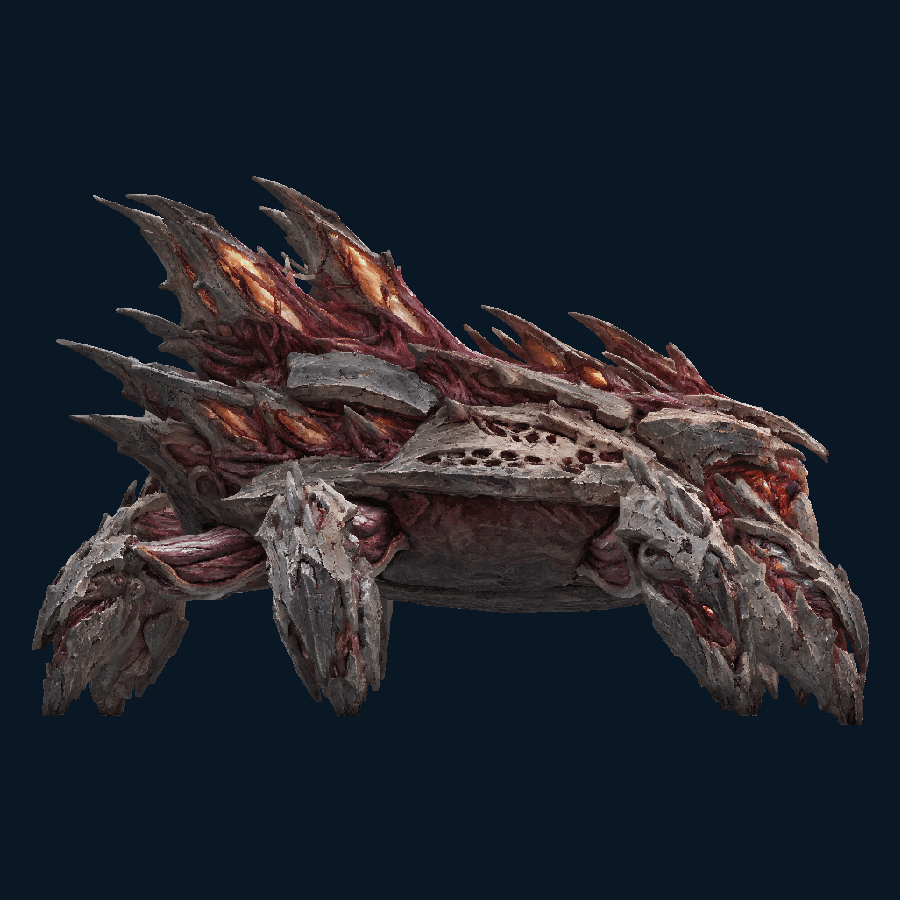
Length 10 m × Width 10.5 m × Height 6.6 m. Proposed overall concept dimensions use a 10 m body length within the supplied 9–11 m range; width and height follow the supplied visual proportions. Height includes the dorsal weapon organs above the lower armored core.
Proposed living combat mass: approximately 210 ton (metric tons). Fictional estimate based on body size, mineralized armor, supporting tissues and internal reserves; not measured performance.
Weapons & Armament
Dorsal kinetic-pressure organs provide the primary attack system, supported by grown mineral penetrators. Close defensive spines discourage contact around the armored core. Pressure-bearing tissues and thick anatomical roots connect each weapon to the body, preserving a biological load path without separate turrets or equipment.
External Anatomy
A low, broad, rock-like core is enclosed by overlapping mineralized shell regions and interlocking sutures. Eight short load-bearing supports emerge beneath protected margins. Dense connective roots tie the dorsal attack organs into the central body, while living tissue remains visible between hard growths and along moving joints.
Functional Architecture
Proposed distributed nerve clusters coordinate footing, balance and attack readiness. Hydraulic-muscular tissues shift load between the eight supports, while vascular channels feed the pressure organs and shell-producing tissues. Internal nutrient and mineral reserves sustain movement, repair and replenishment between engagements.
Technical Specifications
Offensive rating: 70/100 — Dorsal pressure organs and mineral penetrators provide direct battle-line attack
Defensive rating: 80/100 — Interlocking mineralized shell regions protect the broad central core
Mobility rating: 48/100 — Eight load-bearing supports favor stability over rapid pursuit
Tactical cognition rating: 58/100 — Distributed nerve coordination maintains footing and combat orientation
Endurance rating: 62/100 — Biological reserves sustain combat but require nutrient and mineral replenishment
Fleet support rating: 34/100 — Armored presence supports nearby assault organisms with limited dedicated logistics
Battlefield Role
Serves as the primary Bugvex main battle bio-tank, applying direct ground pressure while accompanying other assault organisms. Its broad support base favors deliberate advances across damaged terrain. Close-assault specialists can exploit openings it creates, while the crawler remains responsible for maintaining a durable fighting presence.
Ground Operations
Eight hydraulic-muscular supports carry the organism across broken terrain. Load transfers between planted supports maintain stability beneath the heavy core. This is a ground warform; independent atmospheric or spaceflight is not assigned.
Defense Architecture
Interlocking shell sutures spread impacts through overlapping hard growths. The broad core shelters support roots and critical living regions, while defensive spines protect the immediate perimeter. Local tissue repair can restore damage over time but does not replace lost armor instantly.
Operational Limits
Heavy mineralized armor requires substantial nutrient and mineral intake. Damage to several supports reduces stability, especially on uneven terrain. Dorsal organs and soft joint regions remain vulnerable despite their thick roots. Repeated attacks consume stored pressure and biological reserves; a broad footprint limits passage through narrow routes.
Strategic Strengths
A stable support base, integrated armor and coherent weapon roots provide a durable ground-combat platform. The organism can redistribute load as individual supports cross obstacles, maintaining a fighting posture without wheels, tracks or a separate chassis.
Capability Assessment
Proposed fictional doctrine profile: strong armor and direct combat pressure, moderate mobility and limited formation support. Ratings describe its intended main-battle role rather than measured performance or universal superiority over other units.
C · 58.7
Fleet-wide concept rating, 0–100; not simulated performance. Specialized strengths do not imply an equally high overall grade. Tactical Cognition describes sensing, coordination and command. Grade is the equal-weight mean: S ≥ 90, A ≥ 75, B ≥ 60, C ≥ 45, D < 45.
Technology Level
T0 — advanced biological ground warfare, mineralized living armor and hydraulic-muscular locomotion
Weapon Class
Proposed W1 — main-battle biological pressure weapons, mineral penetrators and close defensive spines
T0 planetary · T1 system flight · T2 phase travel · T3 limited world engineering. W0 point defense · W1 ship combat · W2 heavy fleet combat · W3 strategic theater systems. Technology and weapon classes are independent of the profile grade.
History & Lineage
Universe lore · authored service history
Origin
Purpose-grown to provide a dependable armored core for Bugvex ground formations. Its anatomy concentrates protection and weapon support around one broad body rather than adding a combat payload to an unrelated animal form.
Lineage & Branch
Ironhide Assault Crawler family, Standard variant, within the Bugvex Bio-Armored Warforms. The family is defined by a broad mineralized core, protected support roots and interlocking shell sutures.
Brood or Swarm
Bugvex — armored ground assault formations
Individual History
The Broken Approach — In this authored service history, an Ironhide advances across a fractured causeway while lighter organisms search for a route around the defenders. Its eight supports redistribute the load whenever the surface shifts, allowing the armored core to maintain a steady orientation.
The Held Crossing — A damaged support forces the crawler to slow before the narrowest passage. It holds its position while the flanking organisms move ahead, then withdraws to replenish depleted reserves. The encounter establishes the Standard variant as a formation anchor whose survival depends on coordinated movement and recovery.