
Overview
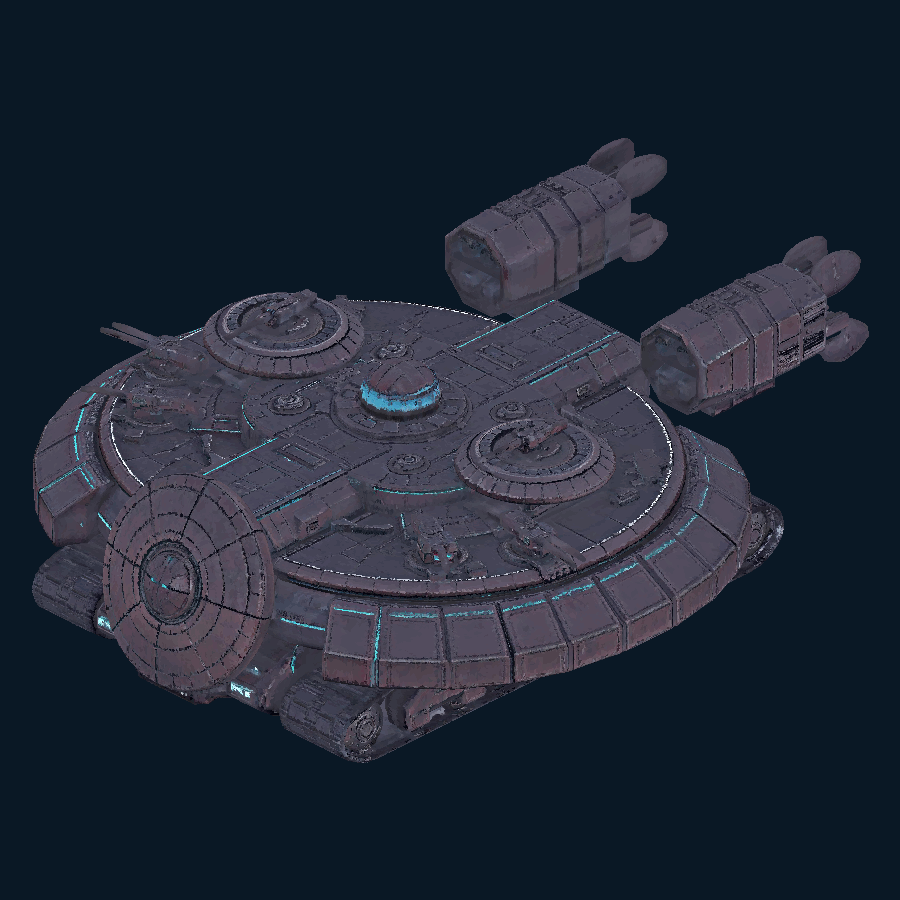
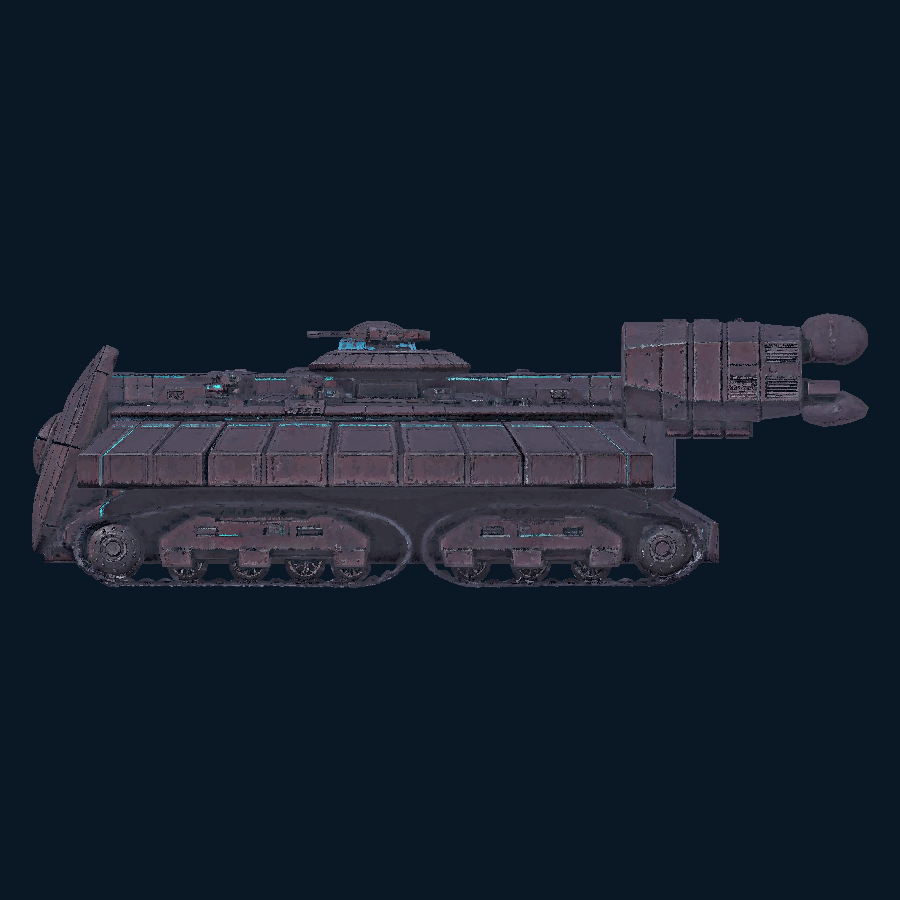
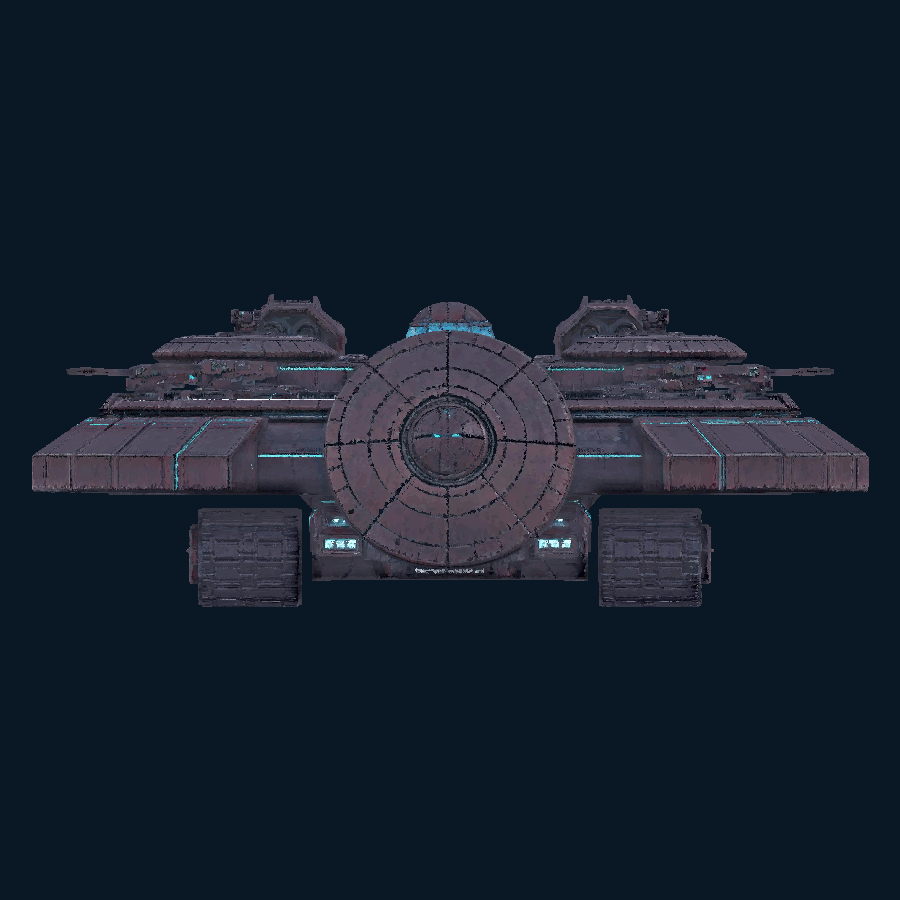
Iron Halo advances behind an enormous rounded armored front, a reinforced central mass and thick side protection. Its approximately 36,000-tonne combat mass and crew of about 220 support a platform intended for urban assault and attacks on fortified positions.
Vessel Profile
Weapons & Armament
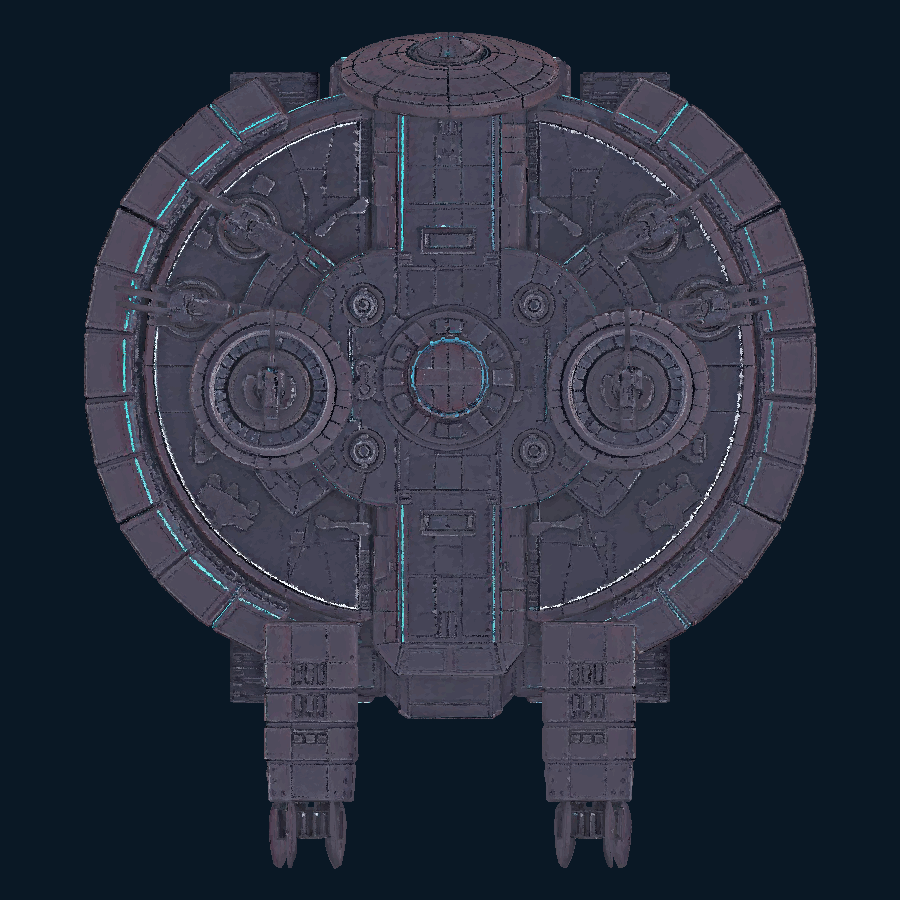
Heavy siege guns and missile batteries form the offensive armament. Air-defense systems, point defense and active protection cover incoming threats, with electronic warfare supporting the approach.
Dimensions & Scale
Length 180 m × Width 135 m × Height 48 m. Fictional overall dimensions in standard operating configuration.
External Anatomy
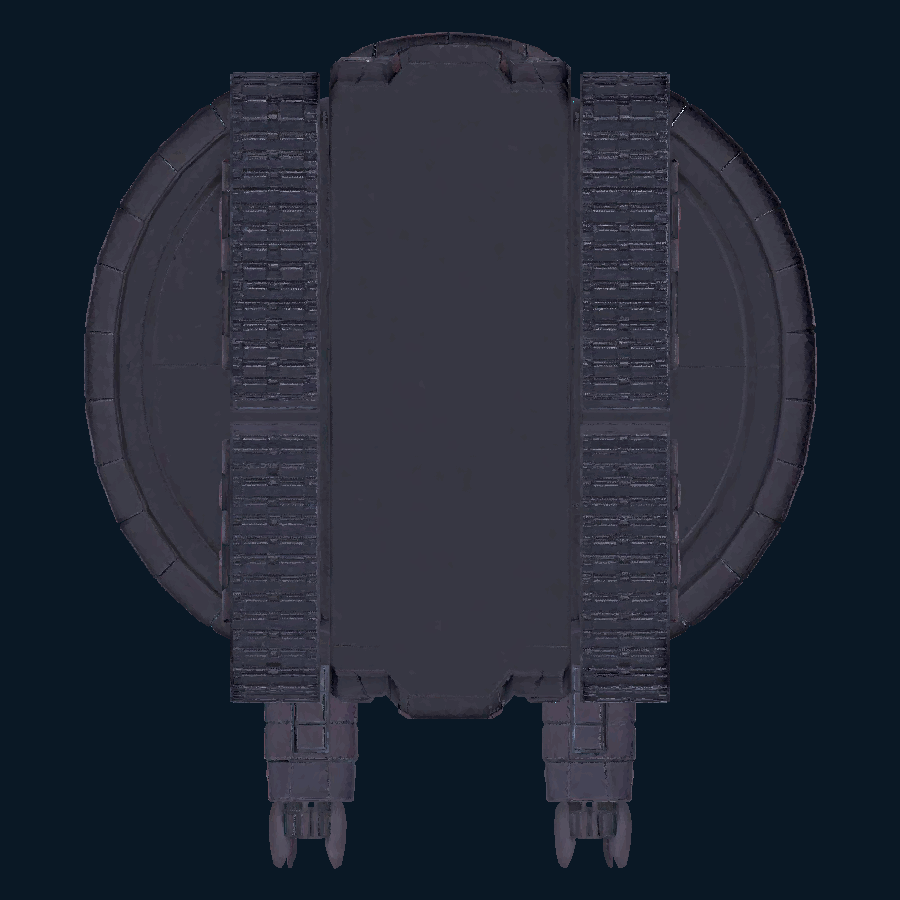
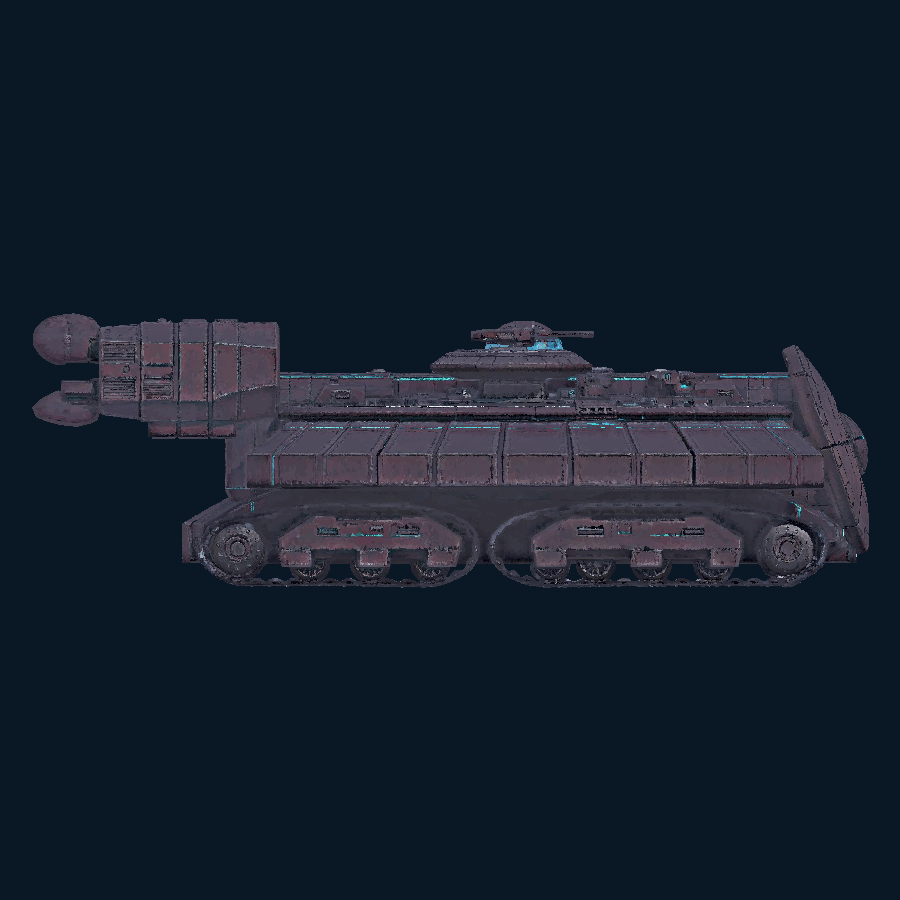
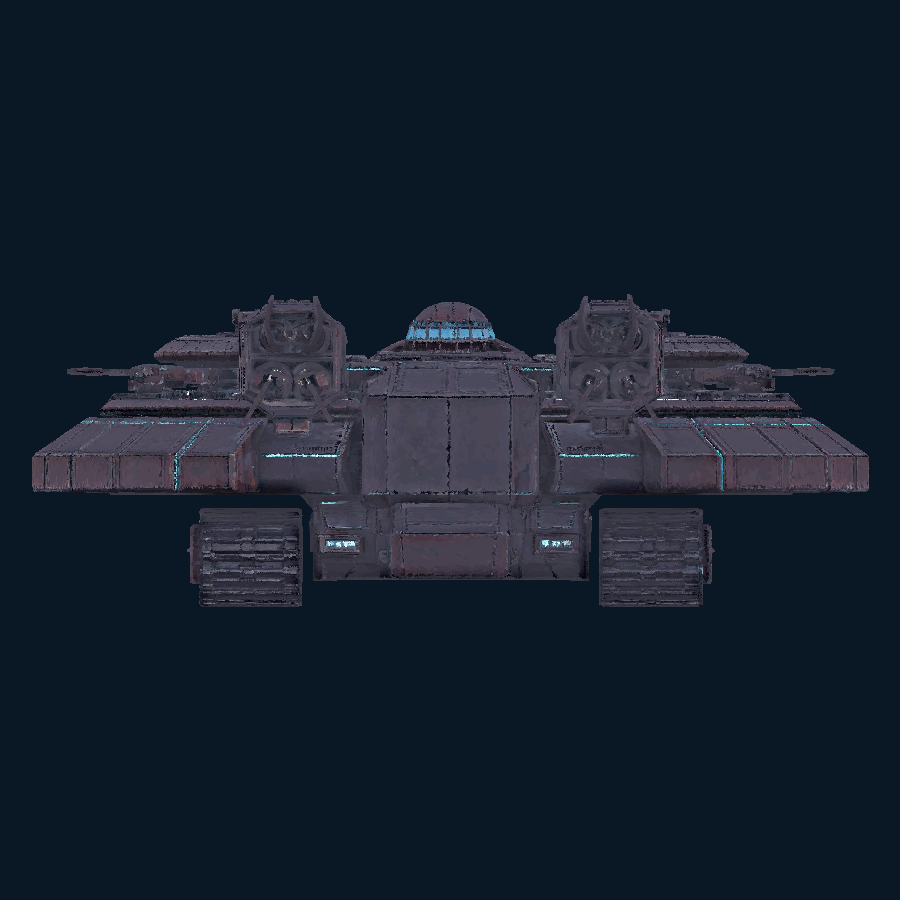
A rounded armored front dominates a deep tracked body. Thick side protection covers the running gear, while the low command core stays within the main mass. Heavy weapons occupy the upper fighting structure instead of a tall exposed tower.
Functional Architecture
Siege guns and missiles supply the offensive layer; air defense, point defense and active protection cover progressively closer threats. A low command core and electronic warfare systems coordinate the vehicle and its supporting formation.
Technical Specifications
Offensive rating: 73/100 — Heavy siege guns and missile batteries form the offensive armament
Defensive rating: 80/100 — An enormous rounded frontal armor mass, thick side protection, active protection and close-defense weapons form layered ground defenses
Mobility rating: 18/100 — Tracked movement prioritizes protected advances over rapid pursuit
Tactical cognition rating: 48/100 — Target assessment, formation coordination and response timing support tracked land battleship operations
Endurance rating: 59/100 — Mission duration depends on finite reserves, damage recovery and scheduled replenishment
Fleet support rating: 28/100 — Breaks fortified ground positions and supplies heavy direct support to assault formations
Fleet Role
Breaks fortified ground positions and supplies heavy direct support to assault formations. The protected command core lets supporting units organize behind its advance.
Life Between Stars
Iron Halo operates as a tracked ground battleship. Its deployment follows surveyed heavy routes, with engineers securing crossings and recovery access before the main advance. Off-world transport relies on fleet logistics rather than independent combat flight.
Defense Architecture
An enormous rounded frontal armor mass, thick side protection, active protection and close-defense weapons form layered ground defenses. Electronic warfare supports the protected approach.
Operational Limits
A massive tracked platform is constrained by terrain, turning space and the ability of supporting forces to secure its flanks. Siege weapons are less useful if an opponent avoids the frontal engagement.
Strategic Strengths
Strong frontal protection, multiple layers of defense and concentrated siege fire let the vehicle anchor a deliberate assault
Capability Assessment
Editorial doctrine: Breaks fortified ground positions and supplies heavy direct support to assault formations. The protected command core lets supporting units organize behind its advance. A massive tracked platform is constrained by terrain, turning space and the ability of supporting forces to secure its flanks. Siege weapons are less useful if an opponent avoids the frontal engagement.
C · 51.0
Fleet-wide concept rating, 0–100; not simulated performance. Specialized strengths do not imply an equally high overall grade. Tactical Cognition describes sensing, coordination and command. Grade is the equal-weight mean: S ≥ 90, A ≥ 75, B ≥ 60, C ≥ 45, D < 45.
Technology Level
T0 — heavy planetary assault and protected ground command
Weapon Class
W2 — heavy fleet or siege engagement. This editorial class does not imply strategic world-scale destruction.
T0 planetary · T1 system flight · T2 phase travel · T3 limited world engineering. W0 point defense · W1 ship combat · W2 heavy fleet combat · W3 strategic theater systems. Technology and weapon classes are independent of the profile grade.
History & Lineage
Universe lore · authored service history
Origin
Designed for the fleet’s hardest planetary assault routes, where a protected moving command point must accompany the attack
Lineage & Branch
Tracked heavy land battleships. Its fleet assignment follows the operational doctrine of this lineage.
Fleet or Unit
Dawn Ring Assault Group
Individual History
The White Causeway — Iron Halo advanced across an exposed industrial causeway while lighter units moved through the cover behind its armored front. It halted short of the inner gate so that engineers could secure the crossing.
The Ring Remains — A damaged outer track assembly delayed the withdrawal, and the crew held their position until the last support vehicles passed. Its unit emblem became an unbroken ring, commemorating the protected corridor rather than a conquest.
The Weight of Passage — After the causeway campaign, engineers found that several civilian bridges could not bear the vehicle during withdrawal. The Dawn Ring Assault Group established surveyed heavy routes and staged lighter recovery teams ahead of the main advance. Iron Halo now deploys only when an exit route and the protection of adjacent communities are part of the same operation.