
Overview
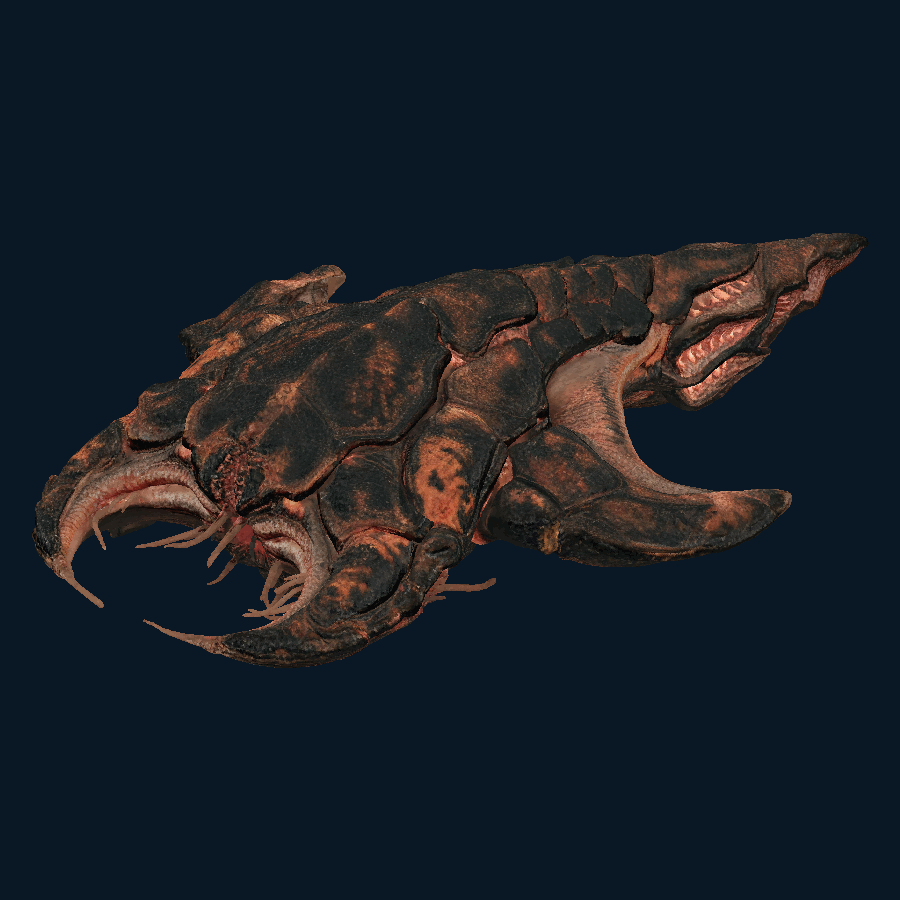
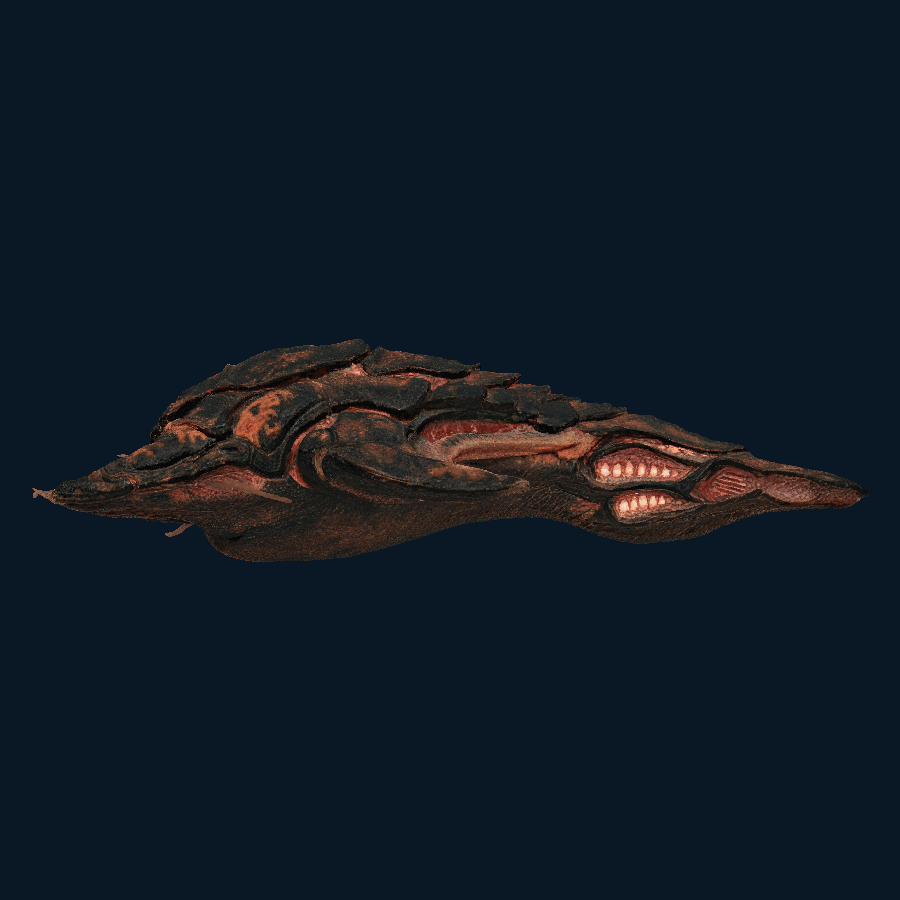
Obsidian Harrow’s two reagent stomachs supply a living artillery mouth. The organism also nurtures biofighters internally before releasing them into combat.
Vessel Profile
Weapons & Armament
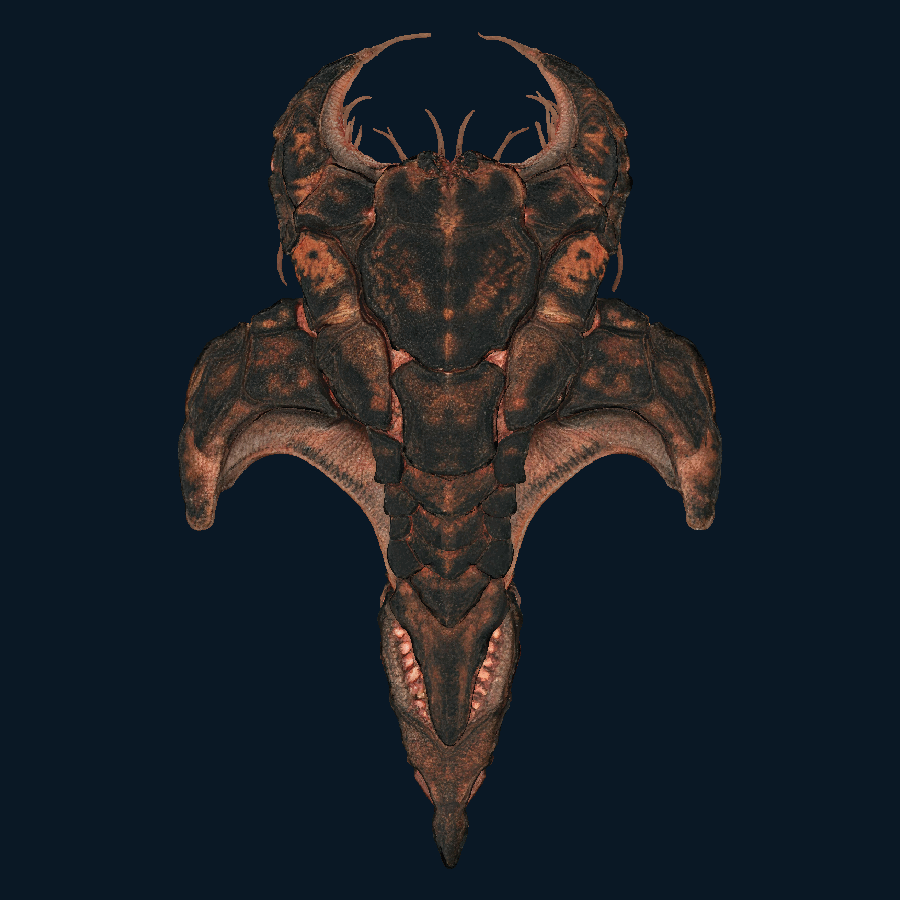
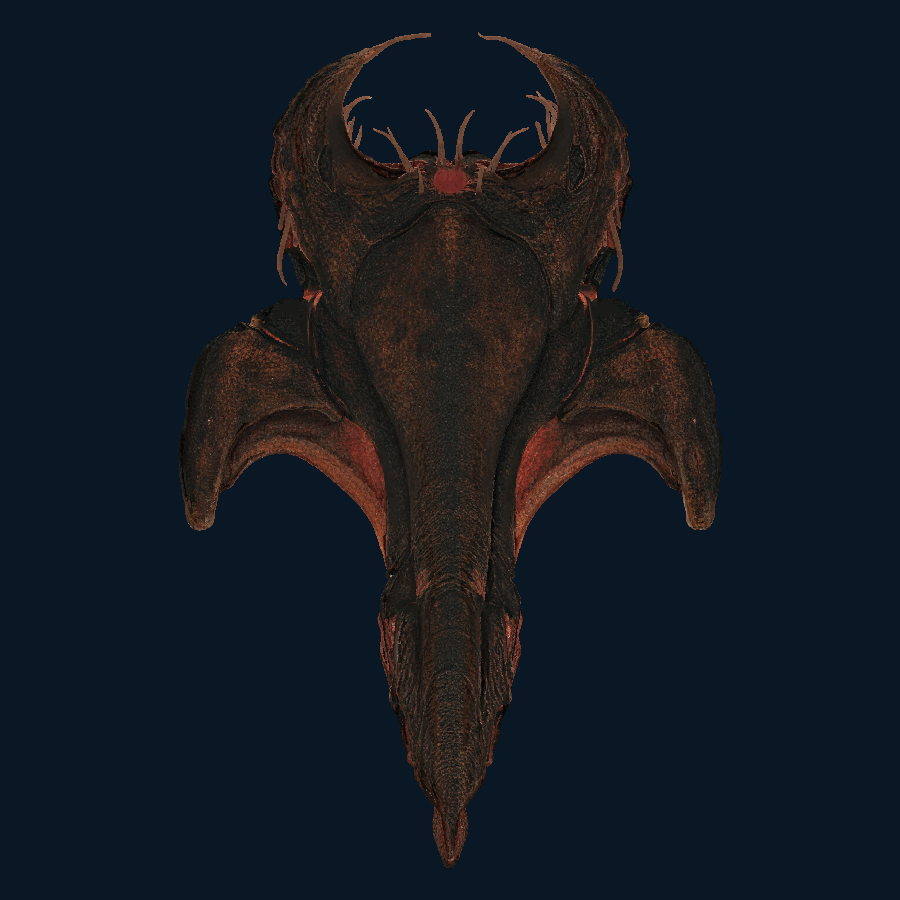
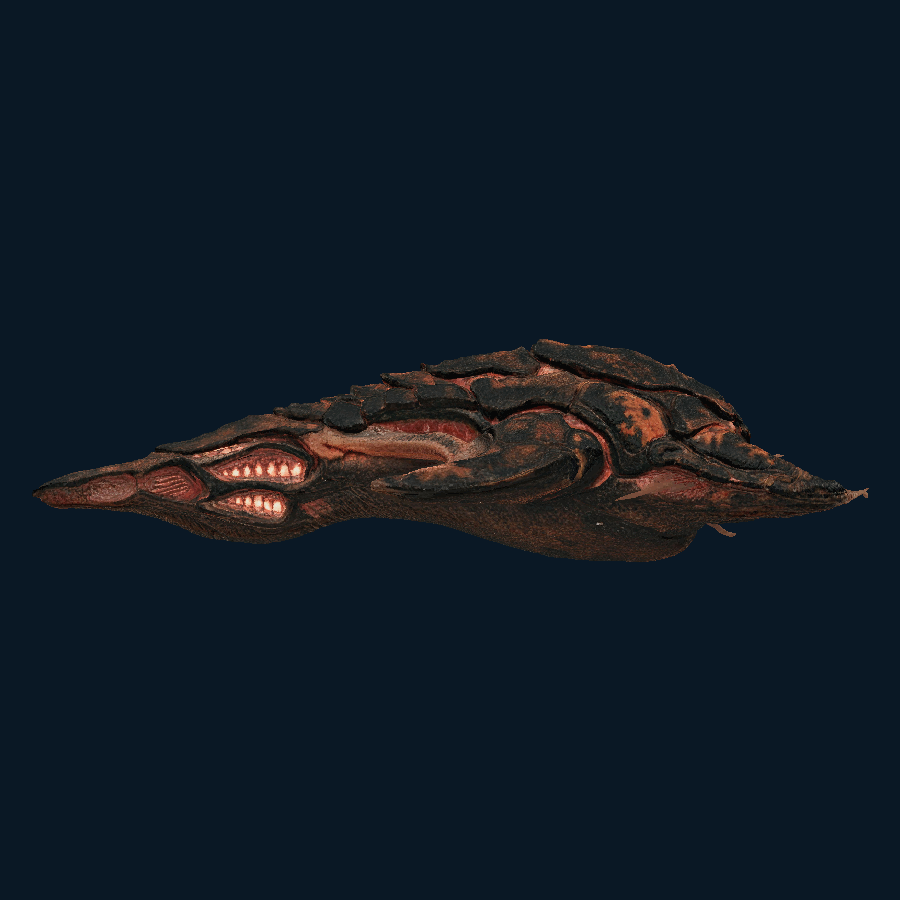
Two reagent stomachs feed a living artillery mouth for directed chemical attacks. The cruiser also nurtures biofighters internally and releases them when mature. The chemical system and deployed organisms give it distinct engagement layers, each dependent on replenishment.
Dimensions & Scale
Length 1,200 m × Width 550 m × Height 260 m. Fictional overall dimensions in standard operating configuration.
External Anatomy
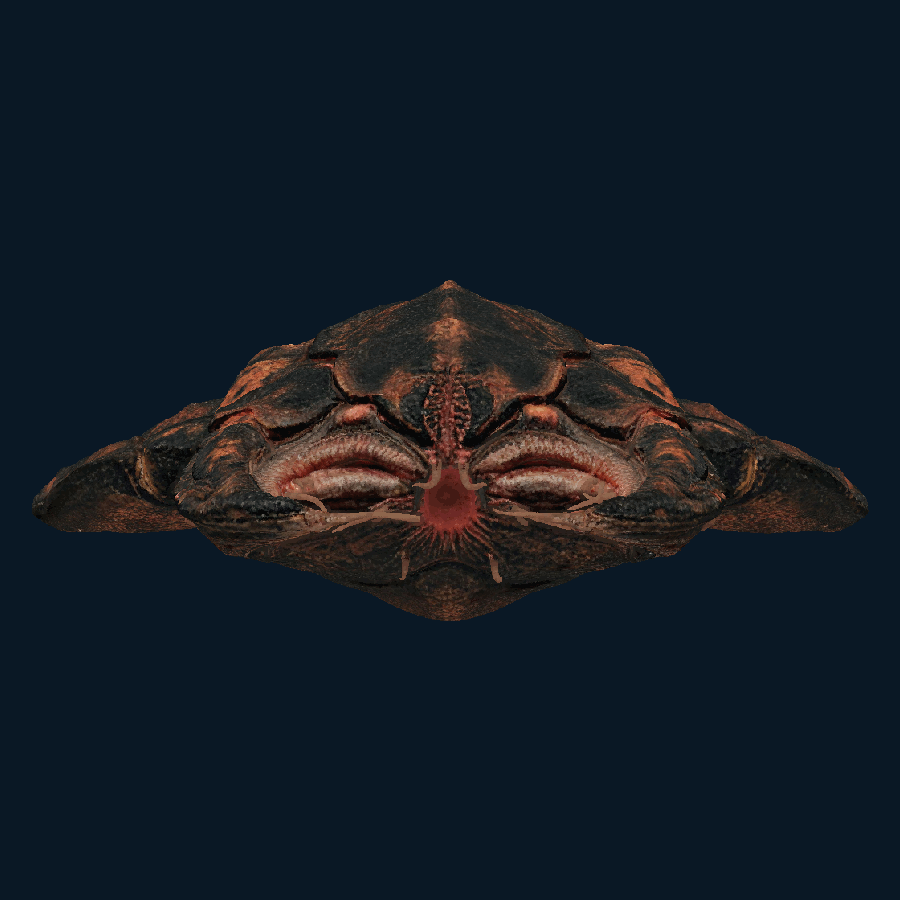
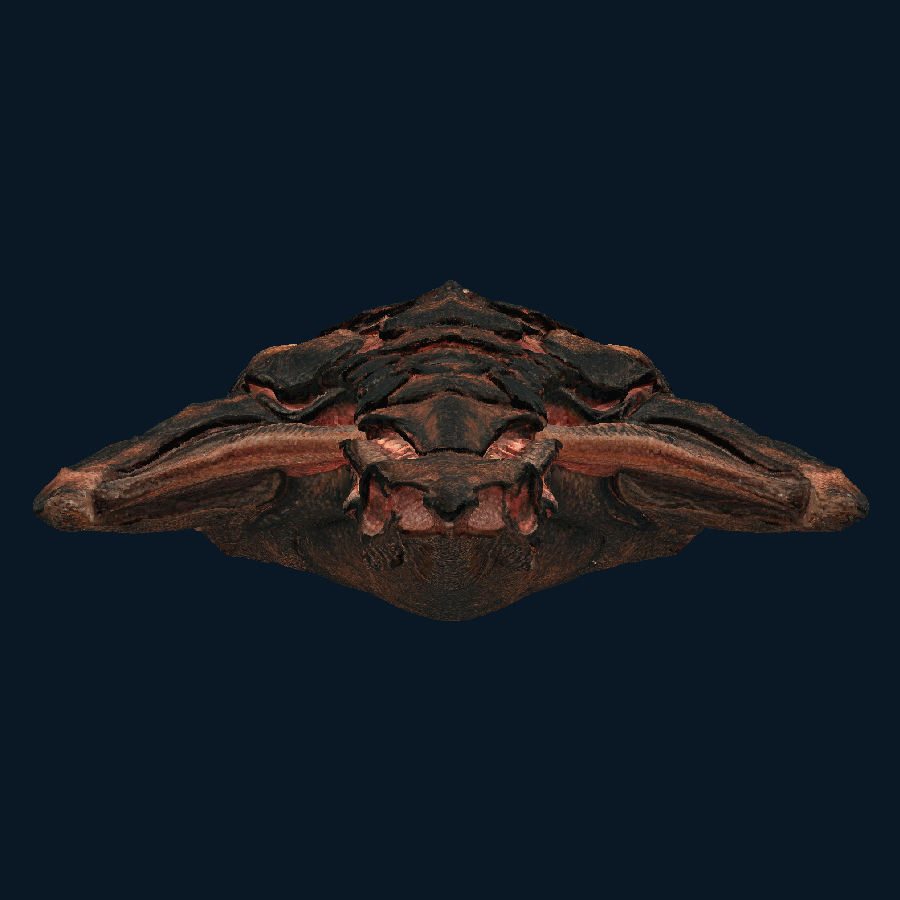
A mature war-organism balances a protected central body, substantial muscle and forward attack anatomy. Hardened dark surfaces contrast with warmer living tissue. The artillery mouth and brood-bearing organs belong to the same continuous body rather than separate weapon and hangar modules.
Functional Architecture
Reagent production, brood growth and tissue repair share food, circulation and recovery time. Eight symbionts and twelve polyps support local defense and sensing. A body-wide blood-field system contributes to propulsion, coordinated with three underside membranes.
Technical Specifications
Offensive rating: 85/100 — Two reagent stomachs feed a living artillery mouth for directed chemical attacks
Defensive rating: 64/100 — The coherent body protects internal organs while symbionts and polyps defend closer approaches
Mobility rating: 43/100 — Maneuvering supports the formation and mission profile rather than unrestricted pursuit
Tactical cognition rating: 65/100 — Target assessment, formation coordination and response timing support chemical assault cruiser operations
Endurance rating: 52/100 — Mission duration depends on finite reserves, damage recovery and scheduled replenishment
Fleet support rating: 63/100 — Provides chemical assault and nurtured fighter support within a brood formation
Fleet Role
Provides chemical assault and nurtured fighter support within a brood formation. It can threaten a target at a distance while its released organisms complicate the target’s defensive response.
Life Between Stars
The blood-field system and three underside membranes coordinate propulsion and attitude. Operational doctrine maintains enough separation for chemical attacks and fighter activity, then withdraws before heat and metabolic depletion collapse both functions at once.
Defense Architecture
The coherent body protects internal organs while symbionts and polyps defend closer approaches. Its own biofighters may help screen the host, but deploying them also spends brood reserves that take food and time to replace.
Operational Limits
Heat, hunger and injury limit endurance. Heavy chemical output and rapid brood replacement compete with regeneration. The published engagement against ten ObsidianWhirls ended in the cruiser’s destruction despite nine interceptor losses; numerical superiority or a powerful main organ alone does not predict every engagement.
Strategic Strengths
A substantial chemical attack and a second layer of nurtured fighters make the cruiser difficult to answer with a single defensive response. It combines more independent combat capacity than a specialized escort with useful brood support.
Capability Assessment
The living artillery mouth and paired reagent organs deliver directed chemical attacks, while internally nurtured biofighters add a second attack layer. This combination gives the cruiser strong offensive reach, constrained by metabolic recovery and modest mobility.
B · 62.0
Fleet-wide concept rating, 0–100; not simulated performance. Specialized strengths do not imply an equally high overall grade. Tactical Cognition describes sensing, coordination and command. Grade is the equal-weight mean: S ≥ 90, A ≥ 75, B ≥ 60, C ≥ 45, D < 45.
Technology Level
T1 — space-operating biological civilization. This editorial class describes the demonstrated space role; phase travel and world engineering are not assigned from anatomy alone.
Weapon Class
W2 — heavy chemical fleet engagement with a supporting biofighter brood. This class does not imply unlimited regeneration or strategic world-scale effects.
T0 planetary · T1 system flight · T2 phase travel · T3 limited world engineering. W0 point defense · W1 ship combat · W2 heavy fleet combat · W3 strategic theater systems. Technology and weapon classes are independent of the profile grade.
History & Lineage
Universe lore · authored service history
Origin
Cultivated to combine a mature chemical artillery organism with the ability to sustain smaller attackers during a prolonged brood encounter
Lineage & Branch
chemical-artillery cruiser branch. The bombardier beetle’s aimed chemical discharge informs the paired reagent organs and living projector, combined with internally nurtured biofighter broods.
Brood or Swarm
Ember Furrow Assault Brood
Individual History
The Ember Furrow — In the brood account, Obsidian Harrow guided its first fighter emergence along the cooling wake of a chemical release. The mature host held back its second discharge until its smaller organisms had cleared the attack path.
The Cost of a Second Brood — After a prolonged pursuit, the host lacked the reserves to replace its spent fighters and repair a damaged membrane at the same time. It fed and recovered behind the brood’s screen, leaving a dark growth seam around the healed tissue.
The Harrow engagement — The official ObsidianWhirl video shows ten interceptors destroying an Obsidian Harrow-class cruiser. Nine interceptors are lost and the lead ship escapes. That recorded outcome is not an invented service episode.