Overview
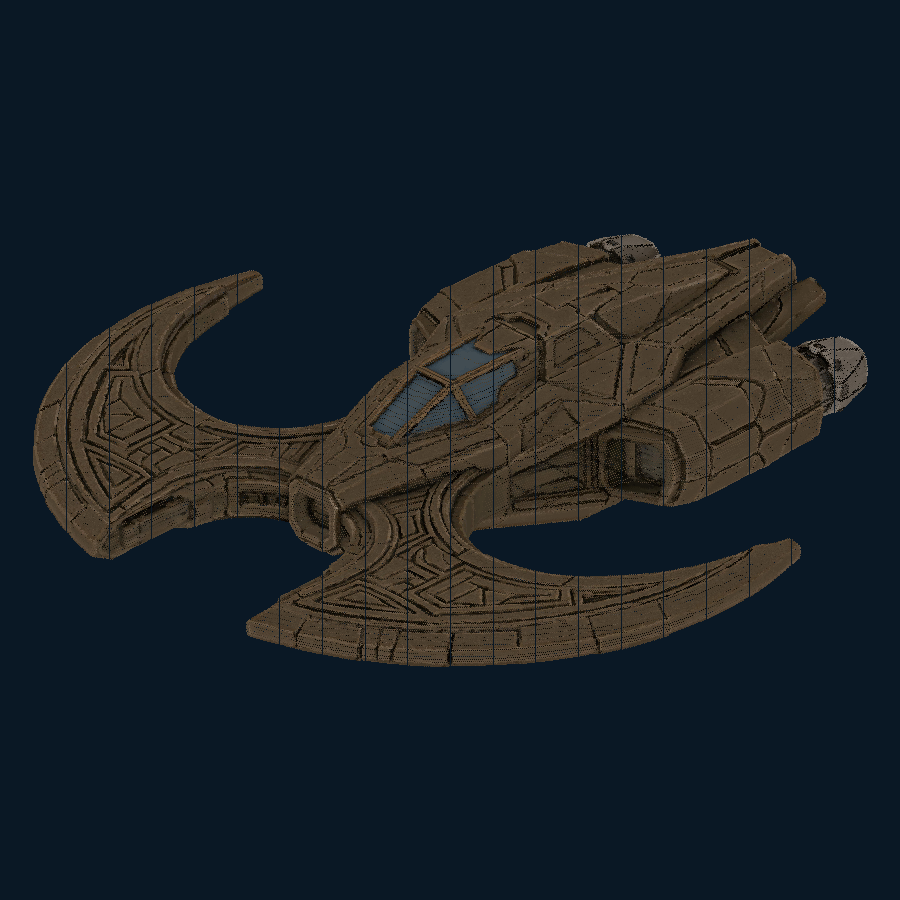
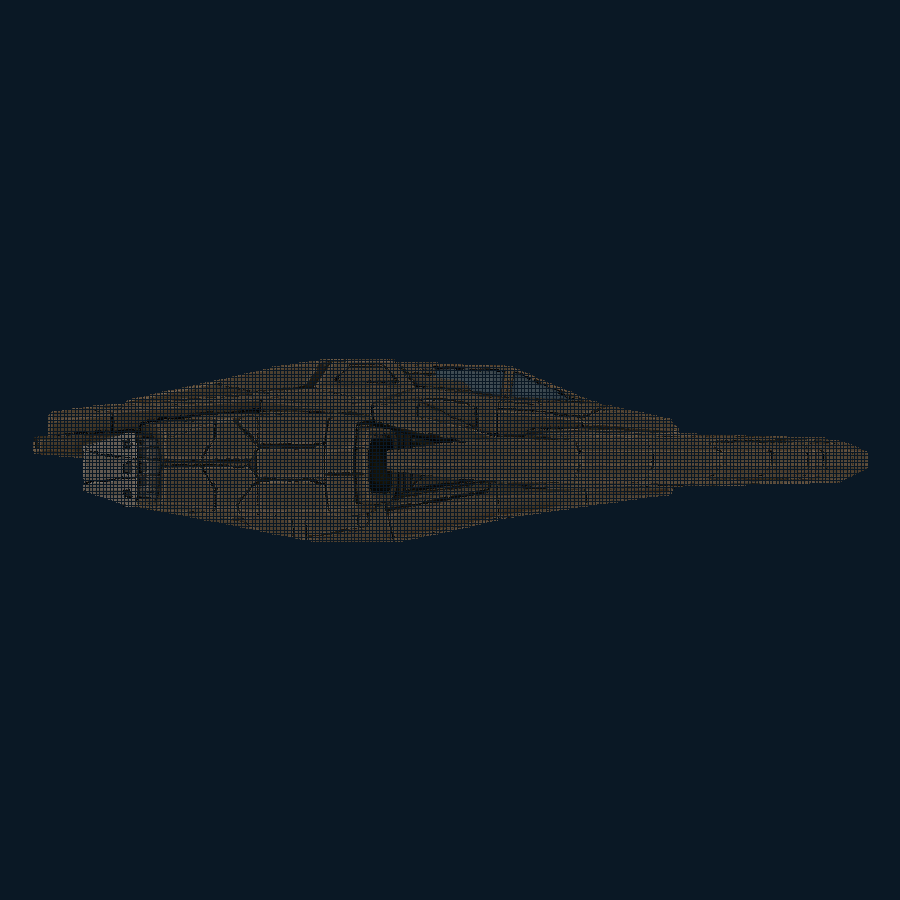
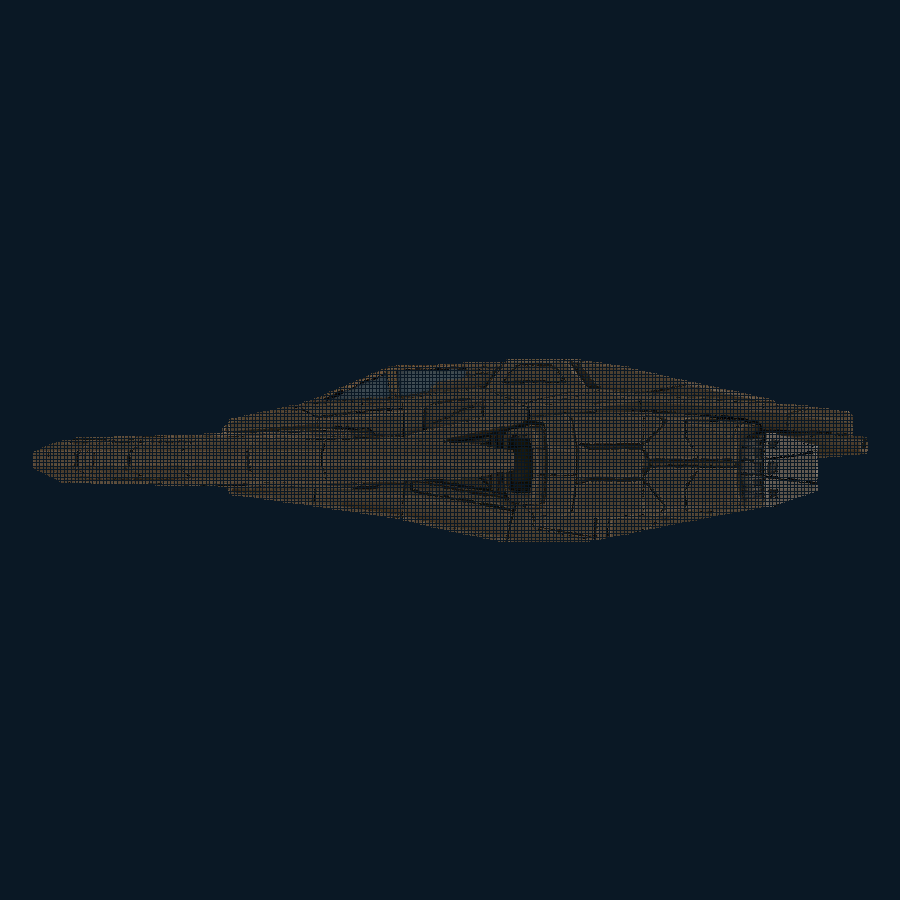
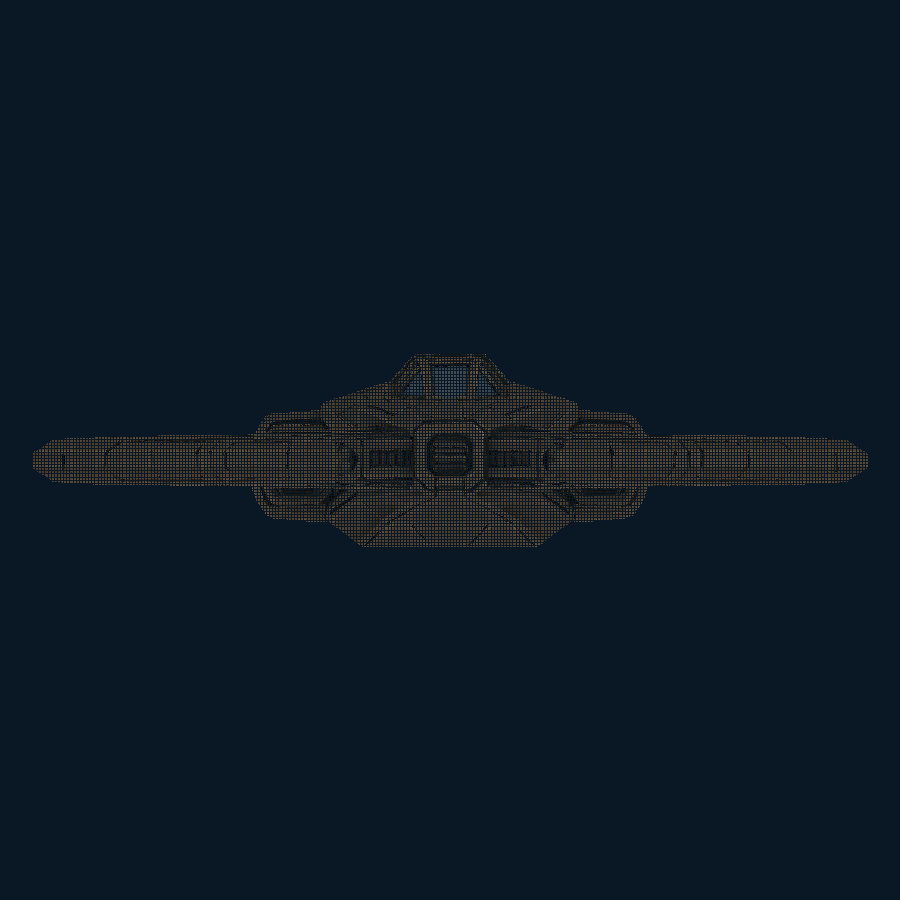
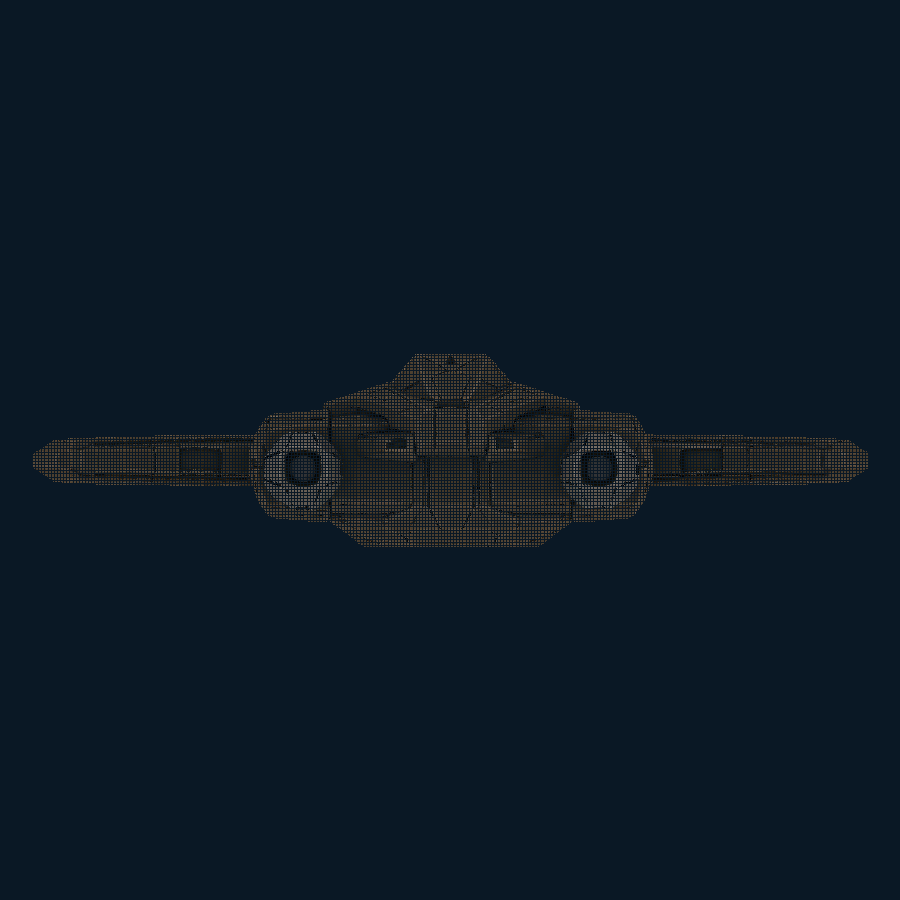
ObsidianWhirl spreads its hull around a thick central elbow. Distributed vector thrusters along the rear edges give this strike interceptor directional control during close engagements with larger warships.
Vessel Profile
Weapons & Armament
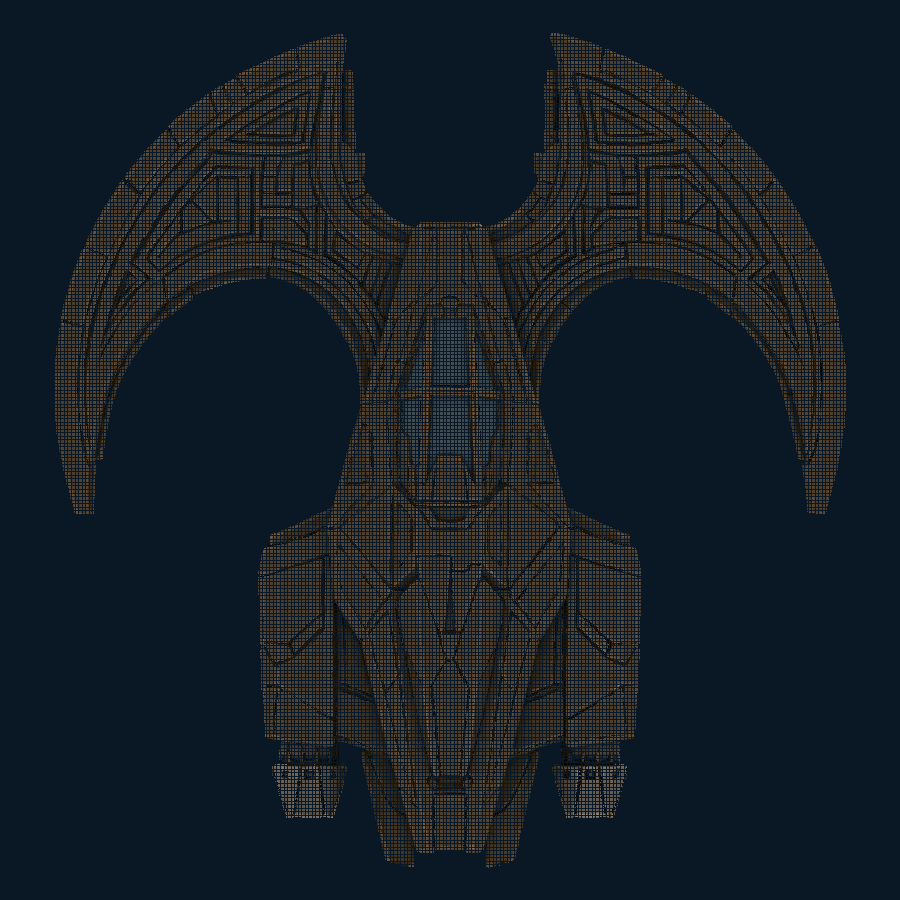
A rotary flak drum occupies the central junction. Four smaller beam emitters, internal missile bays and recessed close-defense systems support the main weapon.
Dimensions & Scale
Length 500 m × Width 180 m × Height 70 m. Fictional overall dimensions in standard operating configuration.
External Anatomy
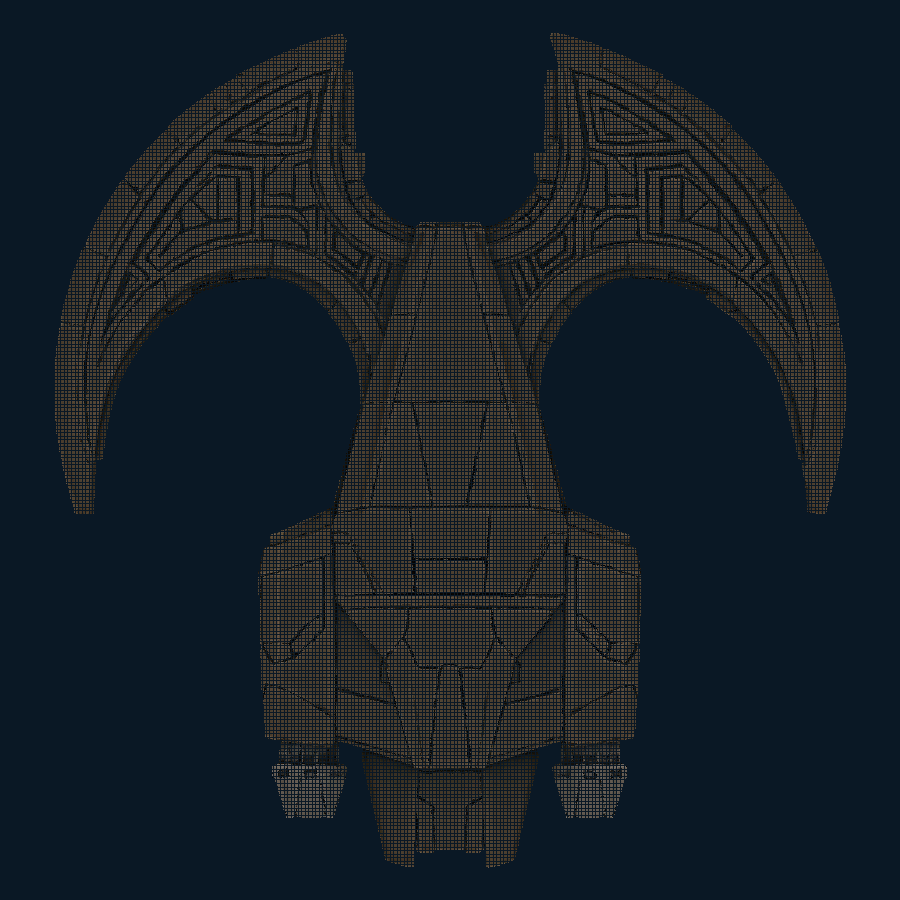
Two curved arms extend from a thick central elbow. The main weapon sits at their junction; smaller emitters and recessed bays remain within the body. Rear-edge vector thrusters support the craft without replacing the curved arms as its defining silhouette.
Functional Architecture
The central rotary flak drum, four beam emitters and internal missile bays require coordinated firing windows. The central junction serves as the organizational core of the two-arm body.
Technical Specifications
Offensive rating: 57/100 — A rotary flak drum occupies the central junction
Defensive rating: 28/100 — Recessed close-defense systems protect a small central body
Mobility rating: 90/100 — Maneuvering supports the formation and mission profile rather than unrestricted pursuit
Tactical cognition rating: 55/100 — Target assessment, formation coordination and response timing support vector interceptor operations
Endurance rating: 34/100 — Mission duration depends on finite reserves, damage recovery and scheduled replenishment
Fleet support rating: 24/100 — Changes the angle of an engagement, distracts heavier batteries and combines several attack passes against a larger target
Fleet Role
Changes the angle of an engagement, distracts heavier batteries and combines several attack passes against a larger target. The wing’s strength is coordinated movement rather than individual durability.
Life Between Stars
Distributed rear-edge vector thrusters rotate the attack geometry around the thick central elbow. The proposed flight pattern uses short passes and separation between successive groups.
Defense Architecture
Recessed close-defense systems protect a small central body. Vector control provides an additional means of avoiding sustained fire, but cannot substitute for capital-ship armor.
Operational Limits
Light protection makes losses severe against cruiser-class weapons. The ten-against-one engagement destroyed Obsidian Harrow but cost nine interceptors; this result does not establish a universal exchange ratio.
Strategic Strengths
Exceptional repositioning, multiple attack angles and a compact mixed armament give a coordinated wing opportunities that a rigid line ship cannot create
Capability Assessment
The sweeping interceptor body supports a rotary flak drum, four beam emitters and repeated attacks from changing angles. Exceptional mobility and varied local armament raise its threat above a basic escort, but light protection makes direct exchanges costly.
C · 48.0
Fleet-wide concept rating, 0–100; not simulated performance. Specialized strengths do not imply an equally high overall grade. Tactical Cognition describes sensing, coordination and command. Grade is the equal-weight mean: S ≥ 90, A ≥ 75, B ≥ 60, C ≥ 45, D < 45.
Technology Level
T1 — system-flight capability. This editorial classification reflects the documented space role; no phase-travel or world-engineering capability is inferred.
Weapon Class
W1 — carrier-wing or interceptor engagement; strength depends on coordinated craft and support
T0 planetary · T1 system flight · T2 phase travel · T3 limited world engineering. W0 point defense · W1 ship combat · W2 heavy fleet combat · W3 strategic theater systems. Technology and weapon classes are independent of the profile grade.
History & Lineage
Universe lore · authored service history
Origin
Developed to give the Human fleet a dedicated vector-controlled interceptor capable of disrupting a larger ship’s preferred firing solution
Lineage & Branch
Vector-interceptor family. Its fleet assignment follows the operational doctrine of this lineage.
Fleet or Unit
Elbow Flight Interception Wing
Individual History
The Returning Lead — At the Harrow engagement, ten ObsidianWhirls attacked a Bugvex cruiser and only the lead ship escaped after the cruiser was destroyed. The surviving crew preserved the losses alongside the victory.
Nine Empty Berths — In the wing’s authored history, the returning ship’s recording became the basis of a new rule: never repeat a successful attack angle merely because the first pass worked. Nine unoccupied maintenance cradles remain on the training deck.