
Overview
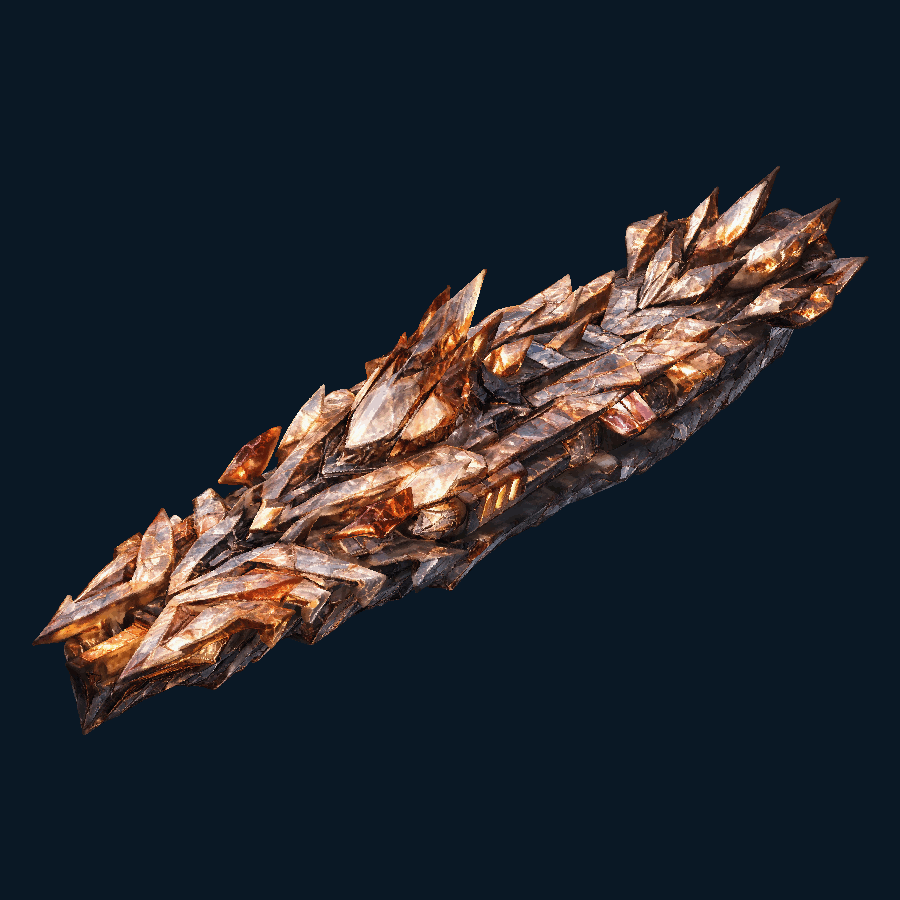
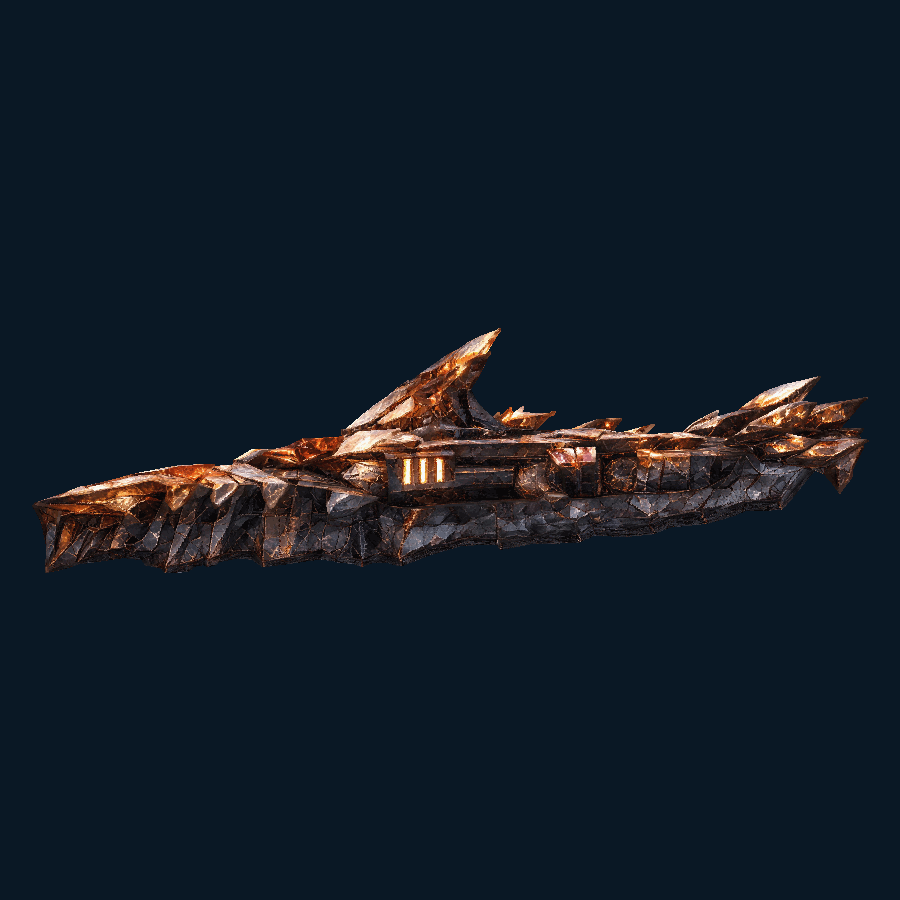
Amberaxis Pursuit Destroyer is a narrow Cryvum sea-surface hunter built to pursue heavily protected targets. A continuous displacement hull carries two concentrated forward emitters, low pursuit sensors and a strongly defined hydrolattice stern, all cultivated from zircon-inspired crystal-metal.
Vessel Profile
Dimensions & Scale
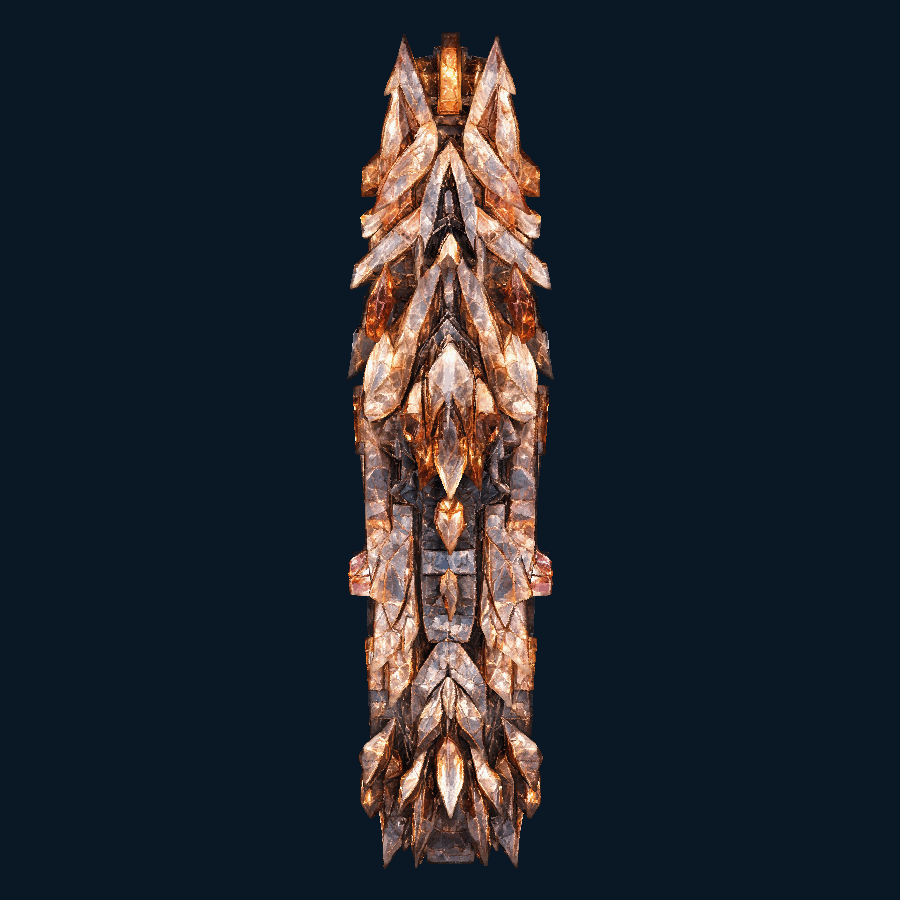
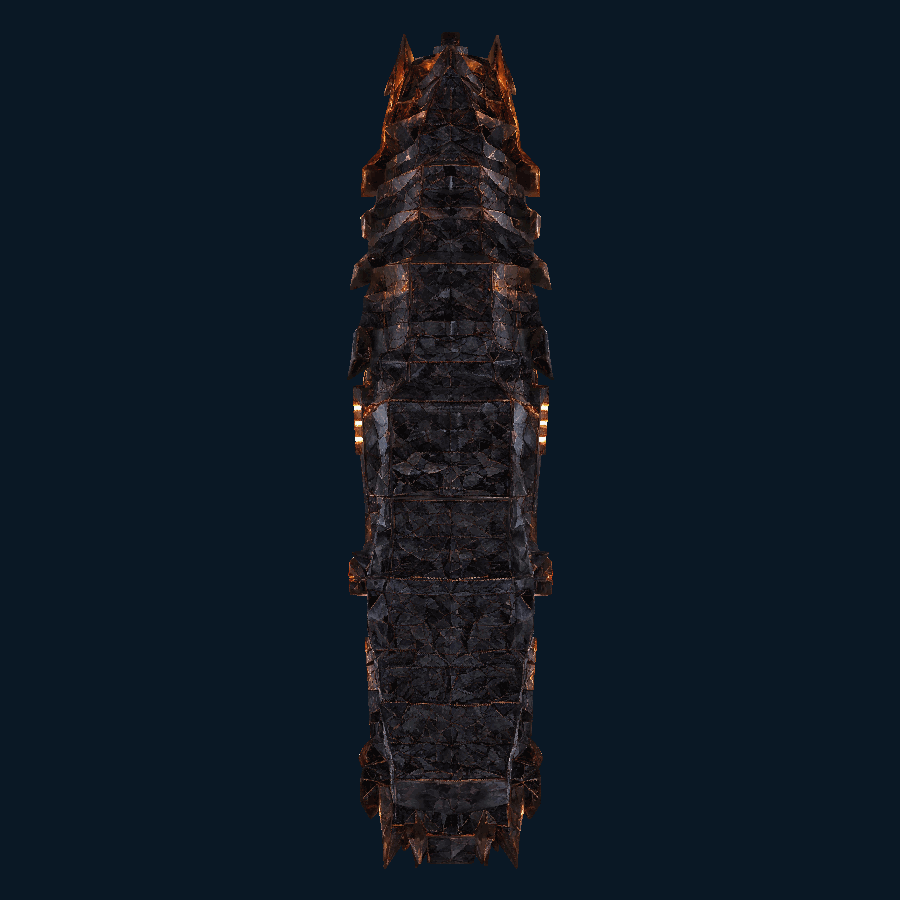
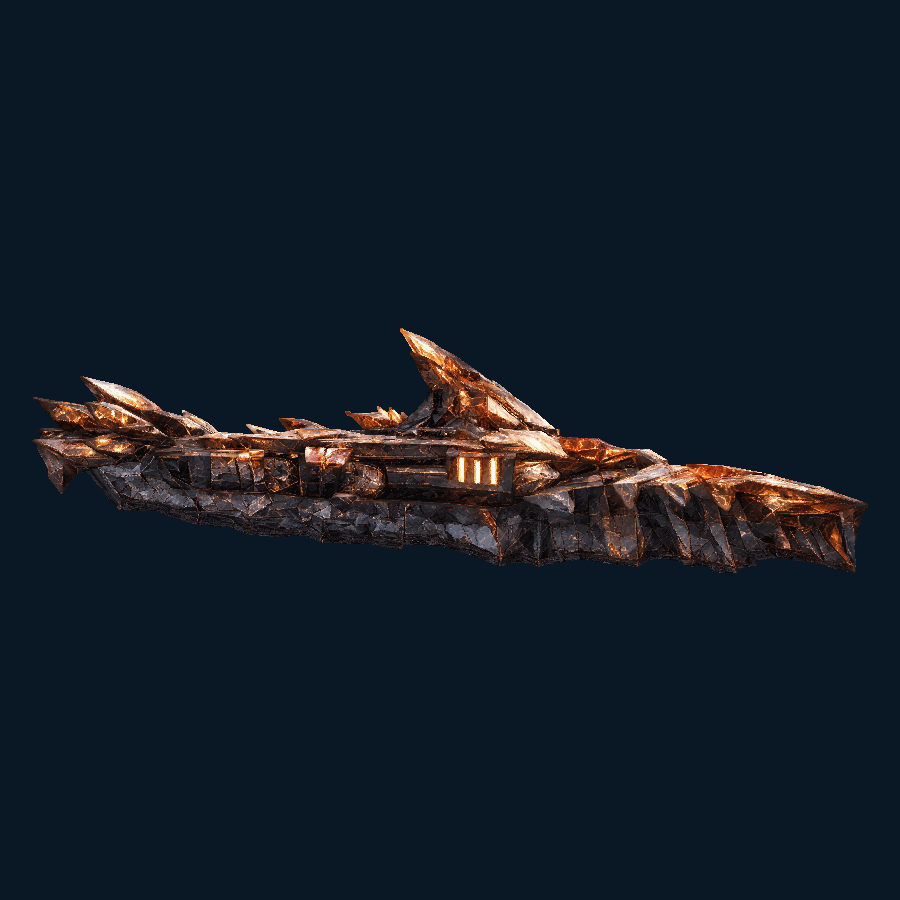
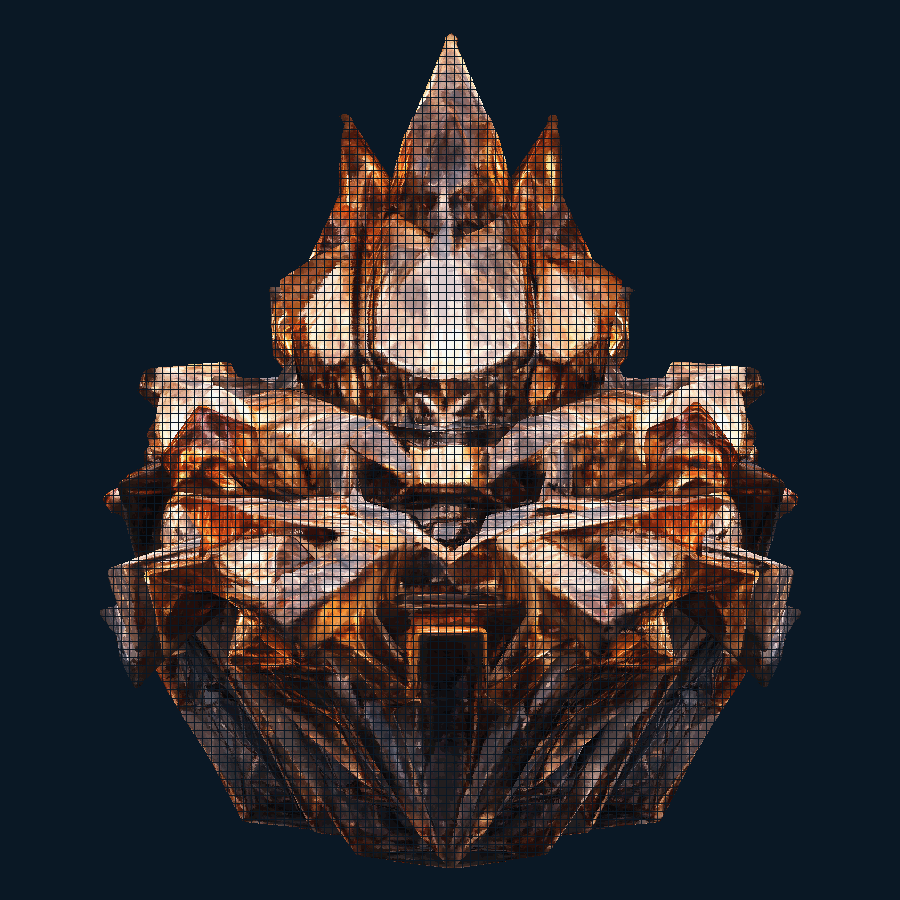
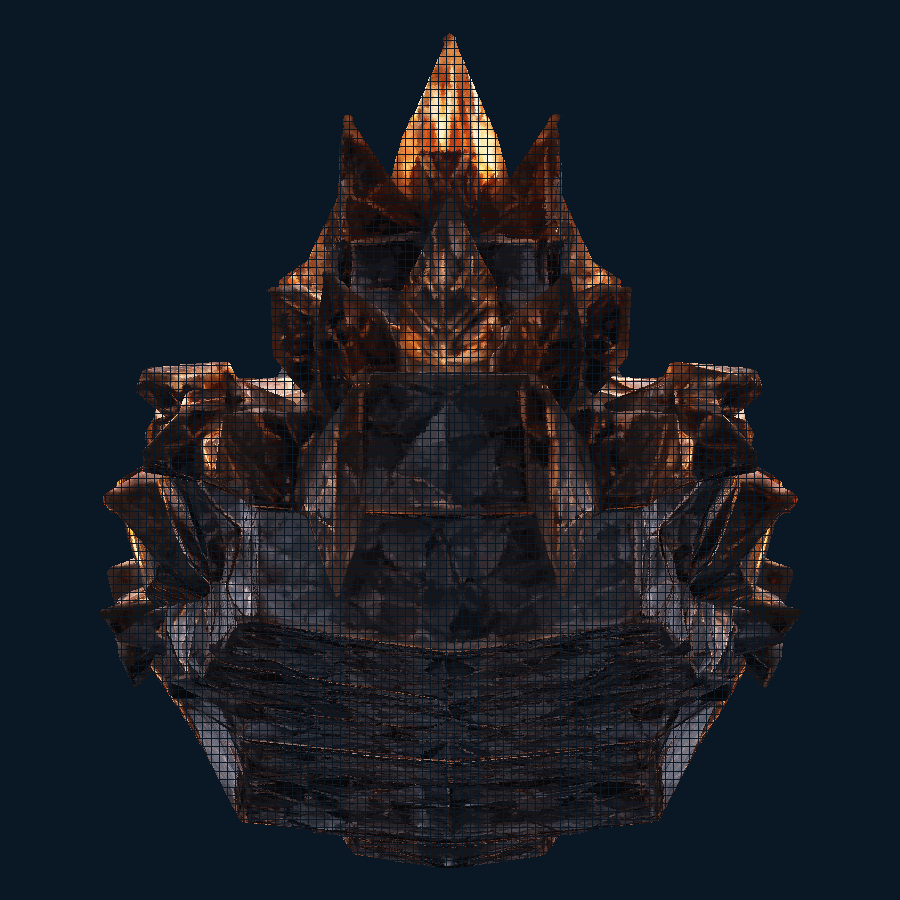
Length 33.1 m × Width 5.3 m × Height 3.1 m. Total height combines 1.6 m above the design waterline and 1.5 m draft. These are supplied fictional surface-vessel dimensions.
Proposed surface displacement: approximately 150 ton (metric tons). Fictional concept estimate based on size, internal structure and operating environment; not measured performance.
Weapons & Armament
Two concentrated anti-heavy emitters form the forward battery. Medium flank attack apertures, compact shard-launch recesses and smaller defensive outlets cover the pursuit corridor. Short rooted projector spines and split-prism recesses remain continuous with the hull rather than separate naval fittings.
External Anatomy
Heavy forward shoulders surround a lower wave-splitting keel ridge. A continuous dark waterline belt joins the combat terraces above to a smoother buoyant belly below. Unequal short prismatic domains retain thickness around the shoulders and stern. Warm red-brown faces meet dark roots and champagne mineral reflections.
Functional Architecture
One or two low sensing ridges combine directional observation with fine resonance slits. Deep common roots carry stored field energy toward the bow and stern. Metal-rich growth follows the waterline reinforcement and outlet rims, while clearer domains focus sensing and attack.
Technical Specifications
Offensive rating: 70/100 — Two concentrated anti-heavy emitters form the forward battery
Defensive rating: 45/100 — A reinforced bow and protective shoulders resist frontal combat loads
Mobility rating: 82/100 — Two to four recessed hydrolattice flow channels accelerate surrounding seawater through fictional field control
Tactical cognition rating: 76/100 — One or two low sensing ridges combine directional observation with fine resonance slits
Endurance rating: 46/100 — The narrow hull limits reserve volume and broadside protection
Fleet support rating: 38/100 — Strong directional sensing, concentrated forward fire and an aggressive stern drive suit interception of heavier surface units
Fleet Role
Heavy Pursuit Destroyer. Strong directional sensing, concentrated forward fire and an aggressive stern drive suit interception of heavier surface units. A compact hull can change pursuit lanes without committing a large surface formation.
Maritime Operations
Two to four recessed hydrolattice flow channels accelerate surrounding seawater through fictional field control. Smaller steering channels adjust the pursuit line. The hull floats by displacement at its design waterline; it does not hover above the sea. Submerged patrol and independent spaceflight are not assigned.
Defense Architecture
A reinforced bow and protective shoulders resist frontal combat loads. Smaller interception outlets cover the flanks, while the continuous waterline band protects the buoyant body. Rapid repositioning supports survival when a pursuit becomes unfavorable.
Operational Limits
The narrow hull limits reserve volume and broadside protection. Heavy seas disturb sensor geometry and forward firing alignment. Sustained pursuit competes with emitter output for energy, while damage below the waterline threatens trim and displacement stability.
Strategic Strengths
Strong directional sensing, concentrated forward fire and an aggressive stern drive suit interception of heavier surface units. A compact hull can change pursuit lanes without committing a large surface formation.
Capability Assessment
Proposed fictional doctrine profile. Strong directional sensing, concentrated forward fire and an aggressive stern drive suit interception of heavier surface units. A compact hull can change pursuit lanes without committing a large surface formation. Ratings express intended battlefield function rather than measured performance.
C · 59.5
Fleet-wide concept rating, 0–100; not simulated performance. Specialized strengths do not imply an equally high overall grade. Tactical Cognition describes sensing, coordination and command. Grade is the equal-weight mean: S ≥ 90, A ≥ 75, B ≥ 60, C ≥ 45, D < 45.
Technology Level
Proposed T2 — coordinated crystal-metal field technology, integrated sensing and material-state control. This tier does not assign independent interstellar travel.
Weapon Class
Proposed W1 — focused anti-heavy surface attack and local interception
T0 planetary · T1 system flight · T2 phase travel · T3 limited world engineering. W0 point defense · W1 ship combat · W2 heavy fleet combat · W3 strategic theater systems. Technology and weapon classes are independent of the profile grade.
History & Lineage
Universe lore · authored service history
Origin
Cultivated as a fast ocean hunter for engagements that demand concentrated anti-heavy pressure from a relatively small surface vessel
Lineage & Branch
Amberaxis surface-pursuit branch, inheriting a Cryvum destroyer lineage and zircon-inspired thick prismatic intergrowths
Fleet or Unit
Cryvum — ocean pursuit formations
Individual History
The Amber Wake — In this authored service history, an Amberaxis follows an armored hostile vessel through a chain of open-water channels. Its sensors maintain a narrow track while the stern field makes small corrections to avoid wasting stored energy.
The Broken Pursuit — Rough water interrupts the forward firing line. The destroyer turns across the target’s expected route and waits for a clearer approach instead of exhausting its reserves in a direct chase. Its next attack begins with a stable bow and an escape lane already selected.