
Overview
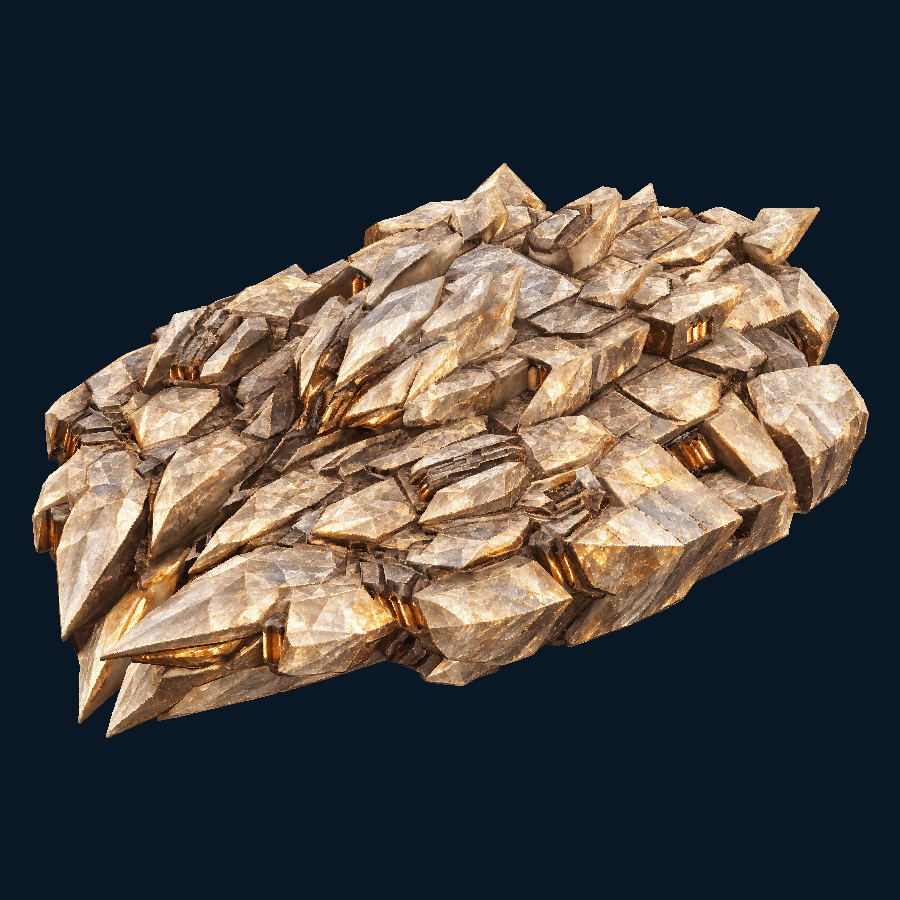
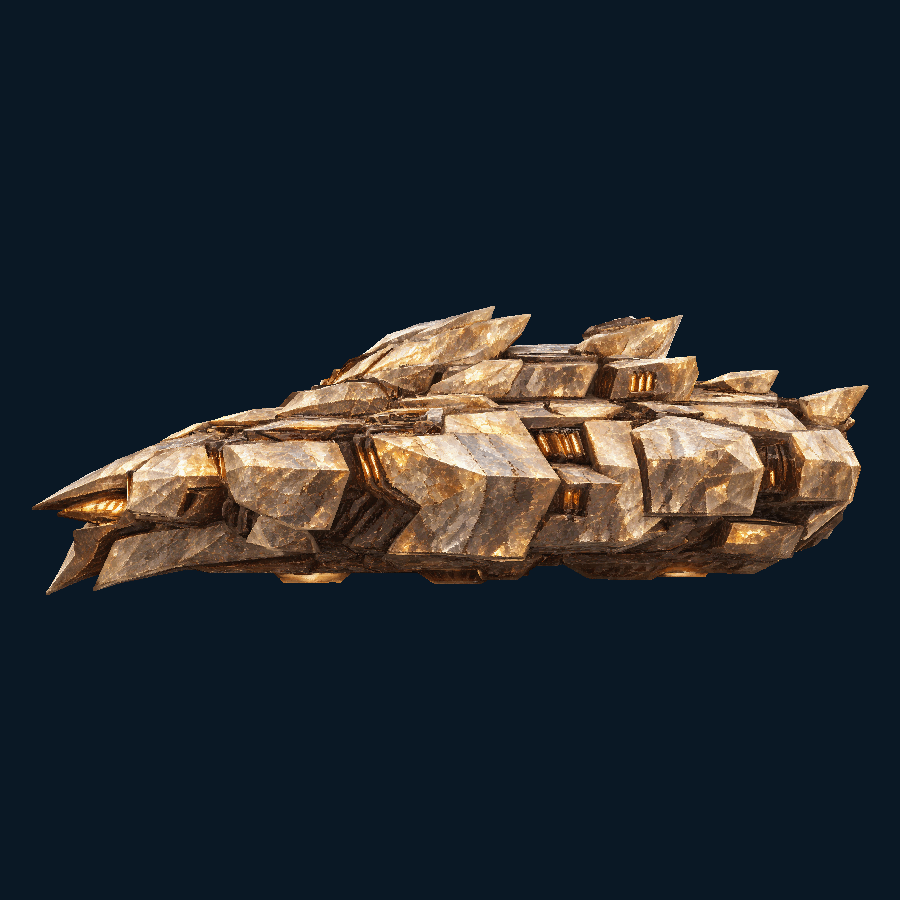
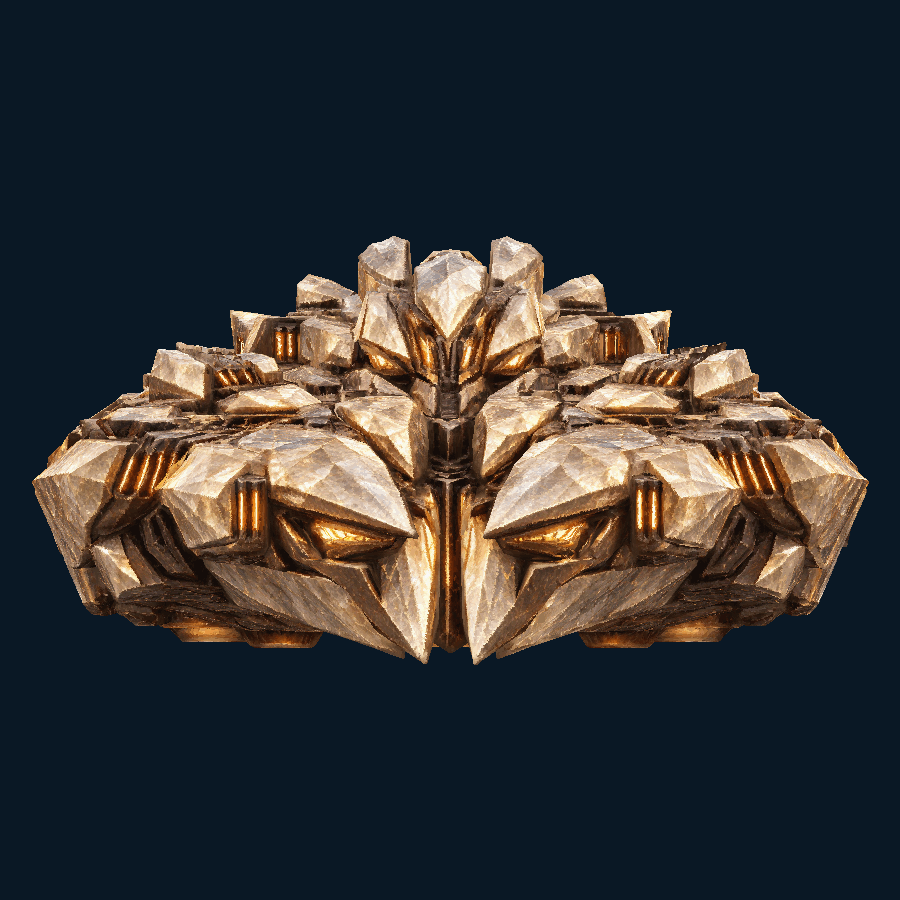
Ochretable Linebreaker is a heavy Cryvum ground assault vehicle built for sustained forward pressure. Two primary lattice projectors, deeply rooted shoulders and a protected central reservoir form one continuous baryte-inspired crystal-metal body carried close to the terrain by distributed support fields.
Vessel Profile
Dimensions & Scale
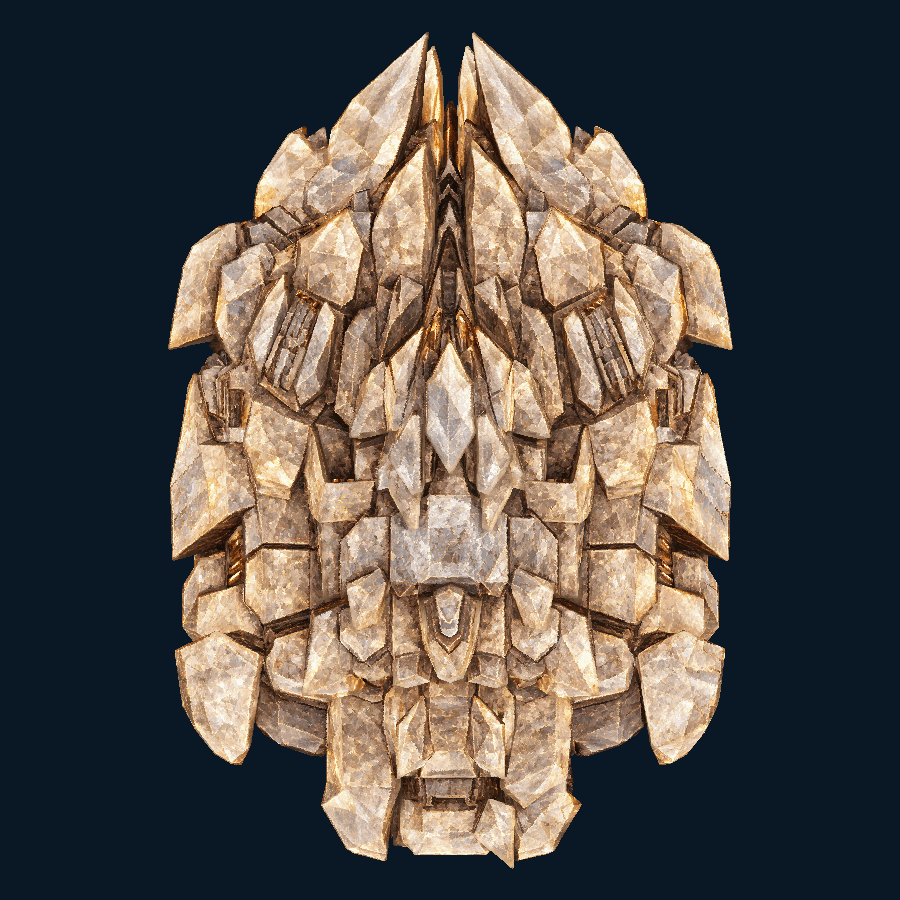
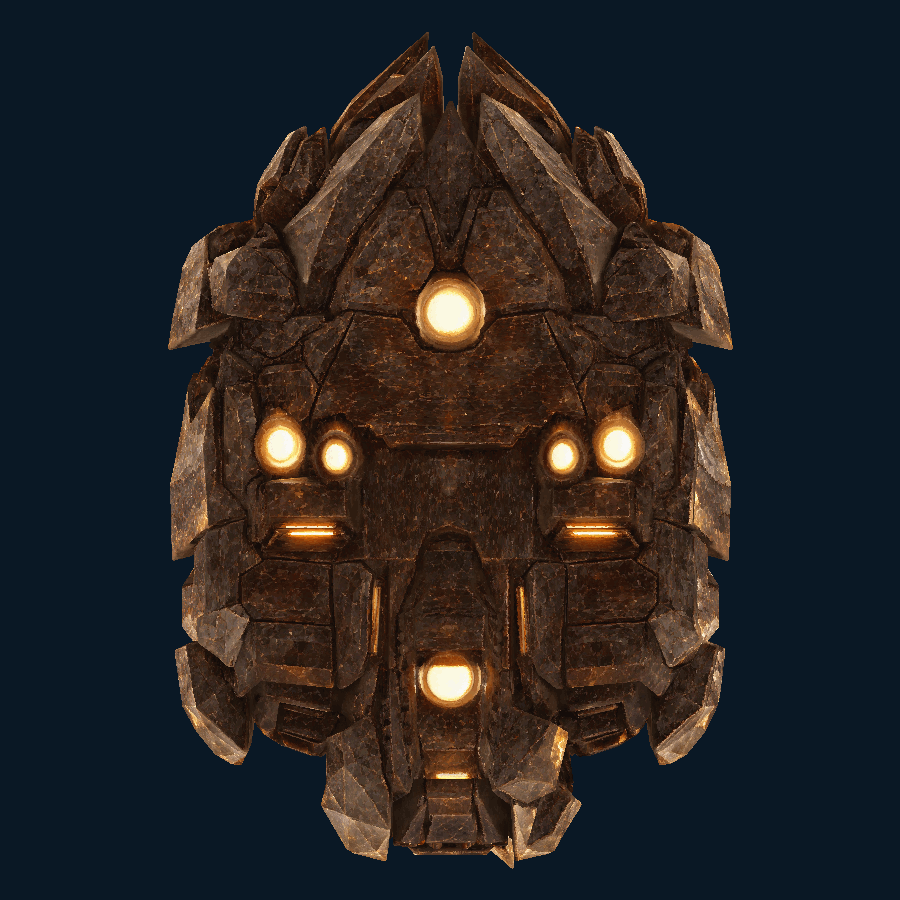
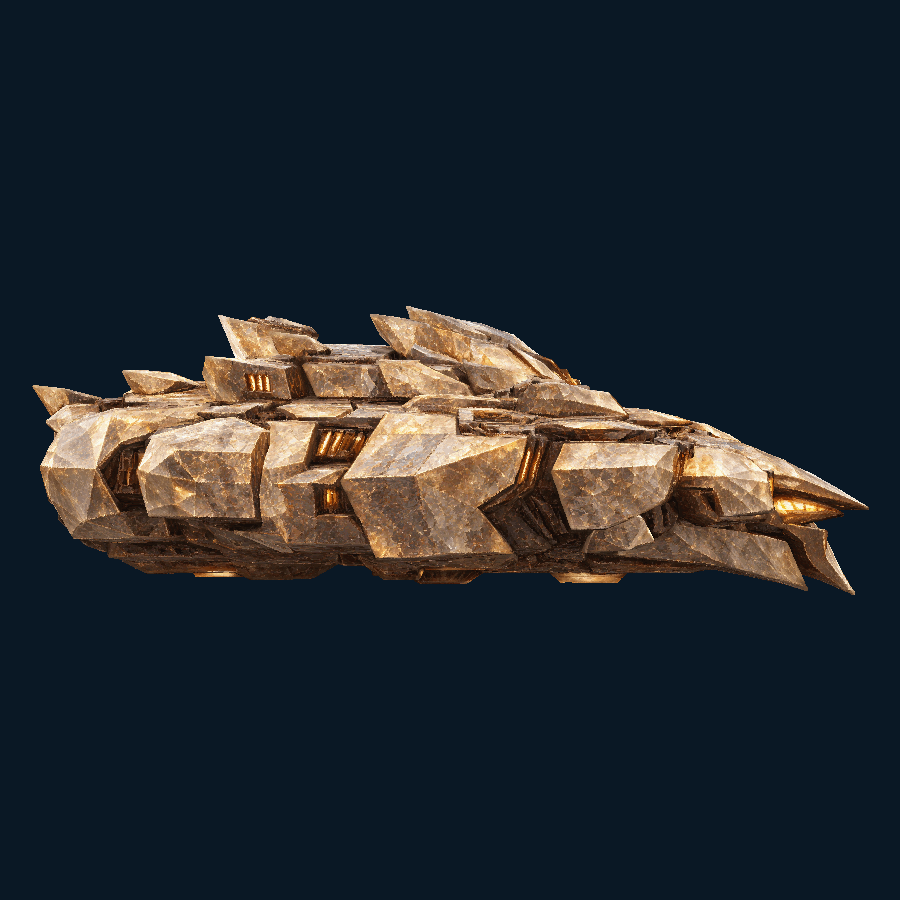
Length 97.8 m × Width 59.2 m × Height 18.1 m. Supplied fictional body dimensions exclude the nominal 1.49 m traveling hover gap. Ground-to-top height while traveling is approximately 19.59 m.
Proposed operating mass: approximately 110,000 ton (metric tons). Fictional concept estimate based on size, internal structure and operating environment; not measured performance.
Weapons & Armament
Two massive primary lattice-projector organs dominate the forward half. Four to six medium attack outlets cover the forward shoulders, supported by one or two grouped dorsal shard-launch banks. Smaller defensive outlets protect the flanks. Coordinated resonance projects lattice shear across a selected target zone through grown concentration and release structures.
External Anatomy
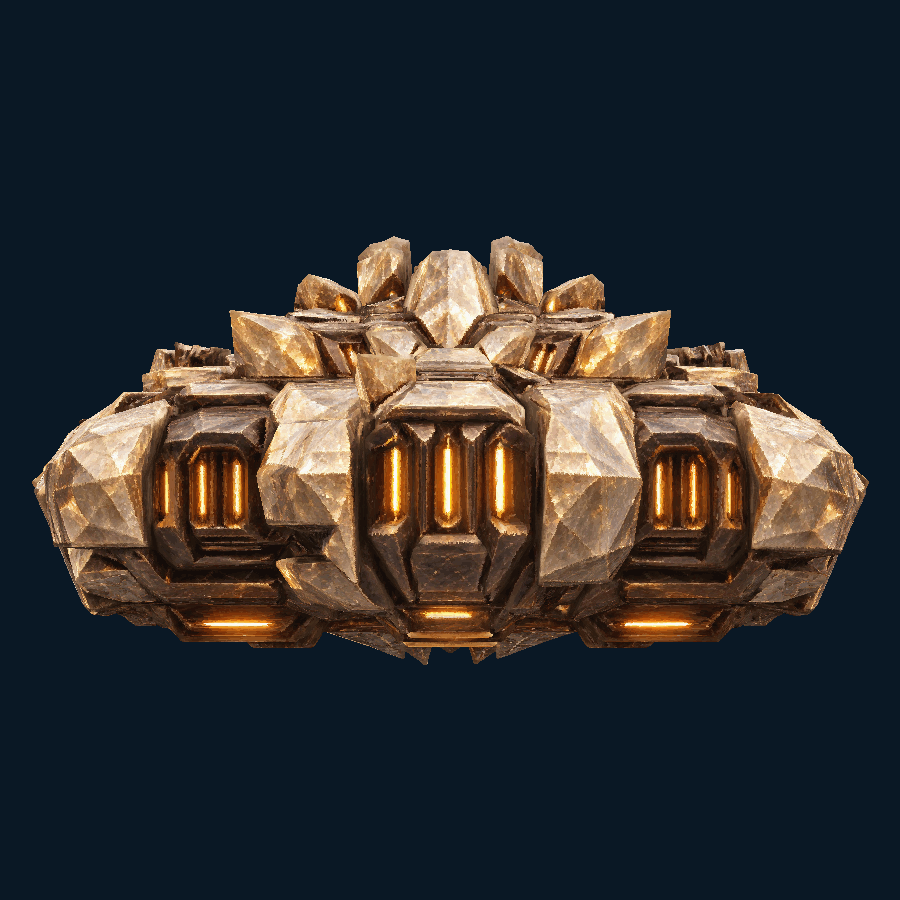
Broad tabular domains overlap lengthwise around a buried structural spine and two low stress shoulders. The forward-middle body holds the greatest density, with a deep central reserve mass and connected unequal rear growths. Pale ochre and cream faces rise from dark taupe roots; the dense underside remains continuous.
Functional Architecture
Low sensor ridges coordinate the paired attack battery with flank defense and terrain clearance. Thick mineral-rich roots connect projectors to the protected reservoir. Broad shallow underside support troughs maintain traveling height, while rear field-bias valleys steer the vehicle. Exchange and deployment boundaries remain closed in motion.
Technical Specifications
Offensive rating: 84/100 — Two massive primary lattice-projector organs dominate the forward half
Defensive rating: 82/100 — Deep frontal roots and broad protective shoulders distribute incoming loads
Mobility rating: 30/100 — The vehicle travels approximately 1.49 m above terrain using distributed support fields and buried rear steering states.
Tactical cognition rating: 66/100 — Low sensor ridges coordinate the paired attack battery with flank defense and terrain clearance
Endurance rating: 75/100 — Attack, defense and hovering draw from shared reserves
Fleet support rating: 55/100 — A heavily reinforced forward body and paired projectors sustain breakthrough pressure without exposed mechanical mounts
Fleet Role
Heavy Linebreaker. A heavily reinforced forward body and paired projectors sustain breakthrough pressure without exposed mechanical mounts. Deep reserves support deliberate assaults, while low support-field travel maintains a stable firing posture.
Ground Operations
The vehicle travels approximately 1.49 m above terrain using distributed support fields and buried rear steering states. The continuous underside clears low obstacles without tracks or legs. This ground adaptation is assigned to ground operations; inherited space-vessel lineage does not establish independent flight.
Defense Architecture
Deep frontal roots and broad protective shoulders distribute incoming loads. Recessed defensive apertures support local interception, while the buried spine protects reserve and control regions beneath the main fighting mass.
Operational Limits
Attack, defense and hovering draw from shared reserves. Narrow routes and abrupt terrain changes constrain its broad footprint. Sustained firing reduces maneuvering margin, while fractures through central roots can interrupt several working regions. Restoring major growths requires minerals and time.
Strategic Strengths
A heavily reinforced forward body and paired projectors sustain breakthrough pressure without exposed mechanical mounts. Deep reserves support deliberate assaults, while low support-field travel maintains a stable firing posture.
Capability Assessment
Proposed fictional doctrine profile. A heavily reinforced forward body and paired projectors sustain breakthrough pressure without exposed mechanical mounts. Deep reserves support deliberate assaults, while low support-field travel maintains a stable firing posture. Ratings express intended battlefield function rather than measured performance.
B · 65.3
Fleet-wide concept rating, 0–100; not simulated performance. Specialized strengths do not imply an equally high overall grade. Tactical Cognition describes sensing, coordination and command. Grade is the equal-weight mean: S ≥ 90, A ≥ 75, B ≥ 60, C ≥ 45, D < 45.
Technology Level
Proposed T2 — coordinated crystal-metal field technology, integrated sensing and material-state control. This tier does not assign independent interstellar travel.
Weapon Class
Proposed W2 — heavy breakthrough lattice projectors and sustained ground assault
T0 planetary · T1 system flight · T2 phase travel · T3 limited world engineering. W0 point defense · W1 ship combat · W2 heavy fleet combat · W3 strategic theater systems. Technology and weapon classes are independent of the profile grade.
History & Lineage
Universe lore · authored service history
Origin
Cultivated to translate Cryvum battle-line pressure into planetary breakthroughs, concentrating growth density and stored energy around a low mobile ground platform
Lineage & Branch
Ochretable ground-linebreaker branch, derived from the Ochretable Bulwark-class Battleship and its baryte-inspired tabular growth language. Ground dimensions are specific to this adaptation.
Fleet or Unit
Cryvum — planetary breakthrough formations
Individual History
The Ochre Corridor — In this authored service history, an Ochretable advances toward a fortified passage across broken ground. Its paired projectors alternate discharge so the underside field can maintain a steady clearance while lighter units secure the flanks.
The Quiet Reservoir — After opening the first barrier, the vehicle pauses behind its protective shoulders to rebuild reserve capacity. The formation proceeds only after a second route is surveyed, preserving enough energy for both withdrawal and renewed forward pressure.