
Overview
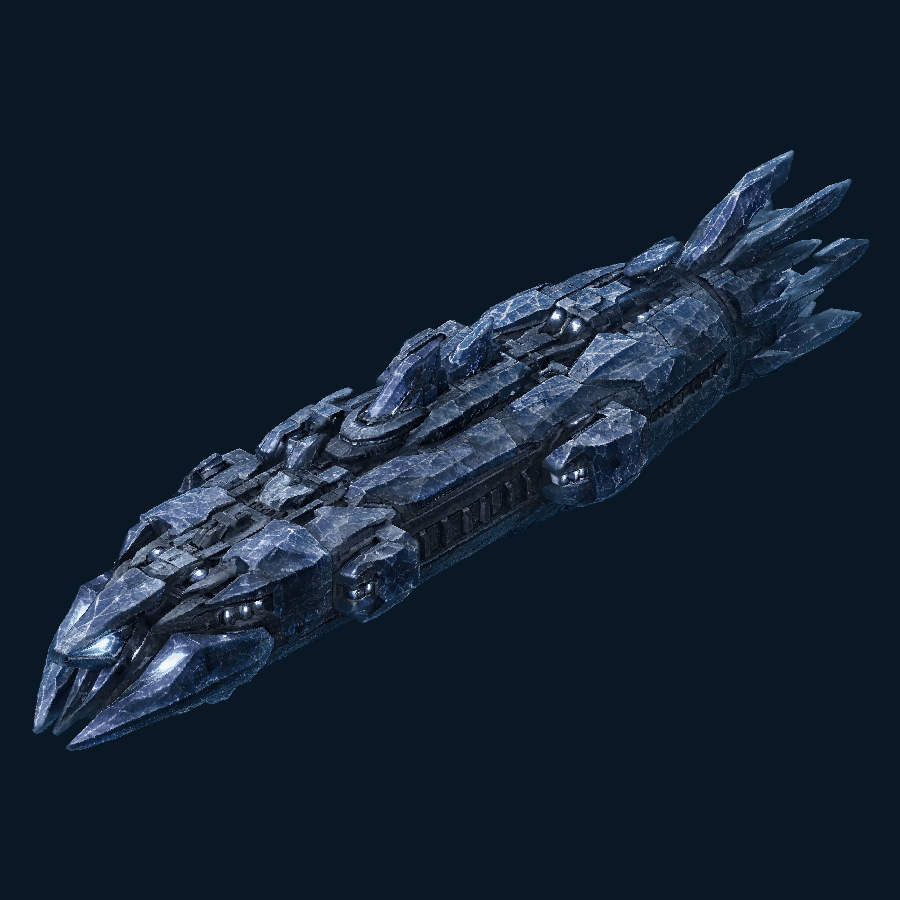
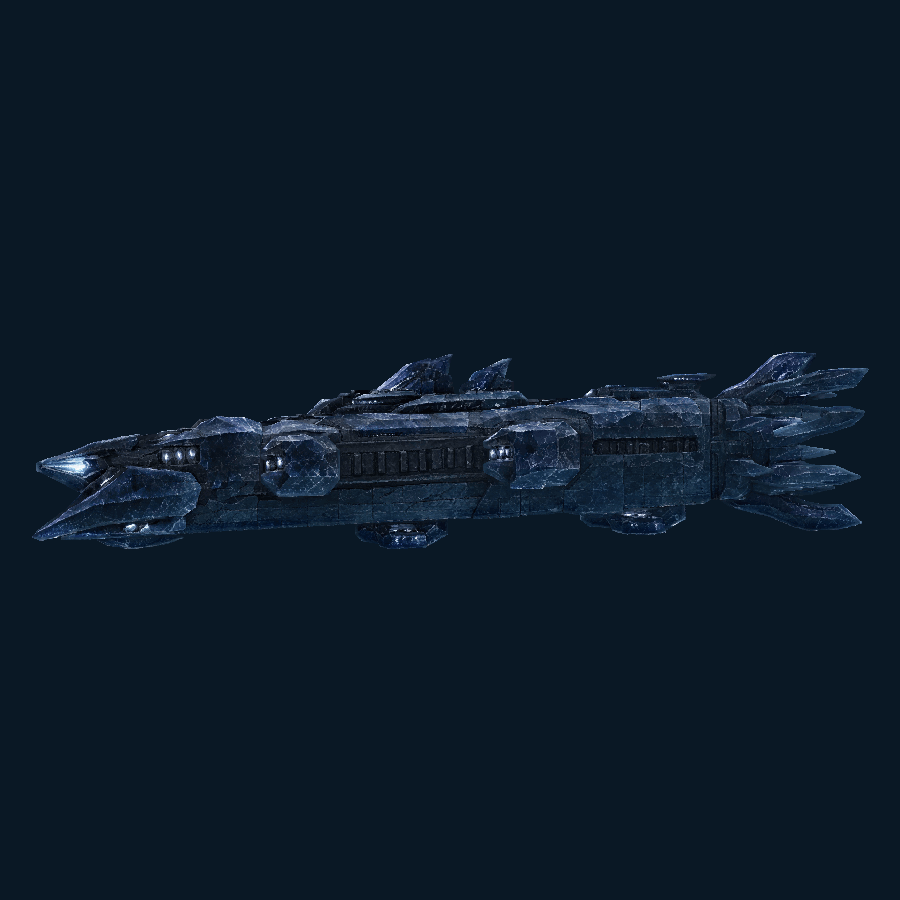
Blackaxis Deep Interceptor is a large Cryvum underwater warship designed for fast directional pursuit. Its narrow magnetite-inspired pressure body integrates precise forward emitters, low sensing ridges and powerful stern field channels within one cultivated crystal-metal lattice.
Vessel Profile
Dimensions & Scale
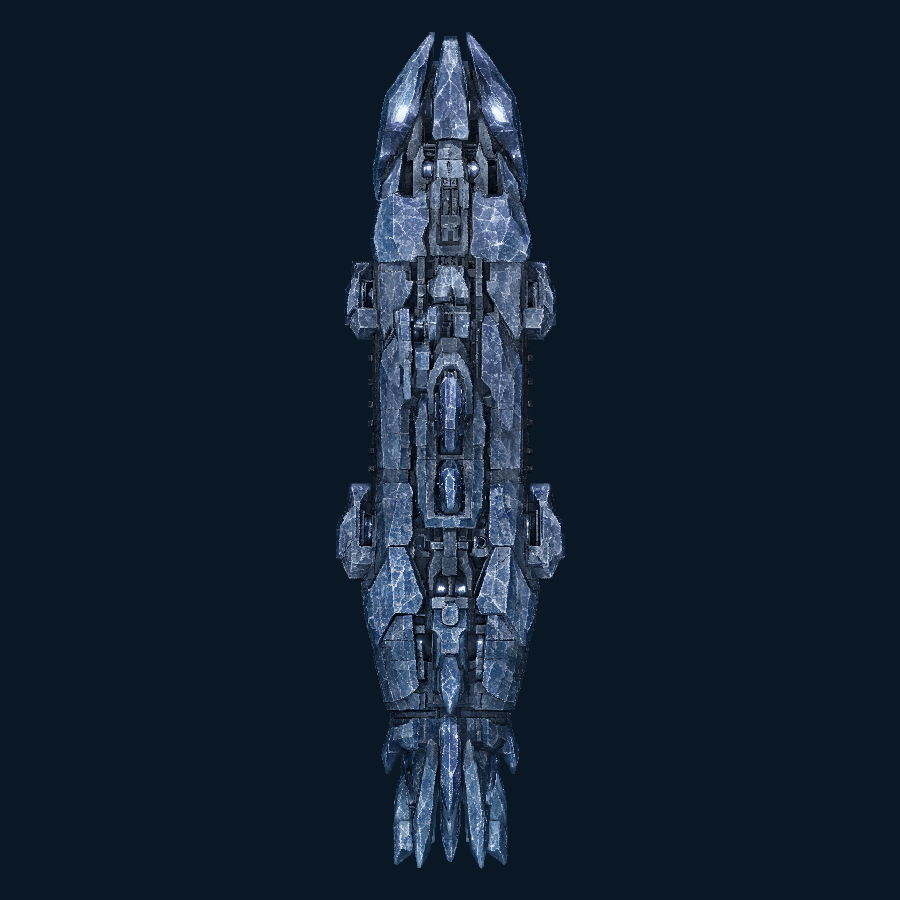
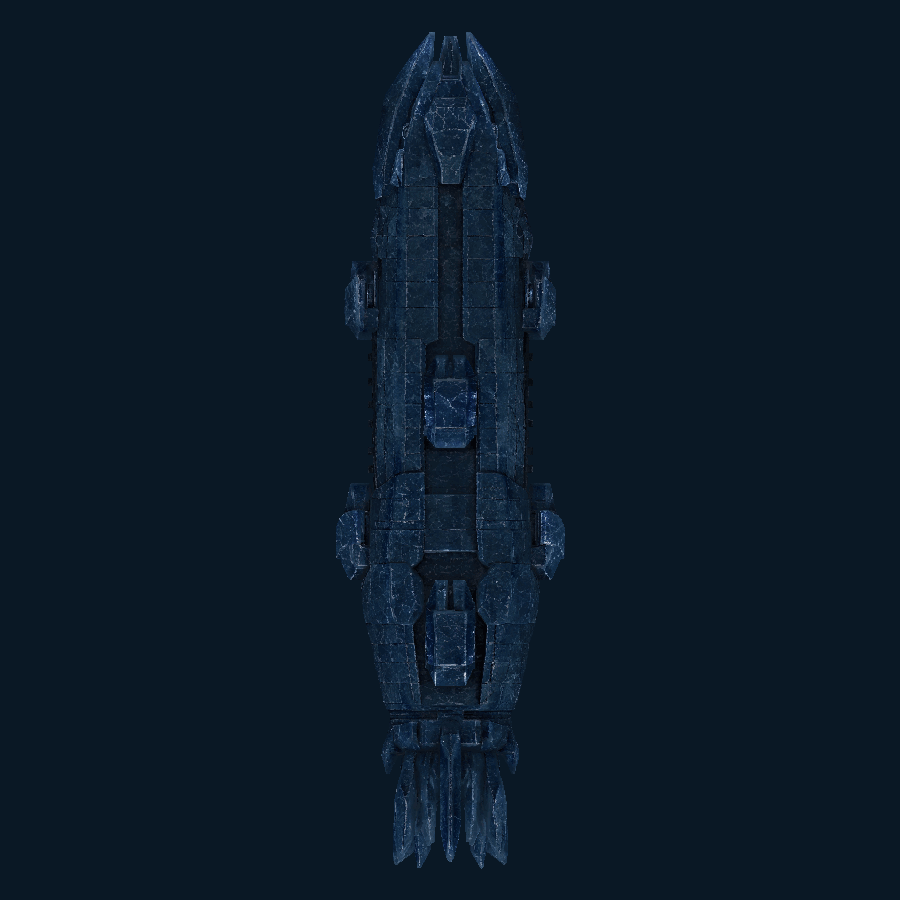
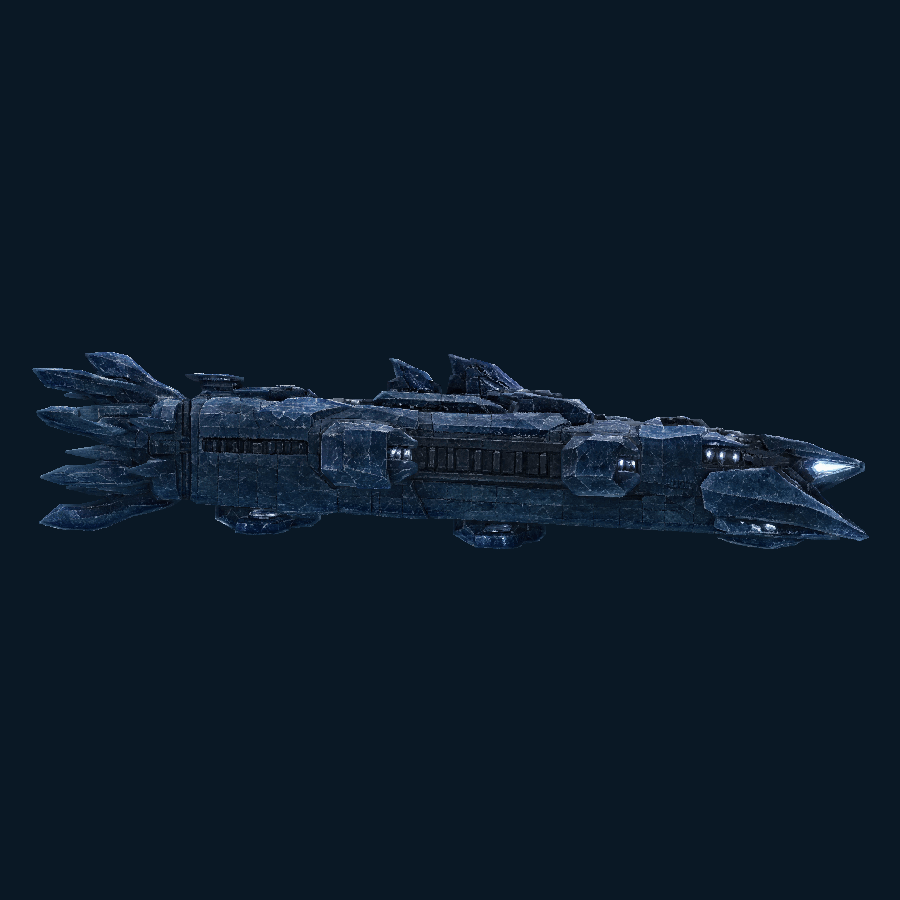
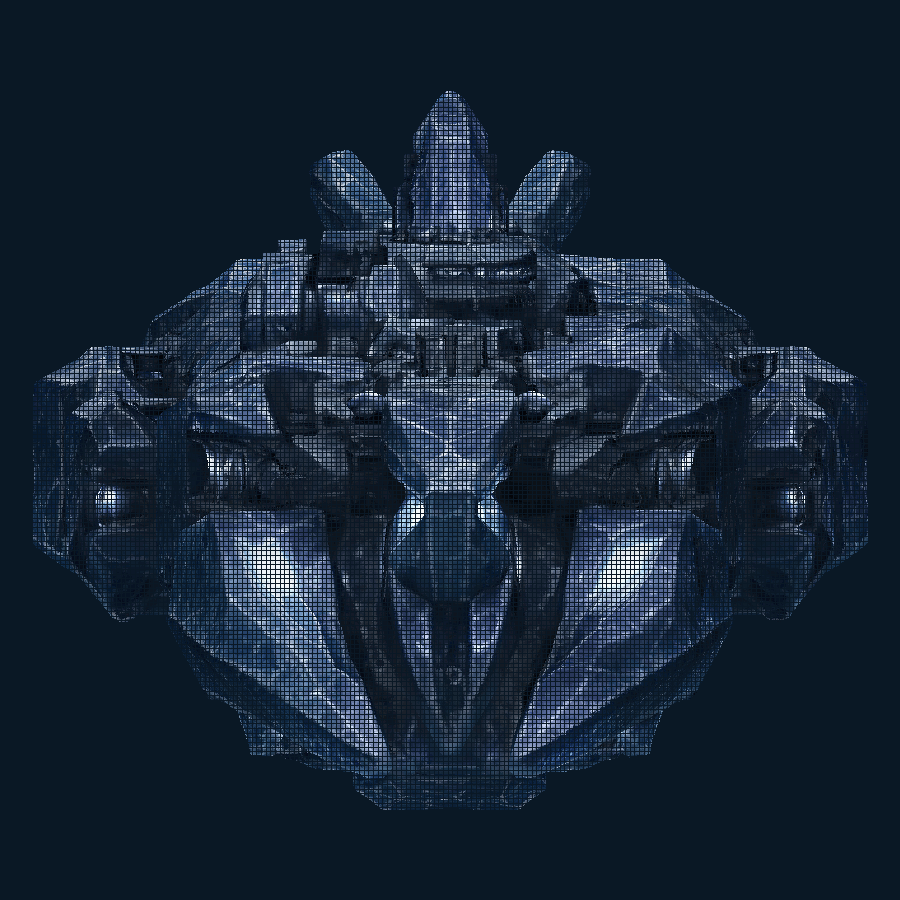
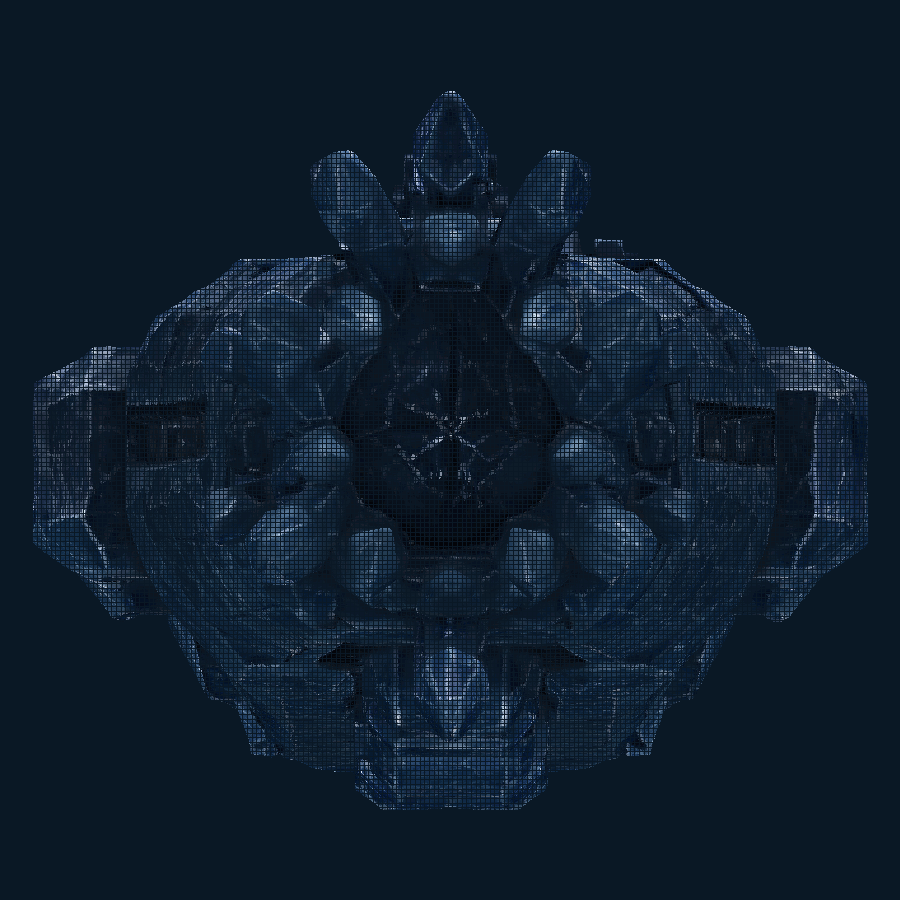
Length 230 m × Width 30 m × Height 20 m. Fictional overall dimensions; height is total body depth, not diving depth.
Proposed submerged displacement: approximately 78,000 ton (metric tons). Fictional concept estimate based on hull size, assumed immersed volume and submerged operating condition; not measured performance.
Weapons & Armament
One or two heavy precision forward emitters concentrate attack along the pursuit axis. Recessed interception outlets and a limited set of directional shard-launch recesses provide secondary coverage. The long pressure-bearing body prioritizes concentrated forward fire and drive reserves over broadside armament.
External Anatomy
Layered attack domains form the bow around a lower flow-parting valley. A continuous dark pressure-root band ties the central body to blended flank protection and a smoother underside. Unequally extended facets converge toward the stern, with iron-black outer domains, blue-black roots and gunmetal reflections.
Functional Architecture
Low dorsal and flank ridges combine sonar-like resonance sensing with optical and field observations. Protected lattice regions coordinate attack and steering. Ventral stability outlets control depth attitude, while common roots distribute pressure loads around the central reserve volume.
Technical Specifications
Offensive rating: 72/100 — Heavy forward emitters concentrate anti-vessel pressure along the pursuit axis
Defensive rating: 64/100 — Reinforced pressure roots and layered frontal domains protect internal reserves
Mobility rating: 82/100 — Strong stern flow control supports pursuit, with turning constrained by the long hull
Tactical cognition rating: 73/100 — Integrated flank and dorsal sensing guides interception and steering
Endurance rating: 61/100 — Enclosed reserves support patrols, while high-output pursuit limits sustained engagement
Fleet support rating: 48/100 — Directional interception screens slower submerged formations
Fleet Role
Large deep-water interceptor for pursuing hostile vessels and screening submerged formations. A slender hull, precise forward attack and concentrated stern output favor interception across deep-water approaches. Low integrated sensors preserve a clean pressure-bearing outline without a projecting tower or mechanical appendages.
Undersea Operations
Two to four recessed hydrolattice deep-flow channels bias surrounding seawater aft, supported by smaller steering and vector-control outlets. Fictional cavitation suppression supports rapid submerged pursuit. The unit operates fully underwater; its maximum speed and safe diving depth are not numerically specified.
Defense Architecture
A coherent pressure-root band and layered frontal domains protect the internal lattice and enclosed reserves. Defensive outlets intercept immediate threats, while directional maneuvering reduces time spent exposed along a predictable attack line.
Operational Limits
Its 230 m hull needs ample turning room and surveyed routes. Sharp turns interrupt forward weapon alignment, while pressure-root fractures can compromise both steering and survival. High-output pursuit competes with weapons and protection for reserves; field recovery and regrowth require support.
Strategic Strengths
A slender hull, precise forward attack and concentrated stern output favor interception across deep-water approaches. Low integrated sensors preserve a clean pressure-bearing outline without a projecting tower or mechanical appendages.
Capability Assessment
Proposed fictional doctrine profile: strong pursuit mobility and directional attack, with moderate protection and endurance. The long hull requires open approaches and planned withdrawal routes. Ratings express intended battlefield function rather than measured performance.
B · 66.7
Fleet-wide concept rating, 0–100; not simulated performance. Specialized strengths do not imply an equally high overall grade. Tactical Cognition describes sensing, coordination and command. Grade is the equal-weight mean: S ≥ 90, A ≥ 75, B ≥ 60, C ≥ 45, D < 45.
Technology Level
Proposed T2 — coordinated crystal-metal field technology, integrated sensing and material-state control. This tier does not assign independent interstellar travel.
Weapon Class
Proposed W1 — warship-scale precision interception and concentrated anti-vessel attack
T0 planetary · T1 system flight · T2 phase travel · T3 limited world engineering. W0 point defense · W1 ship combat · W2 heavy fleet combat · W3 strategic theater systems. Technology and weapon classes are independent of the profile grade.
History & Lineage
Universe lore · authored service history
Origin
Cultivated to intercept hostile vessels before they reach slower submerged formations. Its long, narrow body concentrates field reserves on directional attack and stern flow control.
Lineage & Branch
Blackaxis deep-interceptor branch, derived from an interceptor lineage and magnetite-inspired irregular polyhedral growth boundaries
Fleet or Unit
Cryvum — submerged interception formations
Individual History
The Dark Current — In this authored service history, a Blackaxis holds along a surveyed deep-water approach while a slower formation passes behind it. Its flank ridges detect a pursuing warship, and the interceptor advances into open water to establish a stable forward firing line.
The Narrow Return — After forcing the pursuer away from the formation, Blackaxis breaks contact along a previously surveyed corridor. It reduces drive output before reserve depletion, preserving sufficient field capacity for defense and the return passage. The encounter becomes a lesson in controlling the approach rather than extending every chase.