
Overview
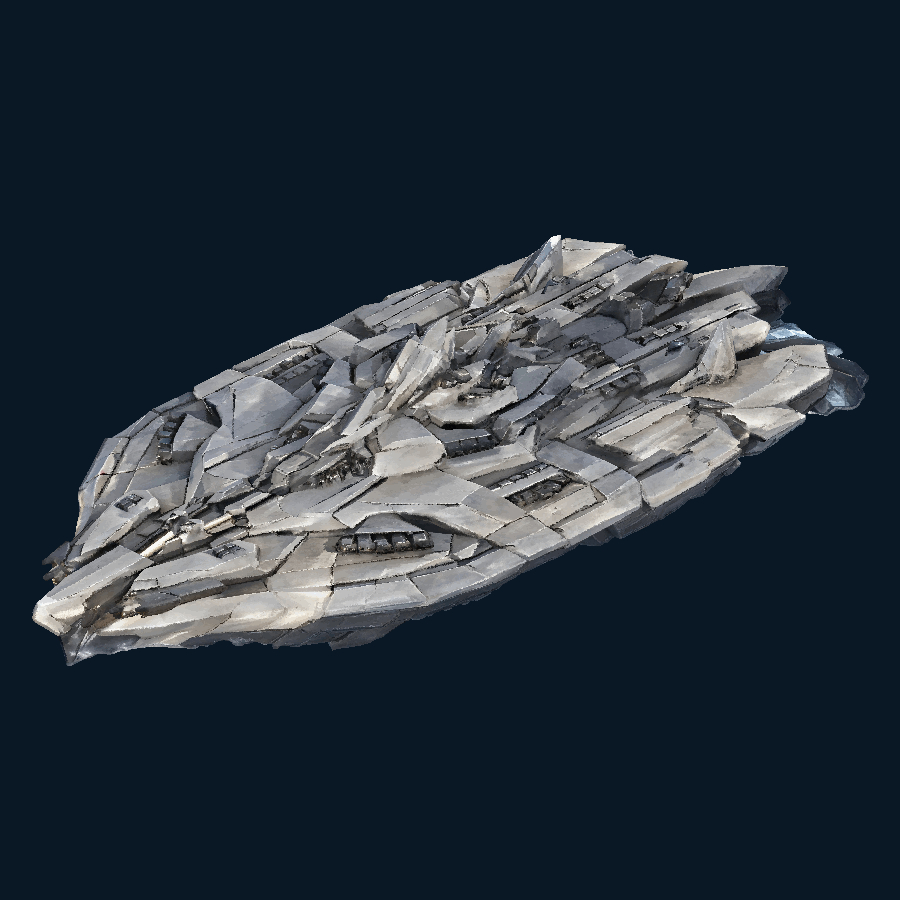
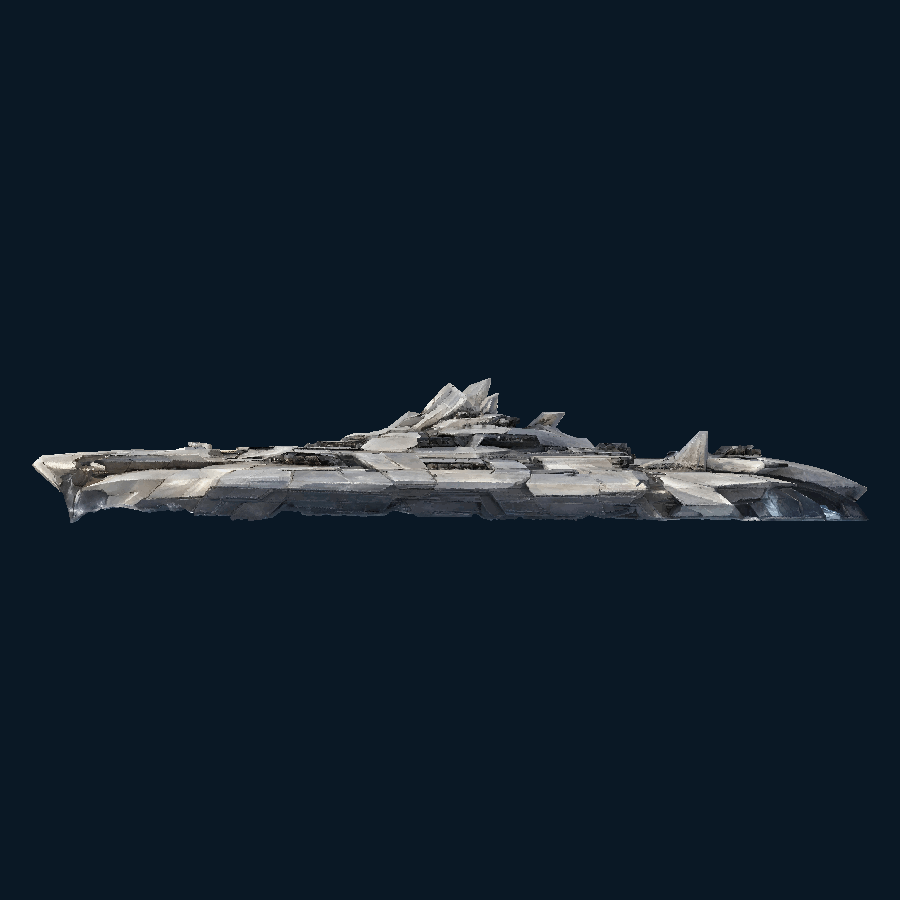
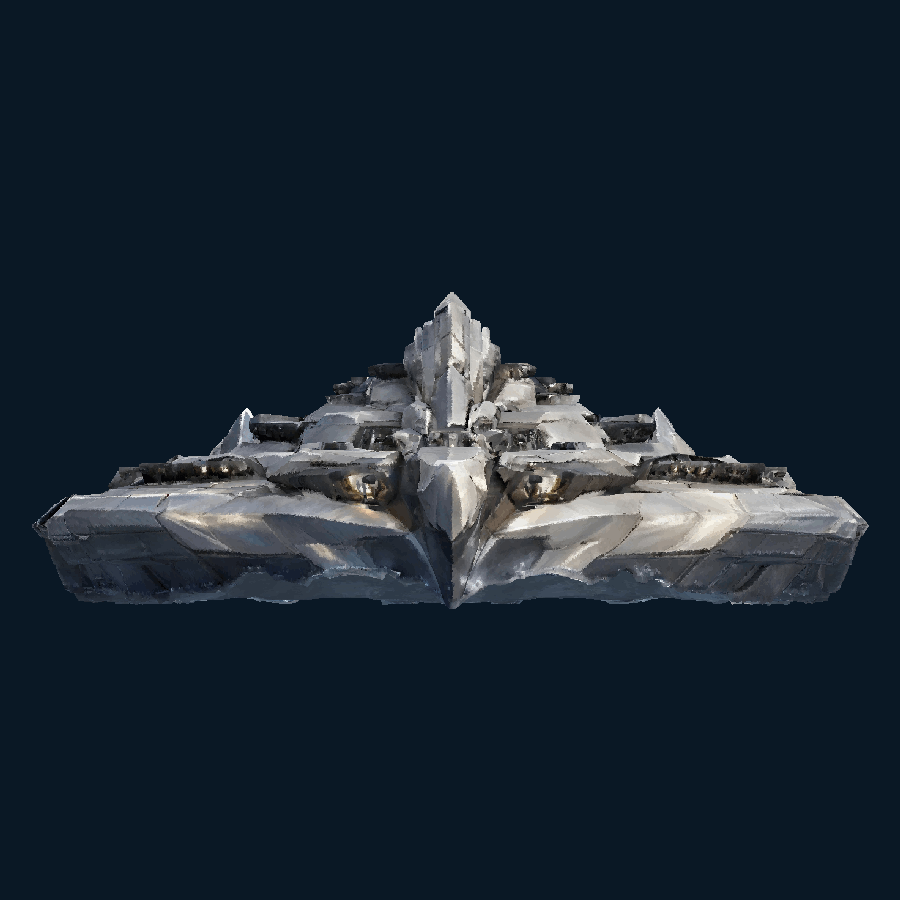
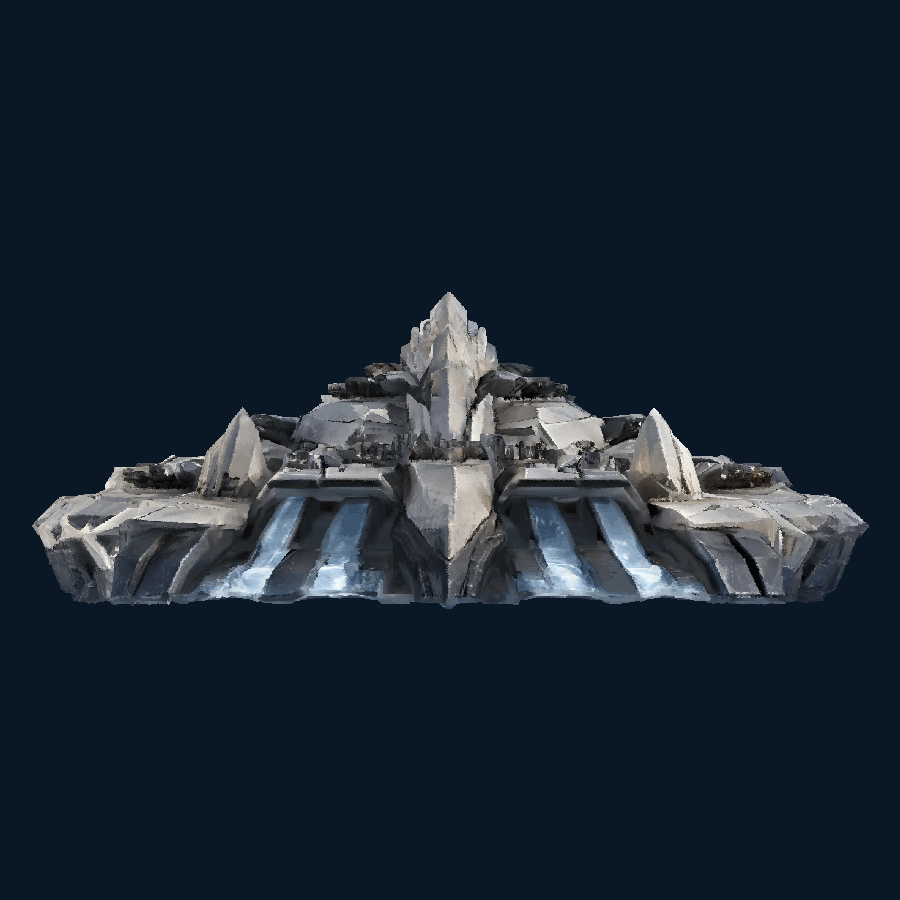
Pearlplane Tide Bastion is a Cryvum sea-surface fortress grown as one continuous crystal-metal hull. A broad armored bow, heavy protective shoulders and layered emitter fields support wide-area naval defense, while a buoyant lower body and recessed stern flow channels sustain displacement travel.
Vessel Profile
Dimensions & Scale
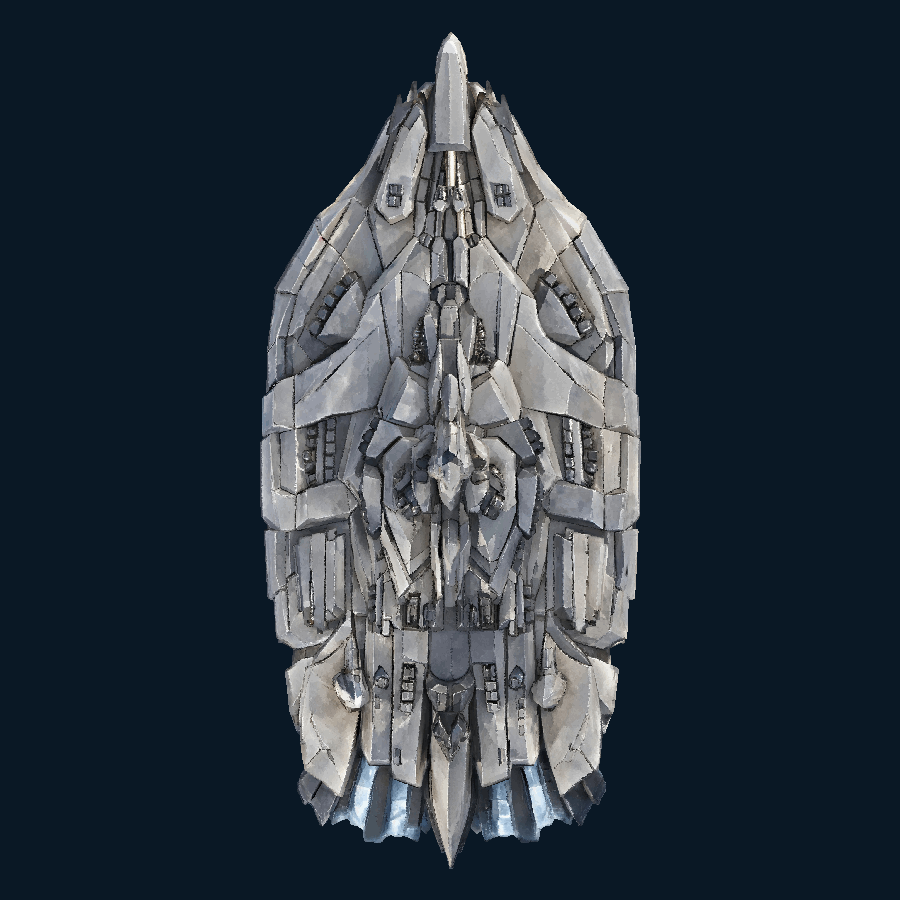
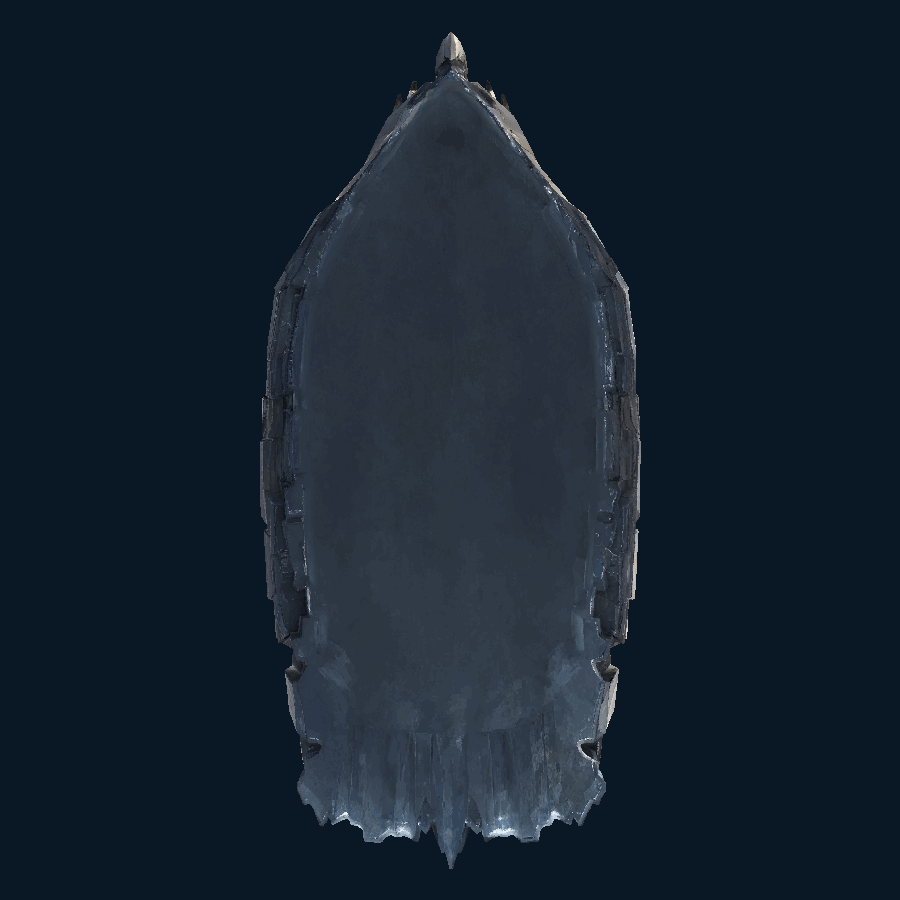
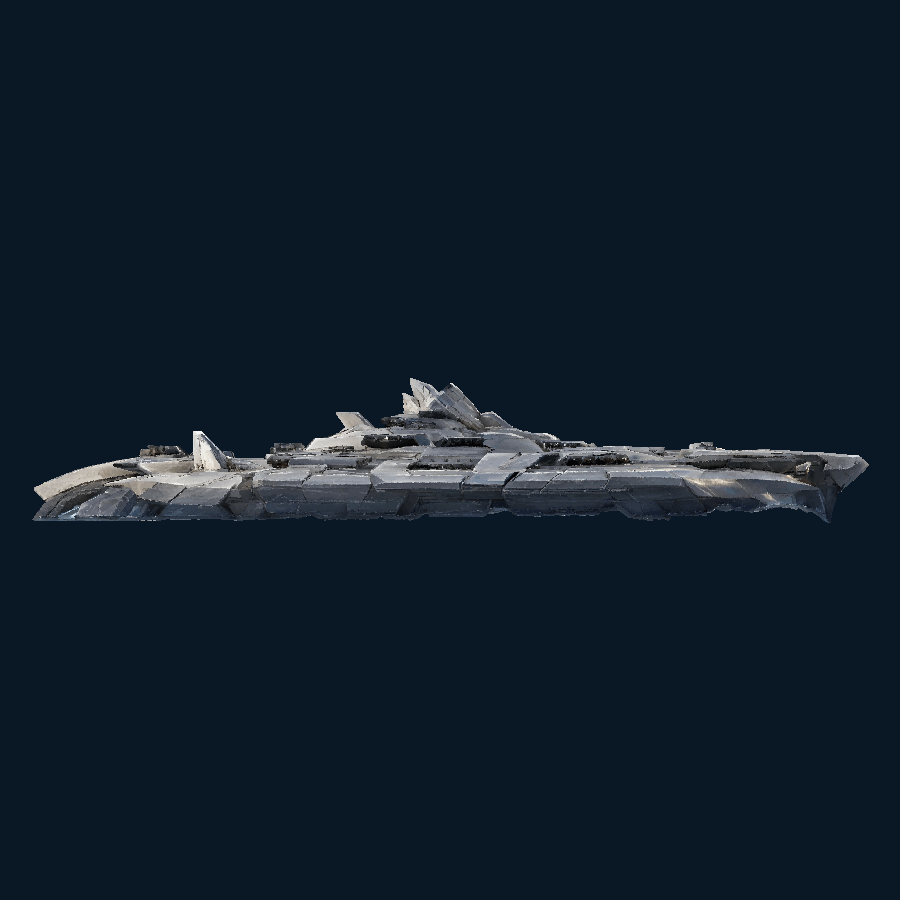
Length 218.4 m × Width 53.5 m × Height 16.6 m above the design waterline. Proposed draft: 15 m. The combined keel-to-top height is approximately 31.6 m. These are fictional surface-vessel dimensions in the design loading condition; the 16.6 m figure describes only the structure above water.
Weapons & Armament
The proposed war package combines 2–4 large forward siege-emitter apertures, two grouped dorsal shard-launch fields and 8–14 point-defense outlets. Short rooted projectors and recessed firing mouths concentrate attack forward, while smaller defensive apertures cover the shoulders. Every focusing and launch region grows within the same crystal-metal body.
External Anatomy
Heavy forward shoulder growths frame a lower wave-splitting keel ridge. Broad pearl-white domains overlap above dark common roots, forming dorsal terraces and protective lateral masses. A continuous metal-rich waterline band joins the combat body to a smoother buoyant belly. The lower hull carries restrained longitudinal ridges and a definite fore-aft axis.
Functional Architecture
Crystal-rich regions coordinate sensing, focusing and launch geometry, while metal-rich roots distribute stress and energy along the hull. One or two low sensing ridges use narrow luminous slits and clearer facets. The stern contains 2–4 main hydrolattice flow channels plus smaller steering channels, all integrated with the waterline and underwater body.
Technical Specifications
Offensive rating: 74/100 — Forward siege apertures and paired shard-launch fields provide heavy naval pressure
Defensive rating: 84/100 — Broad defensive facets, deep roots and a reinforced waterline protect the fighting body
Mobility rating: 30/100 — Displacement travel and a deep draft constrain maneuvering and route selection
Tactical cognition rating: 70/100 — Low sensing ridges coordinate firing arcs, navigation and formation coverage
Endurance rating: 72/100 — Shared reserves sustain measured operations with planned recovery intervals
Fleet support rating: 80/100 — Layered interception and wide-area control protect neighboring surface vessels
Fleet Role
Anchors a surface formation with heavy forward fire, layered interception and wide-area defensive control. It supports protected sea lanes and deliberate approaches to contested coastal waters, coordinating smaller vessels around a stable central fighting mass.
Maritime Operations
The ship floats by displacement and travels at the sea surface. Recessed stern hydrolattice channels accelerate seawater through directed fields, with smaller channels controlling the heading. Bow waves and an organized wake mark its advance. The underwater hull and control regions support surface navigation; they do not establish a submerged operating mode. Independent atmospheric or spaceflight capability is not assigned.
Defense Architecture
Heavy lateral facets and deep crystal-metal roots spread incoming stress around the central fighting body. The reinforced waterline band protects structural continuity between the combat hull and buoyant lower body. Interception outlets cover nearby threats, while broad defensive fields support the surrounding formation.
Operational Limits
Its 15 m design draft restricts access to shallow passages and demands surveyed approaches. Wide lateral mass and displacement travel limit rapid turns. Siege discharge, defensive fields and hydrolattice propulsion compete for finite reserves. Damage near the waterline can threaten buoyancy and field continuity; recovery requires compatible minerals and stable repair conditions.
Strategic Strengths
A protected displacement hull, layered firing arcs and substantial lateral defense provide a stable formation center. Continuous growth joins weapons, sensing and propulsion to shared structural roots, while low sensing ridges avoid a tall exposed command tower.
Capability Assessment
Proposed editorial assessment: strong protection and naval support with substantial siege pressure, balanced by slow maneuvering and deep-draft route constraints. Scores describe its place in the wider archive rather than measured combat performance. Its sea-surface specialization does not imply underwater, air or space operations.
B · 68.3
Fleet-wide concept rating, 0–100; not simulated performance. Specialized strengths do not imply an equally high overall grade. Tactical Cognition describes sensing, coordination and command. Grade is the equal-weight mean: S ≥ 90, A ≥ 75, B ≥ 60, C ≥ 45, D < 45.
Technology Level
Proposed T2 — specialized lattice-field combat and hydrolattice propulsion. This classification concerns field technology; the vessel remains a sea-surface platform without assigned independent phase transit.
Weapon Class
Proposed W2 — heavy naval siege emitters and layered formation defense. No strategic world-scale destructive capability is assigned.
T0 planetary · T1 system flight · T2 phase travel · T3 limited world engineering. W0 point defense · W1 ship combat · W2 heavy fleet combat · W3 strategic theater systems. Technology and weapon classes are independent of the profile grade.
History & Lineage
Universe lore · authored service history
Origin
Cultivated for ocean theaters where Cryvum formations require a persistent surface anchor. Its design brings fortress-scale protective coverage into a buoyant naval body with a defined waterline and directional stern drive region.
Lineage & Branch
Pearlplane surface-bastion branch, derived from the fleet-fortress lineage and the plate-like growth character of selenite. Unequal layered domains retain thick shared roots, with pearl-white outer faces and silver-sage turning surfaces over a dark mineral foundation.
Fleet or Unit
Proposed assignment: Pearlplane coastal-defense formations
Individual History
The Pale Channel — In this authored service history, Pearlplane Tide Bastion enters a deep-water passage ahead of a supply convoy. Its forward emitters remain quiet while lateral defensive fields cover the smaller vessels moving behind its shoulders. The hull holds a measured course to keep the convoy inside that coverage.
The Narrow Anchorage — A damaged survey marker leads the escorts toward water too shallow for the bastion. It stays outside the approach and divides its reserves between interception and station keeping while the lighter vessels recover the stranded transports.
The Returning Tide — After repairs to a stressed waterline root, the ship resumes corridor duty with a new rule in its formation record: a protected approach must also leave enough depth and turning room for withdrawal.