
Overview
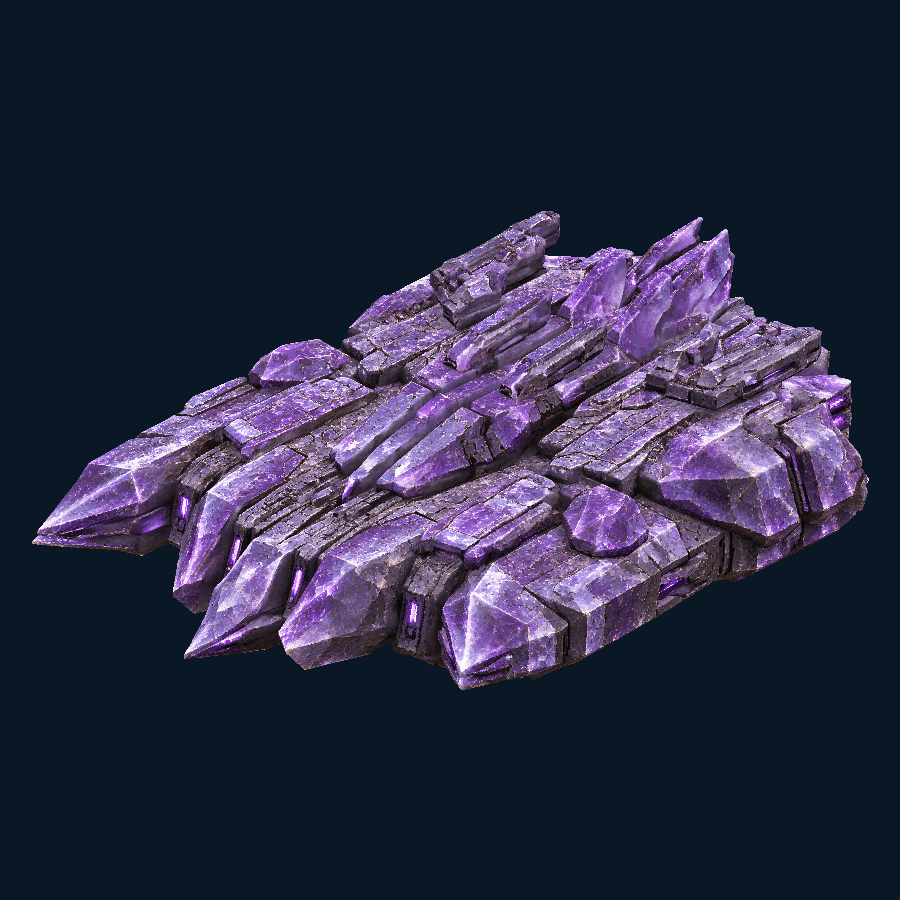
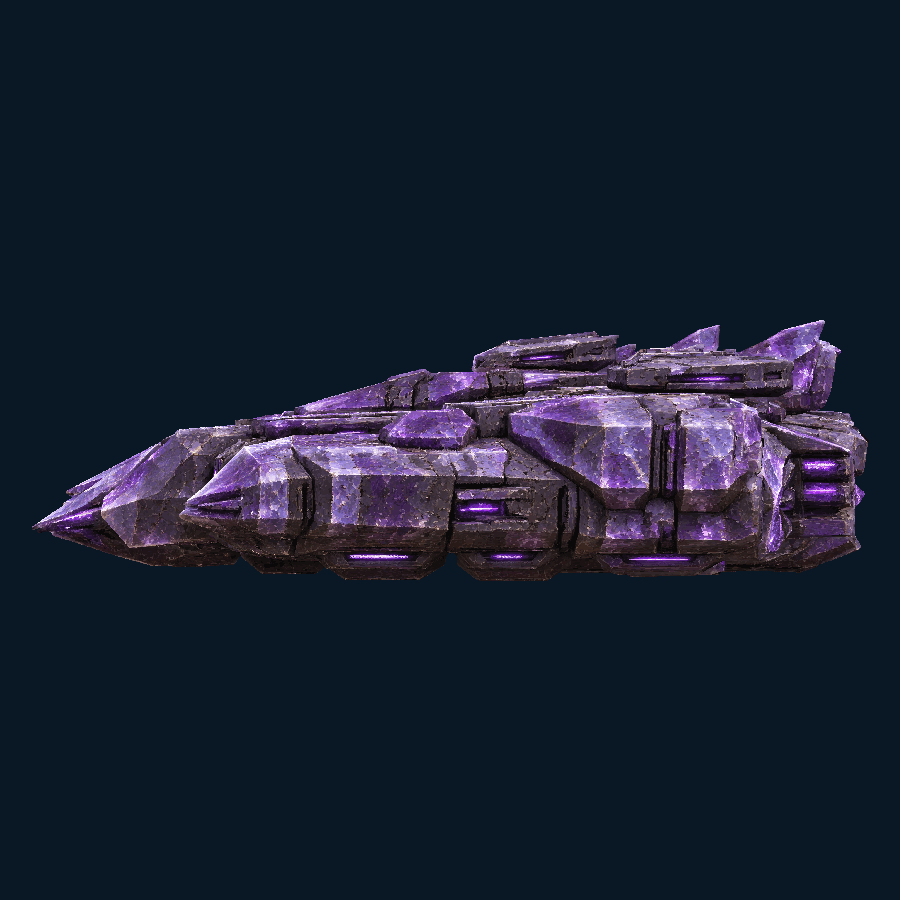
Violetcell Ground Bastion is a Cryvum mobile ground fortress cultivated as one continuous crystal-metal body. Broad protective shoulders, forward siege projectors and paired launch-battery fields support deliberate advances and sustained defensive coverage close to the terrain.
Vessel Profile
Dimensions & Scale
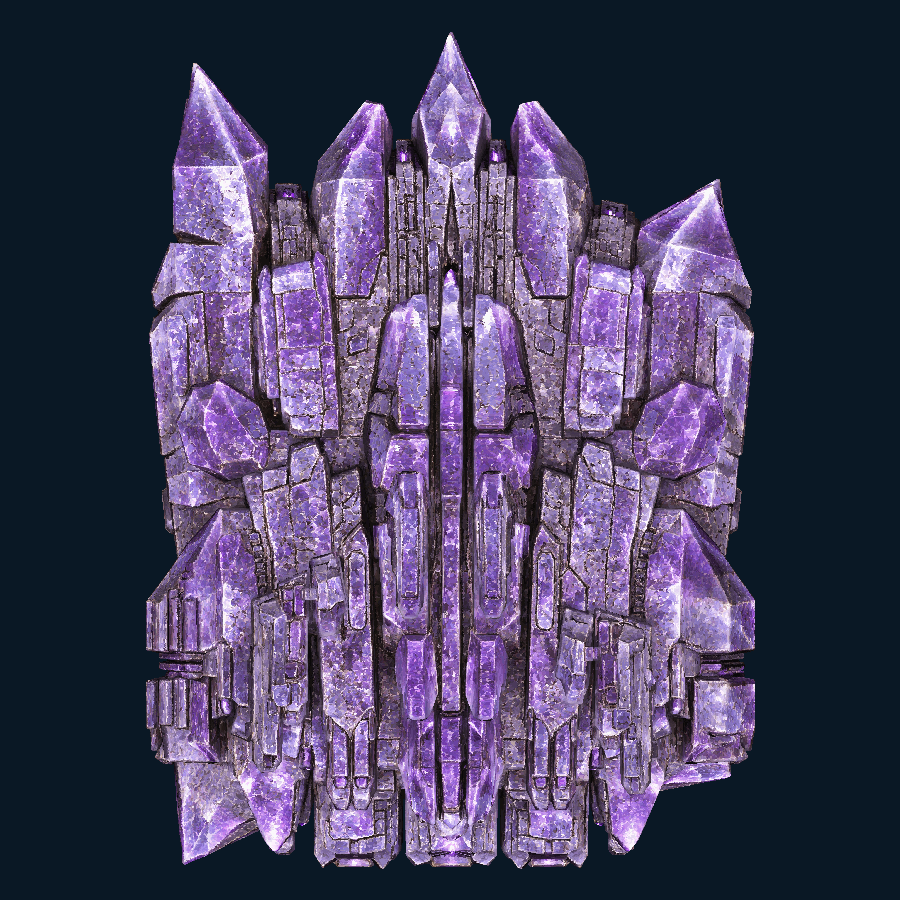
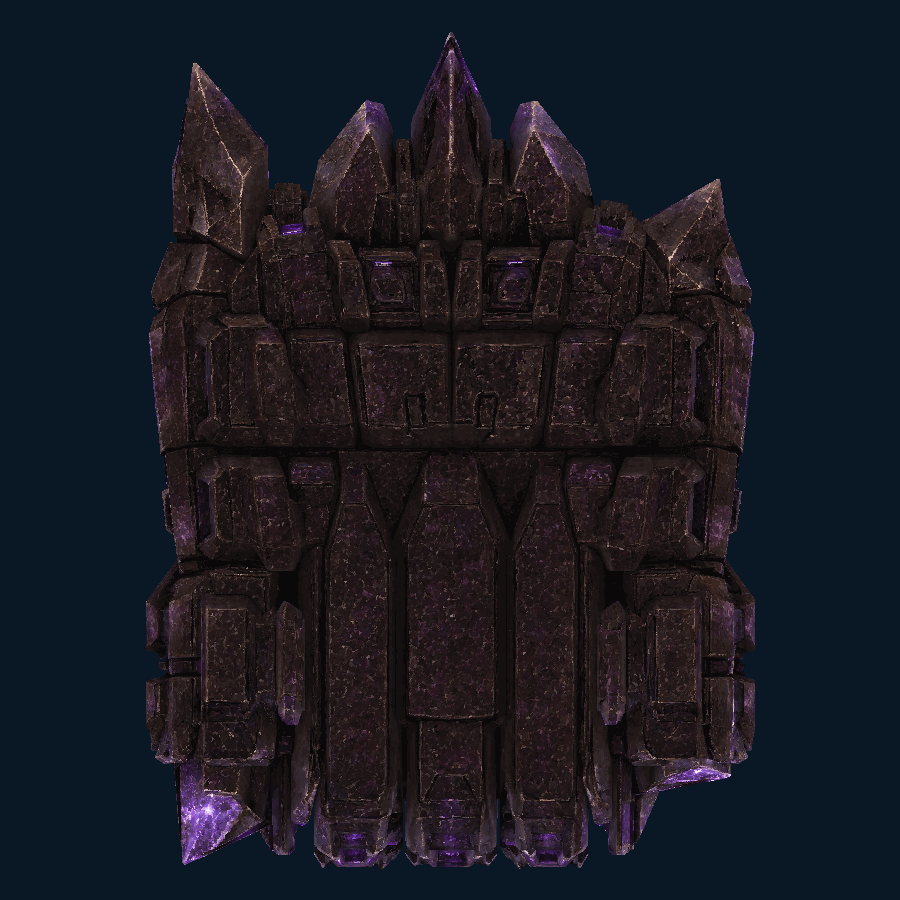
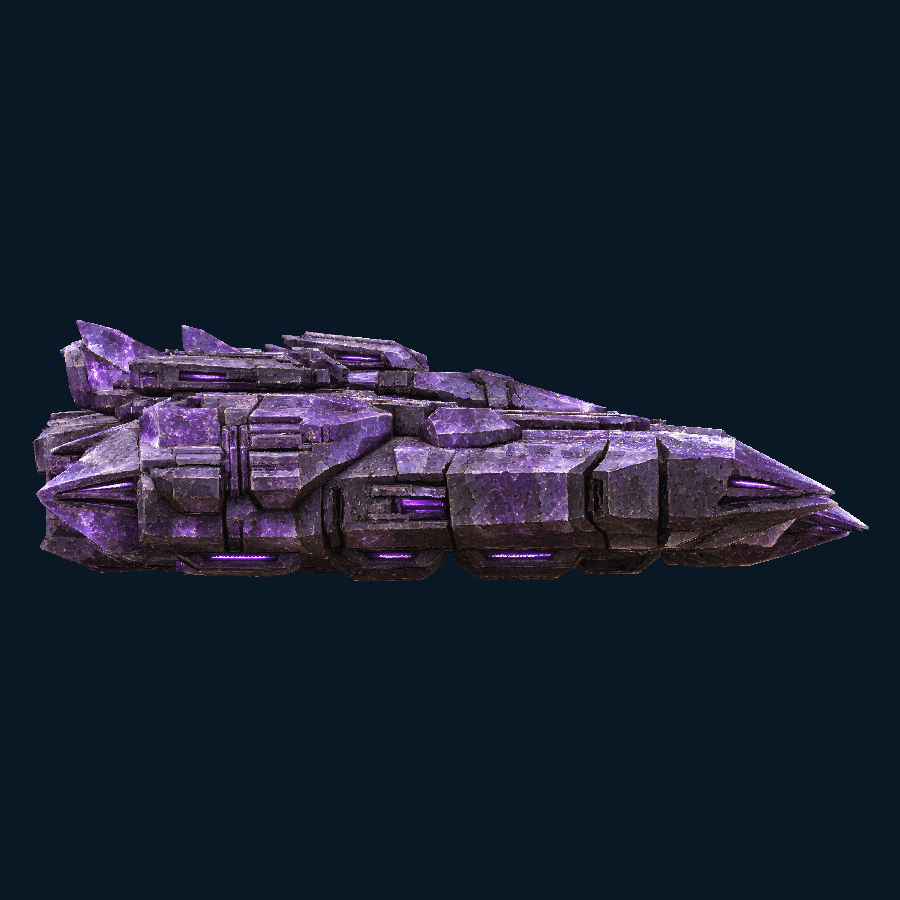
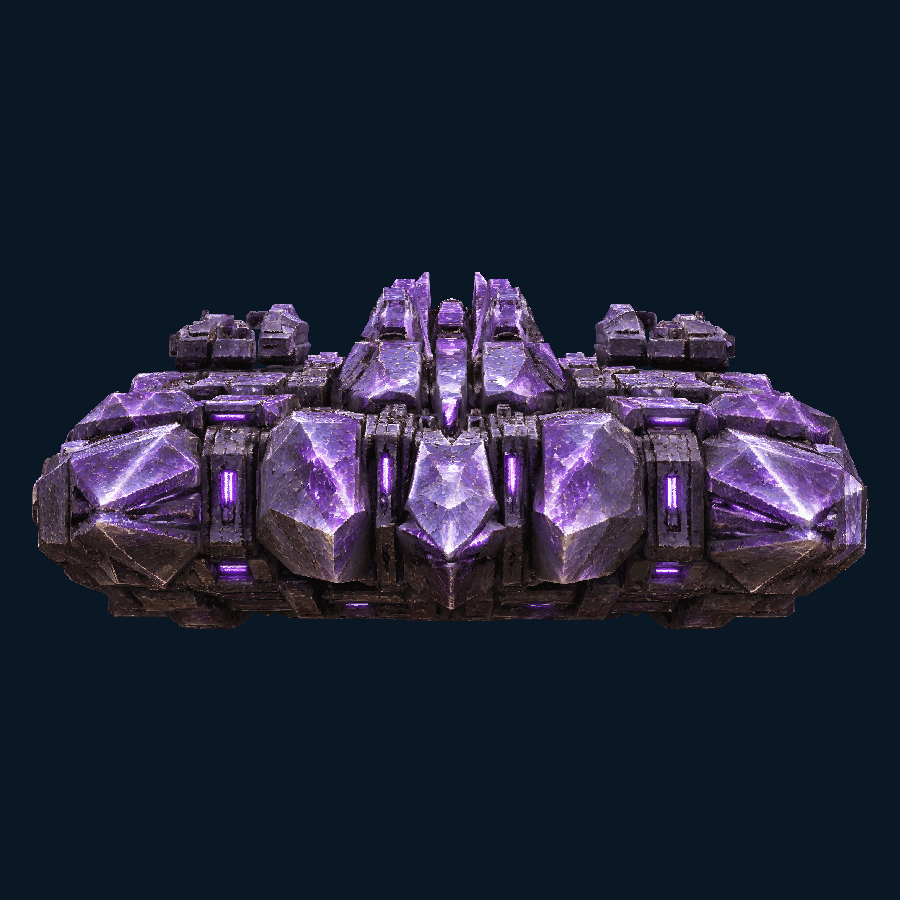
Length 220 m × Width 190.1 m × Height 61.6 m. Proposed ground-platform dimensions; body height excludes the hover gap. A nominal traveling clearance of 3 m gives an overall ground-to-top height of approximately 64.6 m. Width is approximately 86.4% of length, emphasizing a broad defensive platform rather than a narrow pursuit vehicle.
Weapons & Armament
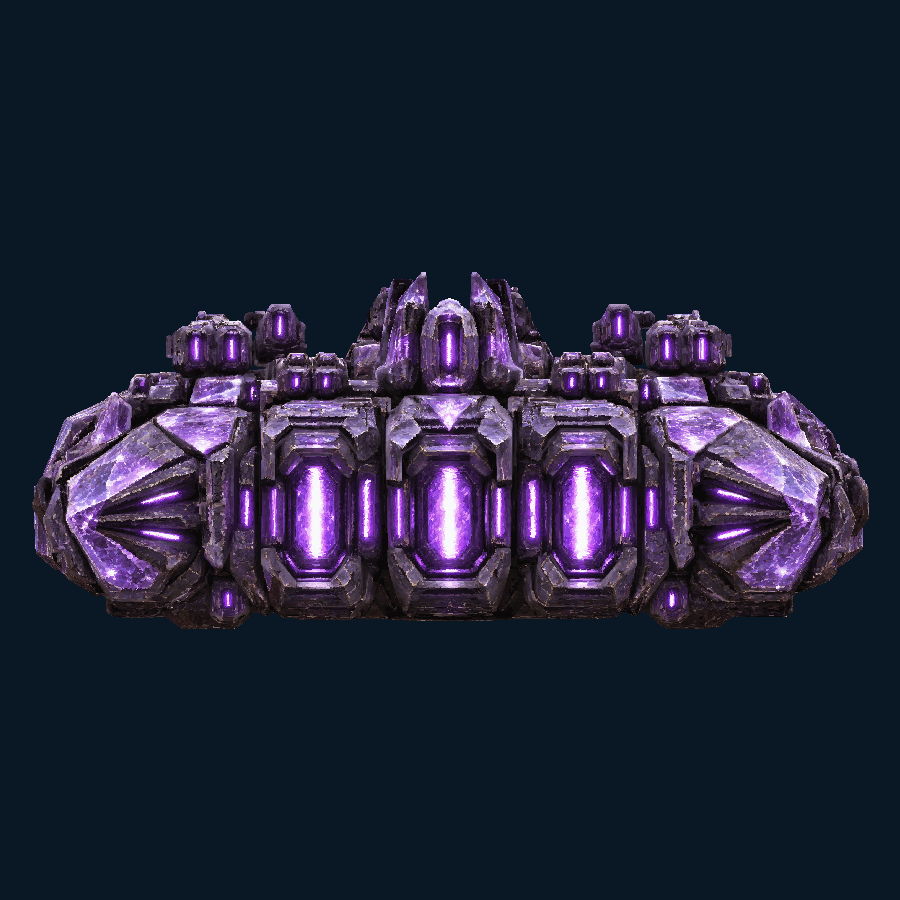
The proposed armament combines 2–4 short, deeply rooted forward siege projectors with two shoulder launch-battery fields, each containing approximately 6–10 recessed shard or seed outlets. A further 6–10 smaller interception apertures cover the outer shoulders and upper flanks. Coordinated resonance concentrates lattice shear across a selected target zone; every emitter and launch recess grows within the common crystal-metal body.
External Anatomy
A directional seed-front joins a deep central fighting body and massive protective shoulders. A shallow plateau-spine spreads structural stress through buried lateral roots. Violet and silver-lavender crystal domains overlap along dark common boundaries, with clipped faces and unequal rear growths expressing the fluorite lineage. The underside remains dense and clear of terrain.
Functional Architecture
Primary projectors, grouped launch recesses, interception apertures and a long low sensing ridge occupy distinct working regions of one lattice. Buried stress corridors connect the central reserves to the shoulders. Rear field-bias regions steer the platform, while broad underside support regions maintain near-ground clearance. Two low flank exchange boundaries remain closed during travel.
Technical Specifications
Offensive rating: 76/100 — Forward siege projectors and paired launch fields concentrate pressure on fortified targets
Defensive rating: 88/100 — Deep shared roots, broad shoulders and sustained repulsion form the principal protective layers
Mobility rating: 24/100 — Near-ground field motion favors deliberate repositioning along cleared routes
Tactical cognition rating: 72/100 — A low sensing ridge coordinates firing arcs, steering and defensive coverage
Endurance rating: 78/100 — Enclosed reserves support extended operations when discharge and protection are carefully balanced
Fleet support rating: 82/100 — Repulsion coverage and reserve sharing reinforce the surrounding ground formation
Fleet Role
Anchors a ground formation with sustained repulsion coverage, reserve sharing and a broad forward control arc. It advances deliberately against fortified positions, supports nearby Cryvum units and holds corridors that demand prolonged protection rather than rapid pursuit.
Ground Operations
The bastion travels approximately 3 m above the terrain using distributed underside support fields and buried rear field-bias regions. Steering changes the internal field state without wheels, tracks or exhaust jets. Terrain clearance, ground conditions and the need to preserve formation coverage constrain its route. This ground adaptation is not assigned independent orbital or interstellar flight.
Defense Architecture
Exceptionally deep crystal-metal mass and broad shoulders distribute stress through coherent shared roots. Long-duration repulsion coverage protects the formation, while local interception apertures address closer threats. The low central spine keeps the command and sensing lattice within the main protective body.
Operational Limits
Attack, repulsion, support and steering draw on shared reserves and cannot sustain maximum output together. Its broad footprint restricts routes through narrow terrain, while the low traveling gap demands careful passage over obstacles. Damage across major roots can impair several functions at once. Recovery requires suitable minerals, time and stable lattice conditions.
Strategic Strengths
A wide defensive arc, substantial internal reserves and layered offensive and interception regions make it a durable formation anchor. The continuous body distributes load and field control without exposed running gear or separate weapon mountings.
Capability Assessment
Proposed editorial profile: strong protection, reserve endurance and formation support, balanced by slow repositioning and dependence on clear ground routes. Its siege armament threatens fortified positions, but mobility and sustained output remain limited by the same reserves that maintain its defensive field.
B · 70.0
Fleet-wide concept rating, 0–100; not simulated performance. Specialized strengths do not imply an equally high overall grade. Tactical Cognition describes sensing, coordination and command. Grade is the equal-weight mean: S ≥ 90, A ≥ 75, B ≥ 60, C ≥ 45, D < 45.
Technology Level
Proposed T2 — localized phase-field support, steering and lattice coordination. This classification describes its field technology and does not assign independent interstellar travel to the ground platform.
Weapon Class
Proposed W2 — heavy siege projectors and layered formation defense. No world-scale destructive capability is assigned.
T0 planetary · T1 system flight · T2 phase travel · T3 limited world engineering. W0 point defense · W1 ship combat · W2 heavy fleet combat · W3 strategic theater systems. Technology and weapon classes are independent of the profile grade.
History & Lineage
Universe lore · authored service history
Origin
Cultivated to carry Cryvum fortress doctrine into planetary campaigns, where protecting a ground corridor requires sustained coverage close to the terrain. The design concentrates reserve volume and lateral protection around a low, directional fighting body.
Lineage & Branch
Fluorite-derived Violetcell ground-bastion branch, drawing on the Bastion-class Fleet Fortress design lineage. Local face angles, subsurface violet zoning and fused growth generations define its material character; its ground dimensions and deployment doctrine are specific to this branch.
Fleet or Unit
Proposed assignment: Violetcell planetary defense formations
Individual History
The Low Passage — In this authored service history, a Violetcell Ground Bastion leads a supply formation across a damaged plain. Its rear steering regions hold a slow course while the shoulders extend repulsion coverage over the accompanying reserve carriers. The forward projectors remain quiet until the corridor narrows.
The Divided Reserve — Repeated attacks force the bastion to alternate siege discharge with broader protection. It yields ground rather than exhausting the support field above an obstructed crossing, allowing lighter units to secure a second route.
The Joined Boundary — After the campaign, a damaged shoulder regrows around its surviving common roots. The repaired boundary remains visible beneath the violet outer domains, recording a formation preserved through measured withdrawal rather than an uninterrupted advance.