
Overview
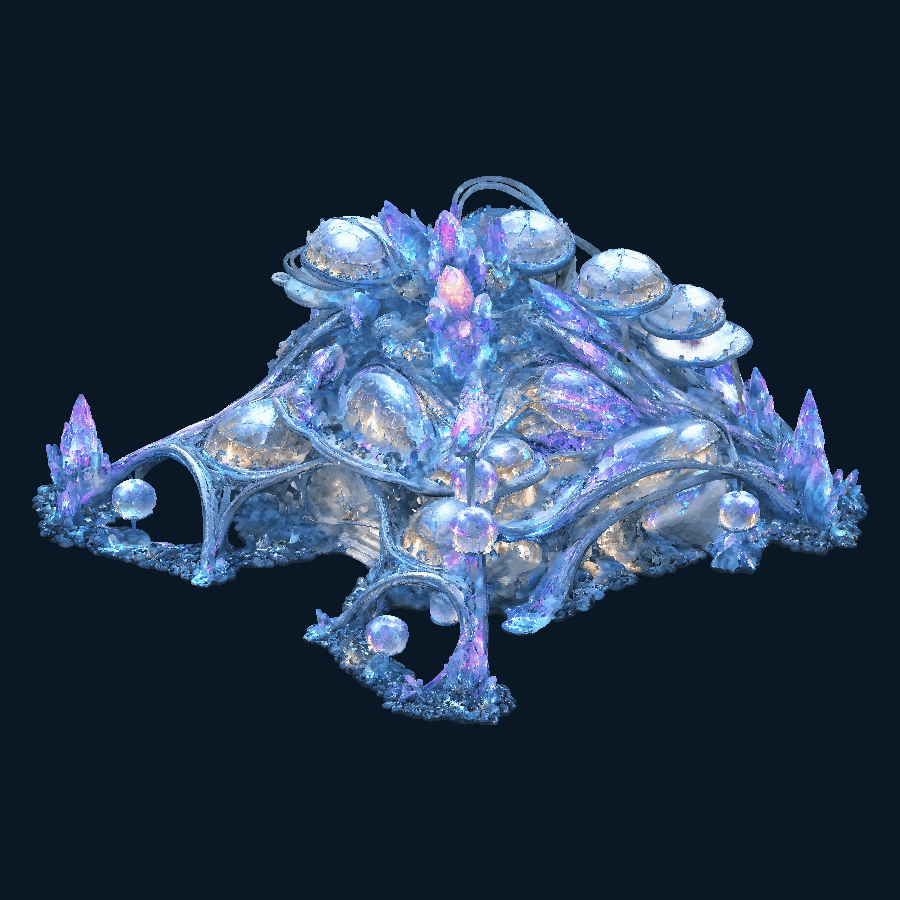
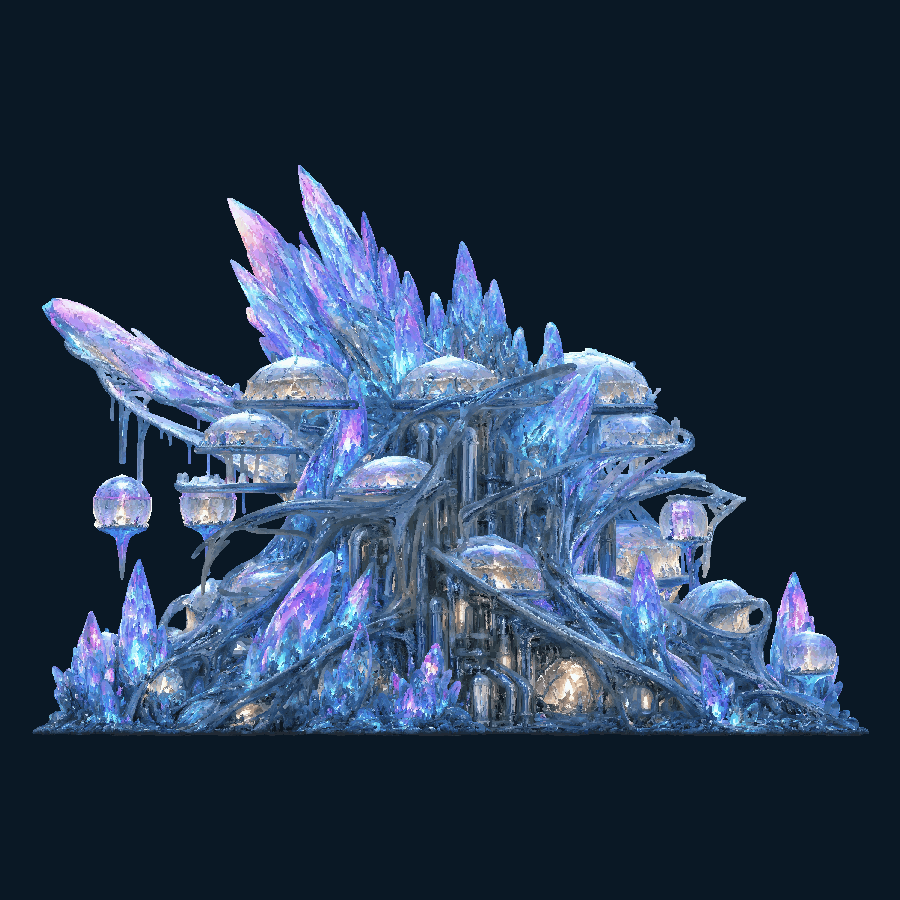
Thaloryxun Abyss Base is a Cryvum deep-sea fortress city: a military stronghold, naval base, population center and industrial complex grown into one immense crystal-metal architecture. Across a 20 km by 19.5 km footprint, its pressure-isolated districts support fleet operations, research, manufacturing and long-duration life beneath an alien ocean.
Base Profile


Dimensions & Scale
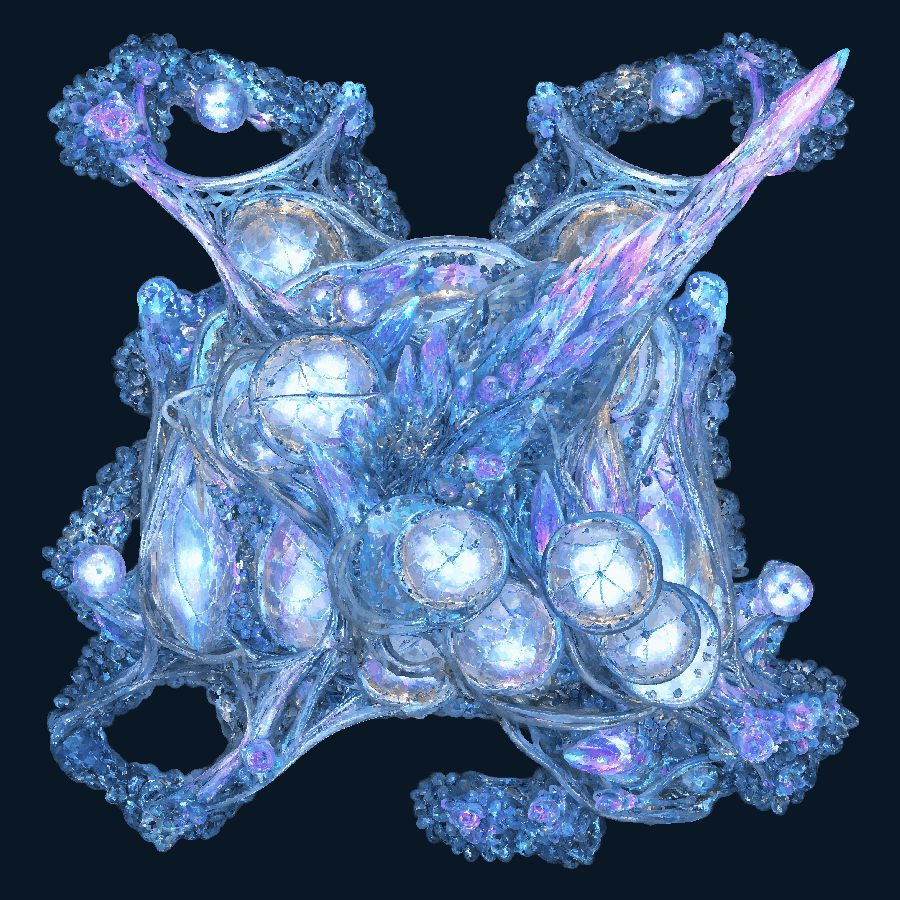
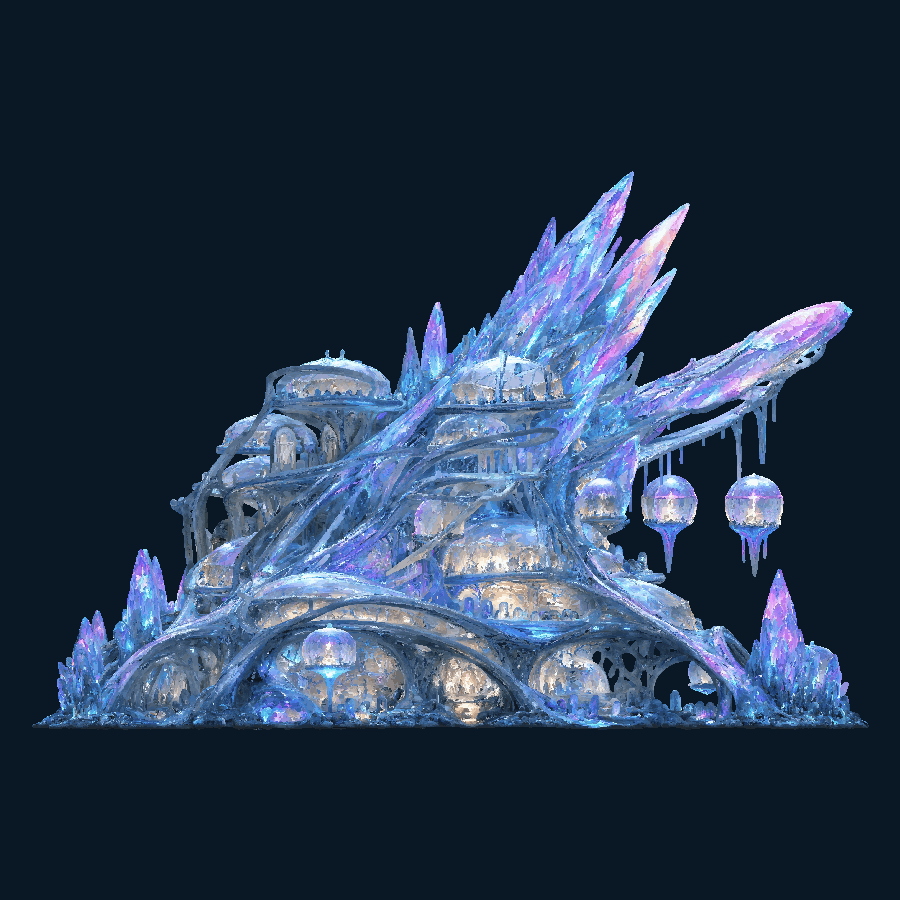
Length 20,000 m × Width 19,500 m × Height 13,300 m (20 × 19.5 × 13.3 km). Supplied fictional overall dimensions include the outer crystal ridges and the highest spires. Height describes the structure, not its operating depth.
The installation occupies an immense basin beneath an alien ocean deep enough to enclose the complete structure. Its pressure conditions and supporting geology belong to the fictional setting; no Earth location or real-world construction feasibility is implied.
Weapons & Armament
Abyssal Lance Batteries — Major peripheral spires and upper defensive domains focus stored energy into directed attacks against heavy submersibles, underwater warships, giant marine organisms and approaching siege units. Under suitable targeting conditions, linked outer nodes can also threaten surface fleets. The focusing regions are integral crystal-metal structures rather than separate turrets.
Heavy Torpedo and Hunter Weapon Fields — Protected outer release chambers deploy guided underwater weapons, autonomous attack craft and long-endurance interceptors. Their proposed defensive envelope extends tens of kilometers and can expand through remote nodes; range and effectiveness depend on sensing and environmental conditions.
Close Defense Network — Smaller emitters and interceptors around entrances, outer ridges and district boundaries engage incoming torpedoes, drones, fast craft and boarding organisms. Seafloor Defense Batteries form a separate network of surrounding positions, forcing attackers to contend with more than the central structure. Exact weapon counts and performance remain concept parameters.
External Anatomy
Upper crystal spires combine sensing, communication, energy focusing and defensive-field functions. Central domed districts shelter command, habitation, research and military activity. Thick lower growths contain fleet docks, industrial halls, distributed energy cores and stores within the principal pressure-bearing structure. Outer crystal ridges carry defensive outlets and long-baseline sensing domains.
Blue-violet crystal-rich regions share continuous roots with denser mineral-metal load paths. Broad arches connect major districts without turning the whole interior into a single pressure volume. The visible spires, domes and lower masses establish the architectural organization; their interior assignments are authored concept details.
Functional Architecture
Command and sensing — Abyss Sensor Spires combine long-baseline acoustic sensing, current monitoring, magnetic detection, energy-anomaly observation and biological target classification. Remote surface relays extend awareness above the ocean; direct air surveillance through kilometers of water is not assumed. A distributed Central Command Nexus, protected deep within the structure, coordinates defense, fleet traffic, weapons, energy allocation and peripheral autonomous systems.
Distributed energy — Several Deep Core Reactors supply an interconnected network with isolated local reserves. Geothermal and ocean thermal recovery supplement the main cores where conditions allow. Crystal Energy Storage regions buffer demand and release short bursts of power for defensive fields, weapons, industry and fleet servicing. Losing one core reduces available capacity without automatically shutting down the city.
Living districts — Separate civilian, garrison, research, engineering and command communities have independent life-support zones. Aquaculture, algae cultivation, controlled ecological pools and synthesized provisions support compatible inhabitants and visiting crews; mineral nutrient recovery sustains Cryvum growth. Desalination, oxygen production, carbon-dioxide recovery, wastewater treatment and atmosphere circulation serve conditioned habitats rather than assuming every species shares identical biological needs.
Industry and research — Large workshops restore fleet vessels, cultivate replacement structural domains, fabricate autonomous units and weapons, process minerals and recycle damaged craft. Seafloor extraction feeds controlled material streams into the industrial districts. Research areas study pressure adaptation, crystal growth and ocean sensing.
Internal transport — High-speed transit corridors join residential and command districts; a separate cargo network carries minerals, stores and industrial components. Vertical lift shafts connect levels across the immense height. Isolation boundaries can close around damaged routes while alternate paths sustain essential movement.
Technical Specifications
Offensive rating: 88/100 — Heavy lance batteries and hunter weapons cover major approaches
Defensive rating: 94/100 — Layered pressure structures, adaptive fields and isolated districts protect vital functions
Mobility rating: 0/100 — The city is fixed to its seabed foundations
Tactical cognition rating: 94/100 — Distributed command and multi-mode sensing coordinate the surrounding defensive network
Endurance rating: 96/100 — Local production and redundant utilities sustain prolonged operations within finite reserves
Fleet support rating: 98/100 — Internal docks, industry and logistics restore and replenish a large fleet
Operational Role
A strategic underwater military base and enduring population center. Thaloryxun combines a fortified naval harbor with a manufacturing and research city, supporting fleet repair, replenishment, command and regional logistics. It can anchor a long campaign without relying on uninterrupted daily deliveries, although losses and sustained combat still consume finite reserves.
Undersea Operations
Located in the fictional Nhalovar Deep, an immense ocean basin on the invented world of Orthelis. Thaloryxun remains fixed to its seabed foundations. Internal submarine docks admit large vessels through closable entrances and provide isolated dry-service chambers, flooded repair berths, replenishment areas, protected ordnance handling and energy transfer.
External docking cavities serve ships that remain outside the enclosed districts. Small-craft hangars support scouts, autonomous submersibles, engineering units and combat craft. Traffic control separates civilian access, industrial supply and military departures. Supporting a fleet does not give the base independent mobility or flight.
Defense Architecture
Layered Pressure Armor — Outer growths resist pressure, attack and environmental disturbance while intermediate structures distribute shock. Compartmented inner districts reduce the chance that a local breach propagates through the whole city. Seismic damage remains a design concern rather than a threat the armor can always negate.
Adaptive pressure and defense fields — Crystal spires reinforce threatened sectors, moderating shock and pressure changes and weakening some incoming energy effects. Coordinated decoys and countermeasures disrupt weapon targeting. Coverage shifts with the threat instead of remaining at full power everywhere, creating real allocation limits.
Compartment isolation — Automatic pressure closures and local barriers seal breached districts. Independent power, atmosphere and control loops keep surviving sectors functioning. Acoustic decoys, false fleet signatures and deceptive energy traces obscure critical nodes.
Emergency survival — Independent refuges, oxygen reserves, medical centers, backup power, rescue submersibles and escape capsules support evacuation and containment. Selected districts are provisioned for weeks of separation, subject to damage and occupancy. No single command room or reactor is indispensable to all survival functions.
Operational Limits
The base cannot retreat. Its immense scale requires continuous inspection, pressure management and structural renewal. Major attacks can overload selected defensive fields, interrupt docking traffic or isolate districts. Thermal rejection, supply reserves and communications constrain sustained operations. Outer seabed nodes can be cut off, and misleading sensor returns complicate long-range engagement. Distributed systems reduce cascading failures but do not eliminate them.
Strategic Strengths
Fleet support, inhabited districts and heavy industry reinforce one another. Repair capacity restores combat strength, recovered material feeds new growth, and protected communities retain the skills needed for prolonged operations. Distributed command and energy reserves let surviving sectors continue useful work after localized damage. The city can coordinate surrounding defenses while receiving damaged vessels and maintaining essential civilian services.
Capability Assessment
Proposed fictional six-axis profile. Thaloryxun is a strategic fortress city with exceptional local defense, sensing, endurance and fleet support. Its heavy weapons remain constrained by targeting, energy allocation and ocean conditions. Mobility is 0 because this is a fixed installation. The equal-weight archive grade is A (78.3); the zero mobility score does not reduce its separate strategic role classification. Ratings describe intended setting and gameplay functions, not measured performance.
A · 78.3
Fleet-wide concept rating, 0–100; not simulated performance. Specialized strengths do not imply an equally high overall grade. Tactical Cognition describes sensing, coordination and command. Grade is the equal-weight mean: S ≥ 90, A ≥ 75, B ≥ 60, C ≥ 45, D < 45.
Technology Level
T0 — advanced planetary installation within the archive scale, using fictional crystal-metal cultivation, distributed cognition and pressure-field technology. This denotes its operating domain rather than technological simplicity; no independent system flight, phase travel or planetary engineering capability is assigned.
Weapon Class
Proposed W3 — strategic theater defense through integrated heavy lance batteries, long-endurance underwater interceptors and distributed seafloor positions. The designation describes regional campaign influence, not unlimited range or planet-destroying firepower.
T0 planetary · T1 system flight · T2 phase travel · T3 limited world engineering. W0 point defense · W1 ship combat · W2 heavy fleet combat · W3 strategic theater systems. Technology and weapon classes are independent of the profile grade.
History & Lineage
Universe lore · authored service history
Origin
Cultivated in the fictional Nhalovar Deep as a permanent Cryvum fleet sanctuary and inhabited industrial center. Early pressure-isolated districts expanded through successive connected growth phases, retaining independent services as the settlement became a strategic fortress city.
Lineage & Branch
Cryvum ocean installations — abyssal fortress-city branch. Continuous crystal-metal growth unites pressure structures, sensing domains, energy storage and defensive focusing. The military vocabulary describes their functions; it does not imply a human-built frame with crystals attached.
Fleet or Unit
Cryvum — fictional Nhalovar Abyssal Concord, with resident communities, fleet-support cadres and distributed defense coordinators
Individual History
The Outer Ridge Campaign — In this authored service history, Thaloryxun shelters damaged Cryvum vessels during a prolonged struggle for the surrounding ocean corridors. Peripheral seafloor nodes hold approaches while internal docks restore returning ships. The central districts continue essential production, but repeated sorties and repairs gradually consume reserve material.
The Isolation Season — Damage to an outer district forces its pressure closures to seal. Local refuges and reserve power sustain the isolated population while engineering craft restore access from protected docking cavities. The event demonstrates the value of independent districts and the limits of relying on a single transit route.
The Deep Defense Reorganization — After the campaign, the city disperses additional energy reserves, separates civilian transit from ordnance supply and revises control of distant defense nodes. Fleet coordination is shared between several protected command regions. Its renewed doctrine treats habitation, industry and defense as interdependent responsibilities rather than sacrificing the city to uninterrupted weapons output.