
Overview
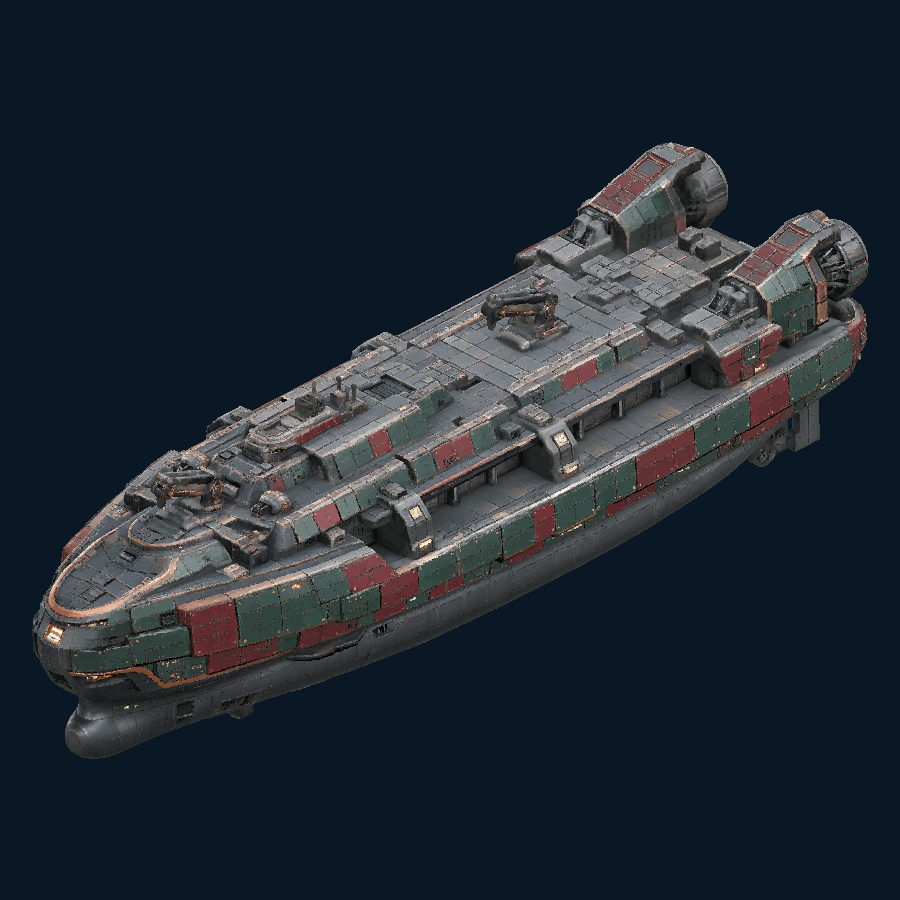
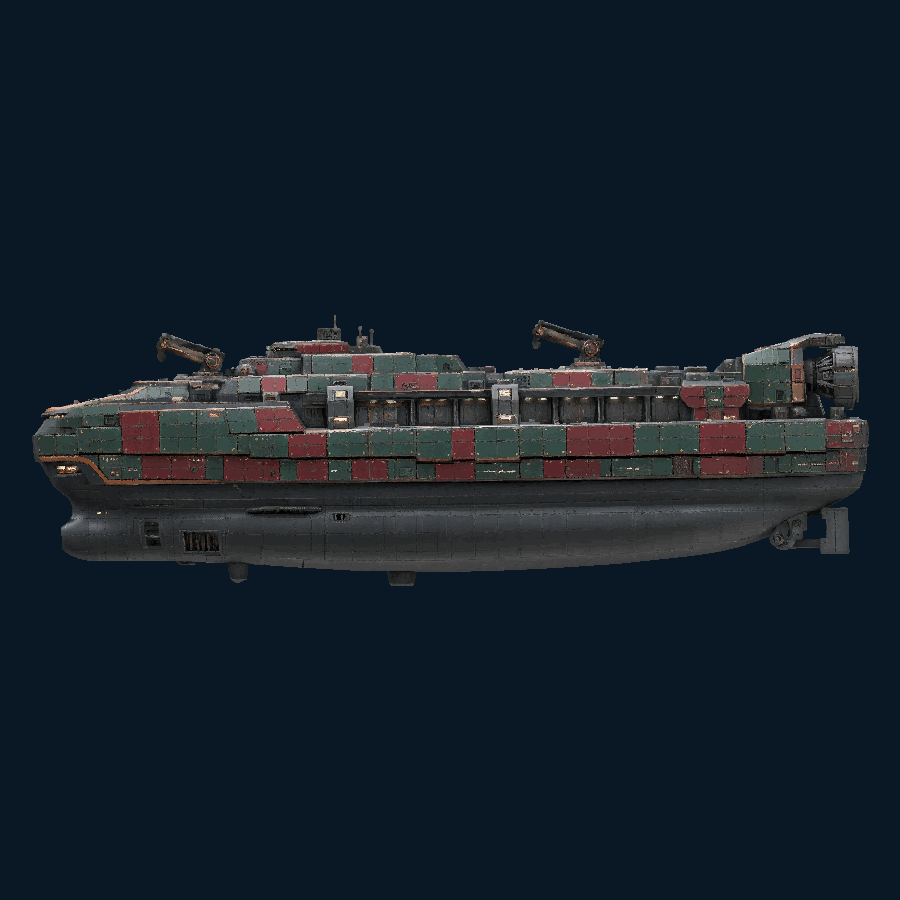
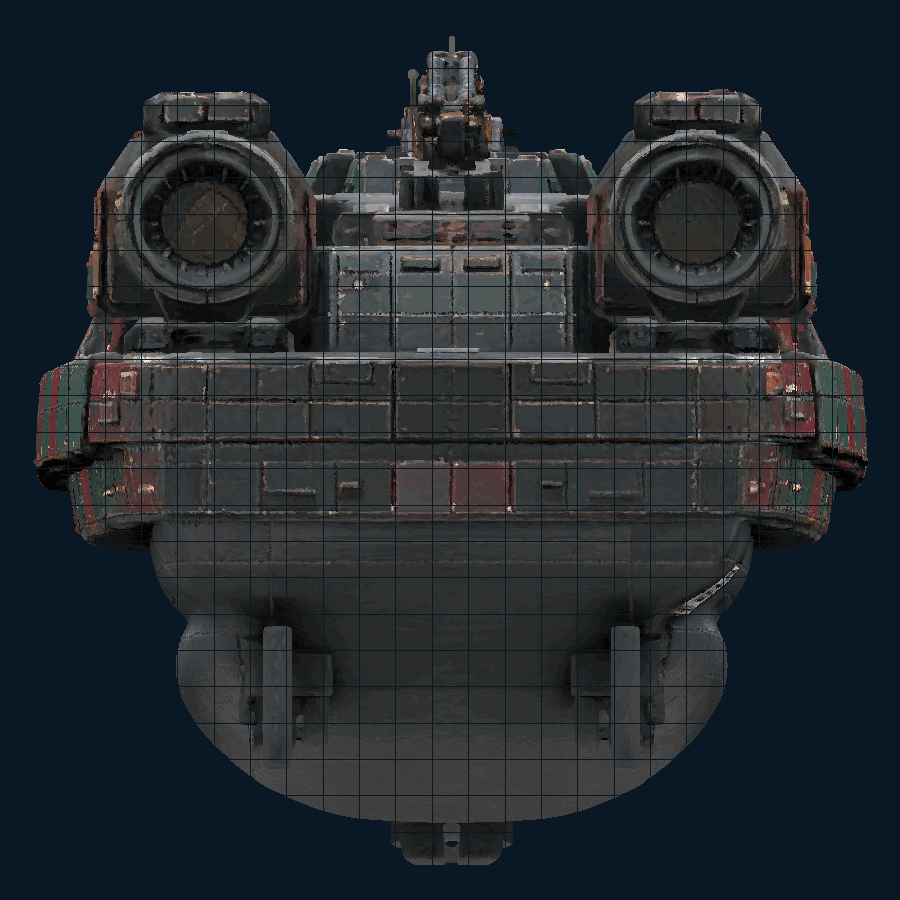
Lamellar Deepservice-class Submarine Tender is a Human maintenance and replenishment vessel for sea-surface and space operations. Long protected side galleries, enclosed technical shops and two folded service cranes define its role. A continuous displacement hull supports three broad stepped armor terraces and integrated stern space-drive groups.
Vessel Profile
Dimensions & Scale
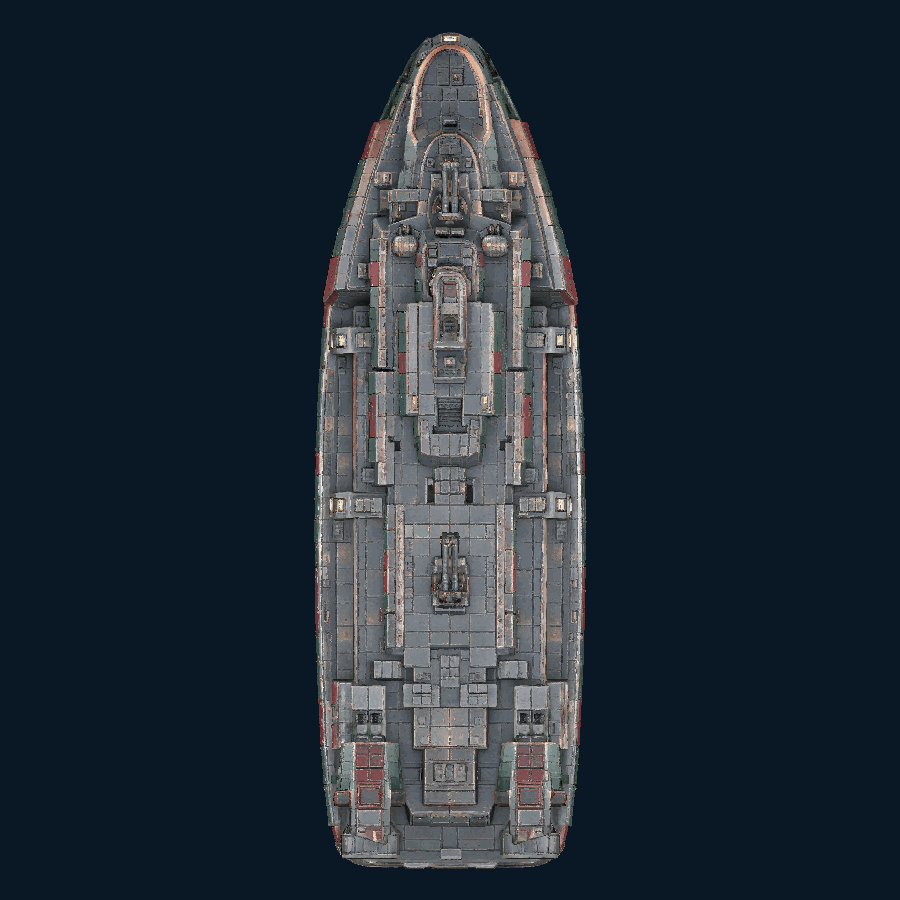
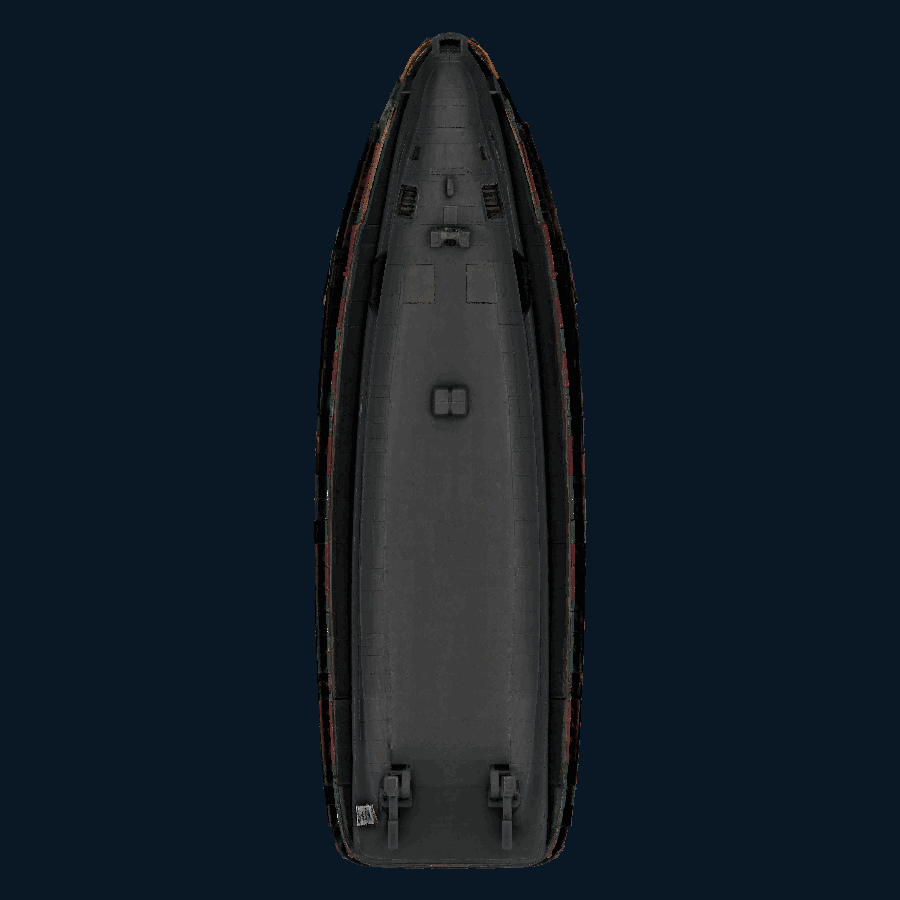
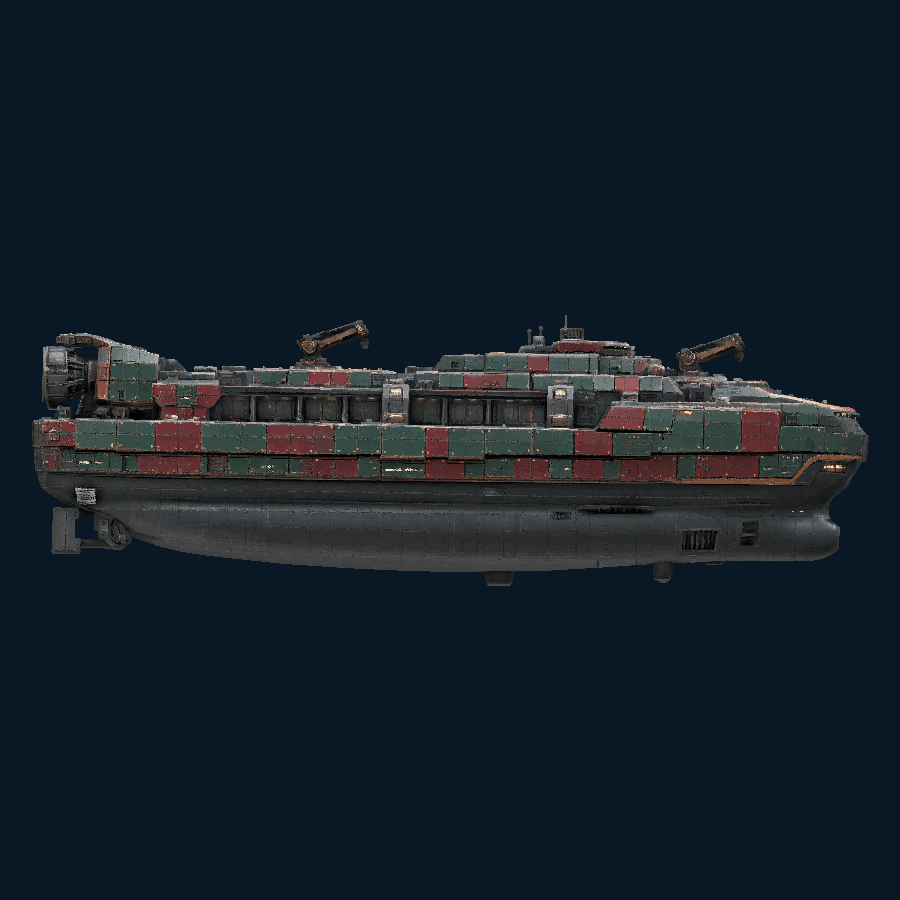
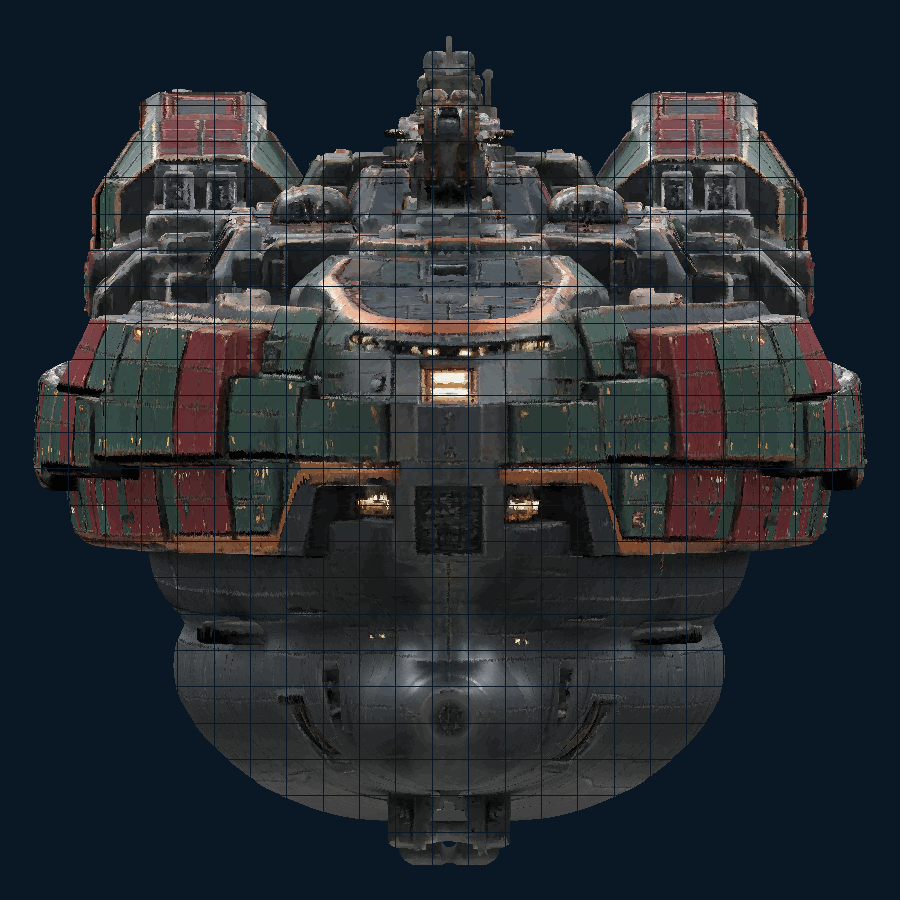
Length 207 m × Width 43.4 m × Height 38.7 m. Total height combines the supplied 30.2 m above the design waterline and 8.5 m draft. These are fictional design proportions rather than certified naval specifications.
Proposed operating displacement: approximately 43,000 ton (metric tons) in the assumed sea-service loading condition. The estimate does not establish stability limits, cargo capacity or validated spaceflight performance.
Weapons & Armament
Two compact 30 mm protective housings provide the specified local defensive armament. Their placement leaves side galleries and crane paths clear. The stated caliber is a fictional visual specification; no additional missile banks or heavy artillery are assigned.
The two folded cranes are handling equipment, not gun mounts. The tender relies on escorts and its operating formation for protection against major threats.
External Anatomy
Three shallow overlapping terraces of substantial rectangular armor modules cover occupied service volumes. A low inset command chamber sits near the front, with shorter shoulders stepping toward the ends. Curved roots join the side galleries to a smooth continuous underwater body. Emerald and burgundy upper regions contrast with dark machinery and restrained copper borders.
Functional Architecture
Enclosed workshops, stores and technical-transfer stations support submarine maintenance and replenishment. Two cranes occupy separate service terraces, preserving access to protected side galleries and cargo doors. Handling routes and maintenance clearances remain distinct from defensive mounts.
Integrated sensors, power distribution and environmental systems coordinate sea and vacuum service states. Marine drainage, sealed compartments and protected machinery interfaces support ocean operation; vacuum-compatible closures and dedicated drive systems support the space role. Exact workshop throughput and cargo capacity remain unspecified.
Technical Specifications
Offensive rating: 22/100 — Only two local protective housings are specified
Defensive rating: 49/100 — Compartmentation and selective armor protect service spaces
Mobility rating: 45/100 — Heavy service volumes favor controlled movement
Tactical cognition rating: 74/100 — Sensors and command coordinate technical operations
Endurance rating: 81/100 — Stores and enclosed workshops support extended deployment
Fleet support rating: 94/100 — Maintenance, replenishment and handling define the vessel
Fleet Role
A dedicated service mothership for submarine formations, carrying technical support rather than battleship-scale armament. It sustains repairs and transfers at sea and provides an authored orbital support role when deployed in space. Supporting underwater vessels does not make the tender itself a submersible.
Life Between Stars
Sea-surface operation uses a genuine buoyant hull with protected marine propulsion outlets and supported rudders. Space operation uses two large armored vacuum-drive groups integrated into the stern shoulders and rear body.
Surface and Space are the supported operating domains. Transition procedures and independent atmospheric flight are not specified. The vessel is not assigned routine underwater operation simply because its customers are submarines.
Defense Architecture
Local armor protects command rooms, shops and machinery, while compartmentation limits flooding and service failures. Two defensive housings provide close protection. Armor remains subordinate to storage and handling capacity, so escort protection and a secure service area are essential.
Operational Limits
Open service activity, crane clearances and side-transfer access constrain protection during maintenance. Limited armament cannot withstand capital combat alone. Stores, replacement modules and workshop resources deplete during prolonged operations, requiring replenishment and scheduled withdrawal.
Strategic Strengths
Protected servicing routes, enclosed technical spaces and distinct handling equipment give the tender a clear support function. Dual-environment engineering allows the same class to contribute to ocean and orbital logistics without sacrificing its continuous marine hull.
Capability Assessment
Proposed fictional profile. Fleet support and endurance are strongest; attack is intentionally low. Tactical cognition represents service coordination and information management. Scores describe intended role balance rather than measured performance.
B · 60.8
Fleet-wide concept rating, 0–100; not simulated performance. Specialized strengths do not imply an equally high overall grade. Tactical Cognition describes sensing, coordination and command. Grade is the equal-weight mean: S ≥ 90, A ≥ 75, B ≥ 60, C ≥ 45, D < 45.
Technology Level
T1 — integrated sea-surface and space-service engineering. No independent phase travel is assigned.
Weapon Class
Proposed W0 — two local protective housings; dedicated offensive fleet combat is outside the mission
T0 planetary · T1 system flight · T2 phase travel · T3 limited world engineering. W0 point defense · W1 ship combat · W2 heavy fleet combat · W3 strategic theater systems. Technology and weapon classes are independent of the profile grade.
History & Lineage
Universe lore · authored service history
Origin
Developed within the fictional Human fleet to extend submarine support beyond permanent naval bases while retaining a space-service capability
Lineage & Branch
Lamellar Deepservice-class service-vessel branch, distinguished by stepped occupied terraces and long recessed maintenance galleries
Fleet or Unit
Human — fictional Merovan mobile technical-support detachments
Individual History
The Distant Service Line — In this authored service history, Lamellar joins an isolated submarine formation after damage closes its normal harbor. Workshops and protected transfer stations restore selected systems while escorts screen the service area.
The Empty Stores Return — After repeated repair cycles, depleted replacement modules force the tender to return for replenishment before every request is fulfilled. The formation preserves a rotating service schedule, recognizing that the tender extends a logistics network rather than replacing it.