
Overview
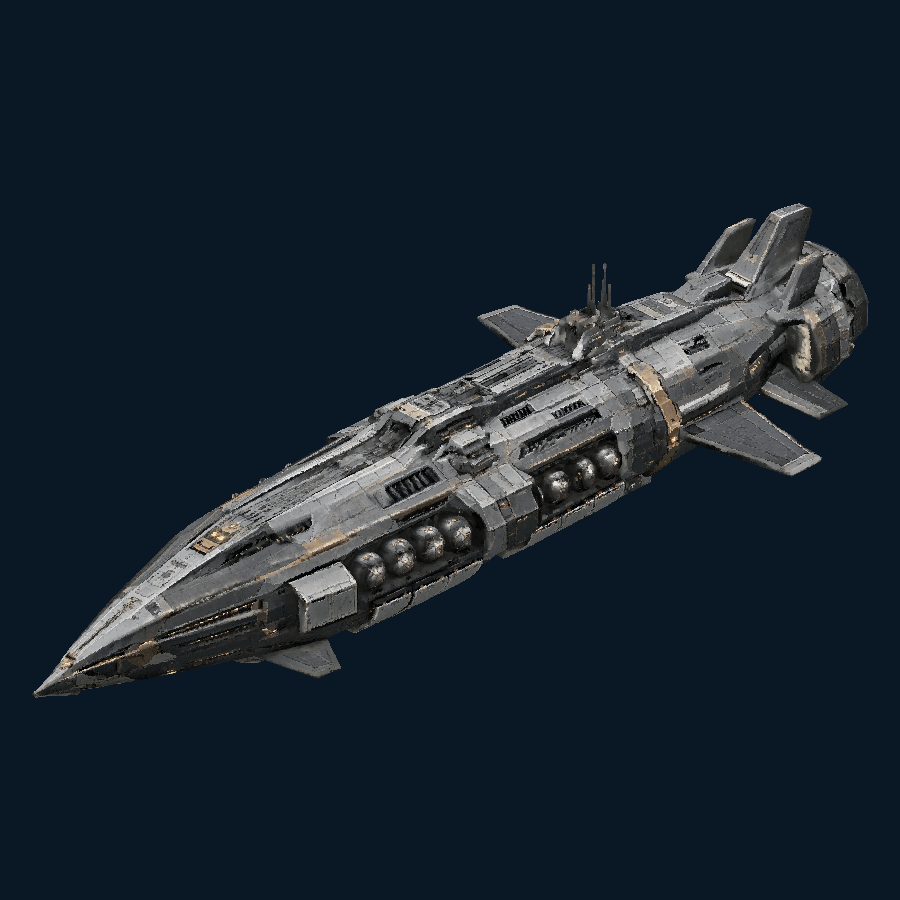
Needlewake Mine Layer is a Human submerged warfare vessel built for mine deployment, ambush preparation and route denial. Its long, slender pressure body carries protected stores, autonomous underwater support vehicles and distributed sensors, allowing it to prepare contested approaches while preserving a quiet cruising profile.
Vessel Profile
Dimensions & Scale
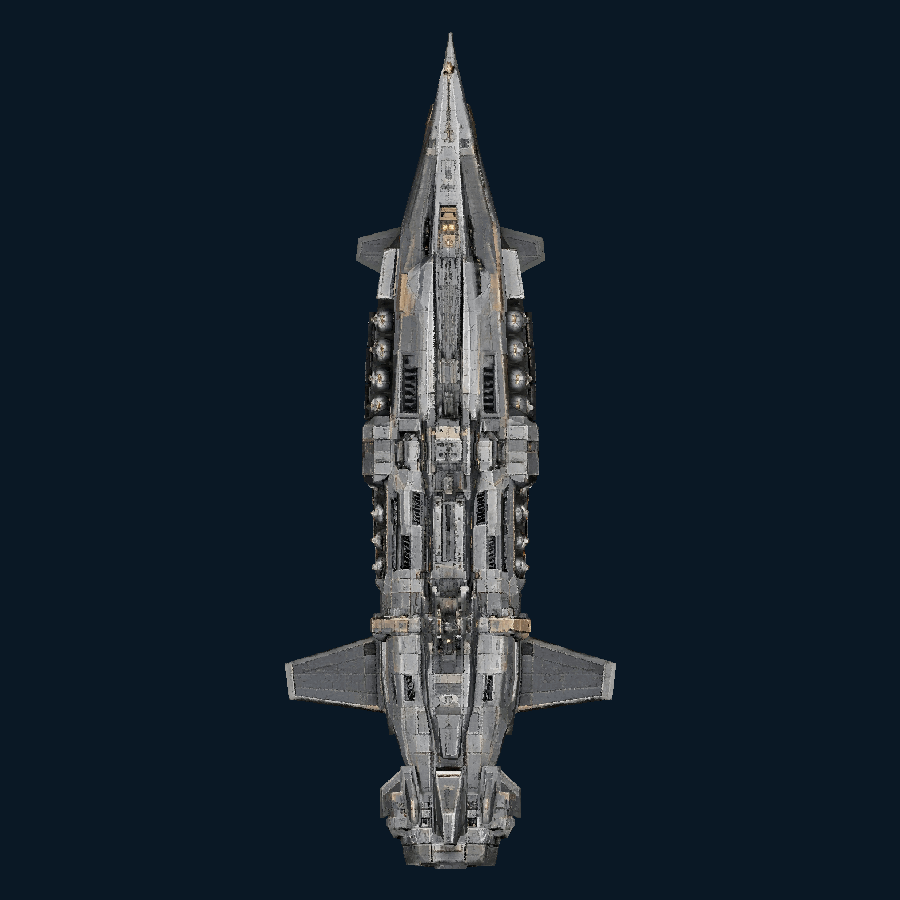
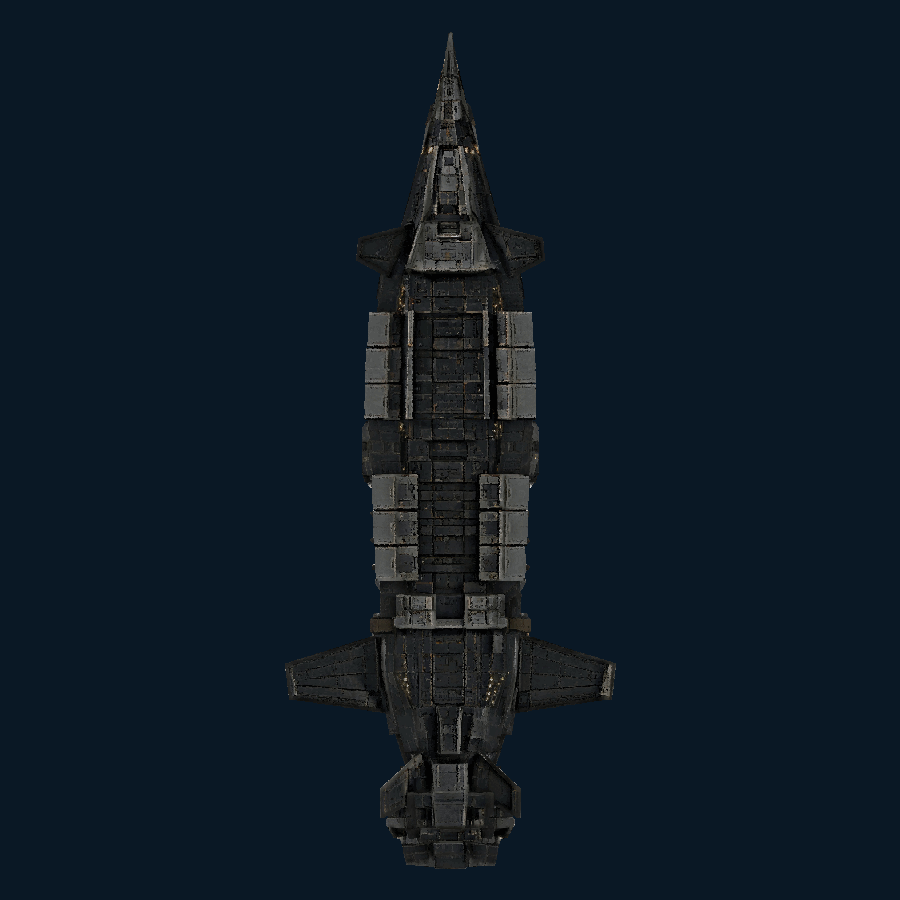
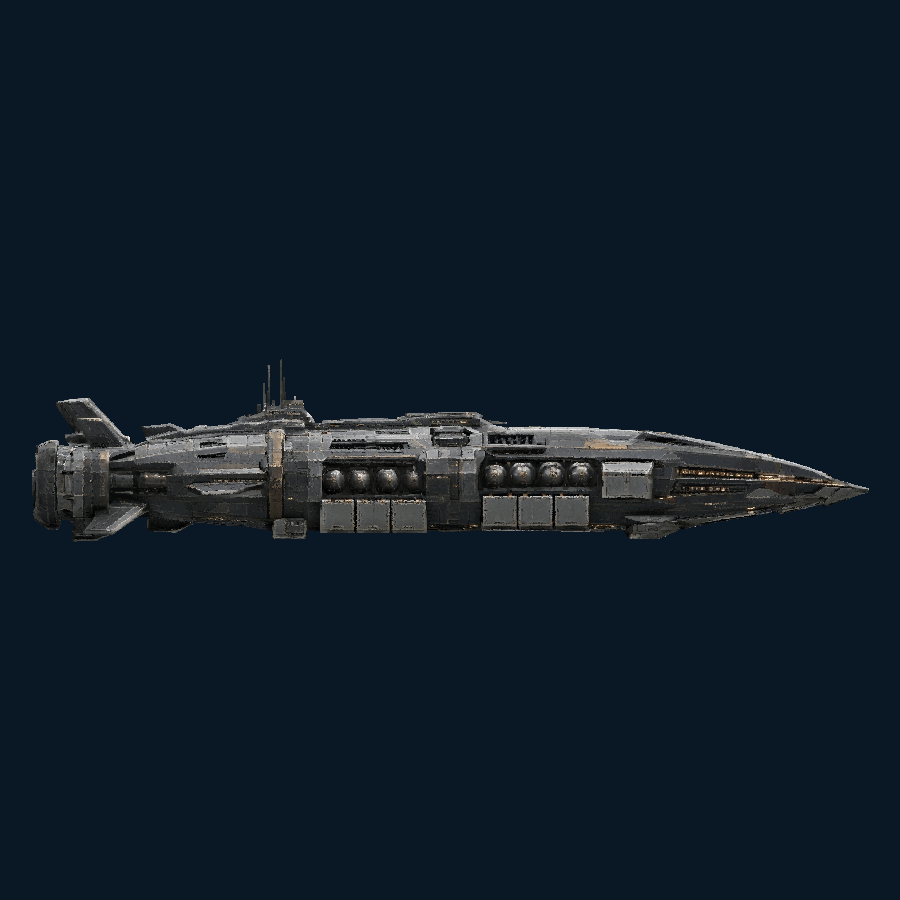
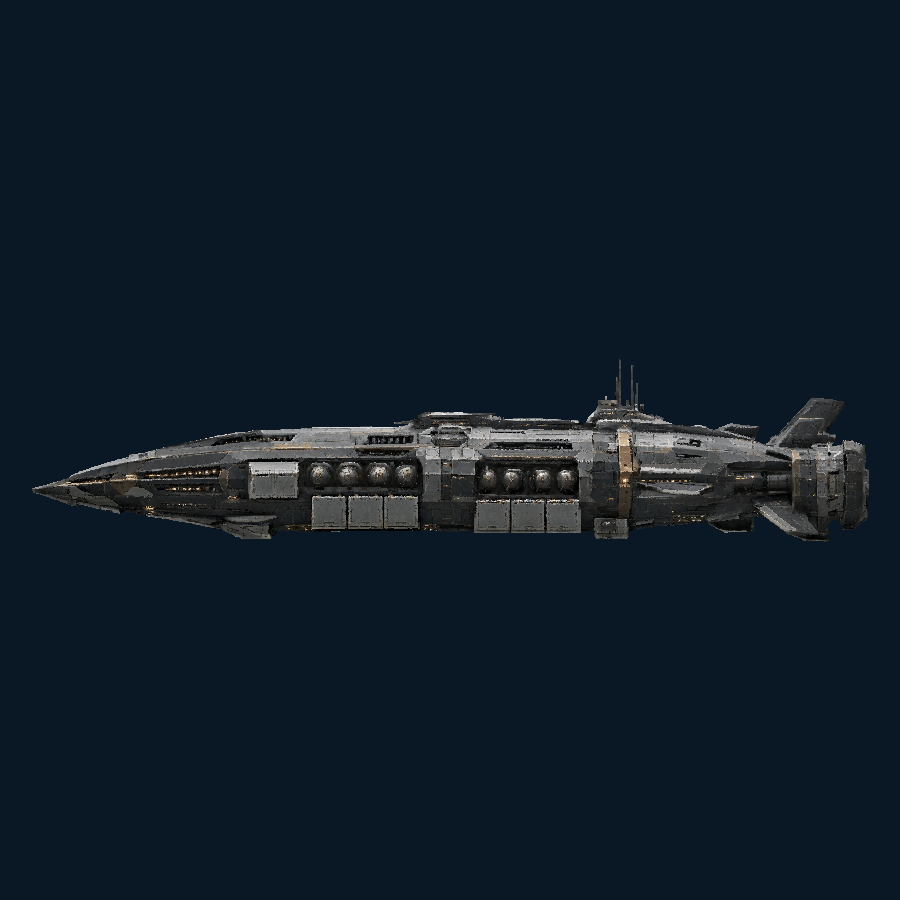
Length 148 m × Width 19.2 m × Height 14.8 m. Supplied fictional overall dimensions. Height denotes total body depth, not operating depth below the sea surface.
Proposed submerged displacement: approximately 24,000 ton (metric tons). Fictional concept estimate based on size, internal structure and operating environment; not measured performance.
Weapons & Armament
The fictional mission package includes smart-mine dispensers, UUV mine-laying support, defensive torpedoes, sensor buoys and decoy launchers. A precision supercavitating dart battery and guided torpedoes provide additional interception capability. Protected galleries and faired deployment regions keep these systems integrated into the vessel’s pressure-bearing architecture.
External Anatomy
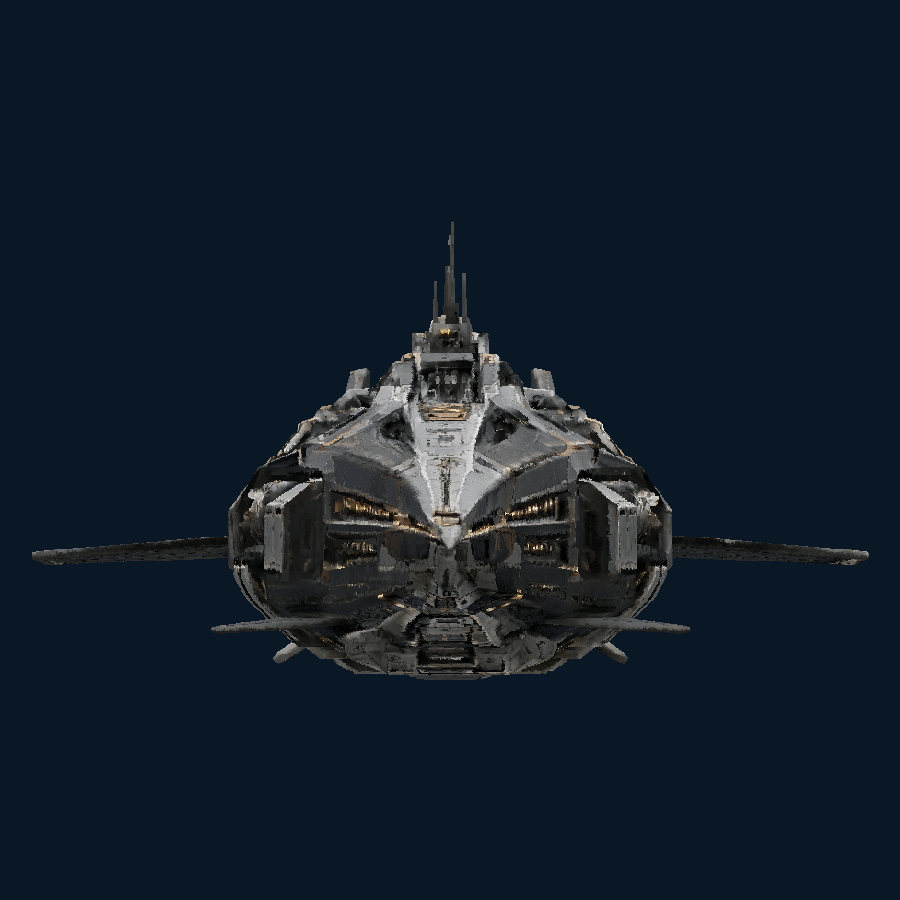
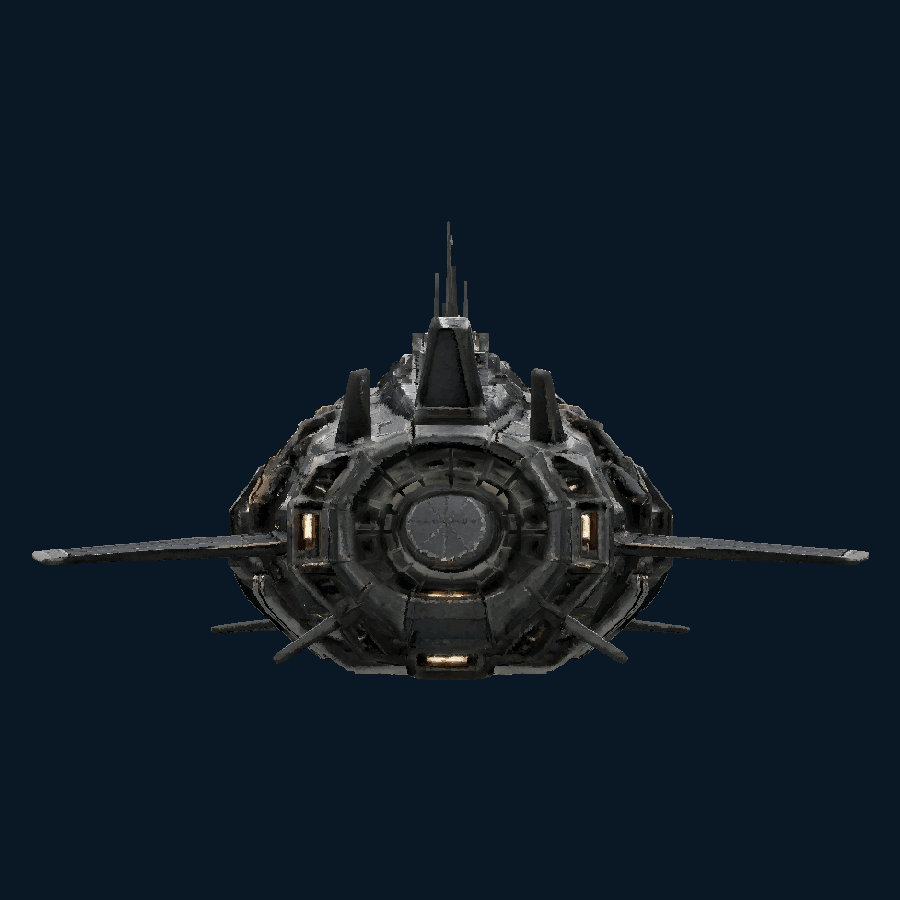
A fine elongated forebody joins a compartmented central pressure hull and a clearly defined stern drive. Protected flank volumes carry mission stores within the overall naval architecture. Charcoal acoustic treatment, cool steel surfaces and pale brass accents follow longitudinal reinforcement and maintenance boundaries. The lower body remains smoother than the dorsal mission zones.
Functional Architecture
Conformal bow and flank sonar, passive acoustic bands and protected optical apertures build a local contact picture. Retractable communications equipment and guarded data links coordinate UUV sorties. Separated magazines, power, cooling and control compartments support mission endurance, with reserve systems and internal maintenance access retained along the central body.
Technical Specifications
Offensive rating: 66/100 — The fictional mission package includes smart-mine dispensers, UUV mine-laying support, defensive torpedoes, sensor buoys and decoy launchers
Defensive rating: 61/100 — Compartment isolation and continuous pressure-root bands protect critical sections
Mobility rating: 55/100 — A deeply integrated low-cavitation pump-jet or ring-drive moves the submarine, assisted by compact control surfaces and vector-flow channels
Tactical cognition rating: 82/100 — Conformal bow and flank sonar, passive acoustic bands and protected optical apertures build a local contact picture
Endurance rating: 72/100 — Mission deployment and UUV recovery can reveal the vessel’s presence
Fleet support rating: 79/100 — Protected mission stores, autonomous support and distributed passive sensing combine route-control capability with quiet movement
Fleet Role
Supports fictional undersea campaigns through mine warfare, ambush preparation and area denial. UUV handling and sensor-buoy support extend local awareness, while defensive weapons protect the deployment vessel. The entry describes game-world capabilities rather than real mine-deployment procedures.
Undersea Operations
A deeply integrated low-cavitation pump-jet or ring-drive moves the submarine, assisted by compact control surfaces and vector-flow channels. Quiet cruise is the preferred state; brief high-power movement trades discretion for repositioning. The assigned domain is underwater. Maximum operating depth and speed remain unspecified.
Defense Architecture
Compartment isolation and continuous pressure-root bands protect critical sections. Acoustic outer treatment and blended hull transitions support signature management. Decoys, deception launchers and defensive torpedoes provide local protection when quiet positioning is no longer sufficient.
Operational Limits
Mission deployment and UUV recovery can reveal the vessel’s presence. Limited underwater communications complicate coordination, while finite stores require eventual replenishment. Pressure-hull damage can constrain depth, and high-power movement reduces acoustic discretion. Its specialized support role does not provide the sustained direct fire of an arsenal submarine.
Strategic Strengths
Protected mission stores, autonomous support and distributed passive sensing combine route-control capability with quiet movement. The slender body and separated pressure compartments support deliberate patrols without placing every mission function in one exposed structure.
Capability Assessment
Proposed fictional doctrine profile. Protected mission stores, autonomous support and distributed passive sensing combine route-control capability with quiet movement. The slender body and separated pressure compartments support deliberate patrols without placing every mission function in one exposed structure. Scores describe intended game roles rather than measured performance.
B · 69.2
Fleet-wide concept rating, 0–100; not simulated performance. Specialized strengths do not imply an equally high overall grade. Tactical Cognition describes sensing, coordination and command. Grade is the equal-weight mean: S ≥ 90, A ≥ 75, B ≥ 60, C ≥ 45, D < 45.
Technology Level
T0 — advanced planetary submarine engineering, autonomous underwater support and integrated acoustic sensing
Weapon Class
Proposed W1 — specialized undersea area denial, guided attack and defensive interception
T0 planetary · T1 system flight · T2 phase travel · T3 limited world engineering. W0 point defense · W1 ship combat · W2 heavy fleet combat · W3 strategic theater systems. Technology and weapon classes are independent of the profile grade.
History & Lineage
Universe lore · authored service history
Origin
Developed for Human underwater formations that need persistent route control and reconnaissance support beyond immediate surface coverage. The design prioritizes protected deployment capacity and acoustic awareness within a coherent submerged hull.
Lineage & Branch
Needlewake underwater mission branch, distinguished by a fine forebody, long structural axis and restrained longitudinal engineering detail
Fleet or Unit
Human — undersea route-control and support formations
Individual History
The Silent Passage — In this authored service history, a Needlewake accompanies a convoy through an uncertain deep-water approach. Its autonomous scouts return conflicting observations, so the vessel holds outside the passage while the formation waits for a clearer contact picture.
The Returned Survey — A recovered scout supplies the missing terrain record. Needlewake relays the revised route and resumes its support patrol, preserving its stores while the convoy clears the area. The account highlights patient reconnaissance, recoverable mission vehicles and coordination under restricted underwater communication.