
Overview
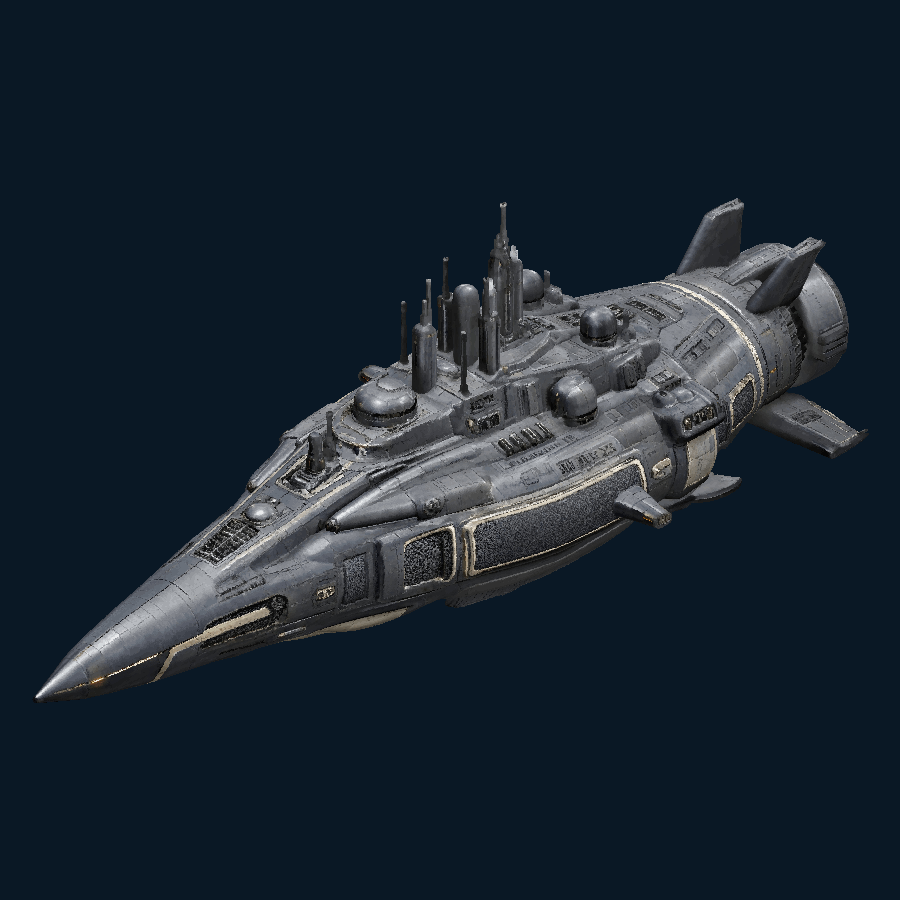
Needlewake Command is a Human electronic-warfare command submarine for Mow My World. A long, fine forebody leads into a compartmented pressure hull carrying protected sensors, communication systems and battle-management spaces. Its purpose is to coordinate an undersea formation, complicate hostile targeting and preserve a coherent tactical picture under pressure.
Vessel Profile
Dimensions & Scale
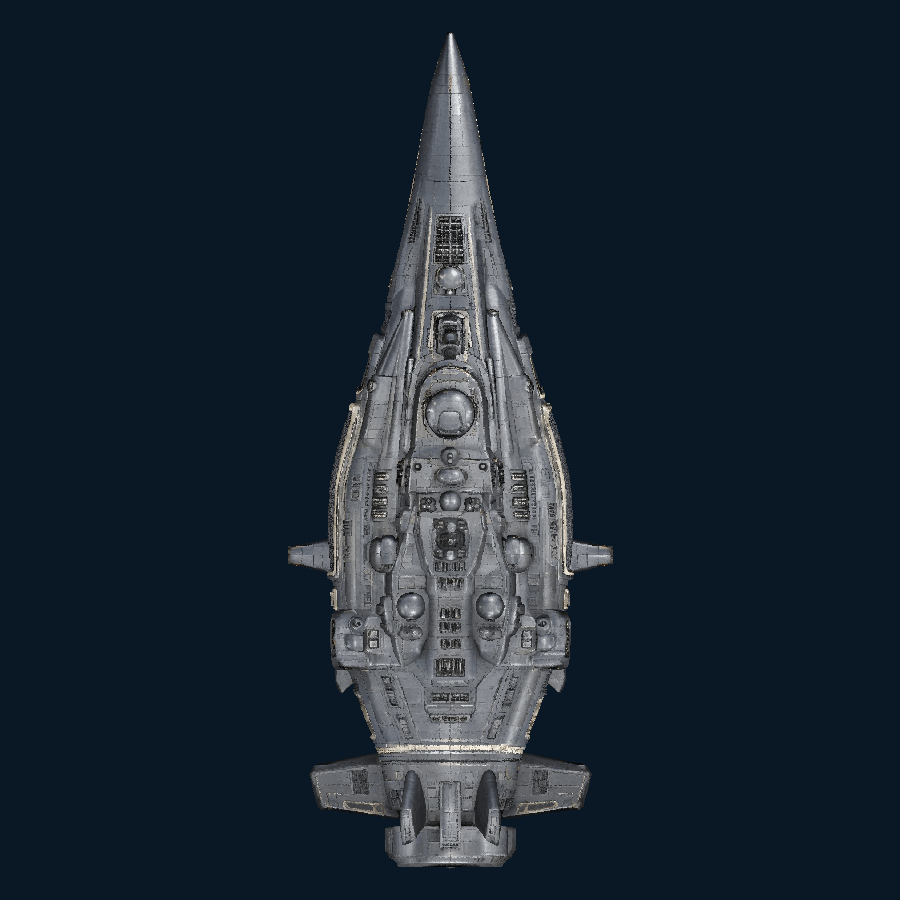
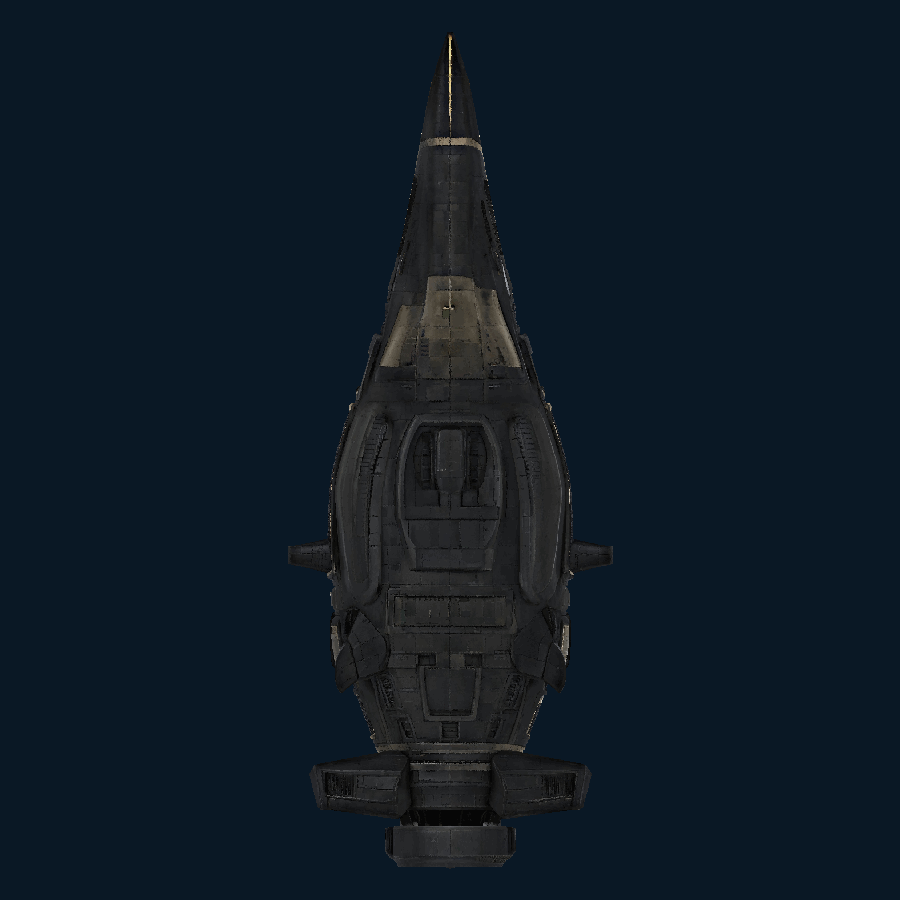
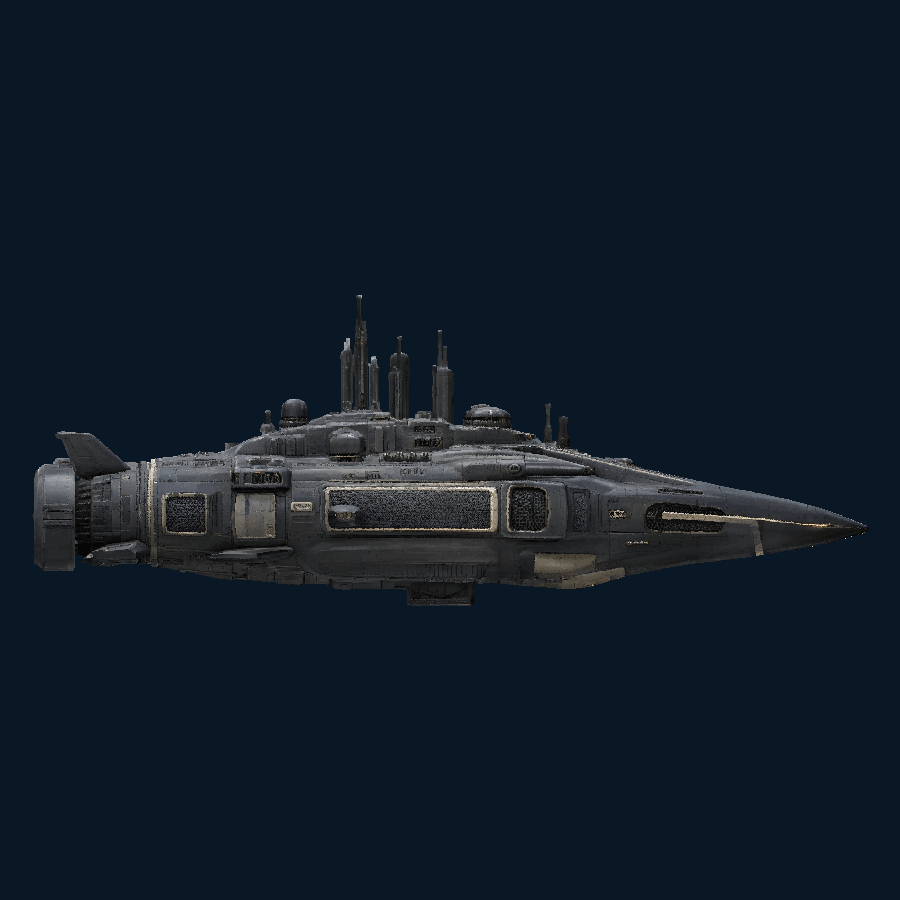
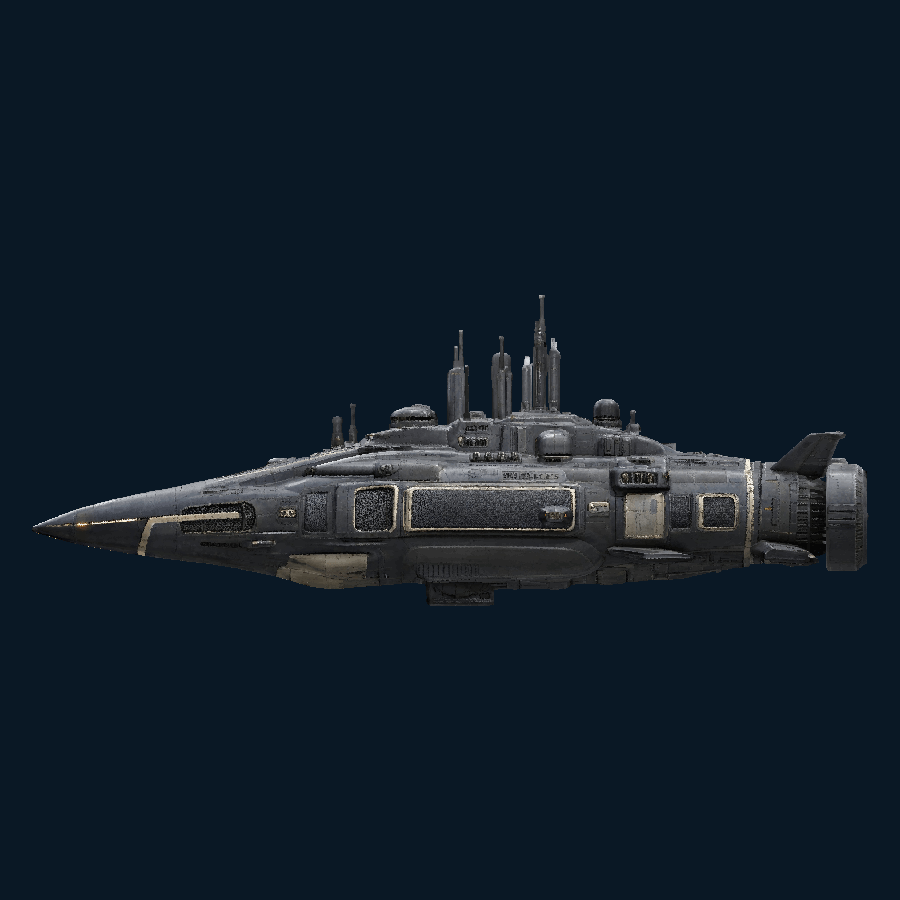
Length 223.9 m × Width 29.1 m × Height 22.4 m. Supplied fictional dimensions specify overall length, maximum beam and body depth. The stated height is the body-depth reference; an exact additional clearance for extended sensor masts has not been specified.
Proposed submerged operating mass: approximately 82,000 ton (metric tons). This concept estimate allows for a tapered pressure-vessel form, internal compartments and service reserves; it is not measured displacement.
Weapons & Armament
Protected torpedo galleries carry defensive torpedoes and long-range guided torpedoes. A proposed precision supercavitating dart battery supports interception and selected short engagement windows. Release systems remain recessed or shuttered within the hull rather than taking the form of exposed racks or long barrels.
Countermeasure ejectors and decoy deployment systems complicate hostile tracking, while compact defensive apertures support the vessel’s survival during disengagement. Weapons protect the command mission; they do not turn Needlewake into a heavy siege platform. Exact ammunition capacities, ranges and launch performance remain fictional design parameters.
External Anatomy
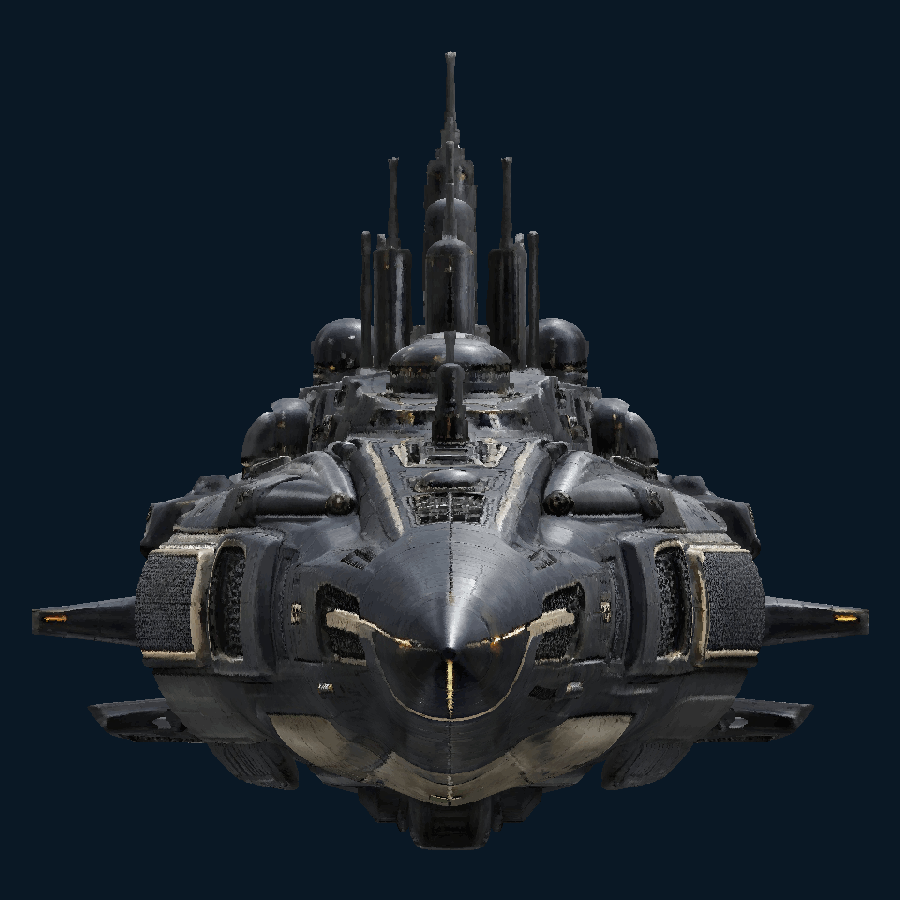
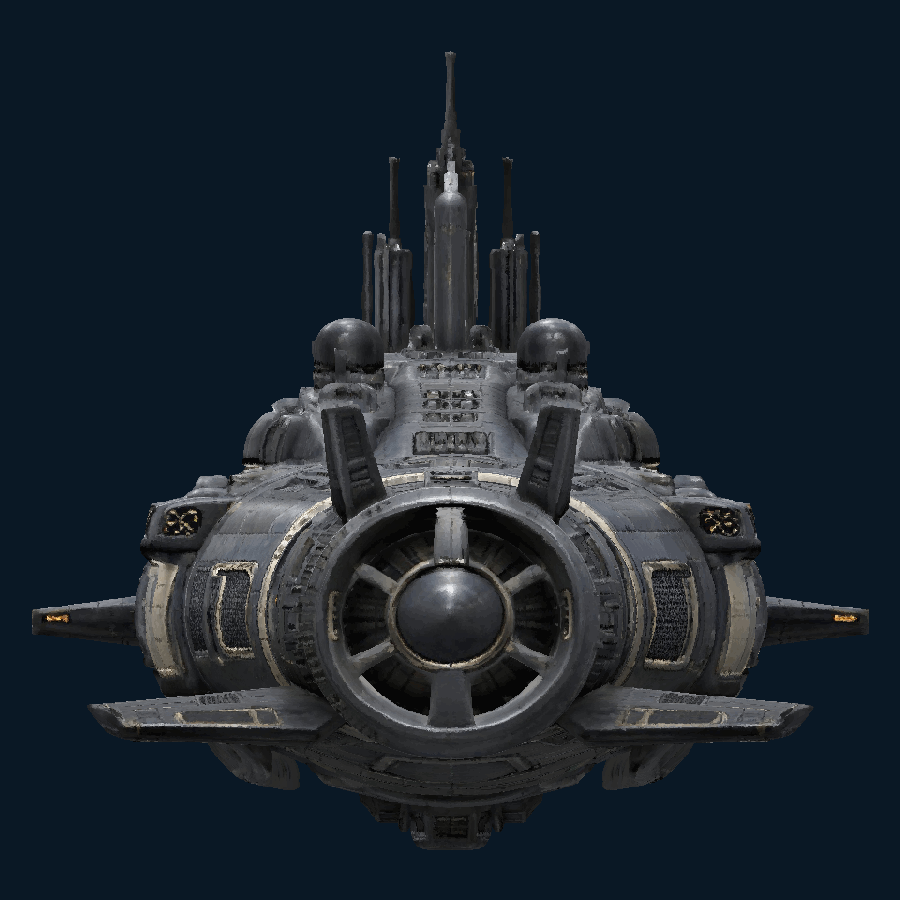
A long tapered bow joins a fuller pressure-bearing middle and a narrowing stern drive sector. Charcoal acoustic surfaces, cool structural metal and pale-brass accents divide the hull into broad controlled regions. Fine longitudinal channels follow service access and structural transitions without obscuring major sensor faces.
The depicted dorsal zone includes raised sensor fixtures and masts in a deployed presentation. The proposed operating design retracts or protects key fixtures for quiet transit. Blended flank structures, compact control surfaces and a cleaner underside preserve a continuous submerged-vessel profile.
Functional Architecture
Command and battle management — Protected processing and control spaces combine onboard sensing with reports from accompanying vessels and autonomous units. Distributed control stations support formation tasking, contact assessment and coordinated response when individual links fail.
Sensing — An integrated bow sonar sector, conformal flank arrays and passive acoustic bands provide complementary observations. Protected optical apertures, close-work navigation windows and anomaly sensing support local investigation. Raised and retractable fixtures serve specialized observation and relay tasks rather than an exposed cockpit.
Electronic warfare and deception — Distributed acoustic apertures and guarded countermeasure outlets support fictional jamming, false-contact generation and signature management. Active emissions can reveal the ship’s presence, so deception and quiet observation compete for tactical priority.
Communications — Protected underwater links and short-range optical exchanges connect nearby units when conditions permit. Retractable masts or remote relays support above-water communication; the design does not assume unrestricted radio propagation through deep seawater.
Continuity — Isolated power, cooling and control regions support the command payload. Crew spaces, maintenance access, magazines and reserve systems remain inside the compartmented pressure hull.
Technical Specifications
Offensive rating: 55/100 — Guided torpedoes and precision interceptors protect the command mission
Defensive rating: 61/100 — Compartmentation, signature management and decoys preserve survivability
Mobility rating: 57/100 — Quiet propulsion and compact controls favor deliberate fleet maneuver
Tactical cognition rating: 93/100 — Sensor fusion, deception analysis and battle management dominate the mission
Endurance rating: 76/100 — Internal reserves and service capacity sustain extended coordination
Fleet support rating: 92/100 — Protected communication and tasking help a dispersed formation operate together
Fleet Role
Coordinates an undersea formation through electronic warfare, acoustic deception and battle management. Needlewake Command maintains the tactical picture, distributes assignments and helps escorts distinguish useful contacts from false returns. It can support mine-warfare vessels and capital submersibles while leaving sustained heavy attack to dedicated combat units.
Undersea Operations
A deeply integrated low-cavitation pump-jet or rim-drive provides stern propulsion, with compact vector channels and control surfaces for heading and depth changes. Quiet cruising is the preferred state; a short high-power sprint trades signature and energy reserve for movement.
This is an underwater vessel. Surface relay access does not imply a separate surface-combat role, and independent atmospheric or spaceflight capability is not assigned. Operating depth, sprint duration and transit range remain concept parameters.
Defense Architecture
A compartmented composite pressure hull, acoustic outer treatment, structural ceramic regions and reinforced pressure roots protect critical spaces. Local isolation limits the spread of flooding and service failures. Decoys, defensive torpedoes and signature discipline improve survival without guaranteeing invisibility or interception of every attack. Protected and retractable sensors reduce exposure during transit.
Operational Limits
High-value command functions make the vessel a priority target. Active sensing, jamming and communication can compromise concealment. Fine forward geometry and extended sensors require disciplined navigation and operating-state management. Limited defensive armament cannot substitute for escorts, while damaged communications or cooling can degrade command effectiveness even if propulsion remains available.
Strategic Strengths
Combines protected fleet coordination with broad sensing and flexible deception. A quiet transit state supports patient observation, and redundant work areas preserve useful command capacity after local disruption. The vessel’s contribution is amplified by well-coordinated escorts and autonomous scouts rather than raw offensive output.
Capability Assessment
Proposed fictional six-axis profile. Tactical cognition and fleet support are the dominant strengths, reflecting sensing, command and information exchange. Attack is deliberately moderate, protection and mobility support survival, and endurance reflects a sustained coordination mission. Ratings describe intended game roles rather than measured performance.
B · 72.3
Fleet-wide concept rating, 0–100; not simulated performance. Specialized strengths do not imply an equally high overall grade. Tactical Cognition describes sensing, coordination and command. Grade is the equal-weight mean: S ≥ 90, A ≥ 75, B ≥ 60, C ≥ 45, D < 45.
Technology Level
T0 — advanced planetary submarine engineering, integrated sensing, autonomous support and fictional acoustic countermeasures. No independent space-travel tier is assigned.
Weapon Class
Proposed W1 — defensive and guided underwater combat systems, including a fictional precision interceptor battery. No strategic theater bombardment capability is assigned.
T0 planetary · T1 system flight · T2 phase travel · T3 limited world engineering. W0 point defense · W1 ship combat · W2 heavy fleet combat · W3 strategic theater systems. Technology and weapon classes are independent of the profile grade.
History & Lineage
Universe lore · authored service history
Origin
Developed within the fictional Mow My World Human undersea fleet to provide a protected mobile command node for dispersed formations. Its configuration reserves internal volume and service capacity for sensing, communication and battle-management functions.
Lineage & Branch
Needlewake undersea family — command and electronic-warfare branch. Shared elongated hull organization supports a distinct mission from the Needlewake Mine Layer; the command vessel prioritizes information and coordination rather than mine deployment.
Fleet or Unit
Human — fictional Merovan undersea command detachments, supported by regional naval infrastructure and accompanying escorts
Individual History
The Broken Contact Watch — In this authored service history, Needlewake Command accompanies a convoy through a region crowded with ambiguous acoustic returns. Its crew combines passive observations with reports from detached scouts, allowing escorts to retain a common assessment without forcing every ship to transmit continuously. A protected command node keeps the formation together while it changes course.
The Relay Withdrawal — Damage to an outer communication relay reduces coordination during a later engagement. Needlewake briefly accepts a higher signature to restore essential tasking, then withdraws behind its escorts while decoys cover the transition. The episode reinforces its doctrine: preserving the formation’s judgment matters more than remaining silent at every moment.