Overview
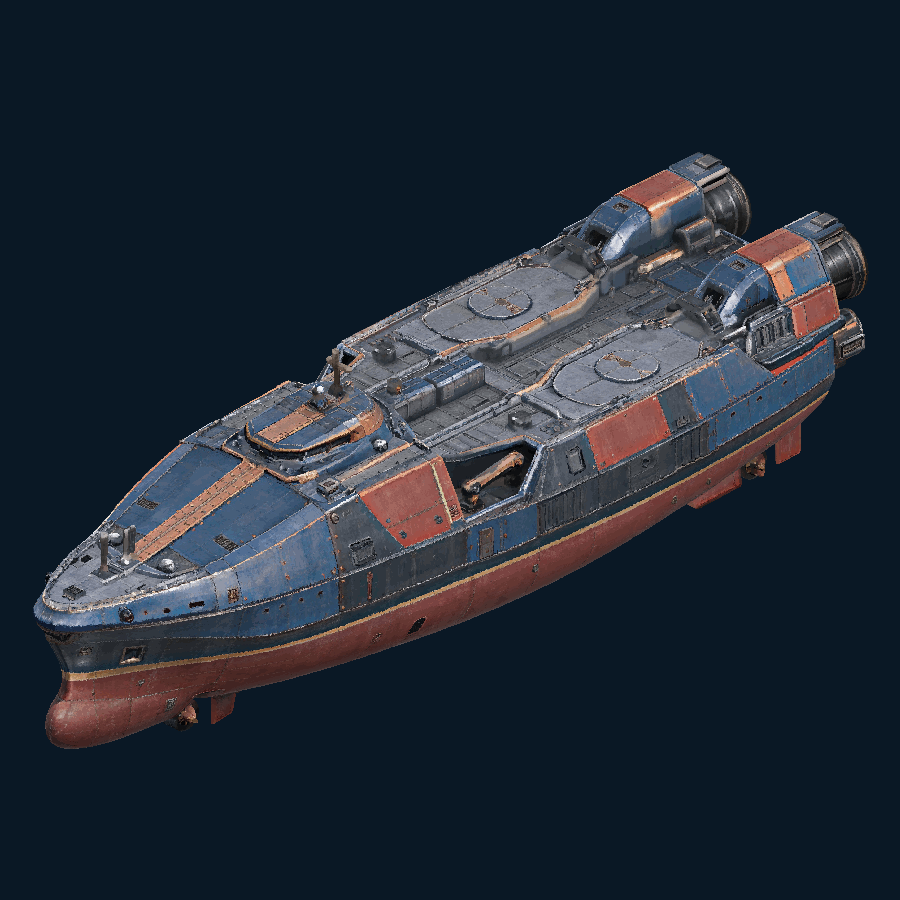
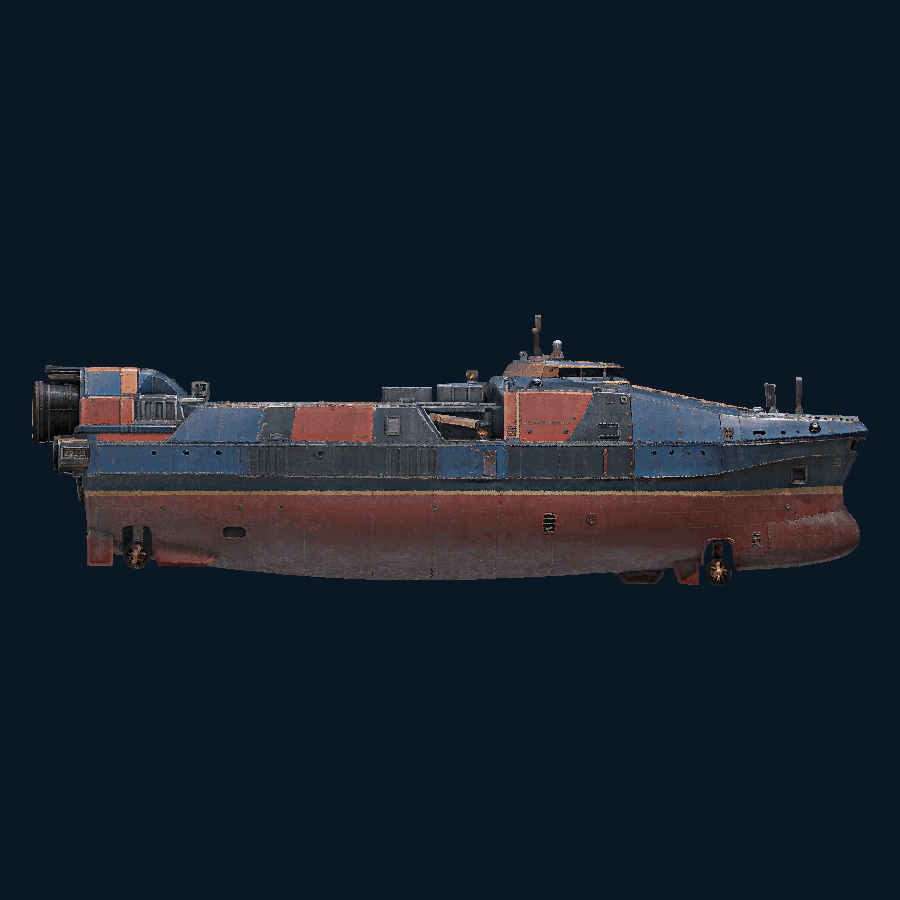
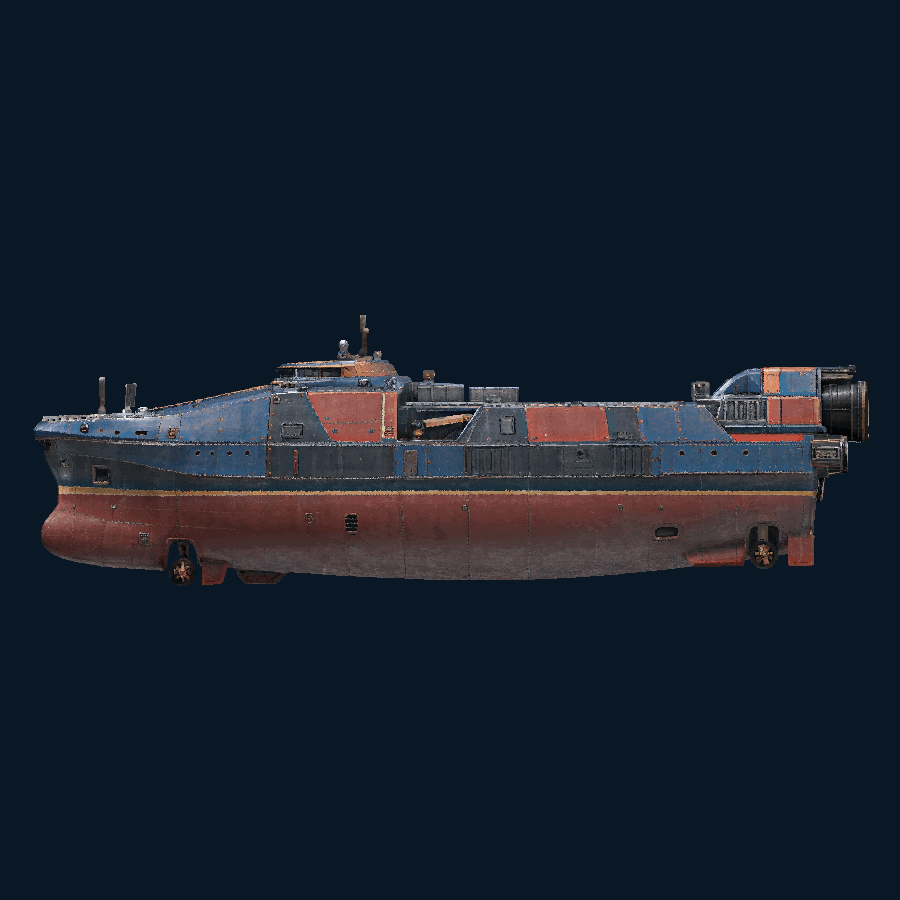
A Human sea-surface support vessel built to lay, recover and repair seabed communication cables. Pavise Linkharbor keeps coastal settlements connected, restoring the routes that carry navigation, emergency traffic and fleet coordination across the ocean.
Vessel Profile
Weapons & Armament
Limited close-range defensive mounts and countermeasures protect the working deck against small threats. The vessel carries no heavy offensive battery; cable recovery and repair take priority over combat.
Dimensions & Scale
Length 180 m × Width 34 m × Height 42 m. Fictional overall dimensions for the encyclopedia setting; height is measured from keel to the highest fixed structure.
External Anatomy
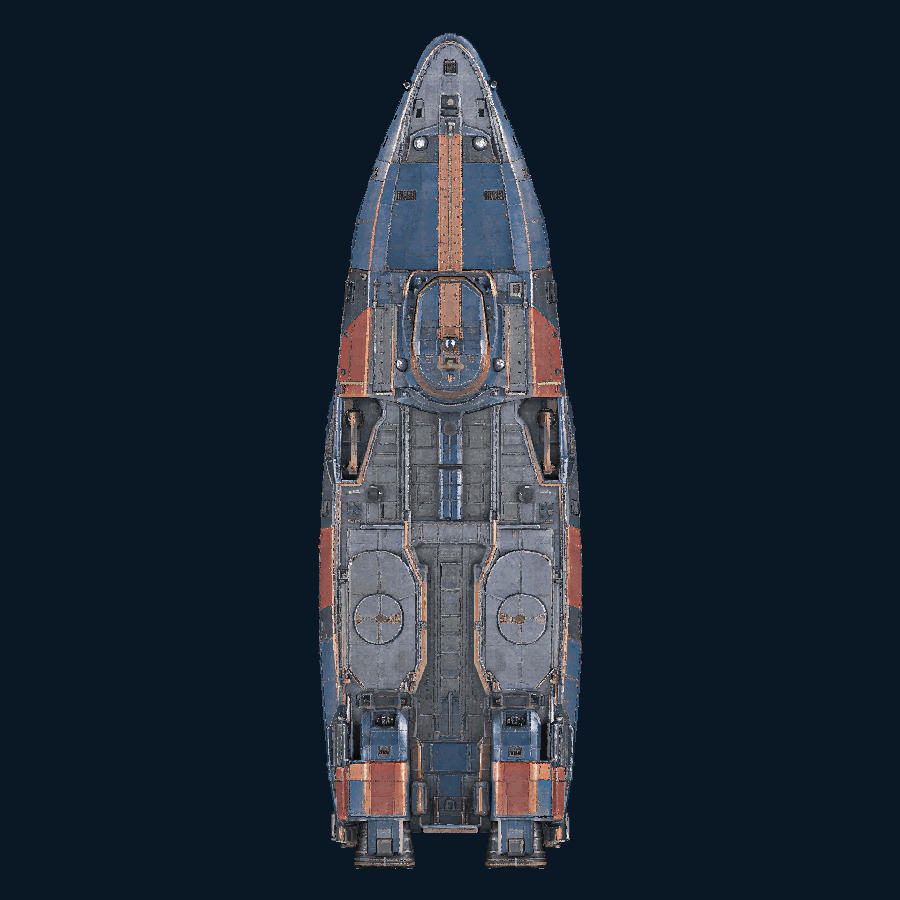
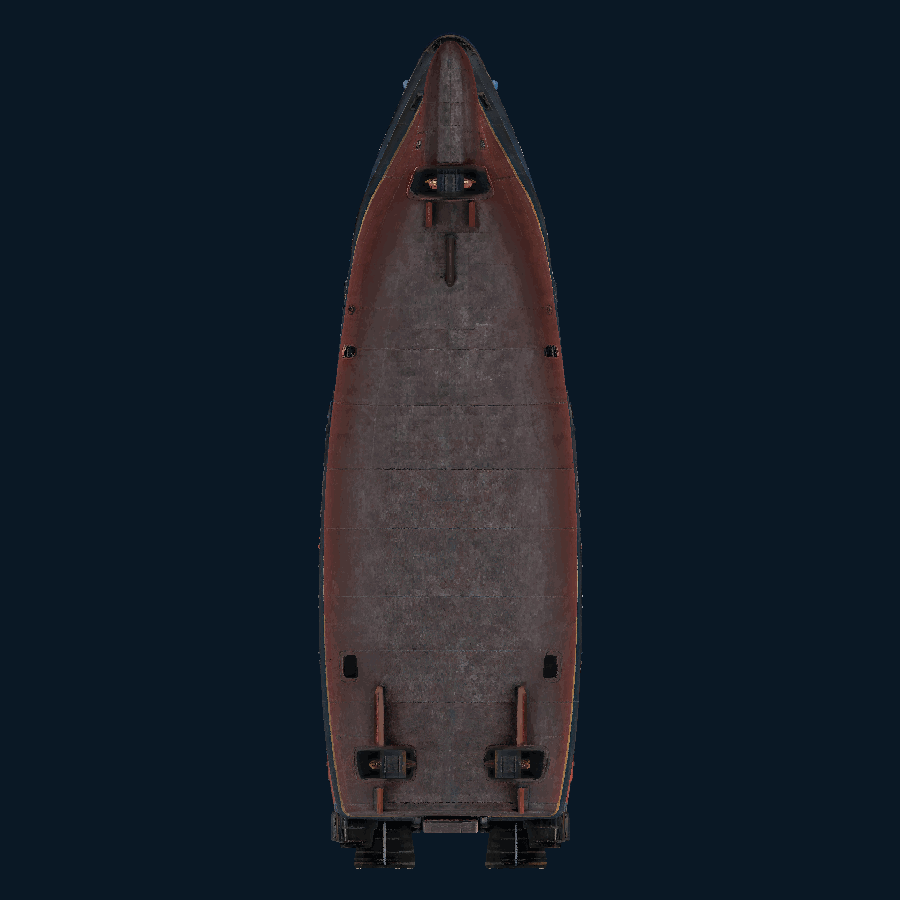
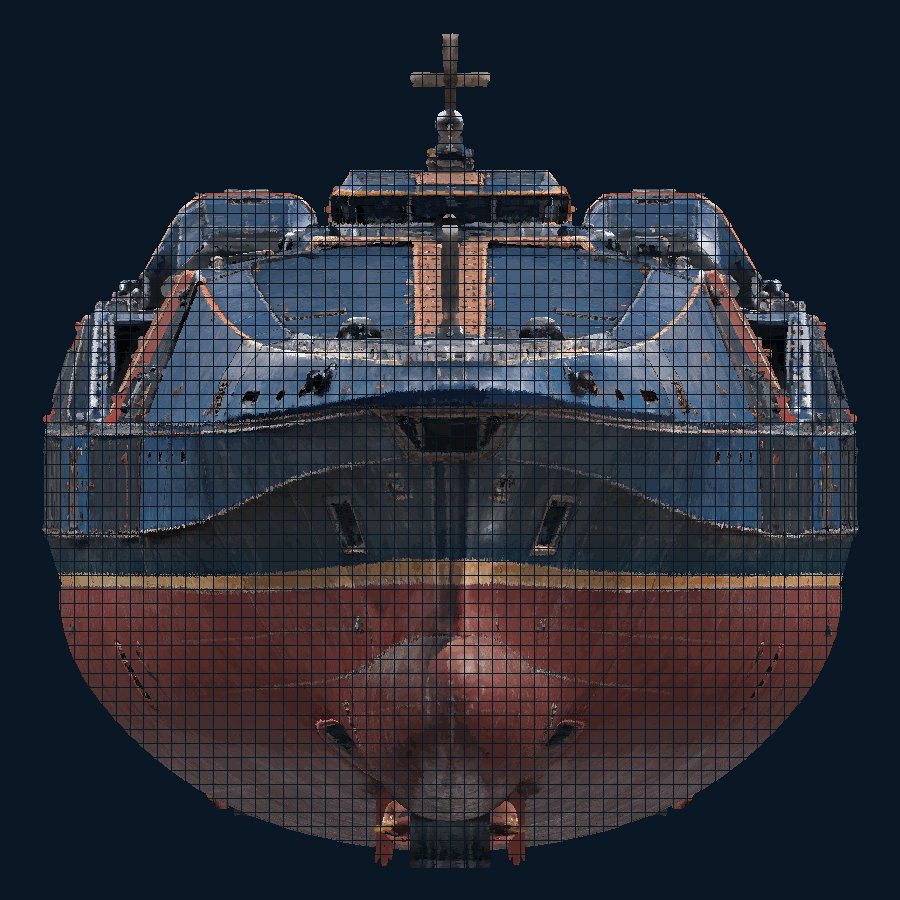
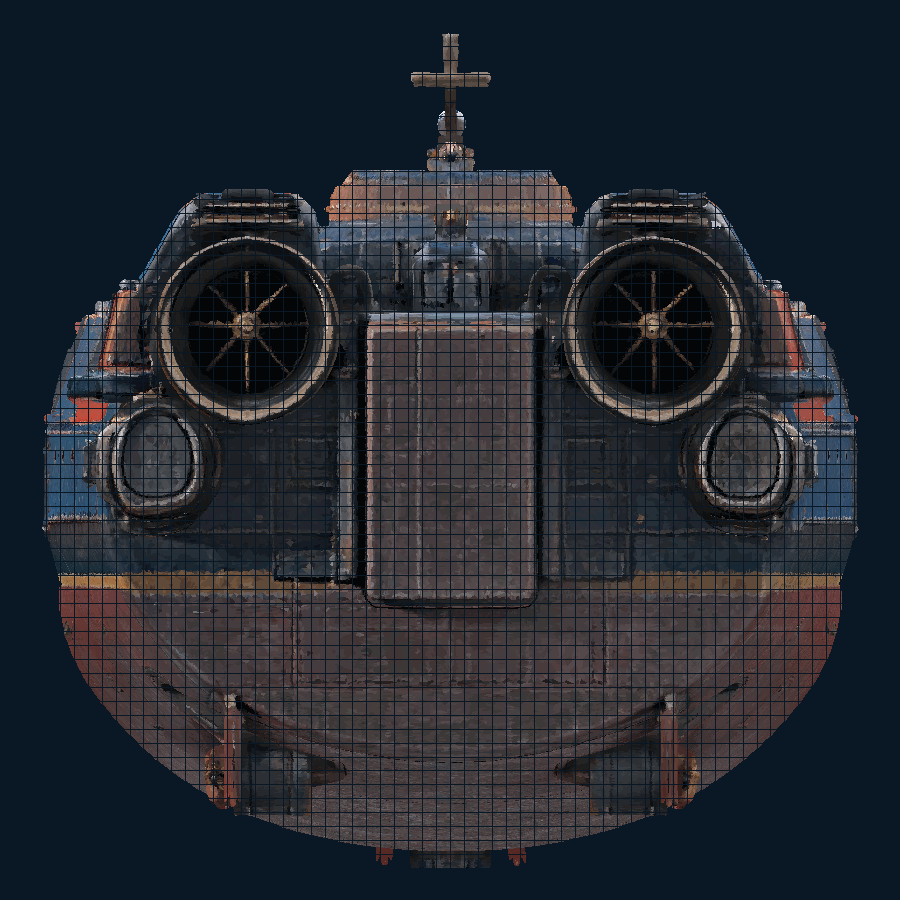
A broad working hull supports a forward command section, two large circular deck housings and an open central service route. Elevated aft machinery sections frame the stern working area. Deck handling equipment supports access to repair stations.
Functional Architecture
Cable storage and controlled payout systems feed the handling route. Survey sonar, positioning sensors and remotely operated repair equipment locate faults and recover damaged lines. Separate machinery circuits help keep station-keeping and essential communications available during repair work.
Technical Specifications
Offensive rating: 18/100 — Local defensive protection; not a combat vessel
Defensive rating: 52/100 — Compartmentalized hull and protected essential machinery
Mobility rating: 44/100 — Controlled marine transit and precise station-keeping
Tactical cognition rating: 82/100 — Survey interpretation, fault localization and repair coordination
Endurance rating: 86/100 — Extended offshore assignments with scheduled replenishment
Fleet support rating: 96/100 — Cable deployment, recovery and restoration of coastal communications
Fleet Role
Restore maritime communications, extend coastal relay networks and support disaster recovery. Linkharbor serves fleets by maintaining infrastructure rather than accompanying the battle line.
Maritime Operations
Operates on the sea surface using marine propulsion and station-keeping thrusters. Underwater tools inspect and work on seabed cables while the ship remains afloat. It has no independent spaceflight or submerged-vessel role; interplanetary relocation requires an external transport.
Defense Architecture
Compartmentalized buoyancy, protected machinery spaces and damage-control teams provide resilience. Local defensive systems cover withdrawal, while escorts are required in contested waters. Exposed repair equipment remains vulnerable.
Operational Limits
Cable work requires low speed or a stable position. Severe weather, seabed obstacles and hostile activity can halt operations. Repair vehicles have finite depth and tether limits, and major cable replacement depends on available stores.
Strategic Strengths
Accurate fault localization, careful cable handling, sustained offshore service and rapid restoration of coastal networks. A successful mission reconnects whole settlements without requiring them to abandon the coast.
Capability Assessment
A specialized infrastructure-support profile: exceptional support and endurance, strong survey coordination, modest mobility and limited offensive capability. Its value is measured in restored connections and dependable repair coverage.
B · 63.0
Fleet-wide concept rating, 0–100; not simulated performance. Specialized strengths do not imply an equally high overall grade. Tactical Cognition describes sensing, coordination and command. Grade is the equal-weight mean: S ≥ 90, A ≥ 75, B ≥ 60, C ≥ 45, D < 45.
Technology Level
T0 advanced planetary maritime engineering, precision navigation and remote subsea repair
Weapon Class
W0 local defensive protection; no heavy fleet-combat battery
T0 planetary · T1 system flight · T2 phase travel · T3 limited world engineering. W0 point defense · W1 ship combat · W2 heavy fleet combat · W3 strategic theater systems. Technology and weapon classes are independent of the profile grade.
History & Lineage
Universe lore · authored service history
Origin
Developed at the fictional Ternhaven coastal yards after a sequence of storms exposed the fragility of isolated ocean relays
Lineage & Branch
Pavise maritime utility family / Linkharbor cable-service branch
Fleet or Unit
Human Coastal Relay Service / Linkharbor Repair Division
Individual History
The first Linkharbor entered service when the northern coastal settlements still depended on a single surviving seabed trunk. Its commissioning voyage became a repair mission after a shelf movement severed that line. The crew mapped the damaged corridor, recovered its broken ends and established a temporary connection before returning for a permanent replacement.
During the Long Squall, Captain Mara Sen held the vessel outside the worst surf while remote teams worked through short weather windows. The restored link allowed harbor controllers to coordinate evacuation traffic and distribute medical supplies. The operation established the division's priority rule: emergency communications first, commercial capacity second.
Later refits separated survey, repair and station-keeping circuits so a fault in one system would not silence the others. Linkharbor now maintains the outer coastal ring, leaving spare repair loops at vulnerable crossings and training local crews to identify damage before an entire region loses contact.