
Overview
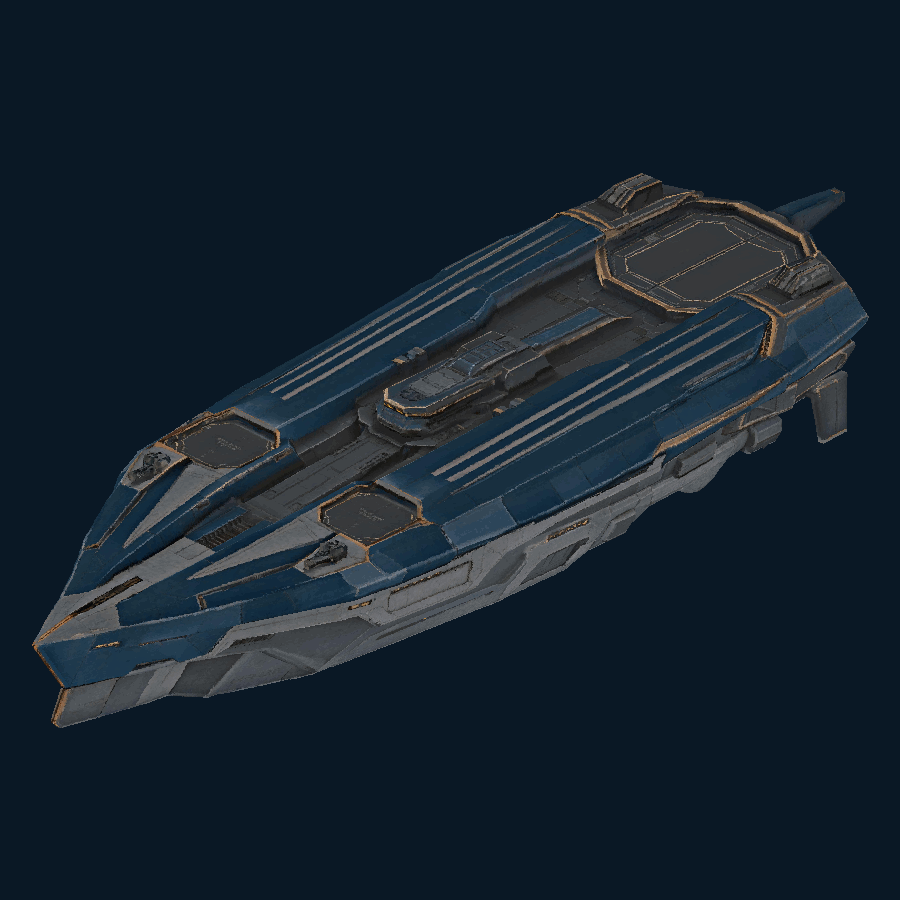
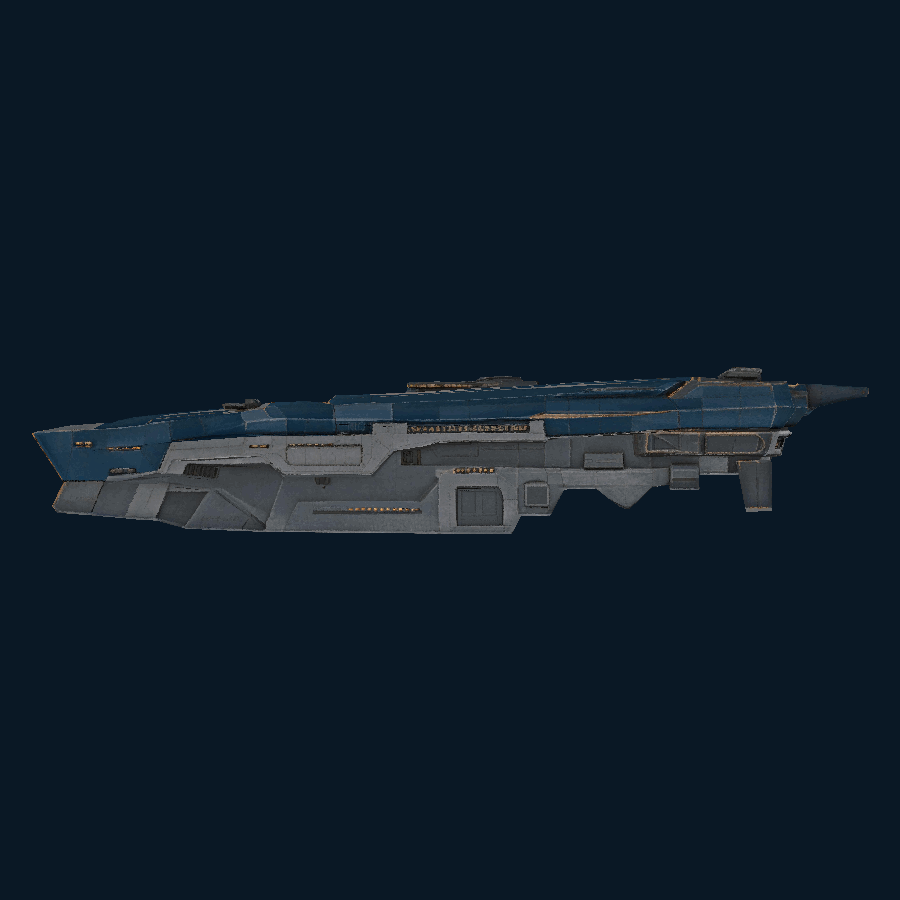
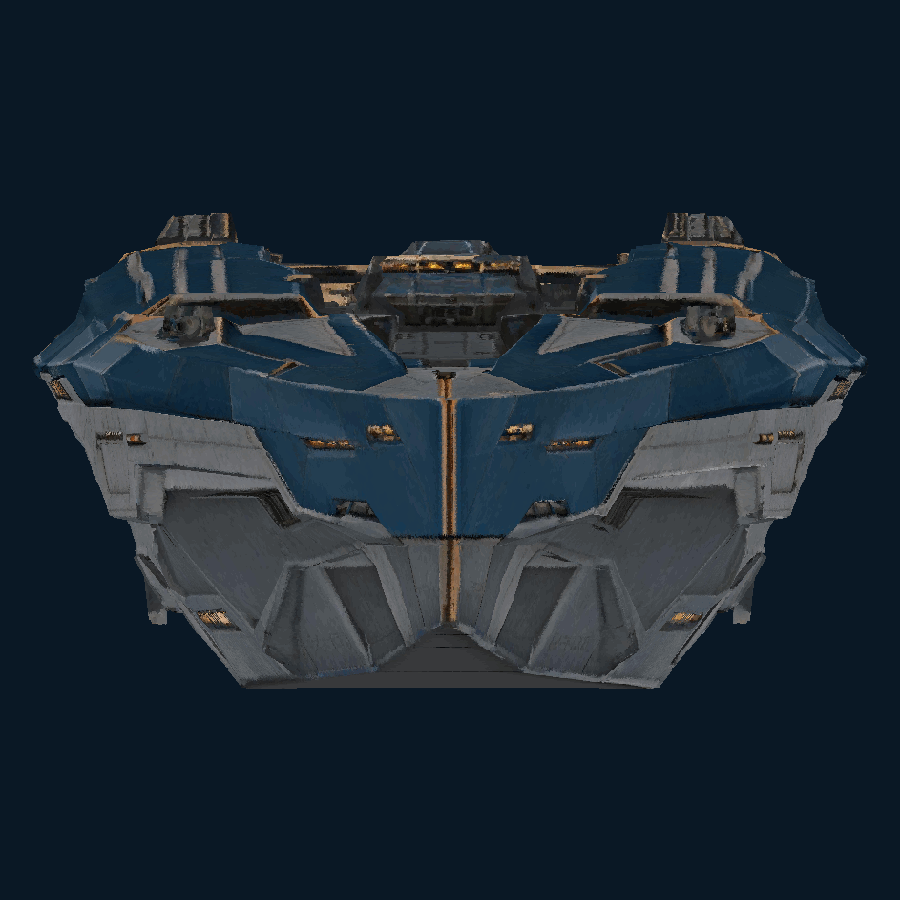
Fluted Skyline provides aviation support, orbital deployment and forward fleet support across ocean, atmospheric and space operations. Its two enormous armored shoulders carry deep parallel fluting above a protected lower hull.
Vessel Profile
Weapons & Armament
Fluted Skyline provides aviation support, orbital deployment and forward fleet support across ocean, atmospheric and space operations. Its two enormous armored shoulders carry deep parallel fluting above a protected lower hull.
Dimensions & Scale
Length 1,180 m × Width 360 m × Height 190 m. Fictional overall dimensions in standard operating configuration.
External Anatomy
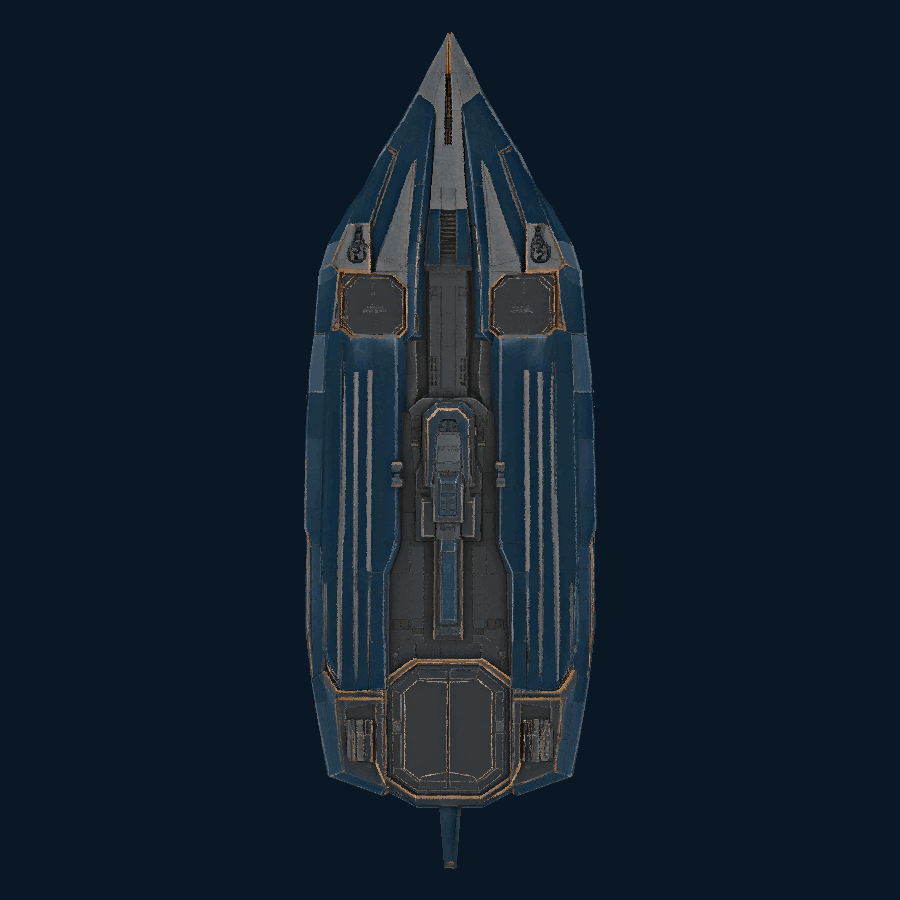
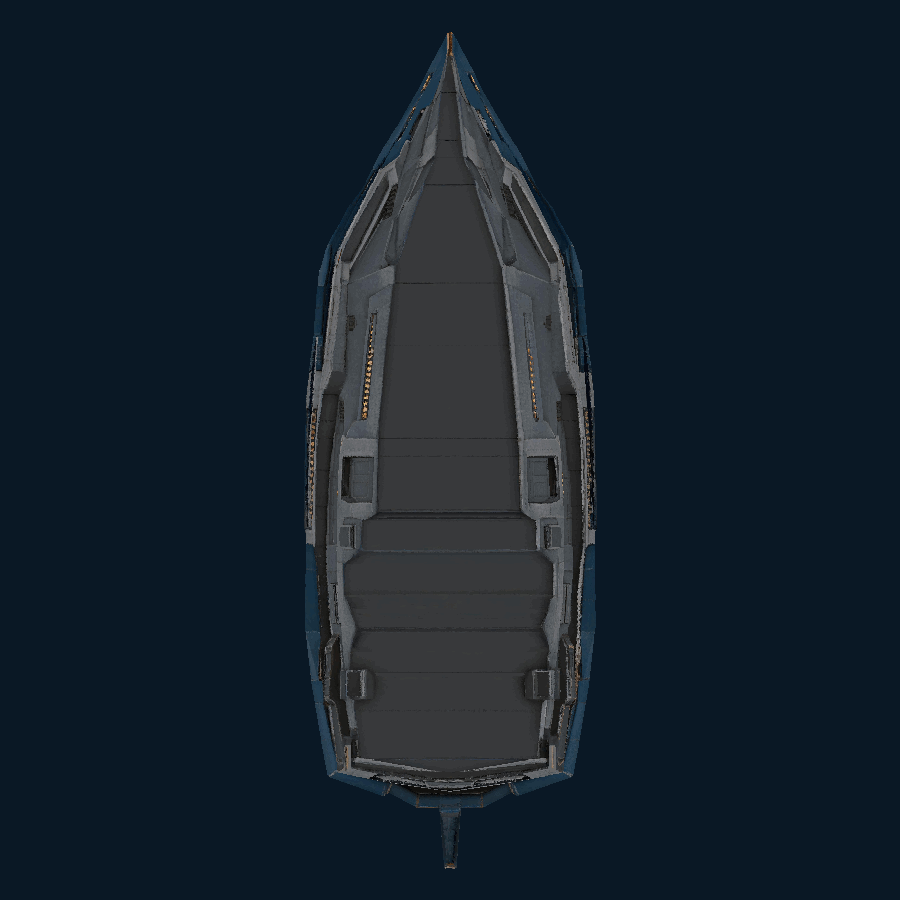
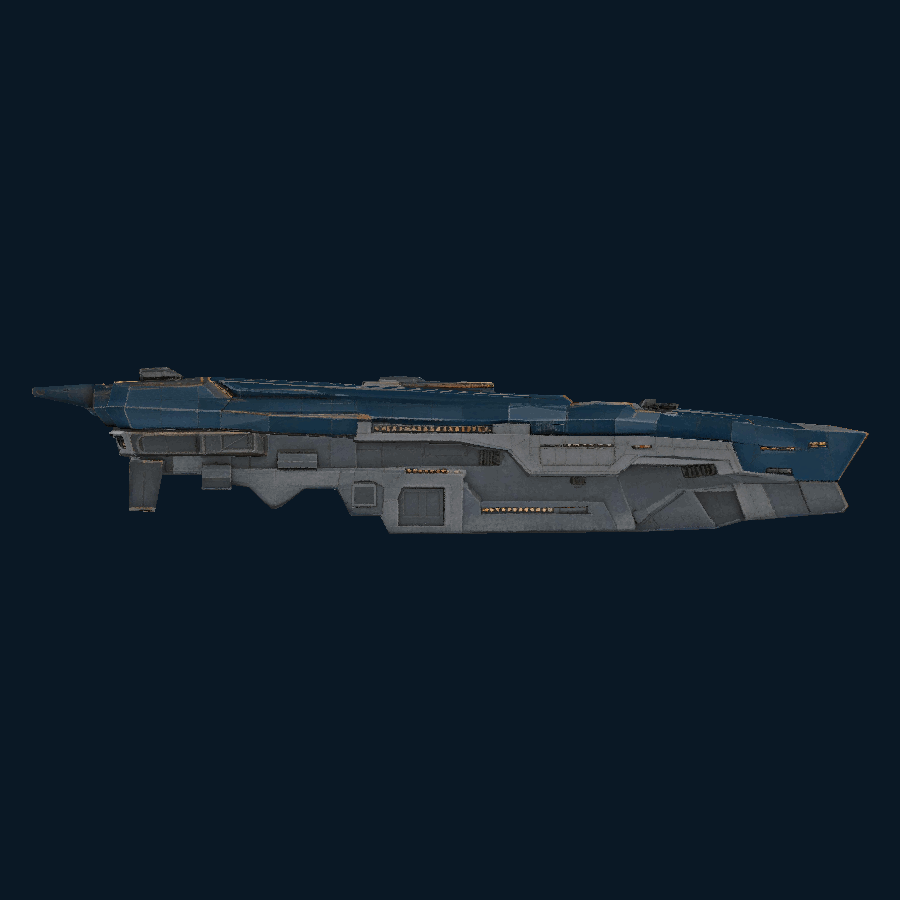
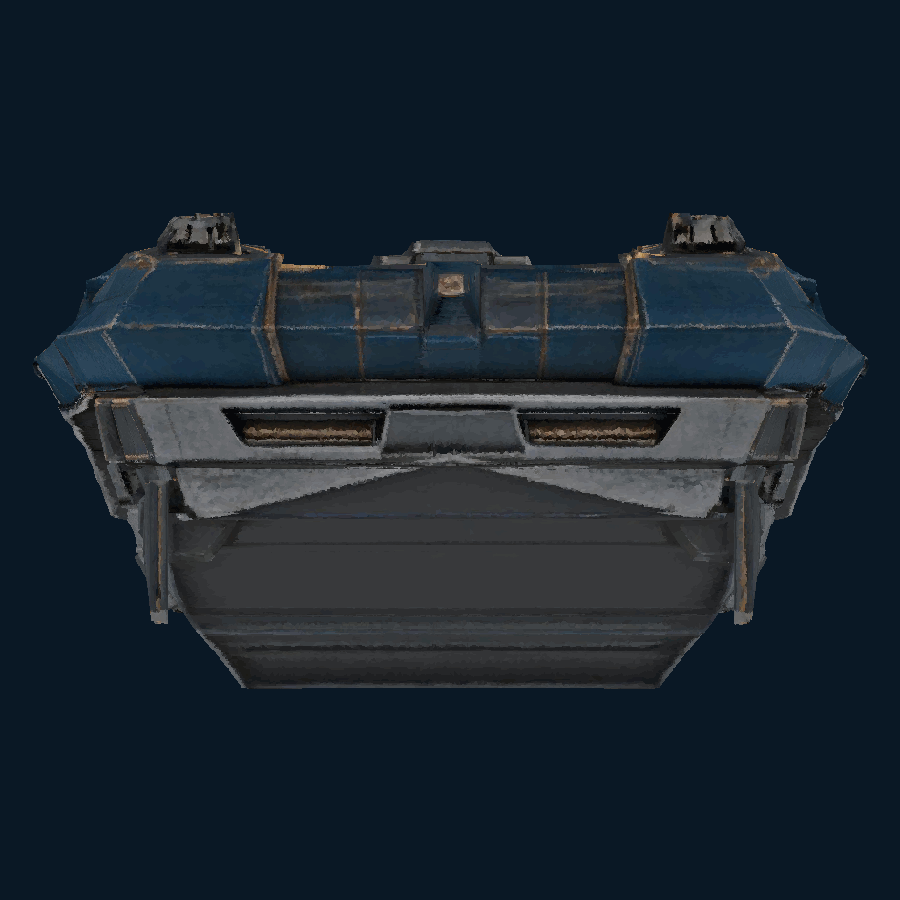
Two broad convex shoulders carry parallel fluting above a deep displacement hull. Protected hangars sit inside the shoulders; short forward terraces and a wider aft recovery area interrupt the upper armor where flight operations require clear space.
Functional Architecture
Two protected hangars replace a conventional full-length flight deck. Forward VTOL terraces and the wider aft recovery area organize launch and return paths around the armored shoulders.
Technical Specifications
Offensive rating: 30/100 — Fluted Skyline provides aviation support, orbital deployment and forward fleet support across ocean, atmospheric and space operations
Defensive rating: 55/100 — Convex armored shoulders shelter two deep hangars
Mobility rating: 38/100 — Transitions between operating environments demand planned routes and recovery intervals
Tactical cognition rating: 64/100 — Target assessment, formation coordination and response timing support transmedium fleet aircraft carrier operations
Endurance rating: 64/100 — Mission duration depends on finite reserves, damage recovery and scheduled replenishment
Fleet support rating: 88/100 — Carries aviation support from ocean operations through atmospheric transit into orbital deployment
Fleet Role
Carries aviation support from ocean operations through atmospheric transit into orbital deployment. The same carrier supports aircraft at sea and small craft within a space fleet.
Life Between Stars
A buoyant lower hull supports ocean operations. Integrated lift and propulsion take the complete vessel through atmospheric ascent and into orbital flight. The profile does not assume underwater operation.
Defense Architecture
Convex armored shoulders shelter two deep hangars. The lower displacement hull supplies protected volume and stability at sea, while low command spaces avoid a tall exposed island.
Operational Limits
Launch and recovery depend on managing traffic and keeping the operating terraces clear. Changing environment disrupts the rhythm of flight operations, so escorts should protect the transition.
Strategic Strengths
A shared carrier platform across sea, air and space reduces the need to transfer the air group between different fleet bases
Capability Assessment
Editorial doctrine: Carries aviation support from ocean operations through atmospheric transit into orbital deployment. The same carrier supports aircraft at sea and small craft within a space fleet. Launch and recovery depend on managing traffic and keeping the operating terraces clear. Changing environment disrupts the rhythm of flight operations, so escorts should protect the transition.
C · 56.5
Fleet-wide concept rating, 0–100; not simulated performance. Specialized strengths do not imply an equally high overall grade. Tactical Cognition describes sensing, coordination and command. Grade is the equal-weight mean: S ≥ 90, A ≥ 75, B ≥ 60, C ≥ 45, D < 45.
Technology Level
T1 — system-flight capability. This editorial classification reflects the documented space role; no phase-travel or world-engineering capability is inferred.
Weapon Class
W1 — carrier-wing or interceptor engagement; strength depends on coordinated craft and support
T0 planetary · T1 system flight · T2 phase travel · T3 limited world engineering. W0 point defense · W1 ship combat · W2 heavy fleet combat · W3 strategic theater systems. Technology and weapon classes are independent of the profile grade.
History & Lineage
Universe lore · authored service history
Origin
Created to maintain a continuous carrier presence as a fleet moves from coastal operations to orbital missions
Lineage & Branch
Sea-air-space fleet carriers. Its fleet assignment follows the operational doctrine of this lineage.
Fleet or Unit
Horizon Transit Carrier Group
Individual History
The Rising Harbor — Fluted Skyline recovered its last sea patrol before beginning an atmospheric ascent with the rest of the convoy. The carrier’s deck crew treated the climb as a change of operating procedure rather than the end of the deployment. Return to Open Water — After the orbital mission, the ship returned to the same harbor with damaged shuttles in its protected hangars. The local squadron adopted a three-line insignia for sea, sky and space.
The Three Approaches — During the Meridian evacuation, the carrier received surface traffic before shifting its recovery plan to aircraft and finally to the orbital convoy. Salt exposure, changing approach conditions and exhausted deck crews disrupted the intended schedule. The flight commander paused departures between transitions, allowing inspection and recovery work to finish. Subsequent service treated each operating environment as a distinct phase of the mission, with its own safety margin.