
Overview
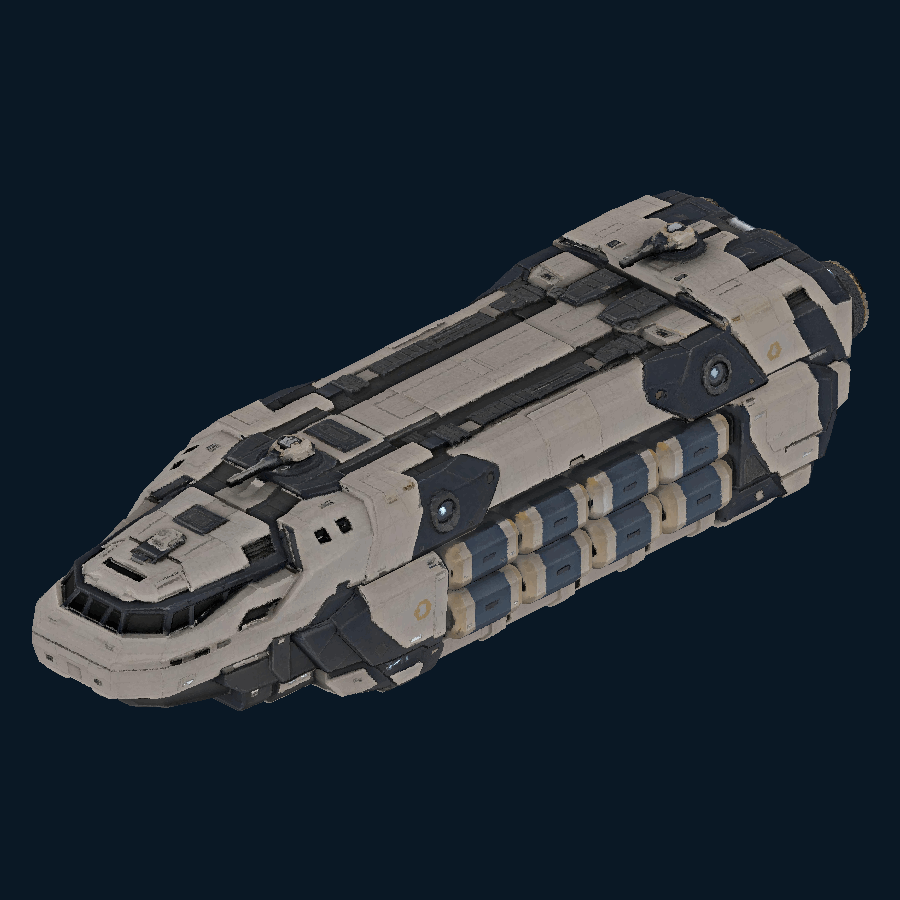
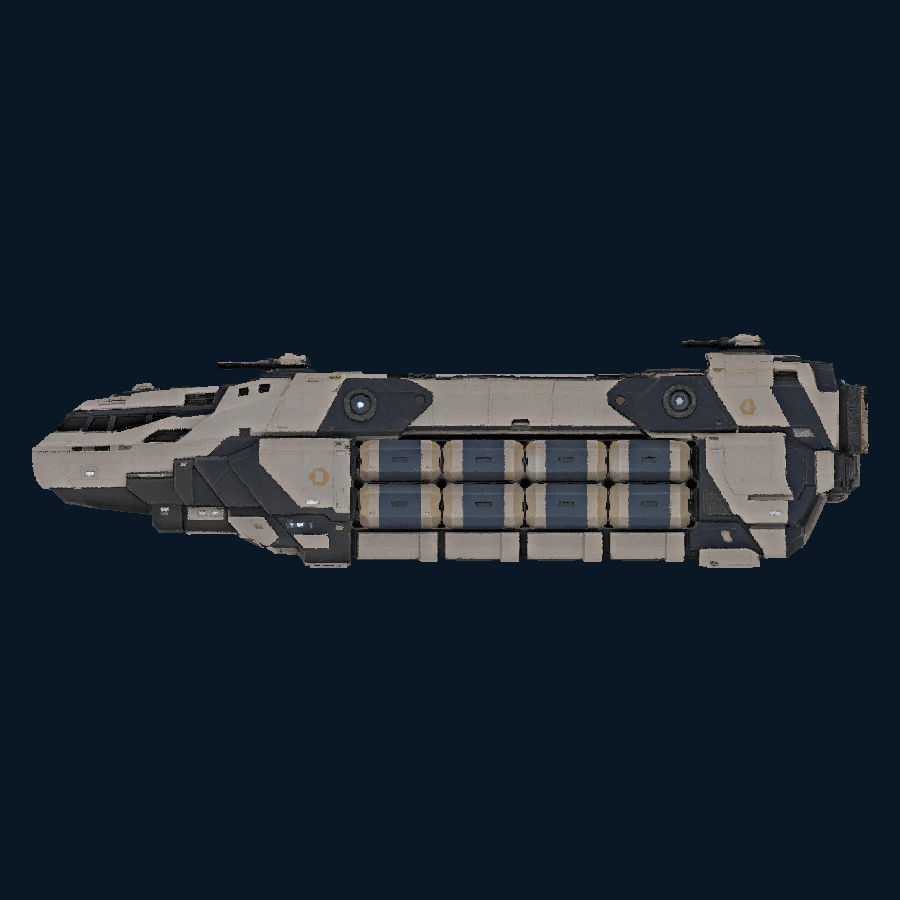
Ironcaravan transports construction equipment, replacement engines, robotic systems, industrial supplies and prefabricated infrastructure. A continuous central hull carries the load while broad protective shoulders shelter independent cargo modules.
Vessel Profile
Weapons & Armament
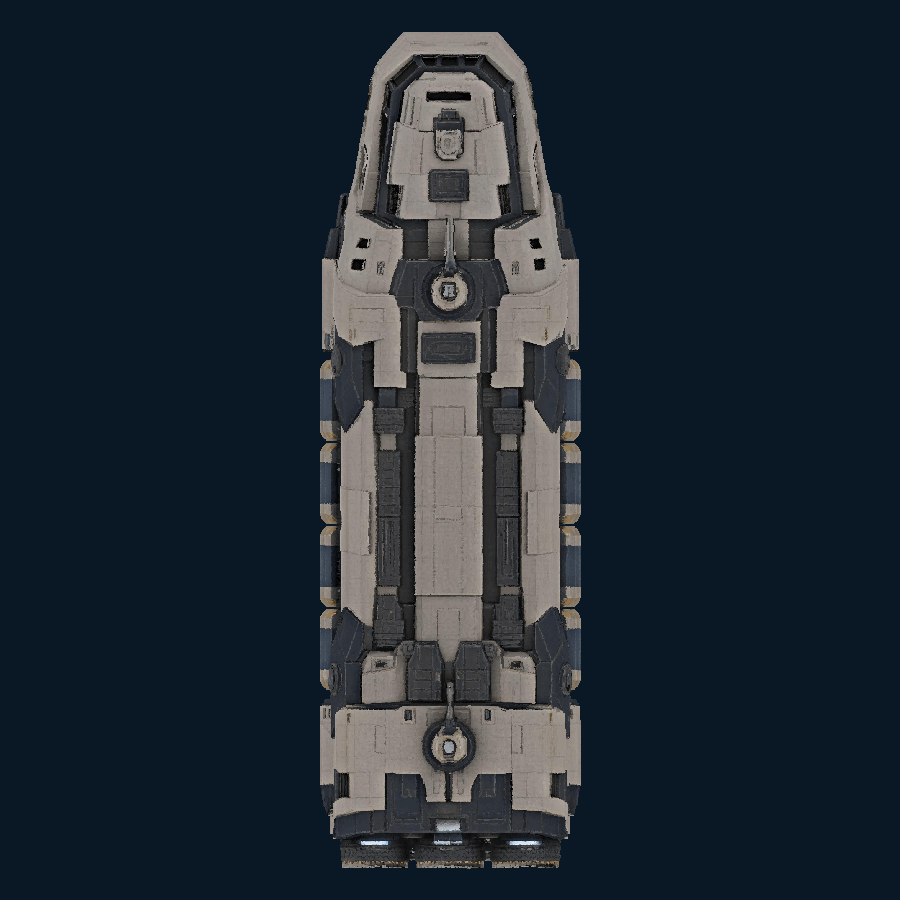
Two modest dorsal single-barrel cannons provide local defense. Four recessed shield-projector assemblies protect the transport; the vessel depends on escorts for sustained combat.
Dimensions & Scale
Length 460 m × Width 195 m × Height 88 m. Fictional overall dimensions in standard operating configuration.
External Anatomy
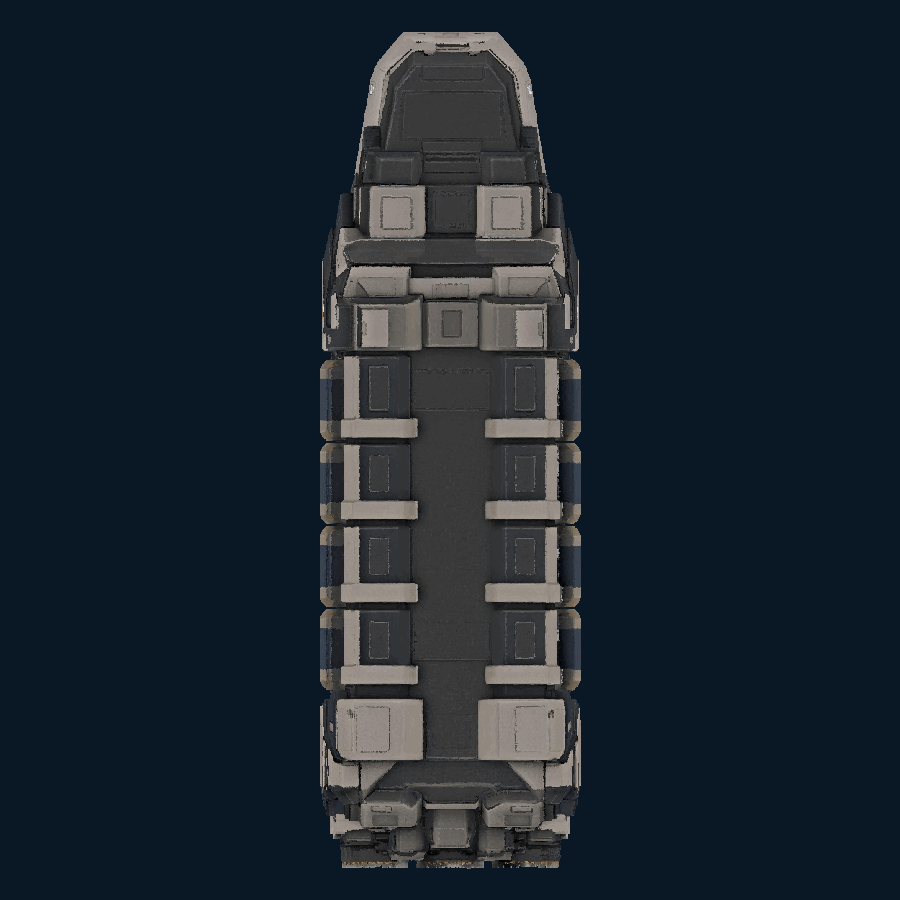
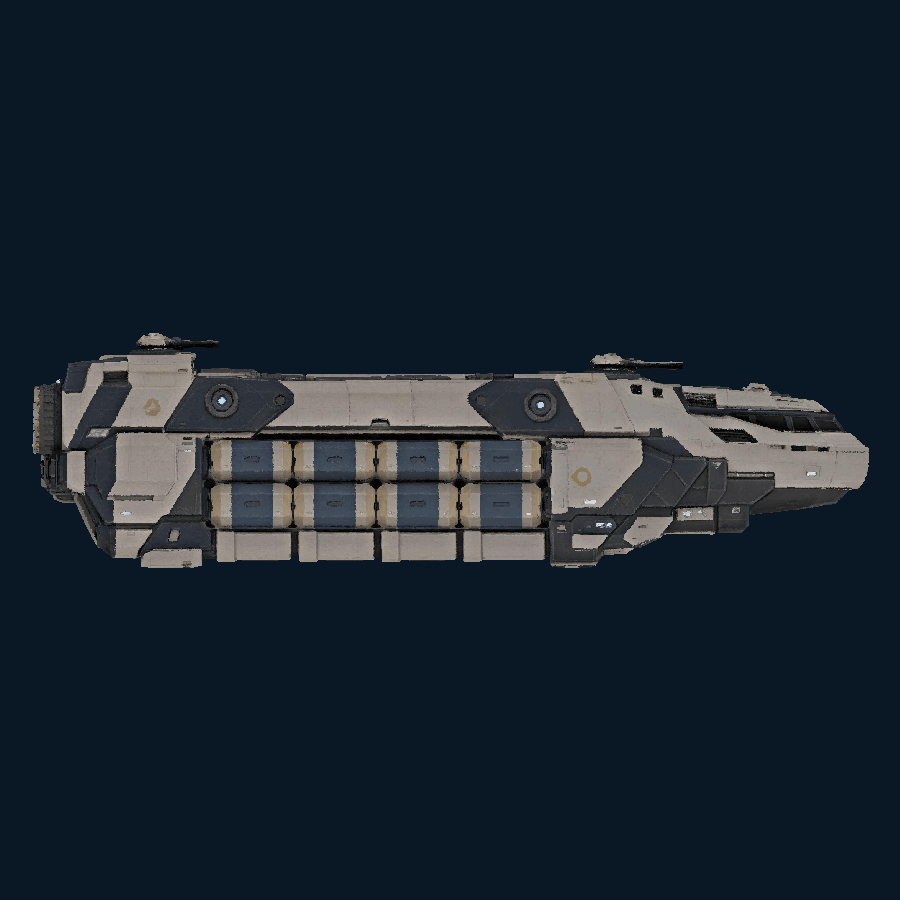
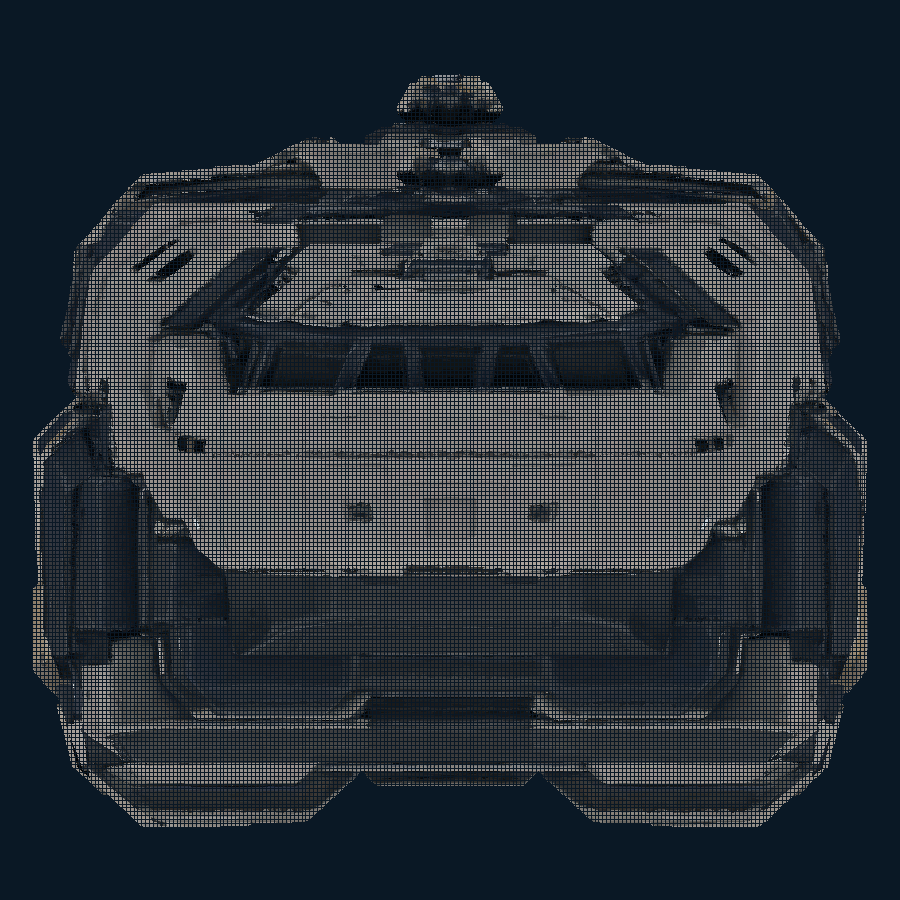
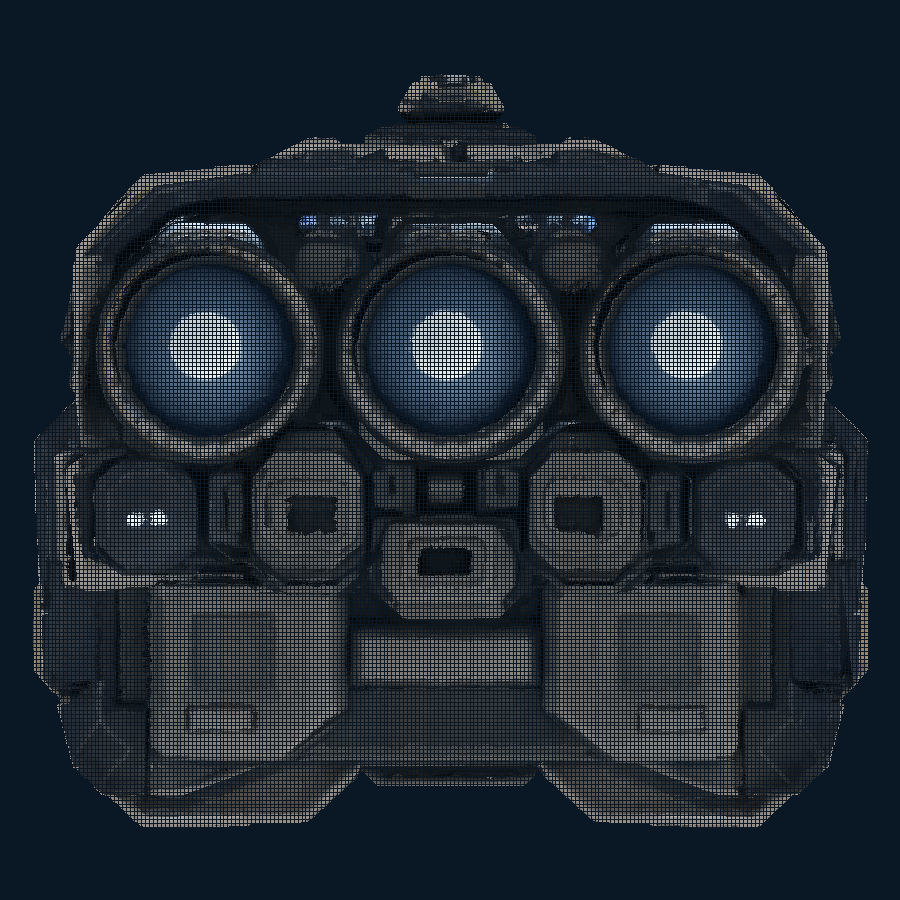
A continuous central hull and lower cradle support independent cargo modules along both sides. Broad armored shoulders shelter the module recesses. A compact command area sits forward, and the stern groups the three main engines into one protected assembly.
Functional Architecture
Forty-eight standardized cargo modules occupy two rows of twelve on each side. Sheltered docking recesses and concealed connections couple each module to the central hull without making the cargo the primary load-bearing structure.
Technical Specifications
Offensive rating: 12/100 — Two modest dorsal single-barrel cannons provide local defense
Defensive rating: 34/100 — Broad protective shoulders shelter the cargo modules
Mobility rating: 26/100 — Maneuvering supports the formation and mission profile rather than unrestricted pursuit
Tactical cognition rating: 38/100 — Target assessment, formation coordination and response timing support heavy modular transport operations
Endurance rating: 67/100 — Mission duration depends on finite reserves, damage recovery and scheduled replenishment
Fleet support rating: 82/100 — Moves machinery, replacement engines, construction equipment and settlement infrastructure between protected destinations
Fleet Role
Moves machinery, replacement engines, construction equipment and settlement infrastructure between protected destinations. Its contribution is measured in fleets kept supplied rather than targets destroyed.
Life Between Stars
Three fusion-plasma engines share an armored stern block. Proposed operations use planned convoy routes, gradual formation changes and protected transfer windows.
Defense Architecture
Broad protective shoulders shelter the cargo modules. Four recessed shield projectors supplement the central load-bearing hull; its two modest dorsal cannons provide limited local defense.
Operational Limits
The cargo mission creates a large, predictable load and route commitment. Escorts are essential near hostile forces; expending cargo or disabling a module can compromise the purpose of the voyage.
Strategic Strengths
Standardized modules, a continuous lower cradle and high payload capacity make the ship a sustained logistics asset for fleets and remote settlements
Capability Assessment
Editorial doctrine: Moves machinery, replacement engines, construction equipment and settlement infrastructure between protected destinations. Its contribution is measured in fleets kept supplied rather than targets destroyed. The cargo mission creates a large, predictable load and route commitment. Escorts are essential near hostile forces; expending cargo or disabling a module can compromise the purpose of the voyage.
D · 43.2
Fleet-wide concept rating, 0–100; not simulated performance. Specialized strengths do not imply an equally high overall grade. Tactical Cognition describes sensing, coordination and command. Grade is the equal-weight mean: S ≥ 90, A ≥ 75, B ≥ 60, C ≥ 45, D < 45.
Technology Level
T1 — system-flight capability. This editorial classification reflects the documented space role; no phase-travel or world-engineering capability is inferred.
Weapon Class
W0 — local defensive armament; the transport’s strategic contribution is logistical
T0 planetary · T1 system flight · T2 phase travel · T3 limited world engineering. W0 point defense · W1 ship combat · W2 heavy fleet combat · W3 strategic theater systems. Technology and weapon classes are independent of the profile grade.
History & Lineage
Universe lore · authored service history
Origin
Built around the need to deliver complete industrial capability to distant outposts instead of supplying only ammunition and fuel
Lineage & Branch
Modular fleet transports. Its fleet assignment follows the operational doctrine of this lineage.
Fleet or Unit
Far Anchor Logistics Train
Individual History
The Unfinished Harbor — Ironcaravan arrived at a settlement that had lost its unloading cranes. Its cargo sequence was reorganized so that repair machines and power equipment could be delivered before the heavy construction modules.
The Last Module — During a later withdrawal, the captain retained a damaged water-processing module that others wanted jettisoned. Its eventual repair supplied the convoy’s temporary refuge, earning the ship a permanent place in the Far Anchor train.