Overview
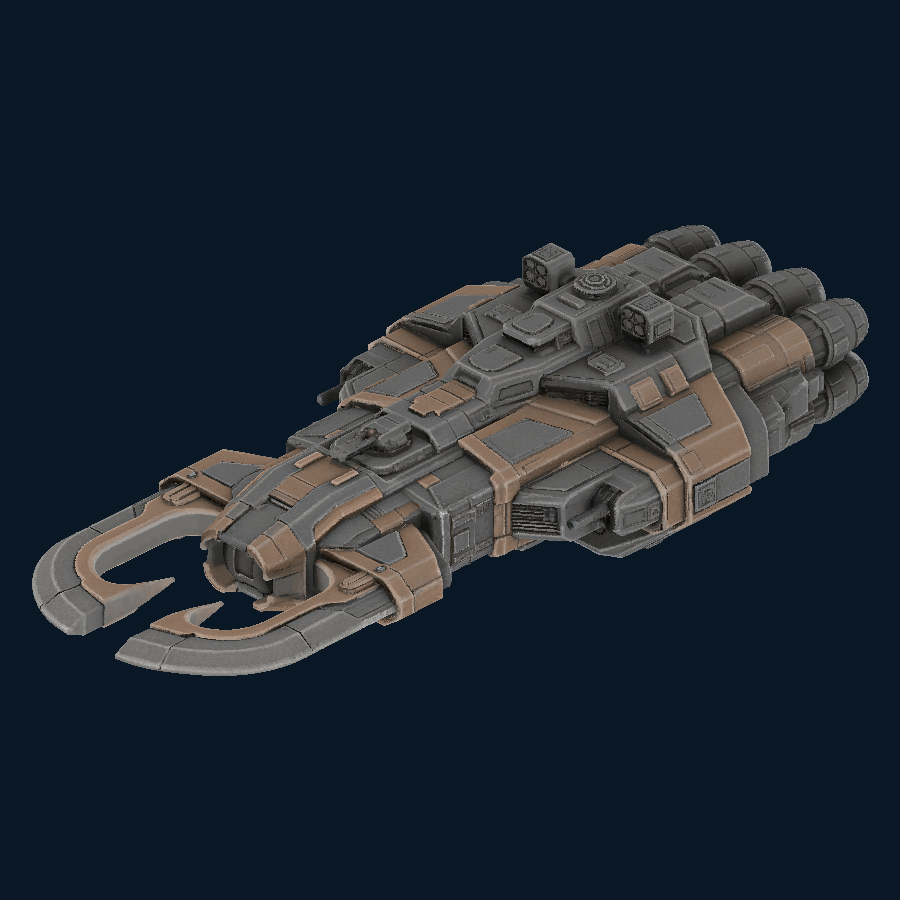
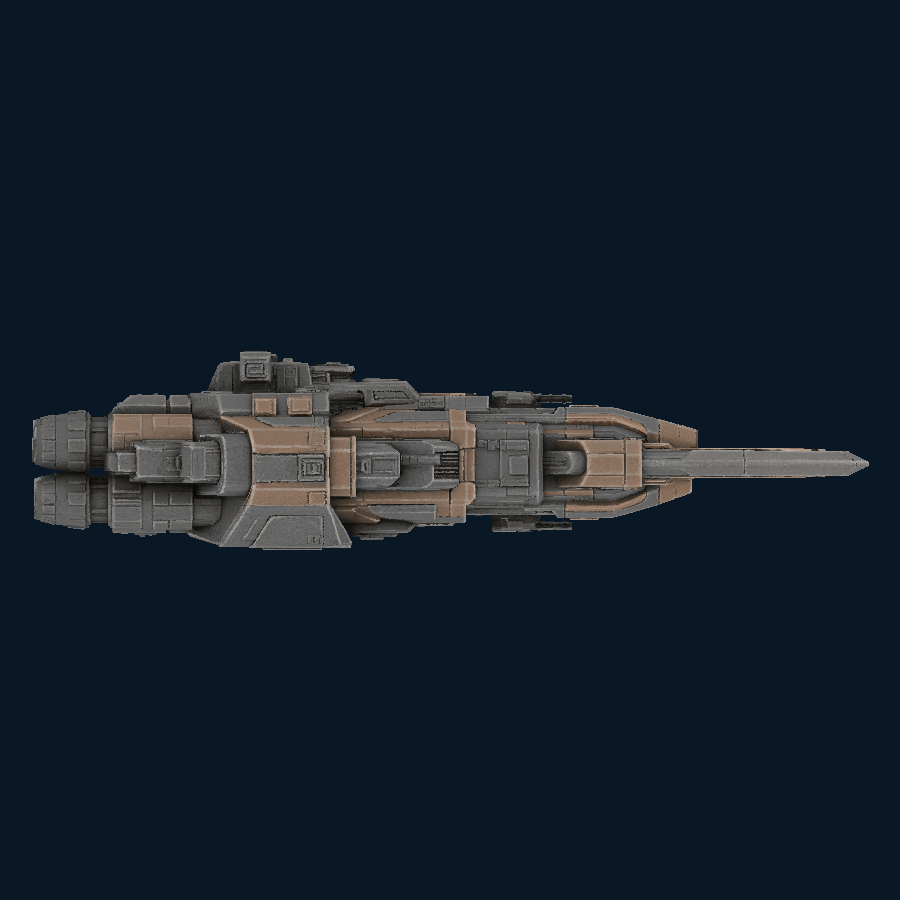
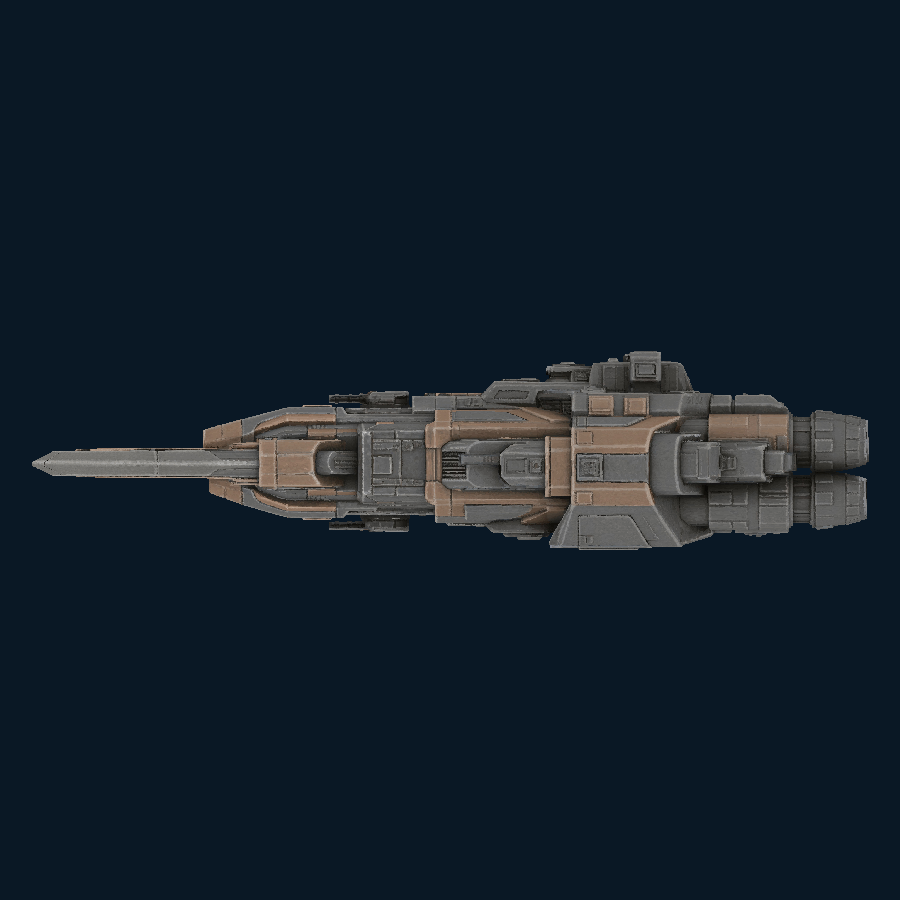
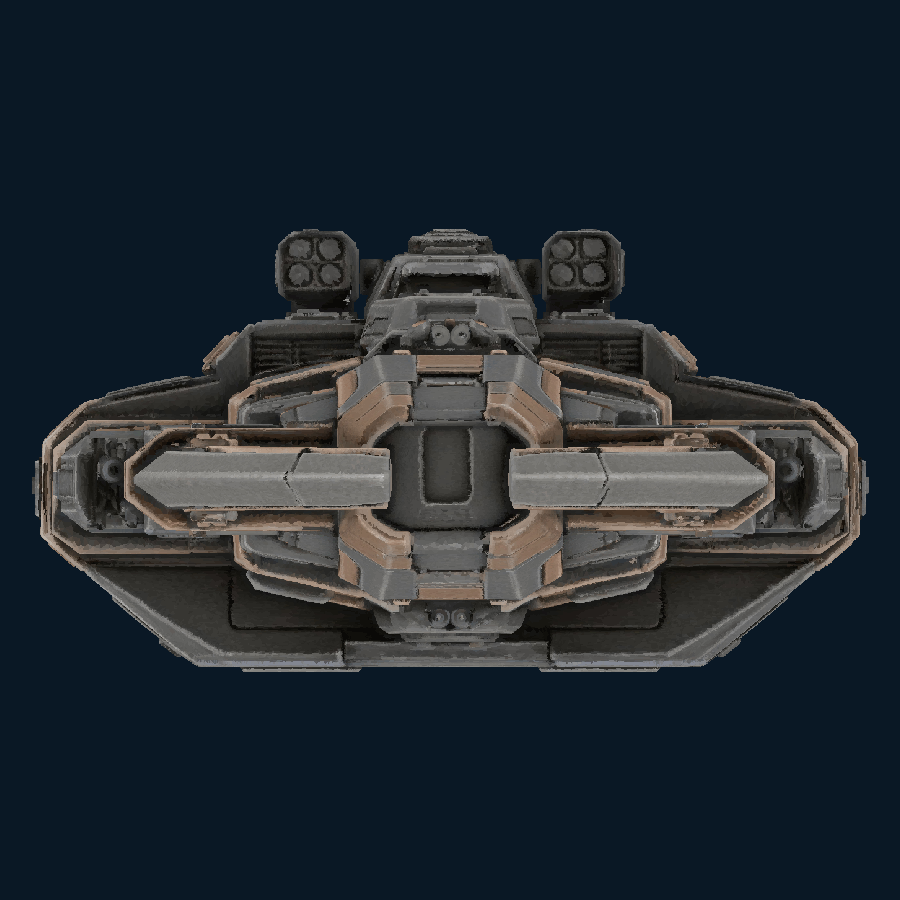
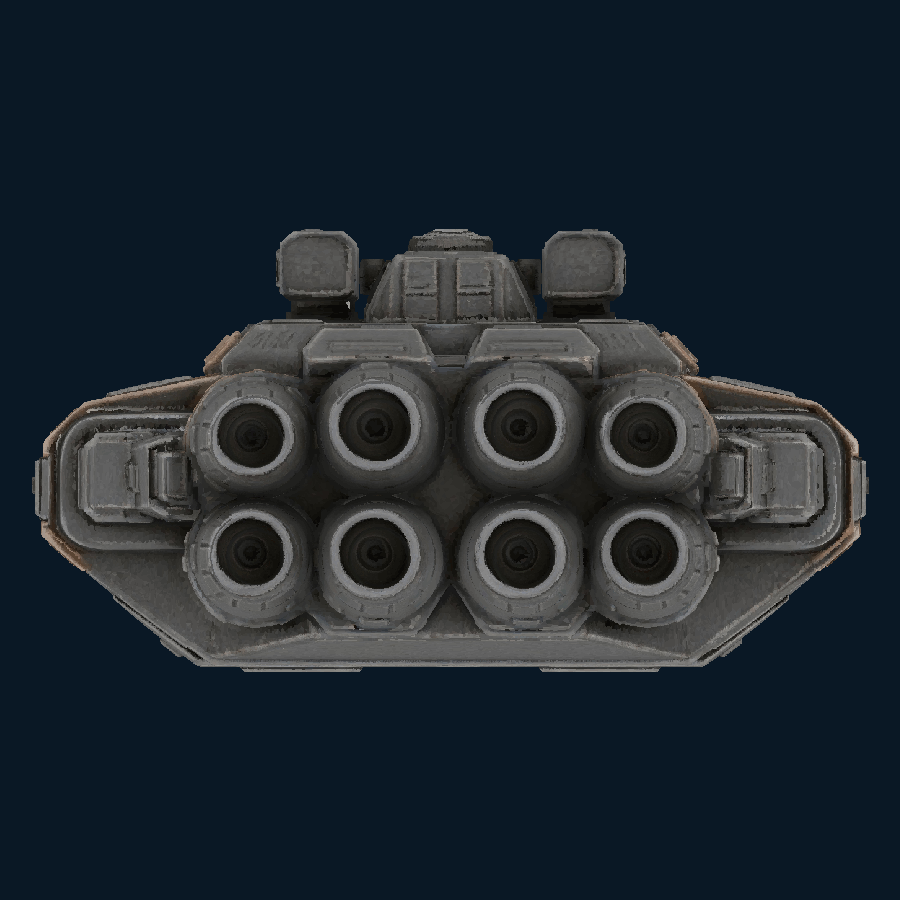
StormArc brings sustained heavy fire into close fleet engagements. Its broad paired hooks frame an open bow, while the deepest upper hull carries the main battery. Four recessed main engines and four maneuvering thrusters support its attack approach.
Vessel Profile
Weapons & Armament
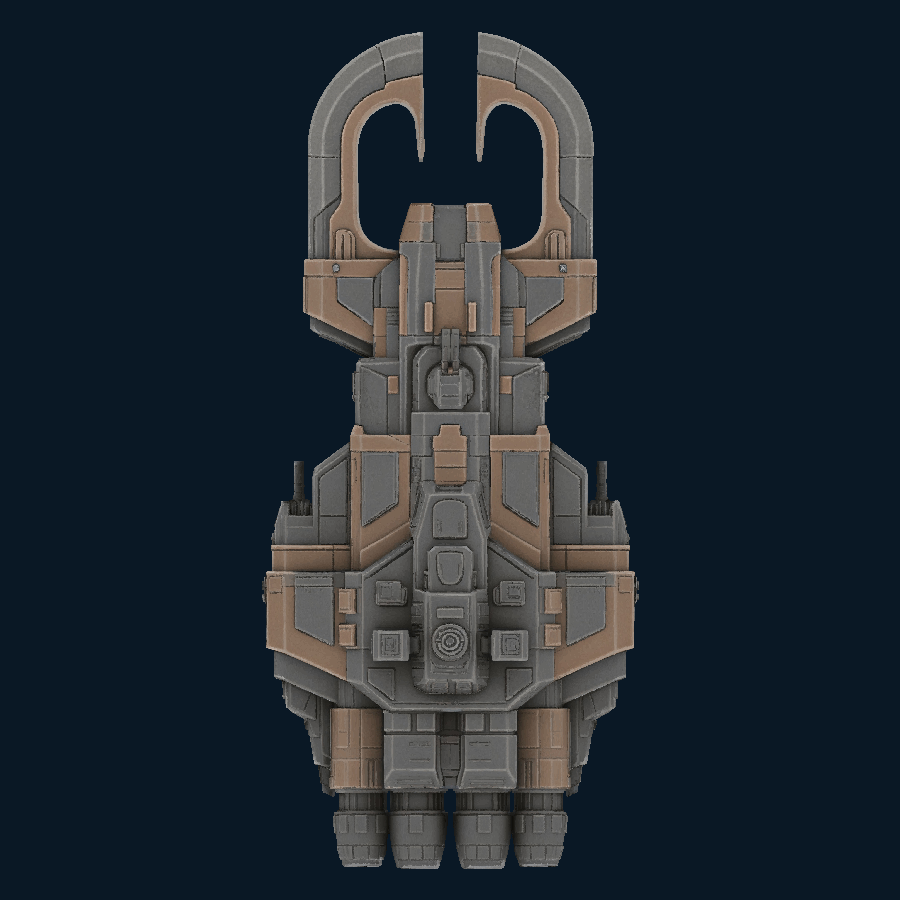
A twin-barrel dorsal siege cannon uses 7 m bores and 75 m barrels on a 65 m armored mount. Four secondary twin turrets, two recessed missile-cell blocks and eight point-defense nodes surround the main battery.
Dimensions & Scale
Length 820 m × Width 300 m × Height 140 m. Fictional overall dimensions in standard operating configuration.
External Anatomy
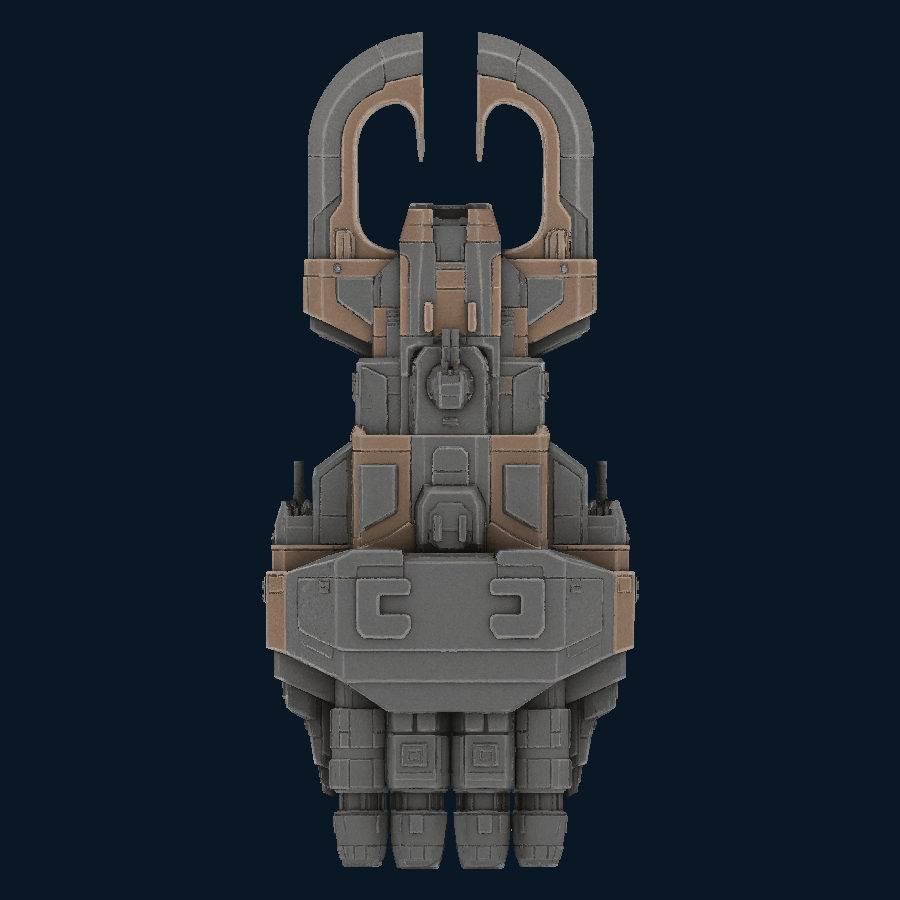
Two inward-hooking bow structures frame an open central gap. The upper hull deepens beneath the main battery, while broad shoulder armor leads back to compact recessed engine blocks. The paired hooks remain visually clear of the weapon mounts.
Functional Architecture
Main-battery direction, secondary tracking and missile control share the forward attack axis. The aft propulsion assembly remains compact so that the paired bow structures carry the vessel’s visual and tactical emphasis.
Technical Specifications
Offensive rating: 86/100 — A twin-barrel dorsal siege cannon uses 7 m bores and 75 m barrels on a 65 m armored mount
Defensive rating: 69/100 — Deep upper-hull armor shelters the main battery
Mobility rating: 53/100 — Maneuvering supports the formation and mission profile rather than unrestricted pursuit
Tactical cognition rating: 66/100 — Target assessment, formation coordination and response timing support line cruiser operations
Endurance rating: 64/100 — Mission duration depends on finite reserves, damage recovery and scheduled replenishment
Fleet support rating: 31/100 — Opens a breach in an opposing formation and maintains pressure while allied ships exploit it
Fleet Role
Opens a breach in an opposing formation and maintains pressure while allied ships exploit it. Paired cruisers can alternate attack approaches to avoid leaving a gap during weapon recovery.
Life Between Stars
Four main engines and four maneuvering thrusters support deliberate attack approaches. The operational proposal favors controlled formation advances over interceptor pursuit.
Defense Architecture
Deep upper-hull armor shelters the main battery. Recessed systems and the broad shoulder masses protect the propulsion root, while eight point-defense nodes cover close threats.
Operational Limits
The heavy forward battery rewards a stable firing axis. Enemies that force repeated turns or attack during battery recovery reduce its ability to sustain a breakthrough.
Strategic Strengths
Concentrated siege fire, substantial battery protection and a clear forward combat axis make it an effective line anchor
Capability Assessment
A prominent twin siege battery backed by secondary turrets, missiles and point defense gives this line cruiser a strong frontal attack. Its heavy gun structure favors deliberate firing alignment over rapid pursuit.
B · 61.5
Fleet-wide concept rating, 0–100; not simulated performance. Specialized strengths do not imply an equally high overall grade. Tactical Cognition describes sensing, coordination and command. Grade is the equal-weight mean: S ≥ 90, A ≥ 75, B ≥ 60, C ≥ 45, D < 45.
Technology Level
T1 — system-flight capability. This editorial classification reflects the documented space role; no phase-travel or world-engineering capability is inferred.
Weapon Class
W2 — heavy fleet or siege engagement. This editorial class does not imply strategic world-scale destruction.
T0 planetary · T1 system flight · T2 phase travel · T3 limited world engineering. W0 point defense · W1 ship combat · W2 heavy fleet combat · W3 strategic theater systems. Technology and weapon classes are independent of the profile grade.
History & Lineage
Universe lore · authored service history
Origin
Developed in the fleet yards to give convoy escorts a ship capable of forcing open a contested route, rather than merely holding the convoy perimeter
Lineage & Branch
Hook-prow line-cruiser family. Its fleet assignment follows the operational doctrine of this lineage.
Fleet or Unit
Third Breakwater Line
Individual History
The Broken Gate — StormArc held its bow toward a narrowing gap in a blockade while two sister ships shifted to its flanks. The formation advanced only after the main battery had forced the nearest hostile hull to turn away.
The Long Watch — During the next crossing, its captain refused a pursuit and stayed with the damaged supply ships. The Third Breakwater Line adopted that decision as its operating rule: an opened route matters only while the convoy can use it.