
Overview
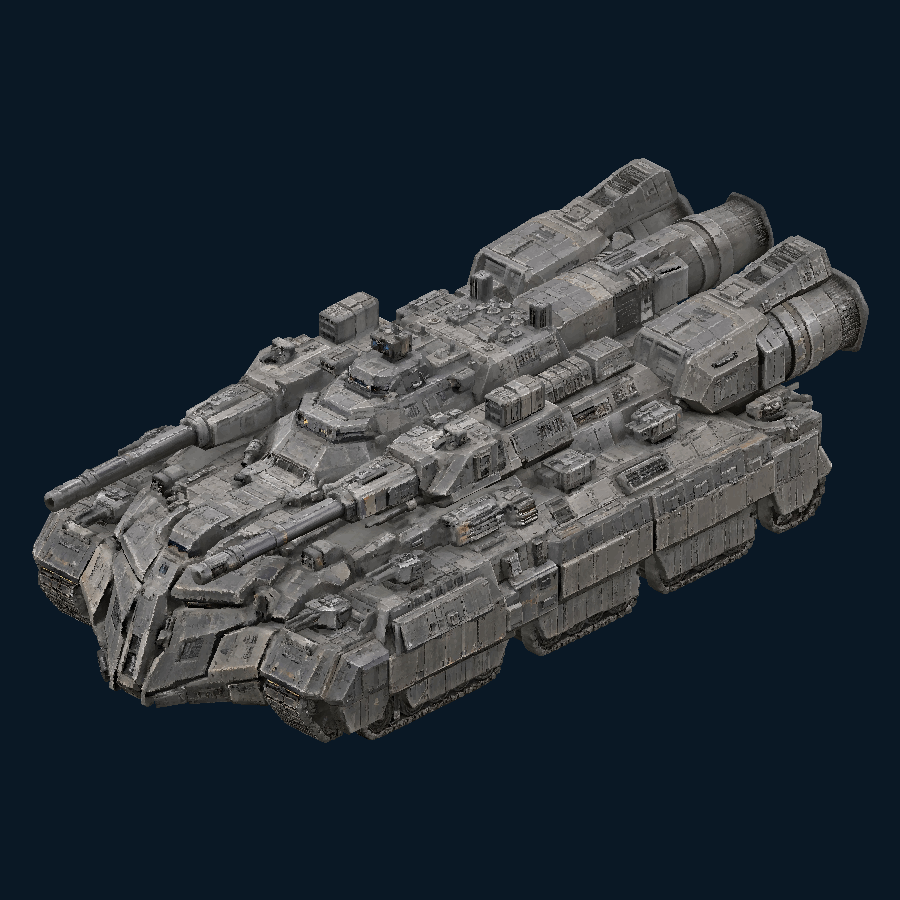
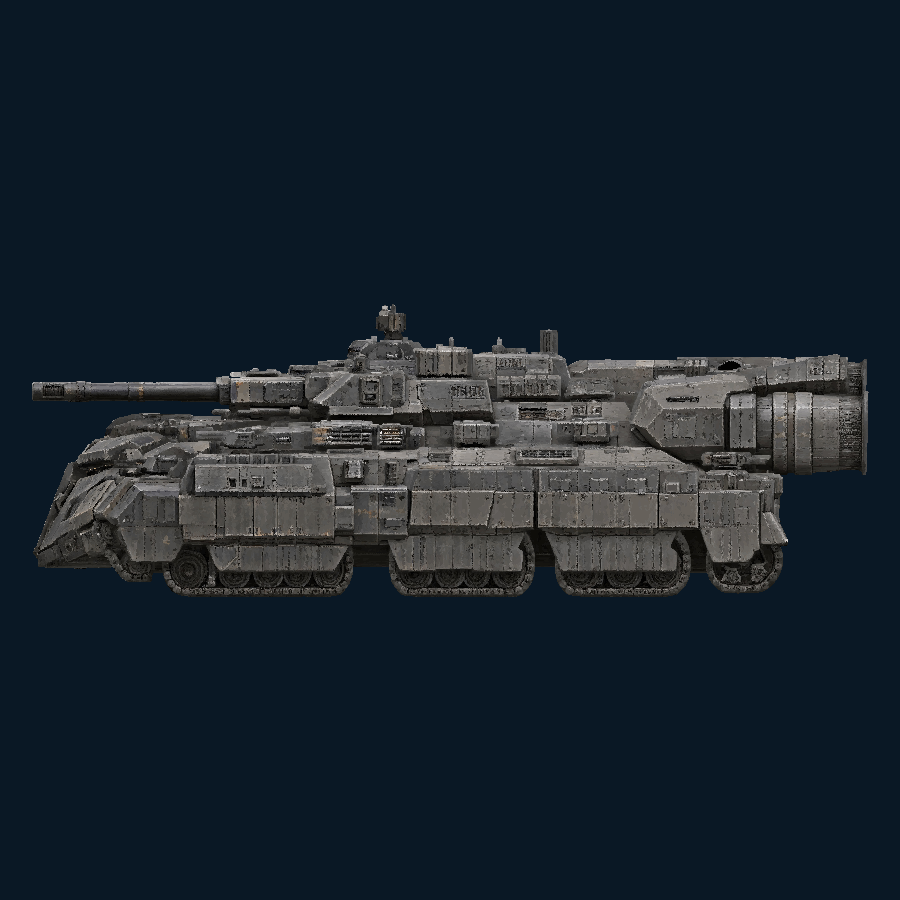
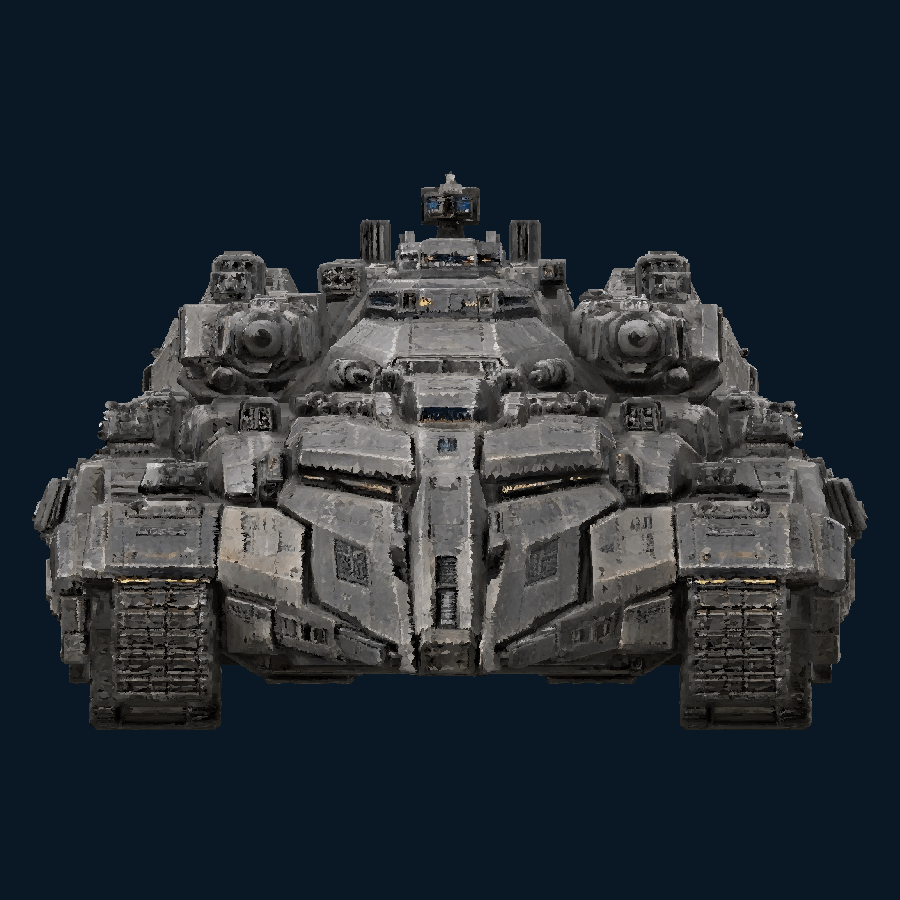
Browguard Super-Heavy-class Land-Space Fortress is a Human siege crawler built around a broad multi-track foundation, a deeply protected command core and a large mixed arsenal. It combines methodical ground bombardment with integrated atmospheric ascent and orbital combat capability in one armored body.
Vessel Profile
Dimensions & Scale
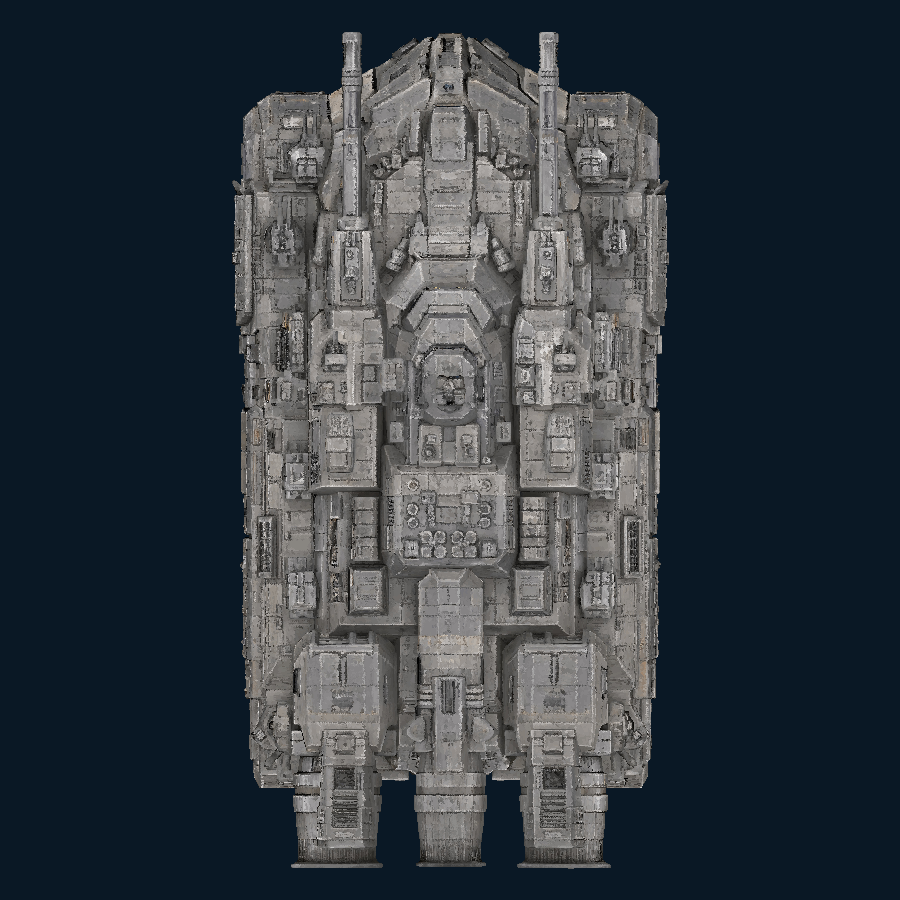
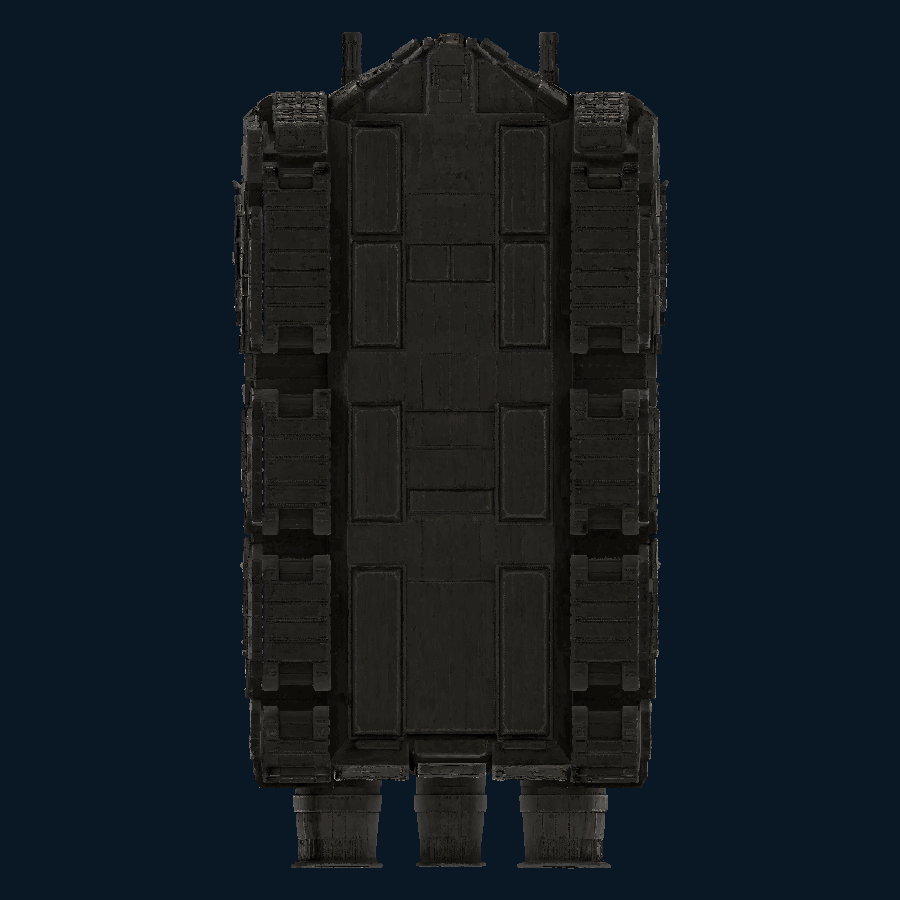
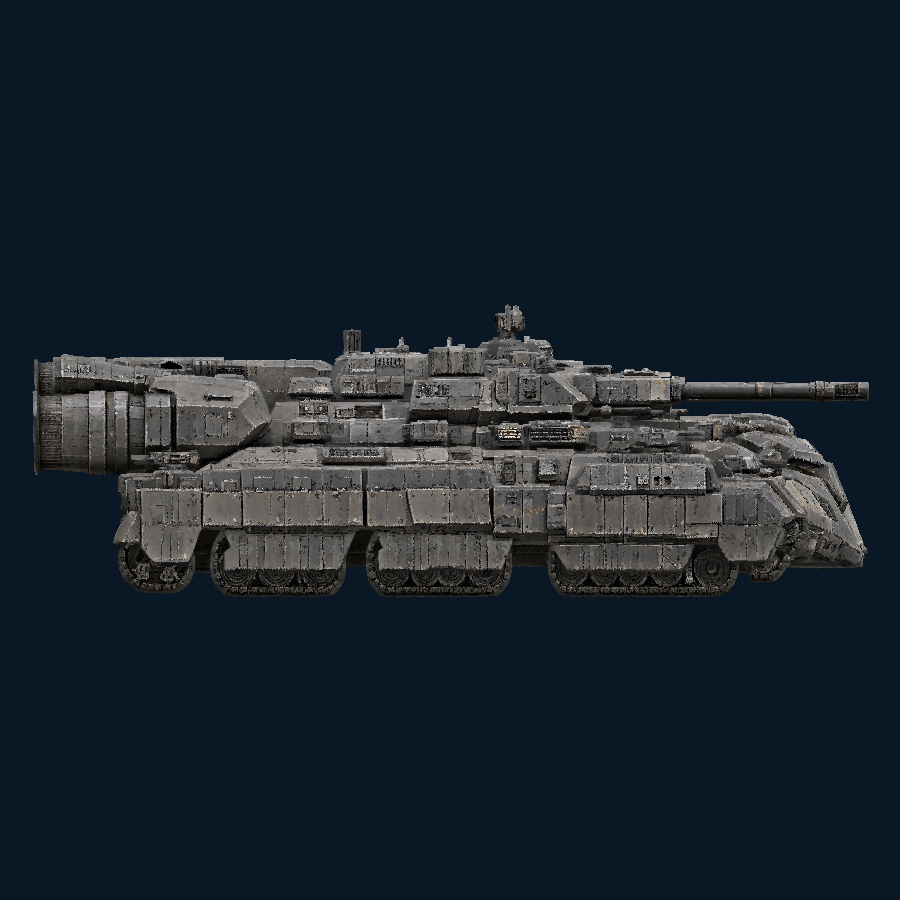
Length 300 m × Width 157 m × Height 105 m. Proposed fictional dimensions: a 300 m reference length with width and height rounded from the supplied proportions. Overall extent includes the armored crawler assemblies, upper batteries and integrated rear propulsion.
Proposed operating mass: approximately 300,000 ton (metric tons). Fictional concept mass based on size, operating environment, structure and mission reserves; not measured performance.
Weapons & Armament
Heavy siege guns and turreted direct-fire batteries occupy reinforced artillery terraces. Protected missiles provide long-range strike, anti-armor attack and layered air defense. Secondary autocannons, counter-drone mounts and point-defense clusters cover closer threats. The proposed advanced fit adds electromagnetic heavy weapons and beam interception as extensions of the same coordinated arsenal.
External Anatomy
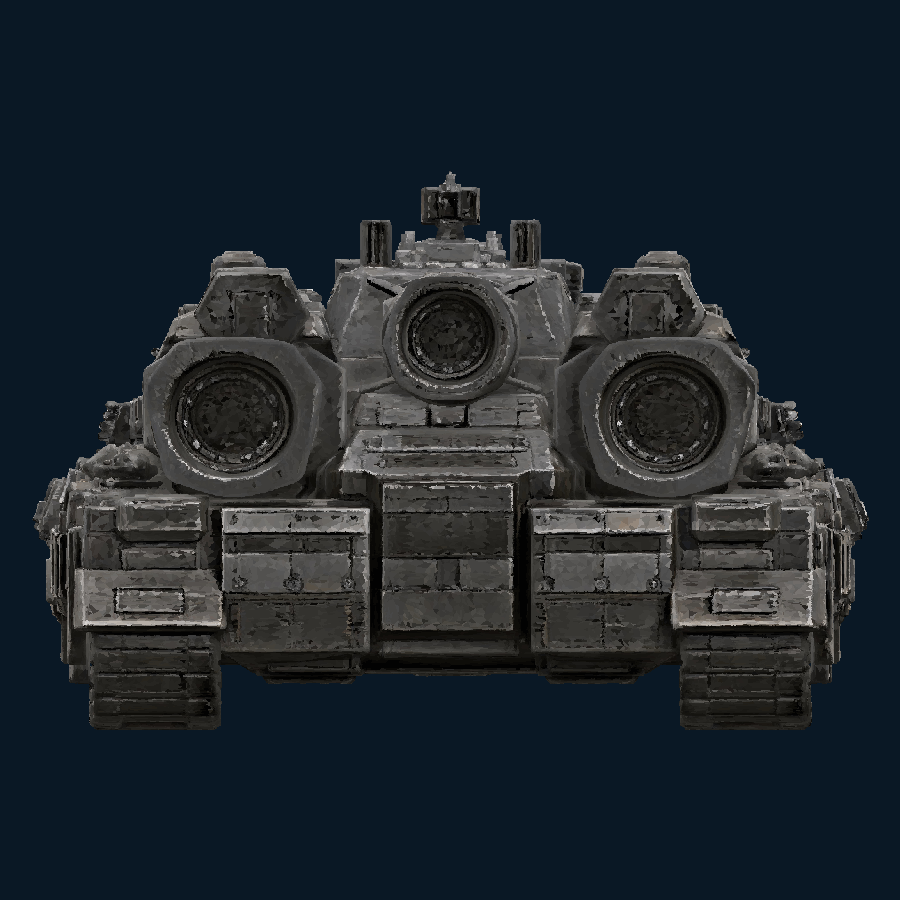
A strong armored brow shelters narrow sensor zones above a broad frontal mass. Flared side protection wraps the multiple crawler assemblies, while a low embedded command core stays within the main armor. Upper weapon terraces connect to thick recoil-support roots, and large recessed propulsion structures occupy the rear.
Functional Architecture
Protected radar, electro-optics, passive sensors and data links coordinate ground and orbital engagements. Isolated magazines and redundant command positions support damage containment. Internal service routes connect the weapon terraces, power systems, cooling paths and rear thermal zone without exposing fragile equipment above the hull.
Technical Specifications
Offensive rating: 84/100 — A mixed heavy gun and missile arsenal sustains siege pressure
Defensive rating: 88/100 — Deep armor, active protection and compartment isolation defend the fighting body
Mobility rating: 18/100 — Large crawler assemblies favor deliberate advances over rapid pursuit
Tactical cognition rating: 66/100 — Protected sensors coordinate the batteries and supporting formation
Endurance rating: 72/100 — Large reserves support extended bombardment with planned replenishment
Fleet support rating: 62/100 — A protected command core and layered fires support neighboring assault units
Fleet Role
Breaks fortified positions through sustained bombardment and methodical advance. The large mixed arsenal supports neighboring assault units while the protected command core coordinates the siege. Orbital deployment extends its reach between ground theaters without replacing its slow crawler doctrine.
Life Between Stars
Broad multi-track assemblies provide stable ground contact and deliberate movement over surveyed heavy routes. Integrated rear engines support powered atmospheric ascent, orbital maneuvering and descent back to ground operations. Transitions require cleared departure zones, reserve propellant and thermal management; the fortress is not assigned independent interstellar transit.
Defense Architecture
Deep frontal armor, wrapped side protection and armored running-gear housings form the passive layers. Active protection, obscurants, decoys and point defense cover incoming threats. Compartment isolation and redundant command systems help the fortress retain local combat functions after damage.
Operational Limits
Its immense footprint limits bridge access, narrow crossings and rapid changes of direction. Sustained bombardment consumes ammunition and cooling reserves, while launch preparation competes with combat power and maintenance needs. Exposed flanks and damaged crawler sections require escort protection and planned recovery routes.
Strategic Strengths
A stable siege foundation, protected command core and layered mixed armament support prolonged pressure. Integrated propulsion allows the same fortress to redeploy through the atmosphere and operate locally in space without separating its ground and orbital bodies.
Capability Assessment
Proposed editorial profile: high siege firepower and protection with substantial reserves and command support, balanced by very low ground agility. Atmospheric and orbital deployment provide strategic movement rather than fighter-like tactical maneuverability.
B · 65.0
Fleet-wide concept rating, 0–100; not simulated performance. Specialized strengths do not imply an equally high overall grade. Tactical Cognition describes sensing, coordination and command. Grade is the equal-weight mean: S ≥ 90, A ≥ 75, B ≥ 60, C ≥ 45, D < 45.
Technology Level
T1 — integrated ground siege operations, atmospheric transit and local spaceflight. Independent phase transit is not assigned.
Weapon Class
Proposed W2 — concentrated siege bombardment and heavy local orbital engagement. No world-scale destructive capability is assigned.
T0 planetary · T1 system flight · T2 phase travel · T3 limited world engineering. W0 point defense · W1 ship combat · W2 heavy fleet combat · W3 strategic theater systems. Technology and weapon classes are independent of the profile grade.
History & Lineage
Universe lore · authored service history
Origin
Developed for planetary assaults in which a protected command and bombardment platform must accompany the ground advance, then redeploy with its own local space propulsion
Lineage & Branch
Browguard super-heavy siege-crawler branch. The armored brow, recessed sensing zones and wrapped side protection organize the frontal fighting body around crew and command survival.
Fleet or Unit
Proposed assignment: Human heavy siege and planetary recovery formations
Individual History
The Sheltered Advance — In this authored service history, Browguard moves along a surveyed causeway while its upper batteries cover engineering teams clearing the next crossing. The crew reserves its longest-range missiles for threats beyond the supporting formation.
The Halted Battery — Damage to an outer crawler forces a pause before the main position is reached. Browguard holds its firing line while escorts protect the repair crews, trading momentum for a secure route of withdrawal.
The Second Descent — After the campaign, the fortress departs through a cleared launch corridor and joins an orbital reception group. Its next ground deployment begins with recovery vehicles and route surveys already in place, carrying the lessons of the causeway into a new siege.