
Overview
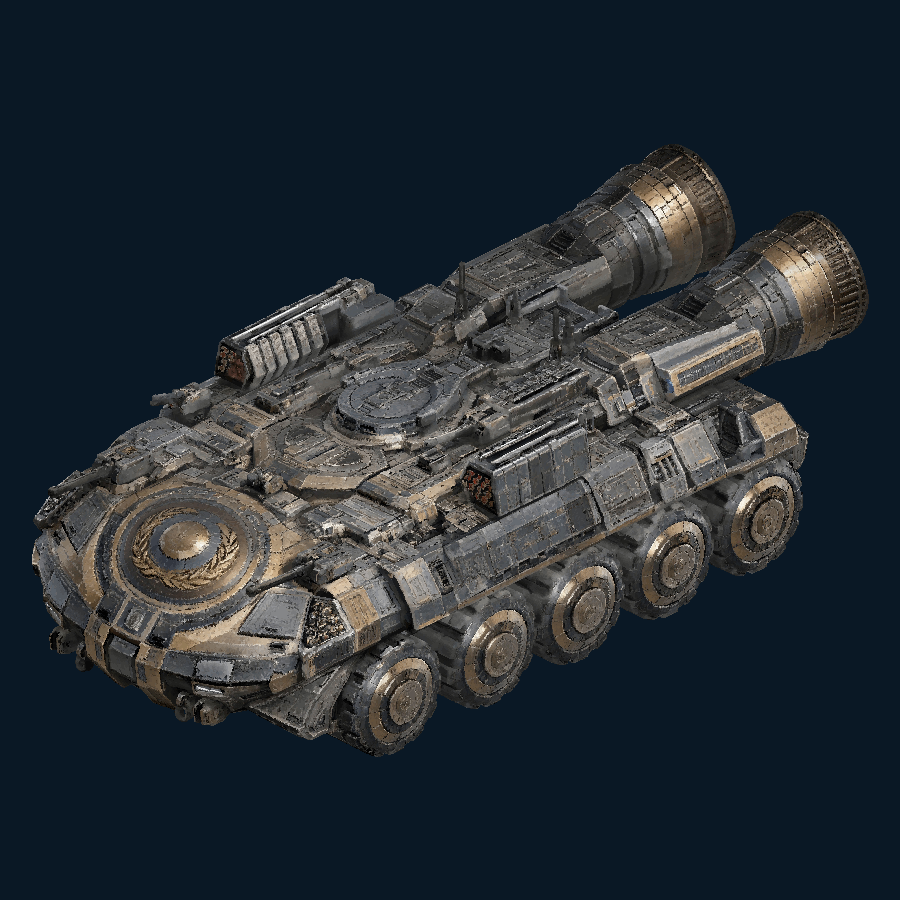
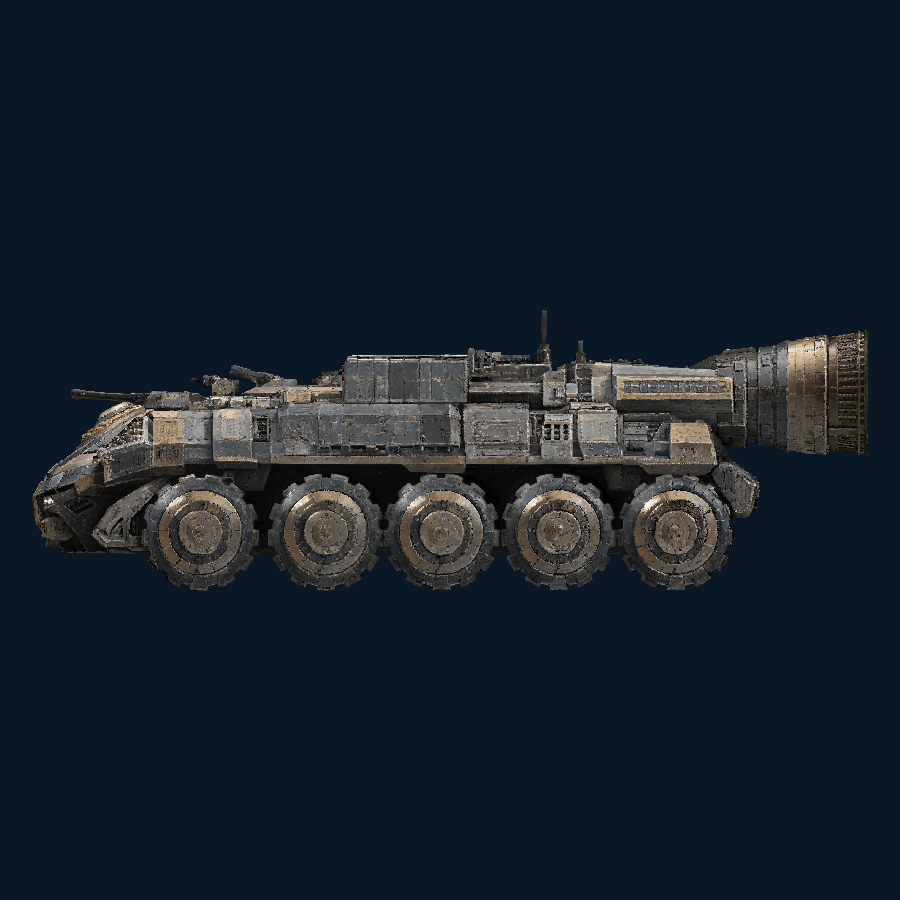
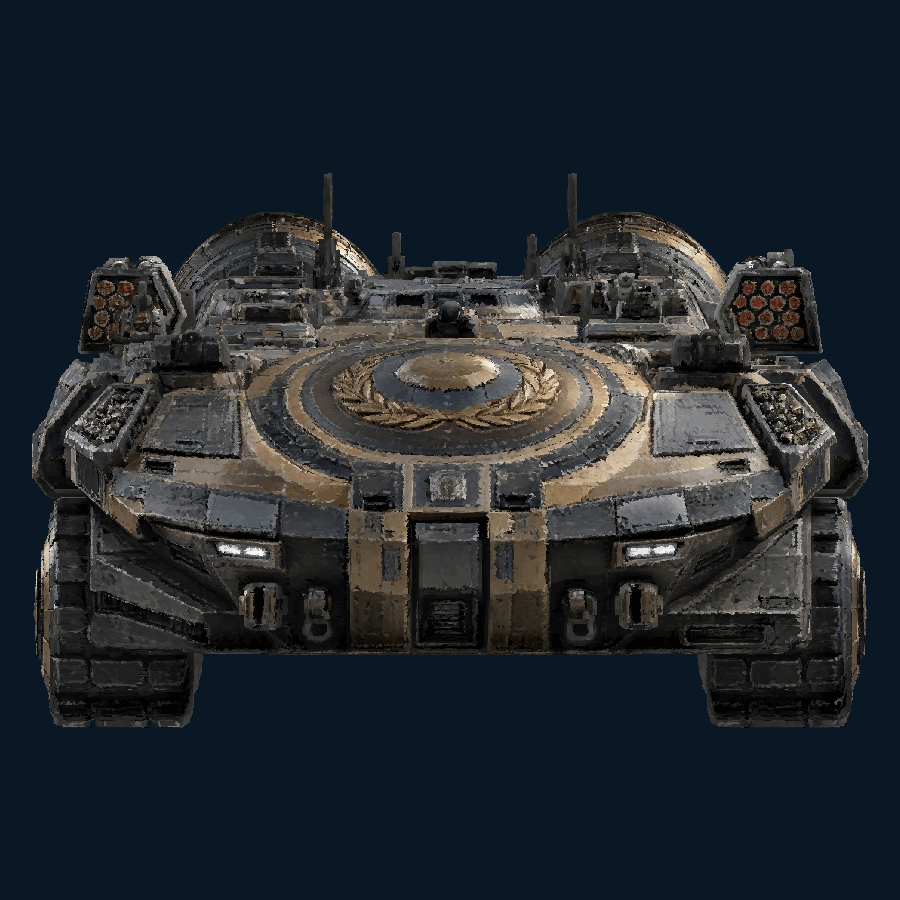
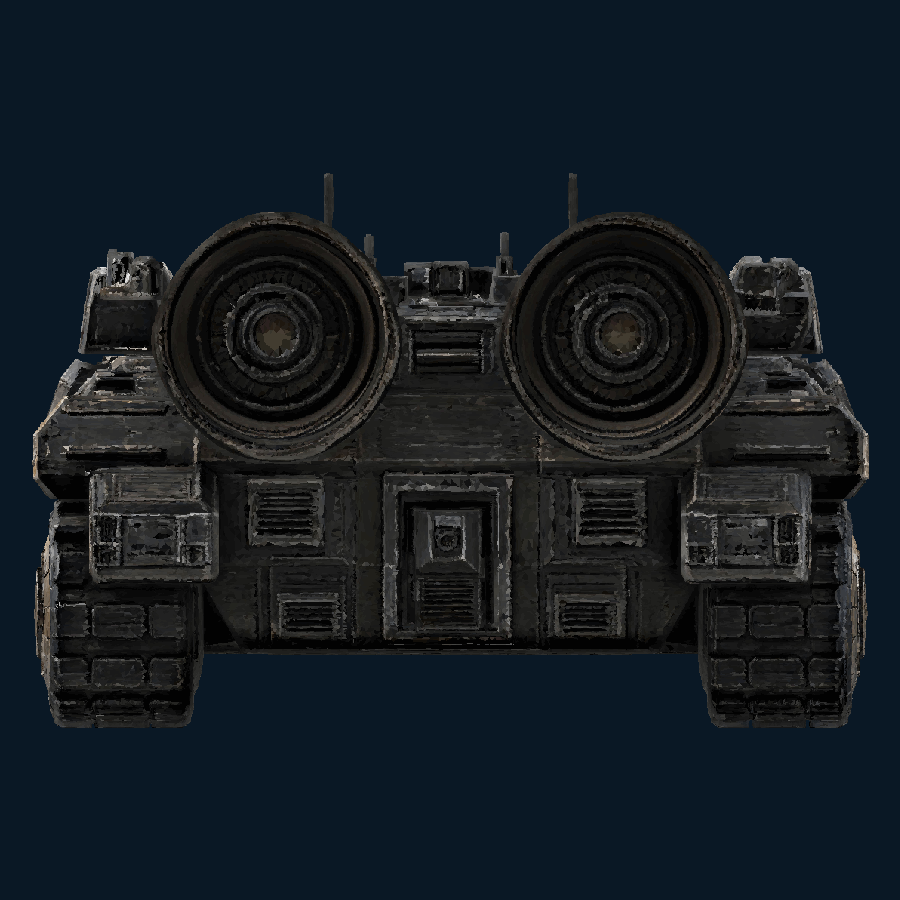
Roundwall 8x8-class Land-Space Fortress is a human wheeled missile bastion built for mobile ground defense. A broad armored front, covered missile banks and a low command citadel protect the fighting core, while integrated rear engines provide its land-space deployment capability.
Vessel Profile
Weapons & Armament
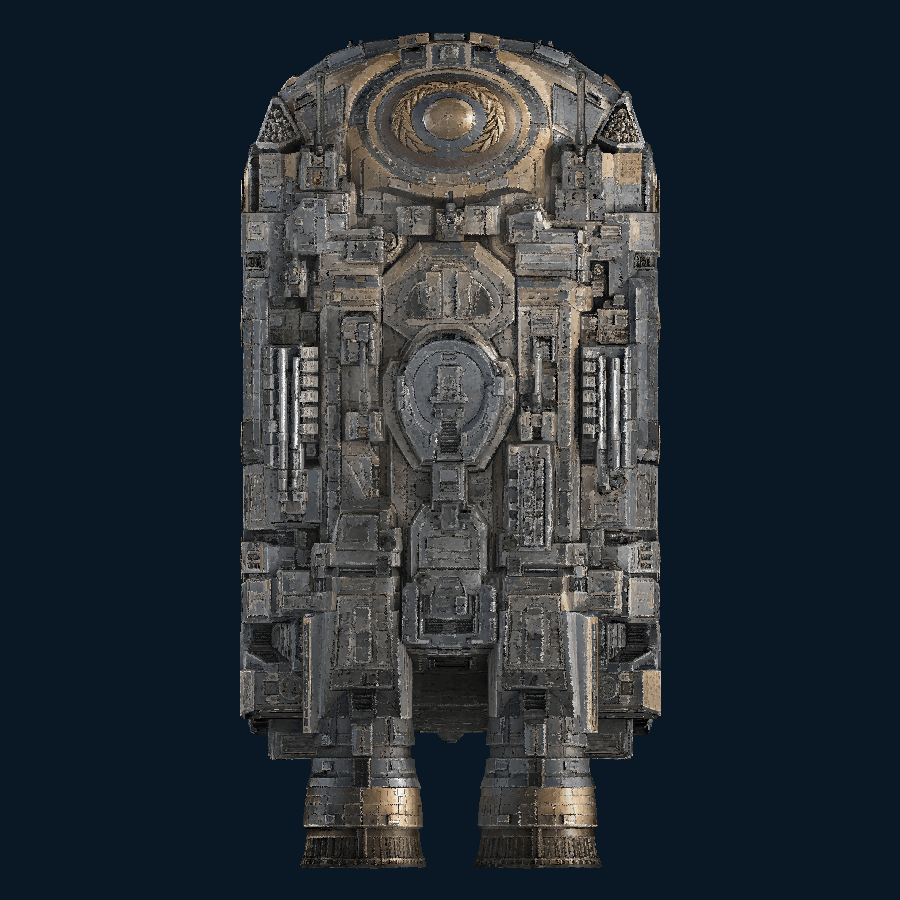
Armored missile banks provide long-range strike, anti-armor fire and layered air defense. Roof-mounted guns and remote autocannons cover closer approaches, while compact point-defense mounts protect the launcher positions. The proposed fit includes electromagnetic direct-fire weapons and beam defense against small incoming threats.
Dimensions & Scale
Length 120 m × Width 64 m × Height 38 m. Proposed fictional dimensions for this archive entry; the supplied design does not specify scale. Mass, crew complement and ammunition capacity remain undefined.
External Anatomy
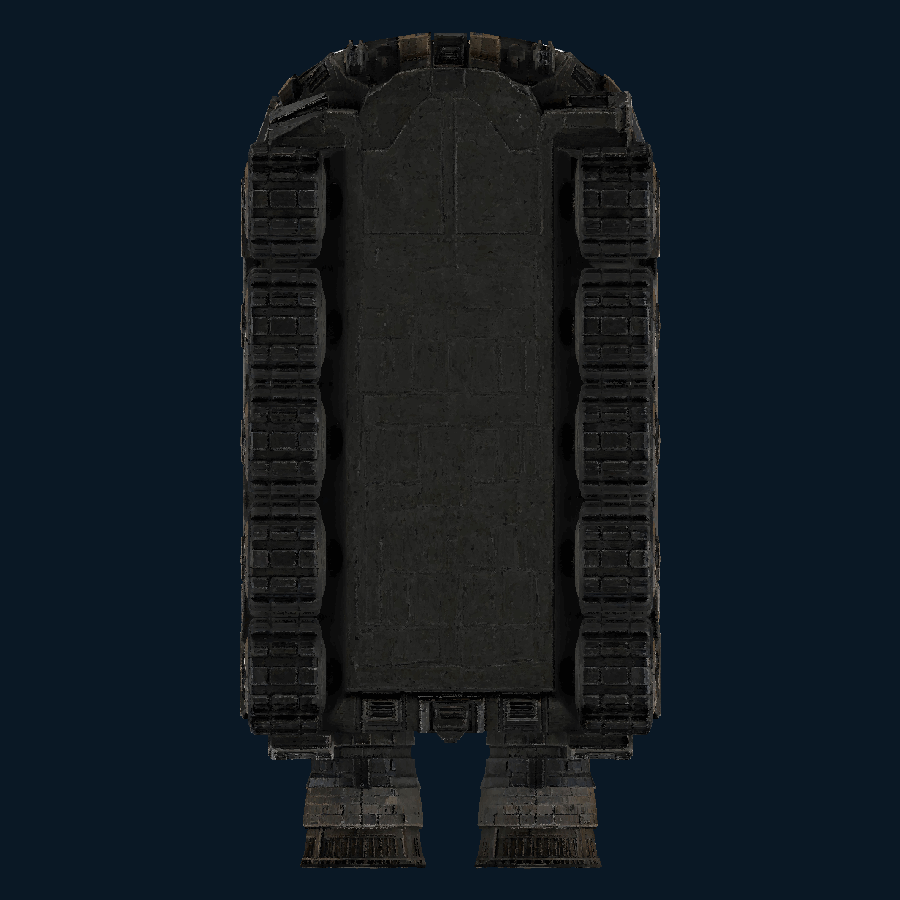
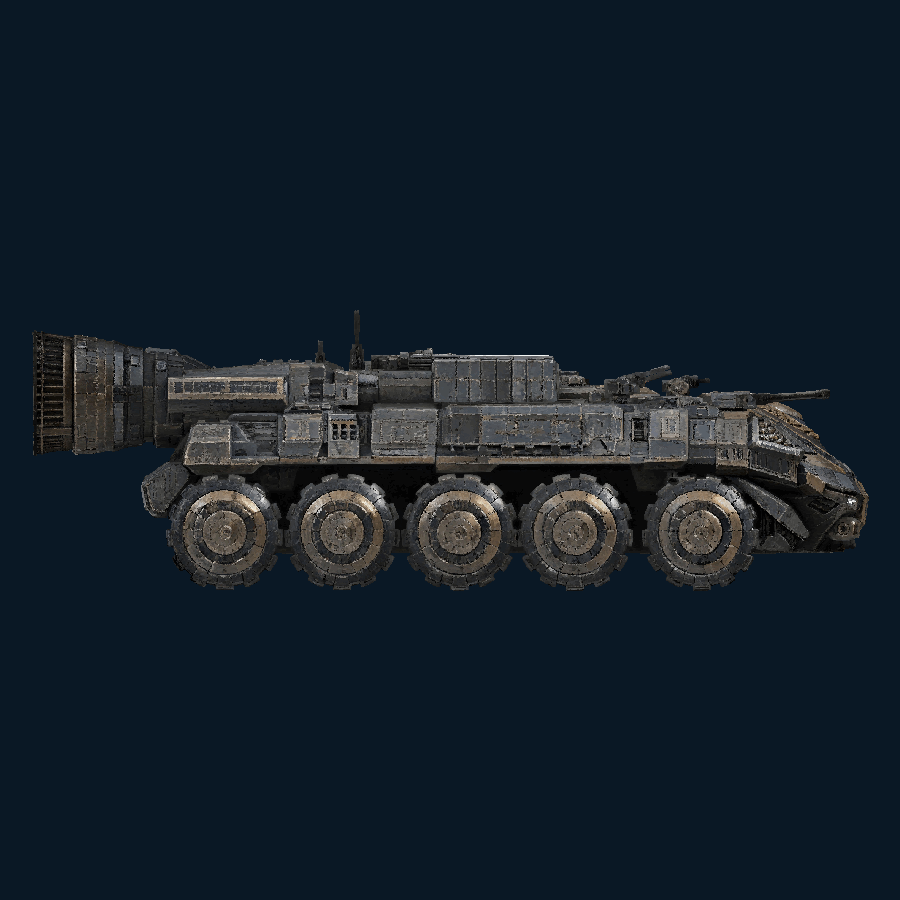
A circular reinforced frontal face flows into broad shoulder armor and deep side skirts. Protected heavy wheels carry the elongated fighting body, with missile housings arranged above the flanks. The command core sits low between weapon positions, and two large recessed engine assemblies dominate the rear.
Functional Architecture
Protected radar panels, electro-optical sights and data links coordinate missile engagements and supporting ground units. Isolated magazines separate ammunition from the command core. Maintenance passages, replaceable armor sections and protected cooling routes support field servicing.
Technical Specifications
Offensive rating: 72/100 — Missile banks and heavy direct-fire mounts provide concentrated support
Defensive rating: 78/100 — Broad frontal armor and layered interception protect the formation
Mobility rating: 36/100 — Heavy wheels favor prepared routes and deliberate redeployment
Tactical cognition rating: 62/100 — Protected sensors and data links coordinate local engagements
Endurance rating: 48/100 — Missile stocks, reaction mass and cooling constrain sustained operations
Fleet support rating: 66/100 — Area defense and command coordination protect nearby ground units
Fleet Role
Provides mobile missile cover for ground formations, secures deployment corridors and reinforces threatened defensive positions. Its wheeled chassis supports redeployment between prepared firing sites, while the protected command core coordinates nearby air-defense and escort units.
Life Between Stars
The design retains a unified land-space body. Integrated rear engines support proposed surface-to-orbit deployment and limited orbital maneuvering, with the same protected magazines and command core serving both environments. Launch preparation, reaction mass and heat rejection constrain flight operations; independent interstellar travel is not assigned.
Defense Architecture
The reinforced frontal armor spreads protection across a broad face and wrapped side returns. Layered side skirts shield the running gear, while active protection, decoys, obscurants and point defense intercept closer threats. Recessed sensors and a low command core reduce exposed equipment.
Operational Limits
Heavy wheels require firm routes, sufficient turning space and surveyed crossings. Flanking attacks threaten the running gear and rear thermal systems. Sustained missile fire depends on replenishment, and high-power defensive systems compete with propulsion and cooling for finite reserves.
Strategic Strengths
Protected missile storage, layered air defense and integrated command systems allow the fortress to anchor a moving defensive line. Its layered armor layout protects the frontal approach while wheeled mobility supports changes of firing position.
Capability Assessment
Proposed editorial profile: strong protection and missile support, balanced by restricted terrain access and finite ammunition. Ground mobility reflects redeployment along suitable routes rather than light-vehicle agility. Orbital capability extends deployment options without making the fortress an unrestricted space combatant.
B · 60.3
Fleet-wide concept rating, 0–100; not simulated performance. Specialized strengths do not imply an equally high overall grade. Tactical Cognition describes sensing, coordination and command. Grade is the equal-weight mean: S ≥ 90, A ≥ 75, B ≥ 60, C ≥ 45, D < 45.
Technology Level
Proposed T1 — integrated ground operations and local orbital deployment. No phase-travel system is assigned.
Weapon Class
Proposed W2 — concentrated missile and heavy direct-fire support. No strategic world-scale weapon capability is assigned.
T0 planetary · T1 system flight · T2 phase travel · T3 limited world engineering. W0 point defense · W1 ship combat · W2 heavy fleet combat · W3 strategic theater systems. Technology and weapon classes are independent of the profile grade.
History & Lineage
Universe lore · authored service history
Origin
Developed for protected ground corridors and expeditionary operations, the fortress combines mobile missile cover with a heavily armored command position. Repairable equipment and integrated rear propulsion support repeated deployment alongside human ground formations.
Lineage & Branch
Roundwall 8x8-class wheeled missile bastions, land-space fortress branch. The fortress carries the supplied class designation; the designation does not define a measured wheel count or finalized production specification.
Fleet or Unit
Proposed assignment: Homebound Armada planetary corridor defense units
Individual History
The Bronze Corridor — In this authored service history, the fortress first deploys along an evacuation road linking scattered settlements to a coastal launch field. Its crews alternate between covered missile positions while engineering teams strengthen the crossings ahead.
The Last Firing Site — When an attack threatens the launch field, the fortress remains behind the departing transports to coordinate local air defense. Ammunition shortages force the crew to reserve long-range missiles for threats that the escort vehicles cannot reach.
Return to the Road — After the evacuation, the fortress returns to ground duty with replacement side armor and revised cooling access. Its crews retain the circular bronze frontal reinforcement as a reminder that the formation’s purpose is to keep a route open for those following behind.