
Overview
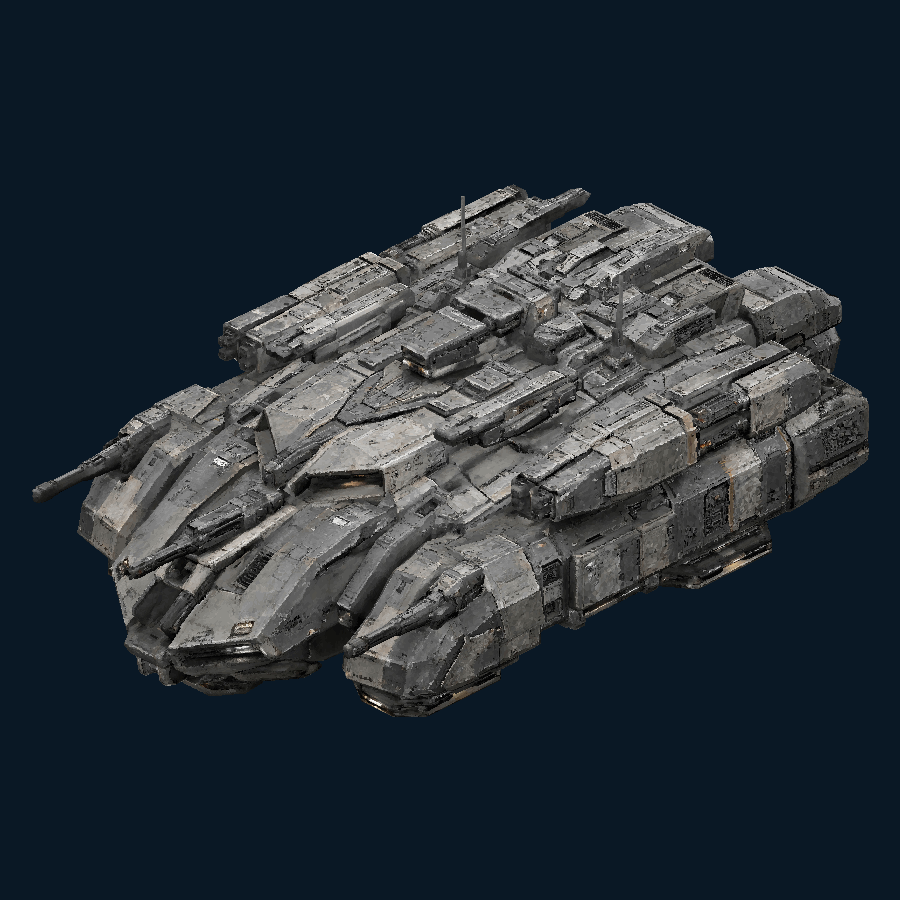
Browguard Drop-class Platform is a Human medium-heavy assault platform designed for orbital insertion followed by immediate ground combat. A dense armored body combines protected descent controls, landing support and ground-running systems with a central fighting module. Its role is to arrive quickly, survive the transition to the surface and establish a mobile foothold.
Vessel Profile
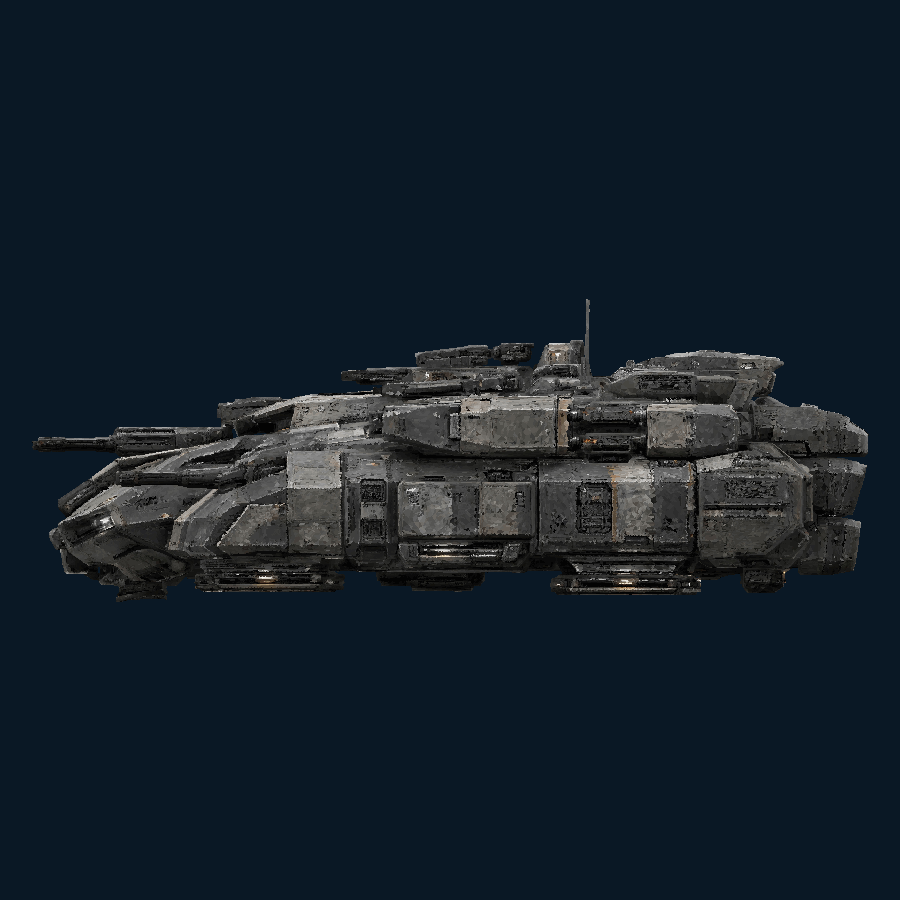
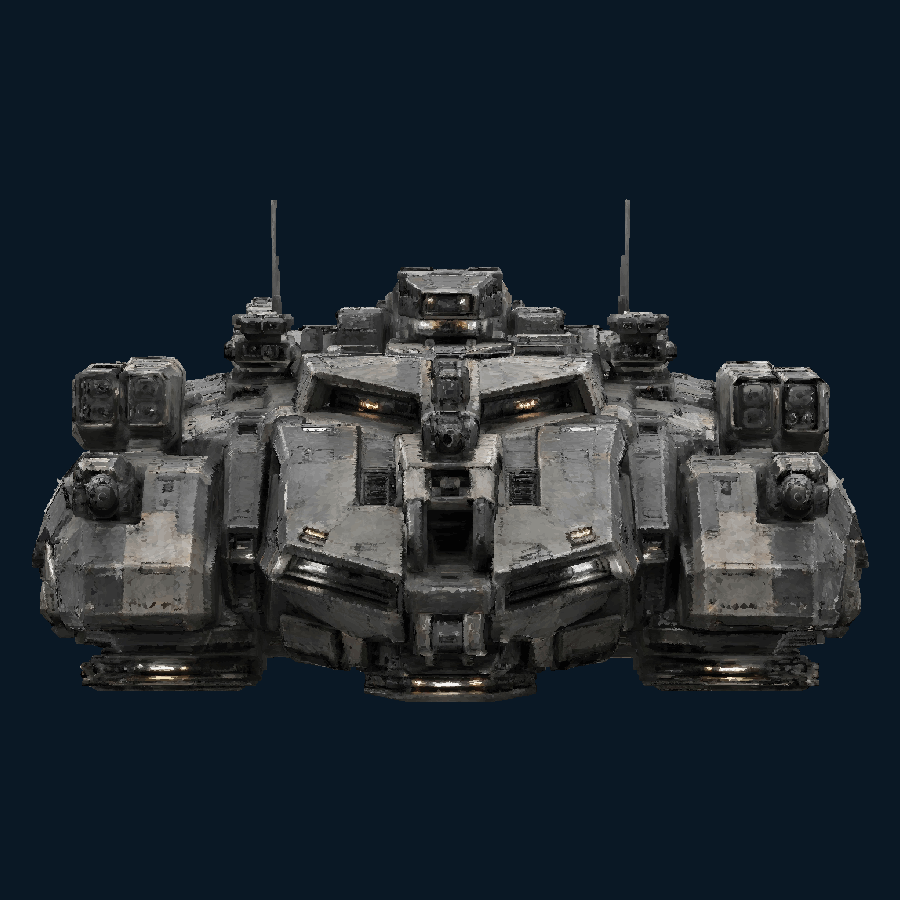
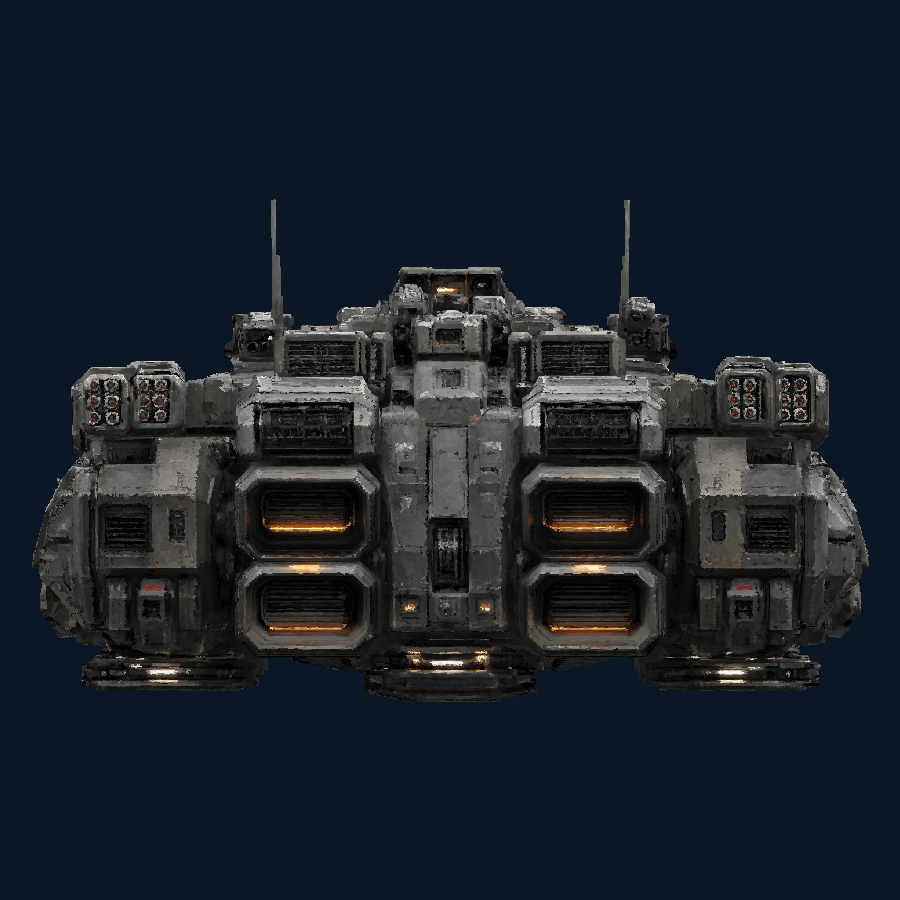
Dimensions & Scale
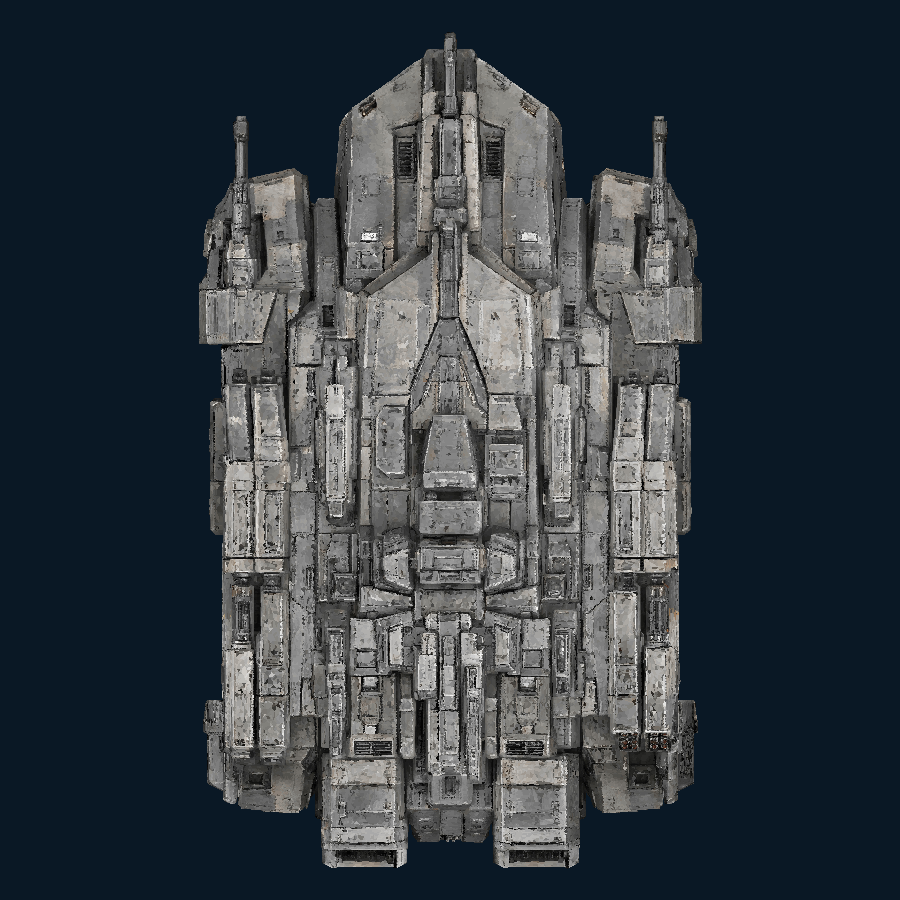
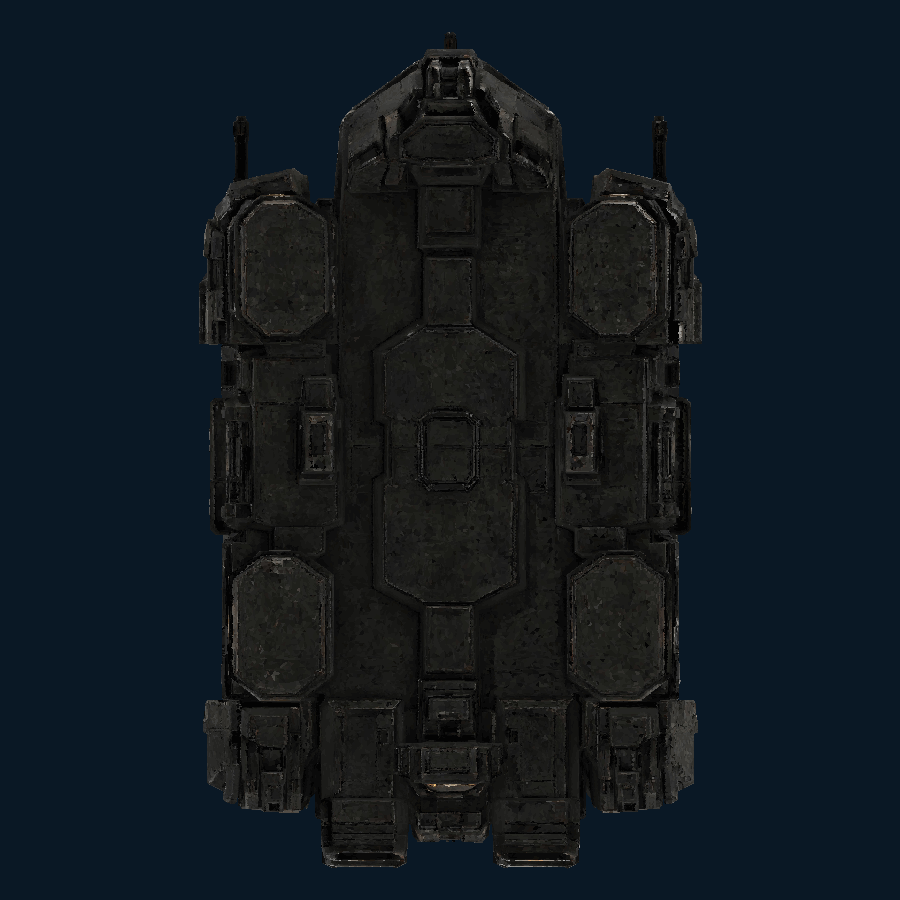
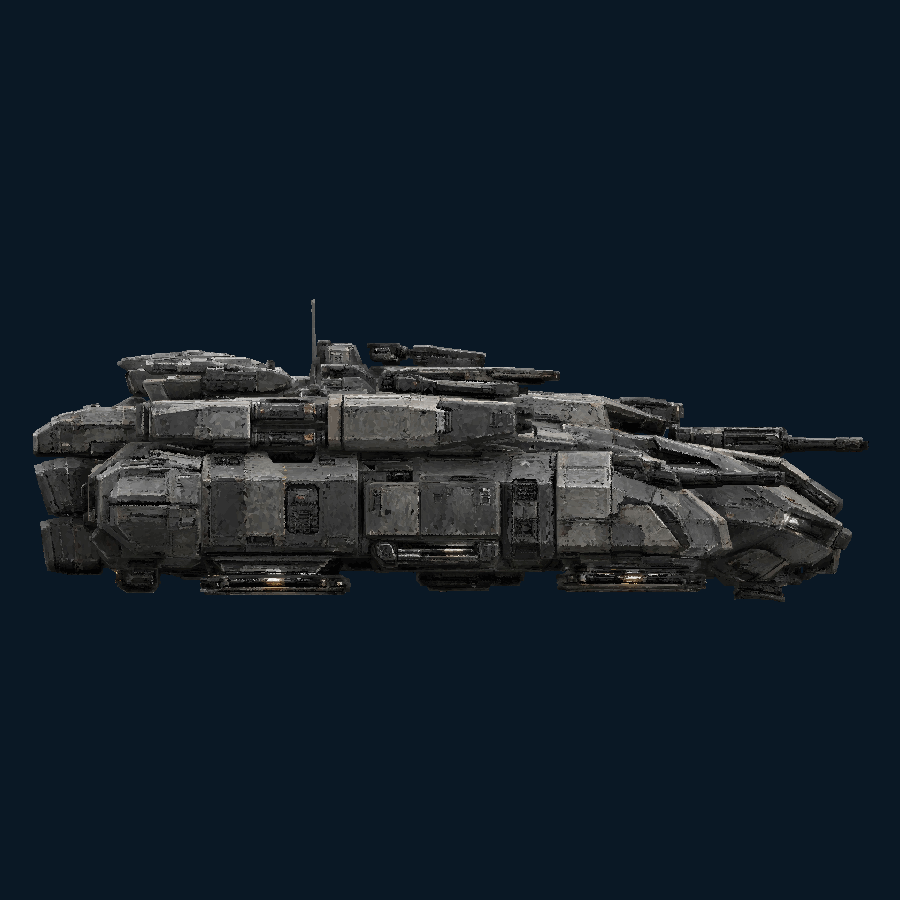
Length 18 m × Width 10.8 m × Height 6.5 m. Proposed fictional dimensions: the source specifies a medium-heavy rapid-deployment role but no absolute size. Length is an authored setting choice; width and total readiness-state height are proportional estimates including the depicted sensors and weapon projections.
Proposed combat operating mass: approximately 220 ton (metric tons). The estimate allows for armor, descent and landing hardware, propulsion, payload and service volume. It is not a measured mass or an engineering validation of orbital insertion.
Weapons & Armament
One principal direct-fire weapon system forms the dominant mission payload. A compact protected strike-missile group provides the supporting combat layer, while local active-protection nodes form the defensive layer. The intended doctrine keeps this hierarchy clear instead of assigning a separate strategic weapon to every exterior projection.
Armored launch covers and protected service regions preserve the compact body. Exact caliber, missile count and firing performance are unspecified concept parameters. This is a general-purpose assault configuration, without invented universal anti-Bugvex or anti-Cryvum effects.
External Anatomy
Broad armored shoulders surround a low central fighting and command volume. Stepped frontal reinforcement shades recessed sensing regions, while protected side masses enclose mobility and service spaces. Muted gray armor contrasts with darker machinery roots and restrained structural bands.
The depicted readiness state includes raised sensor fixtures and several weapon-like projections. Their precise mechanisms are not confirmed by the views; the public role package remains one principal weapon system, a supporting missile group and local protection. Landing and descent equipment are integrated into the same body as the ground-running systems.
Functional Architecture
Deployment control — Protected descent-control housings, distributed vector control, integrated heat-management regions and landing supports manage the transition from orbital release to surface contact in the fictional setting. Local fault isolation preserves remaining control channels after limited damage.
Ground mobility — Enclosed running-gear sectors, distributed drive, adaptive traction and suspension support movement after landing. Self-leveling support stabilizes the fighting module while power routing balances motion, sensors and weapons.
Command and sensing — Recessed optical apertures, multispectral sensing, passive panels, ranging systems and protected datalink housings support threat tracking. Compact electronic-warfare systems assist local awareness without creating an exposed antenna forest.
Servicing — Embedded maintenance boundaries and modular service interfaces permit inspection and replacement of damaged equipment. These interfaces are not designated as CCBOT-specific. Separate power, thermal and ammunition regions reduce cascading failures.
Technical Specifications
Offensive rating: 72/100 — A principal weapon and compact missile group support immediate assault
Defensive rating: 77/100 — Protected mission volumes, compartmentation and local defenses reinforce survivability
Mobility rating: 81/100 — Supported orbital insertion and integrated ground drive prioritize rapid deployment
Tactical cognition rating: 70/100 — Protected sensing and datalinks coordinate local response
Endurance rating: 51/100 — Compact reserves and deployment demands constrain prolonged combat
Fleet support rating: 47/100 — The platform establishes footholds but depends on outside transport and servicing
Fleet Role
Rapid shock insertion and immediate general-purpose ground assault. Browguard Drop establishes a mobile foothold, reinforces threatened formations and exploits short deployment windows. It is a medium-heavy tactical platform rather than a static fortress or a strategic siege megastructure.
Life Between Stars
Space — The platform begins its mission from an orbital carrier or other deployment support. Integrated control hardware supports release orientation and the initial insertion transition. Independent interplanetary travel, orbital patrol and return-to-orbit capability are not established.
Air — Armored descent surfaces, vector controls and thermal systems support passage through the atmosphere and controlled landing. This domain represents insertion, not sustained aircraft-style combat or unrestricted hovering.
Ground — Once landing supports complete their checks, the ground-running system takes over for mobile combat. The same protected body carries the deployment and surface mission hardware; it is not a disposable capsule surrounding a separate vehicle.
Defense Architecture
Composite armor and ceramic-metal shells protect actual mission volumes. Recessed joints, reinforced corners and shielded sensors limit exposure. Isolated magazines and power regions reduce local damage propagation, while active-protection nodes cover immediate threats. Descent protection and ground-combat armor share finite mass and thermal capacity; neither makes the platform invulnerable.
Operational Limits
Orbital delivery depends on external transport and a viable insertion window. Descent heating, landing loads and limited control reserves constrain deployment, and a damaged landing or drive sector can compromise the ground mission. Ammunition and cooling reserves limit prolonged assault. The platform cannot provide its own orbital extraction or replace a dedicated heavy siege unit.
Strategic Strengths
Brings a protected fighting module and useful ground mobility through the same deployment sequence. Integrated support and drive systems shorten the transition from landing to action, while disciplined armament avoids overloading a rapid-deployment chassis. Strong local protection helps it survive the vulnerable opening phase of a ground operation.
Capability Assessment
Proposed fictional doctrine profile. Mobility reflects rapid supported deployment and capable ground movement, not unrestricted flight. Protection and attack support a short, forceful assault window. Endurance and fleet support remain lower because the compact platform depends on replenishment and external transport. These are role-based concept scores, not measured combat results.
B · 66.3
Fleet-wide concept rating, 0–100; not simulated performance. Specialized strengths do not imply an equally high overall grade. Tactical Cognition describes sensing, coordination and command. Grade is the equal-weight mean: S ≥ 90, A ≥ 75, B ≥ 60, C ≥ 45, D < 45.
Technology Level
T1 — supported orbital deployment with integrated descent control and advanced ground engineering. This does not imply independent system-wide flight or phase travel.
Weapon Class
Proposed W1 — tactical direct fire, compact missile support and local active protection. No strategic theater strike or fortress-scale weapon capability is assigned.
T0 planetary · T1 system flight · T2 phase travel · T3 limited world engineering. W0 point defense · W1 ship combat · W2 heavy fleet combat · W3 strategic theater systems. Technology and weapon classes are independent of the profile grade.
History & Lineage
Universe lore · authored service history
Origin
Developed within the fictional Human orbital-assault formations of Mow My World to bridge deployment and immediate surface combat. The design favors a reusable integrated military platform with protected controls rather than a disposable landing shell.
Lineage & Branch
Browguard platform family — Drop-class rapid-deployment branch. Low command protection, reinforced frontal shoulders and compact fighting geometry distinguish this model from the much larger Browguard land-space fortress.
Fleet or Unit
Human — fictional Farreach orbital-assault detachments and their supporting transport formations
Individual History
The Farreach Insertion — In this authored service history, a Browguard Drop group deploys from a carrier to reinforce a contested surface corridor. The platforms complete controlled descents, check their landing supports and establish a moving perimeter while heavier reinforcements remain in transit. Their role is to preserve access and buy time rather than defeat the entire opposing force alone.
The Groundward Watch — One platform suffers damage to a drive sector after landing and remains with the local defense while the others reposition. Recovery crews later replace the affected assembly and inspect its thermal systems. The operation reinforces the detachment’s practice of pairing rapid insertion with planned maintenance, replenishment and extraction support.