
Overview
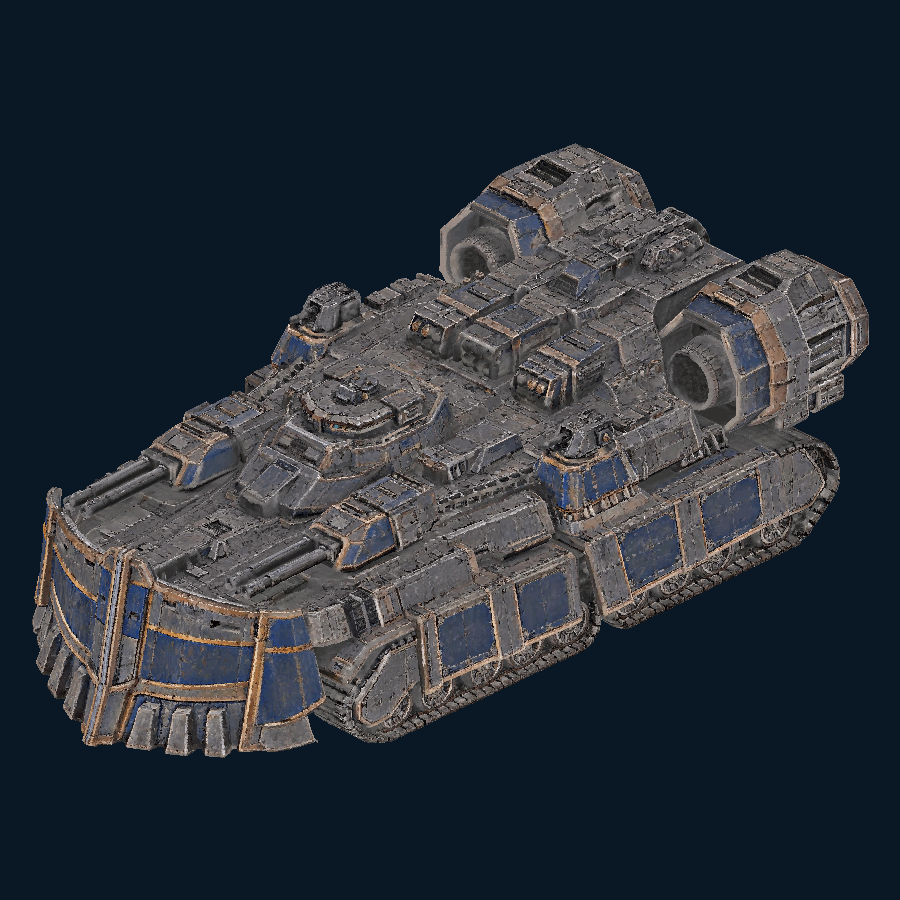
Ironhold explores one platform capable of landing, relocating and fighting on its own tracks during extended planetary operations, while retaining its identity as a space warship
Vessel Profile
Weapons & Armament
The release establishes an armed land-space assault fortress without an enumerated battery list. This profile assigns a heavy assault role without inventing gun counts, calibers or ranges.
Dimensions & Scale
Length 320 m × Width 180 m × Height 95 m. Fictional overall dimensions in standard operating configuration.
External Anatomy
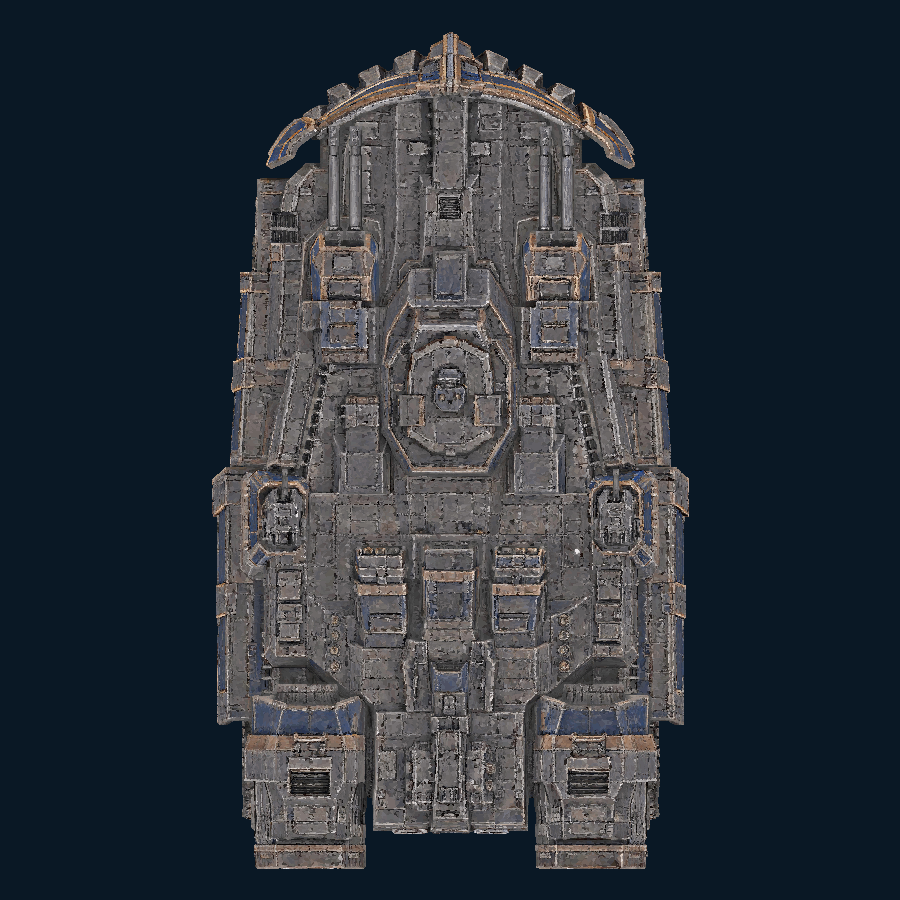
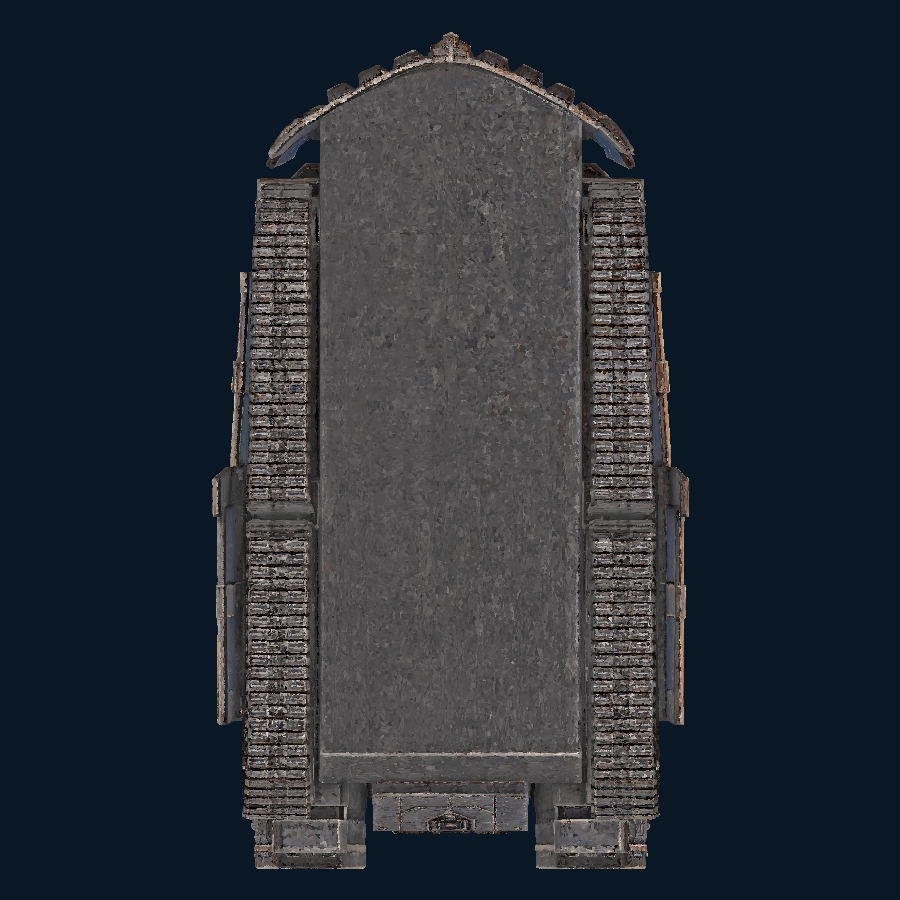
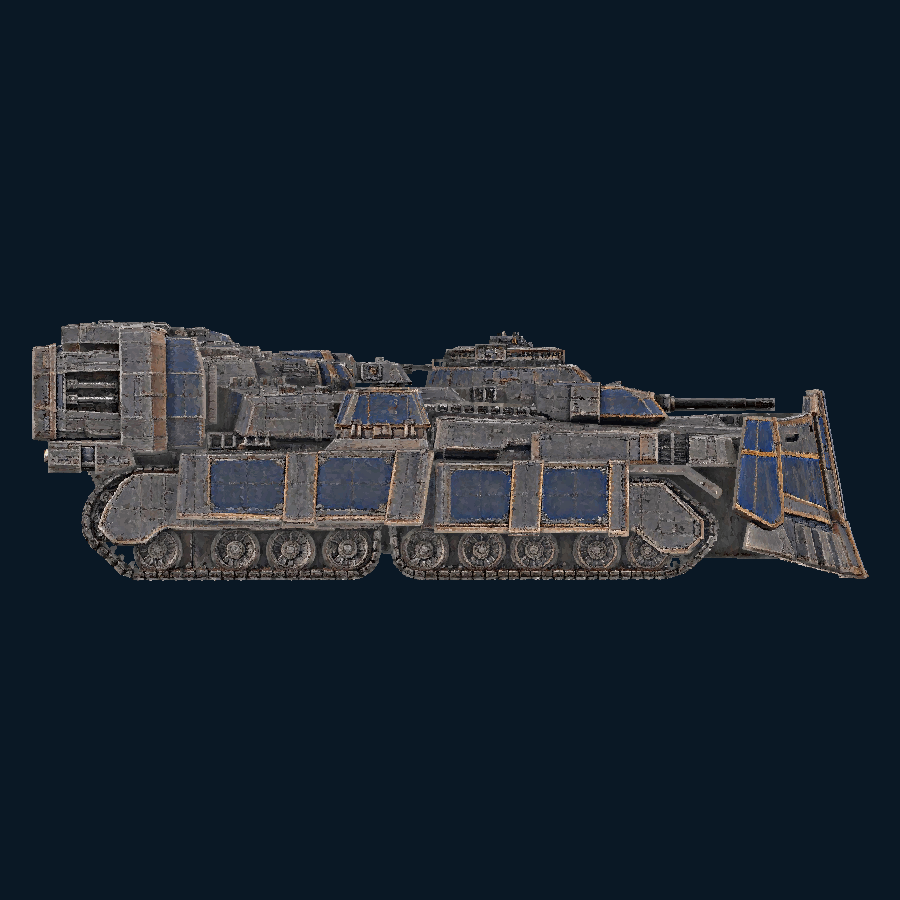
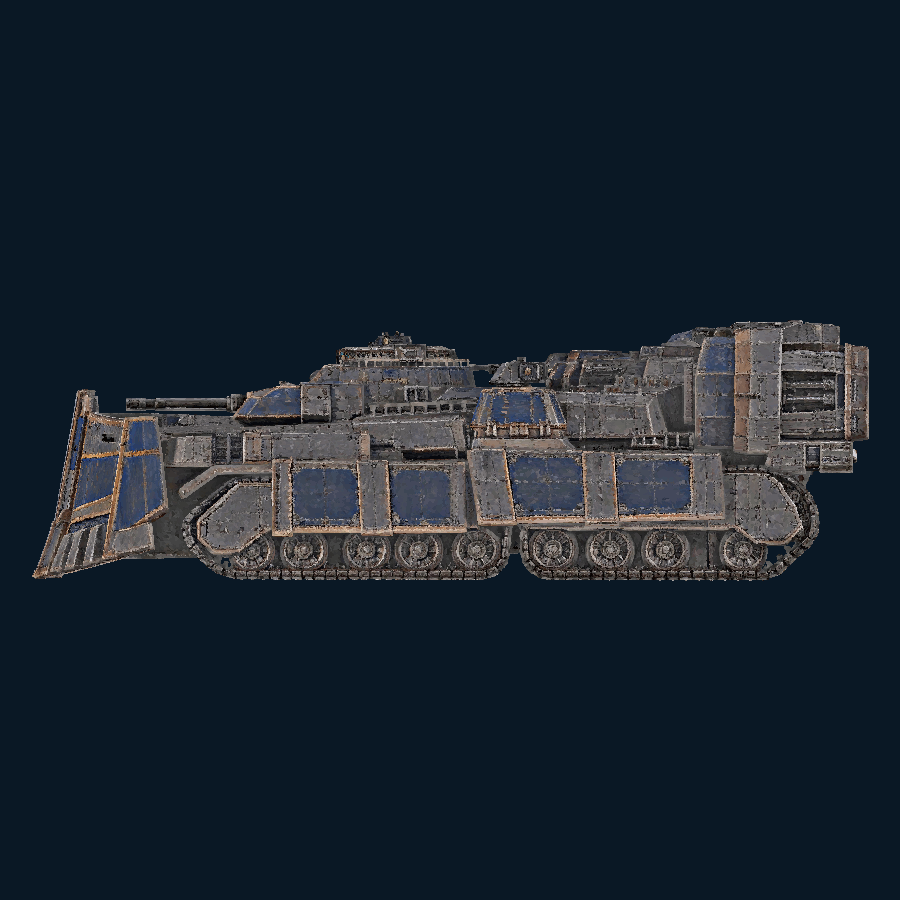
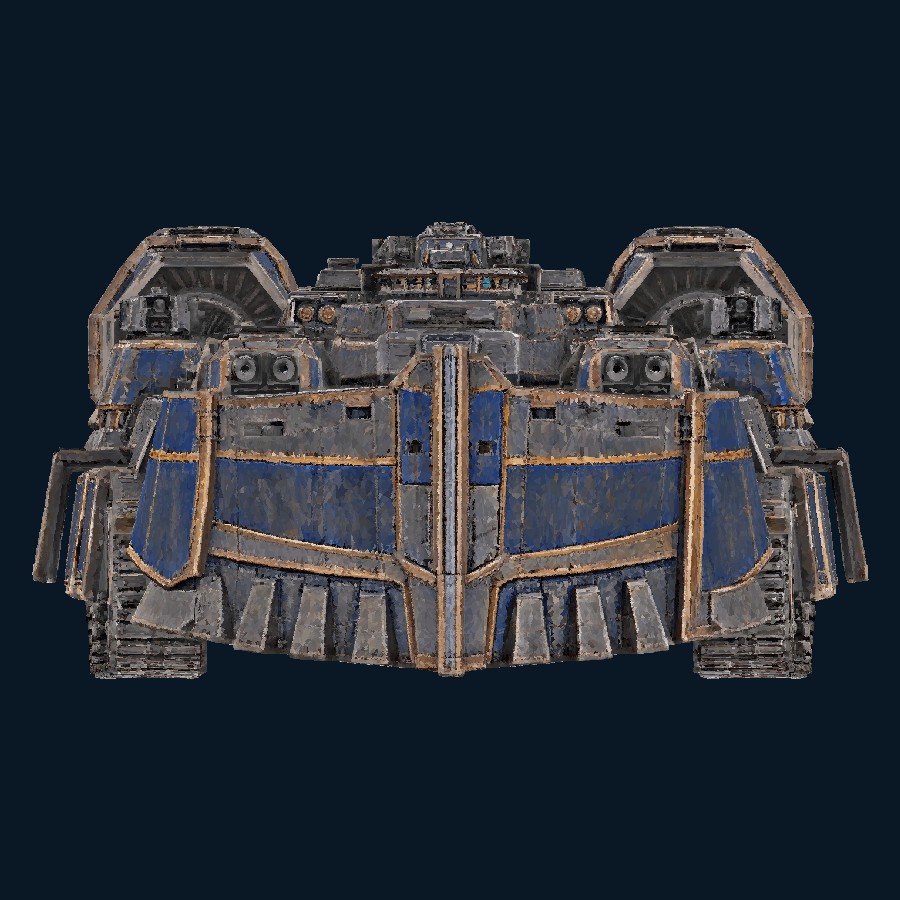
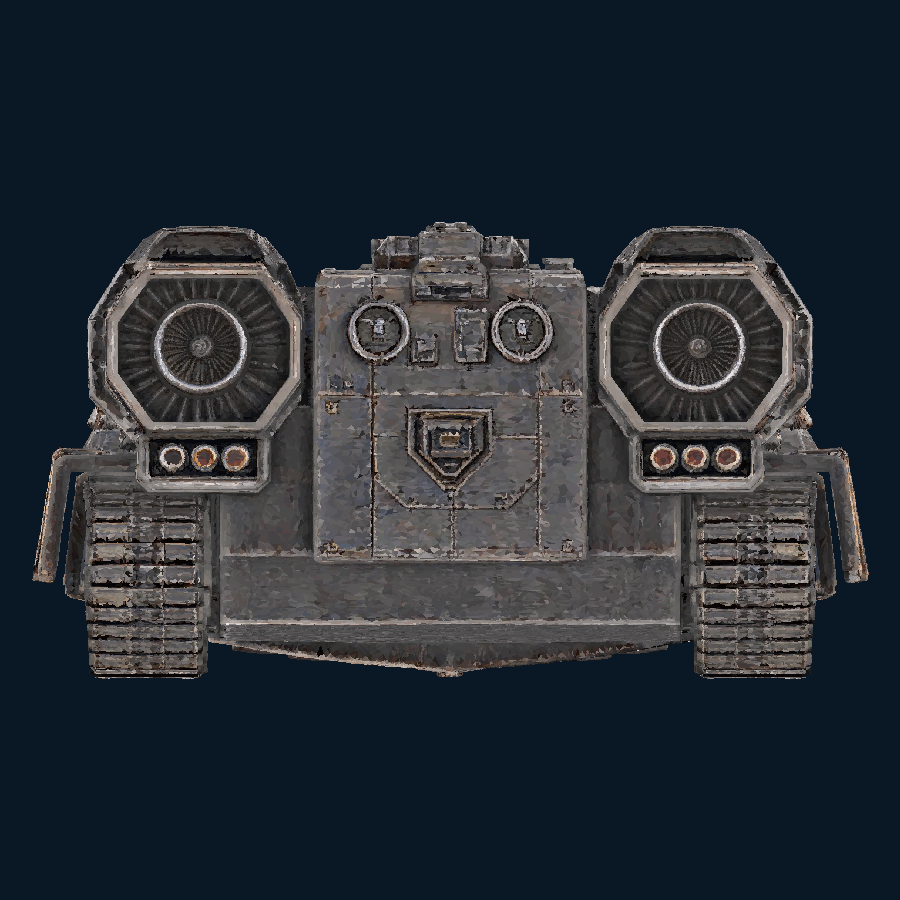
A broad armored vehicle body rests on substantial track assemblies. Upper fighting positions and protected internal volume give it the appearance of a moving strongpoint; the integrated space-warship role extends beyond its tracked surface configuration.
Functional Architecture
Ground mobility and space operations belong to one platform. The proposed architecture organizes command, maintenance and mission support around the fortress’s protected interior, with separate operating procedures for tracked movement and flight.
Technical Specifications
Offensive rating: 62/100 — The release establishes an armed land-space assault fortress without an enumerated battery list
Defensive rating: 76/100 — The proposed defensive doctrine uses the fortress body as shelter for its command and service spaces
Mobility rating: 24/100 — Transitions between operating environments demand planned routes and recovery intervals
Tactical cognition rating: 60/100 — Target assessment, formation coordination and response timing support land-space mobile fortress operations
Endurance rating: 70/100 — Mission duration depends on finite reserves, damage recovery and scheduled replenishment
Fleet support rating: 61/100 — Provides an enduring mobile base during planetary operations, then returns to fleet service as a space warship
Fleet Role
Provides an enduring mobile base during planetary operations, then returns to fleet service as a space warship. Tracks allow repeated ground relocations without keeping the entire fortress in flight.
Life Between Stars
Tracked surface movement supports extended ground deployments. Integrated propulsion permits planned ascent and fleet rendezvous after surface operations. Transitions require secured departure space and a prepared orbital reception group.
Defense Architecture
The proposed defensive doctrine uses the fortress body as shelter for its command and service spaces. Support elements operate within the protection of the moving strongpoint rather than spreading beyond its response range.
Operational Limits
Its size restricts ground routes and makes rapid redeployment difficult. Flight and surface operations demand different support arrangements, and the fortress cannot cover both theaters at once.
Strategic Strengths
Long-duration presence, a mobile protected center and the ability to accompany a fleet beyond a single planetary deployment distinguish the platform
Capability Assessment
Editorial doctrine: Provides an enduring mobile base during planetary operations, then returns to fleet service as a space warship. Tracks allow repeated ground relocations without keeping the entire fortress in flight. Its size restricts ground routes and makes rapid redeployment difficult. Flight and surface operations demand different support arrangements, and the fortress cannot cover both theaters at once.
C · 58.8
Fleet-wide concept rating, 0–100; not simulated performance. Specialized strengths do not imply an equally high overall grade. Tactical Cognition describes sensing, coordination and command. Grade is the equal-weight mean: S ≥ 90, A ≥ 75, B ≥ 60, C ≥ 45, D < 45.
Technology Level
T1 — system-flight capability. This editorial classification reflects the documented space role; no phase-travel or world-engineering capability is inferred.
Weapon Class
W2 — heavy fleet or siege engagement. This editorial class does not imply strategic world-scale destruction.
T0 planetary · T1 system flight · T2 phase travel · T3 limited world engineering. W0 point defense · W1 ship combat · W2 heavy fleet combat · W3 strategic theater systems. Technology and weapon classes are independent of the profile grade.
History & Lineage
Universe lore · authored service history
Origin
Developed for frontier campaigns in which a fixed base might be abandoned before its construction was complete
Lineage & Branch
Land-space assault fortresses. Its fleet assignment follows the operational doctrine of this lineage.
Fleet or Unit
Pavise Frontier Garrison
Individual History
The Walking Outpost — Ironhold followed a retreating survey column across a failing frontier district, relocating its protected perimeter each night instead of leaving another stationary base behind.
Departure from the Plain — Once the evacuation was complete, the fortress left its ground deployment and rejoined the fleet. Its garrison kept a strip of worn track plate beside the departure board as a reminder that a fleet base can also have a road behind it.
The Threshold Muster — Its next campaign joined a surface evacuation to a waiting orbital convoy. The command crew delayed departure until the last ground column had reached shelter, then transferred control of the perimeter to local defenders. That handover became the Ironhold rule: a mobile fortress must leave a functioning refuge behind, not merely take its own protection away.