Overview
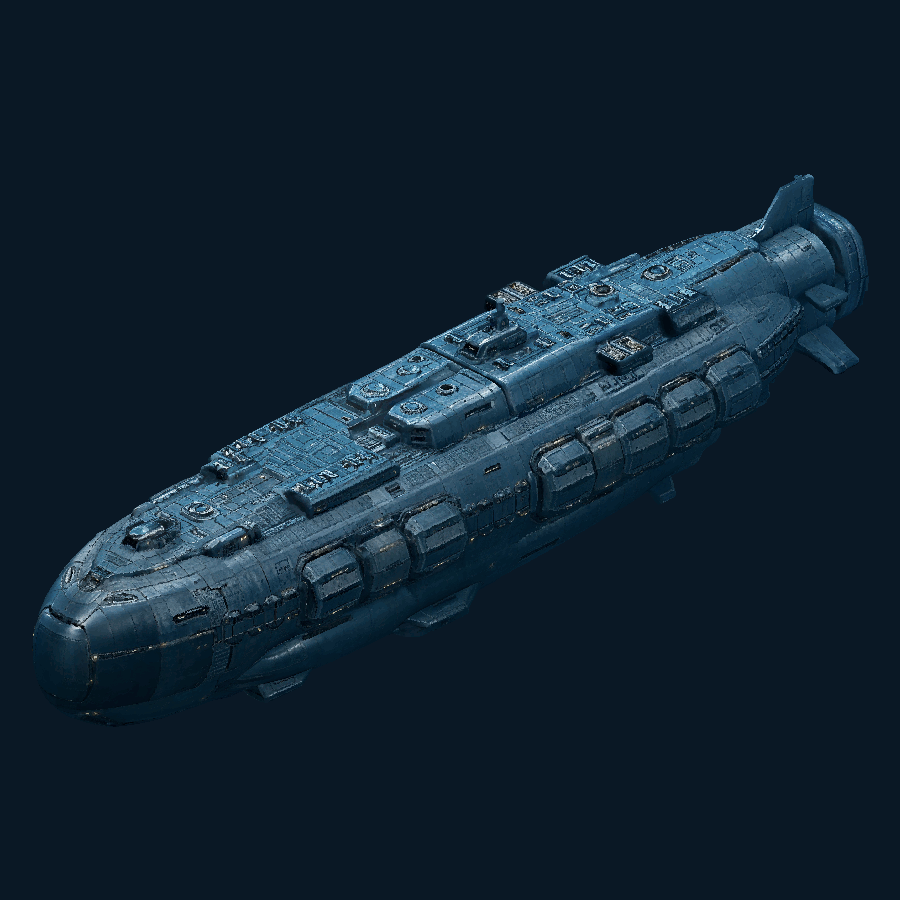
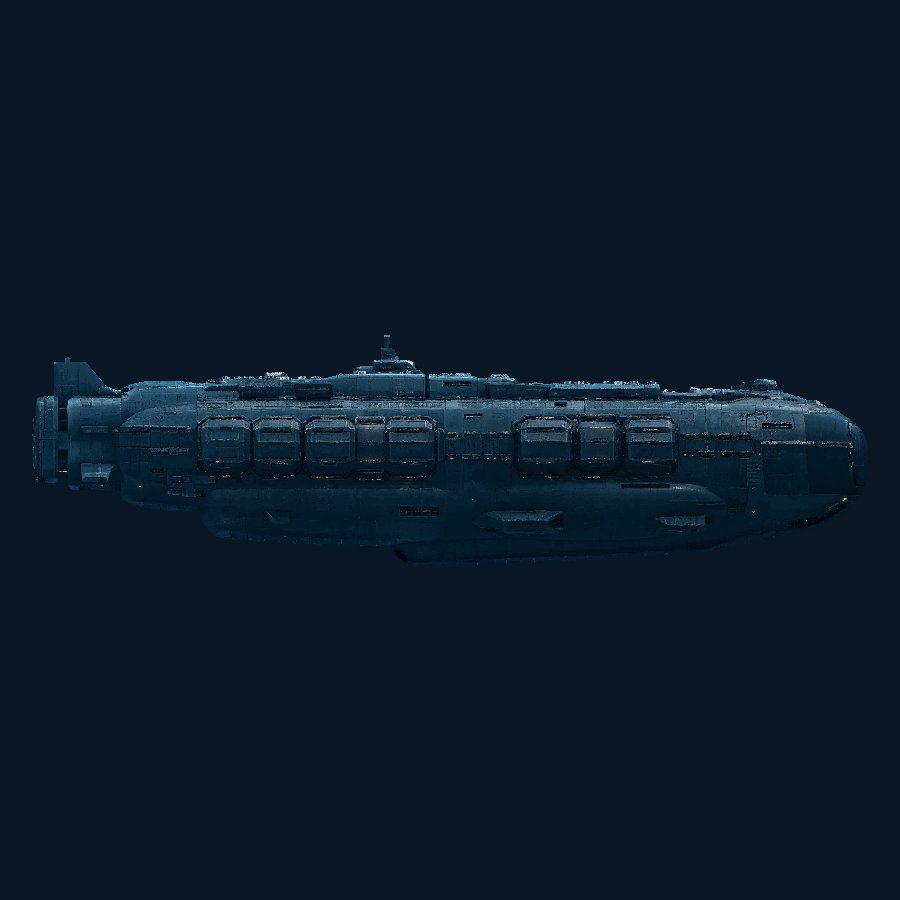
Chainwake Bastion is a Human undersea fortress built for fleet command and sustained heavy combat. A compartmented pressure hull carries a large torpedo and missile reserve, protected deployment nodes and autonomous underwater vehicle support within one continuous hydrodynamic body.
Vessel Profile
Dimensions & Scale
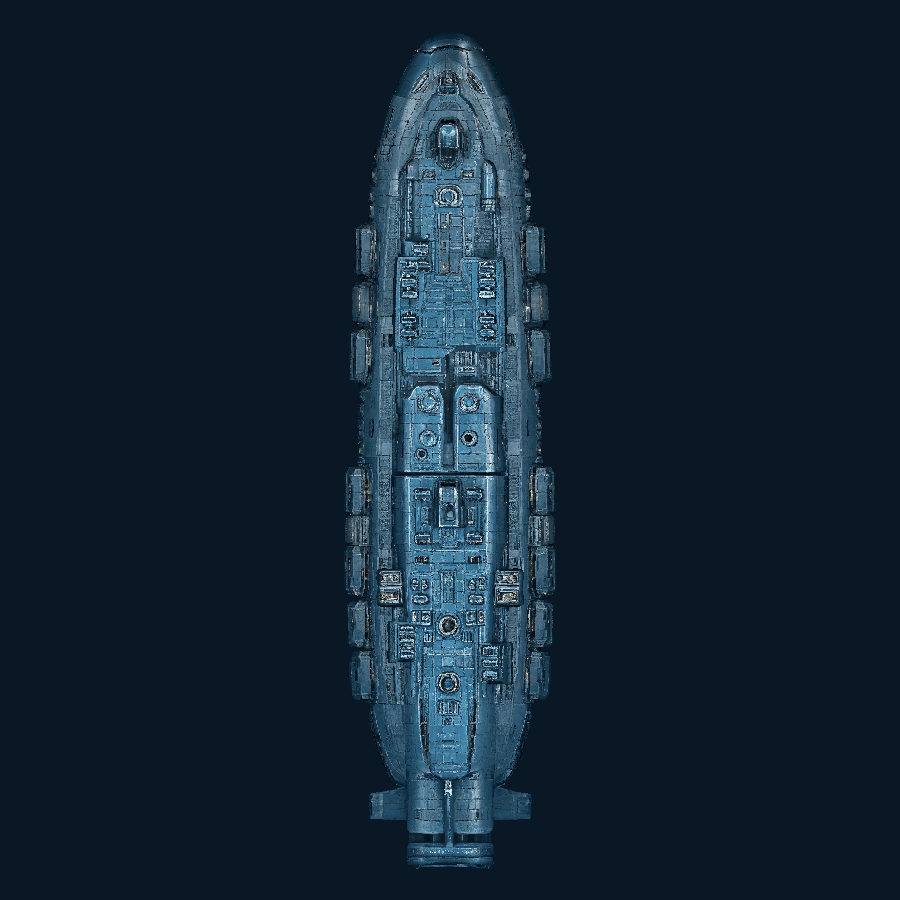
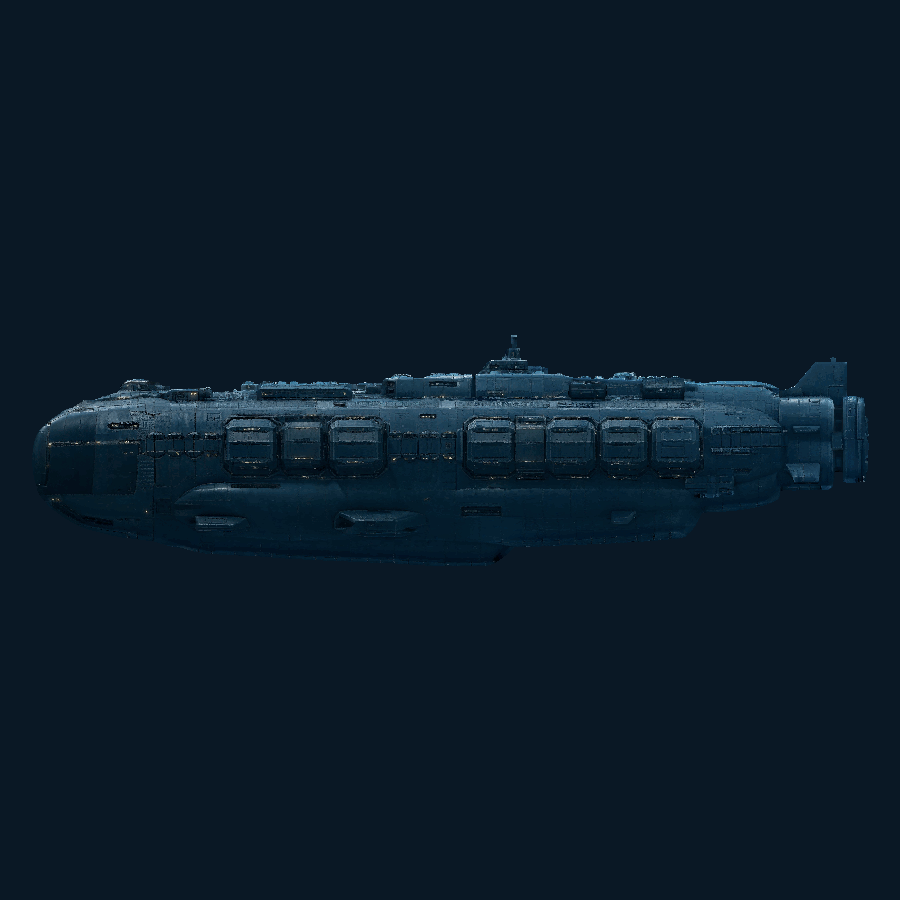
Length 420 m × Width 100.5 m × Height 61.7 m. Proposed fictional overall dimensions; height denotes total vertical body depth, not operating depth below the surface. Maximum diving depth, displacement and crew complement are not specified in the supplied design.
Weapons & Armament
Protected torpedo galleries and shuttered missile cells support sustained heavy combat. Recessed deployment nodes release autonomous underwater vehicles, mines, decoys and loitering undersea munitions. Defensive torpedoes and compact interceptors form the close-defense layer. Electromagnetic-assisted launch channels remain integrated into the hull without exposed racks or projecting gun barrels.
External Anatomy
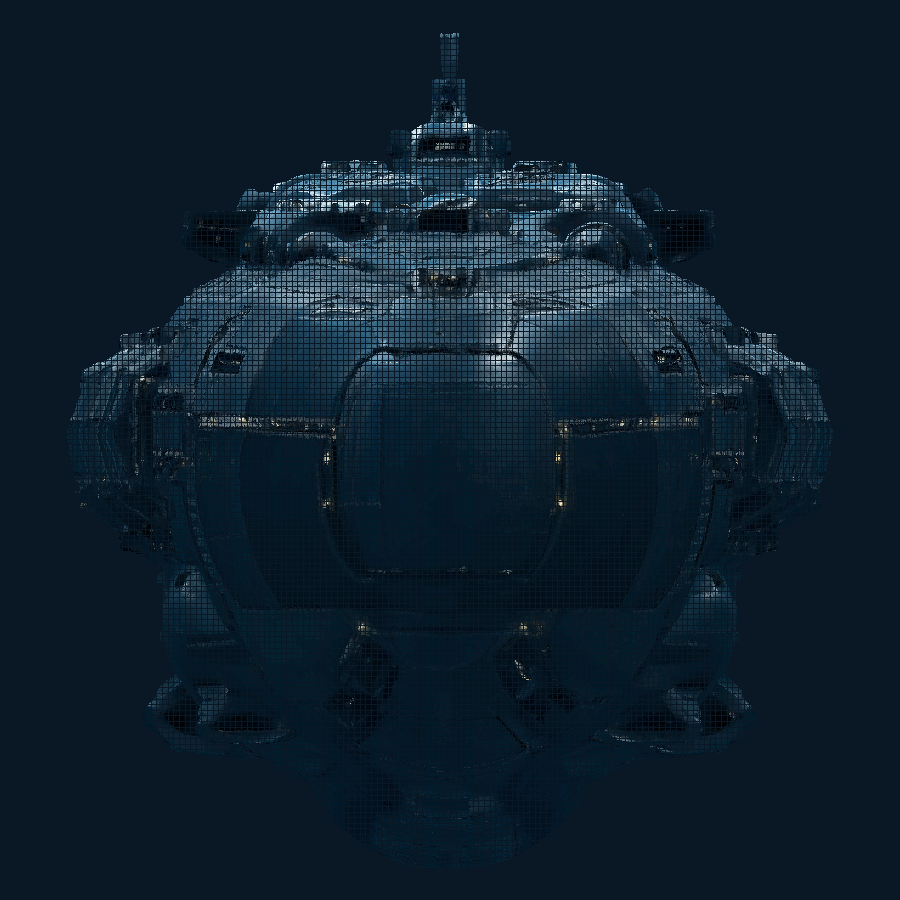
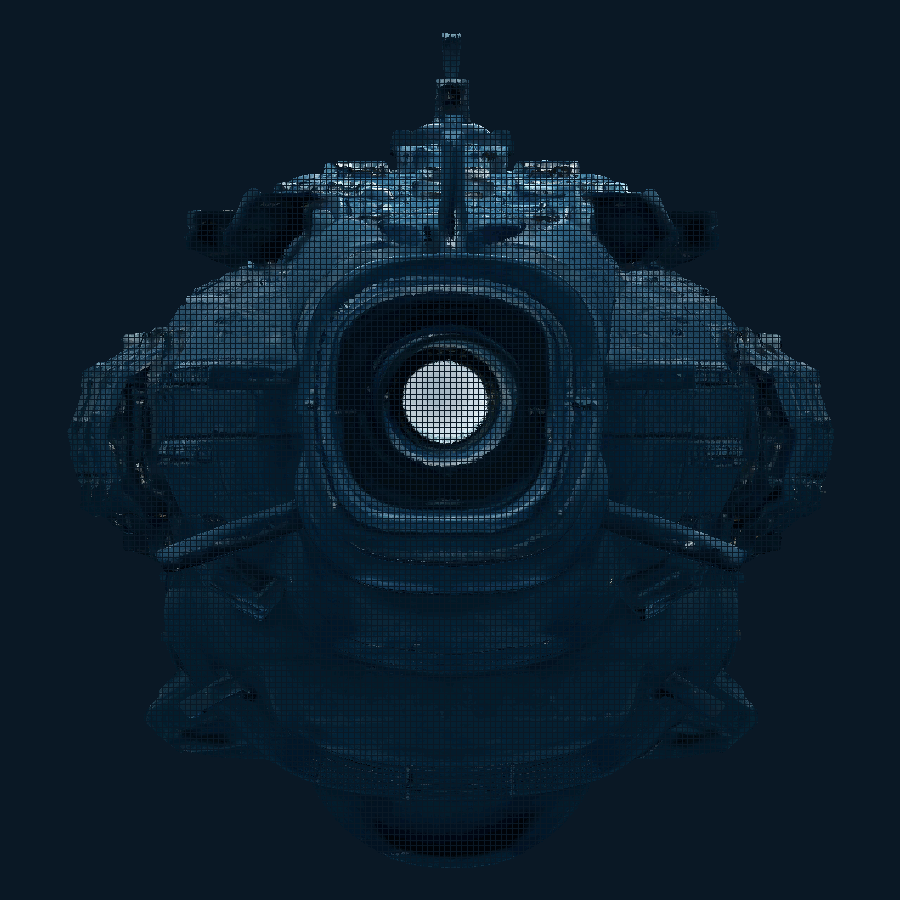
A broad central pressure body connects repeated protected deployment nodes along the flanks. Smooth curves blend into selected faceted planes, with a cleaner lower hull and short control surfaces. Acoustic outer treatment, structural ceramics and dark pressure-bearing bands wrap the compartmented core. The bow sonar sector and recessed stern drive establish a clear direction of travel.
Functional Architecture
Isolated pressure compartments separate command, magazines, reserve power and maintenance routes. Integrated bow sonar, conformal flank arrays and passive acoustic bands support distributed detection. Protected optical windows assist close work, while retractable communication equipment and data links coordinate UUV missions. Acoustic decoys and blue-green optical communications supplement the underwater command network.
Technical Specifications
Offensive rating: 78/100 — Torpedoes, missiles and distributed autonomous munitions sustain heavy underwater pressure
Defensive rating: 85/100 — Compartmented pressure structures, acoustic protection and layered interception support survival
Mobility rating: 25/100 — Large displacement and quiet operating doctrine limit rapid maneuvering
Tactical cognition rating: 78/100 — Broad sonar coverage and autonomous mission coordination guide local engagements
Endurance rating: 86/100 — Large internal stores and reserve power support prolonged station keeping
Fleet support rating: 88/100 — UUV handling, command facilities and countermeasure coverage support the formation
Fleet Role
Acts as a slow, persistent undersea command and arsenal platform. Chainwake coordinates UUV groups, controls contested underwater approaches and sustains defensive coverage around a submerged formation. Large reserves support repeated deployments rather than rapid pursuit.
Undersea Operations
Deeply recessed low-cavitation pump-jet or ring-drive propulsion moves the vessel underwater. Smaller vector-flow channels and compact control surfaces handle steering and depth changes. Quiet cruising preserves its acoustic advantage, while brief high-power bursts trade stealth for repositioning. The assigned operating domain is underwater; atmospheric flight and spaceflight are not part of this design.
Defense Architecture
Compartmented pressure-hull construction, isolated critical sections and continuous protective bands support damage containment. Matte acoustic treatment, blended hull transitions and flush sensor facings reduce signature exposure. Decoys, defensive torpedoes and layered interceptors protect against incoming underwater threats.
Operational Limits
A large pressure vessel requires surveyed routes and ample turning room. High-power maneuvers increase acoustic exposure, while weapon launch and UUV recovery can reveal its position. Command effectiveness depends on limited underwater communications and reliable local autonomy. Sustained combat consumes stored munitions and reserve power; hull damage can constrain depth and deployment options.
Strategic Strengths
Deep stores, compartmented survivability and distributed sensing support long-duration undersea operations. Protected deployment nodes let the bastion coordinate several autonomous mission groups while keeping primary weapons and maintenance systems inside a coherent hull.
Capability Assessment
Proposed editorial profile: strong protection, endurance and command support, with substantial arsenal firepower but limited agility. Its strengths depend on route preparation, quiet positioning and coordinated underwater systems. Scores describe fictional doctrine rather than measured combat performance.
B · 73.3
Fleet-wide concept rating, 0–100; not simulated performance. Specialized strengths do not imply an equally high overall grade. Tactical Cognition describes sensing, coordination and command. Grade is the equal-weight mean: S ≥ 90, A ≥ 75, B ≥ 60, C ≥ 45, D < 45.
Technology Level
T0 — advanced planetary undersea engineering, autonomous mission coordination and submerged propulsion. Independent spaceflight and phase transit are not assigned.
Weapon Class
Proposed W2 — heavy undersea arsenal and sustained theater-level naval support. No world-scale destructive capability is assigned.
T0 planetary · T1 system flight · T2 phase travel · T3 limited world engineering. W0 point defense · W1 ship combat · W2 heavy fleet combat · W3 strategic theater systems. Technology and weapon classes are independent of the profile grade.
History & Lineage
Universe lore · authored service history
Origin
Developed for underwater campaigns that require a durable command center beyond the reach of routine surface support. The design combines a large compartmented pressure body with repeated protected nodes for weapons, countermeasures and autonomous mission vehicles.
Lineage & Branch
Chainwake undersea-bastion branch. Linked deployment nodes and recessed service lanes organize a distributed swarm doctrine around one protected command hull.
Fleet or Unit
Proposed assignment: Human deep-water defense and recovery formations
Individual History
The Quiet Anchorage — In this authored service history, Chainwake Bastion holds beneath a contested sea lane while autonomous vehicles survey the approaches. The crew limits transmissions and divides the reconnaissance work among local mission groups, preserving a reserve screen around the hull.
The Broken Link — A damaged relay interrupts contact with the outermost group. Rather than driving the whole bastion toward the last signal, the crew sends a recovery vehicle along the surveyed route and draws the remaining units inward.
The Returned Watch — The recovered vehicles bring back a revised map of the passage. Chainwake resumes its station with staggered recovery windows and a second communication route, treating the return of its mission groups as part of the defensive plan.