
Overview
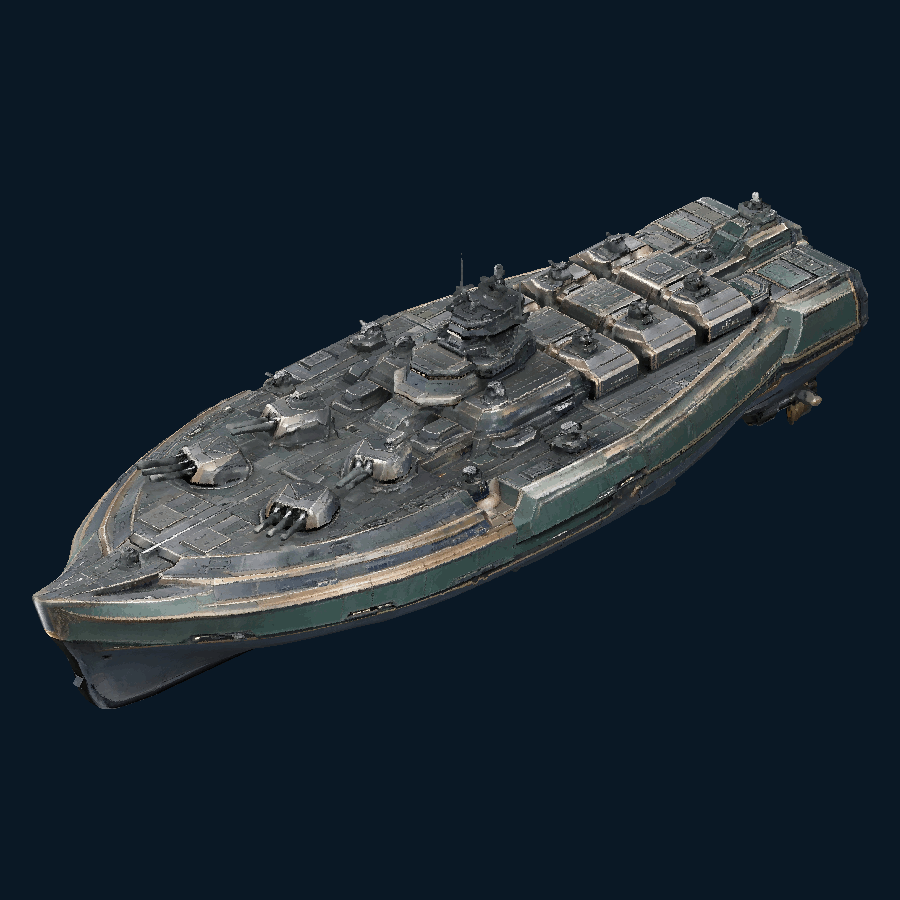
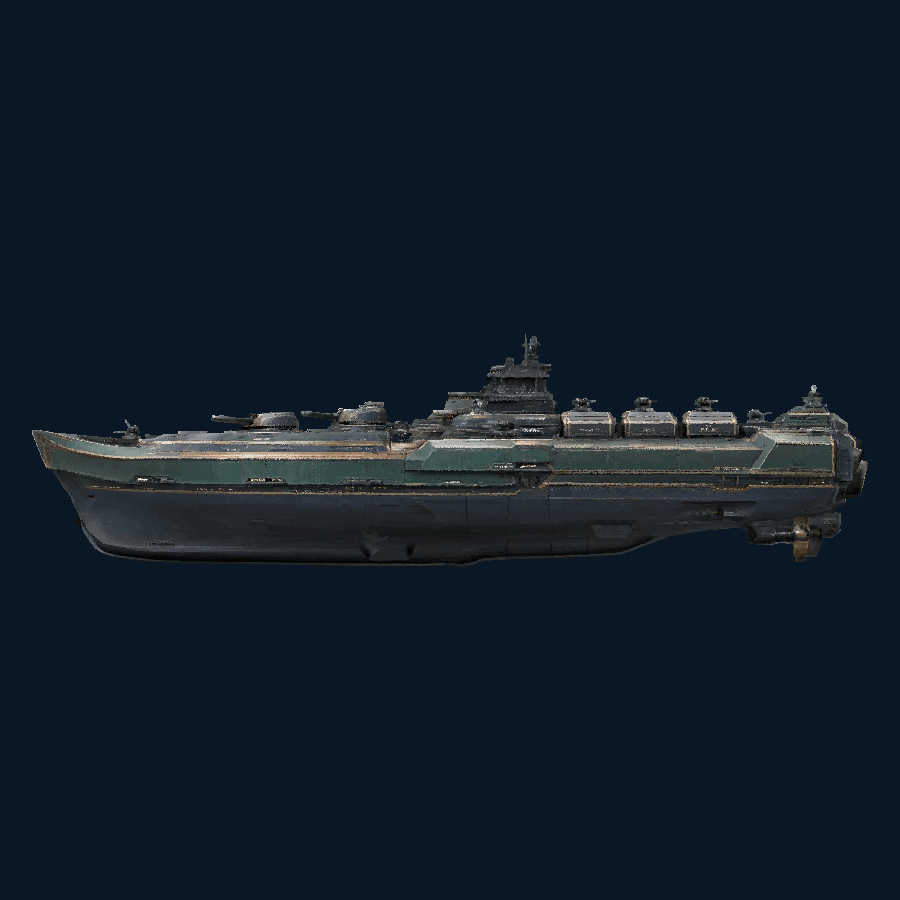
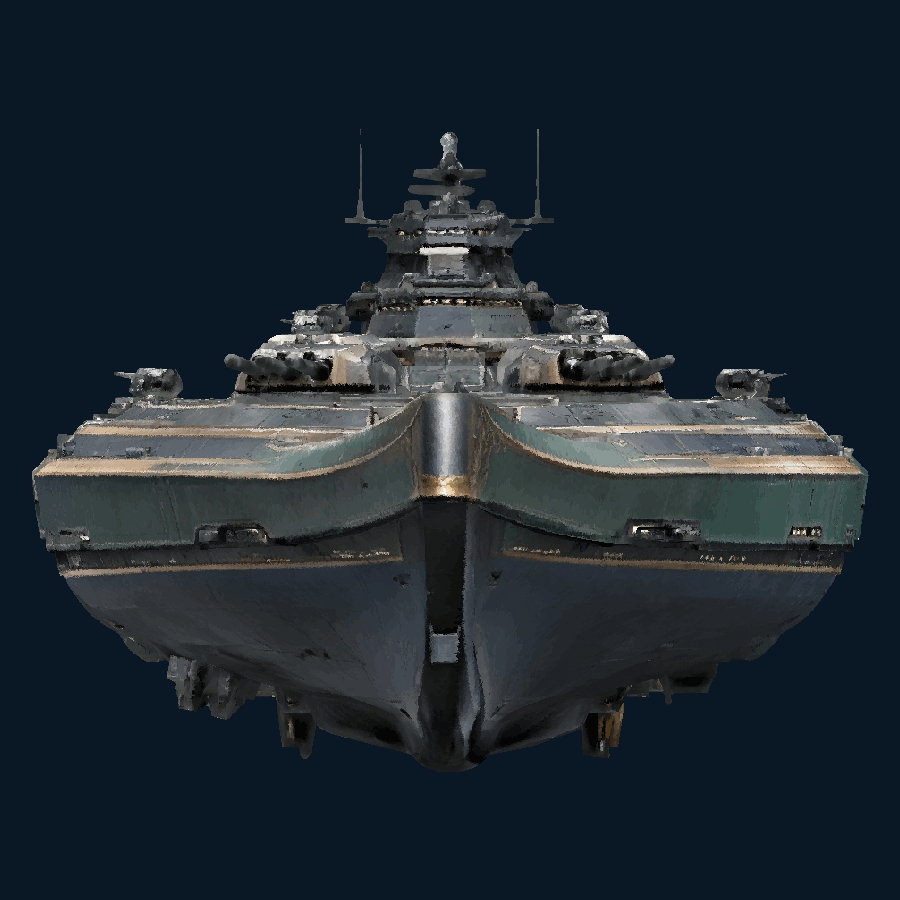
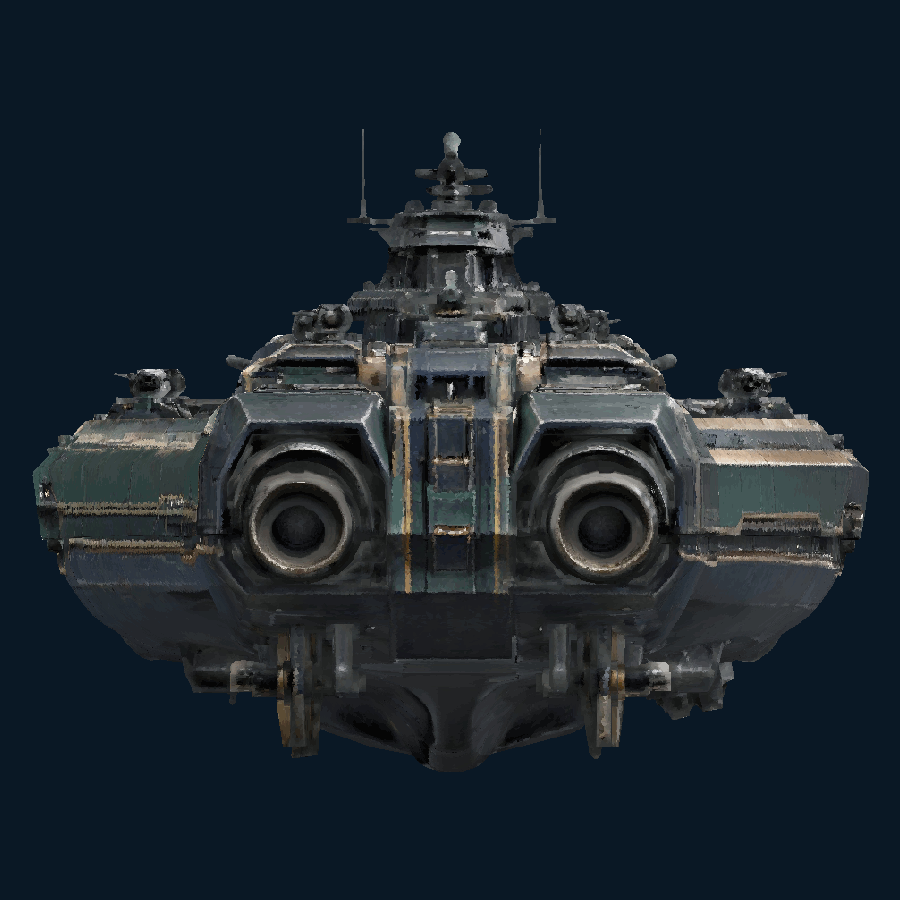
DawnArc Stormvault-class Missile Battleship is a Human warship designed for both ocean-surface and space operations. A continuous displacement hull supports two forward triple-gun turrets and four stepped aft missile vaults, with integrated marine propulsion and armored vacuum-drive groups sharing the stern.
Vessel Profile
Dimensions & Scale
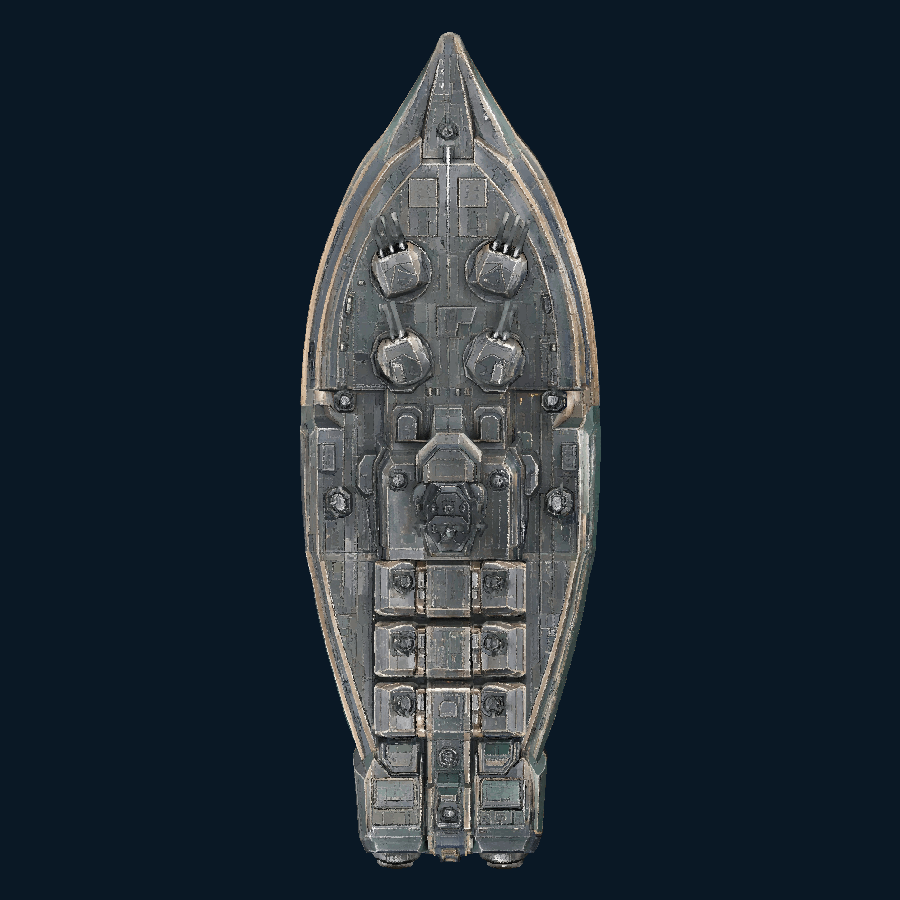
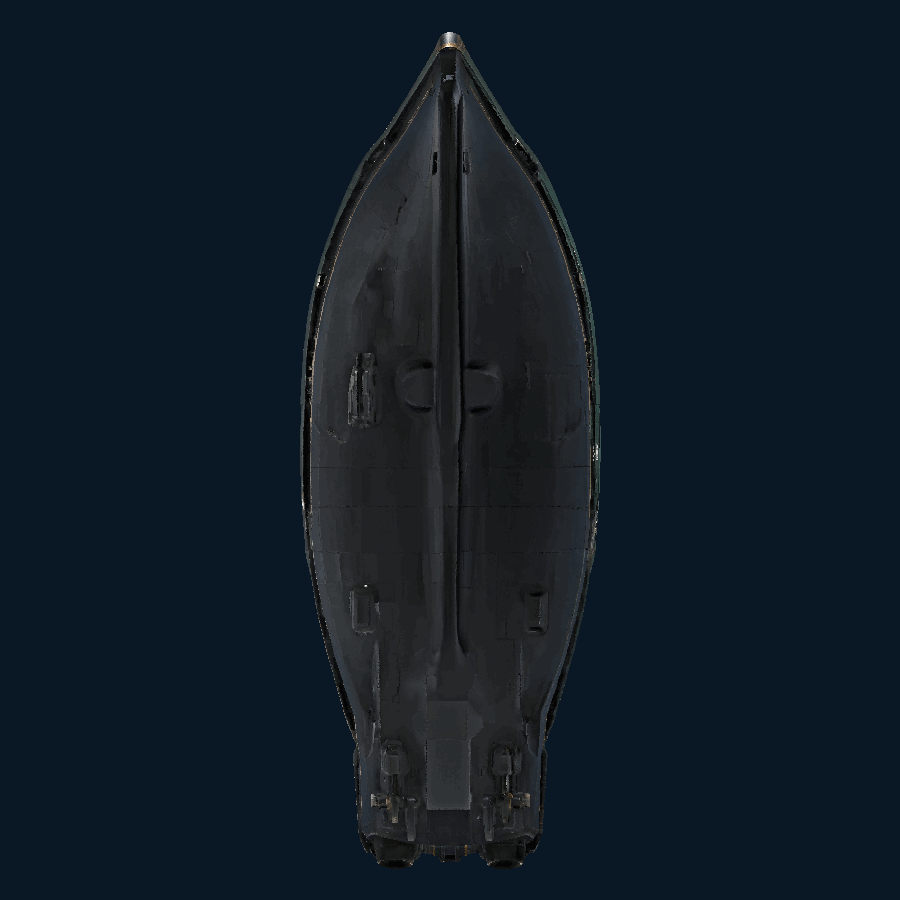
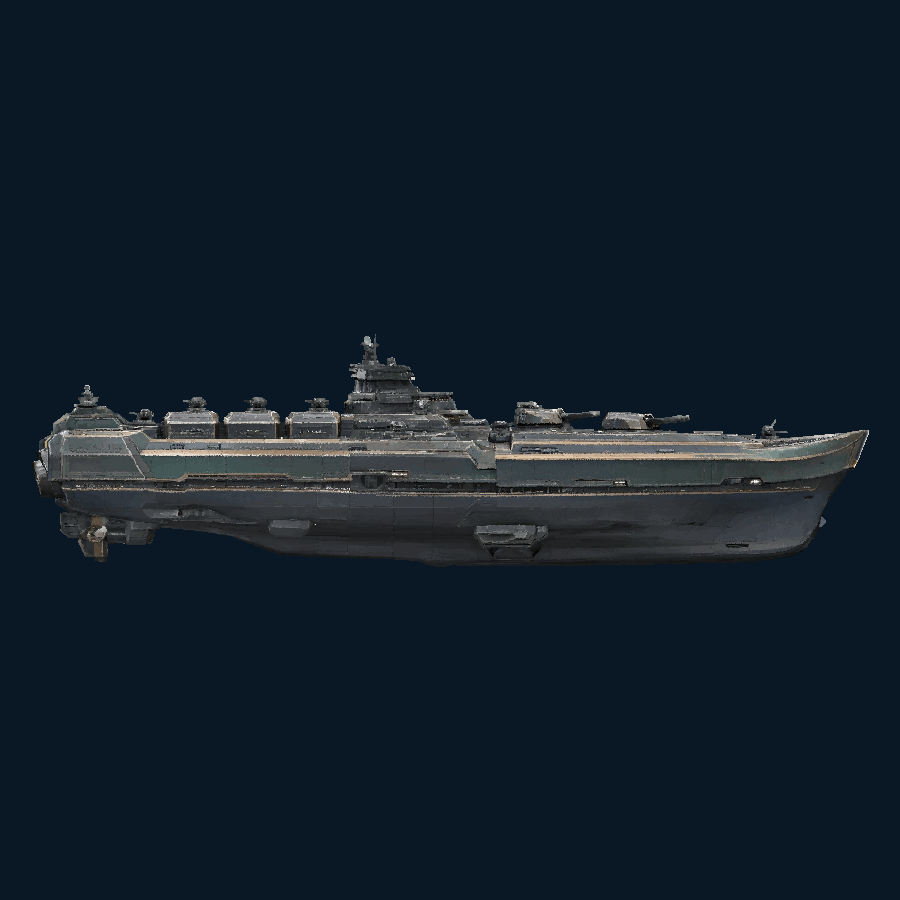
Length 302 m × Width 60.2 m × Height 46.1 m. Total height combines 34.6 m above the design waterline and 11.5 m draft. These are supplied fictional design proportions.
Proposed design surface displacement / nominal operating mass: approximately 120,000 ton (metric tons). Fictional concept estimate based on size, structure, operating environment and reserves; not measured performance.
Weapons & Armament
Two forward triple-barrel main turrets provide the six-gun artillery battery. Four grouped closed launch banks in the aft half carry the proposed strike and air-defense missile package. Four smaller close-defense housings sit on supported arsenal shoulders. No aft main turret or additional missile banks are assigned.
External Anatomy
Broad forward protective shoulders rise above a smooth buoyant lower hull. Two recessed longitudinal valleys connect the artillery saddle, low central control wedge and stepped afterbody. Four missile vaults form separate roof terraces above supported hull volume. Jade enamel, ink blue, gunmetal and narrow bronze inlay distinguish the armored regions.
Functional Architecture
A low embedded command chamber and flush sensors coordinate artillery, missile allocation and close defense. Transverse service passages separate the aft vaults, while low exhaust trunks remain clear of launch fields. Enclosed machinery, protected transfer routes and closed maintenance boundaries support both marine and space service.
Technical Specifications
Offensive rating: 83/100 — Two forward triple-barrel main turrets provide the six-gun artillery battery
Defensive rating: 79/100 — A pronounced upper armor belt, broad artillery foundations and a protected central citadel surround the mission volumes
Mobility rating: 46/100 — At sea, the ship floats by displacement and uses protected marine propulsion outlets and supported rudders
Tactical cognition rating: 76/100 — A low embedded command chamber and flush sensors coordinate artillery, missile allocation and close defense
Endurance rating: 74/100 — Missile stores, cooling and power reserves constrain sustained engagements
Fleet support rating: 71/100 — Forward artillery, separated missile vaults and local defense combine several fleet roles within one supported hull
Fleet Role
Missile Battleship. Forward artillery, separated missile vaults and local defense combine several fleet roles within one supported hull. Integrated marine and vacuum propulsion allow the same fictional battleship to accompany formations in both assigned environments.
Life Between Stars
At sea, the ship floats by displacement and uses protected marine propulsion outlets and supported rudders. Beyond the atmosphere, two large armored vacuum-drive groups integrated into the stern shoulders propel the vessel. The design assigns surface and space operations; the transition mechanism and performance remain fictional and unspecified.
Defense Architecture
A pronounced upper armor belt, broad artillery foundations and a protected central citadel surround the mission volumes. Separated missile compartments reduce dependence on one launch region, while four close-defense housings support local protection. The continuous lower hull preserves buoyant volume beneath the upper armor.
Operational Limits
Missile stores, cooling and power reserves constrain sustained engagements. The broad hull needs turning room, and damage near the waterline can impair marine operation. Sea-to-space transition imposes additional fictional propulsion and thermal demands; no transition speed or operating altitude is claimed.
Strategic Strengths
Forward artillery, separated missile vaults and local defense combine several fleet roles within one supported hull. Integrated marine and vacuum propulsion allow the same fictional battleship to accompany formations in both assigned environments.
Capability Assessment
Proposed fictional doctrine profile. Forward artillery, separated missile vaults and local defense combine several fleet roles within one supported hull. Integrated marine and vacuum propulsion allow the same fictional battleship to accompany formations in both assigned environments. Ratings express intended game roles rather than measured combat performance.
B · 71.5
Fleet-wide concept rating, 0–100; not simulated performance. Specialized strengths do not imply an equally high overall grade. Tactical Cognition describes sensing, coordination and command. Grade is the equal-weight mean: S ≥ 90, A ≥ 75, B ≥ 60, C ≥ 45, D < 45.
Technology Level
T1 — dual-environment marine and vacuum engineering with fictional transition capability; independent interstellar transit is unspecified
Weapon Class
Proposed W2 — battleship artillery, grouped strike missiles and fleet defensive coverage
T0 planetary · T1 system flight · T2 phase travel · T3 limited world engineering. W0 point defense · W1 ship combat · W2 heavy fleet combat · W3 strategic theater systems. Technology and weapon classes are independent of the profile grade.
History & Lineage
Universe lore · authored service history
Origin
Developed as a dual-environment Human arsenal vessel for formations that operate across ocean and space campaigns. Its architecture joins genuine displacement volume to enclosed spaceflight machinery instead of treating marine service as an incidental landing mode.
Lineage & Branch
DawnArc Stormvault missile-battleship branch. Broad shallow curvature, restrained forward upsweep and paired longitudinal valleys link it to the DawnArc family while the stepped aft arsenal defines this variant.
Fleet or Unit
Human Fleet — dual-environment battleship formations
Individual History
The Jade Anchorage — In this authored service history, a Stormvault escorts a surface formation through a contested approach. Its closed aft vaults remain ready while the forward artillery covers the formation’s withdrawal, and the central command section balances strike capacity against defensive missile reserves.
The Second Watch — After servicing its marine systems, the battleship joins a space deployment using its integrated stern drives. The same separated arsenal regions support a different formation geometry, while the crew retains reserve capacity for the return campaign. The account frames dual-environment service as a sustained logistics commitment, not an unlimited advantage.