
Overview
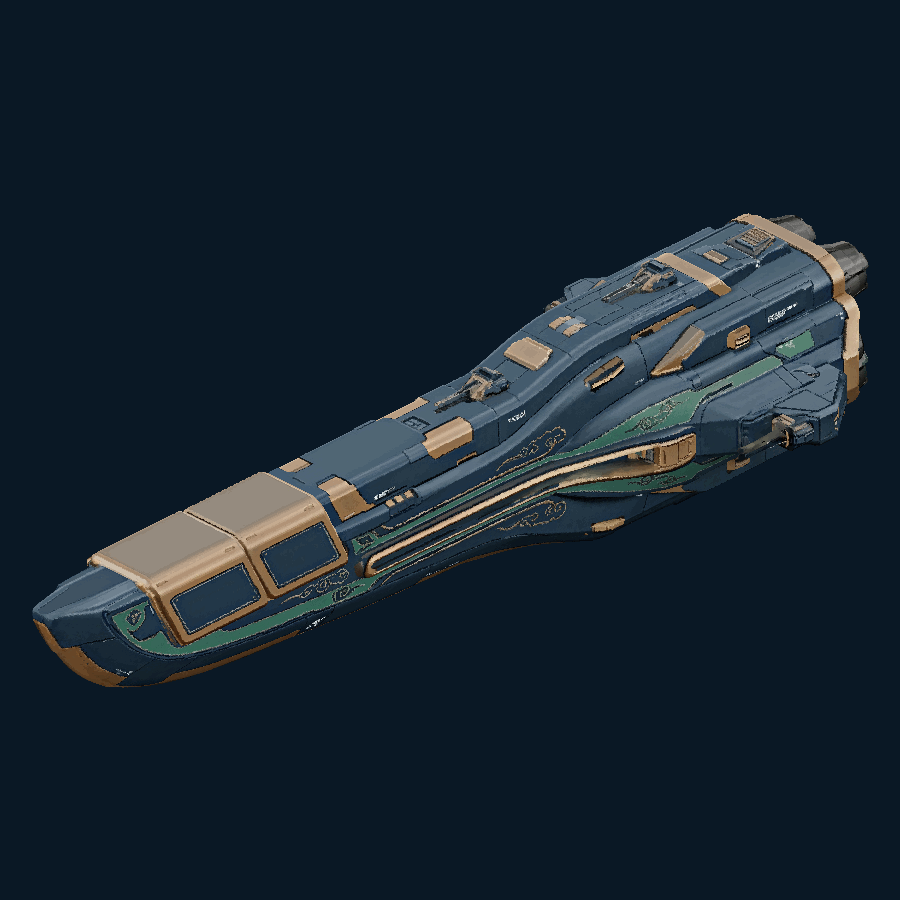
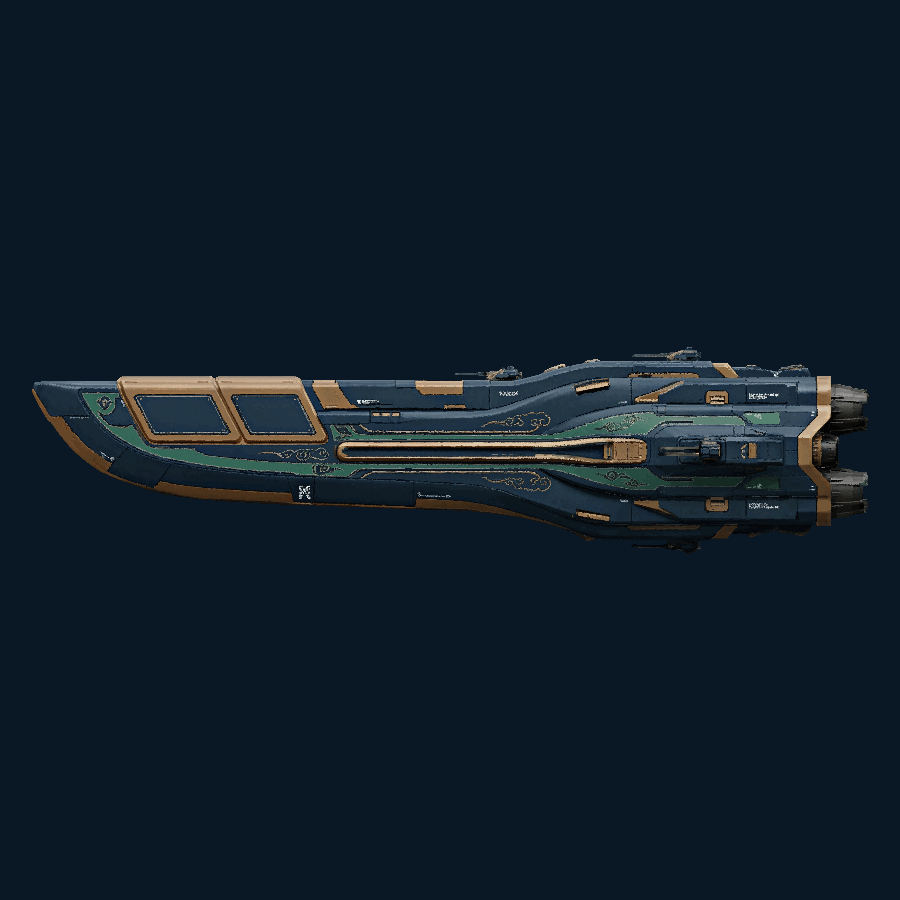
An approximately 800-meter line cruiser serving the Human Homebound Fleet. Its long, shallow-curved hull concentrates heavy armament behind a protected forward profile. DawnArc opens convoy passages and maintains pressure until the ships behind it have crossed.
Vessel Profile
Weapons & Armament
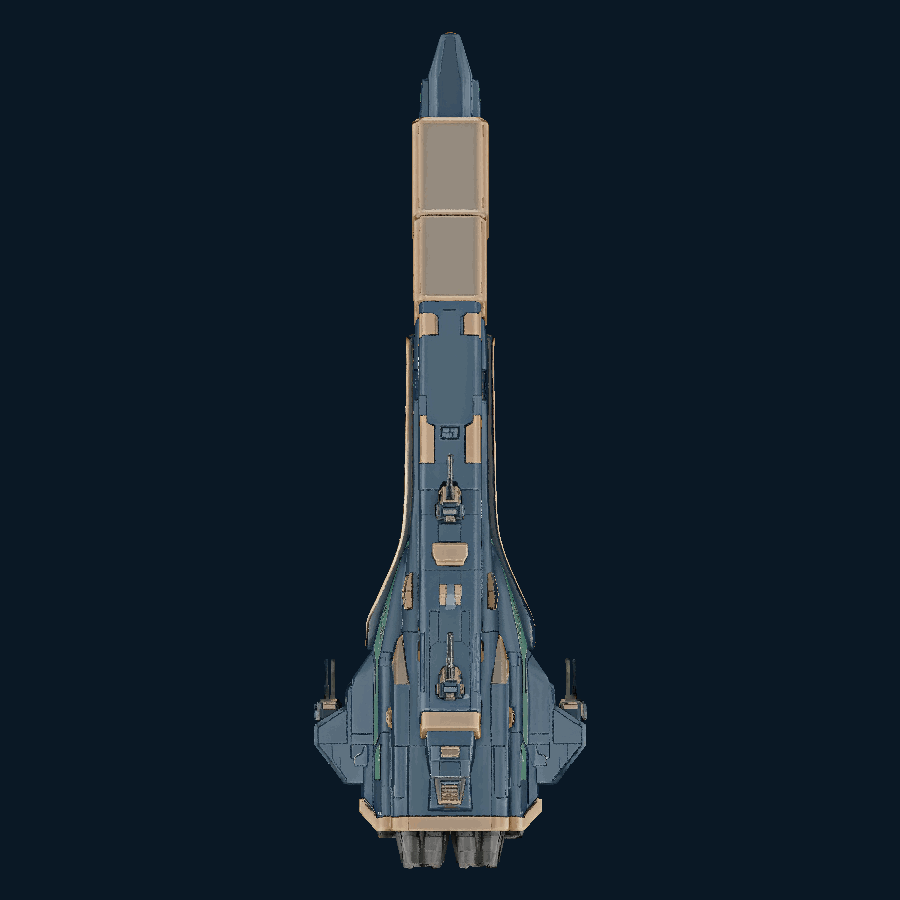
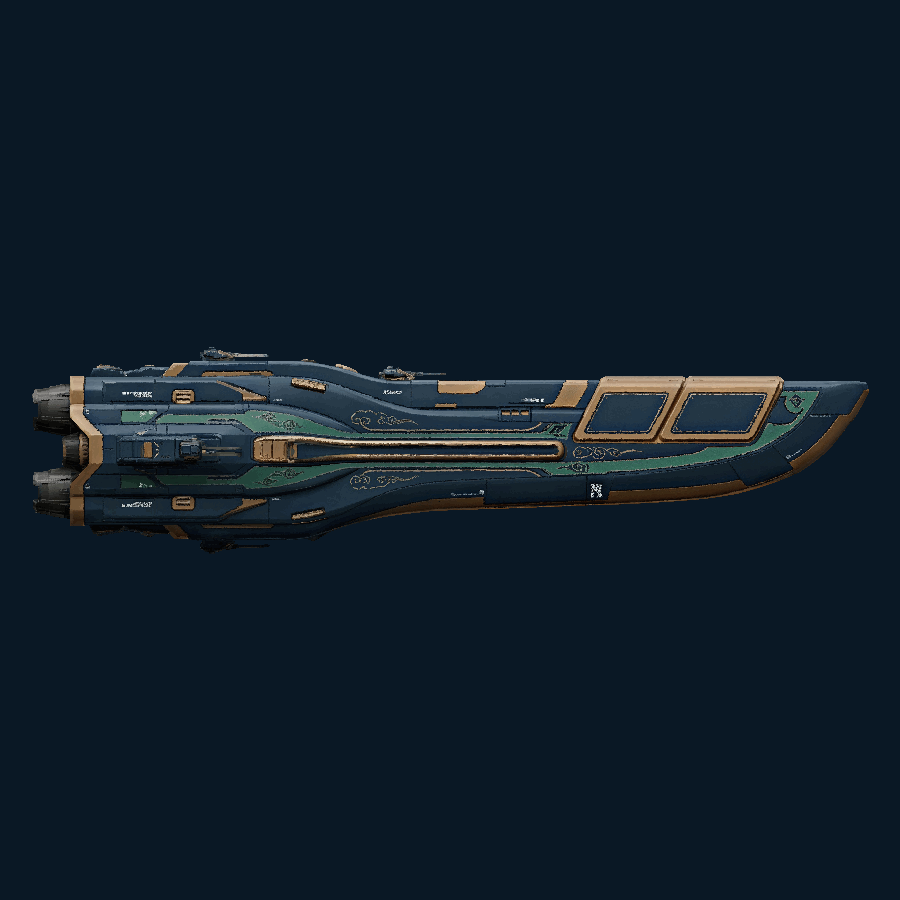
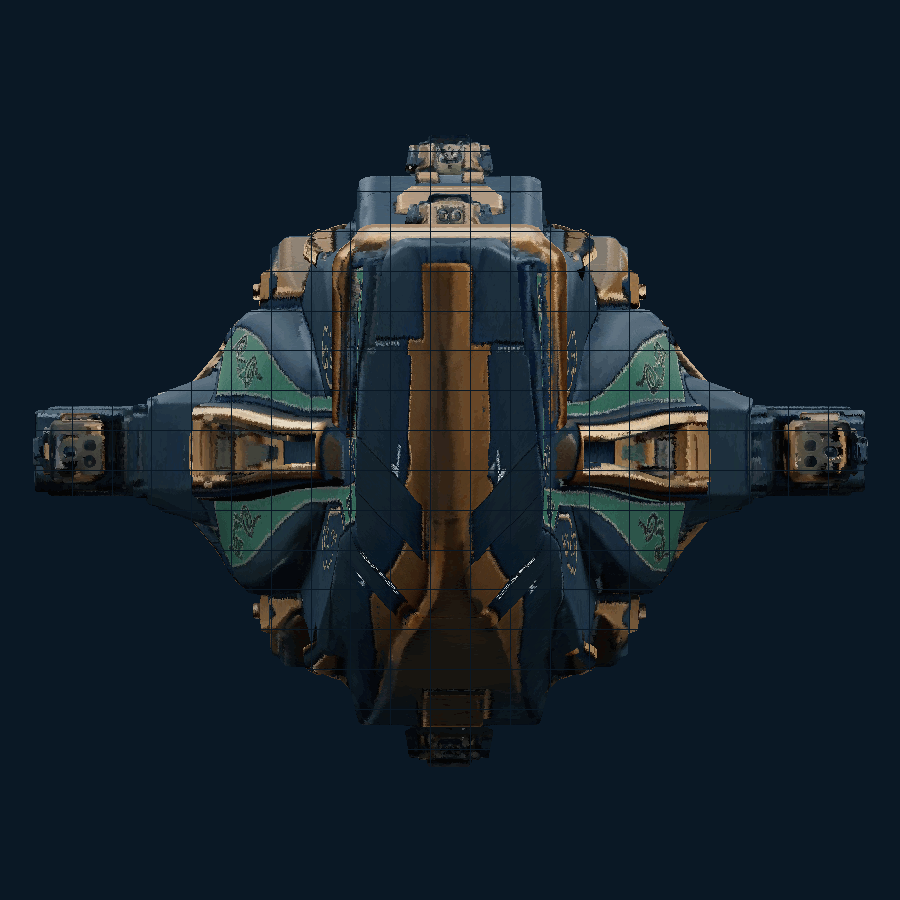
One Stepped Casemate Broadside Battery delivers the main armor-breaking fire. Four secondary twin turrets engage escorts and cover gaps between heavy salvos. Two recessed missile-cell blocks extend engagement options, while eight point-defense nodes protect the cruiser and nearby traffic against close threats.
Dimensions & Scale
Length 800 m × Width 260 m × Height 140 m. Fictional overall dimensions in standard operating configuration.
External Anatomy
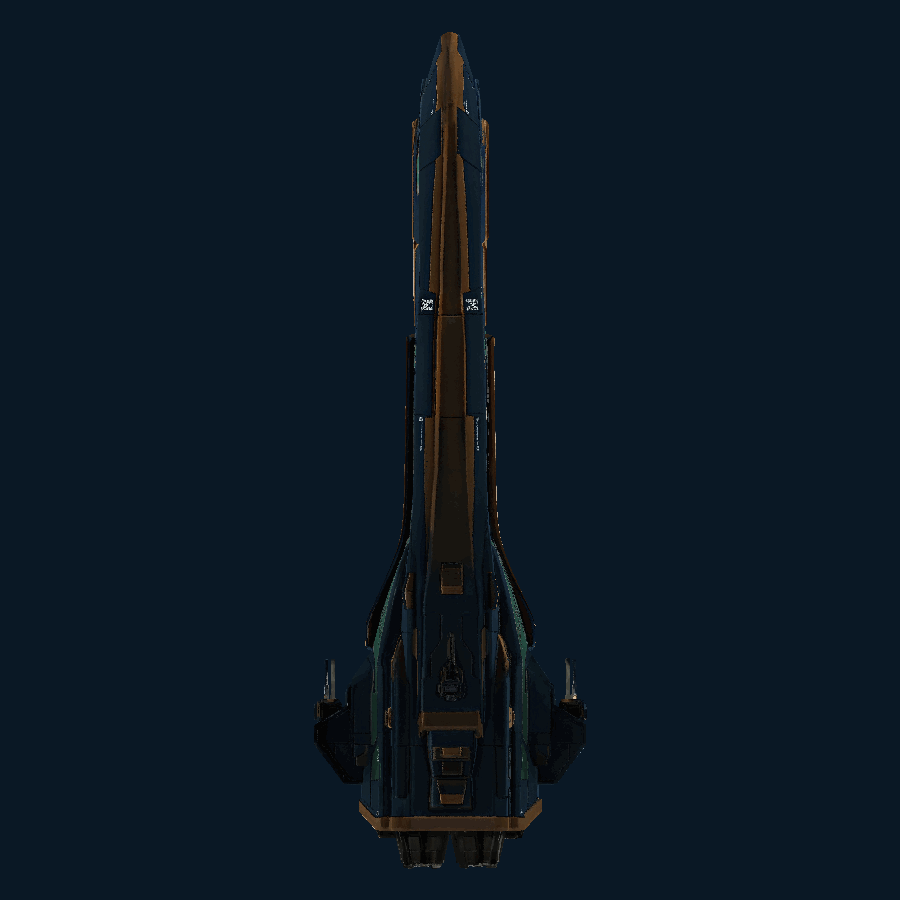
One connected hull with a broad forward cutting section, a low protected command bridge and a short armored reactor collar. Heavy hardware stays within the hull outline; the leading arc and forward taper remain clear.
Functional Architecture
Protected command spaces coordinate the main battery, secondary mounts and convoy escort screen. Compartmentalized power distribution allows damaged sections to be isolated while essential command and propulsion remain active.
Technical Specifications
Offensive rating: 88/100 — One Stepped Casemate Broadside Battery delivers the main armor-breaking fire
Defensive rating: 82/100 — Layered armor, protected command spaces and recessed weapon positions preserve fighting capacity under frontal pressure
Mobility rating: 60/100 — Maneuvering supports the formation and mission profile rather than unrestricted pursuit
Tactical cognition rating: 78/100 — Target assessment, formation coordination and response timing support line cruiser operations
Endurance rating: 76/100 — Mission duration depends on finite reserves, damage recovery and scheduled replenishment
Fleet support rating: 58/100 — Line-breaking attack and sustained forward pressure
Fleet Role
Line-breaking attack and sustained forward pressure
Life Between Stars
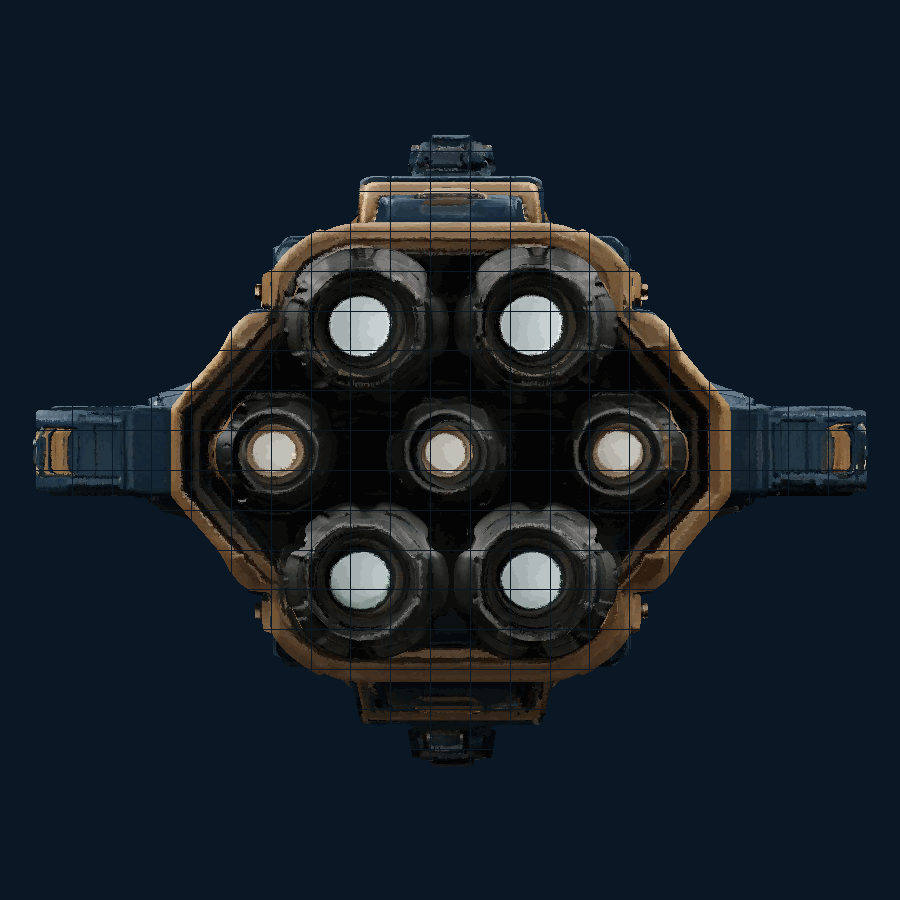
Four main propulsion nozzles are integrated into two recessed stern blocks, supported by four maneuvering thrusters. Fusion-powered reaction thrust drives ordinary flight. Interstellar deployments follow surveyed phase corridors with fleet-provided exit-anchor support.
Defense Architecture
Layered armor, protected command spaces and recessed weapon positions preserve fighting capacity under frontal pressure. Eight point-defense nodes form a local interception screen. The cruiser survives through compartmentalization and coordinated escort coverage rather than unrestricted shield protection.
Operational Limits
The heavy battery must be committed to a planned firing geometry. Opponents attacking from separated bearings can stretch the secondary and point-defense screen. Repeated heavy salvos build thermal load and consume ammunition; a successful breach requires relief and replenishment. DawnArc is poorly suited to prolonged high-speed pursuit or independent carrier operations.
Strategic Strengths
Concentrated armor-breaking fire; sustained pressure along a chosen attack corridor; protected heavy mounts; reliable coordination with convoy escorts. DawnArc is strongest when its formation can exploit the passage opened by its main battery.
Capability Assessment
Heavy line-breaker profile. DawnArc trades pursuit speed and support capacity for concentrated attack, armored endurance and disciplined firing coordination. Its preferred engagement opens a protected passage for the fleet and holds it until relieved.
B · 73.7
Fleet-wide concept rating, 0–100; not simulated performance. Specialized strengths do not imply an equally high overall grade. Tactical Cognition describes sensing, coordination and command. Grade is the equal-weight mean: S ≥ 90, A ≥ 75, B ≥ 60, C ≥ 45, D < 45.
Technology Level
T2 fleet-integrated operations; T1 fusion propulsion with supported phase transit
Weapon Class
W2 heavy fleet combat — formation-breaking cruiser battery
T0 planetary · T1 system flight · T2 phase travel · T3 limited world engineering. W0 point defense · W1 ship combat · W2 heavy fleet combat · W3 strategic theater systems. Technology and weapon classes are independent of the profile grade.
History & Lineage
Universe lore · authored service history
Origin
Commissioned at the temporary Kestra Ring yards after the first extraction evacuations
Lineage & Branch
DawnArc line-cruiser family; Ironwake refit branch
Fleet or Unit
Human Homebound Fleet / Third Passage Squadron
Individual History
The first DawnArc was assembled from contracts that three scattered shipyards could no longer complete separately. Its crew called the joined production line the Long Table: every surviving yard retained a place in the hull register. Commander Ilyan Voss accepted the ship before the yard ceremonies were complete and orders to reopen the convoy passage at Sable Reach. At the Break of the Closed Gate, DawnArc kept its forward mass toward the blockade while its casemate battery forced the defending line to turn. The secondary mounts covered the transport columns slipping through the opening. Voss refused pursuit when the passage cleared; the convoy, not the enemy flagship, was the objective. That decision established the Third Passage Squadron's rule: a breach is not a victory until the last civilian ship is through. Subsequent patrols exposed a costly fault in the fleet's fighting practice. Crews crowded vulnerable stations to watch the forward engagement, and the first return to Kestra brought more wounded from secondary damage than from direct penetration. The Ironwake refit consolidated protected working routes and clarified weapons-clearance procedures. The refit retained the Long Table register as a permanent record of the shipyards and workers that built the vessel. DawnArc now leads the outward leg of Operation Returning Ember. Its assignment is to recover the navigation records of a displaced settlement whose inhabitants have asked to remain where they are. The crew must bring home a route without treating the people at its end as cargo.