
Overview
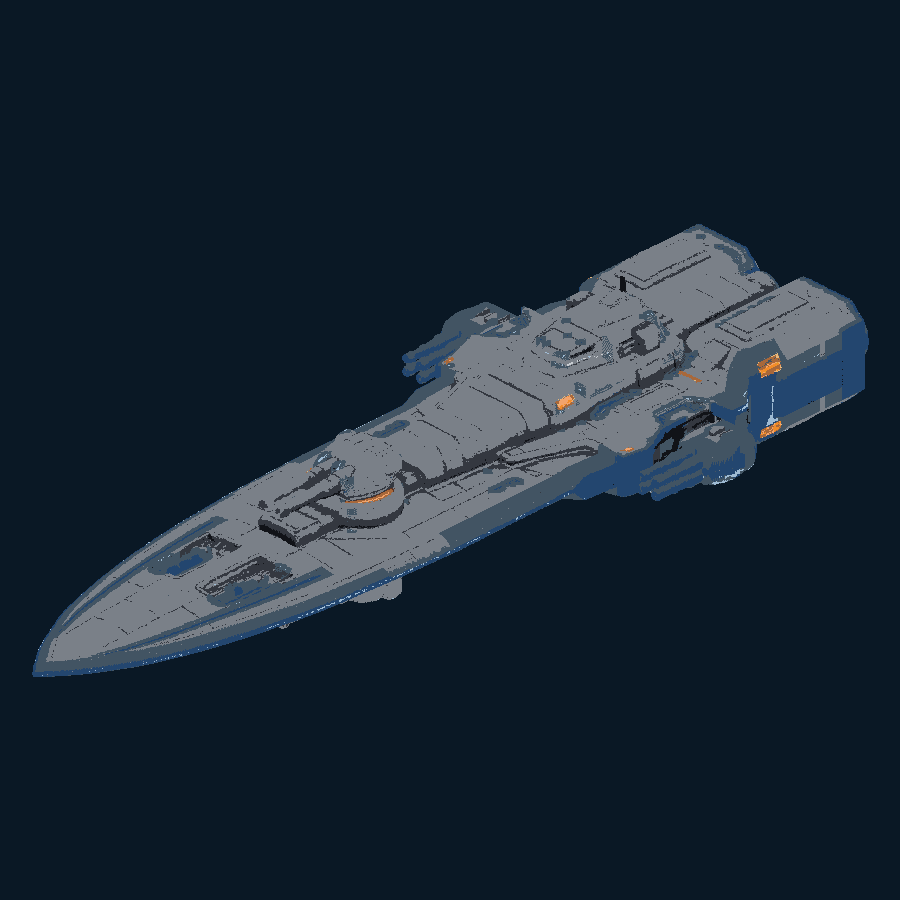
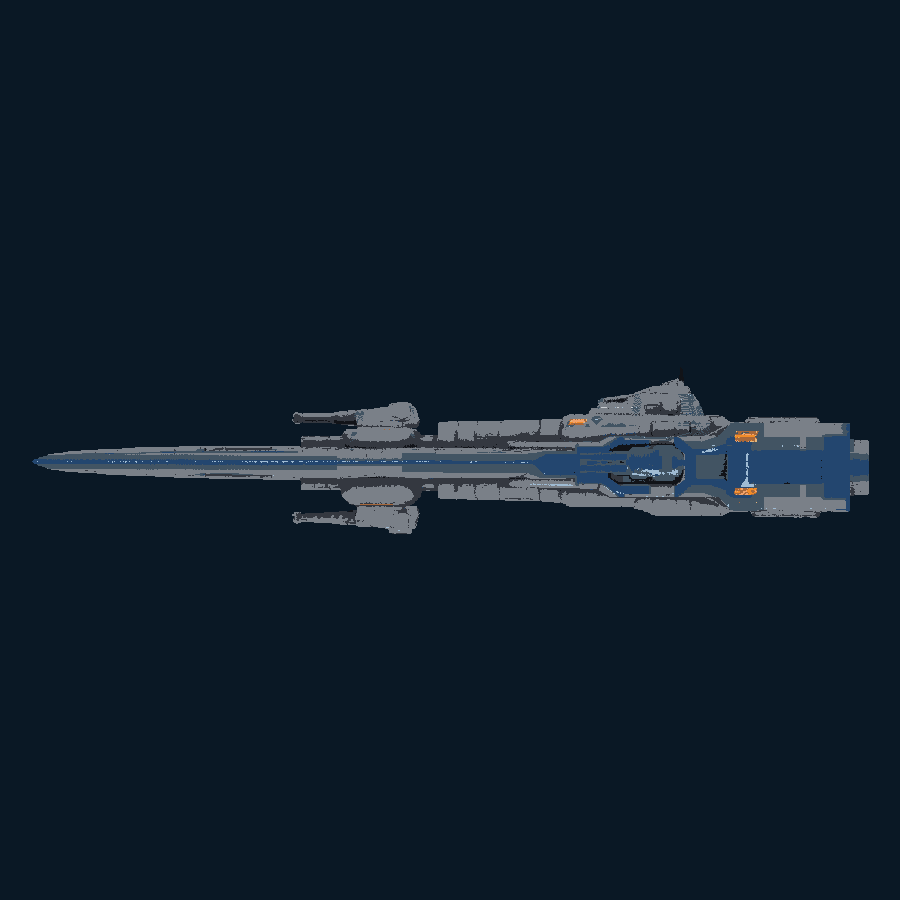
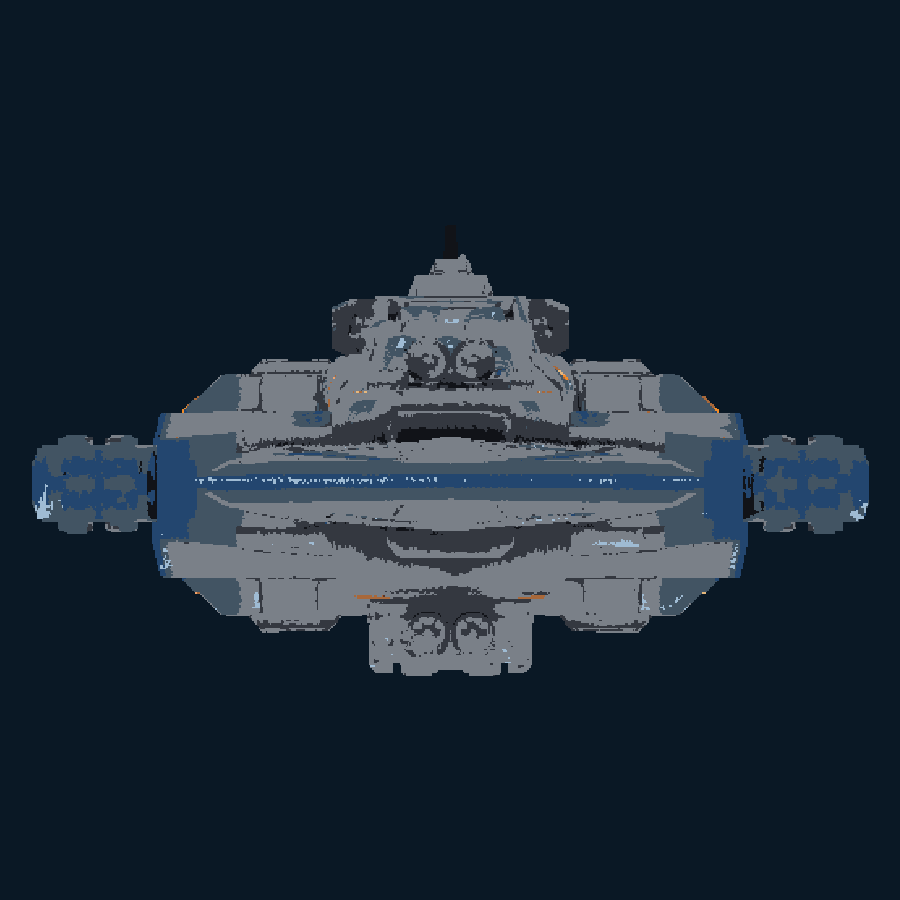
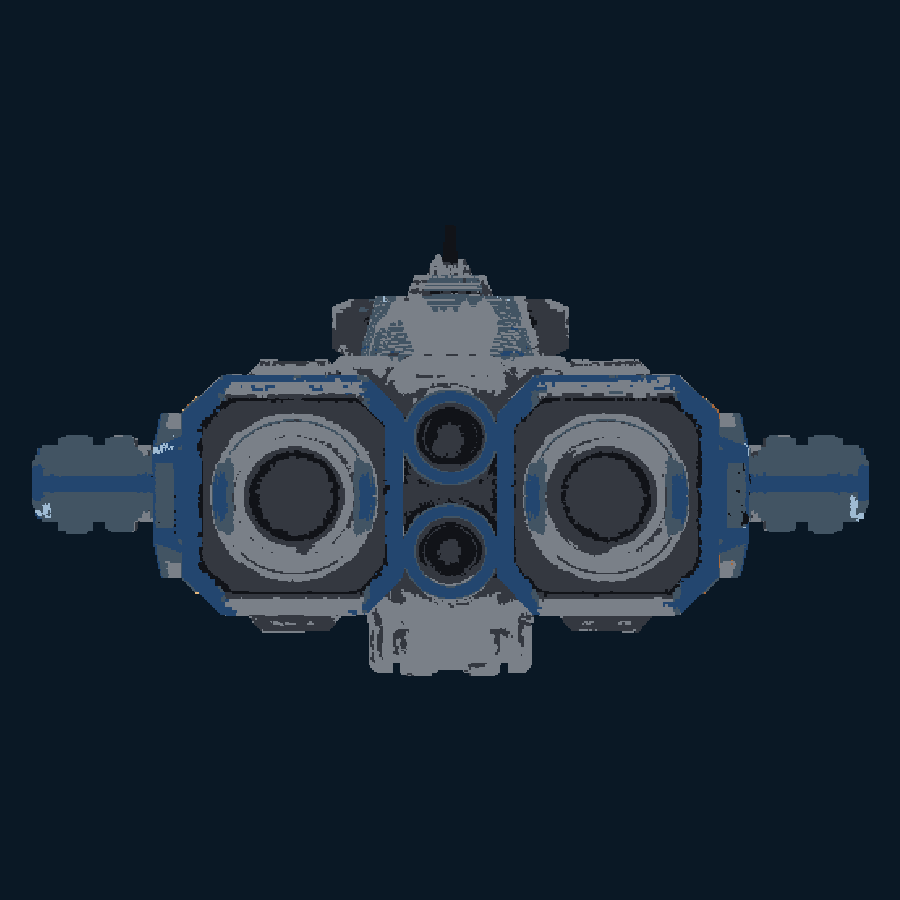
Radiant Blade is a heavily armored battleship with a long blade-like silhouette. Its main weapons occupy the protected central hull between its propulsion structures.
Vessel Profile
Weapons & Armament
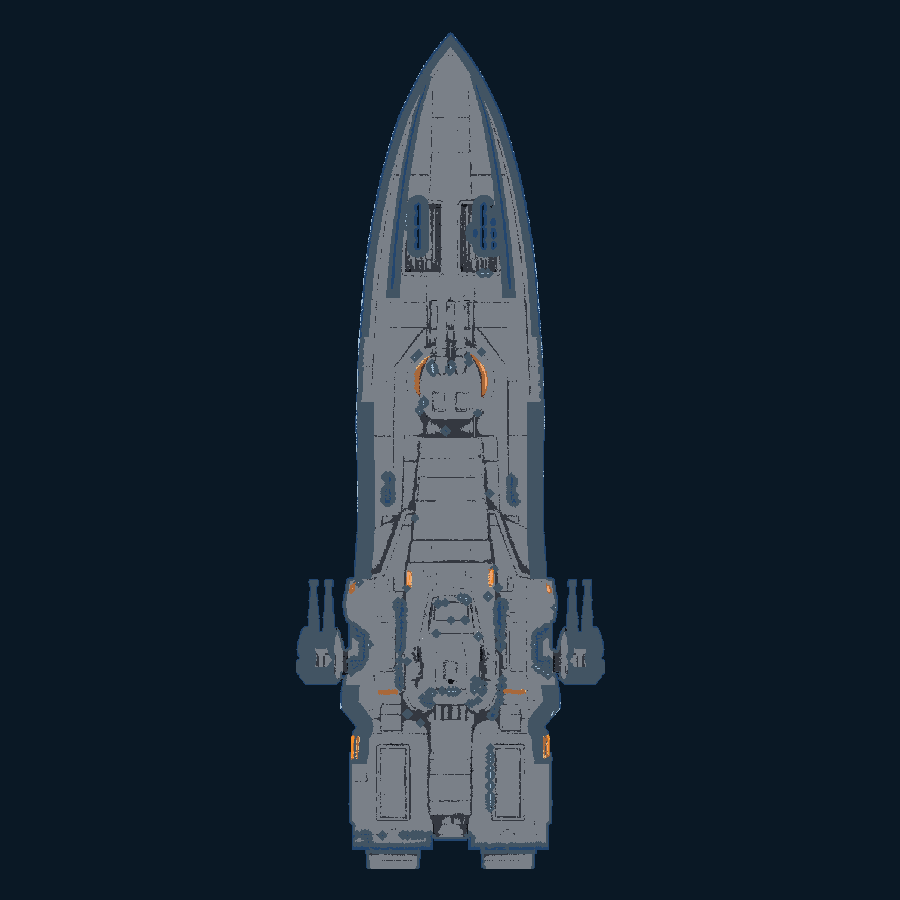
The central hull carries the main weapons axis. The release establishes a heavy battleship with paired propulsion structures but does not specify a complete weapon inventory.
Dimensions & Scale
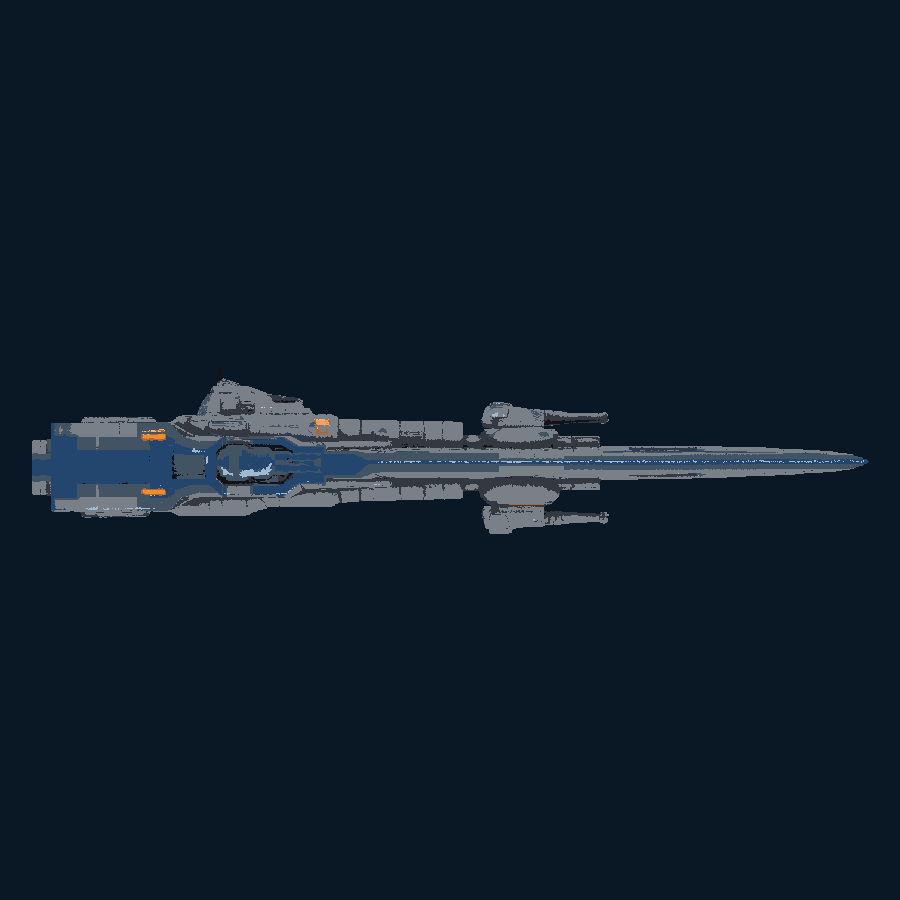
Length 1,400 m × Width 516 m × Height 278 m. Fictional overall dimensions in standard operating configuration.
External Anatomy
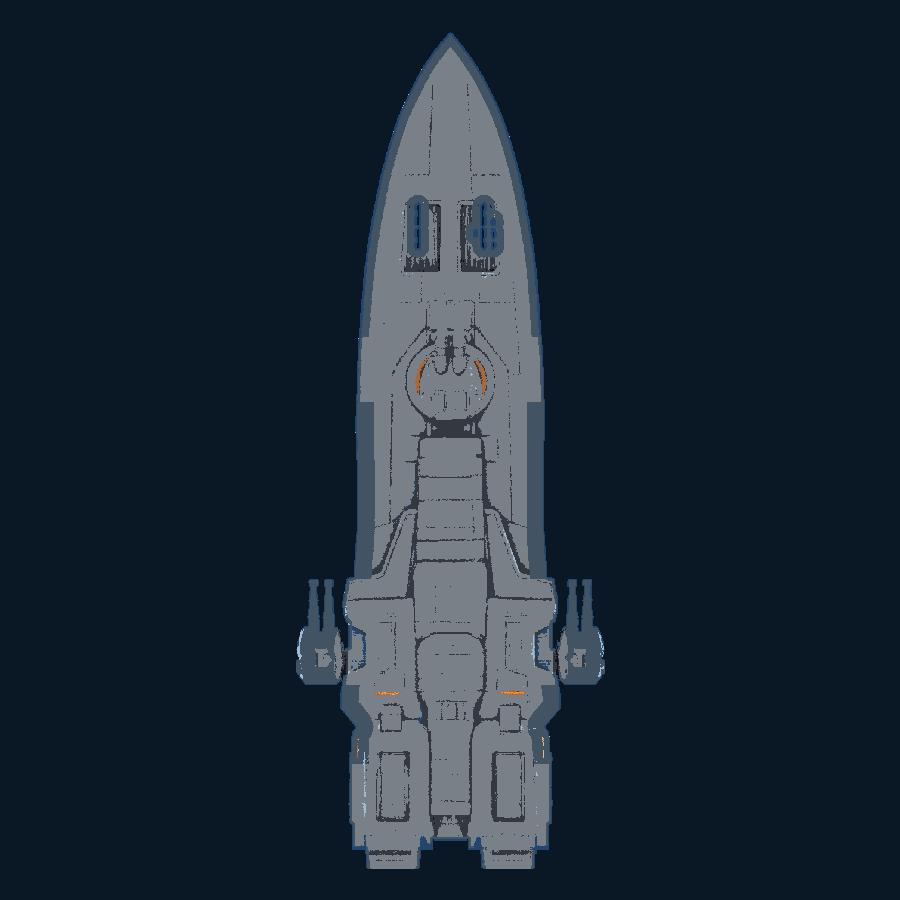
A long blade-shaped armored body tapers toward the bow. A protected central spine supports the main armament, while rear propulsion structures share the hull load.
Functional Architecture
A central weapons spine organizes the offensive system while paired aft propulsion structures establish the ship’s movement axis. Fleet fire control coordinates its target assignment with the screening cruisers.
Technical Specifications
Offensive rating: 90/100 — The central hull carries the main weapons axis
Defensive rating: 82/100 — The broad reinforced-gray blade hull gives structural depth around the central weapons spine
Mobility rating: 32/100 — Maneuvering supports the formation and mission profile rather than unrestricted pursuit
Tactical cognition rating: 64/100 — Target assessment, formation coordination and response timing support heavy battleship operations
Endurance rating: 72/100 — Mission duration depends on finite reserves, damage recovery and scheduled replenishment
Fleet support rating: 28/100 — Engages major fleet targets and supplies the battle line with a durable central weapons platform
Fleet Role
Engages major fleet targets and supplies the battle line with a durable central weapons platform. Lighter cruisers secure its flanks and help preserve its preferred firing geometry.
Life Between Stars
Paired propulsion structures frame the aft body. Operational doctrine uses deliberate formation movement and preplanned turns so escorts can remain in position.
Defense Architecture
The broad reinforced-gray blade hull gives structural depth around the central weapons spine. Supporting ships are assigned to cover the approaches that the main battery cannot dominate.
Operational Limits
A heavy battleship cannot chase every contact. Turning away from its principal target sacrifices the concentration of the central axis, and prolonged isolation exposes its flanks.
Strategic Strengths
Heavy attack potential, substantial hull mass and a continuous weapons axis make it the formation’s principal capital-combat instrument
Capability Assessment
Editorial doctrine: Engages major fleet targets and supplies the battle line with a durable central weapons platform. Lighter cruisers secure its flanks and help preserve its preferred firing geometry. A heavy battleship cannot chase every contact. Turning away from its principal target sacrifices the concentration of the central axis, and prolonged isolation exposes its flanks.
B · 61.3
Fleet-wide concept rating, 0–100; not simulated performance. Specialized strengths do not imply an equally high overall grade. Tactical Cognition describes sensing, coordination and command. Grade is the equal-weight mean: S ≥ 90, A ≥ 75, B ≥ 60, C ≥ 45, D < 45.
Technology Level
T1 — system-flight capability. This editorial classification reflects the documented space role; no phase-travel or world-engineering capability is inferred.
Weapon Class
W2 — heavy fleet or siege engagement. This editorial class does not imply strategic world-scale destruction.
T0 planetary · T1 system flight · T2 phase travel · T3 limited world engineering. W0 point defense · W1 ship combat · W2 heavy fleet combat · W3 strategic theater systems. Technology and weapon classes are independent of the profile grade.
History & Lineage
Universe lore · authored service history
Origin
Developed to supply a stable heavy-fire center for formations otherwise dominated by cruisers and carriers
Lineage & Branch
Blade-spine heavy battleships. Its fleet assignment follows the operational doctrine of this lineage.
Fleet or Unit
reinforced Keel Battle Division
Individual History
The reinforced Keel — Radiant Blade held the center of a divided battle line while its cruisers recovered their positions. The ship’s fire schedule slowed until the formation was whole again, preserving coordination over individual output.
The Quiet Return — After the campaign, the battleship escorted the same repair convoy that had kept it operational. Its crew recorded that voyage beside its combat deployments, recognizing the ships that made the battle line possible.