
Overview
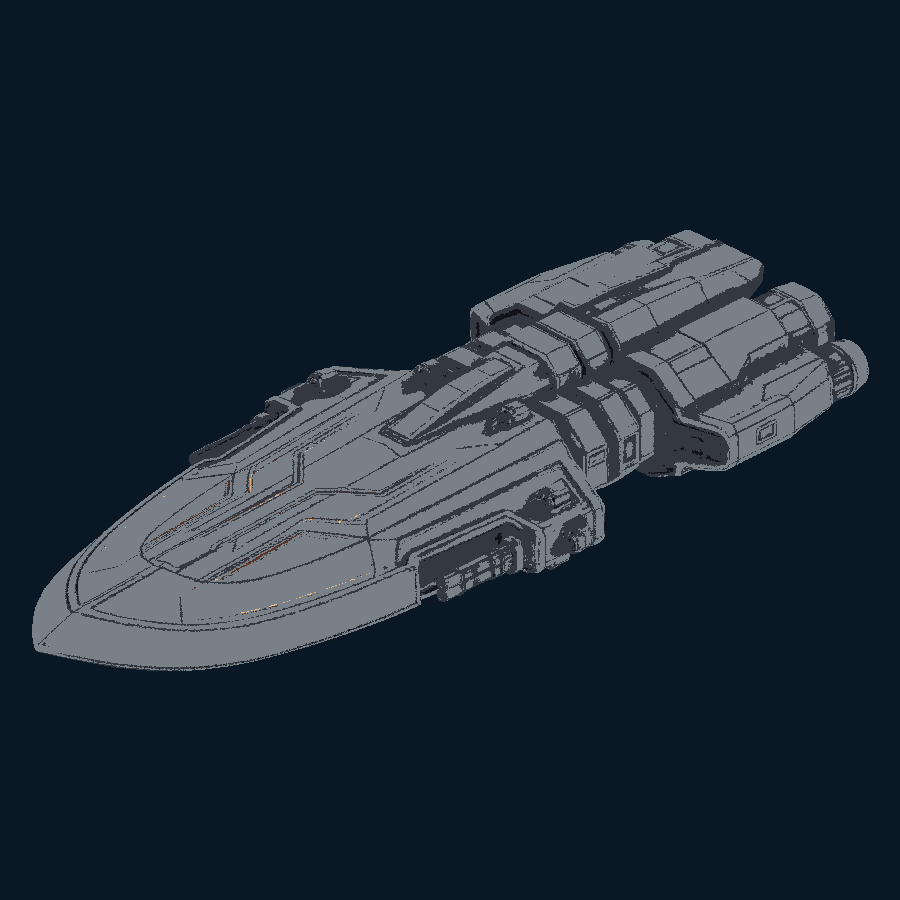
ObsidianWedge concentrates its heavy armament on an armored spine
Vessel Profile
Weapons & Armament
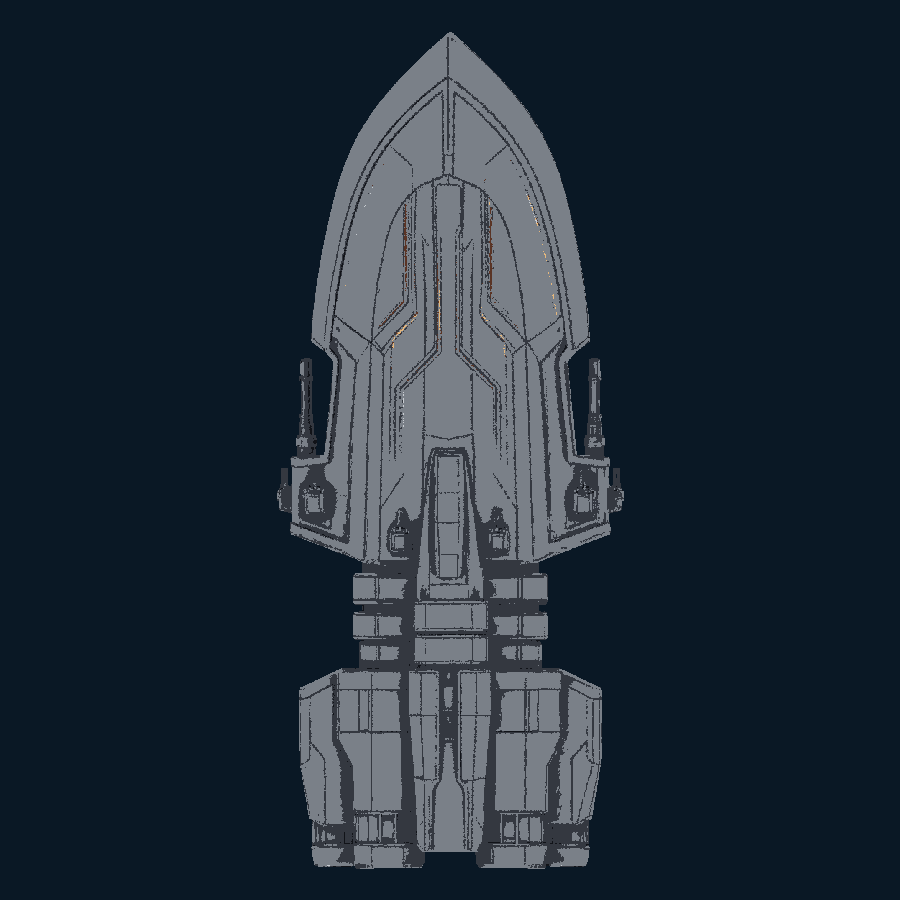
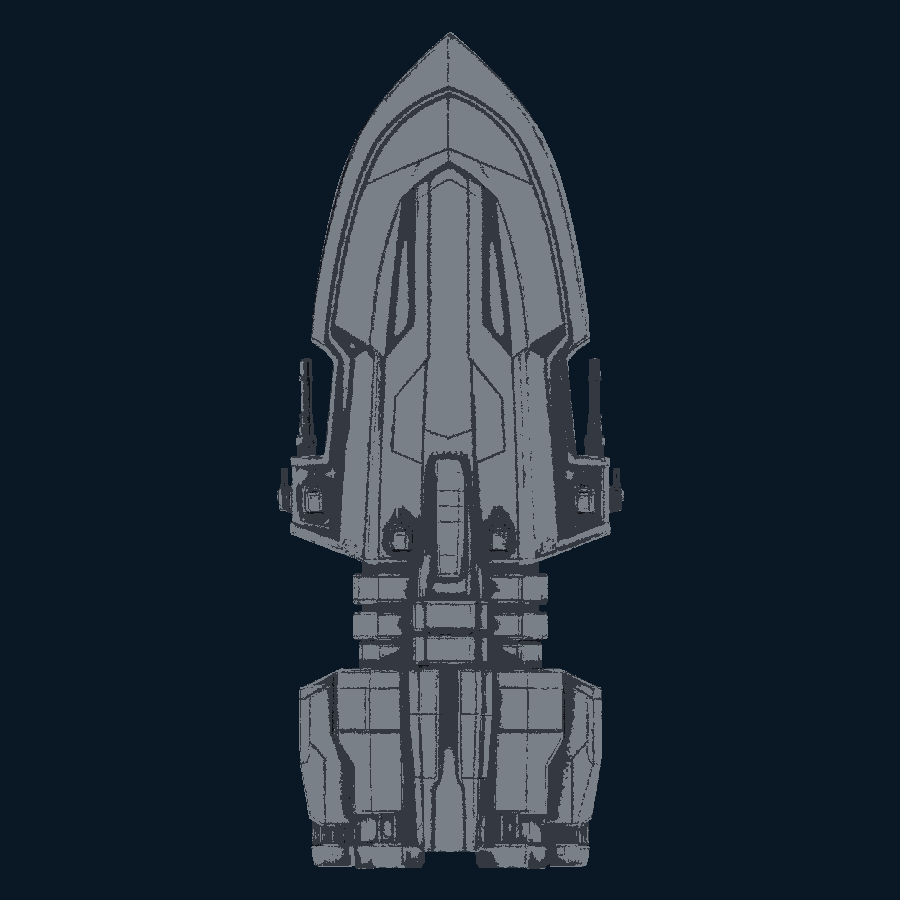
A Heavy Prism Beam Emitter forms the main battery, supported by four twin turrets, missile systems and point defense
Dimensions & Scale
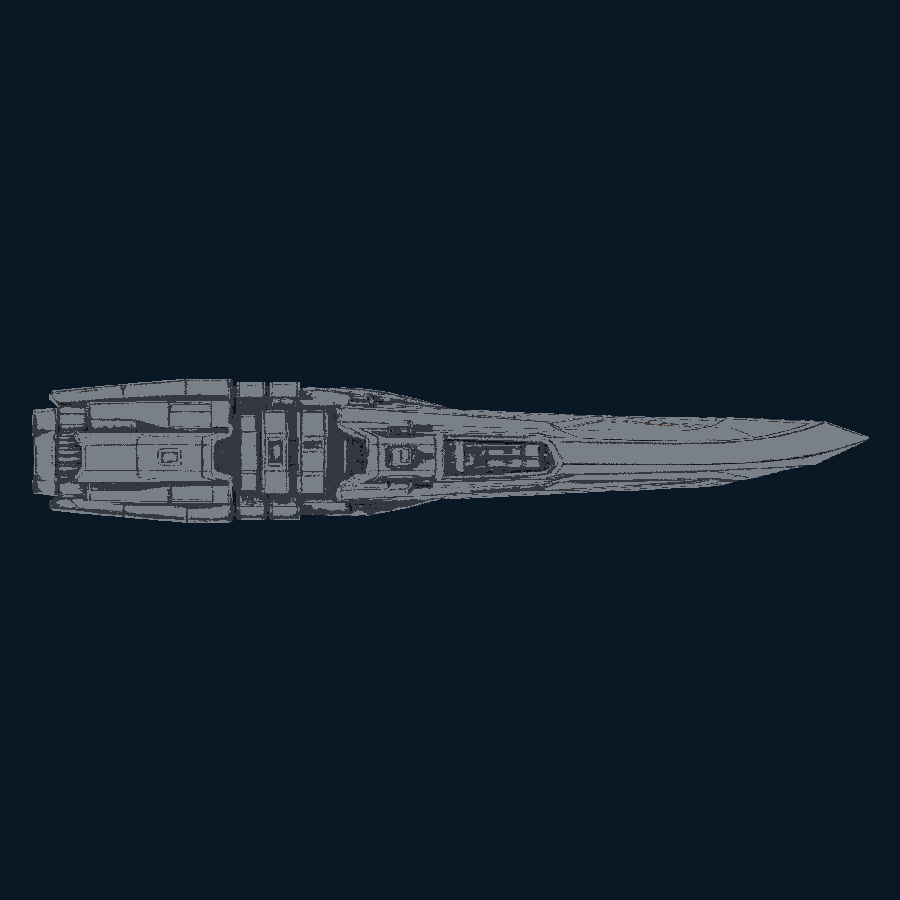
Length 800 m × Width 332 m × Height 138 m. Fictional overall dimensions in standard operating configuration.
External Anatomy
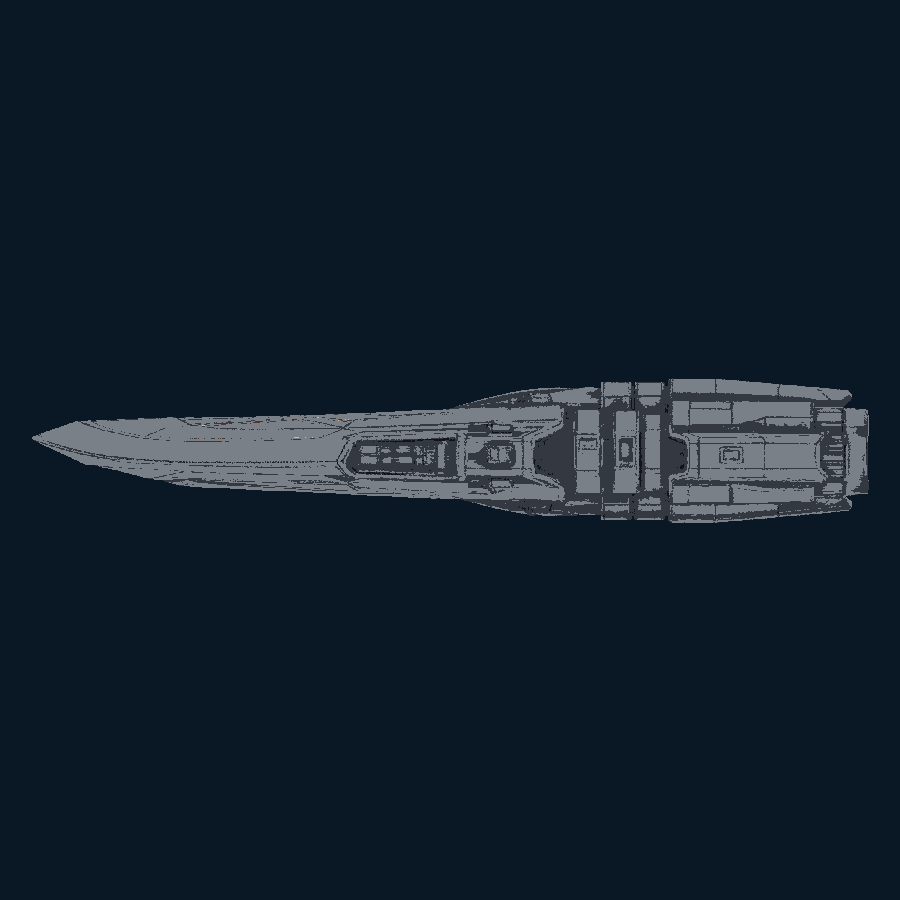
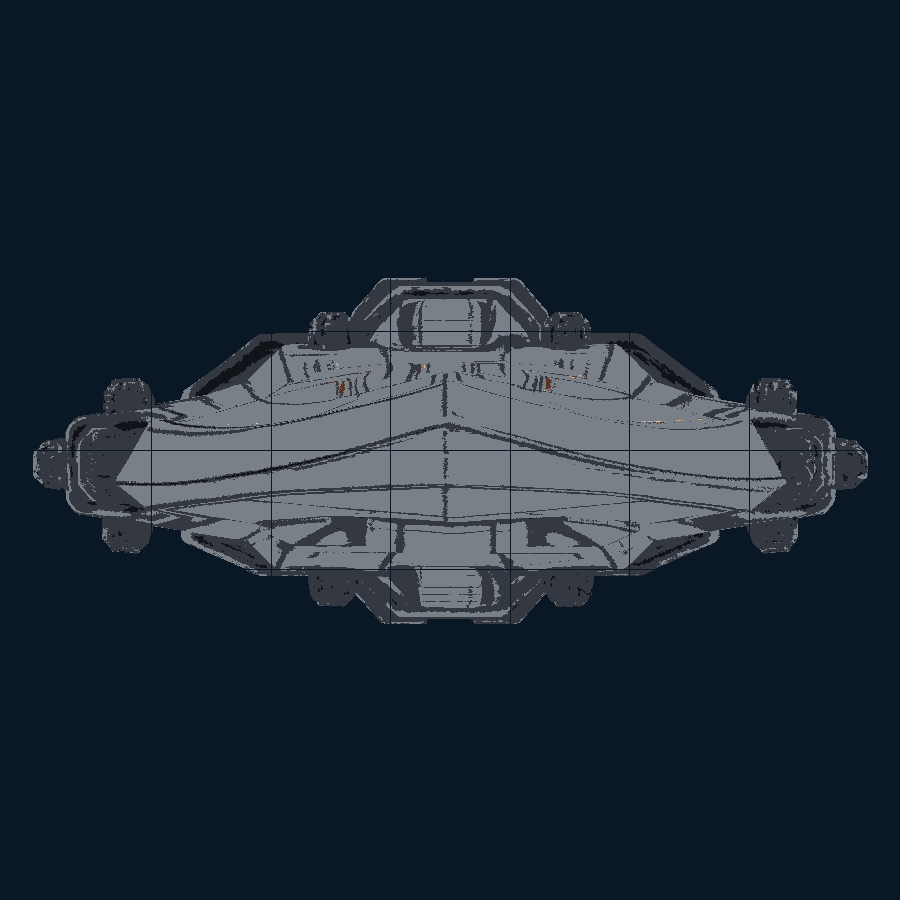
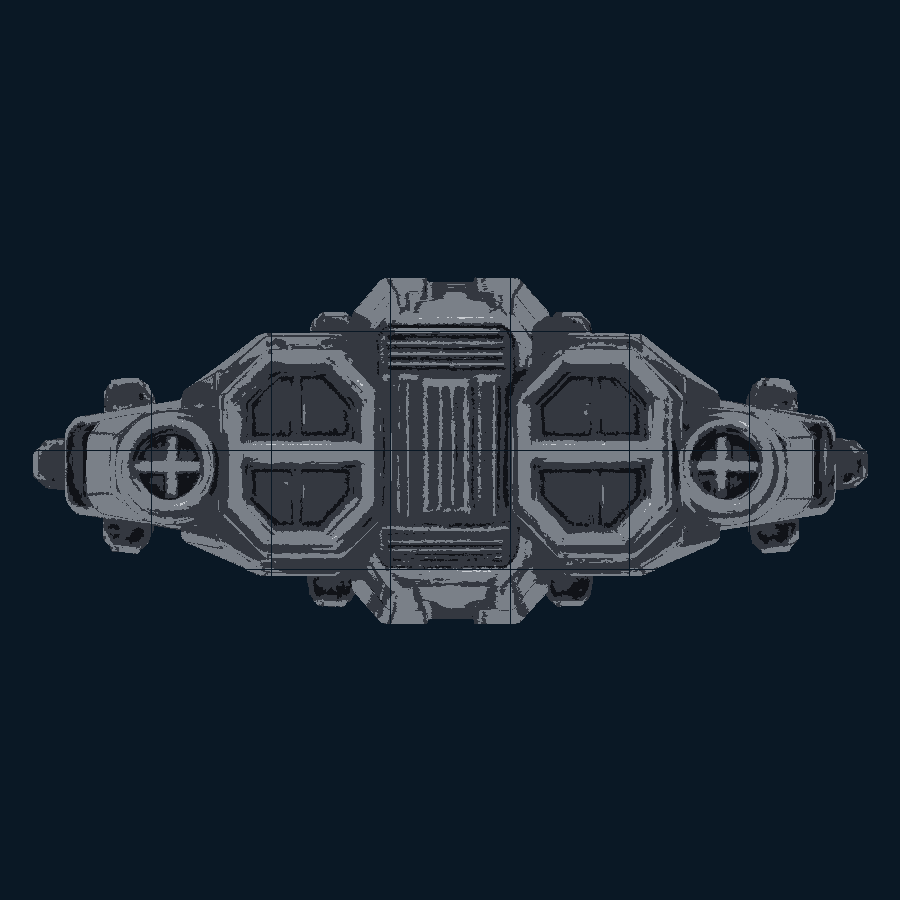
A curved single-blade hull carries a forward-weighted armored body. The central spine establishes the primary firing axis; broad cheek surfaces narrow toward the prow, while the stern houses four main drives.
Functional Architecture
The Heavy Prism Beam Emitter occupies the central armored spine. Four twin turrets, missiles and point defense supplement the main battery rather than requiring the entire ship to turn for every contact.
Technical Specifications
Offensive rating: 70/100 — A Heavy Prism Beam Emitter forms the main battery, supported by four twin turrets, missile systems and point defense
Defensive rating: 58/100 — The armored spine supports the main weapon, with broad curved hull plates protecting the forward-weighted body
Mobility rating: 46/100 — Maneuvering supports the formation and mission profile rather than unrestricted pursuit
Tactical cognition rating: 55/100 — Target assessment, formation coordination and response timing support line cruiser operations
Endurance rating: 57/100 — Mission duration depends on finite reserves, damage recovery and scheduled replenishment
Fleet support rating: 26/100 — Maintains forward pressure beside heavier fleet elements
Fleet Role
Maintains forward pressure beside heavier fleet elements. The main emitter threatens an opposing capital ship while secondary weapons keep smaller threats from closing freely.
Life Between Stars
Four main drives propel the cruiser. The proposed combat pattern uses measured advances and short formation corrections so the armored spine stays aligned with its assigned target.
Defense Architecture
The armored spine supports the main weapon, with broad curved hull plates protecting the forward-weighted body. Missile and point-defense systems cover threats outside the main battery’s engagement.
Operational Limits
The main emitter’s forward emphasis rewards disciplined alignment. Close flanking pressure forces a choice between turning the heavy body and relying on supporting weapons.
Strategic Strengths
A strong primary beam system, supporting turrets and a coherent armored attack axis make it a reliable line-combat ship
Capability Assessment
Editorial doctrine: Maintains forward pressure beside heavier fleet elements. The main emitter threatens an opposing capital ship while secondary weapons keep smaller threats from closing freely. The main emitter’s forward emphasis rewards disciplined alignment. Close flanking pressure forces a choice between turning the heavy body and relying on supporting weapons.
C · 52.0
Fleet-wide concept rating, 0–100; not simulated performance. Specialized strengths do not imply an equally high overall grade. Tactical Cognition describes sensing, coordination and command. Grade is the equal-weight mean: S ≥ 90, A ≥ 75, B ≥ 60, C ≥ 45, D < 45.
Technology Level
T1 — system-flight capability. This editorial classification reflects the documented space role; no phase-travel or world-engineering capability is inferred.
Weapon Class
W2 — heavy fleet or siege engagement. This editorial class does not imply strategic world-scale destruction.
T0 planetary · T1 system flight · T2 phase travel · T3 limited world engineering. W0 point defense · W1 ship combat · W2 heavy fleet combat · W3 strategic theater systems. Technology and weapon classes are independent of the profile grade.
History & Lineage
Universe lore · authored service history
Origin
Developed as a sustained-combat counterpart to the Human fleet’s faster and more specialized strike cruisers
Lineage & Branch
Single-blade line cruisers. Its fleet assignment follows the operational doctrine of this lineage.
Fleet or Unit
Forward Wedge Line
Individual History
The Measured Advance — ObsidianWedge covered a fleet withdrawal by advancing only far enough to keep its main emitter aligned with the nearest pursuer. Each correction bought another interval for the transports behind it.
The Open Flank — A later exercise exposed the cost of pursuing a beam target through a turn. The Forward Wedge Line now assigns a dedicated flank partner before committing to an extended firing approach.