
Overview
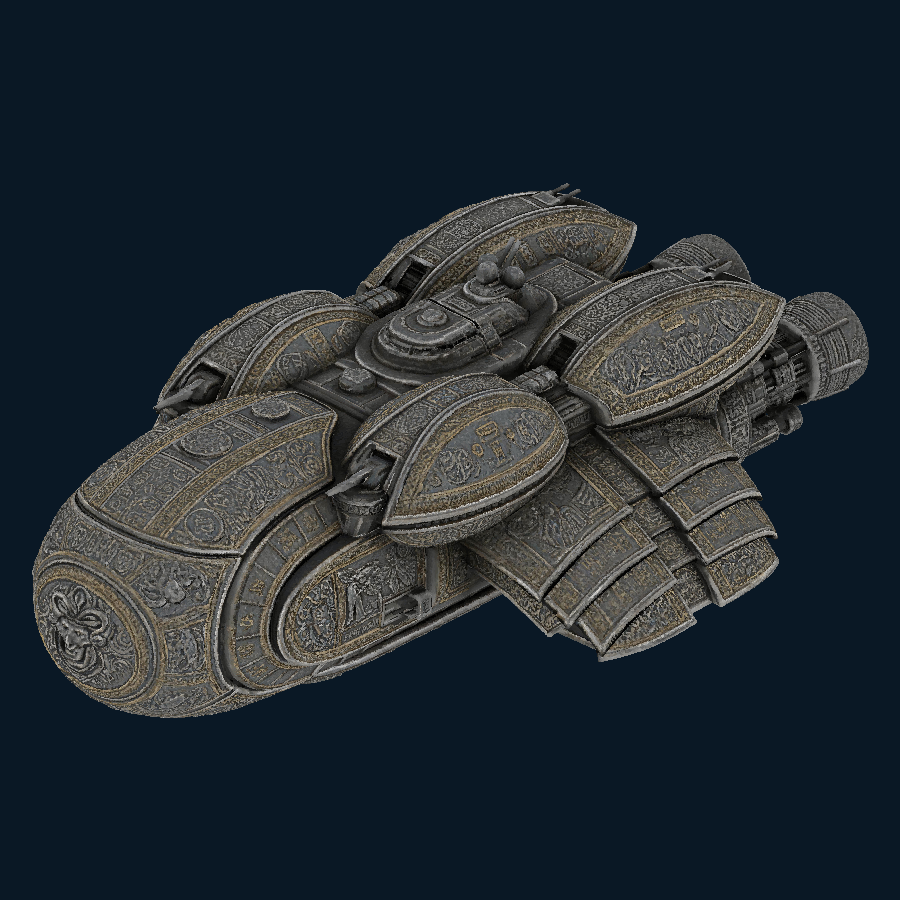
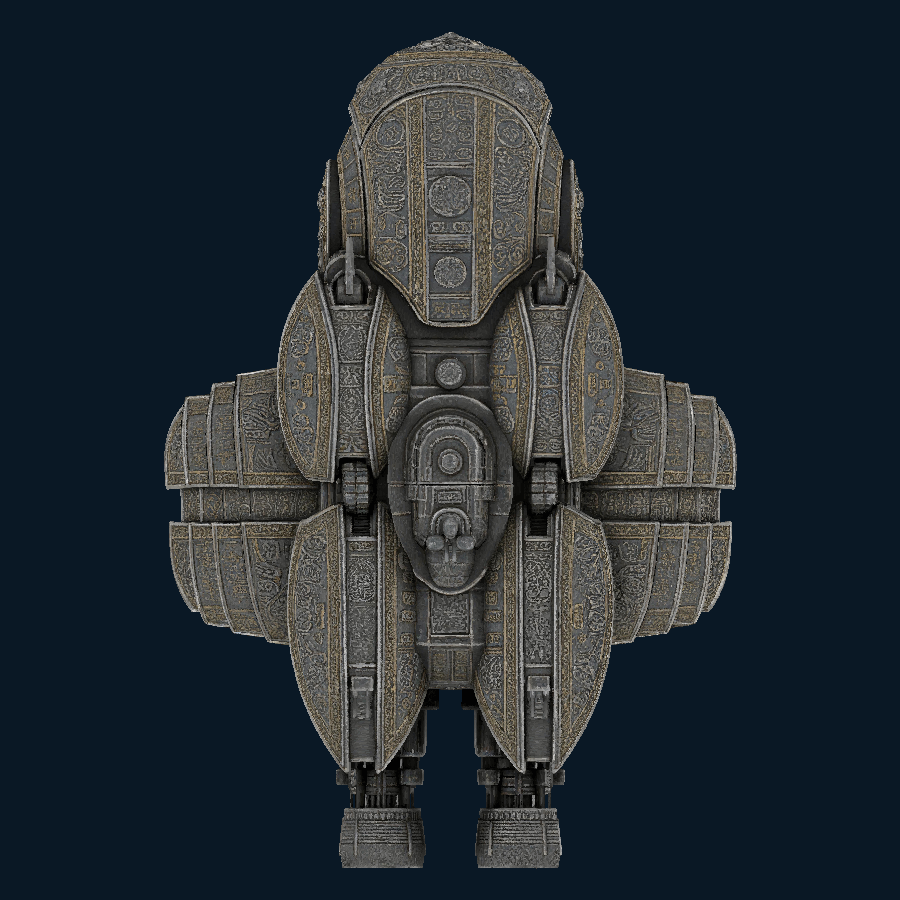
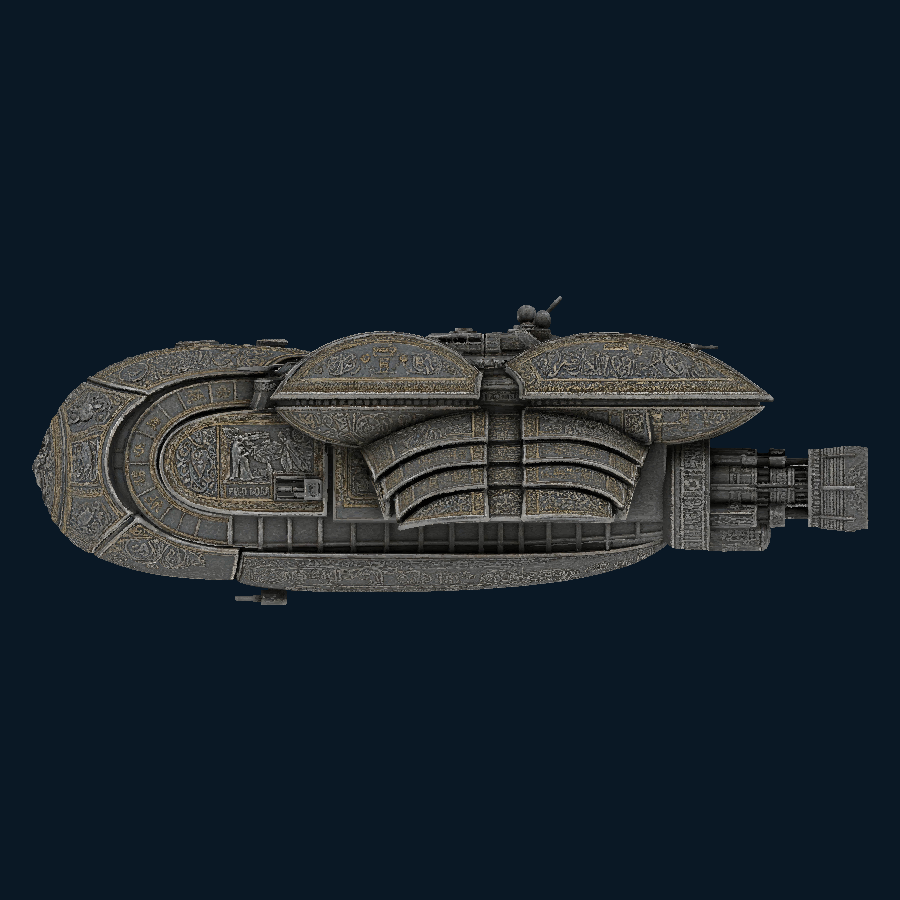
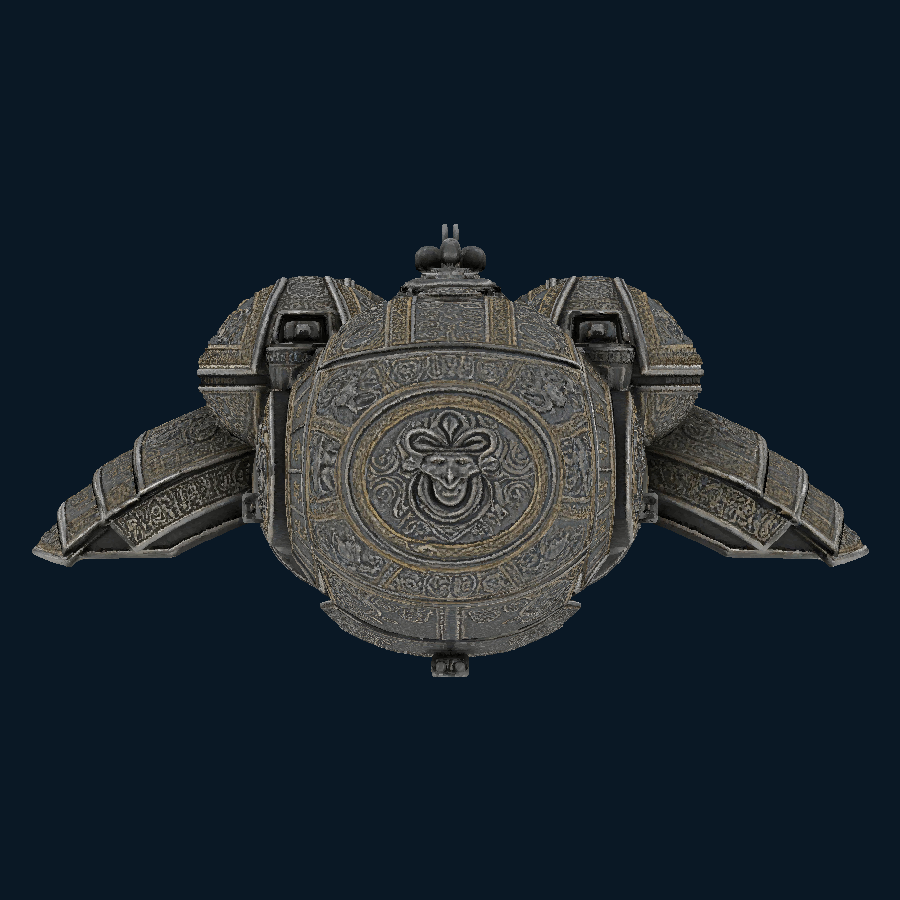
Embossed Crown organizes four raised convex armor fields around a low protected command deck. Overlapping side plates, recessed service bays and shielded propulsion zones support a capital ship envisioned at approximately 120 million metric tonnes fully loaded.
Vessel Profile
Weapons & Armament
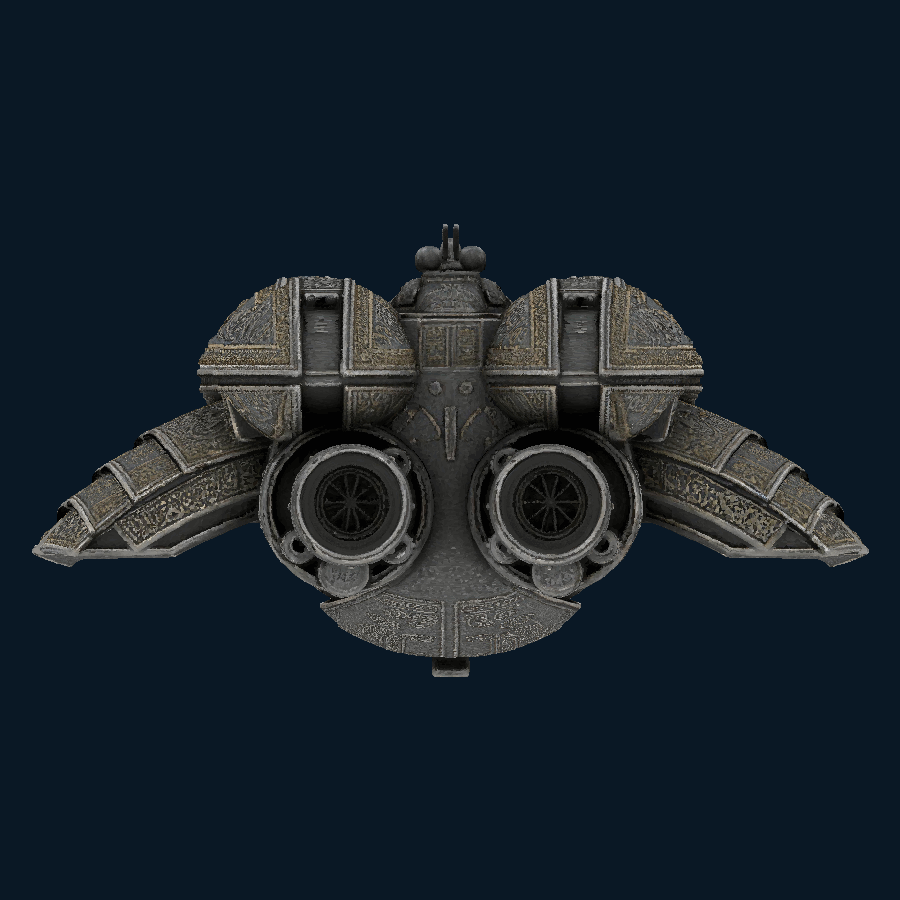
A twin macro battery uses 12 m bores and 80 m barrels. Four secondary defensive mounts, two recessed missile-cell banks and twelve close-in defense nodes support it. Eight protected main thrusters provide propulsion.
Dimensions & Scale
Length 1,880 m × Width 1,200 m × Height 470 m. Fictional overall dimensions in standard operating configuration.
External Anatomy
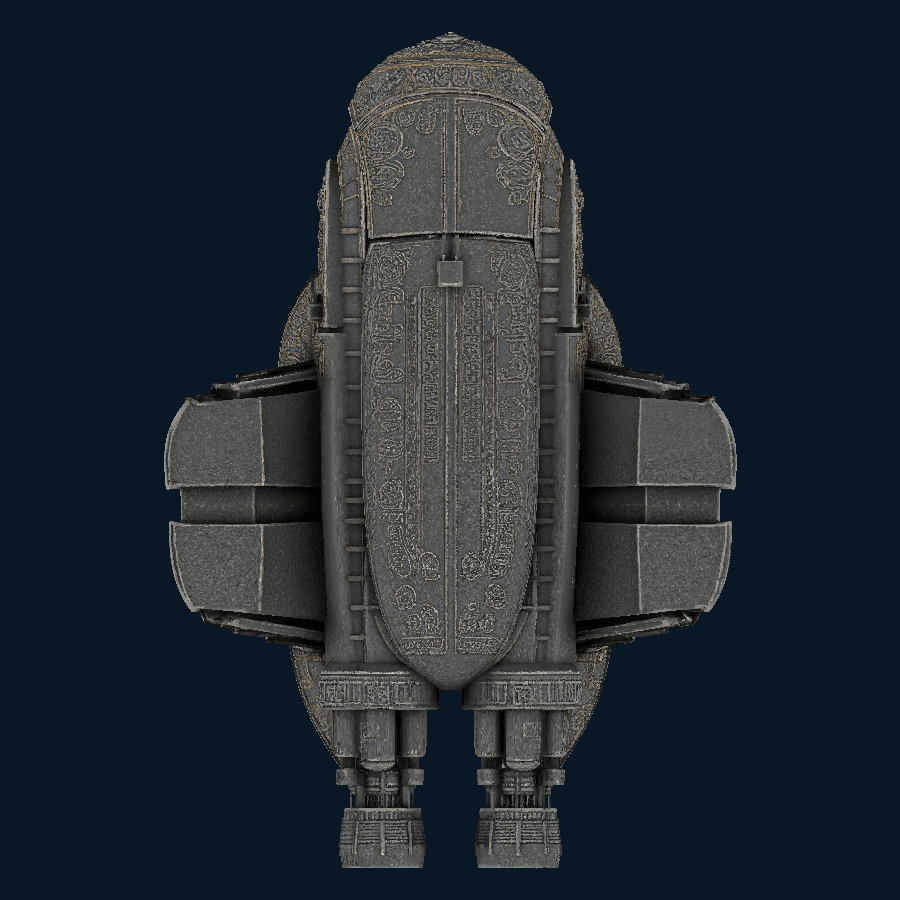
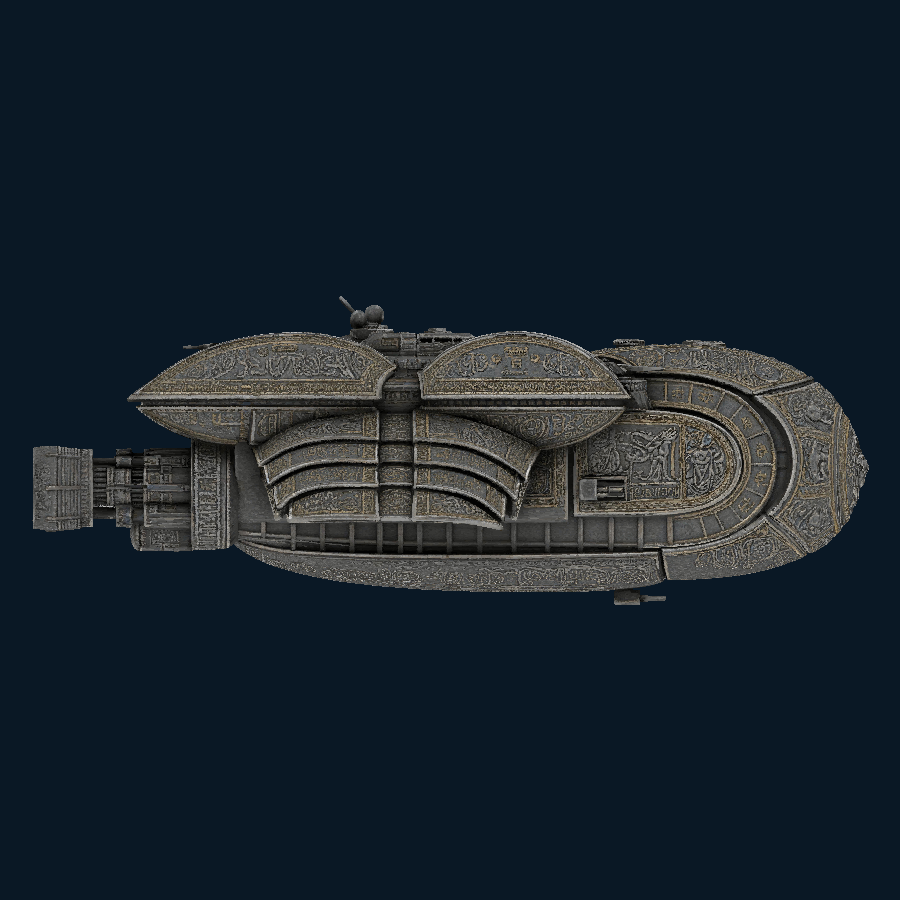
Four convex armor fields surround a low central command deck. Deep curved seams separate forward cheeks from broad overlapping side mission shields. The resulting body reads as a continuous armored fortress rather than a collection of exposed service modules.
Functional Architecture
Deep seams divide the forward cheeks from the side mission shields. Repair spaces, a low central command deck and layered aft structures organize the internal mission around defense and fleet support.
Technical Specifications
Offensive rating: 80/100 — A twin macro battery uses 12 m bores and 80 m barrels
Defensive rating: 91/100 — Four raised convex armor fields surround a low command deck
Mobility rating: 18/100 — Maneuvering supports the formation and mission profile rather than unrestricted pursuit
Tactical cognition rating: 76/100 — Target assessment, formation coordination and response timing support armored fleet fortress operations
Endurance rating: 83/100 — Mission duration depends on finite reserves, damage recovery and scheduled replenishment
Fleet support rating: 78/100 — Holds a fleet defensive center, coordinates a prolonged engagement and supplies internal repair support
Fleet Role
Holds a fleet defensive center, coordinates a prolonged engagement and supplies internal repair support. Its armament discourages an opponent from closing directly on the sheltered formation.
Life Between Stars
Eight main thrusters support the fortress’s movement. Operational doctrine favors preplanned station changes and escort coverage during major turns rather than pursuit of retreating light craft.
Defense Architecture
Four raised convex armor fields surround a low command deck. Broad overlapping side shields and armor layers of 8–20 m protect the central body and service spaces.
Operational Limits
Its enormous mass and broad hull impose a deliberate maneuvering tempo. Covering a wide formation can stretch its defenses, while sustained fire and repair operations compete for operational attention.
Strategic Strengths
Exceptional protection, heavy macro armament and a sheltered command center make it a powerful fixed point around which mobile fleet elements can operate
Capability Assessment
Editorial doctrine: Holds a fleet defensive center, coordinates a prolonged engagement and supplies internal repair support. Its armament discourages an opponent from closing directly on the sheltered formation. Its enormous mass and broad hull impose a deliberate maneuvering tempo. Covering a wide formation can stretch its defenses, while sustained fire and repair operations compete for operational attention.
B · 71.0
Fleet-wide concept rating, 0–100; not simulated performance. Specialized strengths do not imply an equally high overall grade. Tactical Cognition describes sensing, coordination and command. Grade is the equal-weight mean: S ≥ 90, A ≥ 75, B ≥ 60, C ≥ 45, D < 45.
Technology Level
T1 — system-flight capability. This editorial classification reflects the documented space role; no phase-travel or world-engineering capability is inferred.
Weapon Class
W2 — heavy fleet or siege engagement. This editorial class does not imply strategic world-scale destruction.
T0 planetary · T1 system flight · T2 phase travel · T3 limited world engineering. W0 point defense · W1 ship combat · W2 heavy fleet combat · W3 strategic theater systems. Technology and weapon classes are independent of the profile grade.
History & Lineage
Universe lore · authored service history
Origin
Developed as a heavy command adaptation of the Human fleet’s overlapping armor construction tradition
Lineage & Branch
Heavy armored fleet fortresses. Its fleet assignment follows the operational doctrine of this lineage.
Fleet or Unit
Crown Bastion Command
Individual History
The Copper Line — Embossed Crown anchored a fleet screen while the ships on either flank changed formation. Its commander delayed the main battery until the departing escorts had cleared the forward arc. A Crown at Anchor — At the end of that campaign, the fortress served as a repair station beside a damaged transit depot. Its low command deck remained occupied through the rebuilding, turning a battlefield headquarters into the center of recovery.