
Overview
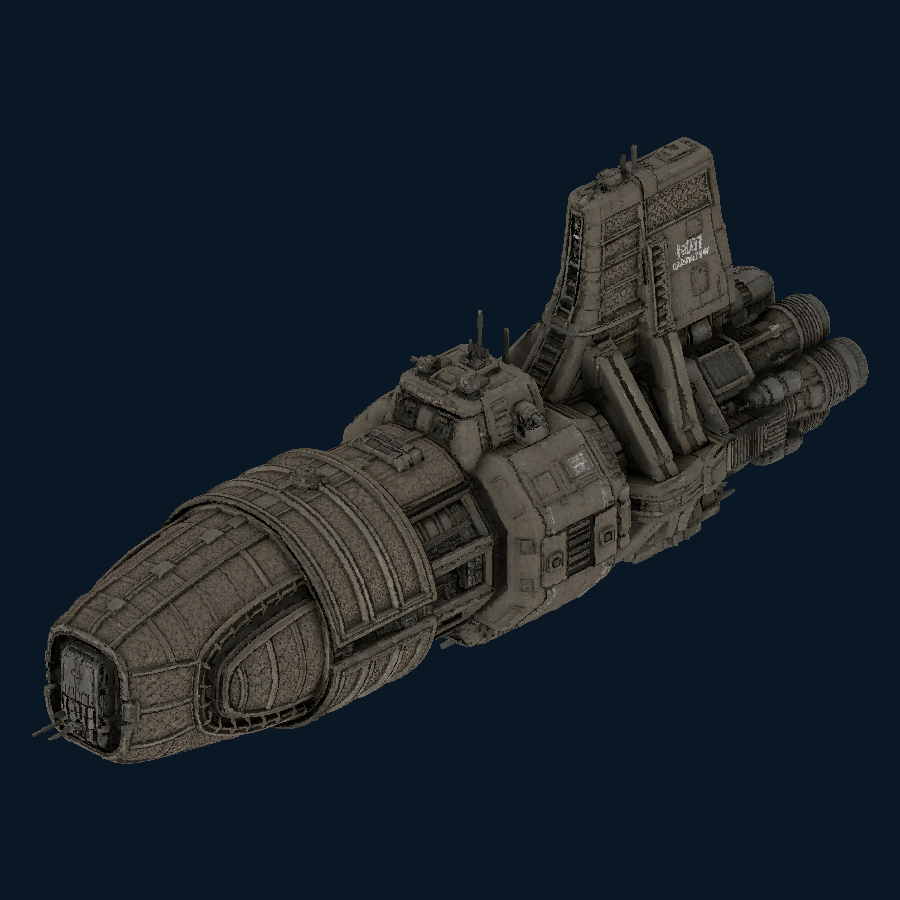
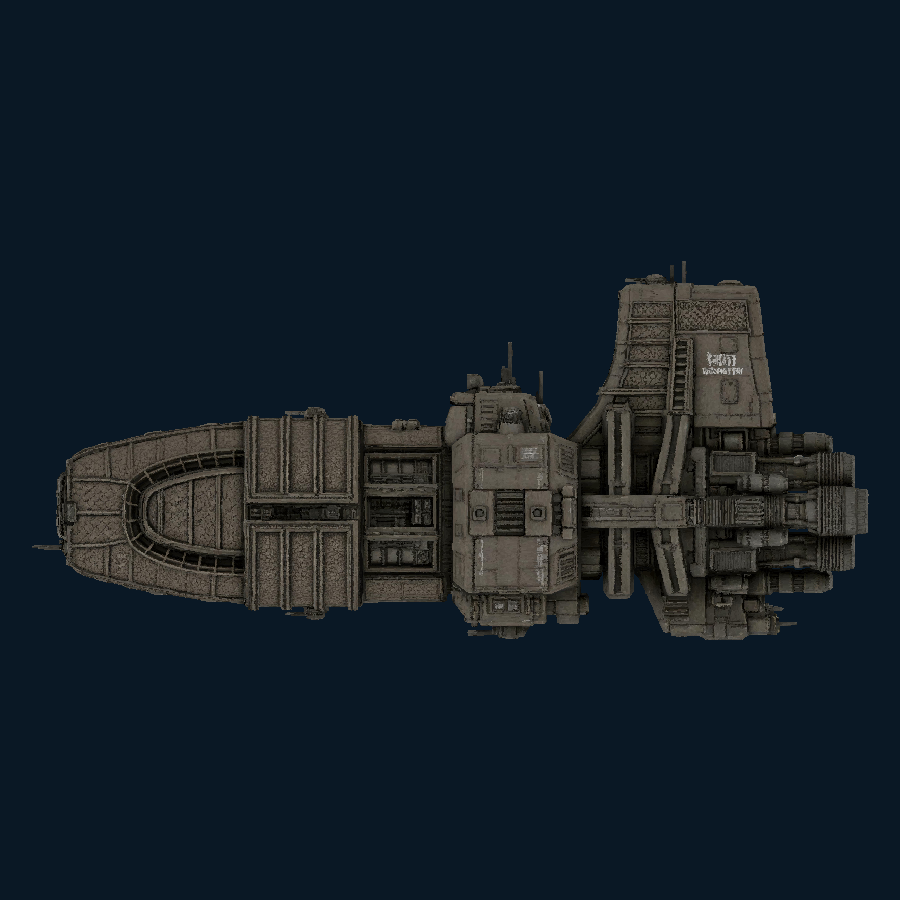
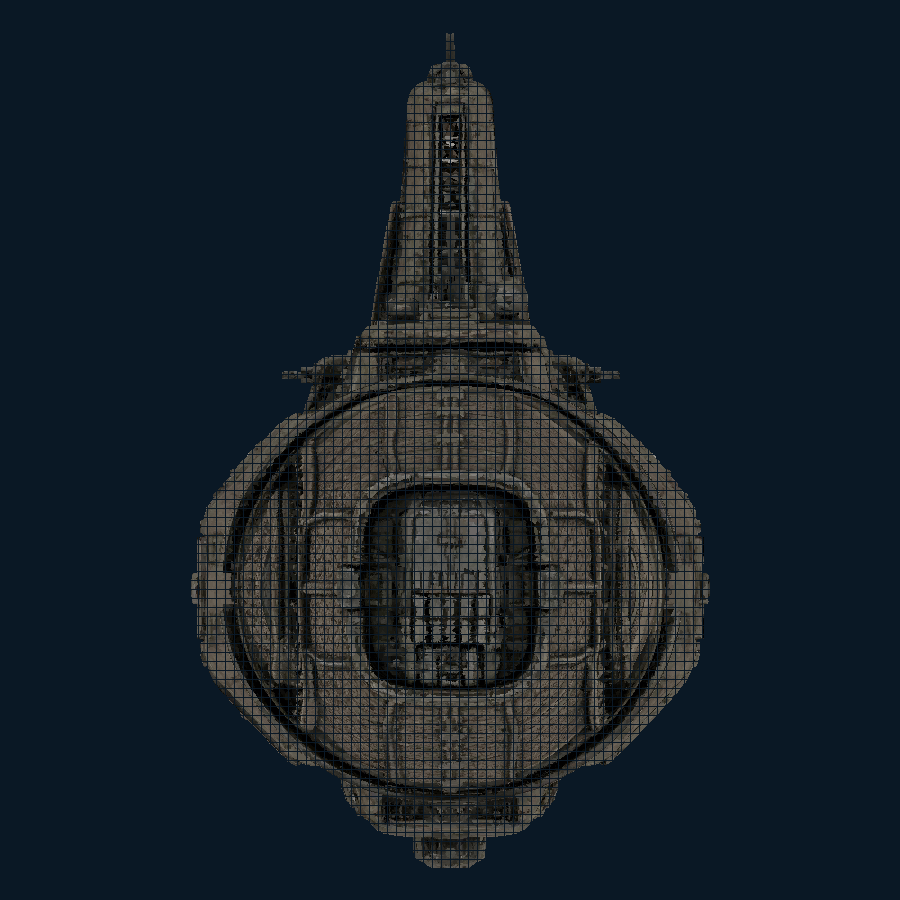
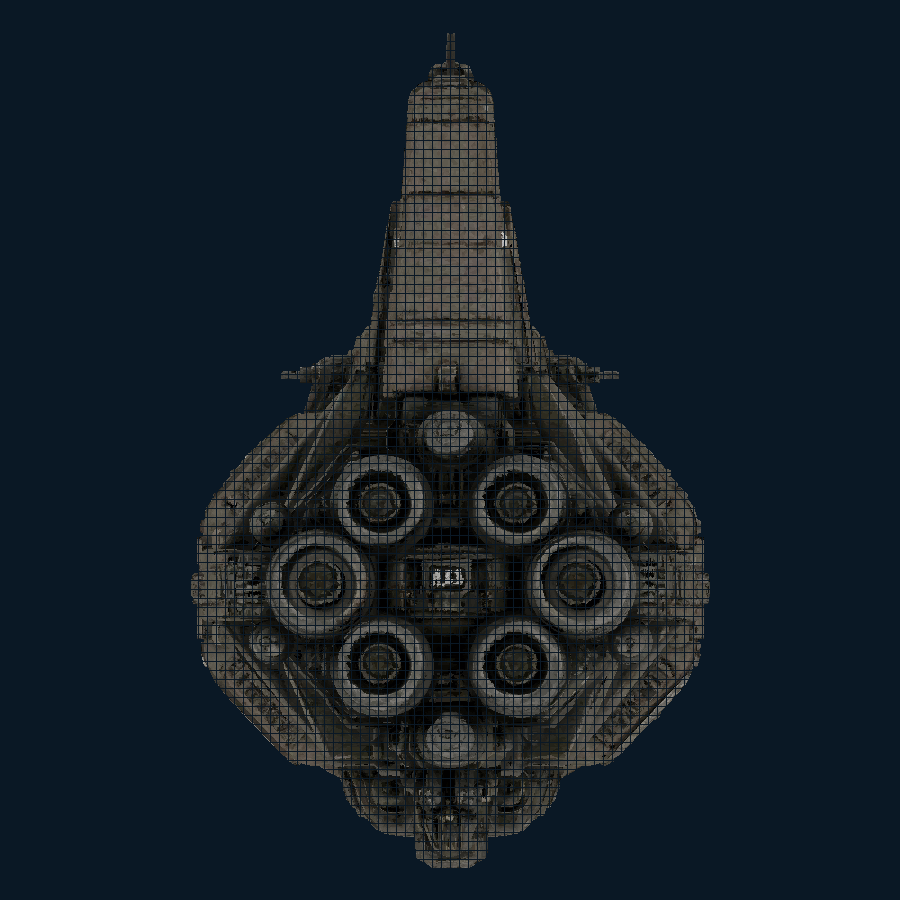
Stormmantle acts as a mobile defensive anchor. A wide armored shell and heavy perimeter protection surround internal repair and docking spaces, with a reinforced command bastion toward the rear.
Vessel Profile
Weapons & Armament
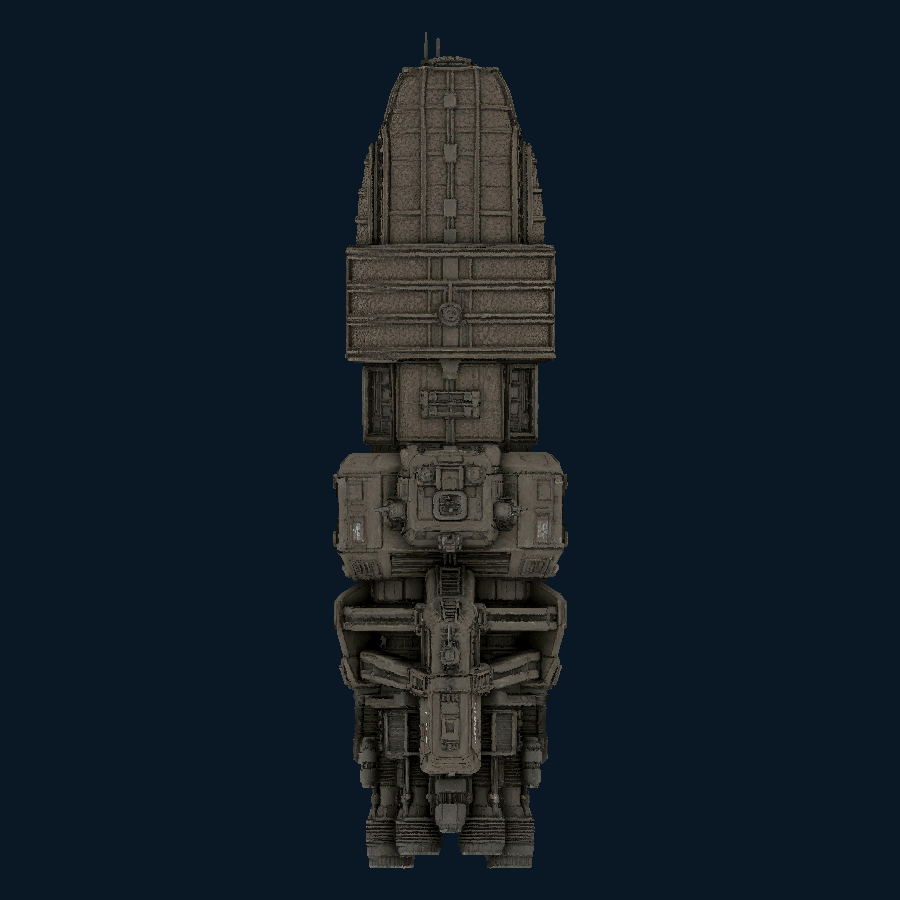
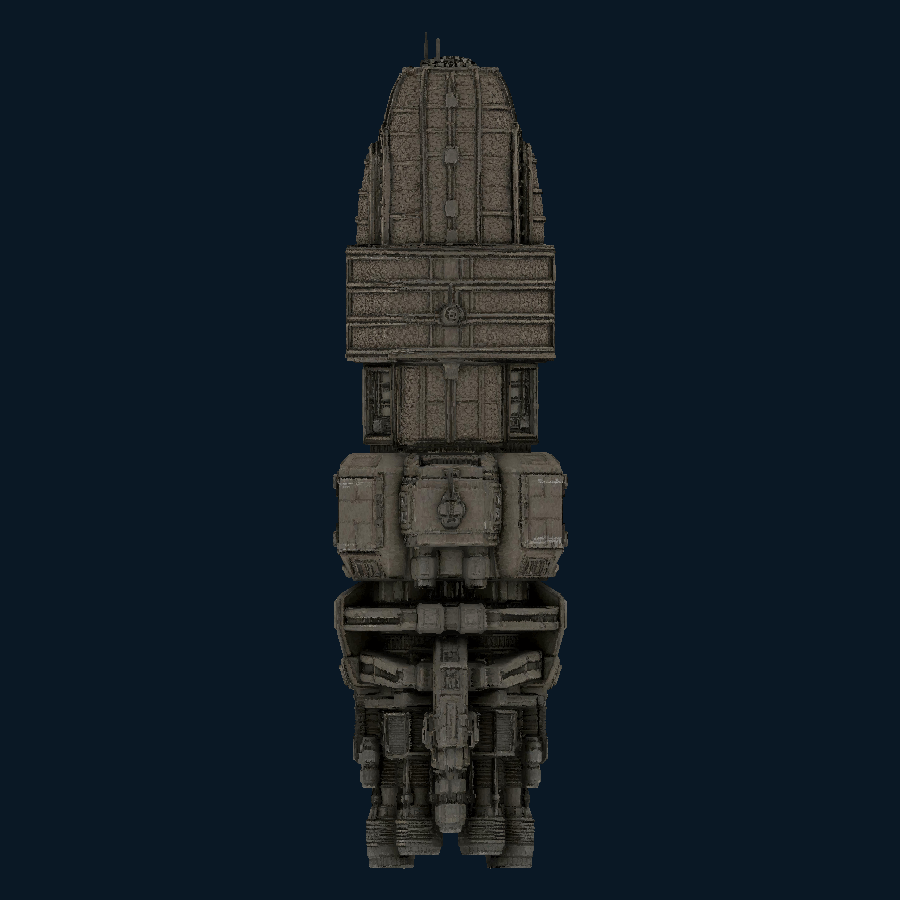
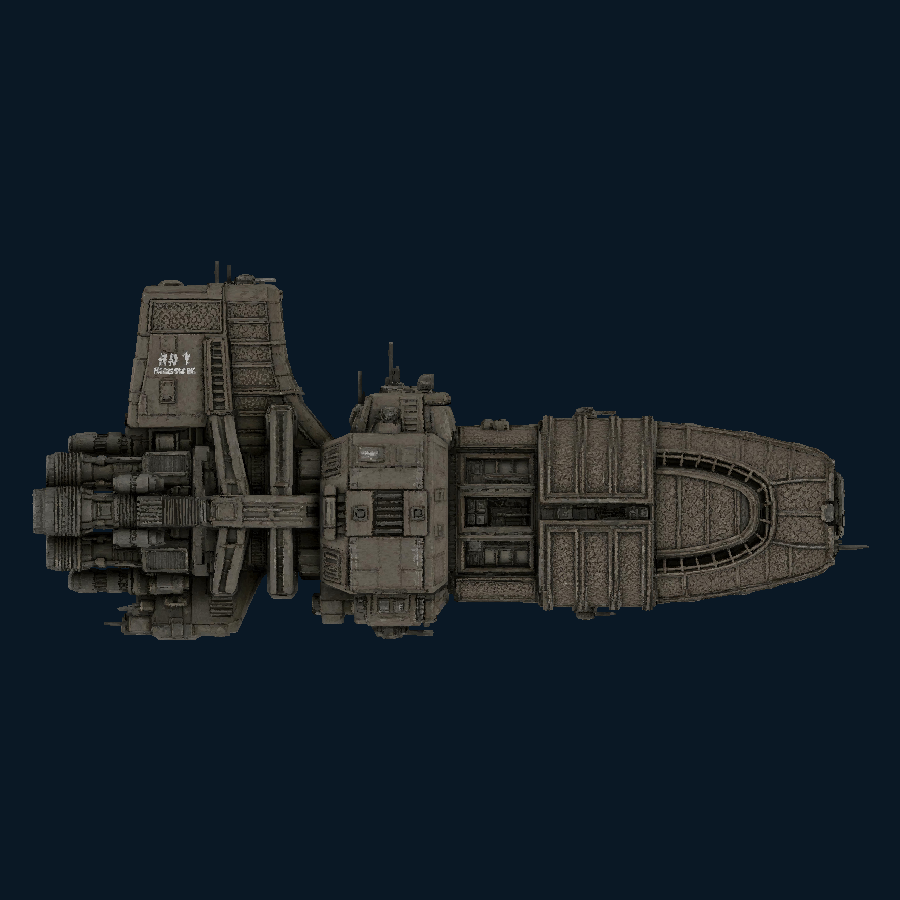
A large twin-barrel dorsal macro battery provides forward firepower. Secondary turrets, missile cells, point-defense systems and protected utility bays are integrated into the broad hull.
Dimensions & Scale
Length 1,640 m × Width 1,240 m × Height 520 m. Fictional overall dimensions in standard operating configuration.
External Anatomy
A wide armored shell, strong perimeter protection and reinforced aft command bastion enclose the vessel. Docking and repair spaces remain inside the protective body.
Functional Architecture
Repair and docking spaces sit behind the armored perimeter. Command functions occupy the reinforced rear bastion, coordinating service traffic with defensive fire so that ships can approach without crossing active firing lanes.
Technical Specifications
Offensive rating: 65/100 — A large twin-barrel dorsal macro battery provides forward firepower
Defensive rating: 85/100 — A broad armored shell and heavy perimeter protection shield internal service spaces
Mobility rating: 22/100 — Maneuvering supports the formation and mission profile rather than unrestricted pursuit
Tactical cognition rating: 75/100 — Target assessment, formation coordination and response timing support armored fleet fortress operations
Endurance rating: 78/100 — Mission duration depends on finite reserves, damage recovery and scheduled replenishment
Fleet support rating: 83/100 — Forms the defensive center of a convoy, provides sheltered repair and docking space, and lets damaged vessels remain with the fleet instead of being abandoned.
Fleet Role
Forms the defensive center of a convoy, provides sheltered repair and docking space, and lets damaged vessels remain with the fleet instead of being abandoned
Life Between Stars
The movement pattern maintains station relative to the convoy and turns gradually to keep the protective shell between damaged ships and the threat
Defense Architecture
A broad armored shell and heavy perimeter protection shield internal service spaces. The main battery deters an approach while secondary turrets, missiles and point defense protect the shelter zone.
Operational Limits
A large defensive footprint limits rapid repositioning. Ships approaching for repair create predictable traffic, and the fortress must divide attention between protecting that traffic and engaging attackers.
Strategic Strengths
Substantial armor, sheltered service spaces and a reinforced aft command position combine fleet survival and combat coordination in one vessel
Capability Assessment
Editorial doctrine: Forms the defensive center of a convoy, provides sheltered repair and docking space, and lets damaged vessels remain with the fleet instead of being abandoned. A large defensive footprint limits rapid repositioning. Ships approaching for repair create predictable traffic, and the fortress must divide attention between protecting that traffic and engaging attackers.
B · 68.0
Fleet-wide concept rating, 0–100; not simulated performance. Specialized strengths do not imply an equally high overall grade. Tactical Cognition describes sensing, coordination and command. Grade is the equal-weight mean: S ≥ 90, A ≥ 75, B ≥ 60, C ≥ 45, D < 45.
Technology Level
T1 — system-flight capability. This editorial classification reflects the documented space role; no phase-travel or world-engineering capability is inferred.
Weapon Class
W2 — heavy fleet or siege engagement. This editorial class does not imply strategic world-scale destruction.
T0 planetary · T1 system flight · T2 phase travel · T3 limited world engineering. W0 point defense · W1 ship combat · W2 heavy fleet combat · W3 strategic theater systems. Technology and weapon classes are independent of the profile grade.
History & Lineage
Universe lore · authored service history
Origin
Conceived after frontier logistics planning exposed the need for repair shelter that could travel with the convoy
Lineage & Branch
Armored fleet fortresses. Its fleet assignment follows the operational doctrine of this lineage.
Fleet or Unit
Convoy Shelter Command
Individual History
The Storm Without Weather — Stormmantle received three damaged escorts during a running engagement. Its commander narrowed the docking approach to one protected lane and held the fortress on course until all three had crossed the perimeter.
The Mantle Watch — The repair crews later recorded a permanent service mark beside each recovered docking berth. In the unit’s tradition, those lines count ships returned to service, not enemy ships destroyed.