Overview
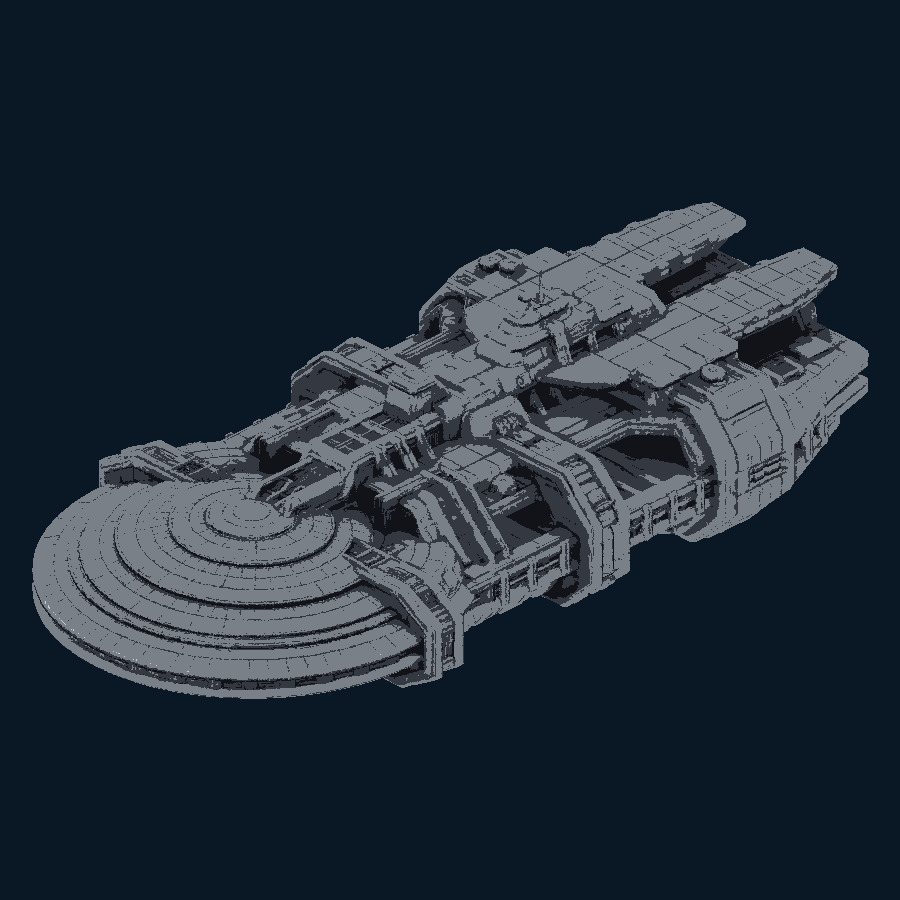
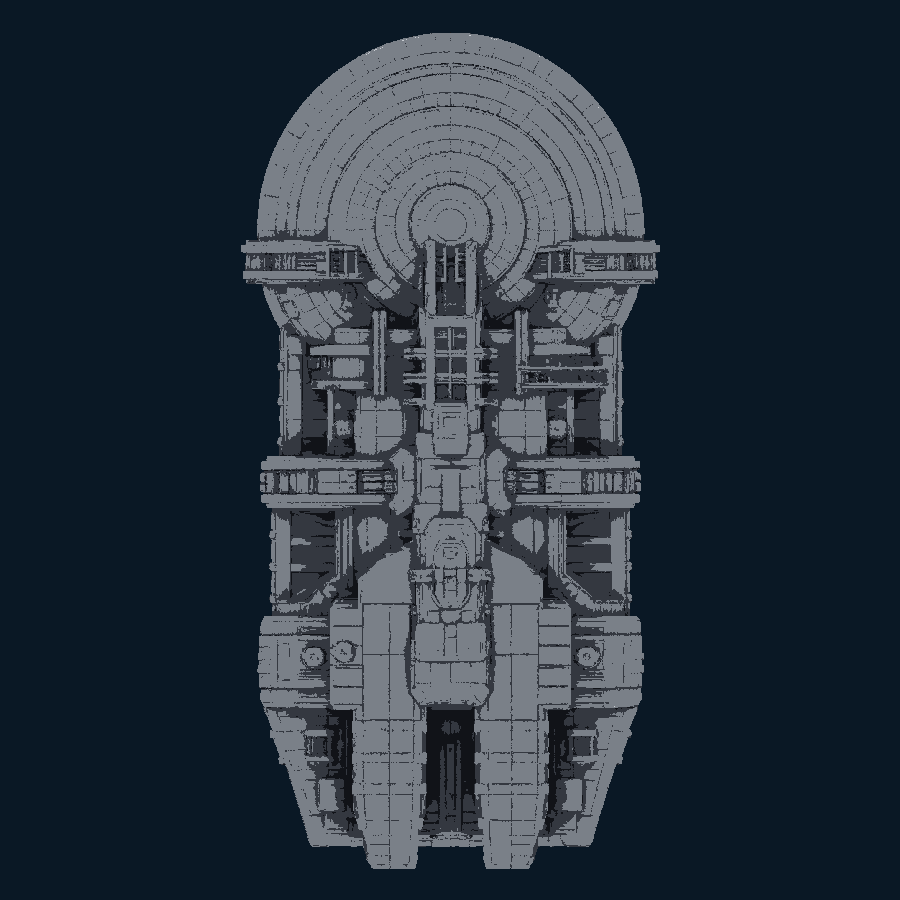
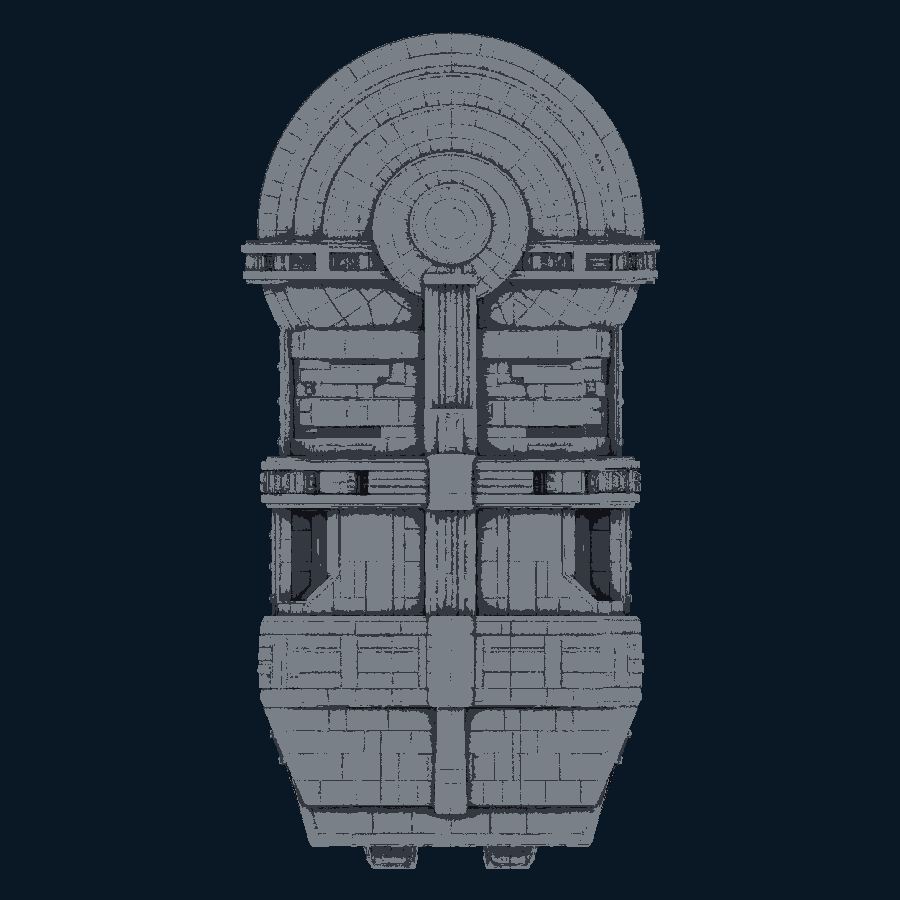
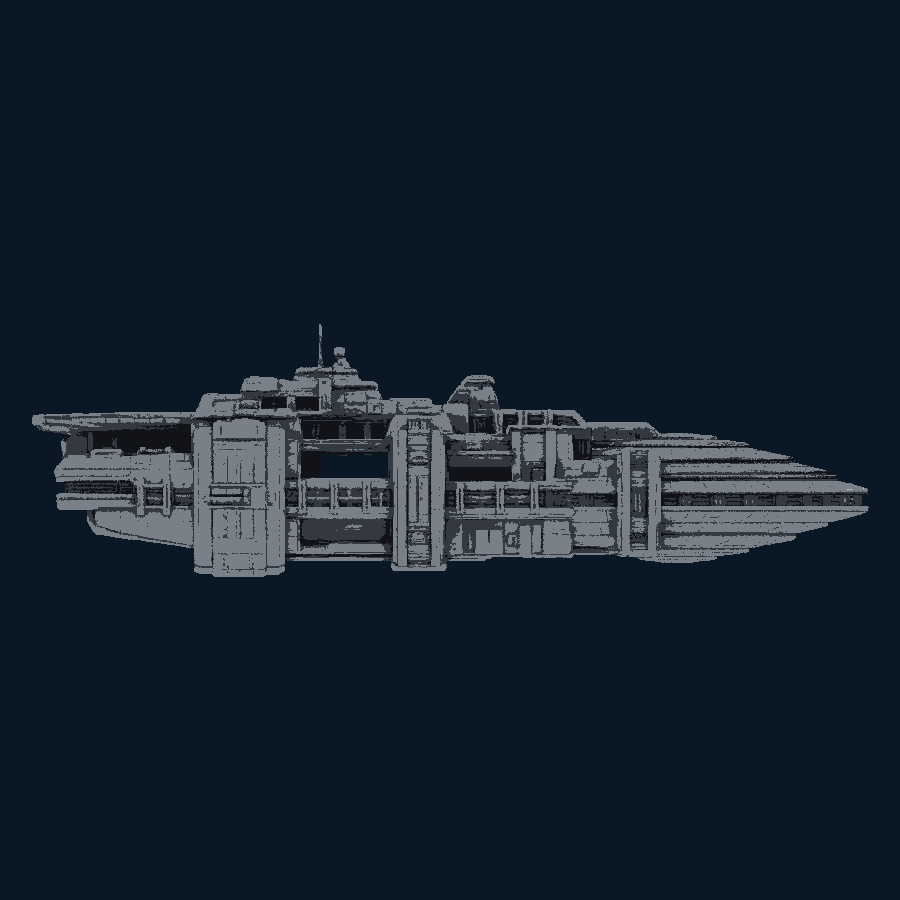
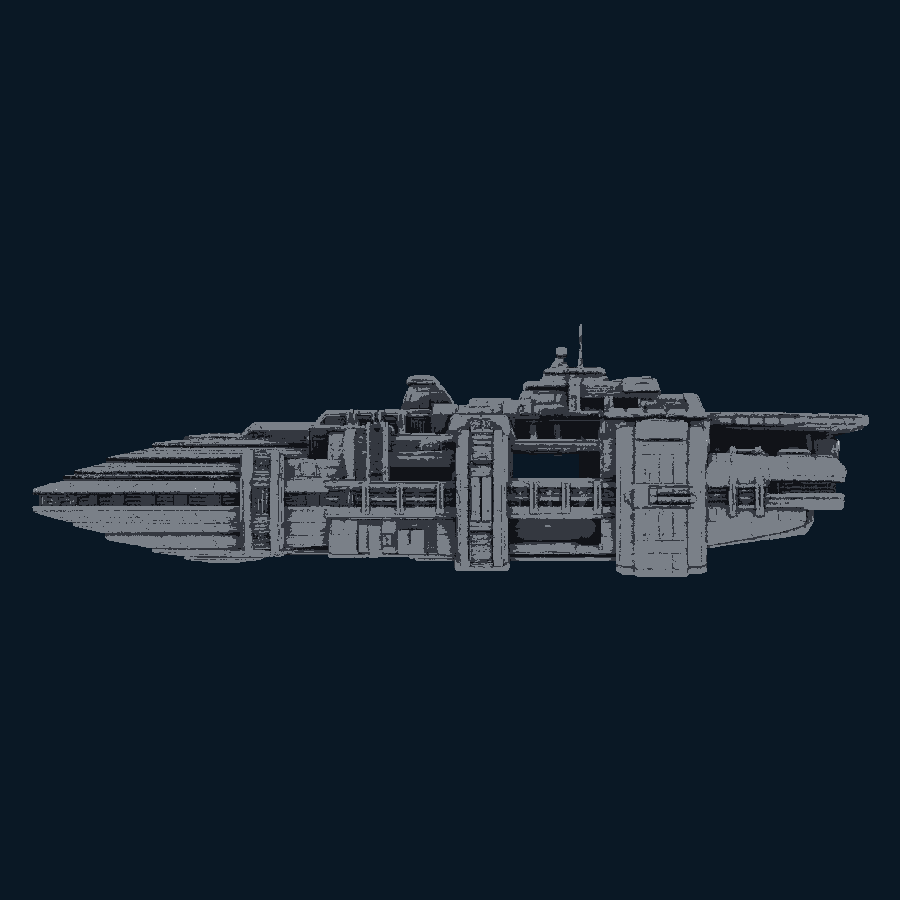
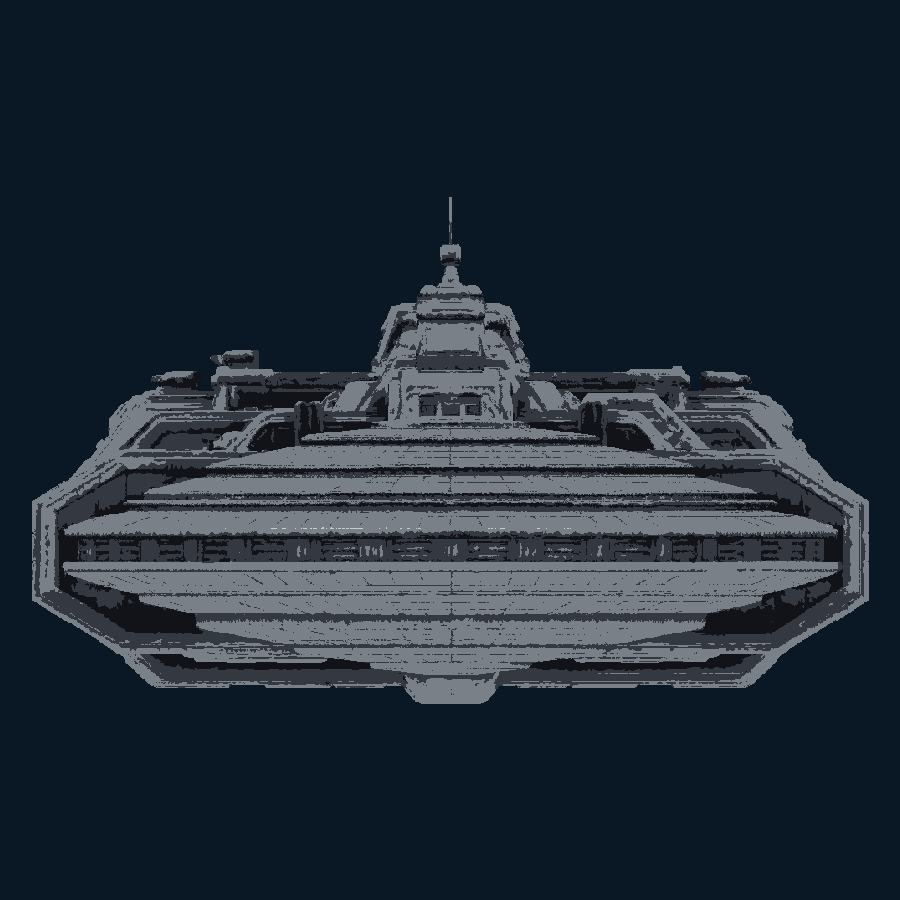
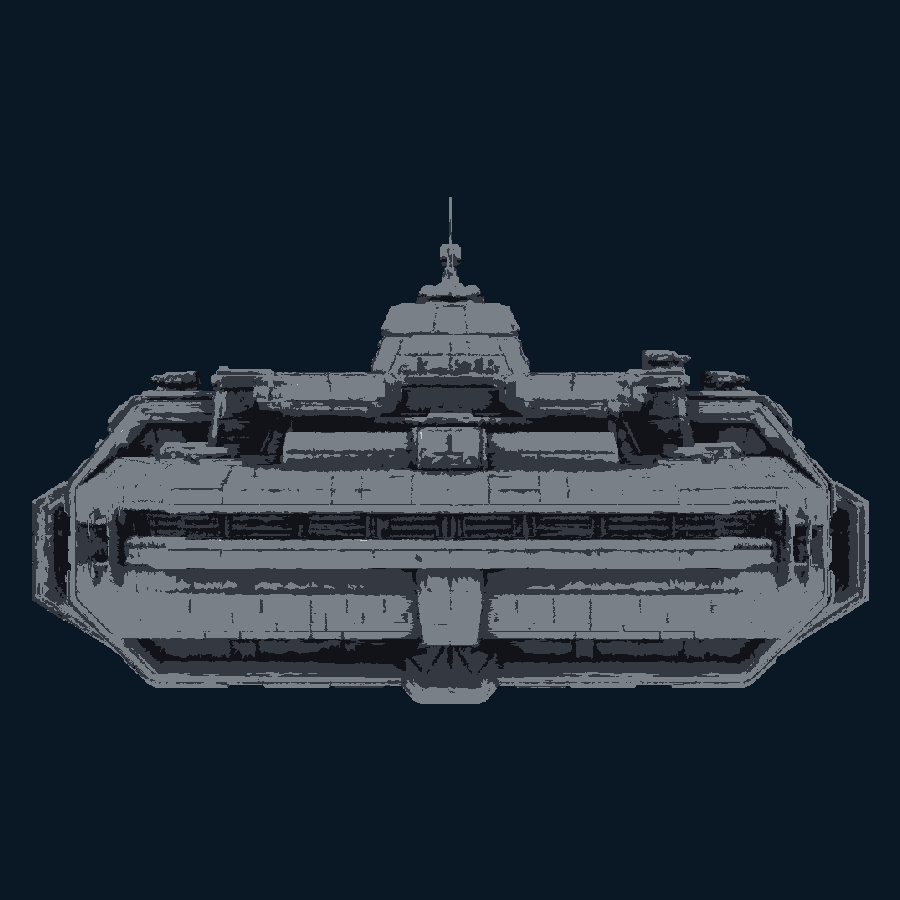
Longitudinal decks and recessed carrier galleries sit behind ShadowWall’s expansive armored face. A central command tower and disc-shaped bow distinguish its profile.
Vessel Profile
Weapons & Armament
Recessed carrier galleries deploy the embarked force
Dimensions & Scale
Length 2,000 m × Width 999 m × Height 605 m. Fictional overall dimensions in standard operating configuration.
External Anatomy
A broad armored face leads into long internal deck arrangements and recessed carrier galleries. A central command tower rises above the deep body. The disc-shaped bow forms the forward end, with the deployment spaces extending behind it.
Functional Architecture
Longitudinal decks organize the service flow between the carrier galleries and the central command structure. Launch scheduling and fleet coordination work together to prevent deployment traffic from crowding defensive lanes.
Technical Specifications
Offensive rating: 77/100 — Recessed carrier galleries deploy the embarked force
Defensive rating: 94/100 — A broad armored face screens longitudinal decks and recessed carrier galleries
Mobility rating: 25/100 — Maneuvering supports the formation and mission profile rather than unrestricted pursuit
Tactical cognition rating: 94/100 — Target assessment, formation coordination and response timing support fleet carrier fortress operations
Endurance rating: 91/100 — Mission duration depends on finite reserves, damage recovery and scheduled replenishment
Fleet support rating: 96/100 — Protects and deploys embarked forces while acting as the command center of an extended expedition
Fleet Role
Protects and deploys embarked forces while acting as the command center of an extended expedition. It creates a sheltered operating area for the fleet’s smaller vessels.
Life Between Stars
The disc-shaped bow and deep hull define a fortress-scale flight body. Proposed operations favor a stable formation center and protected relocations between major objectives.
Defense Architecture
A broad armored face screens longitudinal decks and recessed carrier galleries. The deep central body provides protected volume for command and deployment activities.
Operational Limits
Its scale makes rapid changes of theater difficult. Concentrating command, aviation and logistics in one hull creates operational dependence on keeping that hull’s approaches open.
Strategic Strengths
High endurance, extensive protected deployment spaces and strong coordination make it a mobile fleet center
Capability Assessment
Editorial doctrine: Protects and deploys embarked forces while acting as the command center of an extended expedition. It creates a sheltered operating area for the fleet’s smaller vessels. Its scale makes rapid changes of theater difficult. Concentrating command, aviation and logistics in one hull creates operational dependence on keeping that hull’s approaches open.
A · 79.5
Fleet-wide concept rating, 0–100; not simulated performance. Specialized strengths do not imply an equally high overall grade. Tactical Cognition describes sensing, coordination and command. Grade is the equal-weight mean: S ≥ 90, A ≥ 75, B ≥ 60, C ≥ 45, D < 45.
Technology Level
T1 — system-flight capability. This editorial classification reflects the documented space role; no phase-travel or world-engineering capability is inferred.
Weapon Class
W2 — heavy fleet or siege engagement. This editorial class does not imply strategic world-scale destruction.
T0 planetary · T1 system flight · T2 phase travel · T3 limited world engineering. W0 point defense · W1 ship combat · W2 heavy fleet combat · W3 strategic theater systems. Technology and weapon classes are independent of the profile grade.
History & Lineage
Universe lore · authored service history
Origin
Created for expeditions too large to rely on a single-purpose carrier but too mobile to remain tied to a fixed base
Lineage & Branch
Carrier-command fortresses. Its fleet assignment follows the operational doctrine of this lineage.
Fleet or Unit
Longwall Expeditionary Fleet
Individual History
The Shadowed Anchorage — ShadowWall received an expedition’s returning craft while its escorts formed a moving perimeter. The carrier galleries remained dark except for the lights marking the recovery sequence.
The Long Wall — When a damaged outpost could no longer command the local screen, ShadowWall assumed its coordination duties without halting the evacuation. Its crew began calling the resulting protected corridor the Long Wall.