
Overview
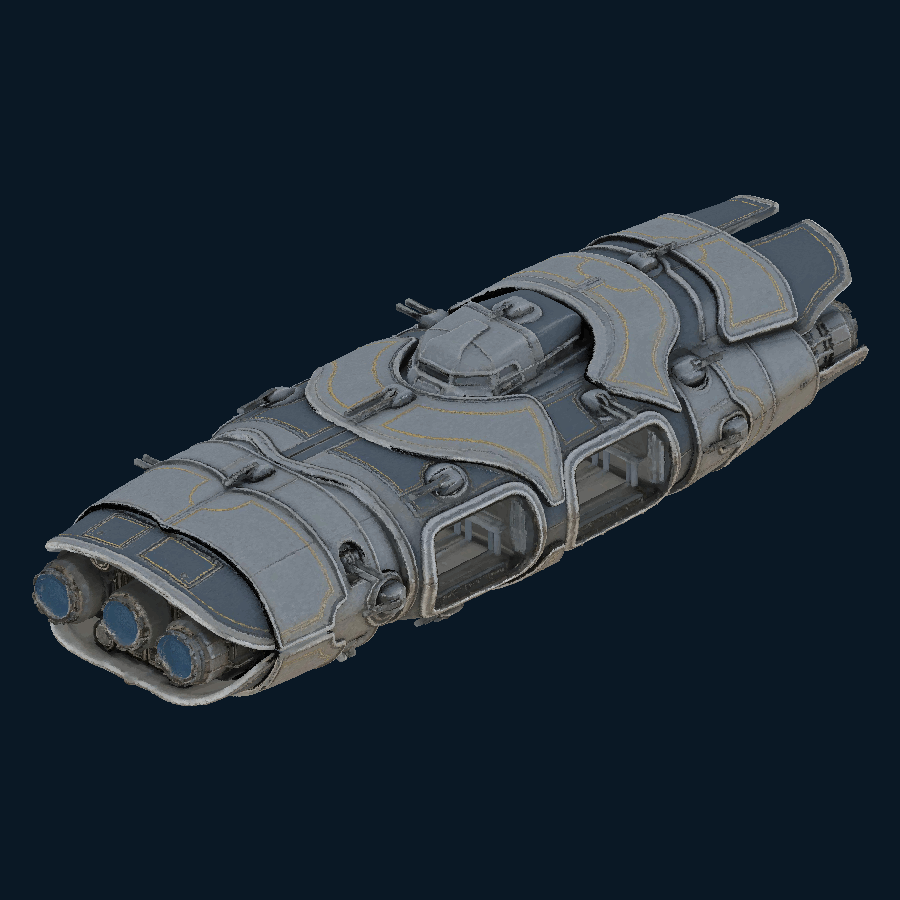
Protected internal hangars and overlapping armor organize this carrier around the safe launch and recovery of its flight group
Vessel Profile
Weapons & Armament
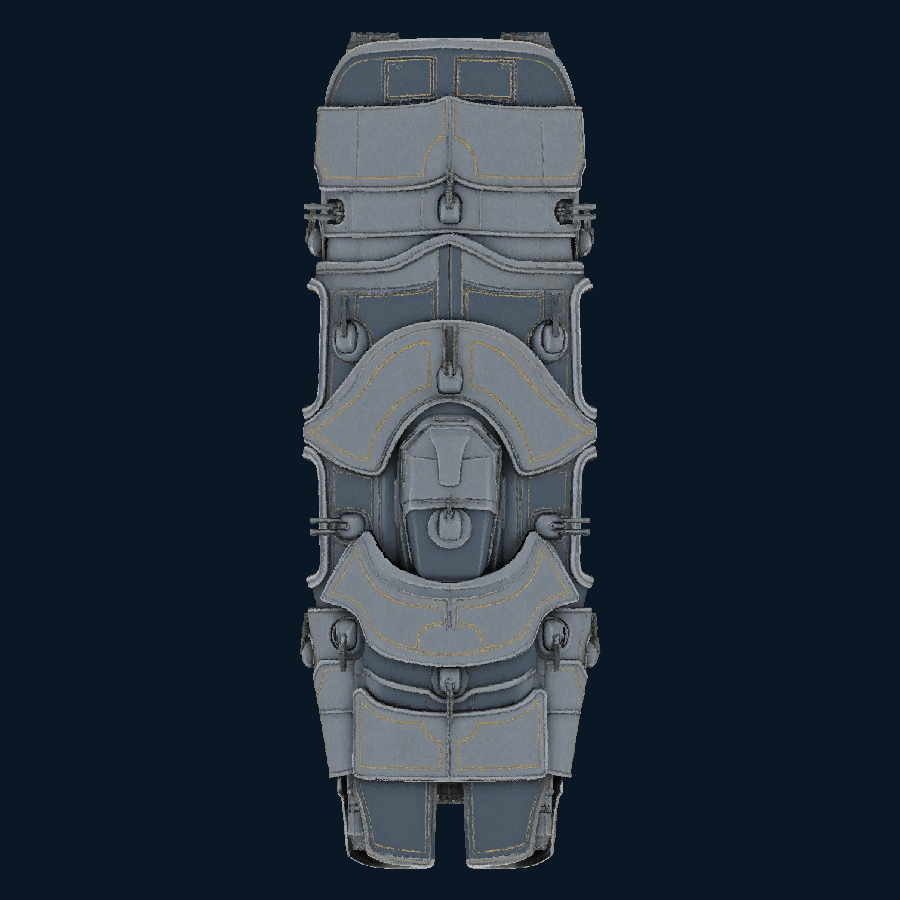
Protected strike-craft deployment is the carrier’s principal offensive contribution. Its defenses include recessed defensive batteries, point defense and internal missile cells; the published release does not fix a final loadout count.
Dimensions & Scale
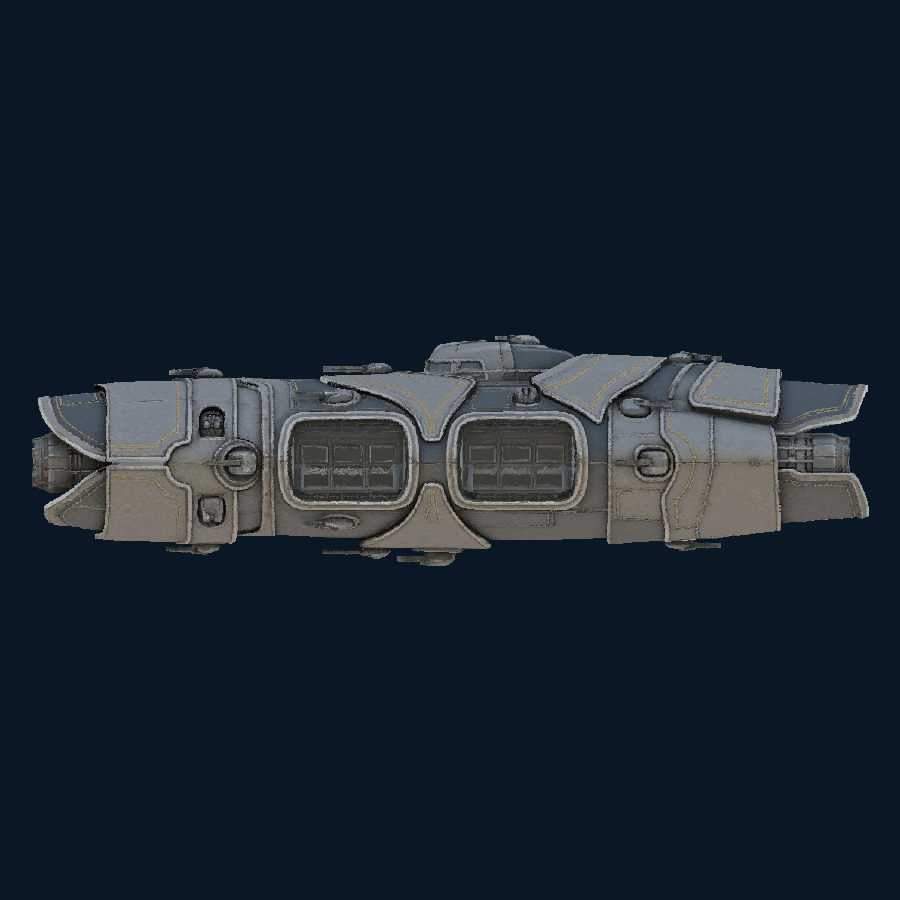
Length 1,400 m × Width 503 m × Height 385 m. Fictional overall dimensions in standard operating configuration.
External Anatomy
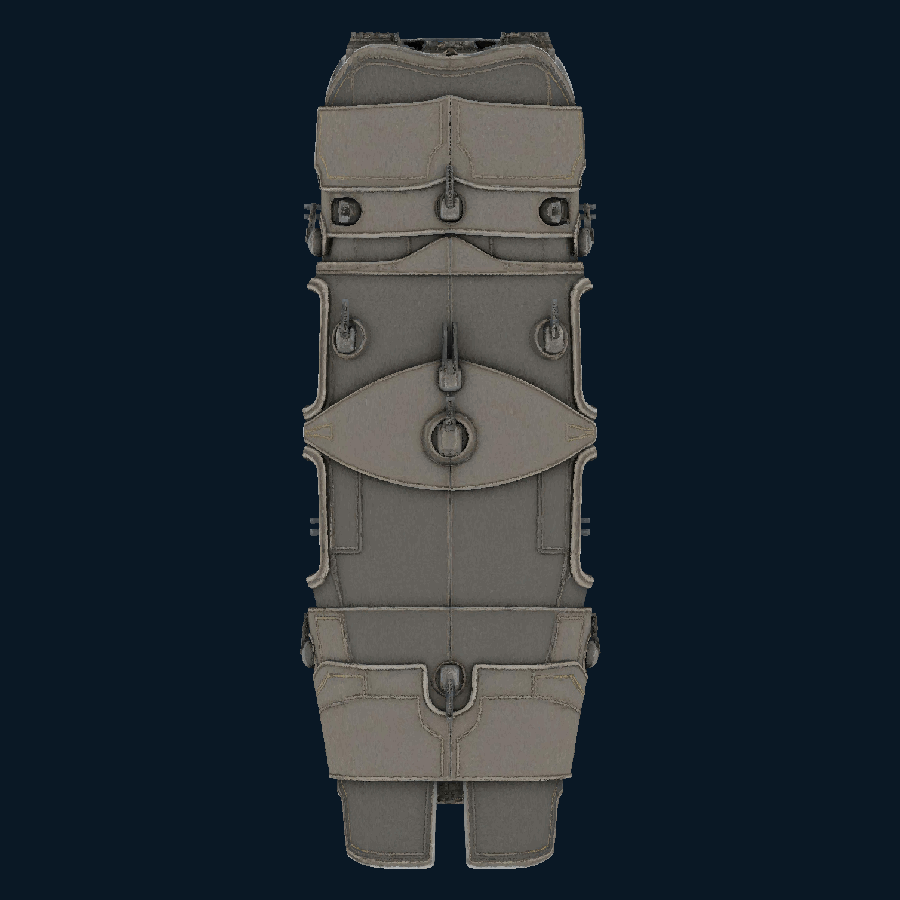
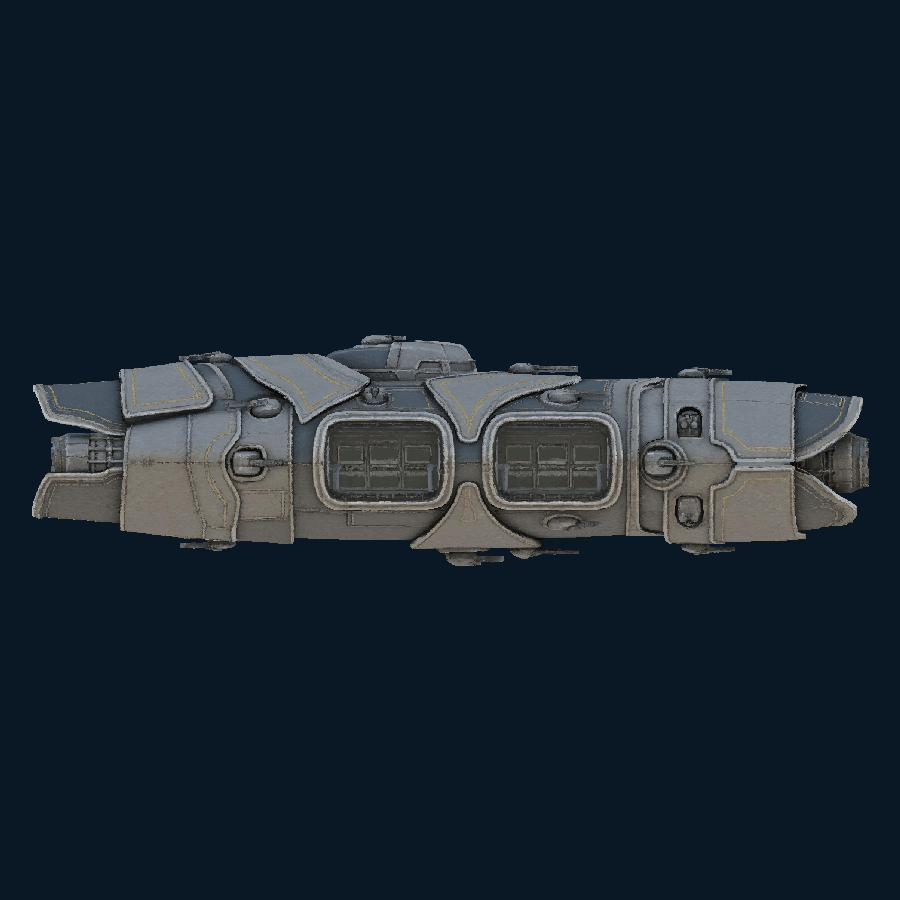
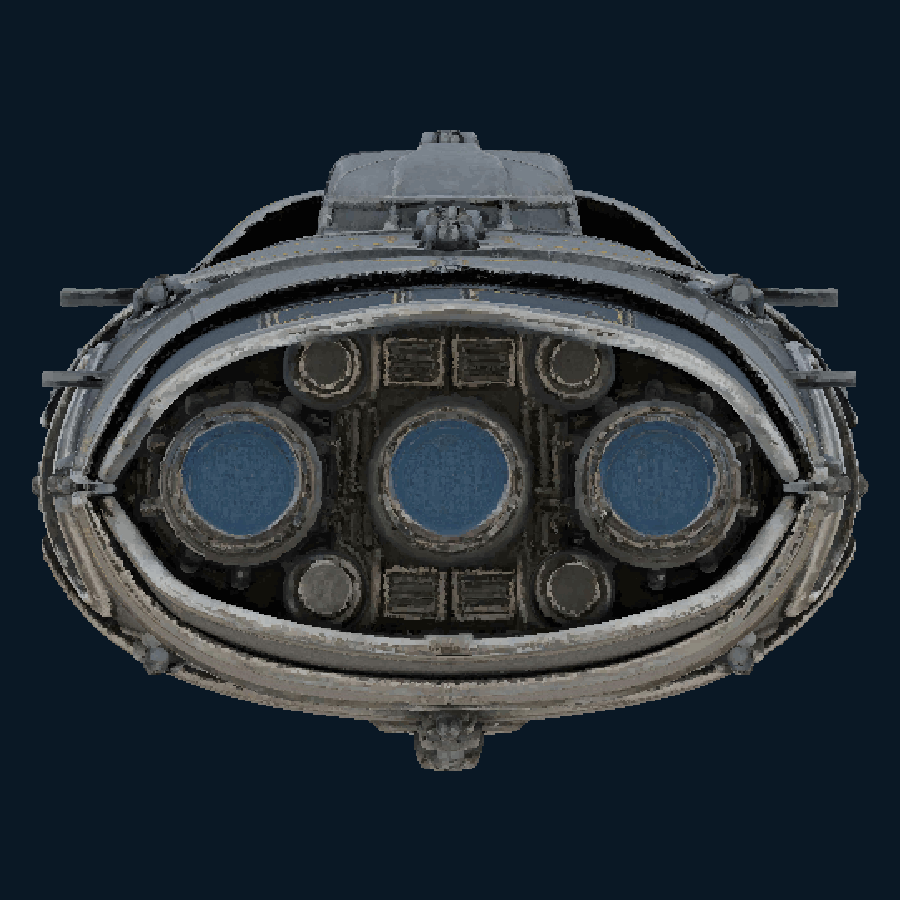
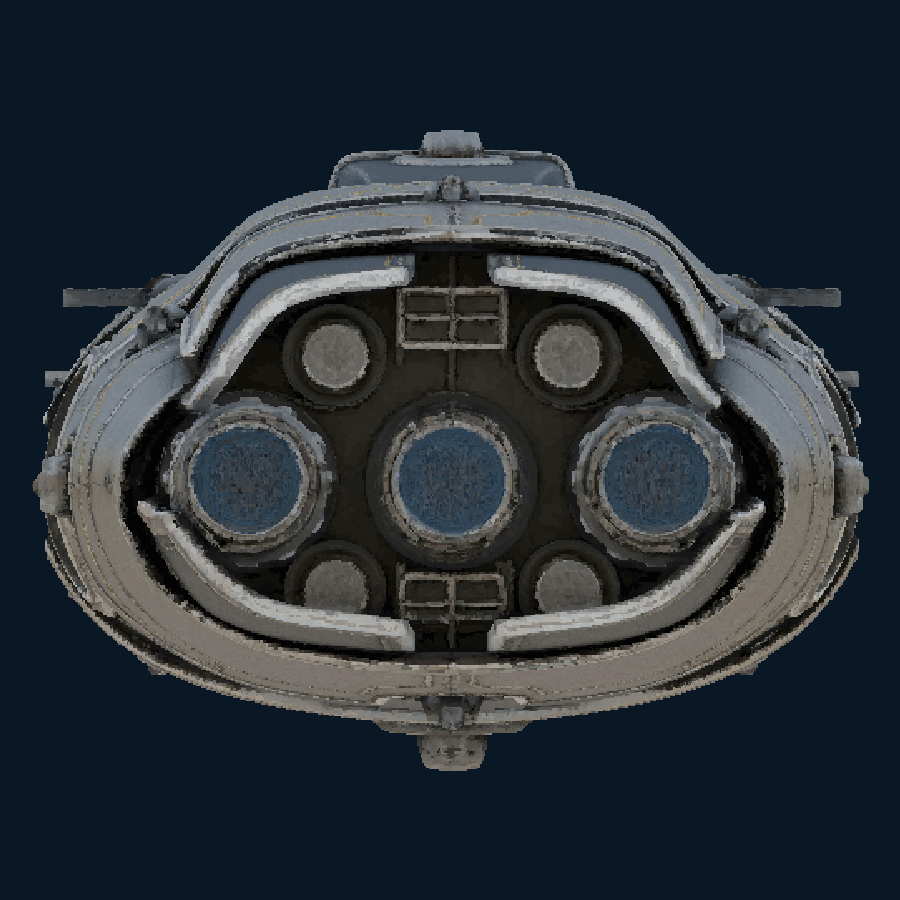
Overlapping protective plates enclose a broad carrier body. Recessed bays preserve clear recovery approaches, while propulsion remains sheltered behind the rear structure.
Functional Architecture
Internal hangars connect launch, recovery and rearming functions. Fleet coordination and defensive systems keep the carrier’s working spaces usable while its air group operates beyond the hull.
Technical Specifications
Offensive rating: 40/100 — Protected strike-craft deployment is the carrier’s principal offensive contribution
Defensive rating: 76/100 — Overlapping armor plates protect recessed bays and internal hangars
Mobility rating: 25/100 — Maneuvering supports the formation and mission profile rather than unrestricted pursuit
Tactical cognition rating: 63/100 — Target assessment, formation coordination and response timing support heavy armor fleet carrier operations
Endurance rating: 61/100 — Mission duration depends on finite reserves, damage recovery and scheduled replenishment
Fleet support rating: 84/100 — Deploys and coordinates strike craft while sustaining recovery, repair and rearming behind substantial protection
Fleet Role
Deploys and coordinates strike craft while sustaining recovery, repair and rearming behind substantial protection. Its offensive reach depends on the air group and the fleet screen working together.
Life Between Stars
Propulsion remains sheltered behind the armored aft structure. The proposed carrier station follows the battle line at a distance that preserves recovery space while keeping the air group within useful reach.
Defense Architecture
Overlapping armor plates protect recessed bays and internal hangars. Shielded propulsion and redundant defenses reduce the exposure of essential carrier functions.
Operational Limits
Carrier effectiveness falls when launch routes are blocked or returning craft overwhelm recovery capacity. Its protected hull cannot replace the scouting and interception work of its embarked wing.
Strategic Strengths
Protected aviation spaces, repeated sortie support and strong coordination let the carrier sustain an air group under pressure
Capability Assessment
A heavily enclosed carrier body protects embarked craft and recovery spaces. Fleet support is its principal strength; moderate direct attack and slow repositioning limit its independent combat grade.
C · 58.2
Fleet-wide concept rating, 0–100; not simulated performance. Specialized strengths do not imply an equally high overall grade. Tactical Cognition describes sensing, coordination and command. Grade is the equal-weight mean: S ≥ 90, A ≥ 75, B ≥ 60, C ≥ 45, D < 45.
Technology Level
T1 — system-flight capability. This editorial classification reflects the documented space role; no phase-travel or world-engineering capability is inferred.
Weapon Class
W1 — carrier-wing or interceptor engagement; strength depends on coordinated craft and support
T0 planetary · T1 system flight · T2 phase travel · T3 limited world engineering. W0 point defense · W1 ship combat · W2 heavy fleet combat · W3 strategic theater systems. Technology and weapon classes are independent of the profile grade.
History & Lineage
Universe lore · authored service history
Origin
Developed around the principle that a carrier’s most valuable armor protects the work required between sorties
Lineage & Branch
Heavy armored fleet carriers. Its fleet assignment follows the operational doctrine of this lineage.
Fleet or Unit
Gilded Shell Carrier Division
Individual History
The Closed Hangar — After a damaged strike craft fouled a recovery approach, IronCarapace shifted the returning wing to its protected alternate sequence and held its course until the deck crews cleared the obstruction. The division kept it visible as a tribute to the crews who restored flight operations while the screen was still under attack.