
Overview
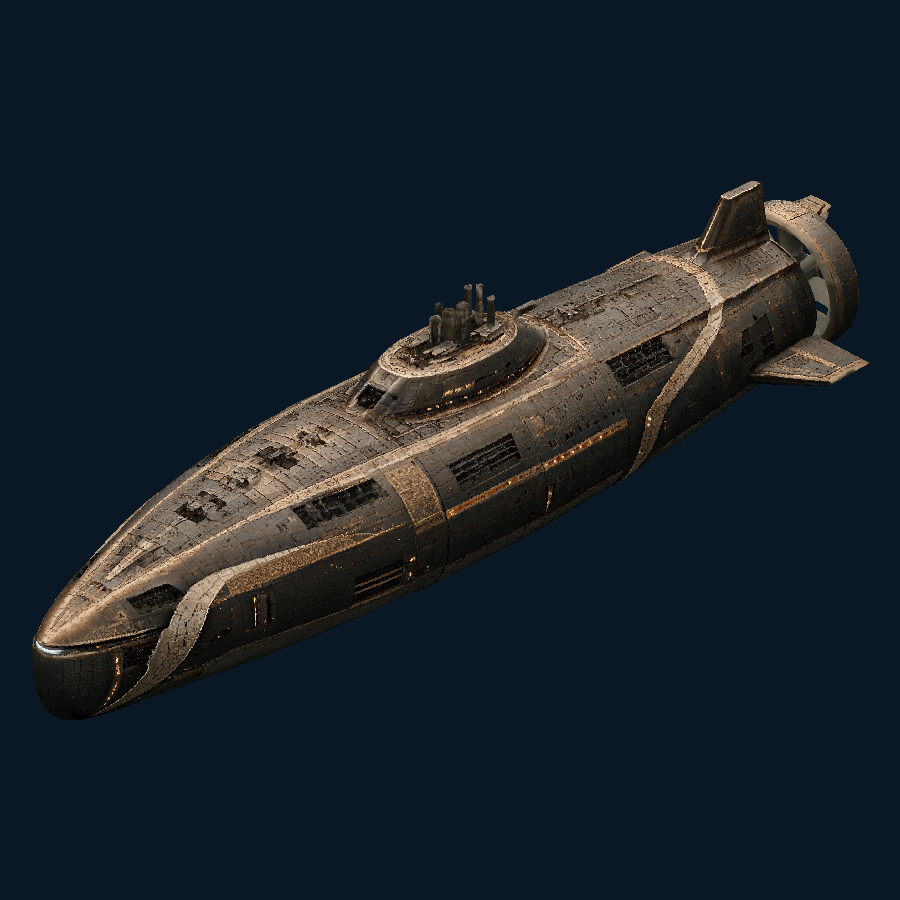
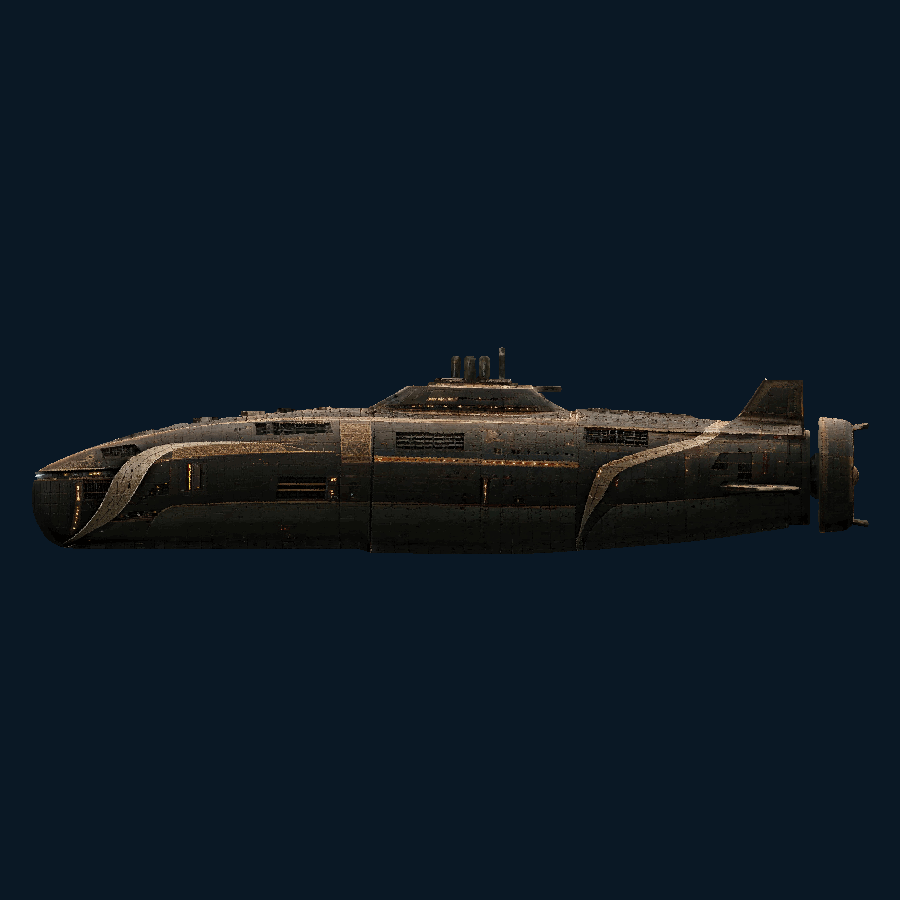
Gildedwake-class Undersea Cruiser is a Human deep-ocean combatant built around quiet pursuit, protected weapons and sustained independent patrol. Its warm titanium upper hull and bronze reinforcement bands enclose a compartmented pressure body, while a single shrouded stern drive preserves a clean underwater silhouette.
Vessel Profile
Dimensions & Scale
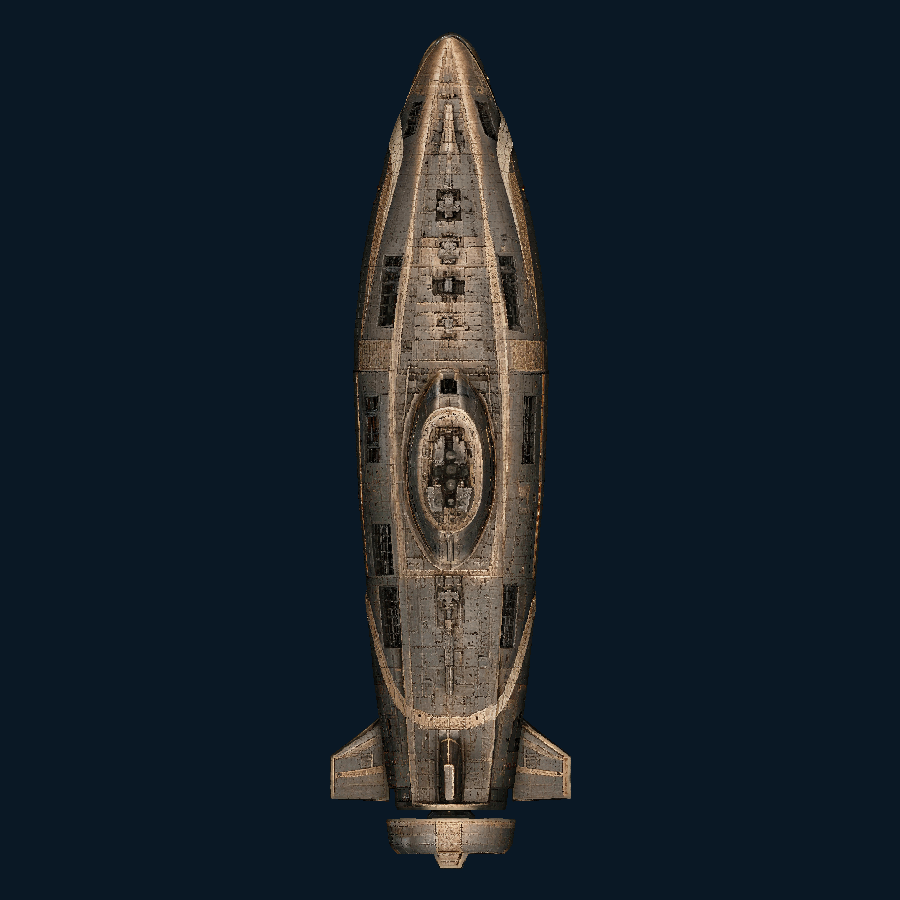
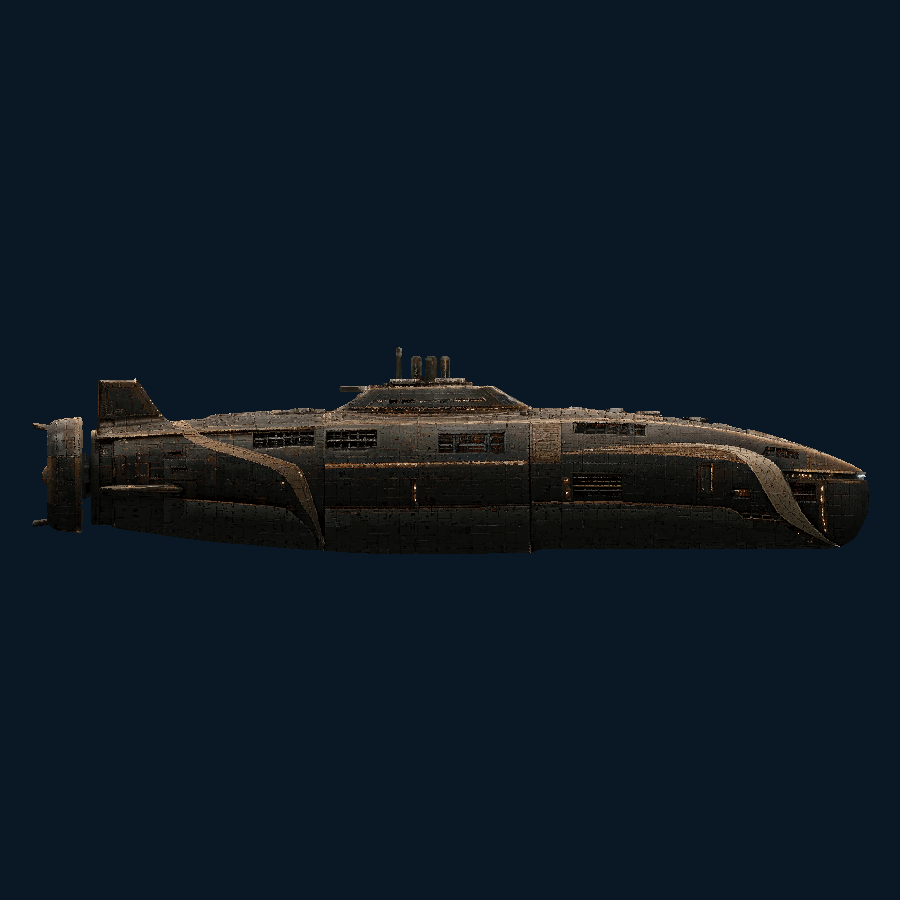
Length 205 m × Width 58.8 m × Height 50.7 m. Proposed overall concept dimensions use the midpoint of the supplied 190–220 m length range; width and height follow the supplied model proportions. Height describes the complete vessel, not its operating depth.
Proposed submerged displacement: approximately 340,000 ton (metric tons). Fictional concept mass estimated from hull size, assumed immersed volume and submerged operating condition; not a measured or engineering-validated value.
Weapons & Armament
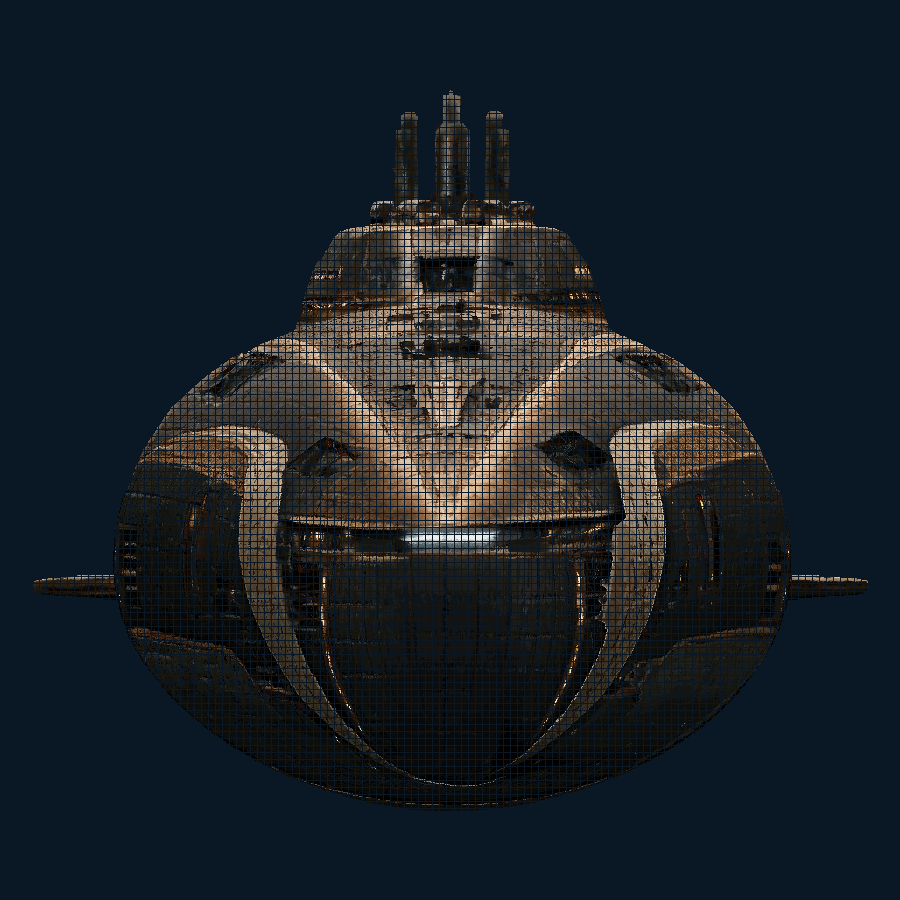
Recessed torpedo galleries provide the primary anti-vessel armament. Flush, shuttered missile cells carry encapsulated strike weapons, while compact protected interceptor launchers form a close-defense layer. Countermeasure tubes deploy acoustic decoys away from the pressure body. UUV support bays extend reconnaissance and route inspection without exposing fragile equipment during transit.
External Anatomy
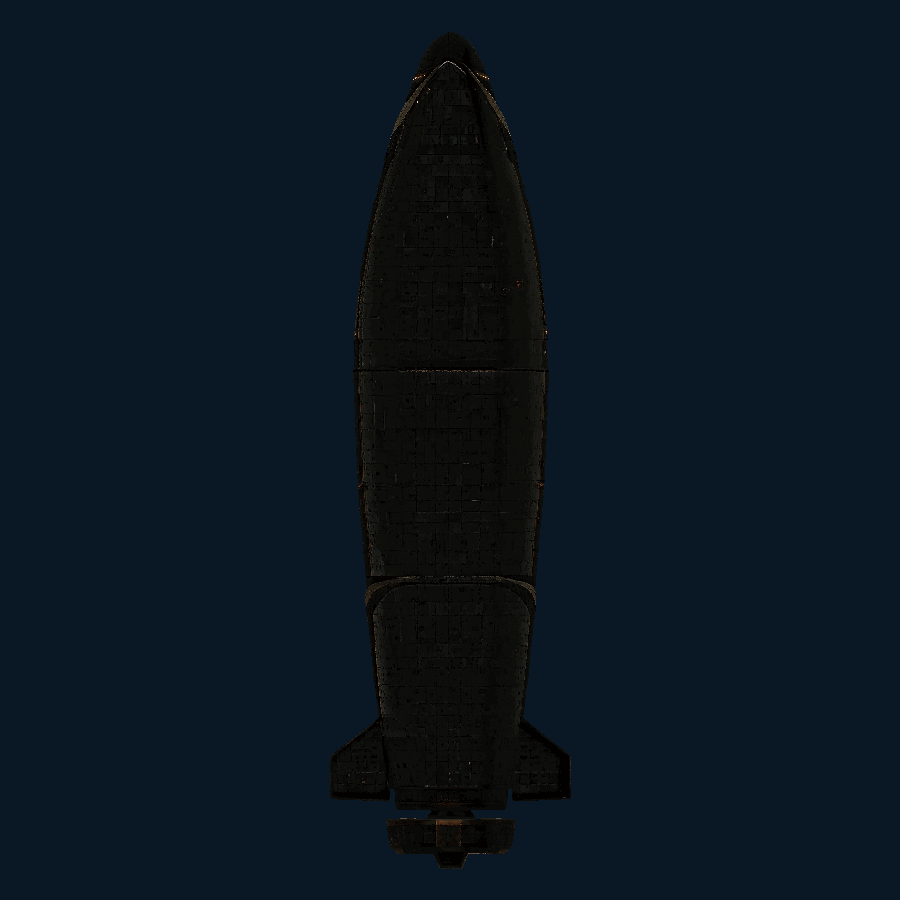
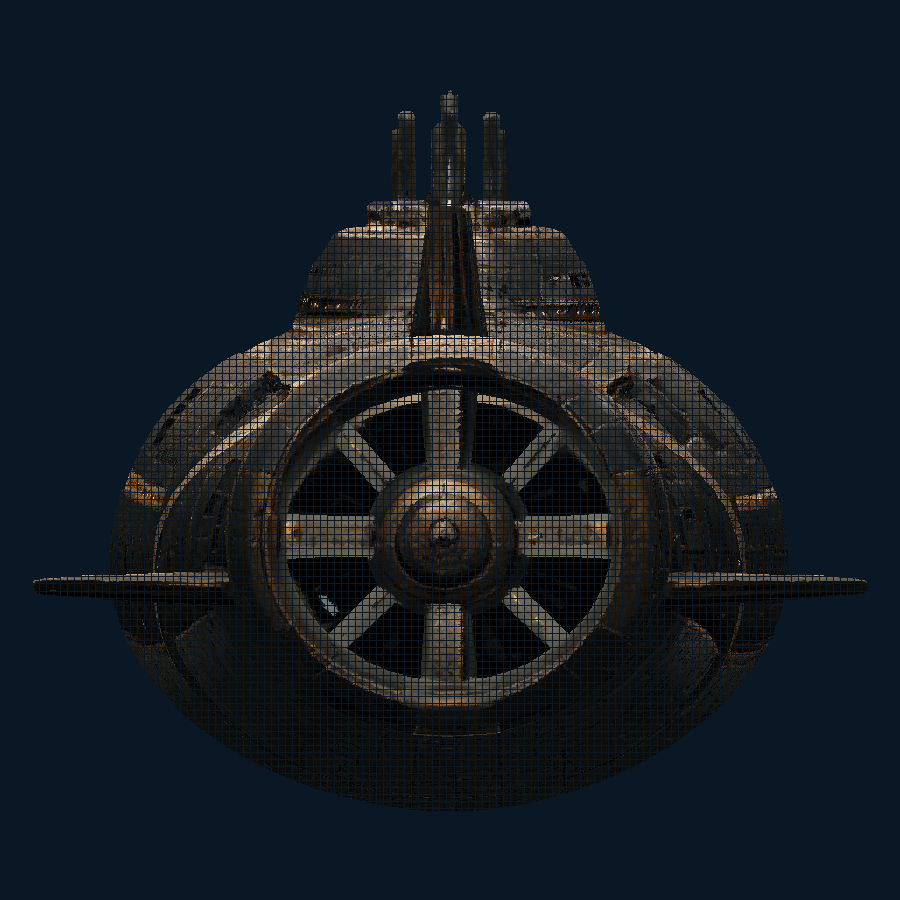
A broad, smoothly tapered bow leads into a deep central body with room for separated pressure compartments, magazines and power machinery. The low command citadel blends into the upper hull. Short control surfaces and a narrowing stern guide flow toward one integrated propulsion ring. Champagne titanium and warm steel upper armor contrast with charcoal acoustic treatment beneath. Shallow bronze and gold bands trace reinforcement zones, leaving sonar faces, weapon shutters and moving surfaces clear.
Functional Architecture
A conformal bow sonar sector works with flank acoustic arrays to build a distributed contact picture. Protected optical apertures assist close navigation; retractable communications and sensor masts remain stowed during quiet patrol. Proposed internal arrangements isolate machinery, magazines and command spaces, with redundant local controls and service routes between pressure compartments. Autonomous scouts relay observations through short, scheduled underwater communication windows.
Technical Specifications
Offensive rating: 65/100 — Protected torpedo galleries and flush strike cells support deliberate cruiser engagements
Defensive rating: 68/100 — Compartment isolation, acoustic treatment and layered countermeasures protect the pressure body
Mobility rating: 58/100 — A coherent streamlined hull supports quiet repositioning, with agility constrained by its broad central body
Tactical cognition rating: 74/100 — Bow and flank sensing combine with autonomous reconnaissance to refine contact tracks
Endurance rating: 64/100 — Internal stores and separated machinery support extended patrols within finite resupply limits
Fleet support rating: 58/100 — Scout handling, escort coverage and local contact sharing support nearby formations
Fleet Role
Escorts high-value submerged formations, patrols deep-water approaches and intercepts hostile vessels before they reach defended routes. Gildedwake favors a carefully maintained contact picture and coordinated torpedo attacks. It can operate ahead of a heavier command bastion as a quiet screening cruiser, returning reconnaissance vehicles between patrol legs.
Undersea Operations
One large, deeply integrated shrouded pump-jet or rim-drive provides submerged propulsion. The protected ring, smooth stern transition and restrained control surfaces support low-disturbance cruising. Quiet movement is the preferred operating state; faster turns and propulsion surges increase acoustic exposure. The vessel belongs to the underwater domain. Its design supplies no independent atmospheric or orbital flight capability.
Defense Architecture
A compartmented load-bearing pressure body contains flooding and separates critical functions. Charcoal anechoic treatment and faired openings support acoustic discretion. Decoy launchers and recessed interceptors offer active protection, while reserve controls allow damaged sections to be isolated. Warm metallic reinforcement bands remain shallow and continuous so ornament does not interrupt sensors or hull flow.
Operational Limits
The broad central body requires room to maneuver and limits access to narrow undersea passages. Quiet patrol restricts acceleration and communication tempo. Opening weapon shutters, recovering scouts or extending a mast can expose the cruiser. Damage to the single stern drive can sharply reduce mobility; pressure-hull damage may force an early ascent. Maximum operating depth, speed and reactor output remain unspecified.
Strategic Strengths
Integrated sensing, protected weapons and a continuous hydrodynamic hull allow the cruiser to patrol with little exposed equipment. Its substantial internal volume supports separated combat systems, while autonomous reconnaissance reduces the need to move the whole ship toward uncertain contacts. The warm-metal armor scheme gives the class a distinct Human naval identity.
Capability Assessment
Proposed fictional doctrine profile: strong contact assessment, balanced cruiser firepower and compartmented protection, with moderate mobility and endurance. Ratings describe intended roles rather than measured performance. Successful engagements depend on acoustic conditions, reconnaissance discipline and careful positioning.
B · 64.5
Fleet-wide concept rating, 0–100; not simulated performance. Specialized strengths do not imply an equally high overall grade. Tactical Cognition describes sensing, coordination and command. Grade is the equal-weight mean: S ≥ 90, A ≥ 75, B ≥ 60, C ≥ 45, D < 45.
Technology Level
T0 — advanced planetary undersea engineering, autonomous reconnaissance and quiet submerged propulsion
Weapon Class
Proposed W1 — cruiser-scale torpedo and missile combat, with local interception and escort capability
T0 planetary · T1 system flight · T2 phase travel · T3 limited world engineering. W0 point defense · W1 ship combat · W2 heavy fleet combat · W3 strategic theater systems. Technology and weapon classes are independent of the profile grade.
History & Lineage
Universe lore · authored service history
Origin
Conceived for deep-ocean routes where surface support is intermittent and submerged escorts must make independent decisions. The design combines a pressure-worthy central body with recessed armament, a low command structure and protected rim-drive propulsion. Its refined metalwork follows structural and maintenance boundaries rather than projecting decoration into the water.
Lineage & Branch
Gildedwake undersea-cruiser branch. The class emphasizes a flowing forebody, restrained warm-metal reinforcement bands and a clearly integrated stern ring. It occupies the patrol and interception role alongside larger Human underwater command vessels.
Fleet or Unit
Proposed assignment: Human deep-ocean escort squadrons and independent submerged patrol groups
Individual History
The Amber Watch — In this authored service history, a Gildedwake cruiser takes station along a deep-water supply route after several relay buoys fall silent. It releases two reconnaissance groups and holds a quiet offset course while the crews compare faint contacts against the surrounding terrain.
The Closed Passage — A hostile patrol approaches the supply corridor through a narrow channel. Gildedwake shares a compact contact report with the convoy escort, lays a decoy trail and shifts across the channel mouth. The opposing vessels turn away before the cruiser commits its protected torpedo galleries.
The Long Return — One scout returns with a damaged navigation unit. The cruiser slows for recovery, retrieves its recorded survey and escorts the delayed supply group through a wider route. The patrol becomes a training account about preserving reconnaissance, keeping weapons ready and completing the mission without sacrificing acoustic discipline.