
Overview
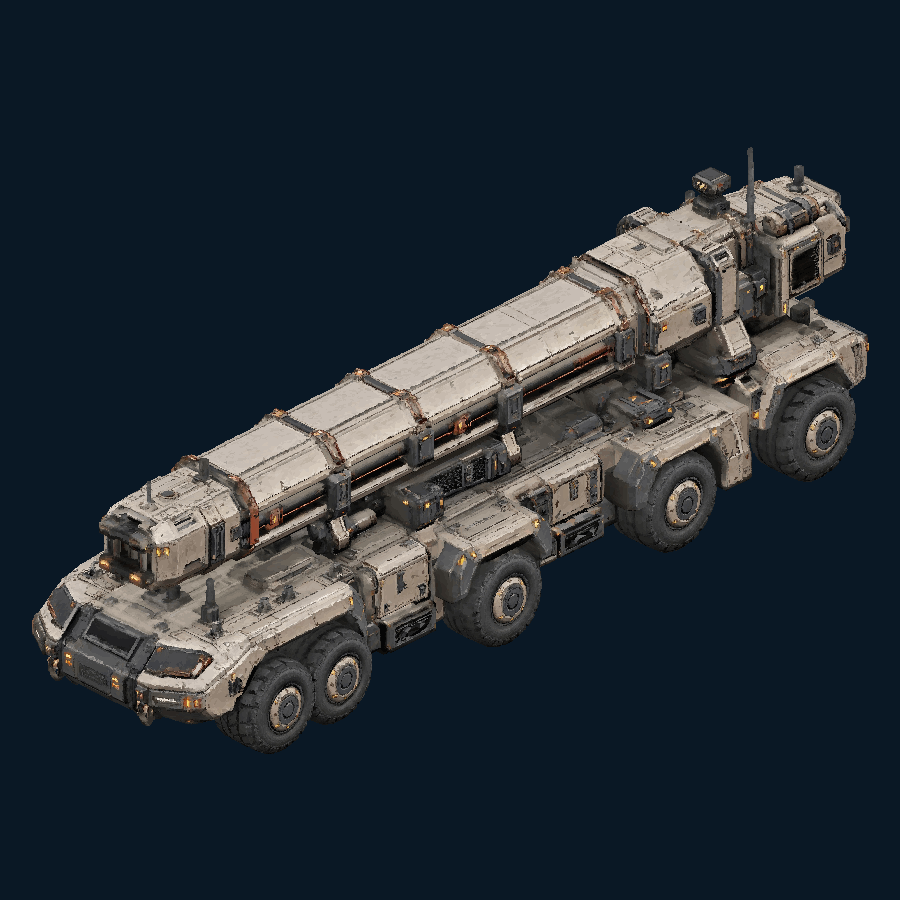
Longspine Precision Carrier is a Human ten-wheel ground platform for deliberate, high-value strikes. A protected central mission spine carries one enclosed fictional coil-assisted precision launcher, supported by automated handling, integrated sensing and modular cooling. Charge time and the cost of relocation define its battlefield rhythm.
Vessel Profile
Dimensions & Scale
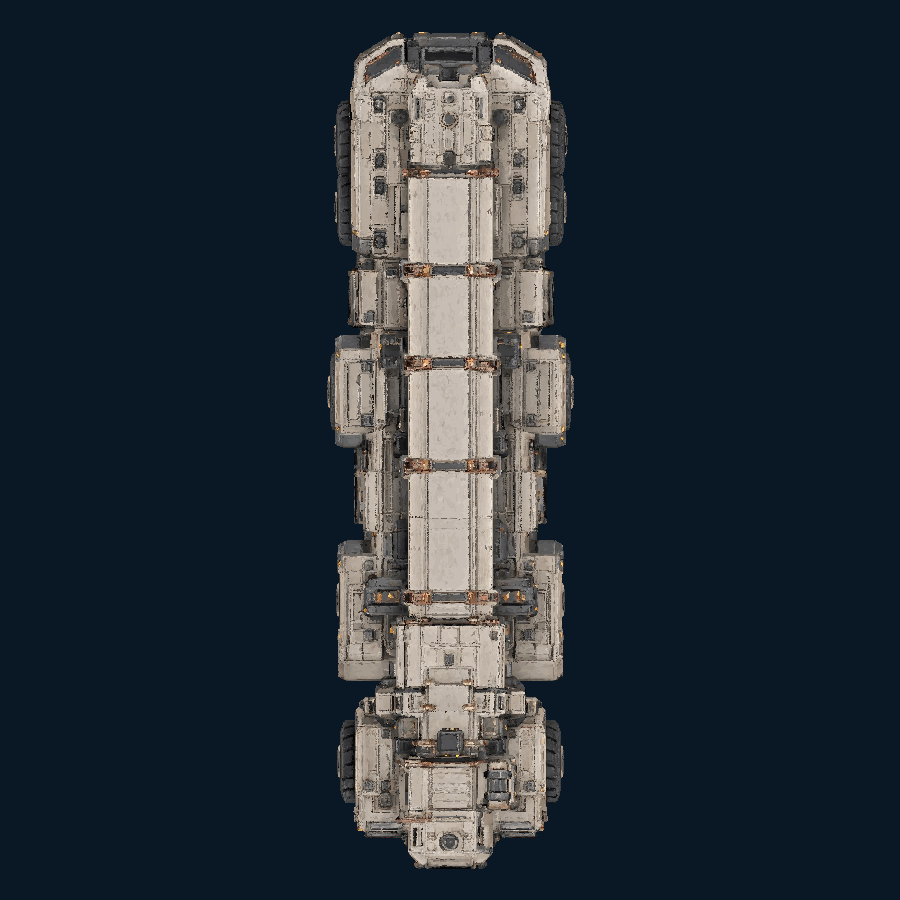
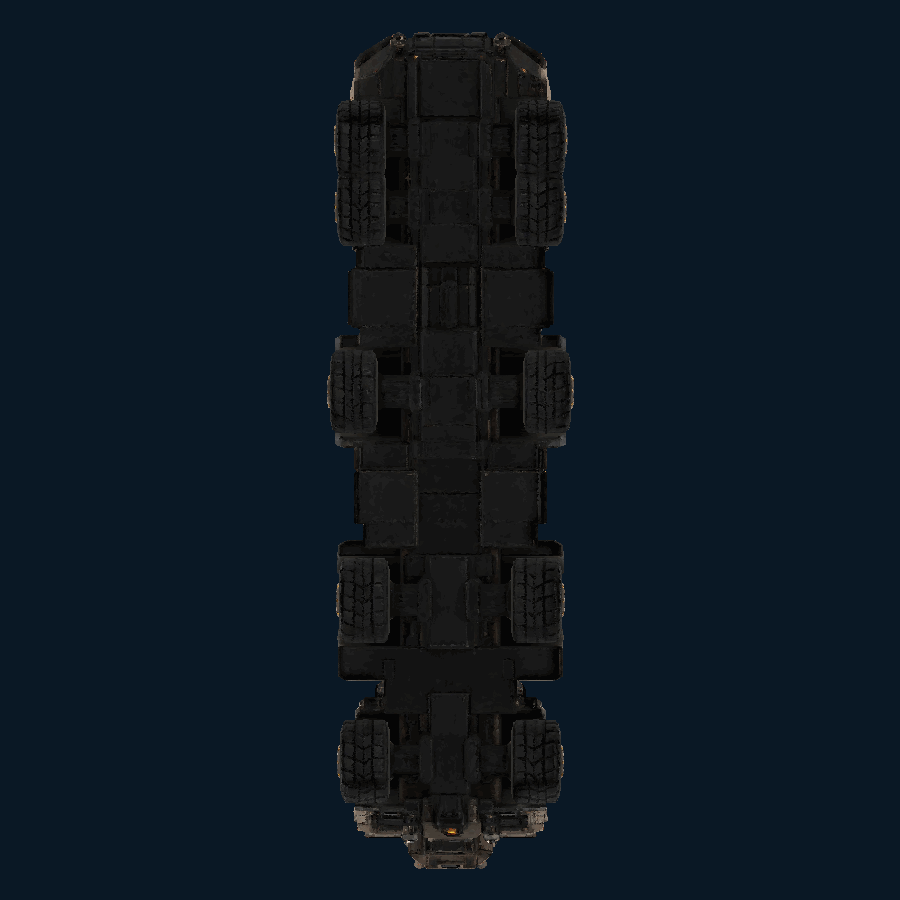
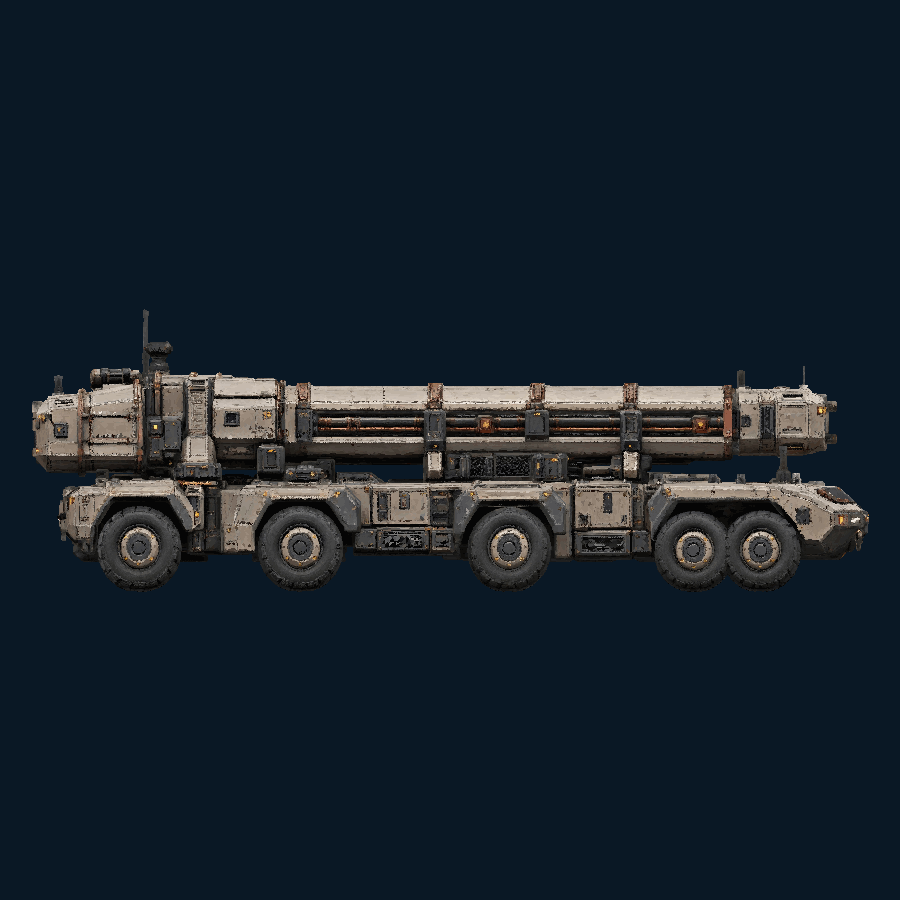
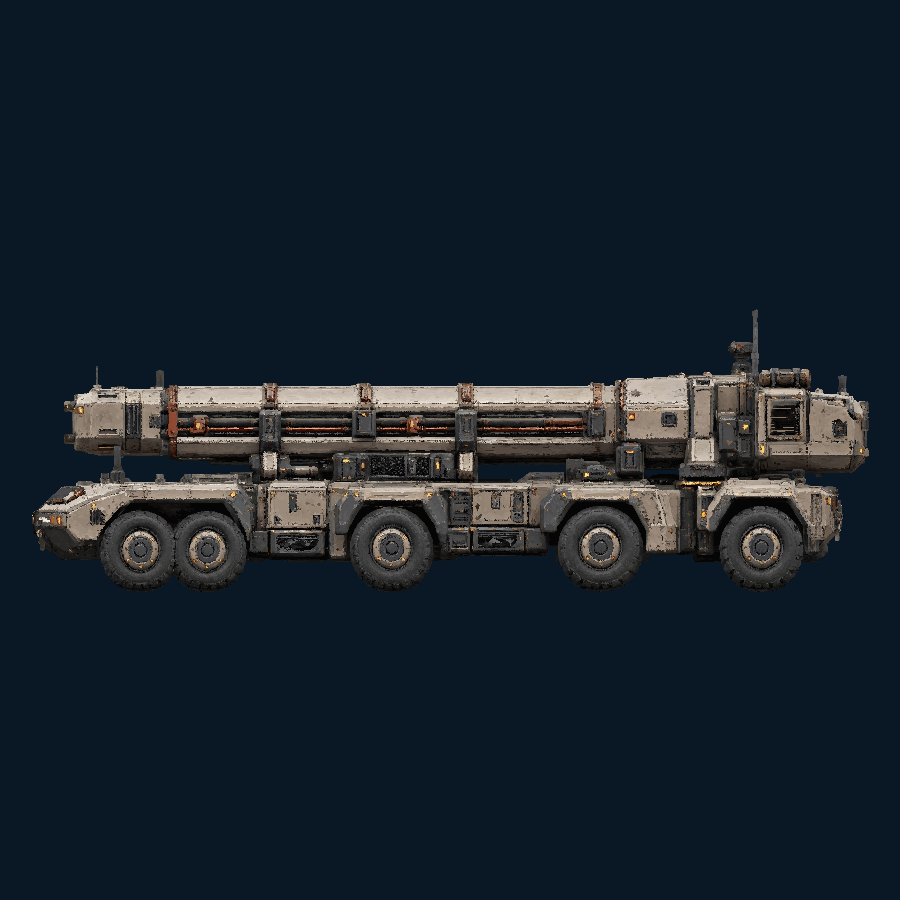
Length 22 m × Width 7 m × Height 5.5 m. Supplied fictional overall dimensions. Height is the complete vehicle in the depicted readiness state.
Proposed operating mass: approximately 140 ton (metric tons). Fictional concept estimate based on size, internal structure and operating environment; not measured performance.
Weapons & Armament
One enclosed fictional coil-assisted precision launcher is the dedicated combat payload. It delivers slow, aimed support effects against designated high-value game targets. The design does not add saturation batteries or a separate collection of secondary weapons; close defense remains limited and depends on the surrounding team.
External Anatomy
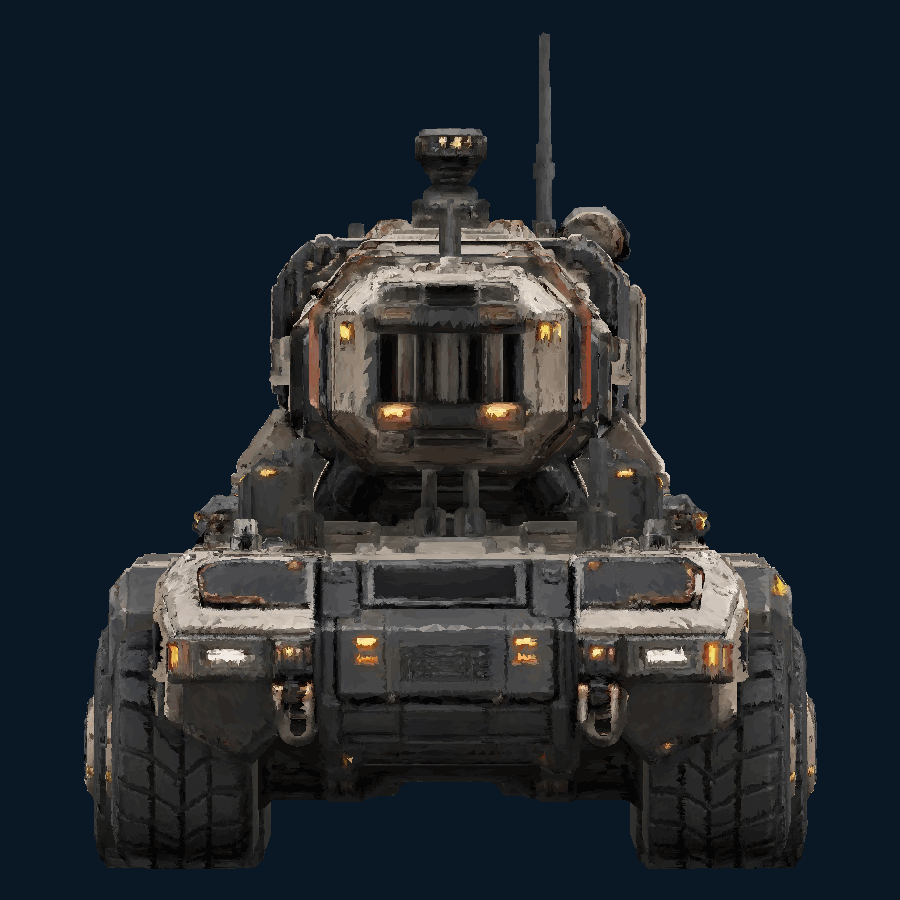
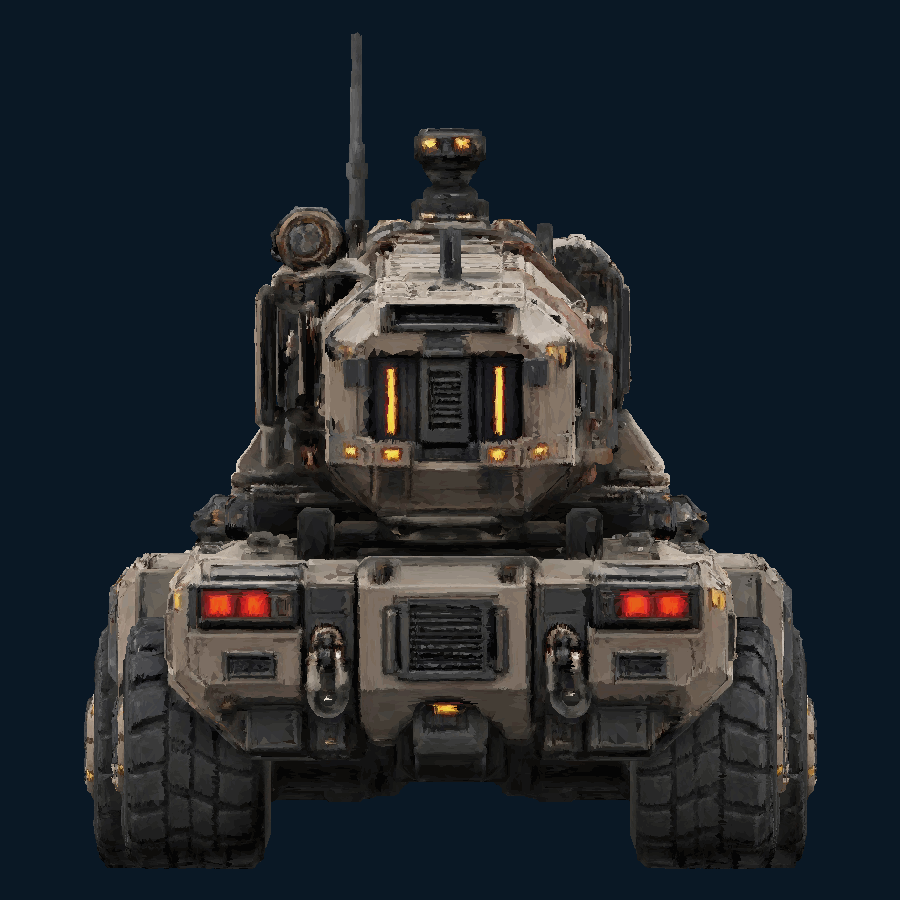
A stretched, low chassis carries ten load-bearing wheels in separated short wheel-bank housings. The uninterrupted mission spine rests on reinforced roots above the running gear, with protected service volume beneath and behind the payload. Warm titanium armor contrasts with charcoal machinery and restrained copper framing around the main system.
Functional Architecture
The protected mission spine carries structural load, power and data through a serviceable task-module boundary. Guarded connectors and recessed alignment features support module replacement. Sensor fusion, self-diagnosis, automated handling and distributed electric-drive housings coordinate the platform, while isolated power and cooling regions support repeated charging cycles.
Technical Specifications
Offensive rating: 67/100 — One enclosed fictional coil-assisted precision launcher is the dedicated combat payload
Defensive rating: 38/100 — Manufactured armor protects the mission core and critical service routes
Mobility rating: 46/100 — Ten wheels support ground travel and deliberate repositioning
Tactical cognition rating: 74/100 — The protected mission spine carries structural load, power and data through a serviceable task-module boundary
Endurance rating: 43/100 — Charge time and relocation cost remain central constraints
Fleet support rating: 78/100 — A single dominant payload, accessible service boundaries and automated handling concentrate the platform on precision support
Fleet Role
Provides indirect fire and siege support through slow, aimed high-value strikes. Proposed gameplay includes supporting allied observers against distant Bugvex nests, pressuring designated Cryvum growth structures without guaranteed penetration, and contributing scheduled boss damage windows while escorts handle close threats.
Ground Operations
Ten wheels support ground travel and deliberate repositioning. The long chassis requires a clear route and space to establish a stable working orientation. Movement between worlds depends on a separate transport system; independent atmospheric and orbital flight are not part of this vehicle.
Defense Architecture
Manufactured armor protects the mission core and critical service routes. Energy, payload and controls occupy isolated regions to limit cascading damage. Short protected sensors reduce exposure, but the long task spine remains a valuable target and the carrier requires nearby protection during charging.
Operational Limits
Charge time and relocation cost remain central constraints. A new firing position requires movement, alignment and renewed readiness. Close defense is limited, and useful distant strikes depend on allied observation. Sustained activity consumes finite power and cooling capacity; the platform cannot substitute for rapid area saturation.
Strategic Strengths
A single dominant payload, accessible service boundaries and automated handling concentrate the platform on precision support. Clear mission separation lets allies provide observation and protection while Longspine prepares scheduled strike windows.
Capability Assessment
Proposed fictional doctrine profile. A single dominant payload, accessible service boundaries and automated handling concentrate the platform on precision support. Clear mission separation lets allies provide observation and protection while Longspine prepares scheduled strike windows. Scores describe intended game roles rather than measured performance.
C · 57.7
Fleet-wide concept rating, 0–100; not simulated performance. Specialized strengths do not imply an equally high overall grade. Tactical Cognition describes sensing, coordination and command. Grade is the equal-weight mean: S ≥ 90, A ≥ 75, B ≥ 60, C ≥ 45, D < 45.
Technology Level
T0 — advanced planetary automation, integrated sensing and a fictional coil-assisted mission system
Weapon Class
Proposed W1 — precision heavy support with finite charge cycles and limited close defense
T0 planetary · T1 system flight · T2 phase travel · T3 limited world engineering. W0 point defense · W1 ship combat · W2 heavy fleet combat · W3 strategic theater systems. Technology and weapon classes are independent of the profile grade.
History & Lineage
Universe lore · authored service history
Origin
Developed within the fictional Mow My World Human CCBOT ecosystem as a modular support carrier. It is a game-world design rather than an actual CCBotics product or real equipment proposal.
Lineage & Branch
Longspine mission-carrier branch. A long load-bearing axis and disciplined linear massing organize the launcher, its supporting roots and the ten-wheel chassis.
Fleet or Unit
Human — fictional CCBOT modular ground support formations
Individual History
The Long Watch — In this authored service history, a Longspine carrier joins a formation halted before a fortified crossing. Allied observers maintain contact while the carrier establishes its working orientation and prepares a single support strike. The crew waits for a confirmed opportunity instead of discharging into an uncertain area.
The Second Position — After the strike, the formation moves and the carrier must follow. Its charging sequence pauses during relocation, leaving a gap that nearby units cover. The next engagement begins only after alignment and cooling checks are complete, preserving the platform’s deliberate support role.