
Overview
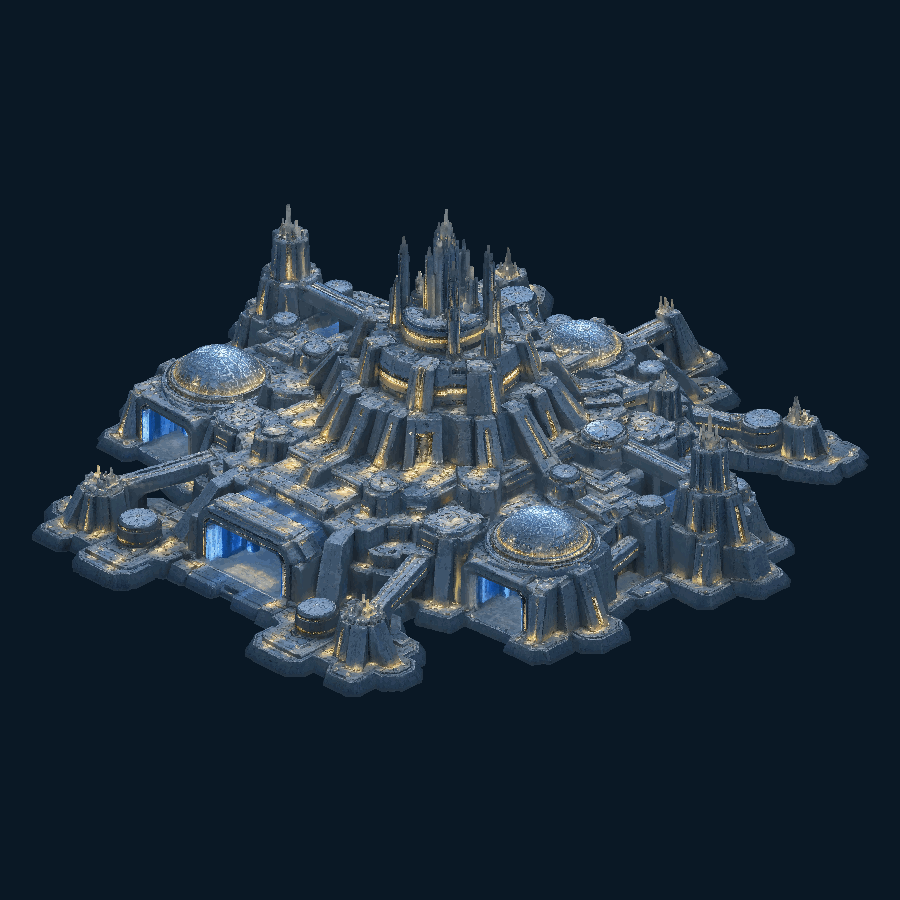
Zaegis Abyss Naval Megacomplex is a Human deep-sea strategic headquarters in Mow My World: a fortified military city, naval harbor, command center, shipyard and industrial reserve built into one immense seabed installation. Its central tower complex coordinates a theater-wide fleet while protected docks, autonomous engineering districts and layered defenses sustain operations beneath an alien ocean.
Base Profile

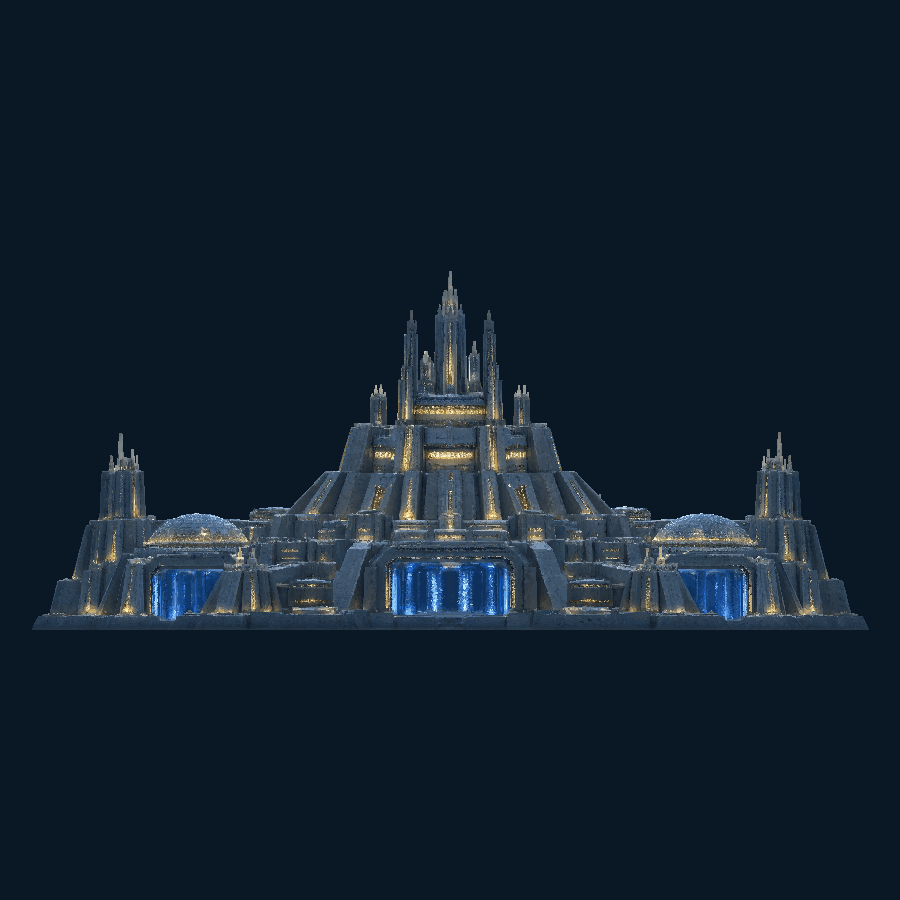
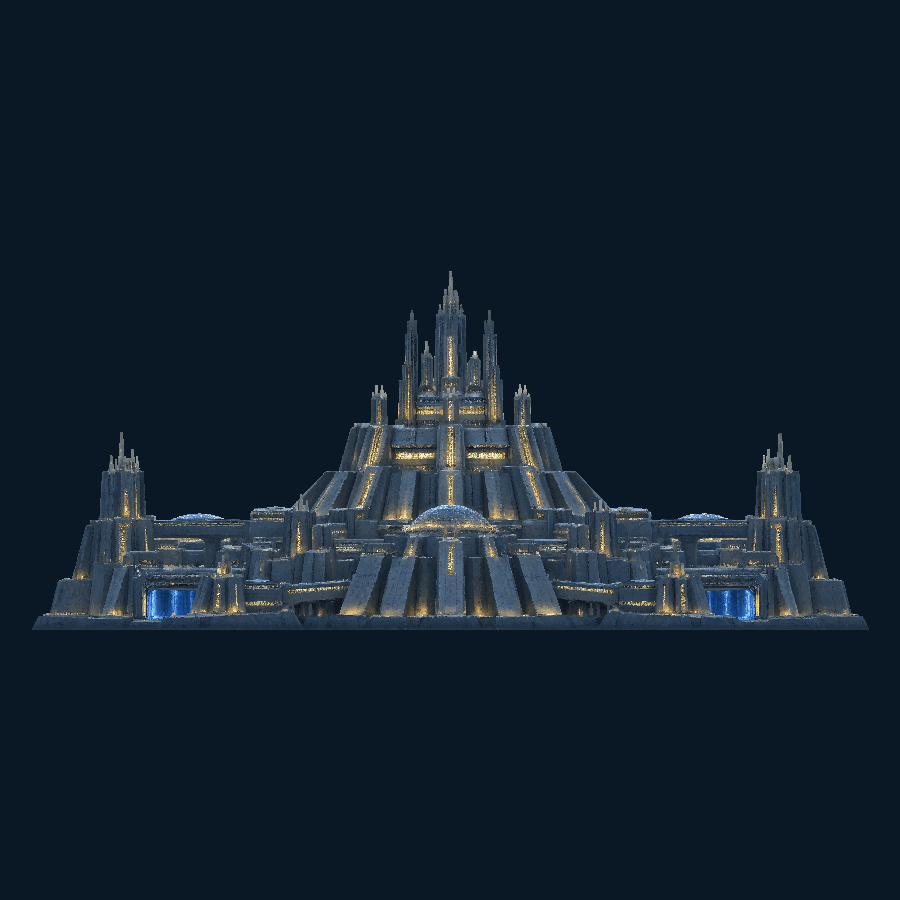
Dimensions & Scale
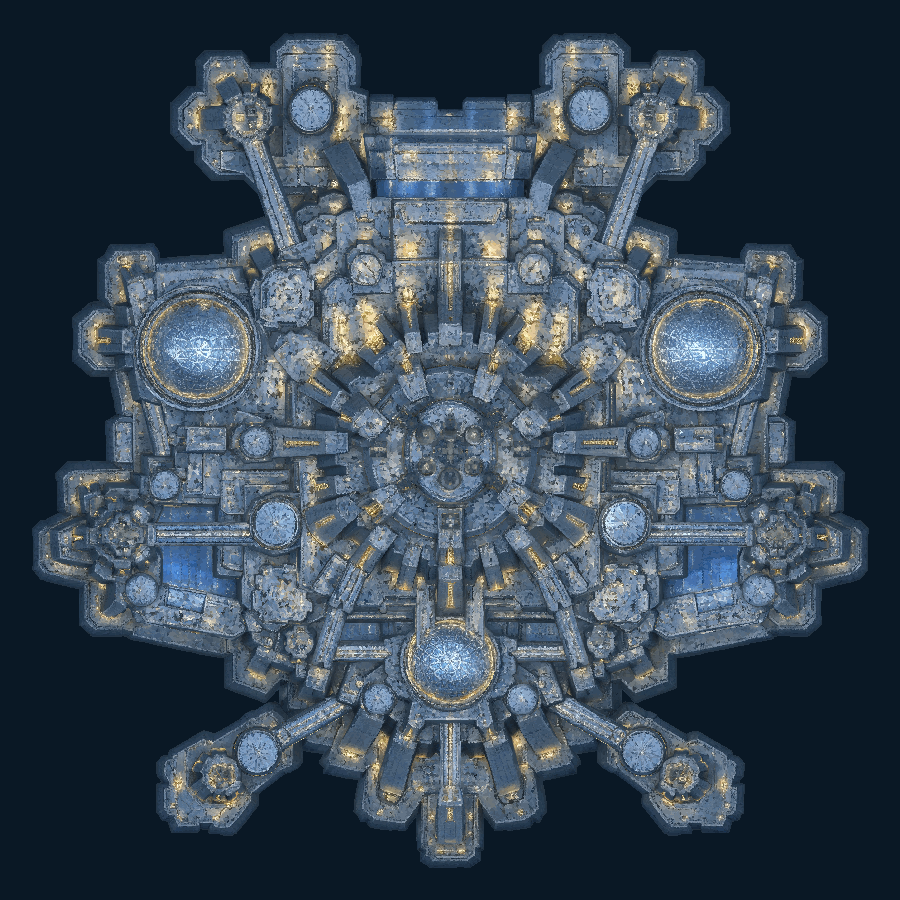
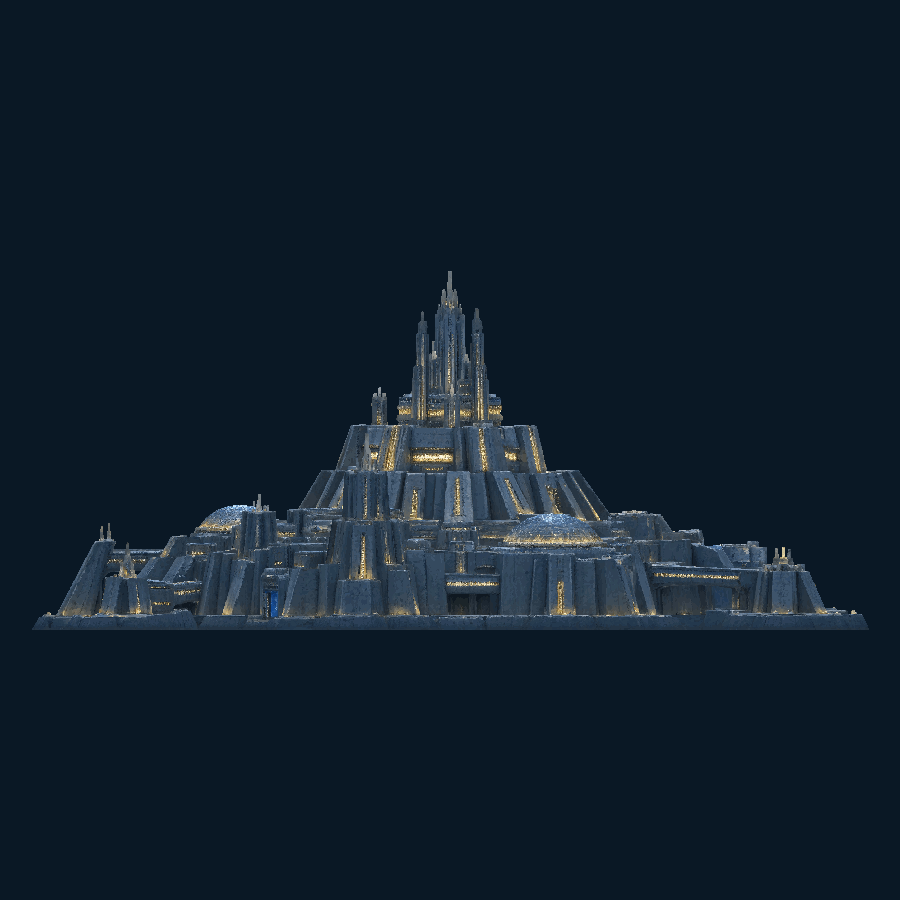
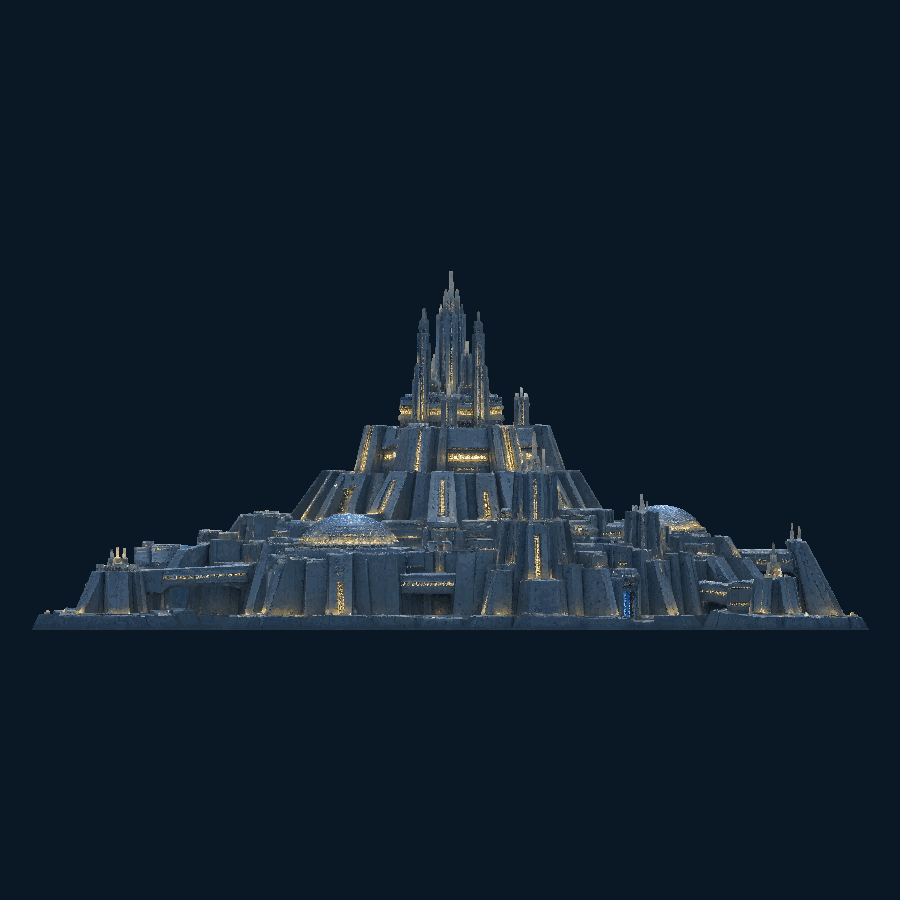
Length 40,000 m × Width 35,000 m × Height 20,000 m (approximately 40 × 35 × 20 km). These are supplied fictional planning dimensions, not a measured engineering survey. The main seabed contact zone is approximately 32 × 28 km.
The central strategic tower cluster rises approximately 15–20 km; peripheral harbor and defense structures rise approximately 0.5–4 km. Major submarine dock entrances have a proposed clear height of 300–800 m. Strategic berths are planned for 1–3 km-class underwater vessels, subject to each vessel’s beam, height and servicing requirements.
Overall height is not the operating depth. Zaegis occupies an invented ocean basin with sufficient water depth and supporting geology for the full structure; these conditions are part of the science-fiction setting rather than Earth geography.
Weapons & Armament
Long-range defense — Distributed underwater interceptors, theater missile systems and long-endurance autonomous submersibles form the outer defensive layer, supported by acoustic detection arrays and remote targeting reports. Strategic releases remain subject to command authorization.
Medium-range defense — Automated interceptor torpedoes, coordinated underwater drone groups, fictional precision-energy systems and electromagnetic launch installations protect approaches to the harbor. Performance depends on local water conditions, sensing and available power; no unlimited underwater range is assumed.
Close defense — Rapid-response defensive nodes, automatic turrets, patrol CCBOT units and defensive robots cover gates, service openings and vulnerable exterior structures. The arrangement emphasizes layered coverage and protected installations rather than weapons on every surface.
The armament list is an authored game-world configuration. Calibers, exact firing rates and destructive yields are not inferred from the exterior views.
External Anatomy
Manufactured armor terraces rise toward a dominant central tower group, with a limited number of domed districts and large blue-lit harbor openings around the lower front. Broad structural buttresses, perimeter platforms and connecting service routes give the installation a coherent Human engineering identity.
The central core houses command, strategic decisions and communications. The front serves major submarine berths; the left sector supports repair, docks and engineering; the right sector supports autonomous systems and weapons logistics. Rear districts contain energy, industry and reserves. The outer belt combines defense, sensing and interception, while seabed-embedded levels carry protected stores and structural roots. These functional assignments are proposed setting details.
Functional Architecture
Abyssal Fleet Command Core — The central tower group integrates deep-sea fleet command, surface-fleet coordination, autonomous-system scheduling, theater intelligence, power allocation and strategic weapons authorization. Protected fiber and underwater communication nodes link to surface and orbital relays; direct radio transmission through kilometers of seawater is not assumed. Separate command cells preserve basic coordination if one district is lost.
Abyssal EW / SIGINT District — Embedded acoustic panels, ring-shaped sensor arrays, low distributed towers and passive detection regions support communication interception, acoustic deception, false-target generation and disruption of hostile underwater systems. Analysts fuse distant reports, monitor Cryvum field activity and recognize Bugvex bioacoustic patterns. Interpretation remains uncertain under jamming or unfamiliar conditions.
Deep Fusion / Exotic Power Complex — Multiple fictional fusion cores, high-density energy stores, deep-ocean heat exchangers, seawater cooling and superconducting distribution serve independently isolatable districts. Illuminated power-distribution spines mark major service routes. Emergency energy islands maintain essential functions after network separation; heat rejection and reserve depletion remain operational limits.
Autonomous Warfare District — Scouts, engineering and repair robots, antisubmarine craft, underwater CCBOT vehicles, autonomous supply platforms and sonar-node deployment units share protected maintenance and dispatch facilities. Human command retains strategic authorization while local automation handles bounded tasks.
Habitation and reserves — Selected domed districts contain residential, medical, training, recreation and artificial-ecology spaces. Food production, freshwater recycling and oxygen and gas management support extended occupation. Seabed-embedded reserves hold torpedoes, missiles, replacement energy modules, CCBOT parts, autonomous craft, medical supplies, provisions and engineering material. Separate passenger routes, cargo corridors and vertical transport connect the enormous districts.
Technical Specifications
Offensive rating: 90/100 — Layered interceptors and authorized strategic weapons influence the surrounding theater
Defensive rating: 95/100 — Prepared barriers, independent pressure districts and specialized threat defenses protect vital functions
Mobility rating: 0/100 — The installation is permanently rooted to the seabed
Tactical cognition rating: 97/100 — Command, electronic warfare and distributed sensing integrate fleet-wide information
Endurance rating: 95/100 — Local production, reserves and isolated utilities sustain extended operations
Fleet support rating: 99/100 — Large docks, shipyards, stores and autonomous engineering restore and replenish major formations
Operational Role
Human Deep-Sea Strategic Headquarters. Zaegis anchors a major regional naval presence, serves as a fleet replenishment and repair center, and coordinates a theater’s undersea response. In proposed gameplay it can be a late-stage player base, a major story objective or a large fleet-assault arena. Its fall would disrupt an entire theater’s command and sustainment rather than merely remove a local outpost.
Undersea Operations
Zaegis is fixed to the seabed of the fictional Merovan Basin on the invented ocean world of Oryndel. Its planned harbor contains 8–12 large submarine docks, 20–40 medium berths and numerous small autonomous-craft interfaces. These figures are proposed internal capacity, not counts of visible exterior openings.
Pressure-adapted servicing areas support heavy underwater warships, cruisers, carriers, fortress vessels, autonomous-craft tenders and CCBOT engineering vehicles. Closable dock entrances isolate maintenance zones from the open sea. External traffic control separates arrivals, repairs, replenishment and military departures.
The Deep-Sea Naval Shipyard repairs pressure hulls, replaces weapons, sensors and power modules, manufactures selected structural components, assembles autonomous submersibles and performs battle-damage recovery. Its construction role is substantial but does not imply that every class of capital vessel can be built entirely on site. The base has no independent movement or flight.
Defense Architecture
Bio-Threat Defense Grid — Fast interceptor craft, local energy defenses, acoustic disruption systems, barrier gates, layered external belts, automatic turrets and CCBOT patrols resist swarming entry, biological attachment and heavy impact. These are fictional defensive systems, not chemical weapons; effectiveness varies with the attacking organism and available coverage.
Crystal Containment Sector — Mineral-change sensing and protected sample-handling systems monitor unwanted crystal growth. Independent isolation rings, dark armored barriers and separable modules limit access to structural and energy networks. Local isolation and controlled recovery are the response; the Human installation does not adopt a Cryvum crystal-built architecture.
Pressure and continuity — Multiple pressure compartments, protected service trunks and automatic closures localize flooding. Independent power, life-support reserves, medical centers and evacuation craft support surviving districts. Perimeter damage can force dock closures or reroute traffic without instantly disabling the entire complex.
Operational Limits
A fixed headquarters cannot evade a determined siege. Its huge footprint requires extensive maintenance, coordinated traffic and reliable replenishment of consumables. Damaged cooling routes, transport links or pressure boundaries can reduce capacity even when command survives. Sensor deception and communication loss complicate decisions. Individual districts may remain operational while the theater loses access to vital docks or supplies; redundancy is not invulnerability.
Strategic Strengths
Concentrates fleet coordination, protected berthing, ship repair and autonomous engineering in a defensible industrial city. Distributed power and pressure isolation improve continuity, while local production and strategic stores support prolonged operations. Separate responses to biological assault and uncontrolled crystal growth let the installation address different threats without treating them as identical.
Capability Assessment
Proposed fictional six-axis profile. Zaegis is strongest in fleet support, tactical coordination and prepared defense. Large reserves support endurance but remain finite. Mobility is 0 because the installation cannot relocate. The equal-weight archive grade is A (79.3); its strategic-headquarters role is separate from that numerical grade. These ratings describe intended gameplay and setting functions, not measured military performance.
A · 79.3
Fleet-wide concept rating, 0–100; not simulated performance. Specialized strengths do not imply an equally high overall grade. Tactical Cognition describes sensing, coordination and command. Grade is the equal-weight mean: S ≥ 90, A ≥ 75, B ≥ 60, C ≥ 45, D < 45.
Technology Level
T0 — advanced planetary megastructure with fictional fusion and exotic-power systems, integrated automation and extensive pressure engineering. Orbital communications rely on external relays and do not give the base independent space-travel capability.
Weapon Class
Proposed W3 — strategic theater defense through layered interception, authorized missile systems and coordinated autonomous forces. This classification describes regional influence, not unrestricted planetary destruction.
T0 planetary · T1 system flight · T2 phase travel · T3 limited world engineering. W0 point defense · W1 ship combat · W2 heavy fleet combat · W3 strategic theater systems. Technology and weapon classes are independent of the profile grade.
History & Lineage
Universe lore · authored service history
Origin
Established in the fictional Merovan Basin as a permanent Human naval command and industrial center. Separate harbor and engineering districts expanded into a unified strategic headquarters while retaining independent pressure and utility boundaries.
Lineage & Branch
Human abyssal installations — strategic naval megacomplex branch. Manufactured pressure structures, modular servicing systems and distributed automation distinguish its construction from Cryvum-grown crystal architecture and Bugvex living warforms.
Fleet or Unit
Human — fictional Merovan Theater Naval Command, supported by CCBOT engineering, logistics and autonomous-system service units
Individual History
The Basin Relief Campaign — In this authored service history, Zaegis receives damaged Human vessels after fighting closes several outer supply routes. Dock crews restore pressure hulls while the central command core coordinates relief convoys and reallocates reserve modules. The shipyard keeps essential formations operating, but repair demand forces difficult scheduling choices between combat and support vessels.
The Outer Belt Defense — Bugvex incursions pressure perimeter service openings while unexplained mineral changes trigger isolation of a separate inspection district. Command treats the events as distinct threats: autonomous patrols protect harbor traffic, and containment crews investigate the affected structures without compromising the energy network. Several berths close temporarily while protected inner sectors remain in use.
The Distributed Watch — Following the campaign, Zaegis separates additional reserve stores, adds alternate transport paths and strengthens continuity between command cells. The revised doctrine prioritizes keeping the fleet supplied and civilians protected while damaged districts recover. Its reputation rests on restoring a theater’s ability to fight, not on an unbroken record of effortless defense.