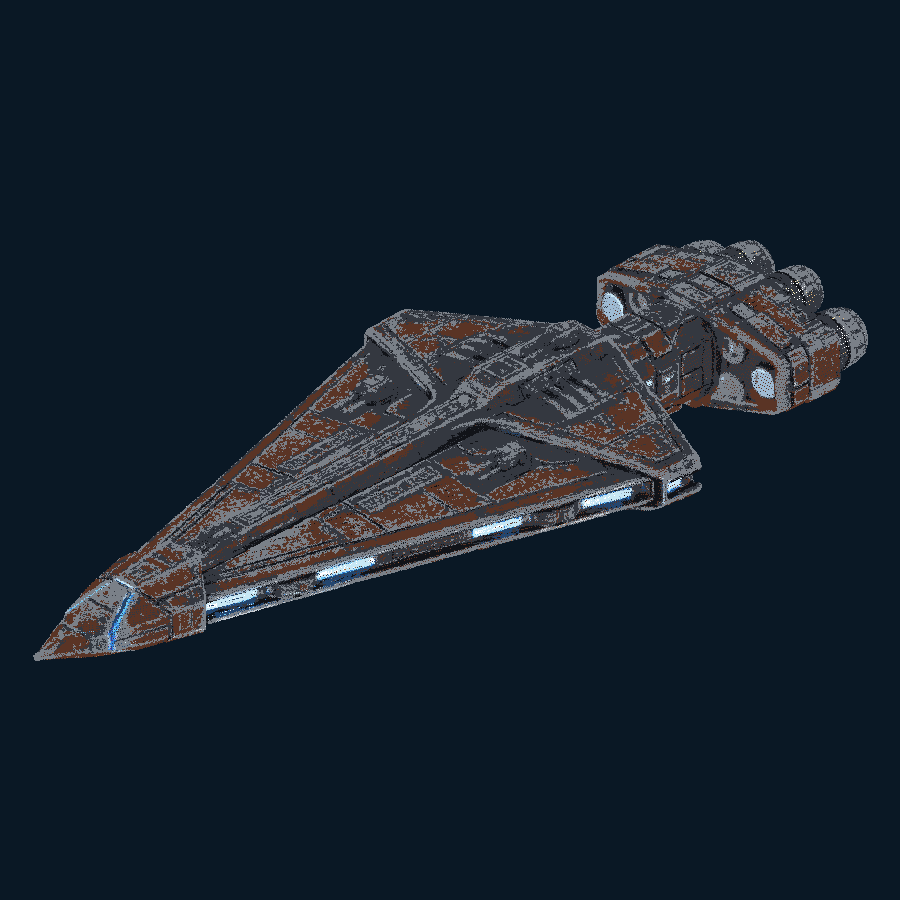

Overview
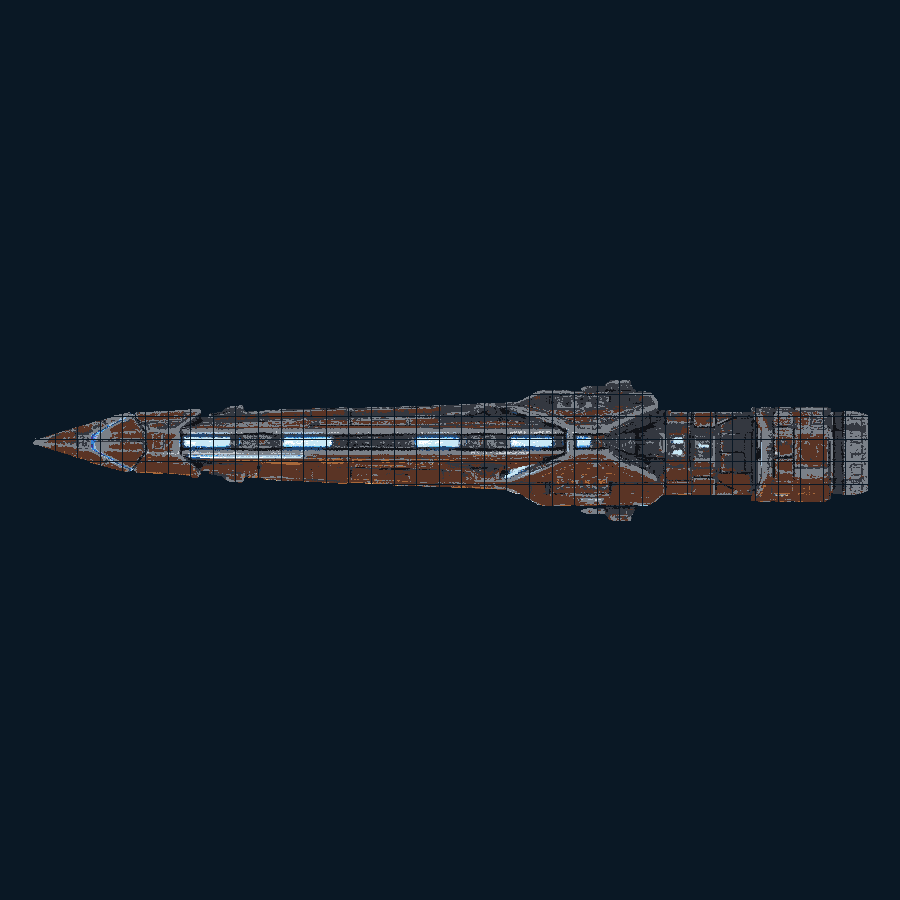
Nightwedge’s dagger-like hull concentrates mass and weapons toward the front. Its mission couples a high-speed approach with a concentrated strike and rapid disengagement.
Vessel Profile
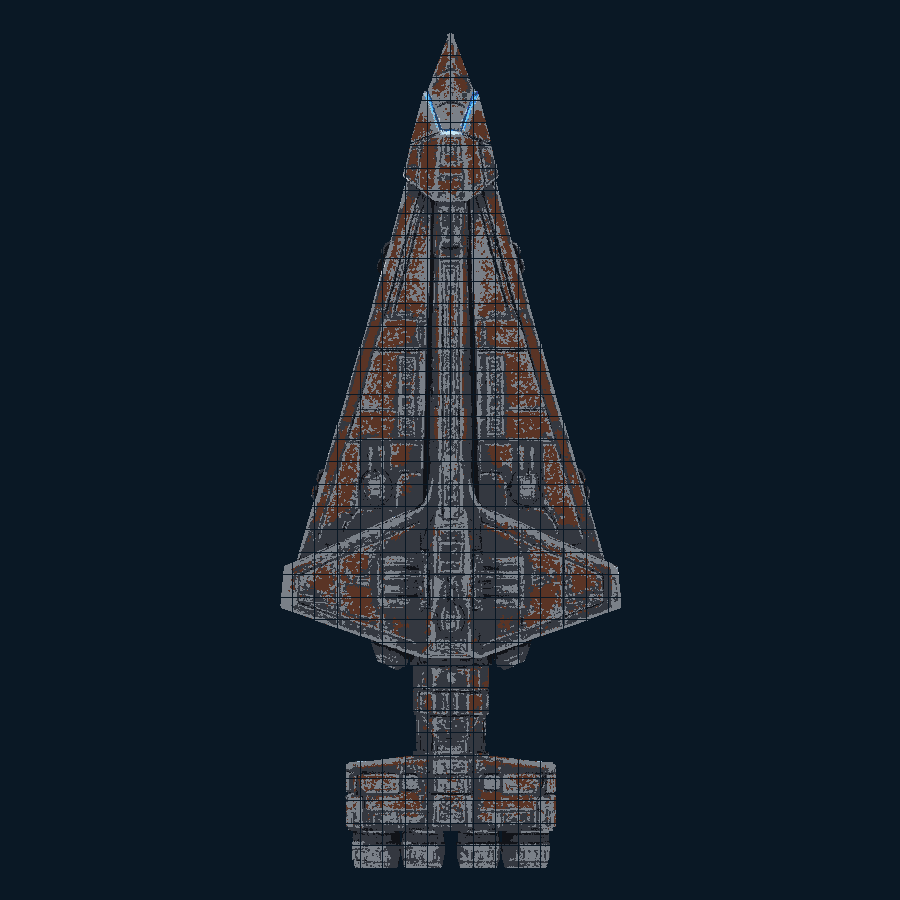
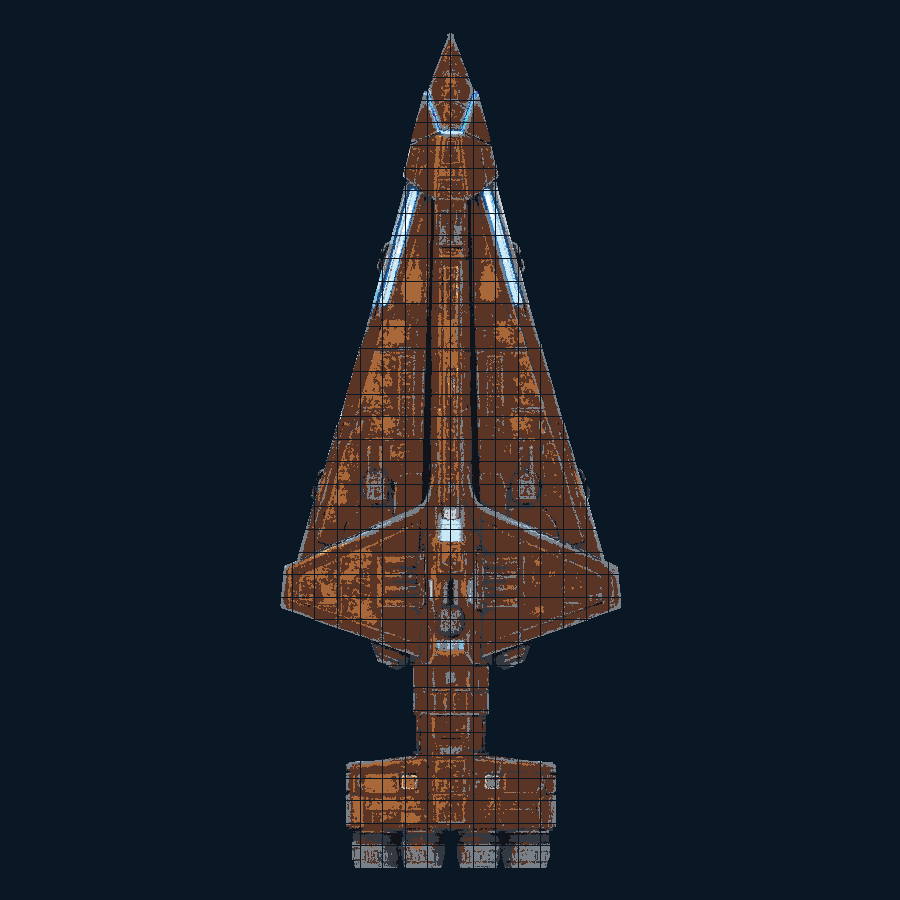
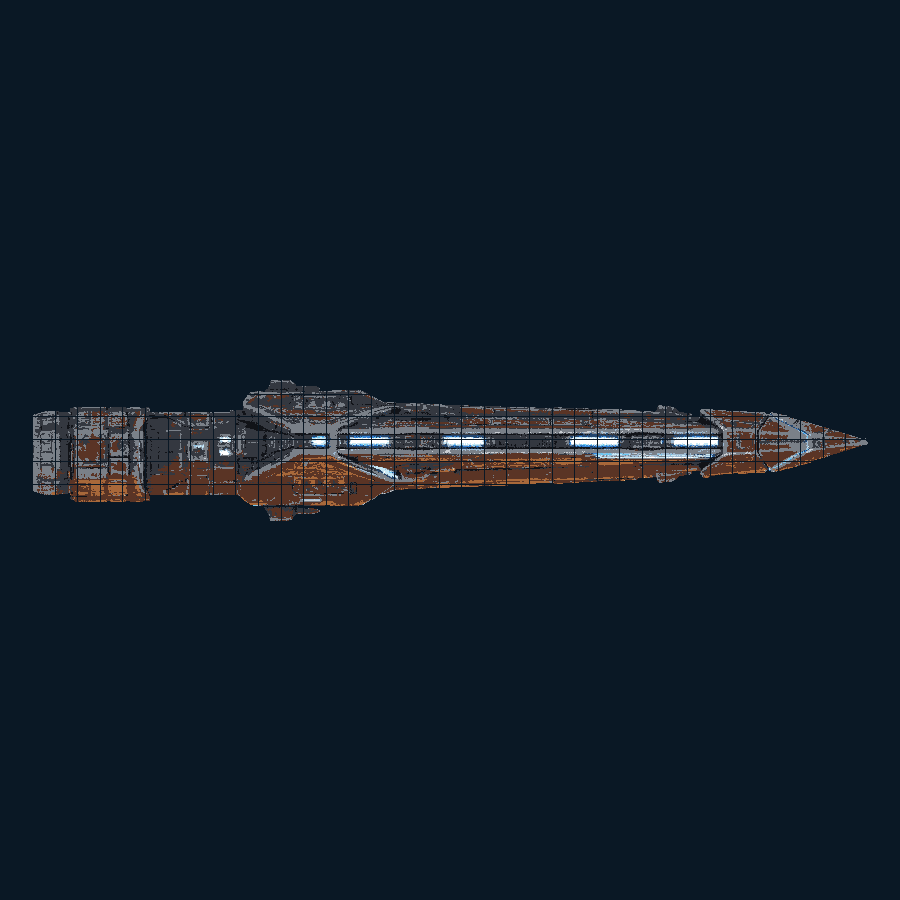
Weapons & Armament
A forward-heavy anti-capital strike arrangement defines its role
Dimensions & Scale
Length 800 m × Width 326 m × Height 135 m. Fictional overall dimensions in standard operating configuration.
External Anatomy
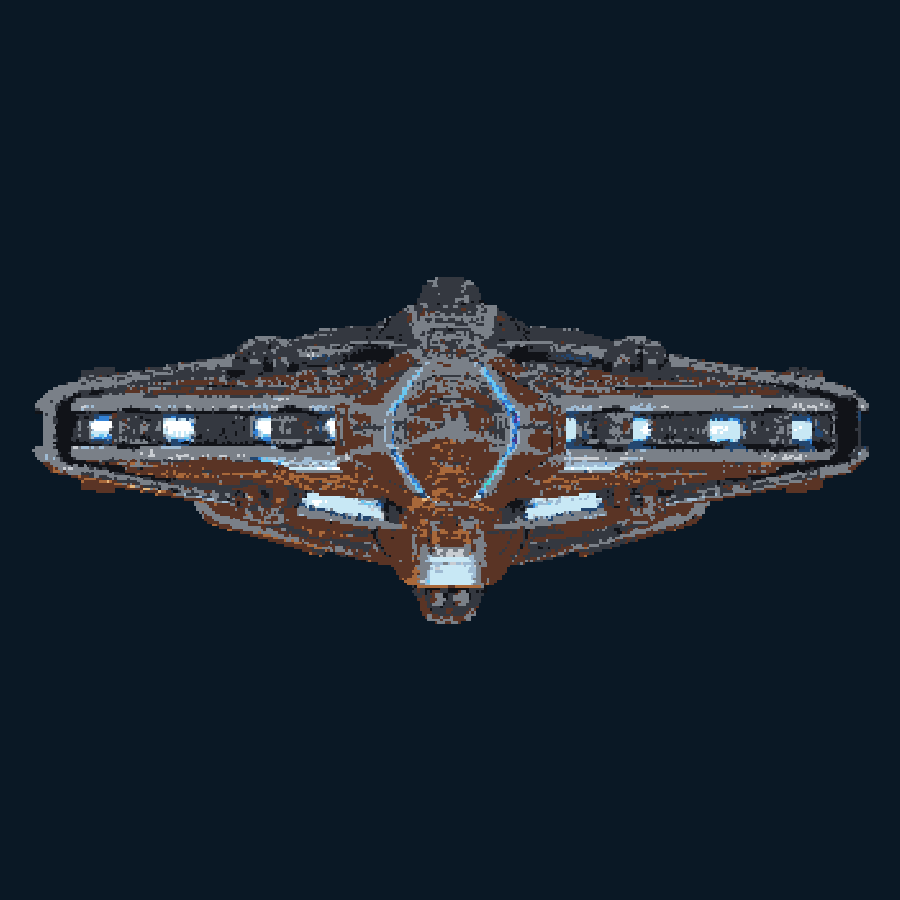
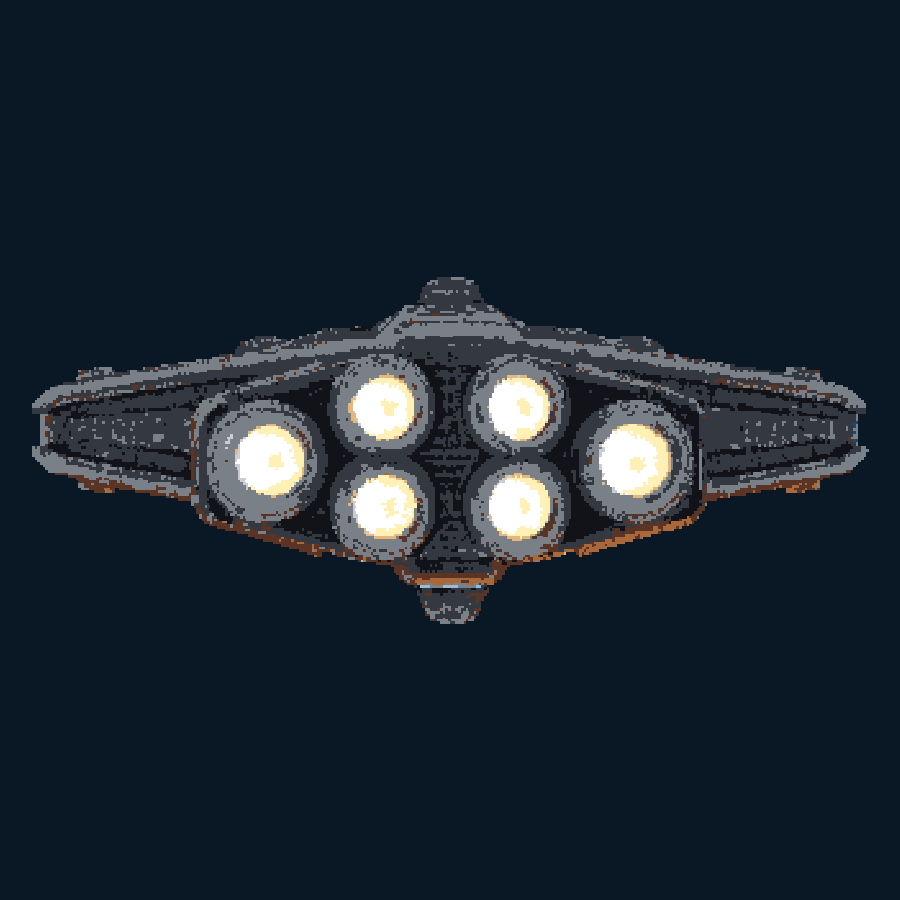
The hull forms a long dagger with a narrow prow and a wider aft body. Its mass and attack orientation emphasize the forward axis; propulsion occupies the rear of a silhouette intended to enter and leave a combat window quickly.
Functional Architecture
The forward-heavy body concentrates the vessel around its strike mission. The editorial architecture prioritizes target selection, attack timing and propulsion coordination over wide-area fleet support.
Technical Specifications
Offensive rating: 86/100 — A forward-heavy anti-capital strike arrangement defines its role
Defensive rating: 55/100 — The dagger-like forward-heavy hull protects the attack body
Mobility rating: 81/100 — Maneuvering supports the formation and mission profile rather than unrestricted pursuit
Tactical cognition rating: 65/100 — Target assessment, formation coordination and response timing support heavy strike cruiser operations
Endurance rating: 45/100 — Mission duration depends on finite reserves, damage recovery and scheduled replenishment
Fleet support rating: 30/100 — Penetrates a fleet screen, concentrates on a capital target and disengages before the opponent can organize a prolonged counterattack
Fleet Role
Penetrates a fleet screen, concentrates on a capital target and disengages before the opponent can organize a prolonged counterattack
Life Between Stars
Fleet doctrine emphasizes high-speed penetration and rapid disengagement. The maneuver sequence commits to a brief attack window and avoids repeated close turns around a heavier opponent.
Defense Architecture
The dagger-like forward-heavy hull protects the attack body. The proposed defensive doctrine relies on timing, support and a preserved withdrawal route as much as on armor.
Operational Limits
A fast attack loses value if the target survives and the exit closes. Extended line combat removes the advantages that justify the ship’s strike-oriented design.
Strategic Strengths
Strong attack emphasis, rapid engagement timing and a focused anti-capital mission give it a decisive role in a coordinated strike division
Capability Assessment
The pointed strike hull and concentrated forward attack favor fast approaches against capital targets. High attack and mobility are balanced by limited staying power and little fleet support.
B · 60.3
Fleet-wide concept rating, 0–100; not simulated performance. Specialized strengths do not imply an equally high overall grade. Tactical Cognition describes sensing, coordination and command. Grade is the equal-weight mean: S ≥ 90, A ≥ 75, B ≥ 60, C ≥ 45, D < 45.
Technology Level
T1 — system-flight capability. This editorial classification reflects the documented space role; no phase-travel or world-engineering capability is inferred.
Weapon Class
W2 — heavy fleet or siege engagement. This editorial class does not imply strategic world-scale destruction.
T0 planetary · T1 system flight · T2 phase travel · T3 limited world engineering. W0 point defense · W1 ship combat · W2 heavy fleet combat · W3 strategic theater systems. Technology and weapon classes are independent of the profile grade.
History & Lineage
Universe lore · authored service history
Origin
Developed as a heavy strike option for fleet commanders who need to threaten a capital target without committing the entire battle line
Lineage & Branch
Skirmisher-class heavy strike cruisers. Its fleet assignment follows the operational doctrine of this lineage.
Fleet or Unit
Dusk Spear Strike Division
Individual History
The Dusk Window — Nightwedge entered a gap opened by allied line cruisers, forced a capital ship to break formation and withdrew before the screen closed. Its captain declined the opportunity for a second pass.
The Unfired Salvo — On a later mission, the division aborted its attack when the escape lane filled with friendly evacuation traffic. The decision became part of the unit’s training: a strike plan is incomplete until the return route is safe.