Overview
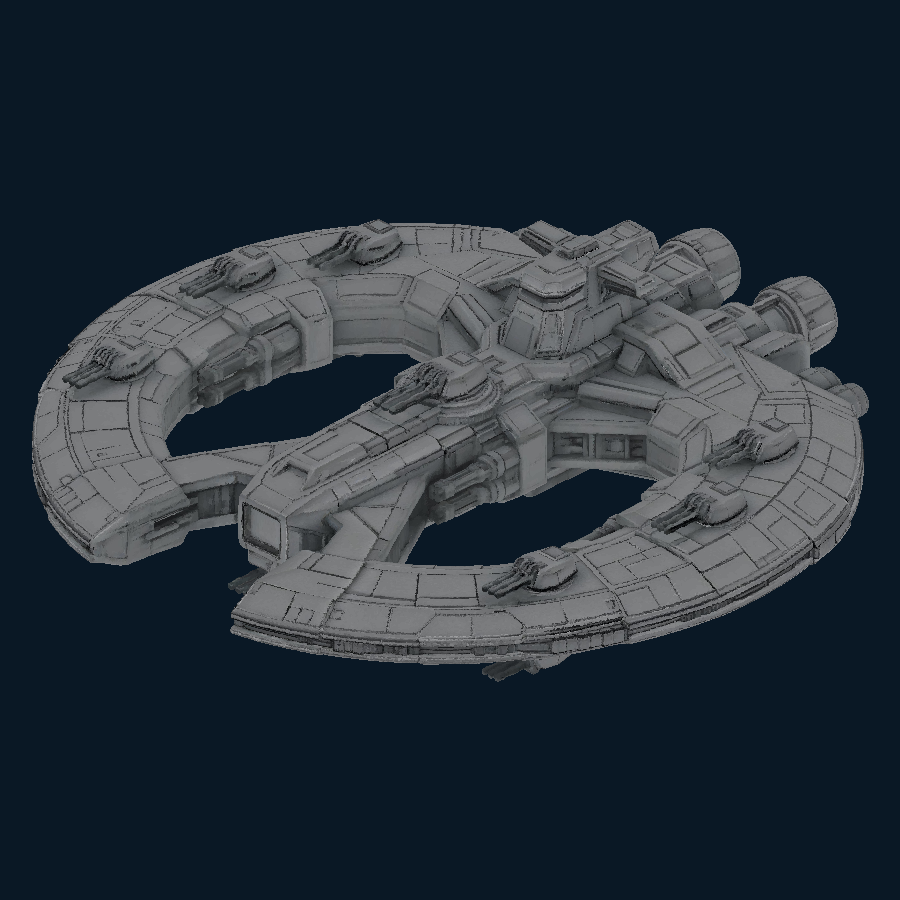
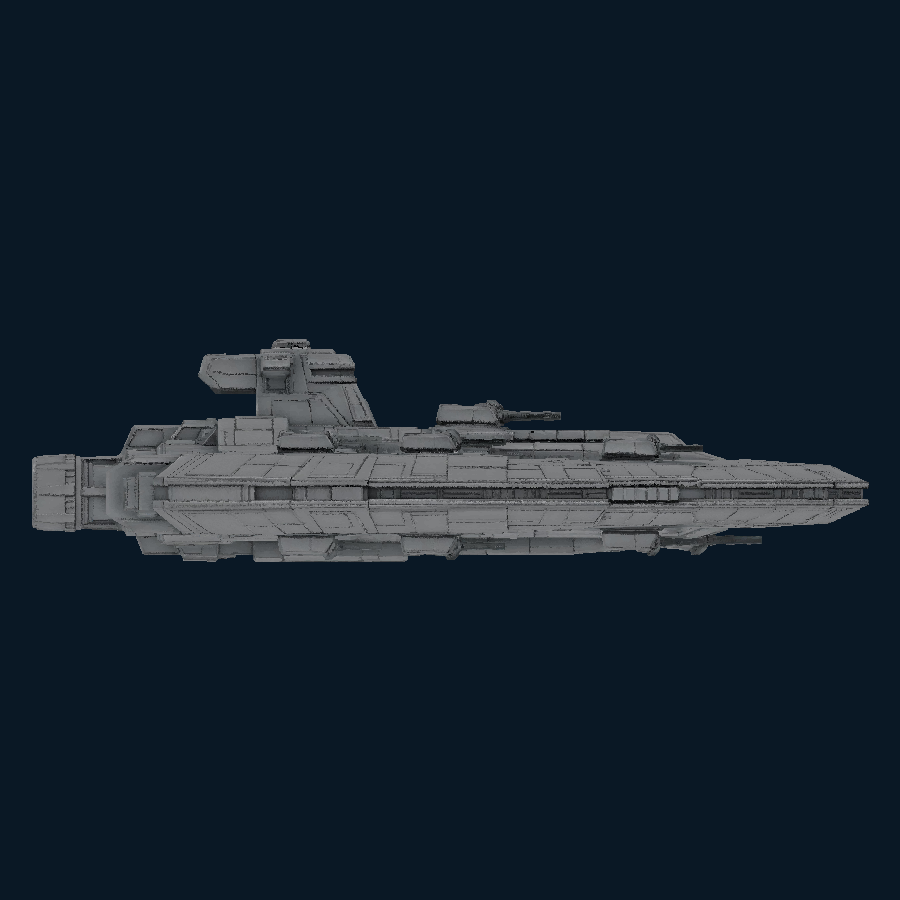
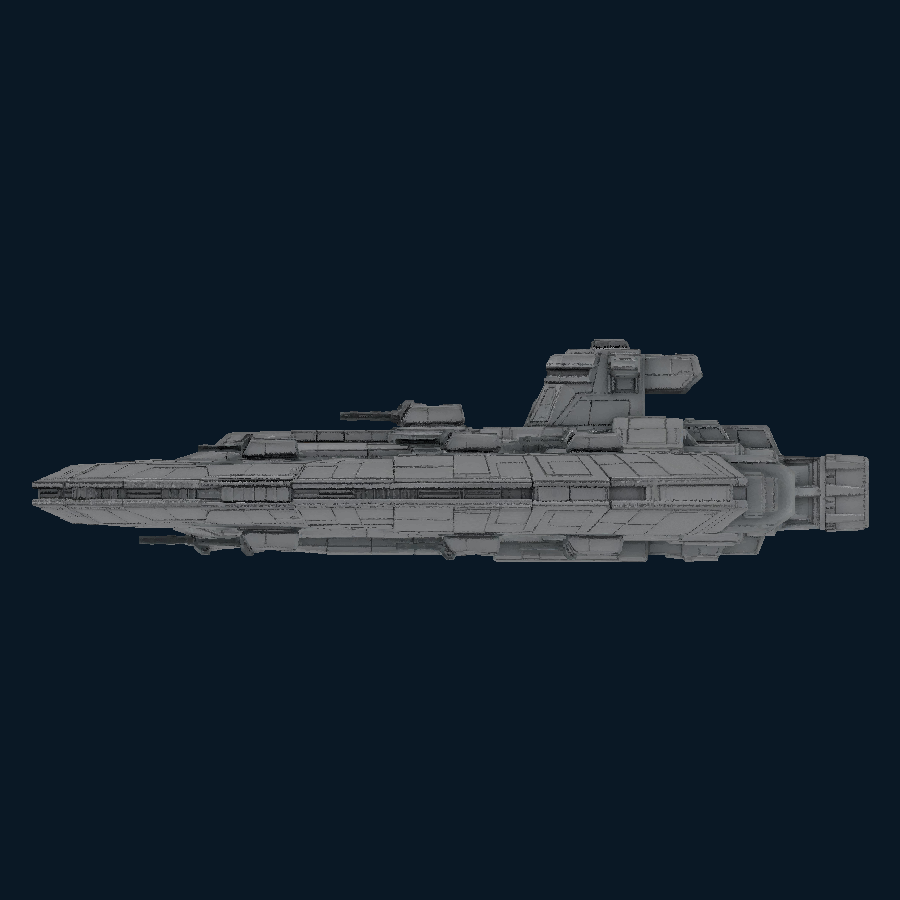
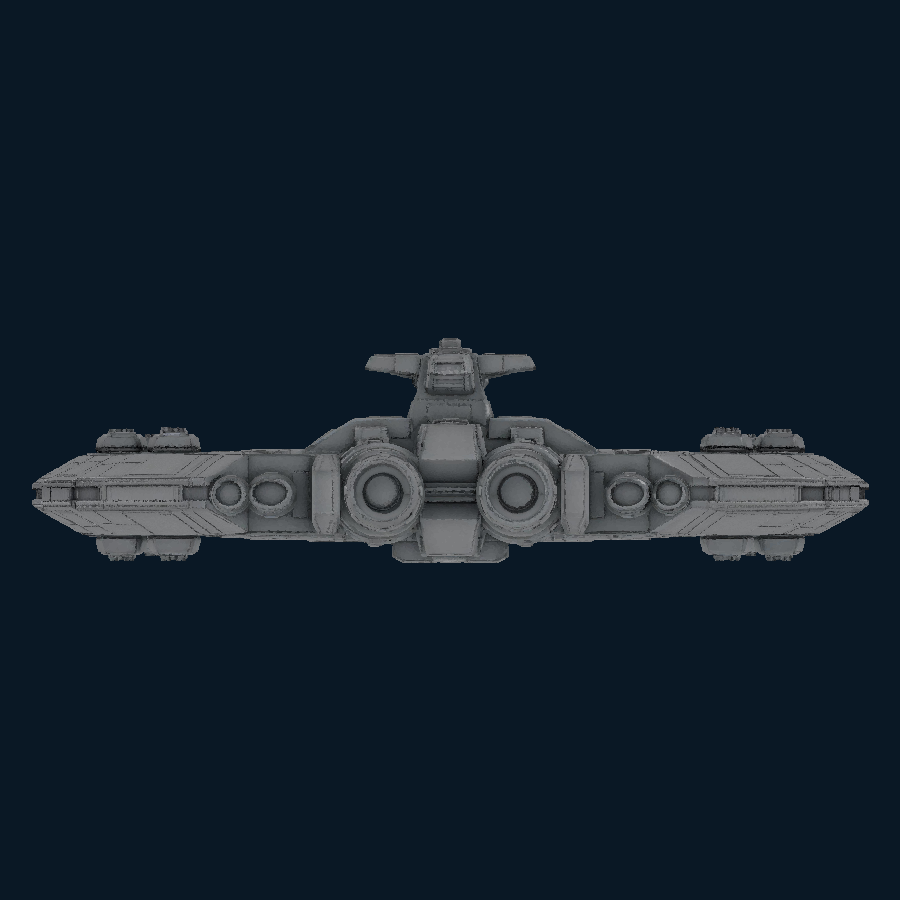
ShadowThorn sweeps outward from a narrow root before curving sharply toward its forward point. Four compact high-output engines propel a fast attack ship intended to close on valuable targets, concentrate fire and withdraw.
Vessel Profile
Weapons & Armament
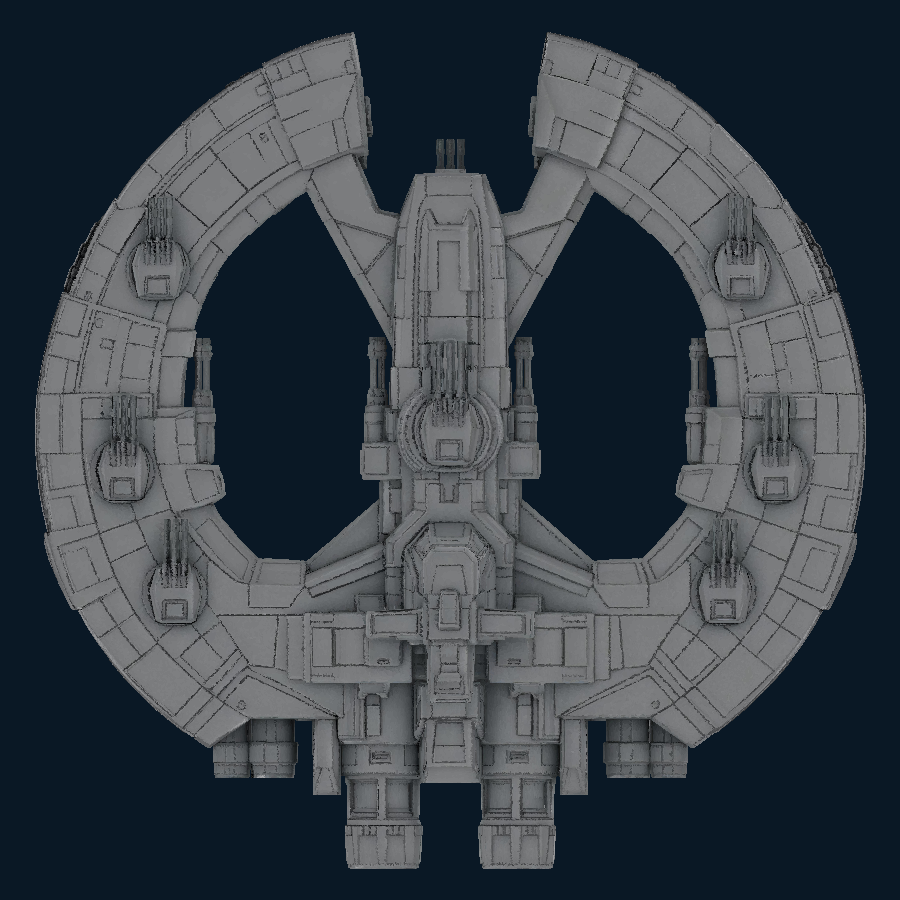
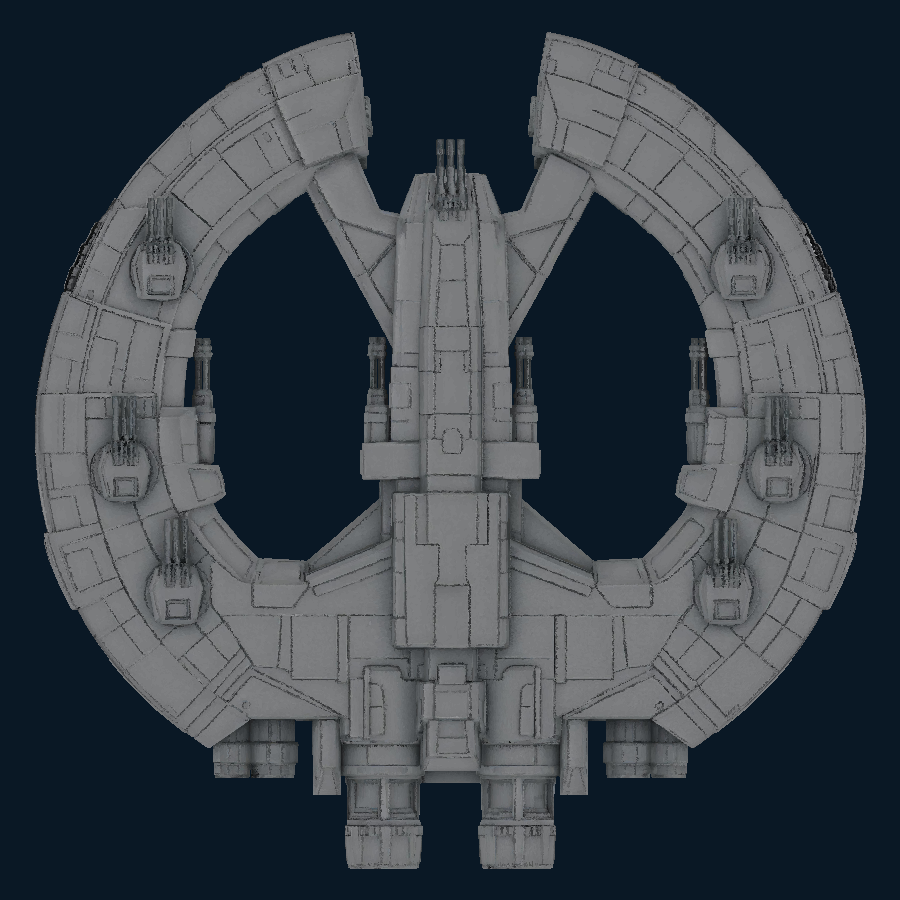
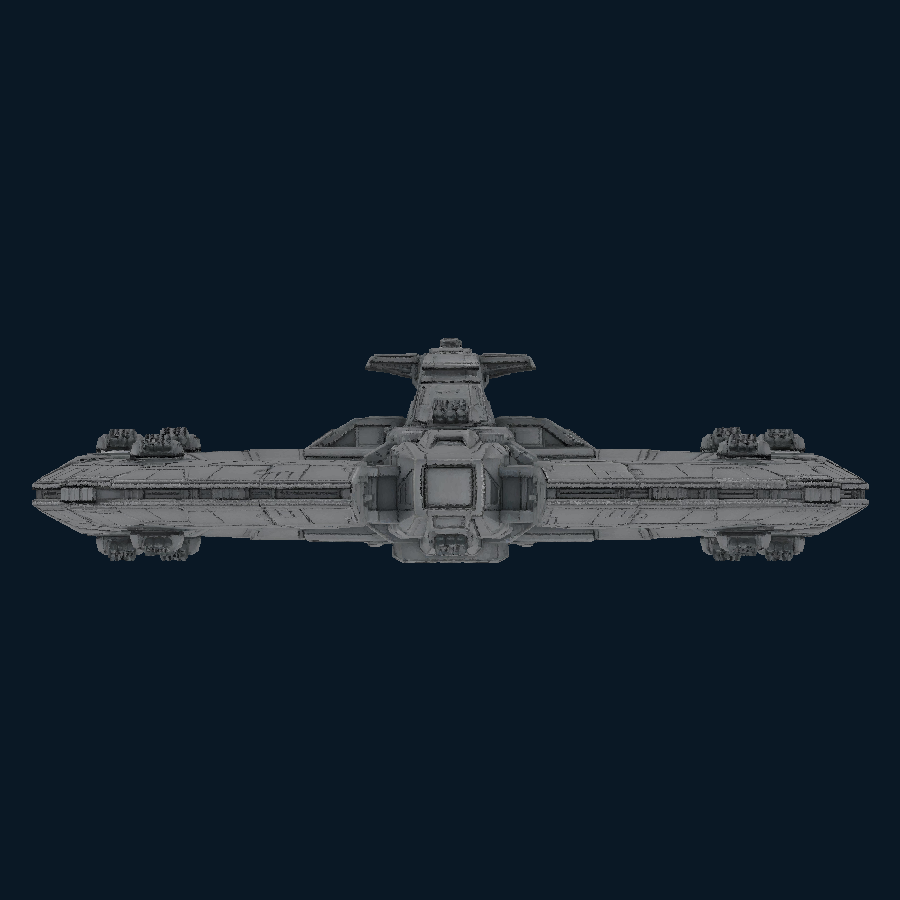
One twin-barrel dorsal siege cannon occupies the thick outer curve in a protected barbette. Two compact twin turrets, one recessed short-range missile battery and six defensive nodes provide supporting fire without filling the open inner crescent.
Dimensions & Scale
Length 520 m × Width 220 m × Height 100 m. Fictional overall dimensions in standard operating configuration.
External Anatomy
A broad crescent grows outward from a narrow root and turns inward at its forward point. The main barbette occupies the thicker outer curve. The open inner crescent separates the heavy attack body from its compact armored propulsion root.
Functional Architecture
The siege battery and short-range missiles concentrate on the selected target while secondary turrets cover the approach. Command and propulsion coordination prioritize timing the strike and preserving an exit corridor.
Technical Specifications
Offensive rating: 84/100 — One twin-barrel dorsal siege cannon occupies the thick outer curve in a protected barbette
Defensive rating: 60/100 — The main siege mount sits inside the thick outer curve in an armored barbette
Mobility rating: 77/100 — Maneuvering supports the formation and mission profile rather than unrestricted pursuit
Tactical cognition rating: 62/100 — Target assessment, formation coordination and response timing support heavy strike cruiser operations
Endurance rating: 49/100 — Mission duration depends on finite reserves, damage recovery and scheduled replenishment
Fleet support rating: 32/100 — Attacks exposed command ships and intercepts valuable targets at close fleet ranges
Fleet Role
Attacks exposed command ships and intercepts valuable targets at close fleet ranges. A strike group fixes the target’s attention while ShadowThorn approaches from a less defended angle.
Life Between Stars
Four compact high-output engines support rapid penetration and withdrawal. Operational doctrine keeps reserve thrust available for escape rather than spending it all on the initial approach.
Defense Architecture
The main siege mount sits inside the thick outer curve in an armored barbette. Defensive nodes and the compact engine citadel protect a short engagement rather than an extended exchange.
Operational Limits
Its strike profile trades staying power for speed. A failed first approach, a blocked withdrawal route or sustained defensive fire can strand it inside a stronger battle line.
Strategic Strengths
A powerful main strike, compact propulsion and strong directional identity suit sudden, coordinated attacks on high-value targets
Capability Assessment
A crescent strike hull carries a protected twin siege cannon, supporting turrets and recessed missiles. Heavy opening fire and responsive positioning make it a dangerous capital-target attacker, with limited endurance and support during a prolonged engagement.
B · 60.7
Fleet-wide concept rating, 0–100; not simulated performance. Specialized strengths do not imply an equally high overall grade. Tactical Cognition describes sensing, coordination and command. Grade is the equal-weight mean: S ≥ 90, A ≥ 75, B ≥ 60, C ≥ 45, D < 45.
Technology Level
T1 — system-flight capability. This editorial classification reflects the documented space role; no phase-travel or world-engineering capability is inferred.
Weapon Class
W2 — heavy fleet or siege engagement. This editorial class does not imply strategic world-scale destruction.
T0 planetary · T1 system flight · T2 phase travel · T3 limited world engineering. W0 point defense · W1 ship combat · W2 heavy fleet combat · W3 strategic theater systems. Technology and weapon classes are independent of the profile grade.
History & Lineage
Universe lore · authored service history
Origin
Conceived as a fast complement to the heavier line cruisers: a ship that can threaten the command structure behind a fleet screen
Lineage & Branch
Crescent-hull heavy strike cruisers. Its fleet assignment follows the operational doctrine of this lineage.
Fleet or Unit
Nightglass Pursuit Squadron
Individual History
The Unlit Approach — ShadowThorn crossed behind the glare of an allied bombardment and forced an enemy command ship to abandon its observation position. The squadron withdrew without trying to occupy the vacated center.
The Second Thorn — A later interception failed when the target’s escorts closed the planned exit. ShadowThorn returned with scorched outer armor, and its squadron began assigning a separate vessel to secure every withdrawal lane.